SMS links work when the recipient recognizes the sender, understands why the message arrived, and can predict where the URL will lead. A short address alone does not create trust. In fact, an unfamiliar generic shortener can make a legitimate promotion resemble phishing.
The phrase SMS link can describe two different things. A link inside an SMS sends the recipient to a web page; that is the main subject of this guide. A click-to-text link uses the sms: URI on a website or in an app to open the device’s messaging application. A basic form looks like sms:+15551234567. Phone-number parsing, prefilled message text, and desktop behavior vary by operating system, browser, and messaging app, so test click-to-text links on the devices you support instead of assuming one universal format.
Quick Answer
Use a custom branded short domain for recurring marketing and account messages when your platform supports it. Keep the brand, purpose, action, and destination consistent. Send people to an HTTPS mobile page, minimize redirects, and test the final personalized URL before launch.
Choose the URL format by use case:
|
Link Type |
Best Fit |
Trust Tradeoff |
|
Full branded URL |
Short, readable destinations |
Familiar but may consume more characters |
|
Generic short URL |
Low-risk internal tests |
Compact but unfamiliar to recipients |
|
Provider-branded subdomain |
Fast setup with some brand context |
Provider domain remains visible |
|
Custom branded short domain |
Recurring customer campaigns |
Requires DNS, security, and redirect management |
The rest of this guide treats every clickable SMS link as a chain. Permission, copy, domain, redirect, landing page, and tracking must support the same promise.
Step 1: Decide What the SMS Link Is For
One message should lead to one expected action. A link may open an order status page, appointment form, product offer, password reset, payment portal, or preference center. State that purpose before the URL.
The recipient should be able to answer three questions without tapping:
- Who sent this?
- Why did I receive it?
- What will happen when I open the link?
“Your order 4821 ships today. Track it: [link]” provides more confidence than “Update available: [link].” The first version connects the sender, event, and destination. The second relies on curiosity, a pattern also used in SMS spam and phishing messages.
Confirm Permission and Expectation
A branded domain cannot repair an unexpected message. Send marketing links only to people who provided the required consent, and keep proof of the signup source, date, and disclosure. The permission flow should explain the kinds of messages and expected frequency.
List growth should preserve that expectation. Use permission-based methods when you get more SMS subscribers instead of importing a contact list whose members do not recognize the sender.
Transactional links need context too. An appointment, delivery, or account message should match a real action the customer recently took. Do not use an urgent security story to disguise a promotion.
Remove Links When They Add No Value
Not every text needs a URL. A delivery time, access code, confirmation number, or simple reply request may fit in the message. Removing an unnecessary link reduces friction, character use, tracking complexity, and suspicion.
Keep the link when the destination must show changing detail, collect a secure action, or present information that does not fit safely in SMS. For sensitive accounts, consider telling recipients to open the official app instead of placing a login link in an unexpected text.
Step 2: Choose a Link Recipients Can Verify
The domain is a trust signal. A recipient may recognize offers.example.com, while a random sequence on a public shortener provides no visible connection to the brand.
Prefer a Controlled Branded Domain
Use a dedicated subdomain such as sms.example.com or go.example.com. Keep it close to the main brand and use it consistently across campaigns. The domain should redirect only to approved properties and remain under company control.
Set up HTTPS with a valid certificate. Restrict who can create destinations, and keep an audit log of the original URL, short code, owner, campaign, creation date, and expiration rule. A short-link system is publishing infrastructure; treat it with the same access discipline as a website.
Minimize the Redirect Chain
Each redirect adds another dependency and another place where tracking parameters can break. Aim for one controlled short redirect to the final HTTPS page. Test both the shortened link and the resolved destination.
Check these elements before launch:
- Domain Ownership: Confirm that the brand controls the short domain and renewal account.
- TLS Certificate: Verify that HTTPS loads without warnings on current mobile browsers.
- Destination Allowlist: Limit redirects to approved brand domains and vetted partners.
- Parameter Handling: Confirm that campaign and personalization parameters survive safely.
- Expiration Behavior: Send expired links to a useful brand page, not an error or unrelated offer.
- Abuse Monitoring: Watch for unauthorized links, sudden traffic, and destinations changed after approval.
The Federal Trade Commission warns that phishing texts may direct people to spoofed sites that look real. Its consumer guidance on spam texts advises people to verify a company through a website or number they already know. A branded domain gives recipients a better verification clue, but it does not replace correct consent or message context.
Avoid Misleading Display Tricks
Do not write a trusted domain in the copy and attach a different hidden destination. Ordinary SMS usually displays the URL itself, but rich previews and some messaging clients can make destination cues less obvious. The visible brand, resolved host, and landing-page identity should agree.
Avoid look-alike domains, extra hyphens, misspellings, or uncommon domain endings chosen only because the preferred short domain was unavailable. Recipients should not need to inspect every character to understand who owns the link.
Plan for Domain Failure
Monitor DNS, certificate expiry, redirect latency, and error rate. Keep a rollback process for a bad campaign destination. When a domain or certificate fails, pause the send instead of routing traffic through a temporary unfamiliar shortener.
Long-lived links need an owner after the campaign ends. Decide whether they remain active, expire, or redirect to a stable page. Never recycle an old code for a different destination; screenshots and forwarded messages can outlive the original campaign.
Step 3: Write Copy That Explains the Link

Trust comes from the sentence around the URL. Name the brand, connect the message to a known event, describe the action, and avoid artificial pressure. The same principles used to write a good marketing SMS become more important when the message asks for a click.
Compare these two messages:
Payment failed. Act now: x7q.example
Northstar Gym: We could not renew your July membership. Review the payment method in your account: sms.northstargym.com/a8F2
The second message gives the recipient several checks. The brand is named, the event is specific, and the destination resembles the brand. It does not ask the recipient to send card details by text.
FTC business phishing guidance notes that phishing messages often imitate familiar organizations and pressure people to act immediately. Legitimate campaigns should avoid the same pattern. A real deadline can be stated plainly without threats.
Use a Complete Message Pattern
A trustworthy link message usually contains:
- Sender: Identify the brand in the text even when an alphanumeric sender ID is available.
- Context: Mention the order, appointment, subscription, request, or campaign the person expects.
- Action: Explain what the recipient can view, confirm, update, or redeem.
- URL: Use the controlled domain and keep only necessary parameters.
- Fallback: Provide a known app, website, or support route for sensitive actions.
- Opt-Out: Include the required opt-out instruction for promotional traffic.
Do not place two unrelated links in a short message. Competing choices increase character use and make the destination less predictable. If two actions are necessary, send one link to a mobile page that presents both clearly.
Preserve Clarity When Shortening
Shorten the URL before you cut the brand or purpose. Remove filler, duplicate timing language, and repeated offer terms first. Keep required disclosures and the context that protects recipients.
Watch character encoding as well. A shortened URL can save characters, but curly punctuation or emoji may switch the message to Unicode and reduce the per-segment capacity. Test the whole payload after the link is inserted.
The message should still make sense when a preview does not appear. Treat previews as optional display help, not the only explanation of the destination.
Step 4: Test the Complete Click Journey
Opening the link on one office phone is not enough. Test the final rendered message, redirect, page, form, and conversion event across realistic devices and network conditions.
Run a Mobile QA Checklist
Verify the journey before every major send:
- Final Rendered URL: Confirm that personalization and tracking create a valid destination for every test record.
- Redirect Speed: Measure the redirect and first page load on mobile data, not only office Wi-Fi.
- Page Identity: Show the same brand, offer, and action promised in the text.
- Responsive Layout: Keep the main action visible without zooming or horizontal scrolling.
- Form Behavior: Use the right mobile keyboard, preserve entered values, and explain errors.
- Accessibility: Check readable type, contrast, focus order, labels, and tap-target size.
- Fallback Route: Provide an official app, homepage, or support method when the action fails.
- Expiry State: Show a useful explanation after the offer or secure token expires.
Test common mobile browsers and at least the destinations that represent most of your traffic. Link previews, security warnings, and redirect handling can vary by device and messaging application.
Protect Sensitive Actions
Use short-lived, single-purpose tokens for password resets, account verification, or payment recovery. Do not place personal information in query strings. Prevent a token from granting more access than the requested action requires.
The landing page should not ask for information that the message cannot reasonably justify. For a surprising financial or security request, direct the recipient to the official app or a known website route.
Measure Clicks with Honest Denominators
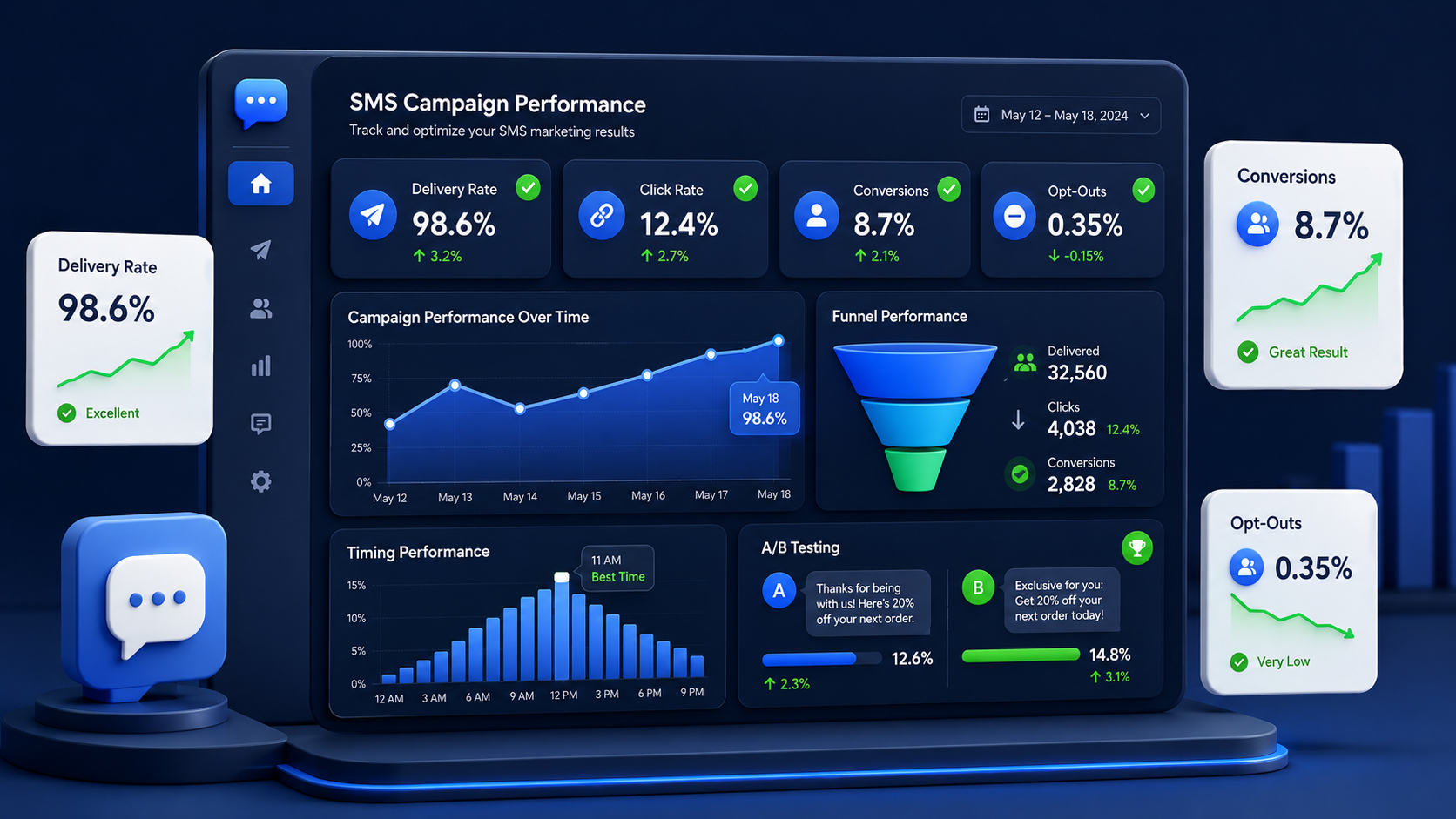
Use unique clickers divided by delivered messages for campaign CTR. Record total clicks separately because one person may tap more than once. For budget and channel comparisons, connect those click measures to a consistent SMS marketing ROI method.
unique SMS CTR = unique recipients who clicked / delivered messages
landing conversion rate = completed actions / unique recipients who clicked
message conversion rate = completed actions / delivered messages
Bots, security scanners, and preview fetches can visit links without a human tap. Filter known automated traffic and avoid describing every request as engagement. Document the attribution window and deduplication rule.
Report opt-outs and complaints beside clicks. A link campaign can win a short-term CTR test while weakening list quality.
Test Failure Paths and Costs
Check what happens when the token is invalid, the offer has ended, the product is unavailable, or the recipient opens the link on another device. A stable explanation protects trust better than a generic 404 page.
Count the final SMS segments after inserting the production link. Generic tracking parameters, long variables, and Unicode symbols may increase the billable parts. Compare cost per completed action, not only cost per send.
Finally, monitor redirect errors during the campaign. Pause traffic when failures rise rather than continuing to send a broken destination.
Common SMS Link Mistakes
- Unknown Shortener: A random public domain saves characters but removes the visible connection to the sender.
- Missing Context: A URL without a reason resembles the unexpected-link pattern recipients are taught to avoid.
- Redirect Stack: Several trackers increase latency and create more failure points.
- Desktop Landing Page: Tiny forms and slow pages waste the attention earned by the message.
- Recycled Link Code: Reusing an old short code can send forwarded messages to the wrong destination.
FAQ
Are SMS links clickable on every phone?
Most modern phones detect web URLs, but display and preview behavior varies. Write the message so the destination remains understandable without a preview.
Should a short link expire?
Secure or time-limited actions should expire. Send expired visitors to a branded explanation and a safe next step.
Can SMS links track opens?
No. A link records requests or clicks, not every message open. Automated scanners may also request the URL, so filter bot traffic and report unique clickers with a clear denominator.
Can an sms: link prefill a message on every device?
Do not assume so. Basic click-to-text behavior, phone-number parsing, body parameters, and desktop fallbacks vary across operating systems and messaging applications. Test the exact link on supported devices and provide another contact method when launching a messaging app is not possible.
Make Every Link Earn the Tap
Use one expected action, a recognizable domain, clear context, and a tested mobile destination. Measure unique clicks and completed actions without calling them opens.
SMSBoosting’s Marketing SMS service can support link-based campaigns, segmentation, and delivery reporting across international audiences.