
Black Friday SMS marketing works best as a short, deliberate sequence, not a stream of increasingly urgent reminders. Give every message a different job, send it only to people for whom that job is relevant, and stop when the reason to text is gone. That approach protects attention while still making room for an offer people may genuinely want.
The practical goal is not to find a magic number of texts. It is to build a campaign where the audience, offer, deadline, opt-out path, and owner are clear before each send. A recipient should be able to tell who is texting, what has changed, what action is available, and how to stop promotional messages if they no longer want them.
Start with a campaign brief, not a message calendar
A Black Friday campaign can become noisy when the team begins with copy and fills every available day. Start instead with a one-page brief for each message or message group. It should name:
- The business objective: for example, introduce a live offer, move a specific in-stock collection, or direct eligible customers to a store event.
- The recipient rule: the permission basis and the source of the audience, plus who must be excluded.
- The offer facts: eligible products, price or discount, code, start and end time, time zone, exclusions, inventory or capacity conditions, and destination page.
- The stop rule: the event that makes the message irrelevant, such as an opt-out, completed purchase, expired offer, stock change, or cancelled event.
- The accountable owner: the person who can approve a changing offer, pause a send, or correct a broken destination.
This brief also protects the accuracy of the offer. In the United States, the FTC requires advertising claims to be truthful, non-deceptive, fair, and supported by evidence. Before sending, verify every price, availability claim, and deadline with the team responsible for the offer. FTC advertising guidance applies in the United States; other markets have their own requirements.

Build a Black Friday SMS sequence around changing reasons to send
There is no universal safe frequency for promotional texts. A message that is welcome to a recipient waiting for an early-access event can feel repetitive to someone who already bought, opted out, or never showed interest in that category. Replace a fixed cadence with a relevance test: what is genuinely new for this recipient, and why does it require an SMS now?
For many campaigns, the sequence may include only a few of these moments:
Swipe horizontally to view the full table.
| Campaign moment | Legitimate job of the message | Do not send if |
| Preview | Confirm a real upcoming event or invite an eligible recipient to view details | The event page or terms are not ready |
| Early access | Tell a specifically eligible group that its access is active | Access is not actually available to that group |
| Offer live | State the verified offer and direct the recipient to its exact destination | The offer, price, code, or product scope is uncertain |
| Meaningful update | Share a material change, such as a real extension or a different live option | It only restates the previous message |
| Final deadline | Name a genuine end time and time zone | The deadline is vague, movable, or not approved |
| Post-event service update | Help customers with an order, pickup, or service fact | It contains a new promotion without the right marketing basis |
Choose only the moments your campaign genuinely needs. A small campaign may use one preview and one live-offer message. A larger campaign may add updates for clearly defined audiences, but every send should introduce a useful reason to act. If the next text is merely another reminder, remove it or narrow the audience.
Give audience relevance a job before you import recipients
Segmentation is a business decision before it is a platform setting. Build the audience in the system that holds your permission and customer context, apply suppressions there, and document the rule used. Then import the approved recipient file into the sending workflow.
Useful audience differences may include a recipient’s expressed product interest, store location, current customer status, or access eligibility. The point is not to invent ever-smaller groups. It is to avoid sending a message that cannot be useful to a large portion of the list. A person who already completed the promoted purchase, has an unresolved service issue, or withdrew marketing permission should not receive the same promotional push as an eligible prospect.
Describe each audience in plain language. For example: “UK subscribers with current SMS marketing permission who viewed winter outerwear in the last 30 days, excluding anyone who purchased after [date/time].” Adapt the rule to the permission and marketing requirements of each destination market.
For broader ecommerce applications beyond a peak promotion, see SMS for ecommerce.
Make every Black Friday offer checkable in one read
Offer confusion is a fast route to frustration. A strong promotional text does not need to fit every condition into one message, but it must not hide the conditions that would change a reasonable person’s decision. Give the recipient enough to understand the proposition before the click, then make the destination page match.
Use this copy structure:
[Brand] + [specific benefit] + [eligible scope] + [verified end time and time zone] + [one action] + [approved opt-out or preference route]
For example, “Up to 50% off today” is misleading if only a limited category qualifies and the landing page does not make that clear. Name the eligible category, include the code when needed, give the end time, and link to the current terms or collection. Claims such as “selling out,” “lowest price,” “exclusive,” or “final extension” need evidence at the time of sending.
Test the entire path before launch: sender display, personalized field fallback, link destination, code, mobile checkout, terms, and inventory or capacity message. A text can be technically delivered while still sending the customer to an expired or mismatched offer.
Treat permission and opt-outs as campaign controls
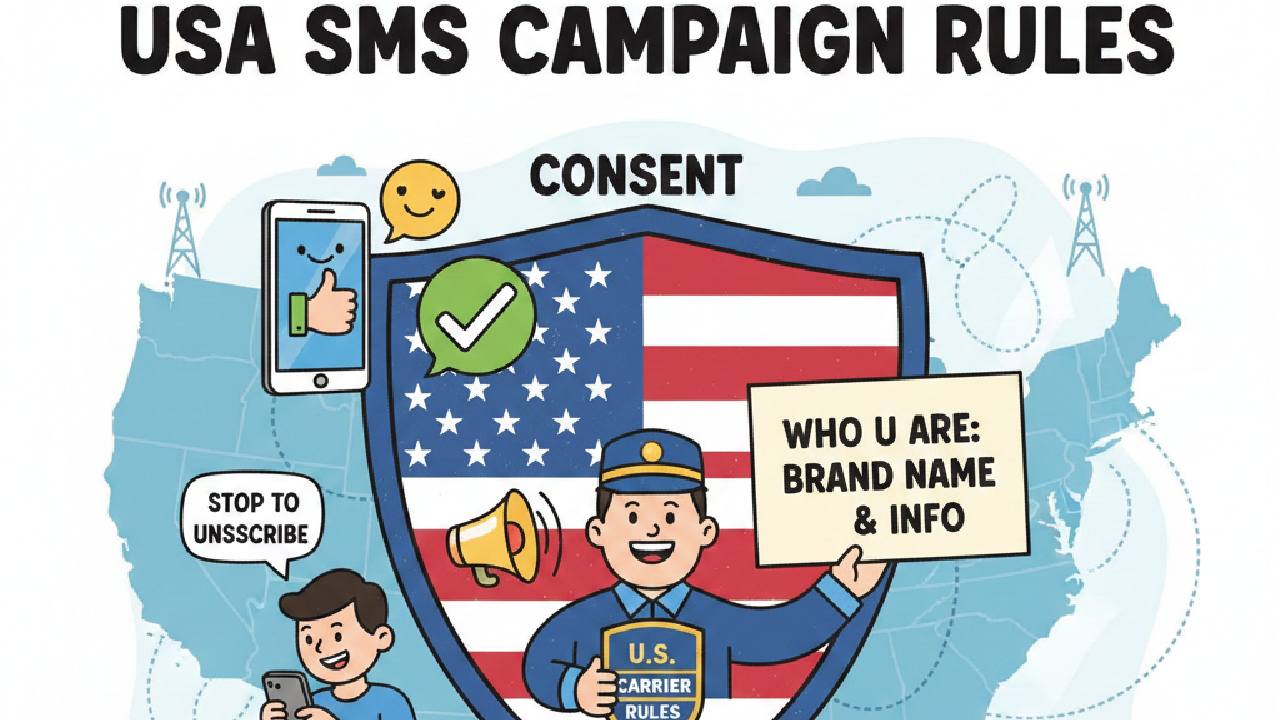
Black Friday pressure is not a reason to relax list controls. Recheck the audience immediately before sending, make the sender recognizable, and use a working opt-out or preference process appropriate to the destination market and message type. Build suppression into the send rule rather than treating it as cleanup after the event.
The details are jurisdiction-specific. In the UK, the ICO explains that PECR restricts unsolicited marketing by text and other electronic messages, and that requirements vary with the kind of subscriber and circumstances. In Australia, ACMA guidance says commercial messages need consent, sender identification/contact details, and an easy unsubscribe path. ICO guidance and ACMA guidance are useful starting points for those markets, not a universal compliance checklist.
For U.S. messaging operations, CTIA’s Messaging Principles and Best Practices are voluntary industry guidance, not law. They emphasize consumer consent and honoring opt-outs. Use the current CTIA principles alongside your legal, carrier, and provider requirements.
Before launch, confirm why each audience is eligible, how opt-out requests are handled, and when suppression takes effect across the remaining sends. Pause any audience whose permission or suppression status is unclear. For more on list fatigue, see why consumers opt out of SMS messages.
Prepare timing and delivery operations for a compressed event
Timing needs two plans: the moment the recipient sees the message and the operations behind the send. Map the reader-facing deadline in the recipient’s relevant time zone. Keep a buffer for offer checks, landing-page QA, approval changes, and a decision to pause. Do not turn “Black Friday” into a floating date label that masks a specific start or end time.
Before each release, use a small internal test group to validate the completed message. Check that variable fields have a safe fallback, recipient files contain the intended records, and the destination works on a mobile device. If you are sending across markets, write down the countries, sender requirements, message class, expected volume, and route considerations before the event. That record also makes a later routing conversation more useful; SMS routing planning is a relevant companion resource.
Have a pause path. If the offer is changed, stock is withdrawn, a landing page fails, a permission issue is found, or replies reveal confusion, the campaign owner should be able to stop the next batch and update the source of truth. Urgency should never prevent correction.
Monitor the send without confusing delivery with revenue
During the campaign, a sending platform can help the team see whether a task is progressing and whether records are succeeding or failing. SMSBoosting’s documented task workflow supports bulk tasks, variable message content, imported recipient files, application-route selection, and monitoring of total, success, and fail counts. That visibility is useful for an operational decision such as whether to investigate a task before the next planned send.
It is not proof of campaign success. A successful send does not show that an offer was understood, a link worked, a purchase occurred, or the campaign caused revenue. Keep task execution and business measurement separate.
Keep a compact campaign record with:
- the message version, audience, exclusions, market, and send time;
- the offer, destination URL, and reason to pause;
- task progress, success count, and fail count; and
- opt-outs, complaints, and the business outcome measured in your other systems.
Do not claim click or conversion measurement that your sending system does not provide. Use your own web analytics, ecommerce records, codes, or other documented method, and keep its attribution rules beside the result.
Review the campaign before planning the next peak event
After the final eligible send, compare messages that had comparable audiences and offer conditions. Start with operational questions: Which messages were paused? Which link or offer conditions changed? Were any audiences overincluded? Did opt-outs or complaints cluster around a particular send, audience rule, or claim?
Then review commercial outcomes under a fixed definition. A purchase count, tracked code use, and attributed revenue are different measures. If you use attribution, record the conversion event, lookback window, cost boundary, and reporting cutoff before comparing Black Friday with another campaign. A shorter message or a larger discount does not, by itself, explain a result.
End the review with three decisions for the next promotion:
- Keep: the messages and audience rules that were useful and operationally reliable.
- Change: the conditions, exclusions, landing experience, or sending process that caused confusion or avoidable work.
- Stop: any repeat message type that added little new value or generated negative list signals.
This closes the loop. The aim is not maximum message volume during a five-day period; it is a repeatable way to earn attention when the next relevant offer arrives.
Frequently asked questions
How many Black Friday SMS messages should a brand send?
There is no defensible universal number. Set a campaign ceiling, then let each additional message earn its place through a material change, a relevant eligible audience, and a verified reason to act. If it is simply a repeat, do not send it.
Should one Black Friday text go to the entire subscriber list?
Only if every selected subscriber is eligible, the offer is relevant enough for that broad group, and the campaign’s permission and suppression rules allow it. In most programs, exclusions matter as much as inclusions: recent purchasers, opted-out recipients, and people outside the offer’s market or scope may need to be left out.
Can a delivery report show whether Black Friday SMS marketing worked?
No. Delivery or task status is an operational signal. Evaluate business performance separately with a documented outcome definition and measurement method. Keep attribution assumptions visible so a later comparison means something.
Bring a complete Black Friday plan to SMSBoosting
If you need a sending workflow for a Black Friday campaign, bring us your target countries, approved recipient file, variable fields, expected volume, sender requirements, and monitoring needs. We can help you define the bulk task, recipient import, dynamic content, route selection, and task-status setup for the campaign. Contact SMSBoosting to discuss the scope.



