
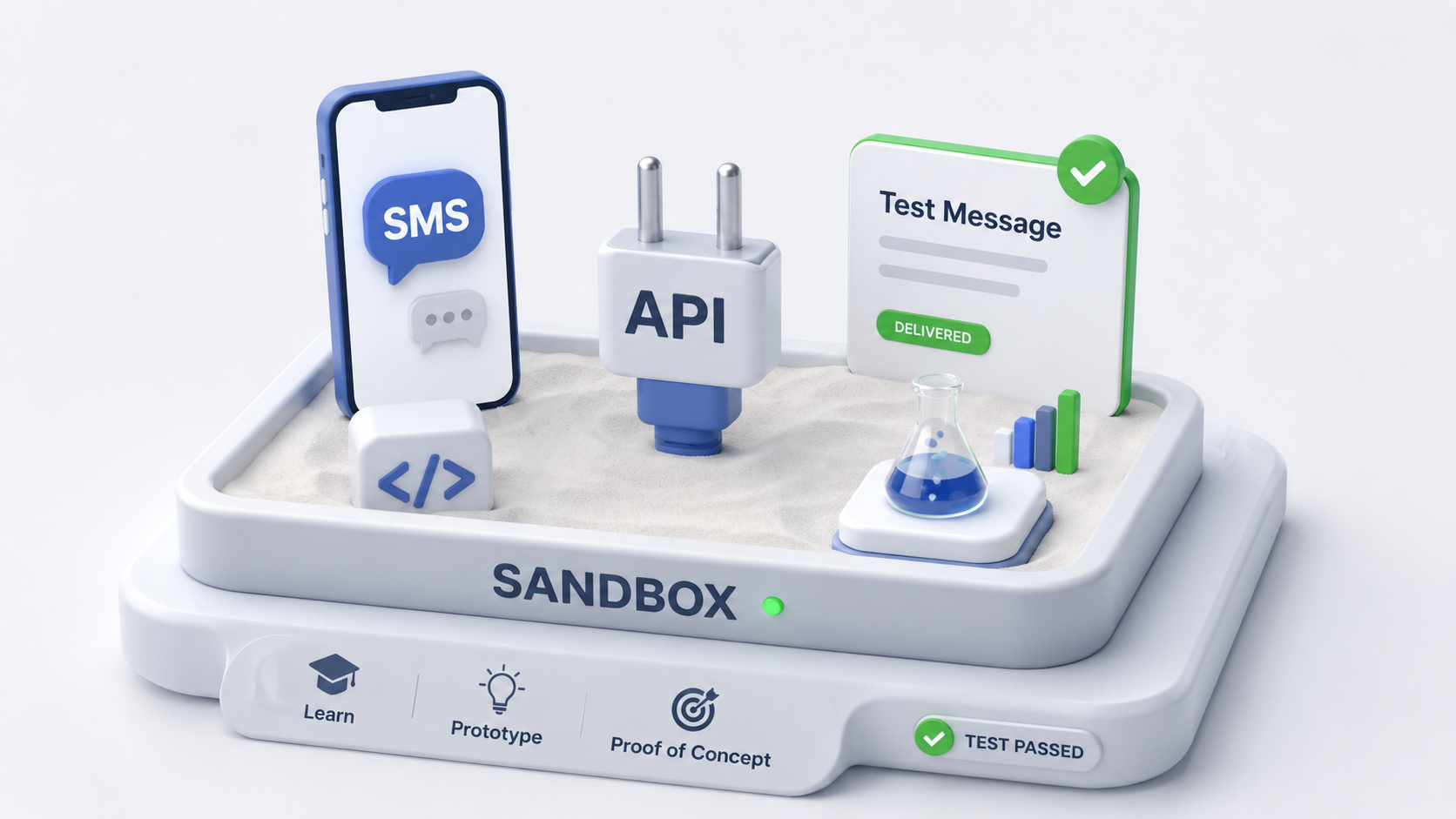
A free SMS gateway can be useful when you want to test SMS sending, learn how an SMS API works, or build a small proof of concept before paying for a full messaging setup. It gives developers and business teams a way to experiment with message delivery without committing to a long-term provider from day one.
But “free” has limits. Once SMS becomes part of customer communication, marketing campaigns, transactional alerts, or OTP verification, the real question is no longer just whether you can send a message for free. The better question is whether your gateway can support reliable delivery, routing quality, sender identity, reporting, compliance, and support.
This guide explains the main free SMS gateway options you can try, where they work well, where they fall short, and when a paid SMS gateway becomes the better choice for business messaging.
What Is a Free SMS Gateway?
A free SMS gateway is a tool, API, software gateway, or workaround that lets you send SMS messages without paying a standard per-message commercial rate upfront. The term can mean different things depending on the context.
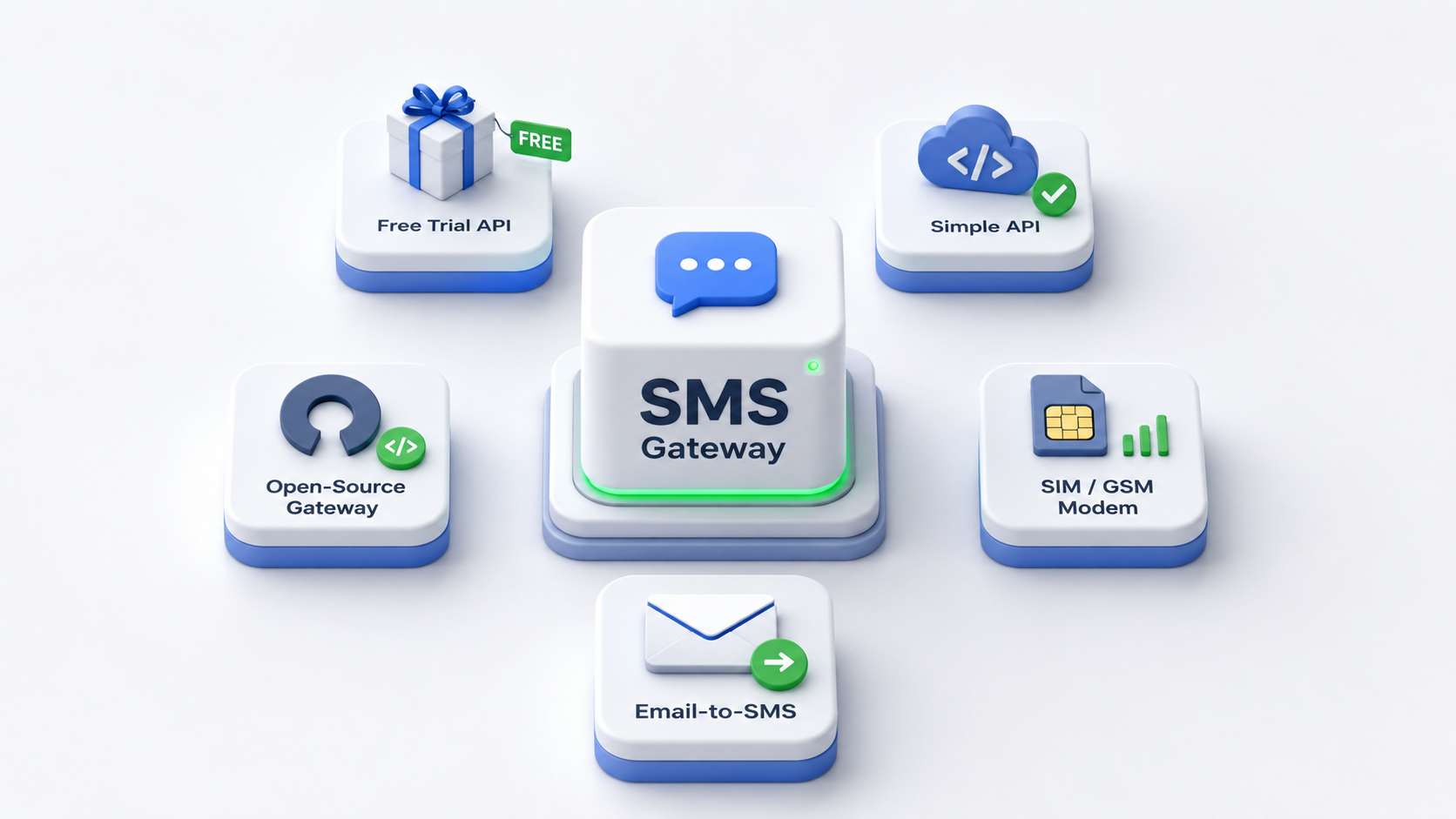
In practice, people usually mean one of five things:
- A free trial from an SMS API provider
- A simple SMS API with limited free testing
- An open-source SMS gateway
- A DIY SMS setup using a SIM card or GSM modem
- An email-to-SMS gateway provided by mobile carriers
These options are not the same. Some are useful for testing real SMS API workflows. Some are software tools that still require telecom connectivity. Some are temporary workarounds rather than reliable business infrastructure.
That distinction matters because many users search for a free SMS gateway expecting a free business messaging platform. In reality, free options can help you test, but they rarely replace a paid SMS gateway for production use.
When Does a Free SMS Gateway Make Sense?
A free SMS gateway makes sense when the risk is low, the volume is small, and the message is not business-critical.
It is usually a good fit for:
- Testing an SMS API before choosing a provider
- Building a proof of concept for a product or workflow
- Learning how SMS delivery, callbacks, and API responses work
- Sending very small internal notifications
- Comparing basic developer experience across tools
For example, a SaaS team might use a free trial SMS API to test whether its login flow can trigger an OTP message. A developer might use a simple SMS API to confirm that a backend service can send alerts. A technical team might install an open-source SMS gateway to understand how SMPP routing works.
These are valid use cases. The problem starts when the same setup is used for real customer communication at scale.
If missed messages can affect signups, payments, orders, account access, customer trust, or marketing revenue, a free gateway is usually not enough.
Best Free SMS Gateway Options to Try
There is no single “best” free SMS gateway for every business. The right option depends on what you are trying to test.
The safest way to evaluate free options is to group them by use case instead of treating them as equal alternatives.
1. Free Trial SMS API Platforms
Free trial SMS API platforms are usually the best option when you want to test a real commercial SMS workflow. They let you experience how an SMS API works, how sender numbers are configured, how delivery responses look, and how your application handles message sending.
This option is best for:
- Developers testing SMS API integration
- Product teams validating OTP or alert workflows
- Businesses comparing SMS providers before paying
- Small proof-of-concept projects
The main advantage is that you are testing within a real provider environment. You can usually explore API documentation, authentication, request formats, message logs, and delivery responses.
The limitation is that trial accounts are not designed for production traffic. They often restrict who you can send to, how many numbers you can use, which sender types are available, or how many messages you can send.
For business teams, this means a free trial is useful for validation, not for ongoing customer messaging. You can test whether the workflow works, but you should not treat the trial as your long-term SMS infrastructure.
2. Simple Free SMS API Tools
Simple free SMS API tools are useful when you want a quick way to send a test message from an application, script, or backend service. They are often easier to start with than full CPaaS platforms because they focus on a small set of basic API functions.
This option is best for:
- Quick developer testing
- Lightweight internal alerts
- Low-volume experiments
- Simple HTTP-based SMS workflows
The advantage is speed. A developer can often test a basic SMS request quickly without setting up a complex messaging account or campaign structure.
The limitation is depth. Simple free SMS APIs may not provide the routing controls, sender identity options, compliance support, analytics, delivery visibility, or support model needed for business messaging.
They may also have stricter rules around recurring messages, business identification, opt-out handling, URLs, or message content. That is not a weakness; it is a sign that SMS is a regulated and abuse-sensitive channel.
Use this type of gateway to test sending logic. Do not rely on it as the foundation for customer-facing campaigns, OTP delivery, or operational alerts. When testing starts to involve budget planning, this guide to SMS API pricing can help you understand why country, route, and volume change the real cost.
3. Open-Source SMS Gateways
Open-source SMS gateways are different from free SMS APIs. They usually give you gateway software, not free SMS delivery.
Tools such as Jasmin or Kannel can help technical teams build, configure, or study SMS gateway infrastructure. They may support protocols such as HTTP and SMPP, which are common in SMS routing and telecom integrations.
This option is best for:
- Technical teams with telecom knowledge
- Developers learning SMS gateway architecture
- Companies with existing SMSC or SMPP connectivity
- Internal infrastructure experiments
- Labs, testing environments, or controlled deployments
The advantage is flexibility. Open-source gateways can give teams more control over routing logic, configuration, protocol handling, and infrastructure design.
The limitation is that software is only one part of SMS delivery. To send messages reliably, you still need connectivity, carrier or aggregator relationships, sender setup, routing management, monitoring, compliance handling, queue management, failover logic, and ongoing maintenance.
Open-source can reduce software licensing cost, but it does not make business SMS delivery free.
For most marketing, e-commerce, SaaS, fintech, logistics, or platform teams, open-source SMS gateway software is too operationally heavy unless they already have strong telecom engineering resources.
4. DIY SMS Gateways with SIM or GSM Modems
A DIY SMS gateway usually means connecting a SIM card, phone, GSM modem, or modem bank to a system that sends SMS messages. This can look attractive because the hardware is relatively simple and the sending cost may appear low at first.
This option is best for:
- Very small internal notifications
- Local testing
- Non-critical alerts
- Technical experiments
- Learning how device-based SMS sending works
The advantage is control over a basic sending device. A small team may be able to send a few internal messages without integrating with a commercial SMS API.
The limitation is reliability and scale. SIM-based sending is not designed for modern A2P business messaging. Throughput is limited, routing is not optimized, monitoring is basic, and deliverability can be inconsistent. It may also create carrier policy issues if used for bulk or automated customer messaging.
DIY SMS gateways are especially risky for OTP, transactional alerts, or marketing campaigns because failure is hard to diagnose. When messages are delayed or blocked, the team may not have enough visibility to know whether the problem is the SIM, carrier filtering, device stability, content, destination network, or sending pattern.
This setup may work for a lab. It is not a good foundation for serious business SMS.
5. Email-to-SMS Gateway Options
Email-to-SMS gateways allow a message to be sent to a phone number through a carrier-specific email address format. This is one of the oldest “free SMS gateway” methods people still search for.
This option is best for:
- Temporary personal reminders
- Basic internal notifications
- Very small non-commercial tests
- Situations where the recipient carrier is known
The advantage is that it may not require an SMS API integration. In simple cases, an email system can trigger a text-like message.
The limitations are significant. You may need to know the recipient’s carrier. Formatting can be inconsistent. Delivery behavior can vary by network. Replies may not work as expected. There is usually little to no delivery reporting. It is also not a good fit for consent management, sender identity, branded communication, or scalable A2P messaging.
For business use, email-to-SMS is better treated as a temporary workaround than a real SMS gateway.
Free SMS Gateway Comparison Table
| Free SMS Gateway Option | Best For | Main Advantage | Main Limitation |
|---|---|---|---|
| Free trial SMS API platforms | API testing and proof of concept | Tests real SMS provider workflows | Trial restrictions usually prevent production use |
| Simple free SMS API tools | Quick developer testing | Easy to start and test | Limited routing, reporting, compliance, and support |
| Open-source SMS gateways | Technical teams and infrastructure labs | More control over gateway software | Connectivity, routing, compliance, and operations are still your responsibility |
| DIY SIM or GSM modem gateways | Local experiments and small internal alerts | Basic device-level control | Poor scalability, weak visibility, and reliability risks |
| Email-to-SMS gateways | Temporary reminders or simple tests | No full SMS API setup required | Inconsistent delivery and not suitable for business messaging |
This comparison shows why “free” needs context. A free SMS gateway may be useful, but each option solves a narrow problem.
If your goal is to test, learn, or prototype, free options are worth trying. If your goal is to communicate with real customers, the decision changes.
Why Free SMS Gateways Are Limited for Business Messaging
Free SMS gateways are limited because business messaging depends on more than the ability to send a message.
A business SMS setup needs to answer questions such as:
- Can messages reach users consistently across destination networks?
- Is the route stable enough for important campaigns or alerts?
- Can the sender identity be configured properly?
- Can the team see delivery status and failure patterns?
- Is there a clear opt-out process for marketing messages?
- Can traffic scale without triggering filtering or throttling?
- Is there support when delivery performance drops?
- Can the provider help evaluate routing, compliance, and cost?
Free options usually do not solve these questions well.
For marketing SMS, the risk is wasted spend and poor campaign performance. For transactional SMS, the risk is missed customer updates. For OTP and verification, the risk is failed login, user frustration, and lower conversion.
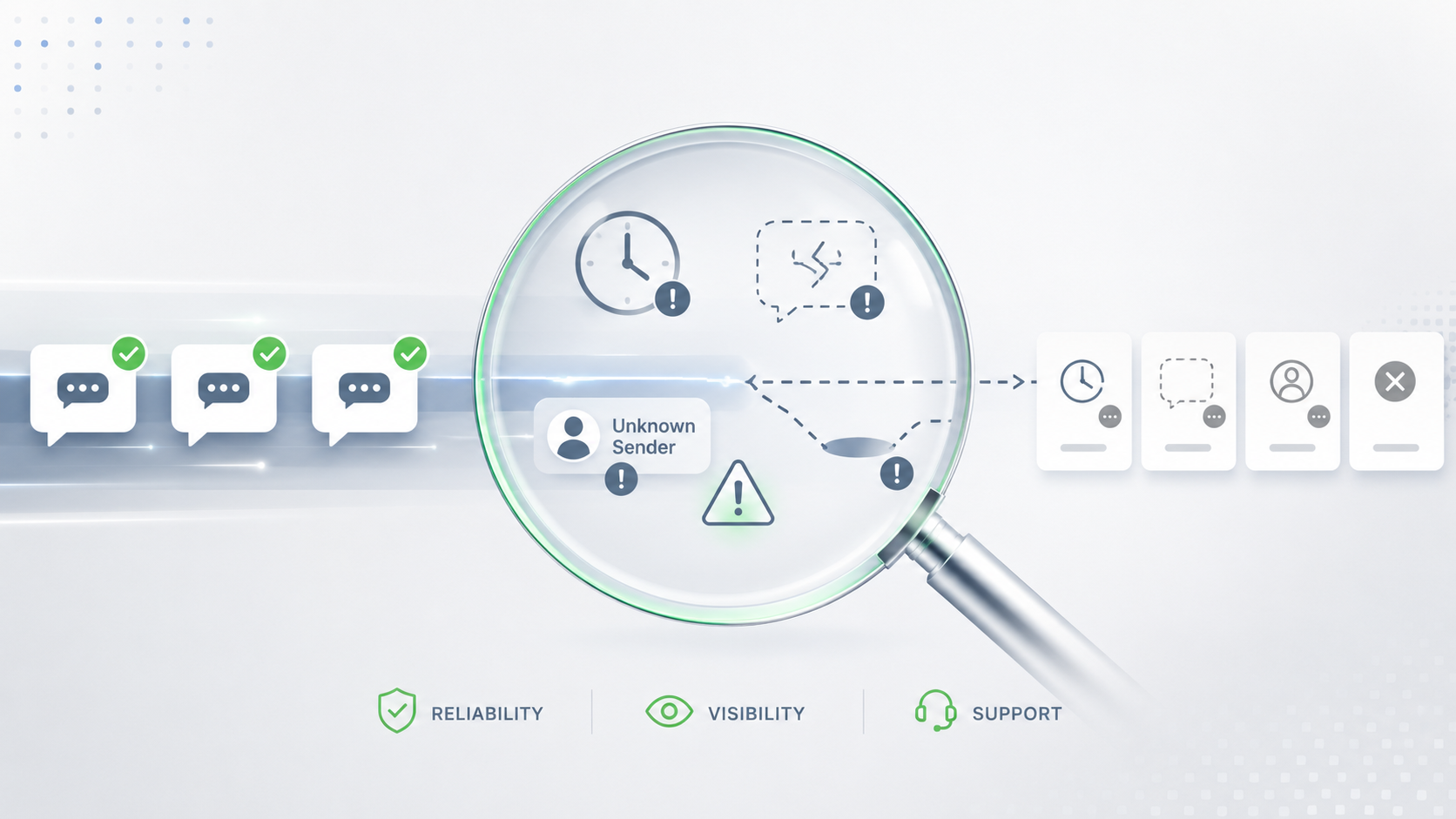
This is why a free gateway can be enough during testing but not enough when SMS becomes part of customer experience. Route quality is one practical reason. If you are comparing production setups, this guide to SMS routing explains how routes affect reach, stability, and delivery quality.
Free vs Paid SMS Gateway: Key Differences
The difference between a free and paid SMS gateway is not only price. The difference is operational responsibility.
With a free gateway, your team often has to accept limited visibility, limited control, limited support, and uncertain delivery behavior. With a paid SMS gateway, you are paying for infrastructure, routing, delivery management, reporting, compliance support, and provider accountability.
| Factor | Free SMS Gateway | Paid SMS Gateway |
|---|---|---|
| Best use case | Testing, learning, very small-volume sending | Business messaging and customer communication |
| Delivery reliability | Often limited or unpredictable | Managed through provider routing and monitoring |
| Routing quality | Basic or self-managed | Optimized across routes, regions, and use cases |
| Sender identity | Limited or unavailable | More options depending on market and message type |
| Reporting | Basic or missing | Delivery logs, status tracking, and performance visibility |
| Compliance support | Mostly self-managed | Stronger guidance around consent, opt-out, sender setup, and traffic rules |
| Scalability | Low | Built for larger and more consistent traffic |
| Support | Community, self-service, or limited | Provider support and escalation paths |
| Long-term fit | Risky for real customer messaging | Better for marketing, transactional, and OTP use cases |
For a business, this difference affects revenue, trust, and user experience. A delayed OTP can block a login. A failed order notification can create support tickets. A poorly delivered campaign can reduce ROI. A non-compliant marketing message can create avoidable risk.
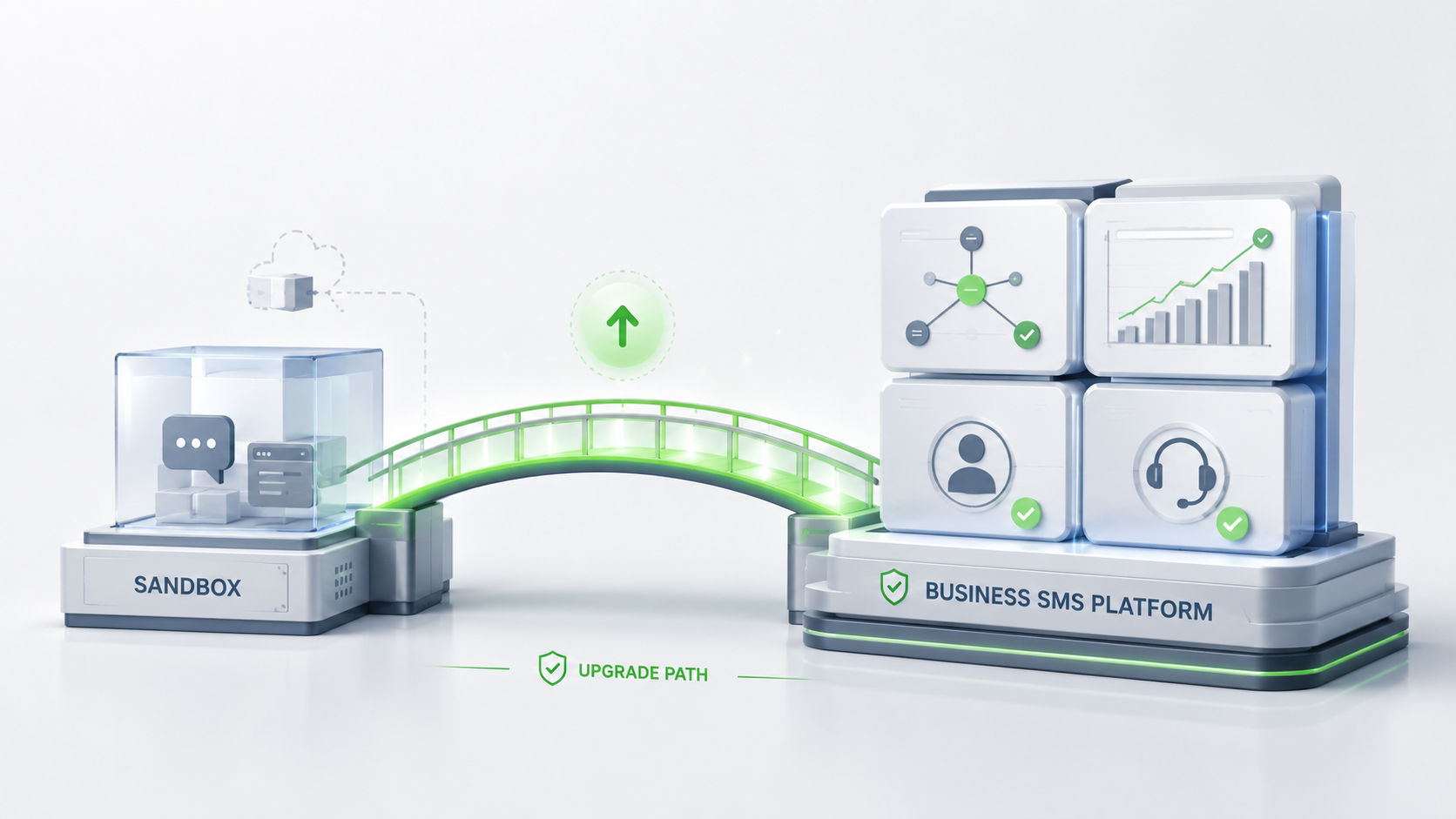
When Should You Move from a Free SMS Gateway to a Paid One?
You should move from a free SMS gateway to a paid SMS gateway when SMS becomes part of a real business workflow.
Common signs include:
- You are sending messages to real customers, not just test numbers
- You need OTP, verification, transactional alerts, or order updates
- You are planning marketing campaigns or customer retention messages
- You need to send across multiple regions or countries
- You need better delivery visibility
- You need sender identity, opt-out handling, or compliance support
- You need predictable performance during high-volume periods
- Message failure affects revenue, account access, support workload, or customer trust
The move does not have to happen immediately. It depends on risk.
If the message is low-volume and non-critical, testing with a free option may be reasonable. If the message affects account access, payments, delivery updates, marketing revenue, or customer trust, a paid gateway is usually the safer choice. This is especially true for verification flows, where OTP SMS delivery problems can directly affect signups, logins, and conversion.
A Better Long-Term Option for Business SMS
Free SMS gateways are useful for testing, but they are rarely enough for serious business messaging. Business teams usually need a setup that can support delivery performance, route quality, message visibility, and long-term cost control.
That is where a paid SMS gateway becomes more practical.
SMSBoosting is built for businesses that need A2P SMS delivery across markets, with a focus on routing quality, deliverability, cost-efficient messaging, and practical support for marketing, transactional, and OTP use cases.
This does not mean every team should skip free tools. If you are testing a workflow, start with a free SMS gateway option. But if you are preparing to send SMS to real customers, the better next step is to evaluate whether your current setup can handle business requirements.
A practical checklist:
- Can you track message status clearly?
- Can you identify why messages fail?
- Can your setup support the destination markets you need?
- Can it handle higher volume without unstable performance?
- Can it support consent, opt-out, and sender requirements?
- Can someone help when delivery performance changes?
- Can you control cost without sacrificing delivery quality?
If the answer is no, it may be time to move from free testing to a paid SMS gateway designed for business messaging.
Planning to move beyond free SMS testing?
If your team is preparing for marketing SMS, transactional alerts, OTP messages, or cross-border customer communication, SMSBoosting can help you review your A2P SMS setup and build a more reliable path from testing to scalable business messaging.
Talk to SMSBoostingFAQ
Can I use a free SMS gateway for business?
You can use a free SMS gateway to test business workflows, but it is usually not a good choice for ongoing customer communication. Business SMS often needs reliable delivery, sender identity, reporting, compliance handling, and support. Free options usually have limits in one or more of these areas.
Are free SMS gateways reliable?
Free SMS gateways can be reliable enough for testing or very small internal use, but they are not usually reliable enough for production business messaging. Reliability depends on the gateway type, destination network, sending volume, message content, sender setup, and route quality.
What is the best free SMS gateway for testing?
For most teams, a free trial SMS API is the best starting point because it lets you test a real provider workflow. If you are a developer testing a simple request, a lightweight SMS API may be faster. If you are studying telecom infrastructure, an open-source SMS gateway may be more useful.
Is an open-source SMS gateway really free?
Open-source SMS gateway software may be free to use, but SMS delivery itself is not free. You still need telecom connectivity, routing, sender setup, monitoring, hosting, maintenance, compliance handling, and operational support. Open-source reduces one cost area, but it does not remove the full cost of business SMS.
When is a paid SMS gateway worth it?
A paid SMS gateway is worth it when messages affect real customers or business outcomes. This includes OTP messages, account alerts, order updates, marketing campaigns, appointment reminders, payment notifications, customer retention messages, and cross-border SMS programs. The more important delivery performance becomes, the more a paid gateway makes sense.
Conclusion
Free SMS gateway options are useful when you want to test, learn, or build a small proof of concept. Free trial APIs, simple SMS tools, open-source gateways, DIY modem setups, and email-to-SMS methods can all help in different testing scenarios.
But free options have clear limits. They are not built to solve the full business messaging problem: routing quality, delivery reliability, sender identity, reporting, compliance, support, and scalability.
For testing, try a free SMS gateway. For customer-facing SMS, evaluate a paid SMS gateway that is built for business use.
If your team is planning marketing SMS, transactional alerts, OTP messages, or cross-border customer communication, SMSBoosting can help you review your A2P SMS setup and build a more reliable path from testing to scalable business messaging.