
SMS deliverability is the practical ability of an A2P business message to reach the intended recipient under real routing, filtering, sender identity, content, and destination conditions. It is broader than a delivery report and different from delivery speed because reports show status visibility, while speed describes timing.
For growth, CRM, product, and technical operations teams, this distinction matters. A message can be accepted by an API, move through a queue, receive a status update, and still fail to create the business outcome the team expected. The OTP may not be completed. The service notification may not be seen in time. The campaign may never reach enough real users to prove whether the offer worked.
That is why SMS deliverability should be understood as a delivery-path judgment, not a single report status. Teams need to separate what was reported, how fast the message moved, and what conditions shaped whether the message could actually reach the user.

What SMS Deliverability Means in A2P Business Messaging
SMS deliverability means the practical ability of an application-to-person business message to reach the intended recipient through the real messaging ecosystem. In business messaging, the message path is shaped by the sending platform, routing partners, mobile networks, filtering systems, sender identity rules, message content, and destination-specific requirements.
An SMS Deliverability Definition for Business Messages
A useful SMS deliverability definition needs to go beyond “the message was sent.” For business messaging, deliverability means whether the message can pass through the delivery path and arrive in a usable way for the recipient.
That delivery path includes several checkpoints:
| Layer | What it means for SMS deliverability |
|---|---|
| Platform acceptance | The message request is accepted by the SMS platform or API. |
| Routing | The message is passed through a route toward the destination carrier or network. |
| Filtering | The message is evaluated for spam, abuse, registration, sender identity, or content risk. |
| Carrier and destination handling | The destination network processes the message based on local rules and technical conditions. |
| User-side outcome | The message reaches the recipient’s device or messaging inbox in a way that can support the intended action. |
This is why a business should not treat one technical event as the whole picture. SMS deliverability is not only about whether a message was submitted. It is about whether the full path supports reliable reach.
Where A2P SMS Deliverability Starts and Ends
A2P SMS deliverability starts when a business system sends a message through an SMS platform, API, campaign tool, or workflow. It ends only after the team has enough visibility to understand whether the message reached the user, failed, expired, was filtered, or needs investigation.
This article focuses on A2P business messaging: OTPs, service notifications, transactional updates, and marketing campaigns. It does not cover person-to-person texting, provider rankings, country-by-country rules, or a full engineering guide for SMS infrastructure.
The goal is simpler: give business and operations teams a shared way to understand what affects SMS deliverability before they move into deeper support topics.
Why SMS Deliverability Is Not the Same as a Delivery Report or Delivery Speed
SMS deliverability is broader than a delivery report or delivery speed because reports show status visibility and speed shows timing, while deliverability describes practical reach. This is the most common misunderstanding in SMS performance discussions.
A delivery report helps you see what happened to a message. Delivery speed helps you understand how long a message took to move through part of the path. Neither one, by itself, explains the full set of conditions that shaped whether the message could reliably reach users.
The Delivery Report Boundary: Status Visibility, Not Full Deliverability
A delivery report, delivery receipt, or message status update gives visibility into a message event. It can tell you that a message was queued, sent, delivered, undelivered, failed, or expired, depending on the platform and carrier data available.
That visibility is valuable. Twilio’s Message Resource, for example, defines message statuses such as failed, delivered, undelivered, sent, queued, and accepted. Its delivered status means Twilio has received confirmation of outbound message delivery from the upstream carrier and, where available, the destination handset [1].
But status visibility is not the same as the whole deliverability picture. Vonage makes this boundary especially clear: a successful SMS API request means the message was successfully queued for sending, not that it reached the recipient. Vonage also notes that a delivery receipt is usually a reliable indicator, but not an absolute guarantee, because DLR accuracy can depend on the countries and providers involved [2].
That is the boundary. Delivery reports are necessary for monitoring. They are not a complete explanation of deliverability.

The Delivery Speed Boundary: Timing, Not Reliable Reach
Delivery speed describes timing. It helps teams understand how quickly a message moved through a specific part of the delivery path.
Speed matters, especially for OTPs, fraud alerts, appointment reminders, and service notifications. A verification code that arrives five minutes late may be technically delivered but commercially useless. Still, speed is not the same as deliverability.
AWS SNS delivery logging is a useful example. Its CloudWatch delivery logs can include success or failure status, failure reason, message dwell time, price, and other delivery information [3]. That helps teams observe timing and delivery events. At the same time, AWS End User Messaging SMS documentation warns that carrier-generated events or delivery receipts can take up to 72 hours to be received and should not be used to determine whether there is a delay in outbound message delivery [4].
So timing data is useful, but it must be interpreted carefully. Fast movement through one stage does not prove strong deliverability. A delayed event does not always mean the original message was delayed. The team needs both timing visibility and delivery-path context.
Why SMS Deliverability Matters for OTP, Notifications, and Campaigns
SMS deliverability matters because OTPs, notifications, and campaigns lose business value when messages are filtered, delayed, or never reach the user. The same delivery problem can look different depending on the use case.
OTP SMS: Verification Depends on More Than API Acceptance
OTP SMS depends on reliable reach within a short user action window. If the message is accepted by the API but delayed, filtered, or blocked downstream, the user may abandon login, registration, payment, or account recovery.
For OTP, the problem is not only “was the message eventually delivered?” The real question is whether it reached the user while the user was still trying to complete the action. A weak delivery path can turn an authentication step into a conversion blocker.
This is also where teams often overtrust the first successful technical signal. API acceptance is not enough. The workflow should still monitor the message path, delivery status, failures, latency patterns, and destination-specific issues.
Notification SMS: Operational Messages Need Reliable Reach
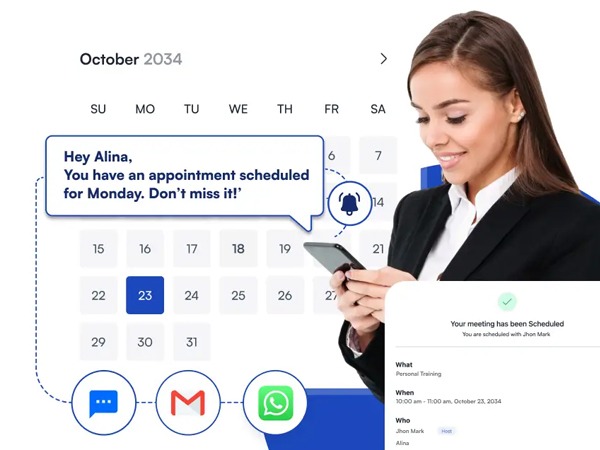
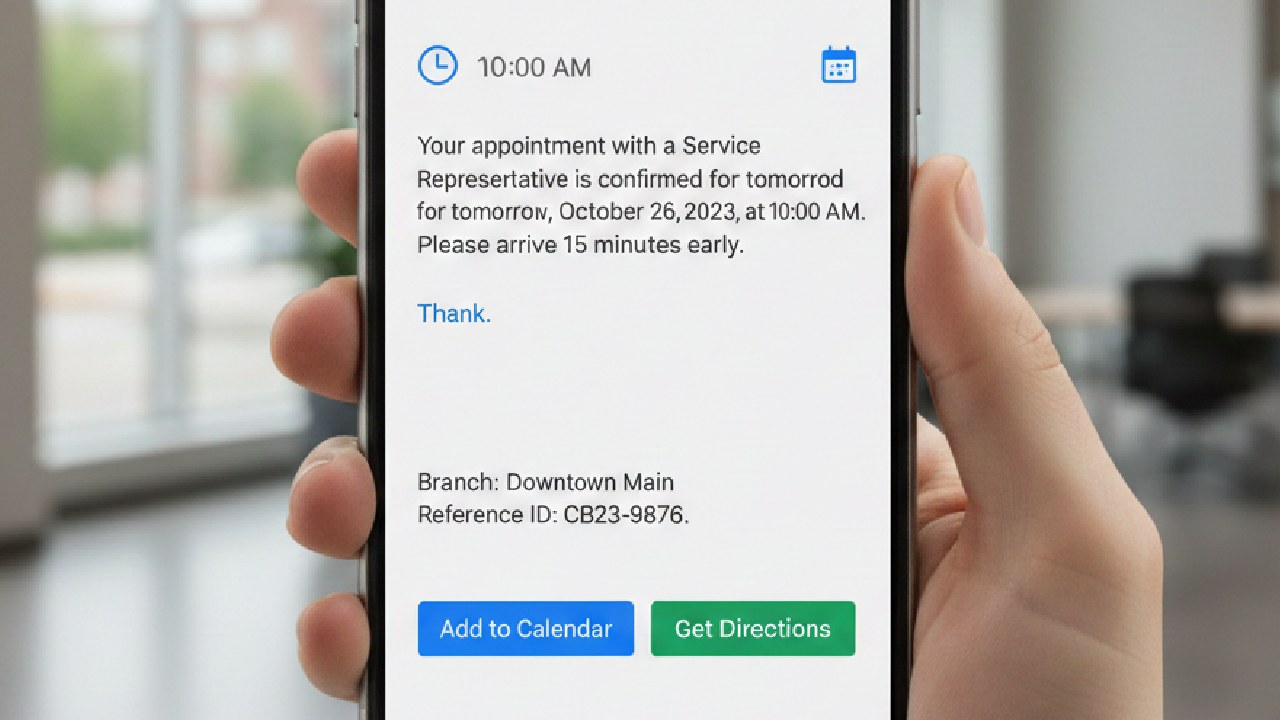
Notification SMS is usually tied to service expectations. Order updates, delivery alerts, appointment reminders, payment notices, and security alerts all depend on users receiving the message at the right moment.
If notification deliverability is unstable, support tickets increase and customer trust weakens. A shipping update that does not arrive can create confusion. A payment reminder that arrives too late can cause missed deadlines. A service alert that is filtered can make the business look unreliable, even when the internal system worked correctly.
Notification SMS does not need the same emotional framing as marketing. It needs operational dependability.
Marketing SMS Campaigns: Reach Affects Response Before Copy Does
Marketing teams often look first at offer, copy, segmentation, and timing. Those are important, but campaign performance begins earlier. If the message does not reliably reach the target audience, the campaign cannot generate accurate response data.
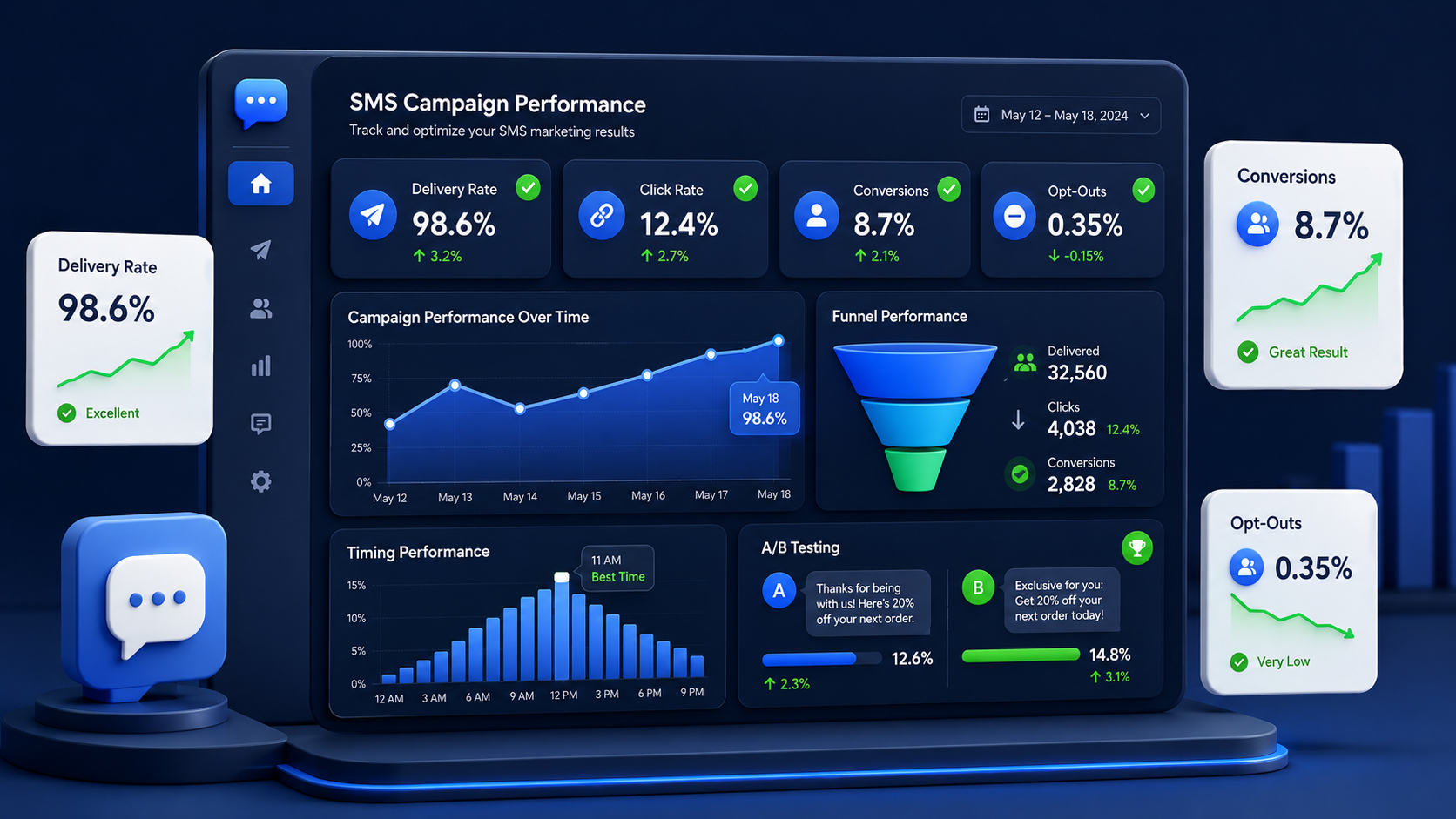
Poor SMS deliverability can make good copy look weak. It can make a strong offer appear ineffective. It can also distort A/B tests because the team may compare message variations without realizing that routing, filtering, sender identity, or destination conditions changed underneath the delivery path.
Before optimizing campaign language, teams should make sure they are not measuring a delivery problem as a creative problem.
What Affects SMS Deliverability Across Routing, Filtering, Sender Identity, Content, and Destination Conditions
SMS deliverability is affected by five main areas: routing quality, filtering rules, sender identity, message content, and destination conditions. These factors work together. A message can have good content but weak routing. It can use a trusted sender but still face destination-specific registration rules. It can receive a delivery receipt but still leave the team unsure about the full delivery path.
| Factor | How it affects SMS deliverability |
|---|---|
| Routing quality | Determines how the message moves through networks and intermediaries. |
| Filtering rules | Determines whether the message is blocked, delayed, or treated as suspicious. |
| Sender identity | Signals whether the sender is recognizable, registered, and trusted. |
| Message content | Influences spam risk, classification, link handling, and user complaints. |
| Destination conditions | Changes outcomes by market, carrier, local rule, registration requirement, and network behavior. |
Routing Quality: The Path Behind A2P SMS Deliverability
Routing quality affects how reliably an A2P SMS message moves from the sending platform to the destination network. For cross-border or high-volume messaging, routing is rarely a simple one-step path. It can involve aggregators, carrier connections, fallback decisions, and destination-specific handling.
A good route is not only a route that exists. It is a route that performs consistently for the use case, destination, and message type. OTP, notification, and marketing traffic may face different expectations and filtering behavior.
Routing also affects visibility. If the route produces incomplete, delayed, or unreliable delivery feedback, the team may struggle to diagnose what happened. This is why route quality and reporting quality should be reviewed together.
Filtering Rules: Why Business Messages Can Be Blocked or Delayed
Filtering rules are designed to reduce spam, abuse, fraud, and unwanted messaging. For legitimate businesses, the challenge is that filtering systems may evaluate sender identity, traffic pattern, consent signals, content, URLs, complaint history, and registration status.
This is where compliance and deliverability overlap, without becoming the same topic. The CTIA Messaging Principles and Best Practices identify parameters for the exchange of consumer and non-consumer messages and emphasize practices such as honoring opt-in and opt-out records [5]. Twilio’s A2P 10DLC documentation also states that registration results in lower message filtering and higher messaging throughput for relevant U.S. 10DLC traffic [6].
The practical point is straightforward: filtering is not random from the sender’s perspective. It is often tied to trust signals, registration, consent, message behavior, and local messaging rules.
Sender Identity: How Trust Signals Shape Message Treatment
Sender identity affects how networks and users interpret a message. A clear sender identity helps show who is sending the message and why the recipient is receiving it.
In A2P messaging, sender identity can involve sender ID, long code, toll-free number, short code, 10DLC number, brand registration, campaign registration, or other local sender requirements. The exact mechanism depends on the destination and message type.
Bandwidth’s messaging compliance best practices summarize the operational logic well: collecting consent, identifying message senders, disclosing frequency, stating opt-out instructions, and registering traffic can help increase deliverability while reducing consent audits and spam complaints [7].
Sender identity is therefore not just a branding issue. It is part of how business messaging becomes recognizable and less likely to be treated as suspicious traffic.
Message Content: How Links, Claims, and Formatting Raise Risk
Message content can influence deliverability because filters and users both react to what the message contains. Risk can increase when a message uses suspicious links, unclear sender names, aggressive claims, misleading language, unusual formatting, or content that does not match the registered use case.
This does not mean teams should turn every SMS into a compliance checklist. It means content should match the purpose of the message.
An OTP should be clear and limited. A notification should identify the service context. A marketing campaign should make the sender and opt-out path clear. A message with a link should make the destination feel expected rather than surprising.
Content alone does not determine deliverability, but it can amplify or reduce risk when combined with sender identity, filtering rules, and user complaints.
Destination Conditions: Why Markets, Carriers, and Registration Rules Change Outcomes
Destination conditions explain why the same message may perform differently across countries, carriers, or number types. Local requirements may affect sender registration, allowed content, template expectations, throughput, quiet hours, opt-out handling, or filtering behavior.
Even delivery feedback can vary by destination. Vonage notes that DLR accuracy depends partly on the countries and providers involved [2]. AWS also highlights that carrier-generated delivery events can take up to 72 hours, which means teams should avoid using those events alone to judge outbound delay [4].
For global A2P messaging, this is a critical point. Deliverability is not a universal constant. It is a moving result shaped by the destination environment.

SMS Deliverability Topic Map: Where to Go Next
SMS deliverability is the starting point for understanding whether an A2P message can reliably reach the recipient. After that, the next topic depends on the problem your team is trying to diagnose.
| If you are trying to understand… | Read next |
|---|---|
| What SMS deliverability means and what affects it | SMS deliverability guide |
| How to improve SMS deliverability in practice | how to improve SMS deliverability |
| Why messages are blocked, delayed, or filtered | SMS filtering guide |
| Why messages arrive too late for the use case | SMS delivery speed guide |
| Why API success does not prove delivery | transactional SMS API workflow guide |
| How routing, pacing, sender identity, and reporting fit into SMS operations | SMS platform vs SMS API guide |
This structure keeps the SMS deliverability page as the pillar, while each supporting article handles a narrower diagnostic, operational, or action-focused topic.
How to Diagnose the Right SMS Deliverability Support Topic Before Optimizing
Before optimizing SMS deliverability, teams should identify whether the issue is mainly about status visibility, timing, filtering, routing, sender trust, or destination rules. This keeps a Pillar-level question from turning into scattered troubleshooting.
Use the first symptom to decide which deeper topic to read next:
| If the main symptom is… | Read next about… |
|---|---|
| The team cannot tell what happened after sending | Delivery reports, DLRs, callbacks, and message status |
| Messages arrive, but too late for the use case | Delivery speed, latency, queueing, and dwell time |
| Messages are blocked, flagged, or inconsistent | SMS filtering and carrier policy behavior |
| Performance changes by country, route, or volume | SMS routing and destination-level variability |
| Sender looks unclear or untrusted | Sender identity, registration, and compliance basics |
| Campaign data looks wrong before copy is tested | Delivery path monitoring and campaign reach quality |
If your team needs practical fixes rather than a definition, the next step is our guide on how to improve SMS deliverability. This page explains the broader concept first, while the improvement guide focuses on the actions teams can take after they already understand the problem.
Read About Delivery Reports When the Status Trail Is Unclear
Read about delivery reports when the team cannot explain what happened after the message was sent. This topic should cover message status, DLRs, webhooks, callbacks, logs, and reporting gaps.
The goal is not to prove that every status is perfect. The goal is to understand what each status can and cannot tell you.
Read About Delivery Speed When Timing Is the Main Issue
Read about delivery speed when messages eventually arrive but miss the action window. This is especially important for OTPs, payment reminders, appointment messages, and urgent notifications.
The key question is not only whether the message arrived. It is whether the message arrived soon enough to support the user action.
Read About SMS Filtering When Messages Are Blocked or Rewritten
Read about SMS filtering when messages are blocked, delayed, rewritten, or treated inconsistently. Filtering topics should explain spam controls, sender trust, consent, content risk, registration, and complaint signals.
This article only introduces filtering. A full filtering guide should go deeper into how filters work and what teams can do without guessing.
Read About SMS Routing When Performance Varies by Route or Market
Read about SMS routing when performance changes by country, carrier, traffic type, or volume. Routing topics should explain route quality, direct and indirect routes, fallback behavior, visibility, and destination-level variation.
This matters most for cross-border messaging and high-volume A2P use cases.
Read About Sender Identity or Compliance When Trust Signals Are Weak
Read about sender identity or compliance when messages appear unrecognized, unregistered, or misaligned with local expectations. This does not mean every deliverability issue is a compliance issue. But weak trust signals can increase filtering risk and reduce consistency.
Sender identity is often where business, legal, and technical teams need to align before scaling traffic.

FAQ About SMS Deliverability
What Is a Good SMS Deliverability Rate?
A good SMS deliverability rate depends on the use case, destination, traffic type, and how the rate is measured. An OTP program, a marketing campaign, and a service notification workflow should not always be judged by the same benchmark. Teams should define whether they are measuring accepted, sent, delivered, failed, expired, or user-completed outcomes. For example, an OTP flow should look beyond delivered status and also track verification completion within the expected time window.
Can a Message Be Delivered but Still Have Poor Deliverability?
Yes, a message can be marked delivered while the broader deliverability picture is still weak. A delivered status may show that a carrier or handset confirmation was received, but it does not explain whether the route is stable, whether similar messages are filtered in another market, or whether delivery timing supports the use case. For example, an OTP delivered after the user abandons login is still a business failure. That is why teams should review status, timing, use case, and destination conditions together.
How Does SMS Filtering Affect Deliverability?
SMS filtering affects deliverability by blocking, delaying, or flagging messages that appear risky, unwanted, unregistered, misleading, or inconsistent with expected traffic behavior. Filters may consider sender identity, consent signals, traffic pattern, message content, URLs, and complaints. For example, a promotional message with an unclear sender and suspicious link can face more risk than a clear order notification sent from a recognized sender. Filtering should be treated as a trust and traffic-quality issue, not only a content issue.
Does Sender ID Improve SMS Deliverability?
Sender ID can improve SMS deliverability when it helps carriers and users recognize the sender and when it aligns with local registration or sender identity requirements. It is not a universal fix. In some destinations, sender identity rules are strict; in others, the available sender types differ. For example, a registered sender or approved traffic path may reduce filtering risk in one market, while another destination may require a different number type or registration process.
How Should Businesses Improve SMS Deliverability?
Businesses should improve SMS deliverability by diagnosing the delivery path before changing random tactics. Start by separating report visibility, timing, filtering, routing, sender identity, content, and destination conditions. Then match the issue to the right next step: review delivery reports if status visibility is unclear, review speed if timing is the problem, review filtering if messages are blocked, and review routing if performance changes by market. For OTP, notifications, and marketing campaigns, the best starting point is usually a delivery-path review rather than a copy rewrite.
When to Review Your SMS Delivery Path for OTP, Notifications, and Campaigns
Teams should review their SMS delivery path when OTP, notification, or campaign performance changes in ways that reports alone cannot explain. If the problem appears across multiple use cases, the issue is probably not only copy, timing, or one campaign setup.
Match the Delivery Issue to the Right Next Step
Match the next step to the clearest symptom.
If the team cannot see what happened after sending, start with delivery reports and callbacks. If messages arrive too late, review delivery speed and dwell time. If messages are blocked or inconsistent, review filtering and trust signals. If results vary by country or carrier, review routing and destination conditions.
That order prevents wasted effort. It keeps teams from rewriting templates when the real issue is routing, or changing providers when the real issue is sender registration.
Use Product Pages Only When the Use Case Is Clear
Product pages are most useful after the team knows the use case. OTP SMS, notification SMS, and marketing SMS do not need the same delivery path, timing expectation, or monitoring priority.
If your team is still defining the problem, use this guide as the starting point for understanding SMS deliverability. If your team already knows the issue and needs practical fixes, continue with the guide on how to improve SMS deliverability.
For teams reviewing A2P SMS performance across OTP, service notifications, or marketing campaigns, SMSBoosting can support the next step from an SMS-first perspective: routing quality, delivery performance, and practical A2P messaging fit before platform breadth.
References
[1] Twilio — Messages Resource — API Documentation
[2] Vonage — SMS Delivery Receipts API Guide — Developer Documentation
[3] AWS — Amazon SNS SMS Delivery Monitoring with CloudWatch Logs — Documentation
[4] AWS — Event Destinations in AWS End User Messaging SMS — Documentation
[5] CTIA — Messaging Principles and Best Practices — Industry Guidelines
[6] Twilio — Programmable Messaging and A2P 10DLC — Compliance Documentation
[7] Bandwidth — Messaging Compliance Best Practices — Support Documentation