
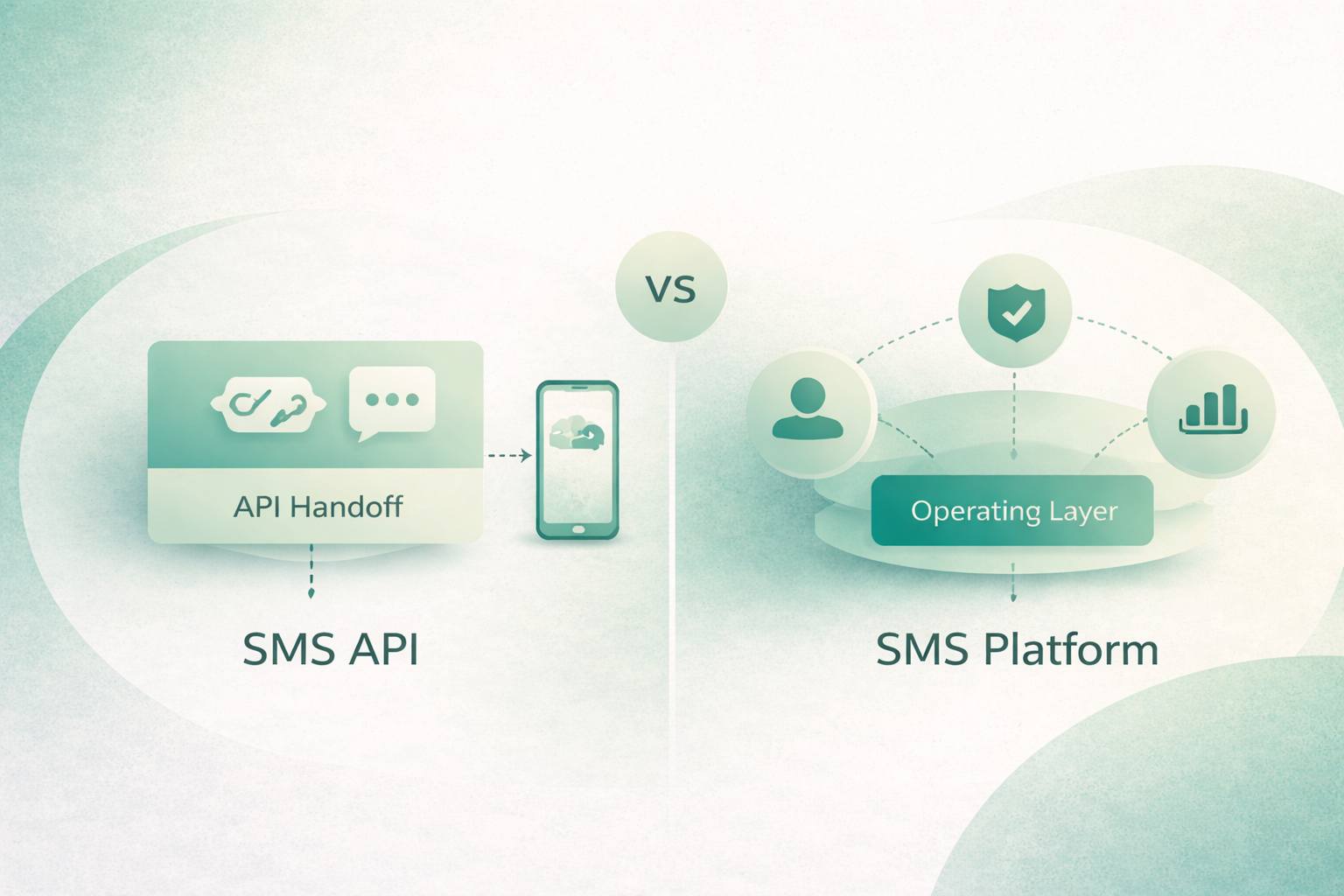
An SMS platform is not “just an API.” It is the operating layer around sending: the part that helps you manage sender identity, compliance hygiene, routing choices, pacing controls, and reporting so business texting stays more predictable as volume, destinations, and risk all increase.
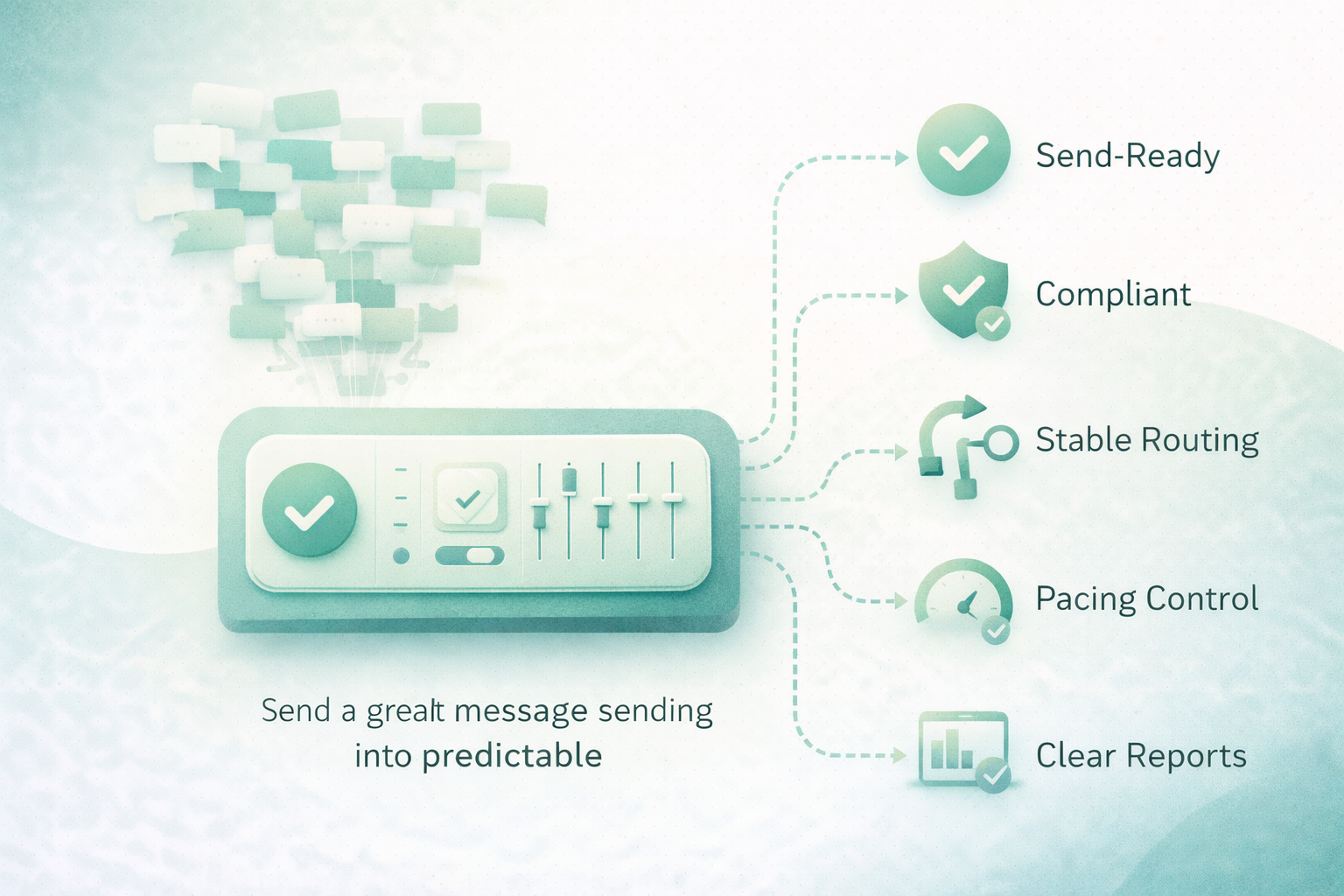
If you remember one shortcut from this guide, make it this: 3 checkpoints + 5 levers. That is the difference between an API that simply accepts requests and a system you can actually operate.
This matters because A2P messaging is a major business channel, and the operational requirements around business texting vary by market and continue to evolve. If you want a simpler reset first, start with what an SMS platform is.
Why Does a “200 OK” From an SMS API Not Mean SMS Delivery?
An API success response usually means your provider accepted the request for processing. It does not automatically mean a carrier accepted the message, and it does not prove that a handset received it.
Real outcomes can still change after submission because SMS moves through multiple checkpoints, and only the first one is fully visible from your application side.
So when someone says “our API works,” the next question should be: which checkpoint are we talking about?
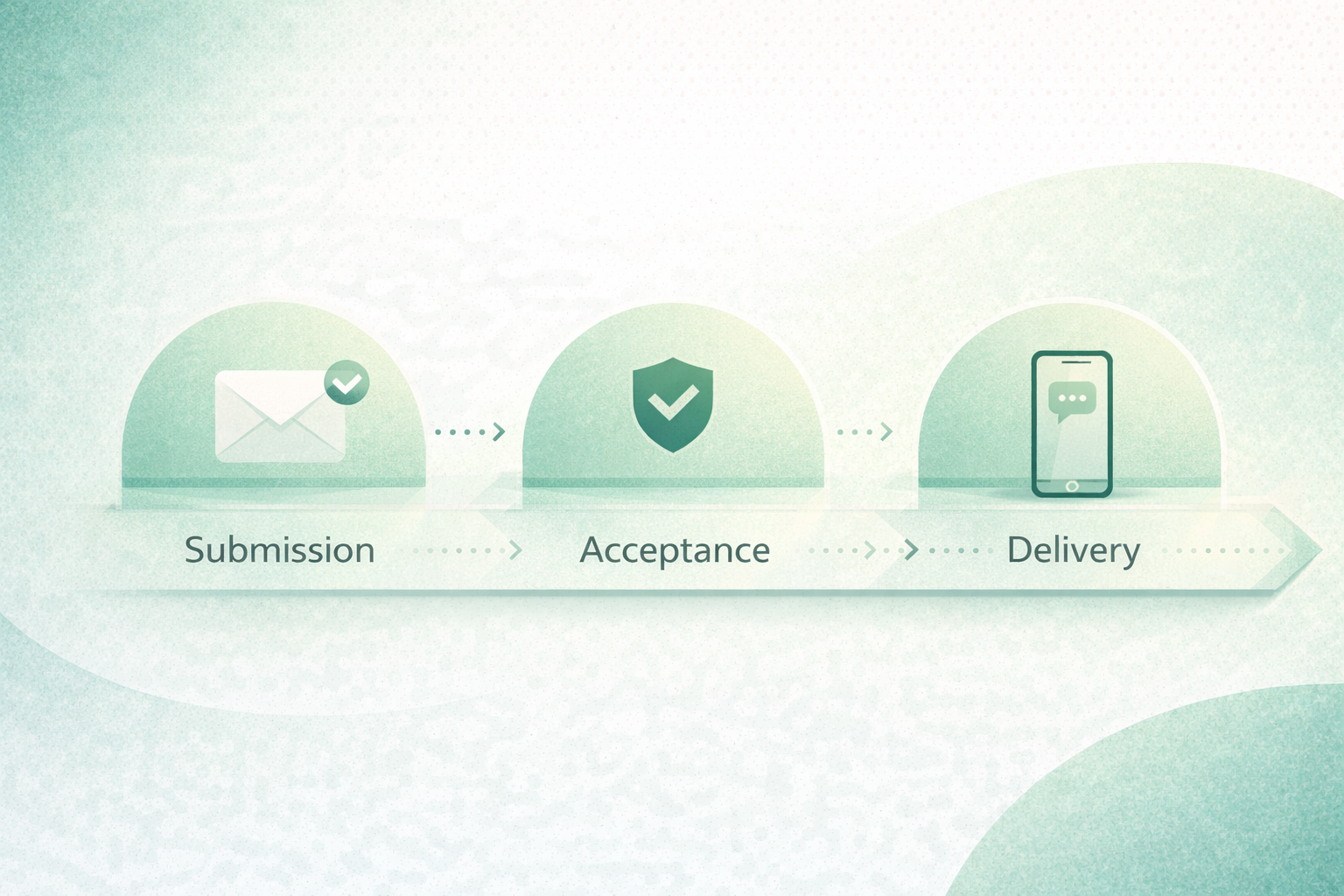
Submission vs Acceptance vs Delivery: The 3 Checkpoints Behind “Sent”
Here is the clean mental model an SMS platform is built around:
- Submission: your system hands a message to a provider endpoint, often through an HTTP API.
- Acceptance: the upstream path, including routes and carriers, decides whether the message is allowed to enter the network for that destination.
- Delivery: the handset is reachable and the network can complete delivery, with varying levels of confirmation depending on the destination and ecosystem.
This is why you can see messages marked as “sent” all day and still see business outcomes drift. Different checkpoint, different meaning.
What an SMS API Confirms vs What Carriers Decide
An SMS API can confirm a limited set of things reliably. Carriers and destination-specific rules determine the rest.
The simplest way to think about it is this: an API is good at telling you what you asked for; the network decides what happens next. If you are new to the path behind that handoff, this guide on how SMS platforms connect to mobile networks is the best companion read.
An API can usually confirm:
- your request was received,
- a message ID was created,
- the payload passed basic validation,
- your account-level limits were not exceeded.
The network and local rules may still determine:
- whether that sender identity is allowed in the target country,
- whether the traffic pattern looks risky and should be throttled,
- whether content, links, or timing increase filtering risk.
That split is the heart of the “not just APIs” problem.
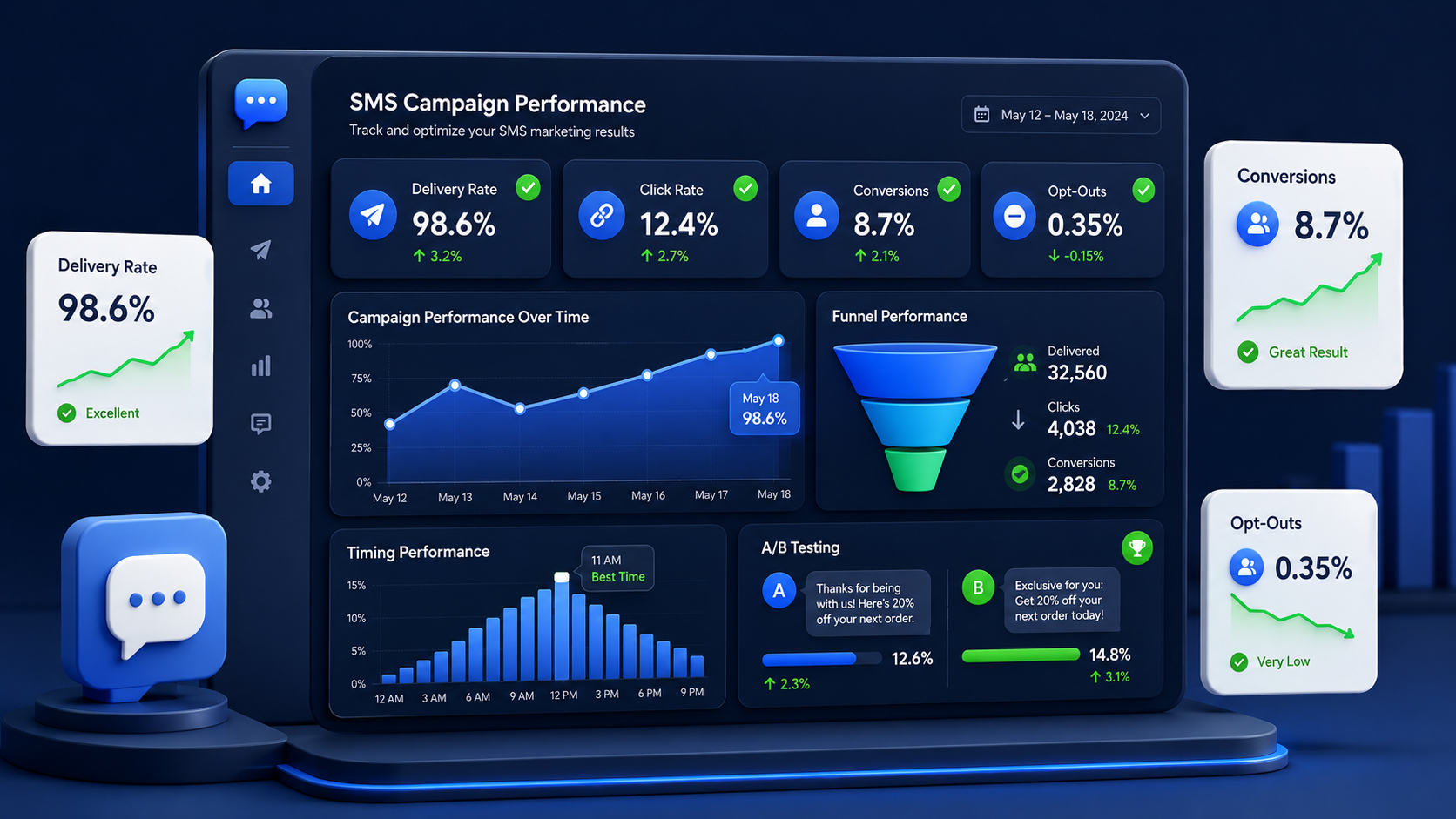
The Fastest Way to Misread Delivery Rate in the First 7 Days
A high delivery rate early on can hide issues that show up later because filtering and user feedback signals often lag.
In the first week, you can appear to be “winning” on delivery while actually losing trust. That happens more often than beginners expect.
So do not treat delivery rate as your only health metric during days 1–7.
Instead, pair delivery rate with at least two behavior signals, such as opt-out rate and complaint or reply proxies. For example, watch STOP or HELP volumes, sudden spikes in negative inbound replies, or visible drops in engagement. Two numbers beat one. For a more practical checklist, see how to improve SMS deliverability.
What Does an SMS Messaging API Actually Do?
An SMS messaging API is the interface for submitting messages and receiving status plumbing. It is necessary, but it is not the whole operating model.
By itself, an API is not a guarantee of sender readiness, not a compliance system, and not a routing strategy.
So if you buy “just an API,” you are also taking on a stack of operational responsibilities whether you planned for them or not.
At a minimum, an API layer typically does things like:
- accept a send request,
- validate required fields,
- return a message ID so the send can be tracked,
- trigger callbacks or webhooks when a status update is available.
Useful. Necessary. Still incomplete.
If your team is still mixing up these layers, compare SMS platform vs SMS gateway next. It helps clarify what belongs to the handoff layer versus the operating layer.
The Work That Still Exists After the API Call: Identity, Rules, and Measurement
After the API call, you still need to operate the parts that make outcomes more stable over time.
- Identity: what sender the user sees, such as an alphanumeric sender ID, a short code, or a local long-code program.
- Rules: what each country or carrier will accept, including registration requirements, permitted sender types, and content-related limits.
- Measurement: what you can observe when something changes, such as delivery receipt quality, route-level patterns, opt-outs, or destination-specific performance shifts.
A useful stakeholder exercise is to draw a line on a whiteboard. Put API submission on the left and operating SMS on the right. Most surprises happen on the right.
What Is the Difference Between an SMS Platform and an SMS API?
An SMS API is the technical interface used to submit messages from an application to a messaging provider. It accepts send requests, validates the message format, and returns a message ID so the system can track status updates.
An SMS platform, by contrast, is the operational layer around that API. It helps businesses manage sender identity, routing strategies, pacing controls, compliance rules, and reporting across different countries and carriers.
In simple terms:
an SMS API lets you send a message, while an SMS platform helps you run an SMS program—with the controls and visibility needed to keep messaging reliable as you scale.
What Does an SMS Platform Add Beyond an SMS API: The 5 Operational Levers
An SMS platform adds a layer you can actually operate: identity, compliance hygiene, routing, pacing, and reporting.
If you are new to telecom, this is the simplest way to stop guessing. Treat these five levers as the control panel behind business texting.
And if one of those levers is missing, you will usually feel it the first time performance dips.
Sender Identity on an SMS Platform: Sender IDs, Number Types, and Registration Basics
Sender identity is not one global label you set once and forget. It is local, rule-sensitive, and sometimes registration-dependent.
In practice, your options may include alphanumeric sender IDs, short codes, and local long-code programs such as A2P 10DLC in the US. Different destinations accept different combinations.
A platform’s job is to help you manage those constraints without turning every country into a custom engineering project.
Concrete examples:
- An alphanumeric sender ID may display correctly in one country and be replaced or blocked in another.
- Some destinations require pre-registration for specific sender types before traffic is accepted.
Compliance Hygiene on an SMS Platform: Consent, Opt-Outs, and Suppression Lists
Compliance hygiene is the unglamorous work that helps you keep sending next month.
At minimum, you need a reliable opt-out flow, often involving keywords like STOP and HELP, and a suppression list so opted-out users stay opted out.
A platform makes those rules enforceable and auditable across campaigns instead of turning them into a spreadsheet someone updates sometimes. If you want the fuller beginner version, read our SMS compliance guide.
Two examples that should be true every time:
- A user who opts out does not get re-added in the next upload.
- A support agent can explain why a specific user did or did not receive a message without guessing.
Routing Choices on an SMS Platform: Coverage vs Stability vs Cost Trade-Offs
Routing is where “same API, different outcomes” becomes real.
Routes can differ in coverage, stability, cost, support quality, and visibility. You usually cannot maximize all of them at once.
A platform helps you choose and adjust routing intentionally, and helps you see what changed, instead of learning about problems from angry replies.
Two route categories you may hear about:
- connectivity that is closer to operators in some destinations,
- aggregator-style connectivity that may offer broader coverage with different trade-offs.
The right fit depends on your destination mix, compliance readiness, support quality, and how much visibility you need when performance changes.
Pacing Controls on an SMS Platform: Throughput, Throttling, and Send Windows
Pacing is how you avoid looking like spam without slowing the business to a crawl.
In practice, that means you need controls for throughput, awareness of throttling, and sensible send windows for sensitive destinations or use cases.
A platform should let you shape traffic without requiring code rewrites every time something changes.
Two failure modes to watch:
- A campaign blast triggers throttling and delays time-sensitive traffic.
- A previously steady traffic pattern becomes bursty after a product or campaign change, and delivery starts to drop.
Reporting You Can Debug on an SMS Platform: DLR Quality, Callbacks, and Analytics
Reporting is only useful if it helps you answer one question: what changed?
A platform should give you visibility into delivery receipt quality, status callbacks or webhooks, and analytics you can segment by destination, sender type, or route.
Otherwise, your debugging process is just hope dressed up as dashboards.
Three layers you want, even as a beginner:
- message-level status: what happened to this message,
- batch or campaign view: what changed for this send,
- destination view: is this country behaving differently from others.

Why the Same SMS API Can Produce Different Outcomes?
The same SMS API can look stable while outcomes change because the world behind it changes.
The point is not to blame carriers or providers. The point is to understand what can shift underneath you.
Once you can name these scenarios, you stop treating every dip as a copywriting problem.
Scenario 1: One Sender Works in Country A, Gets Replaced or Blocked in Country B
What you see: messages appear to send, but branding looks wrong or delivery collapses in one destination.
What it usually means: sender identity rules are local. An alphanumeric sender ID may not be supported everywhere, or a destination may require registration for that sender type.
What to do: test sender identity per country before you scale, and keep at least two fallback identity options where possible, such as a registered local number and another approved sender format.
Scenario 2: Delivery Rate Stays High While Opt-Outs Quietly Rise Over 14 Days
What you see: delivery stays flat, but opt-outs rise and responses get colder.
What it usually means: users are receiving messages, but the traffic is losing trust. Timing, frequency, targeting, or perceived relevance may be off, and filtering risk can increase over time.
What to do: cap frequency, tighten audience segments, and monitor at least two behavior metrics alongside delivery during a 14-day window, such as opt-out rate and STOP or HELP volume.
Short version: delivery can look “fine” while your reputation gets worse. This becomes even more critical for time-sensitive traffic such as OTP SMS, where delays or filtering directly affect login and verification experiences.
Scenario 3: Performance Drops Without Code Changes Because Routing Changed Underneath
What you see: same templates, same API, same offer, yet performance drops over the course of a week.
What it usually means: routing shifted, intentionally or incidentally, or a carrier started filtering a pattern more aggressively, and your reporting is not granular enough to show it clearly.
What to do: compare performance by destination and sender type, then confirm whether route-level changes occurred. If you cannot answer that, you are flying blind.
You can get API success responses all day while real outcomes drift because sender rules, routing, or filtering behavior changed underneath you, not because your code broke. A good companion read here is what an SMS platform cannot control.
How to Tell If You Need an SMS Platform: A 7-Question Reality Check
If you only send a small volume to one country with one sender type, a simple API may be enough for a while.
You are more likely to need an SMS platform when you must control outcomes without constant engineering work, and when you need visibility that helps you explain changes quickly.
Use these seven questions as a reality check before you commit.
Control Questions: What You Need to Change Without Rewriting Code
An SMS platform earns its keep when you need control knobs, not just endpoints.
- Can you change sender identity by country?
- Can you enforce opt-outs and suppression rules across every send path?
- Can you shape pacing with throughput caps or send windows for sensitive destinations?
If you answer “no” to two or more, you are already operating beyond “just API.”
Visibility Questions: What You Need to See When Things Go Wrong
Visibility is the other half. When outcomes change, you need answers you can act on.
- Can you see results by country and by sender type, not just one overall delivery rate?
- Can you trace a problem batch to a likely route or carrier behavior pattern?
- Can you explain a spike in opt-outs with data such as timing, audience, or destination instead of guesses?
If your reporting cannot slice performance at least two ways, debugging starts to become superstition.
Country-Readiness Questions: What You Must Verify Before You Add More Destinations
Country expansion is where beginners get surprised.
- Have you verified which sender types are accepted in each target country?
- Have you confirmed whether registration is required before traffic is accepted?
- Have you run a small pilot per destination before scaling spend?
A one-week pilot beats a one-month cleanup.
What Should You Do After Choosing an SMS Platform: 2 Simple Next Steps
Once you start thinking in 3 checkpoints + 5 levers, the next steps become clearer.
You stop asking “which API is best?” and start asking “which operating system can we actually run?”
Here are two practical steps that work even if you are brand new.
Step 1: Decide Your Sender Identity and Country Scope for the First 14 Days
Pick a scope you can actually measure.
Choose one to three countries, select one primary sender identity per country, and define what success means for the first 14 days.
This keeps the learning cleaner and prevents one destination’s rules from distorting the whole picture.
Step 2: Pick 3 Metrics You Will Trust, and 2 You Will Not
Metrics shape behavior, so choose carefully.
Anchor them to the real goal of an SMS platform: signals you can act on.
Trust:
- delivery rate segmented by country,
- opt-out rate,
- a complaint or reply proxy such as STOP, HELP, or negative reply spikes.
Do not over-trust:
- overall averages that hide destination-level problems,
- API success rate as a proxy for user outcomes.
That is the operating mindset. Not perfect. Just repeatable.
Final Thought
An SMS platform isn’t just an API—it’s the operations layer that turns 3 checkpoints and 5 levers into predictable outcomes.
But even the best platform cannot control every part of the messaging ecosystem. Carriers, local regulations, and user behavior still influence what ultimately happens after a message leaves your system. If you want a deeper look at those boundaries, our guide on what an SMS platform cannot control explains where platform responsibility ends.
Soft next step
If you’re preparing your first rollout and want a sanity check on countries, sender identity, pacing, and what to measure, our team at SMS Boosting can walk through your plan and help you pressure-test it—without turning this into a hard sell.
FAQs
Do I need an SMS platform if I only send transactional alerts?
If you only send transactional alerts in one country at low volume, a simple SMS API might be enough at first. You likely need an SMS platform once you add more destinations, more sender types (like alphanumeric sender ID + long code), or time-sensitive traffic that gets throttled. A practical trigger is when you start caring about opt-outs, pacing, and route-level visibility. Even “just alerts” can break if sender rules or filtering change.
What is a delivery receipt (DLR), and why does it matter?
A DLR is a status update about what happened to a message after you sent it. DLR quality varies by destination, but it matters because “sent” is not the same as “delivered.” A strong setup lets you separate submission vs acceptance vs delivery, instead of treating everything as one metric. For example, you might see “delivered” drop in one country while others stay stable—DLRs help you spot that quickly.
Why does a Sender ID work in one country but fail in another?
A Sender ID can work in one country and fail in another because sender rules are local and carriers enforce different acceptance policies. For example, an alphanumeric sender ID may display in Country A but be replaced or blocked in Country B, while a long code (like 10DLC) might require registration in certain markets. The fix is to validate sender types per destination before scaling. A platform can help you manage identity options and fallbacks country by country.
What should I check in the first 14 days of sending business SMS?
In the first 14 days, check more than delivery rate—because early delivery can look healthy while trust signals worsen. Track delivery by destination, plus at least two behavior signals like opt-out rate and STOP/HELP volume. Keep scope small (1–3 countries) so you can see patterns clearly. If performance changes without code changes, compare by sender type and destination first.
What throughput do I need, and why do carriers throttle?
Throughput needs depend on your use case, but the main point is that carriers can throttle traffic that looks bursty or risky. For example, a sudden campaign blast can trigger delays even if your API accepts messages. You should plan pacing controls (caps, send windows) and test in a small pilot before scaling. A platform is useful when you need to shape throughput without constant engineering changes.