
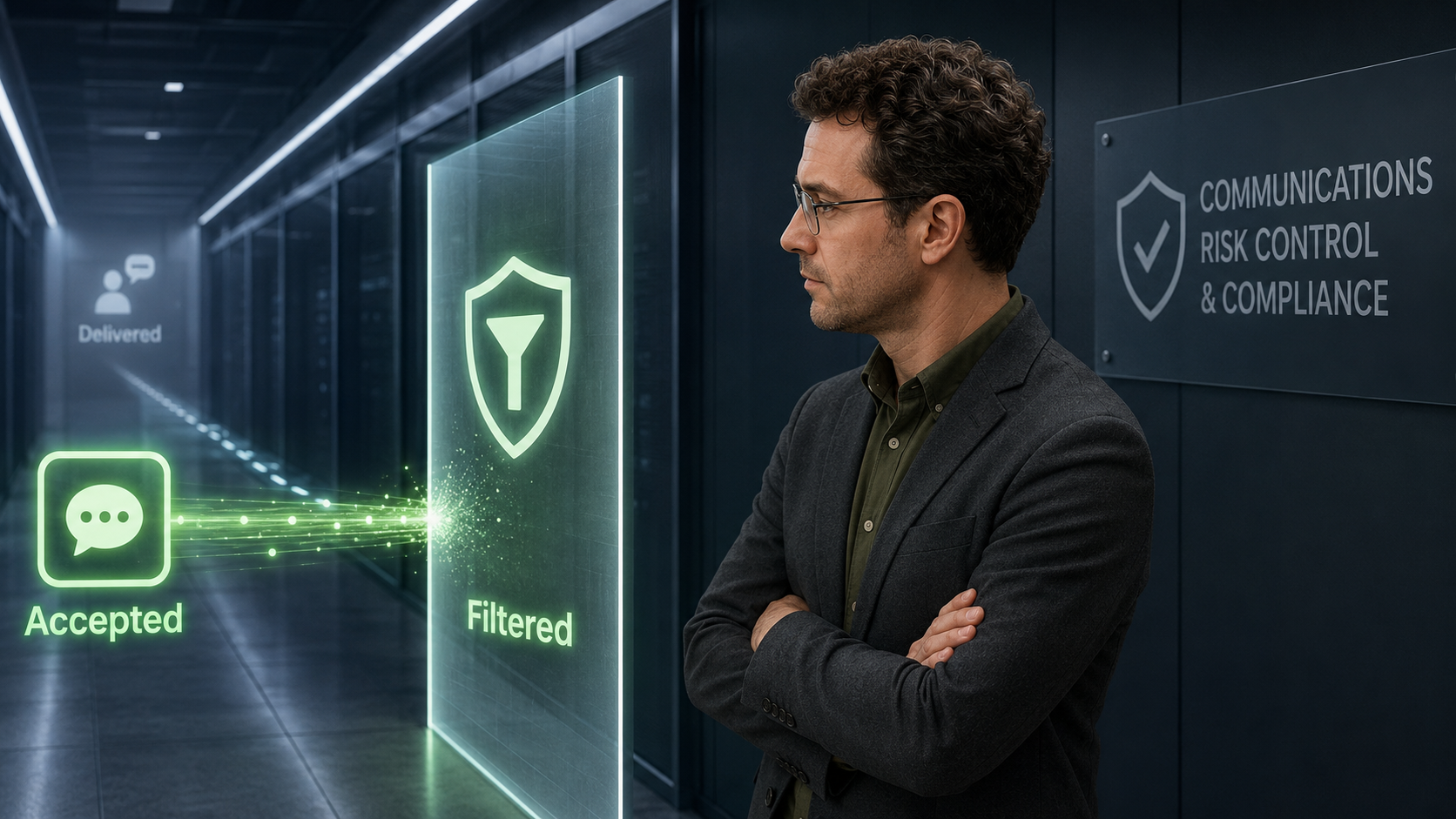
A submitted or accepted SMS message can still be filtered before delivery because acceptance only means the message entered the sending workflow, not that it reached the recipient. SMS filtering is the process carriers, providers, or messaging platforms use to detect and block unwanted, risky, suspicious, or non-compliant SMS traffic before it reaches the user.
For business, operations, and technical teams, this distinction matters. A blocked message is not always a provider outage. It is not always a routing failure. It is usually a signal that something in the sender setup, message content, traffic pattern, market path, or support evidence needs closer review.
Why Submitted SMS Messages Can Still Be Filtered Before Delivery
A submitted SMS message can still be filtered because sending is a workflow, not a single event. The message may move through an API, platform, provider, carrier network, and anti-abuse controls before the recipient ever sees it.
That makes SMS filtering different from a simple “sent or not sent” question. A message can be accepted by one layer and stopped by another. For a broader view of how this fits into overall message performance, see our guide to SMS deliverability.
Accepted Means the SMS Entered the Sending Workflow, Not the Recipient Inbox
When a platform accepts an SMS request, it usually means the request was formatted well enough to enter the sending workflow. It does not mean the carrier accepted the message. It also does not mean the recipient device received it.
This is why teams can see a message request succeed, then later see a blocked, filtered, failed, or undelivered status. The message has more checkpoints to pass after initial submission.
A Blocked SMS Message Is Not Always a Provider Outage or Routing Failure
A blocked SMS message can involve routing, but routing is only one possible cause. Carriers and messaging providers also use filtering systems to reduce spam, fraud, phishing, objectionable content, and other unwanted traffic. Twilio’s 30007 documentation, for example, says a message may be filtered by Twilio or by the carrier, and lists spam, phishing, and fraud as examples of blocked messaging [4].
The practical point is simple: before changing routes or blaming a provider outage, teams need to identify the filtering signal.
What SMS Filtering Means for Business Messaging
SMS filtering is a control process that evaluates whether a message should continue toward the recipient. In business messaging, this matters because A2P traffic is often reviewed differently from casual person-to-person texting.
Filtering exists to reduce unwanted or harmful traffic while allowing wanted business messages to move through. FCC materials describe wireless providers’ role in protecting consumers from unwanted text messages, and CTIA principles describe industry practices for non-consumer messaging, including vetting, audits, and unwanted-message filtering [1][2].
Definition Box: SMS Filtering in One Sentence
| Term | Definition |
|---|---|
| SMS filtering | SMS filtering is the process carriers, providers, or messaging platforms use to detect and block unwanted, risky, suspicious, or non-compliant SMS traffic before delivery. |
This definition does not mean every filtered SMS is spam. Legitimate business messages can still be filtered when their sender setup, content, sending pattern, or destination market creates a risk signal.
SMS Filtering vs SMS Blocking vs Failed Delivery
SMS filtering, SMS blocking, and failed delivery are related, but they are not identical.
| Term | Practical meaning |
|---|---|
| SMS filtering | The evaluation process that may stop a message before delivery. |
| SMS blocking | The result when a message is prevented from moving forward. |
| Failed delivery | A broader delivery outcome that may come from filtering, invalid numbers, expired messages, device issues, opt-outs, or other causes. |
For support teams, this distinction prevents over-reading one status. A filtered or blocked status can point to a likely cause, but it does not automatically explain the whole root issue.
Who Filters SMS Messages Before They Reach Users
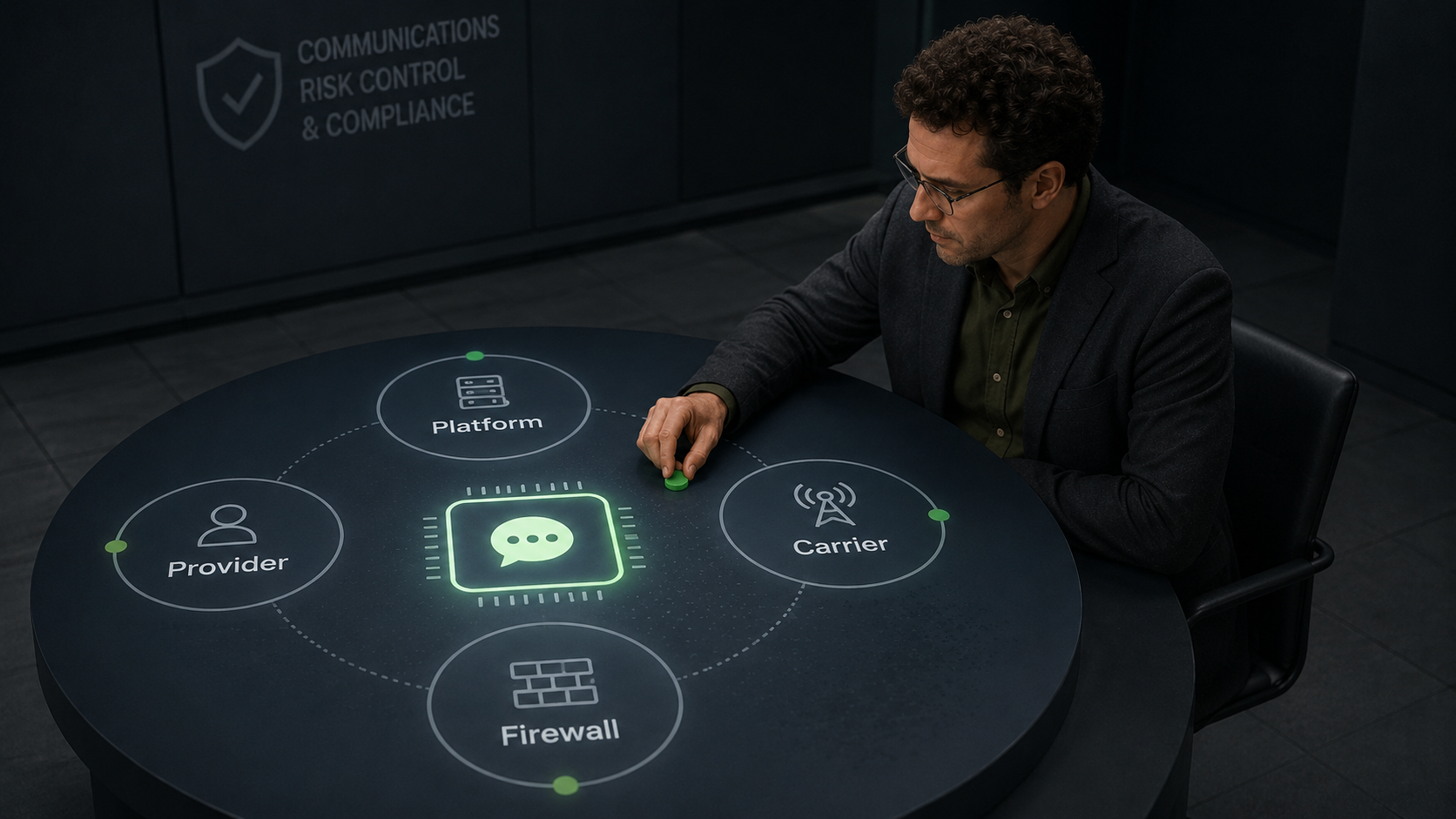
SMS messages can be filtered by carriers, messaging providers, platform anti-abuse systems, or SMS firewall layers before they reach users. These layers may apply different rules because each one sees a different part of the message path.
A carrier may focus on network and subscriber protection. A provider may enforce acceptable-use and messaging policies. A platform may detect suspicious traffic behavior. A firewall layer may classify traffic before it reaches the mobile network.
Carrier Filtering Controls
Carrier filtering controls are designed to reduce abusive or unwanted traffic on mobile networks. The FCC has recognized that providers use methods to protect consumers from unwanted text messages, and its robotext-related order also discusses provider-level blocking aimed at highly likely illegal texts [2][3].
For a business sender, this means the destination market matters. A message that works in one country, network, or sender setup may behave differently elsewhere.
Provider and Platform Anti-Abuse Filtering
Messaging providers and platforms may also filter traffic before or during carrier handoff. Twilio’s 30007 documentation says filtering can happen either by Twilio or by the carrier, and that wireless carriers also use filtering systems to block abusive traffic and enforce network or country rules [4].
This is why a blocked SMS message should not be reduced to one question: “Did the provider send it?” A better question is: “Which layer appears to have stopped it, and what evidence supports that?”
SMS Firewall and Spam-Control Layers
SMS firewall and spam-control layers help classify message traffic at scale. They may look for unwanted message patterns, abusive sender behavior, suspicious content, or unusual routing behavior.
For business teams, the important point is not the exact internal firewall logic. The useful point is that filtering may be based on more than the text itself. Sender identity, volume, destination pattern, and historical behavior can all matter.
Why Blocked SMS Messages Usually Come From Multiple Cause Buckets
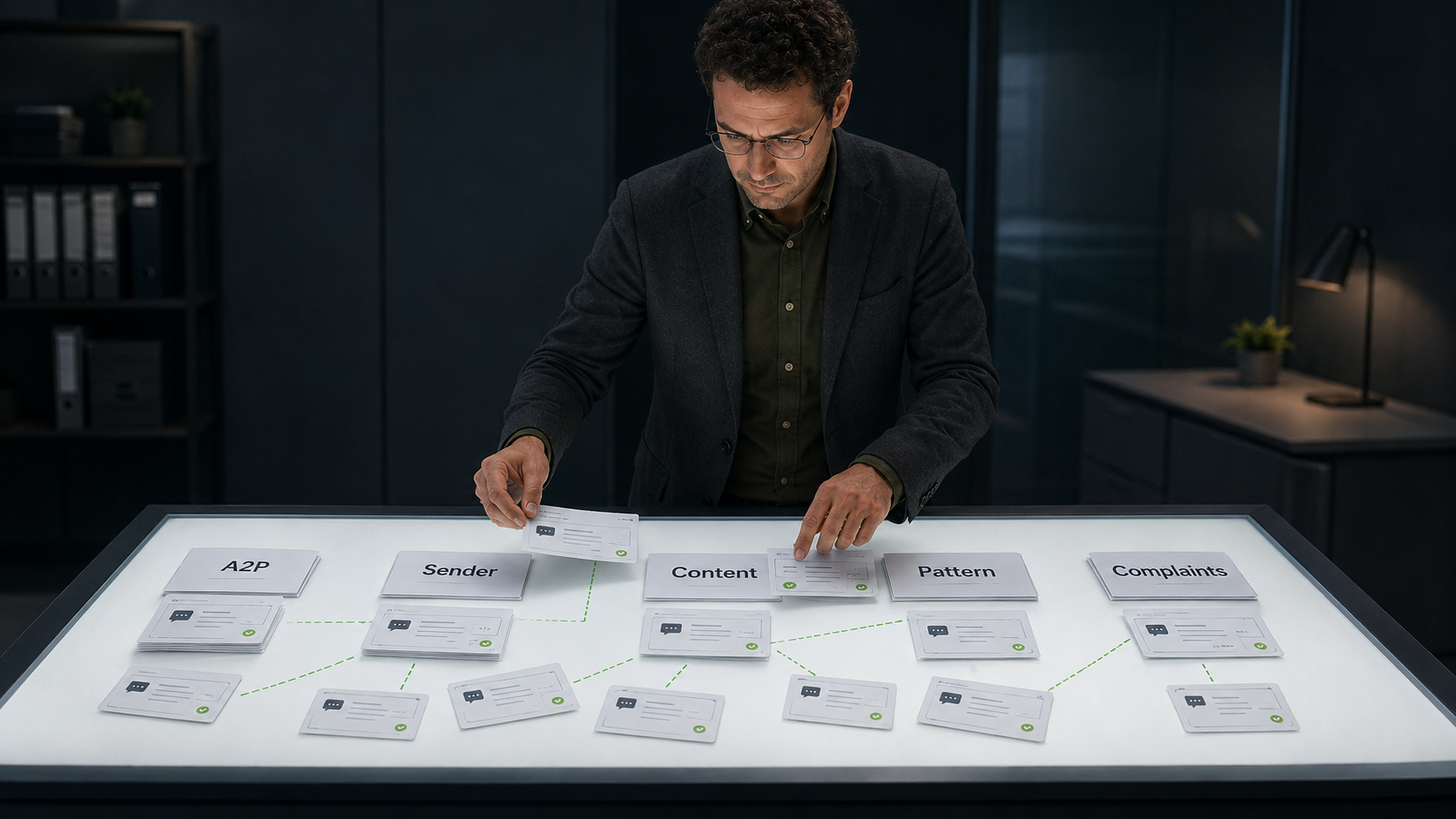
Blocked SMS messages usually come from several cause buckets, including A2P controls, sender setup, content risk, sending pattern, and recipient or complaint signals. Reading these buckets together is more useful than looking for a single universal cause.
SMS filtering is not a single error to fix; it is a control signal that becomes useful only when sender setup, message content, sending behavior, market rules, and support evidence are read together.
| Cause bucket | What it means | Example signals | What it helps identify |
|---|---|---|---|
| A2P traffic controls | Business or automated traffic may be treated differently from person-to-person messaging. | Business sender, automated workflow, bulk sends, service alerts. | Whether the use case is being classified and controlled as business messaging. |
| Sender setup issues | Sender identity, number type, or registration may not match the use case or market expectation. | Sender ID mismatch, unverified number type, wrong campaign setup. | Whether the sender path is trusted enough for the message type. |
| Message content risk | The message body may resemble spam, fraud, phishing, or prohibited content. | Short links, aggressive claims, sensitive topics, suspicious domains. | Whether the copy or link pattern creates filtering risk. |
| Sending pattern risk | Traffic behavior may look abnormal even if the copy looks normal. | Volume spikes, repeated templates, burst sending, snowshoe-like behavior. | Whether the sending pattern is triggering controls. |
| Recipient and complaint signals | Recipient behavior can increase risk over time. | Opt-outs, complaints, repeated unwanted messages. | Whether the audience or permission context needs review. |
A2P Traffic Controls and Business Message Classification
A2P traffic controls matter because business messaging is often evaluated under different expectations from consumer texting. FCC materials distinguish person-to-person messaging from application-to-person or automated messaging patterns, and CTIA guidance treats non-consumer message senders as a separate category with specific best-practice expectations [1][2].
This does not mean A2P messages are bad. It means business traffic needs a sender setup, message type, and traffic pattern that match how carriers and providers expect business messages to behave.
Sender Setup Issues: Sender ID, Number Type, and Registration Mismatch
Sender setup issues can trigger SMS filtering when the sender identity does not match the message type, market, or expected registration path. A sender ID, long code, short code, toll-free number, or campaign registration may each carry different expectations.
For example, a marketing message sent from a sender setup intended for service alerts may create a mismatch. A high-volume notification flow sent through an unprepared number type may also raise risk. The message text may be clean, but the sender path may still look wrong.
Message Content Risk: Links, Risky Wording, and Sensitive Claims
Message content risk can cause SMS filtering when the text resembles unwanted or abusive traffic. Links are a common trigger area. Bandwidth says it has implemented additional security measures to block messages containing shortened URLs, and notes that these stricter filters are tied to consumer protection against spam [6].
Risky wording can also matter. Examples include phishing-like urgency, misleading claims, sensitive financial language, suspicious domains, or repeated promotional templates. The goal is not to remove every strong word. The goal is to understand whether the content looks trustworthy in the context of the sender and use case.
Sending Pattern Risk: Volume Spikes, Repeated Templates, and Burst Sending
Sending pattern risk happens when traffic behavior looks suspicious. Bandwidth’s error-code documentation lists filtered or blocked spam cases and notes that messages may be blocked for reasons including volumetric filtering, content blocking, and related violations [7].
A sudden spike can create risk. So can repeated templates sent across many numbers, sharp changes in destination mix, or bursts that do not match previous traffic. A single message may look acceptable when read by a human, but the pattern around it may still be flagged.
Recipient and Complaint Signals That Can Increase SMS Filtering Risk
Recipient and complaint signals can raise SMS filtering risk over time. If users opt out, complain, or consistently treat the traffic as unwanted, the sending pattern becomes harder to defend.
This is not only a compliance issue. It is also a signal-quality issue. Carriers and providers want wanted traffic to reach users. If recipients show that the traffic is unwanted, future messages may face more filtering pressure. For more context on how consent, opt-outs, and message rules affect delivery outcomes, see our SMS compliance guide.
How to Read SMS Filtering Signals Without Turning This Into a Delivery Report Guide
SMS filtering signals can help narrow the likely cause, but they should not be treated as a complete delivery report diagnosis. A status code or error message gives a clue. It rarely explains every condition that led to the block.
The right use of an error signal is to separate possible cause buckets. It can tell the team whether to look at content, sender setup, traffic classification, destination market, or support evidence first.
Error Signals Can Support a Filtering Hypothesis, Not Prove the Whole Cause
An error signal can confirm that filtering is plausible. Twilio’s 30007 error, for example, directly indicates that a message was filtered or blocked by Twilio or by the carrier [4]. That is useful, but it does not automatically prove whether the root cause was message content, carrier policy, sender setup, or traffic pattern.
Support teams should treat the error signal as a starting point. It should lead to evidence collection, not a rushed conclusion.
Support Evidence Needed Before Sender Setup or Market Review
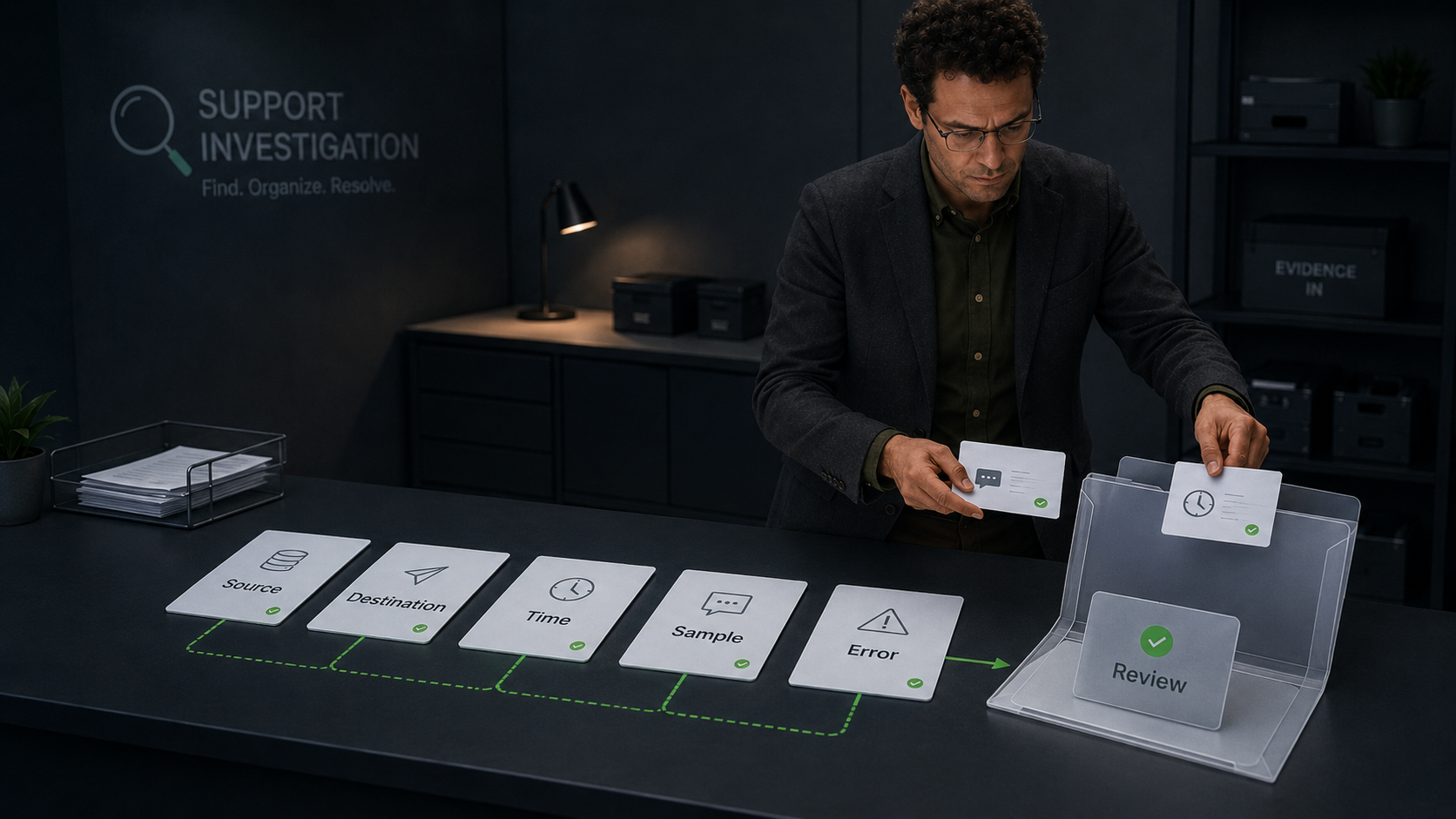
Before a sender setup, routing, or market review, teams need a basic evidence set. Bandwidth’s deliverability FAQ asks for details such as source number, destination number, timestamp, and a sample of blocked content when opening a support ticket about blocked messages [5].
That evidence helps prevent vague escalation. It also helps separate isolated failures from repeatable filtering patterns.
What to Check First When SMS Filtering Is Suspected
When SMS filtering is suspected, teams should first check the sender, destination market, message content, sending pattern, and error signal. This is a first-check list, not a full troubleshooting SOP.
The goal is to identify the most likely cause bucket before changing copy, switching routes, or escalating the issue.
What-to-Check-First Checklist: Sender, Market, Content, Pattern, and Error Signal
| First check | What to review | Why it matters |
|---|---|---|
| Sender identity | Sender ID, number type, campaign registration, use-case match. | Sender setup can affect trust and classification. |
| Destination market | Country, carrier, local restrictions, traffic type. | Carrier filtering can vary by market and network. |
| Message content | Links, shorteners, domains, sensitive claims, repeated wording. | Content can resemble spam or fraud even when intent is legitimate. |
| Sending pattern | Volume spike, burst timing, repeated templates, destination concentration. | Filtering may react to behavior, not only message text. |
| Error signal | Filtered, blocked, failed, undelivered, provider-specific codes. | Error signals help narrow the cause, but should not be the only evidence. |
We’ve seen teams investigate a routing issue first, only to find later that the same sender, content pattern, or destination market was creating the filtering signal. The earlier the cause bucket is isolated, the less time teams spend changing the wrong thing.
When to Review Sender Setup, Routing, or Market Conditions
A sender setup, routing, or market review becomes reasonable when the filtering pattern is repeatable. For example, the same message type may fail in one destination market, the same sender may show repeated filtered results, or one link pattern may correlate with blocked messages.
That is the point where the review should become structured. Not broader. A market review should not turn into a full routing article. A sender review should not become a full compliance audit. A content review should not become a generic SMS copywriting guide.
FAQ About SMS Filtering and Blocked SMS Messages
Is SMS Filtering the Same as SMS Blocking?
SMS filtering is not exactly the same as SMS blocking. Filtering is the evaluation process, while blocking is one possible result of that process. For example, a carrier or provider may filter a message because it appears unwanted, then block it before delivery. In support conversations, the two terms are often used together, but they should not be treated as identical.
Why Are Legitimate Business SMS Messages Blocked?
Legitimate business SMS messages can be blocked when the message looks risky to a filtering system. The cause may be sender setup, market controls, content signals, or sending behavior. For example, a service notification with a shortened link may still trigger filtering risk, even if the business use case is valid. This is why teams should identify the cause bucket before rewriting every message.
Can Carrier Filtering Block Transactional or OTP Messages?
Carrier filtering can affect transactional or OTP messages when the traffic pattern, sender setup, or content creates risk. This does not mean OTP or transactional messages are automatically unsafe. It means carriers and providers may still apply controls to business traffic, especially when the sender identity or market path does not match the use case. For Support teams, OTP should be treated as one message type within the broader filtering review, not as a separate identity-system project.
Does Message Content Risk Cause SMS Filtering?
Message content risk can cause SMS filtering when the text resembles spam, fraud, phishing, or unwanted traffic. Examples include public URL shorteners, suspicious domains, misleading urgency, and sensitive claims. Content risk becomes stronger when it appears together with volume spikes or weak sender identity. A content review should focus on evidence, not guesswork.
Can Sending Pattern Trigger SMS Filtering?
Sending pattern can trigger SMS filtering when the traffic looks abnormal. Examples include sudden volume spikes, burst sending, repeated templates, or traffic spread across many senders in a way that resembles snowshoeing. A message can look safe by itself but risky as part of a larger pattern. That is why pattern review belongs next to content and sender setup review.
What Evidence Should Support Teams Collect for Blocked SMS Messages?
Support teams should collect the sender, destination number or market, timestamp, message sample, traffic volume, use case, and error signal. If a provider requires a ticket, these details help the support team separate content, sender setup, market, and pattern issues. Bandwidth’s deliverability FAQ lists source number, destination number, timestamp, and sample blocked content as useful information for blocked-message support requests [5]. Without this evidence, escalation often becomes slower and less precise.
References
[1] CTIA — Messaging Principles and Best Practices.
[2] FCC — Wireless Messaging Service Declaratory Ruling, FCC 18-178.
[3] FCC — Targeting and Eliminating Unlawful Text Messages / Robotext Order.
[4] Twilio — 30007: Message filtered.
[5] Bandwidth — Messaging Deliverability FAQ.
[6] Bandwidth — Messaging URL Best Practices.
[7] Bandwidth — SMPP and MM4 Error Codes.