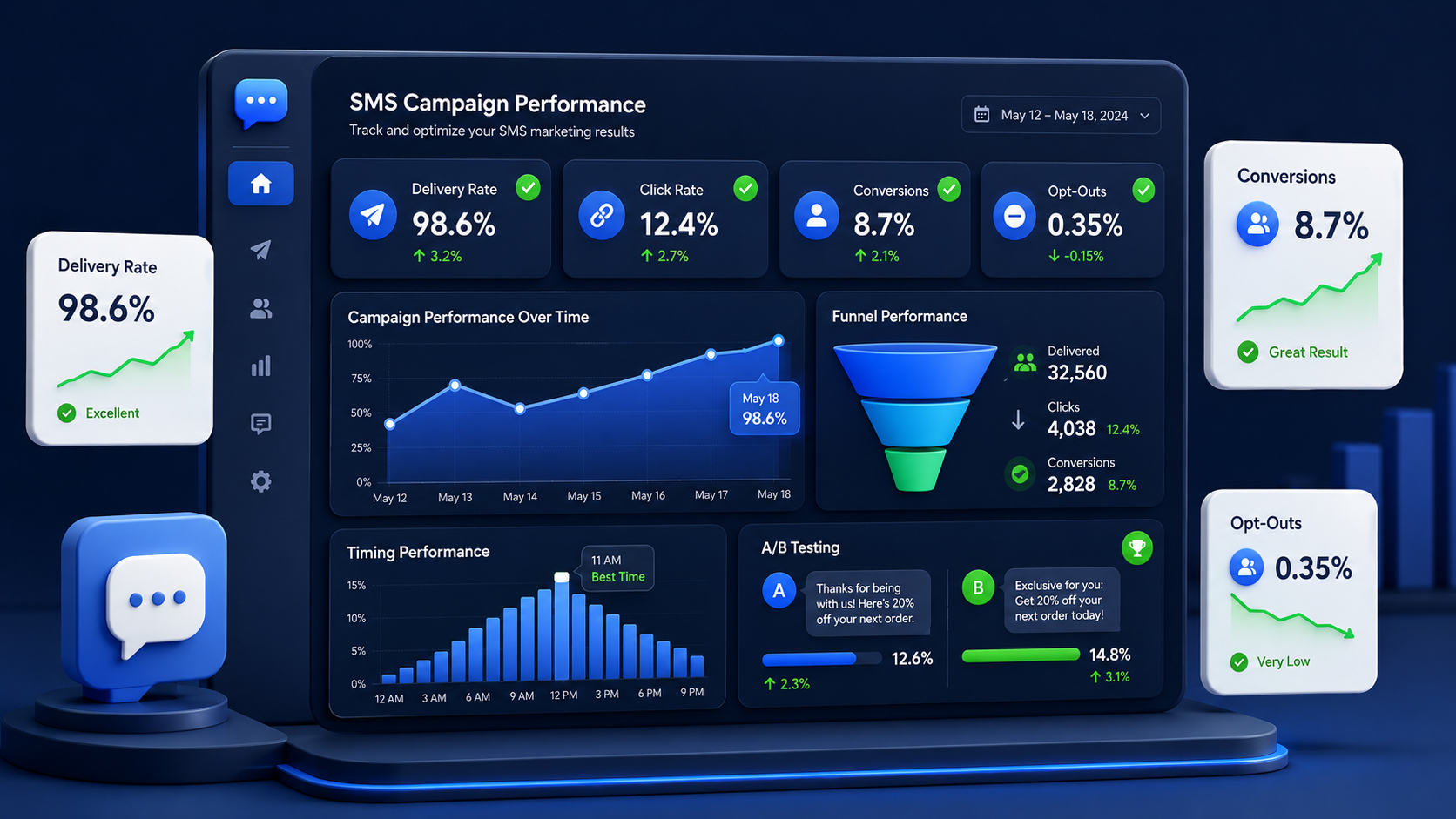

SMS delivery speed is the time it takes for a message to move through the sending path and reach the recipient in a usable window. In practice, SMS delivery speed depends on more than one step: platform handling, route conditions, carrier acceptance, and destination-specific behavior can all influence how fast a message arrives.
That is why SMS delivery speed can look simple at first, but become harder to evaluate once you send across real countries, operators, and traffic conditions. A message may be submitted quickly on your side, yet still arrive later than expected on the phone.
For teams that are new to telecom, the key is to separate software response time from real delivery timing. This article gives you a practical way to think about SMS delivery speed, what actually changes it, and what to ask vendors when “fast” needs to mean something measurable.
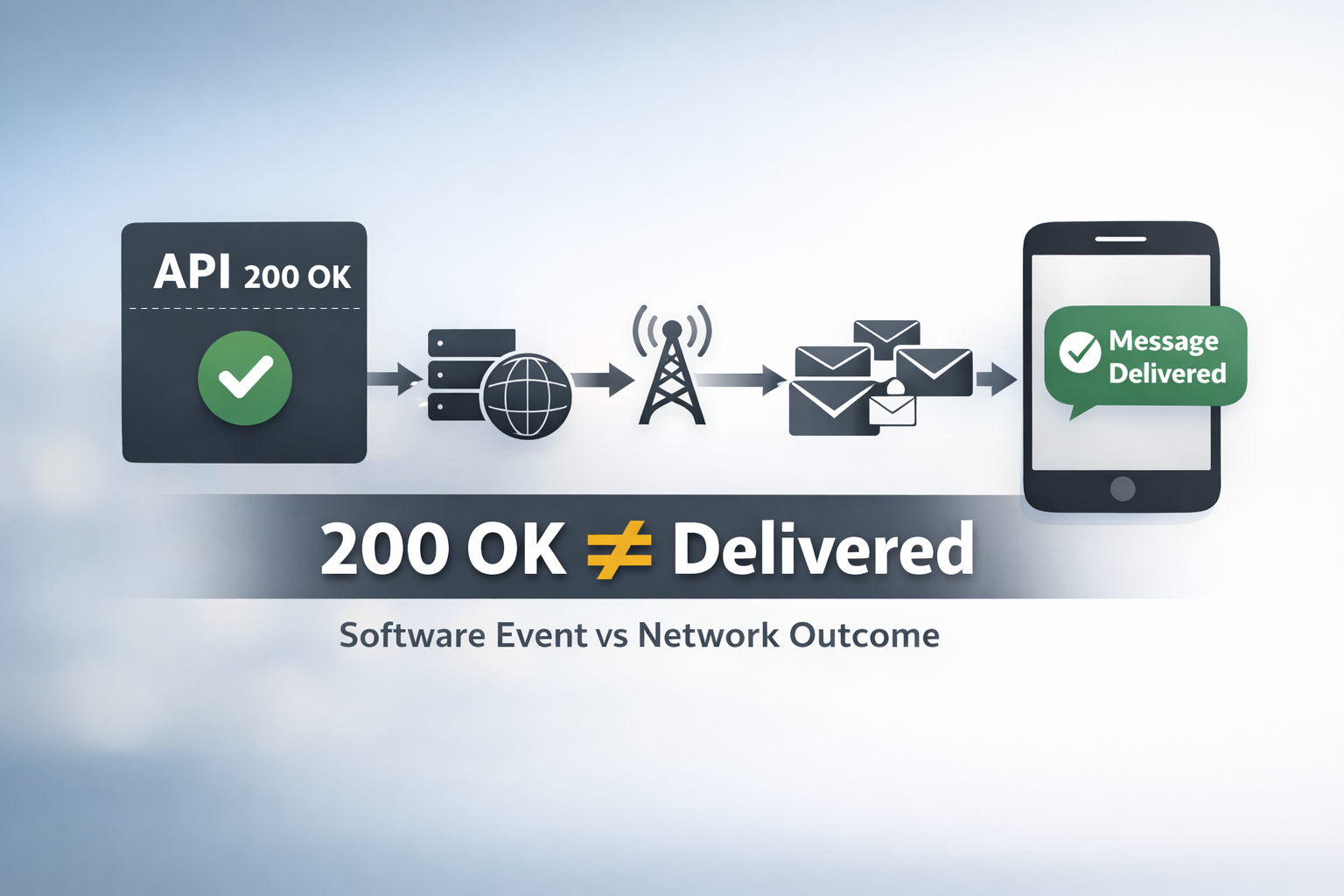
What SMS Delivery Speed Actually Refers To
What an HTTP 200 OK response actually guarantees for SMS delivery speed
A fast API response usually means your request was received and accepted by the messaging provider’s edge. That is an important first step, but it only describes the software side of message submission.
It does not confirm that the carrier has already accepted the message, that the route is clear at that moment, or that the phone will surface the message within a specific number of seconds.
A useful way to keep the model clear is this:
“Accepted by an API” is a software event. “Arrived on a phone” is a network outcome.
If your team is still treating API acceptance as the whole story, what an SMS platform cannot control is a useful next read.
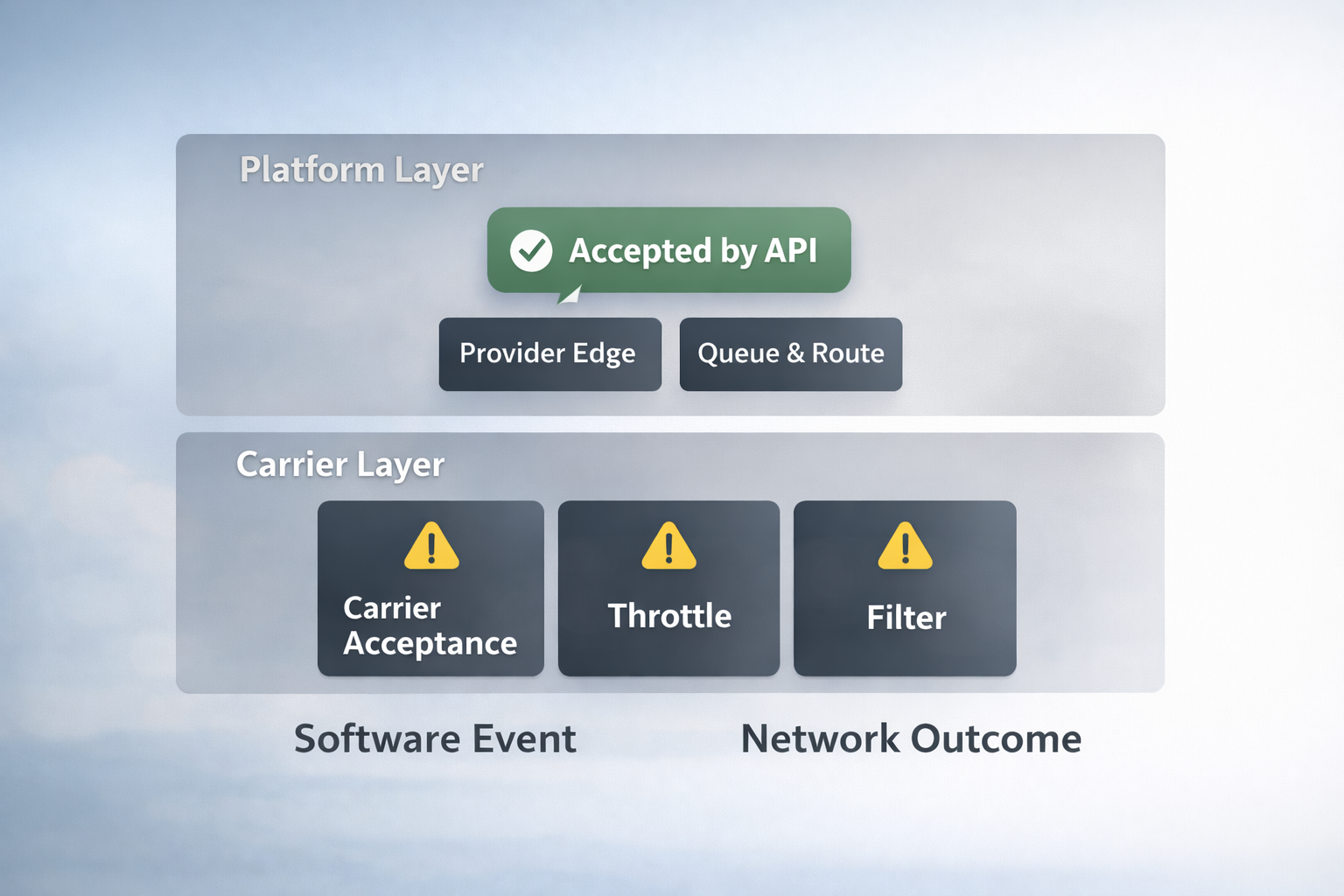
Where SMS delivery speed can change after “message submitted”
Once a message is submitted, it still moves through a broader system that may include routing decisions, carrier handoffs, carrier queues, filtering checks, and delayed delivery receipts.
That system is not a single straight line. It varies by country, operator, traffic pattern, and route conditions, which is why SMS timing often feels less predictable than teams expect at first.
For a broader explanation of the full delivery path, sender identity, filtering, routing, and destination conditions behind this timing problem, start with our SMS deliverability guide.
SMS Delivery Speed: Latency, Throughput, and Delivery Windows
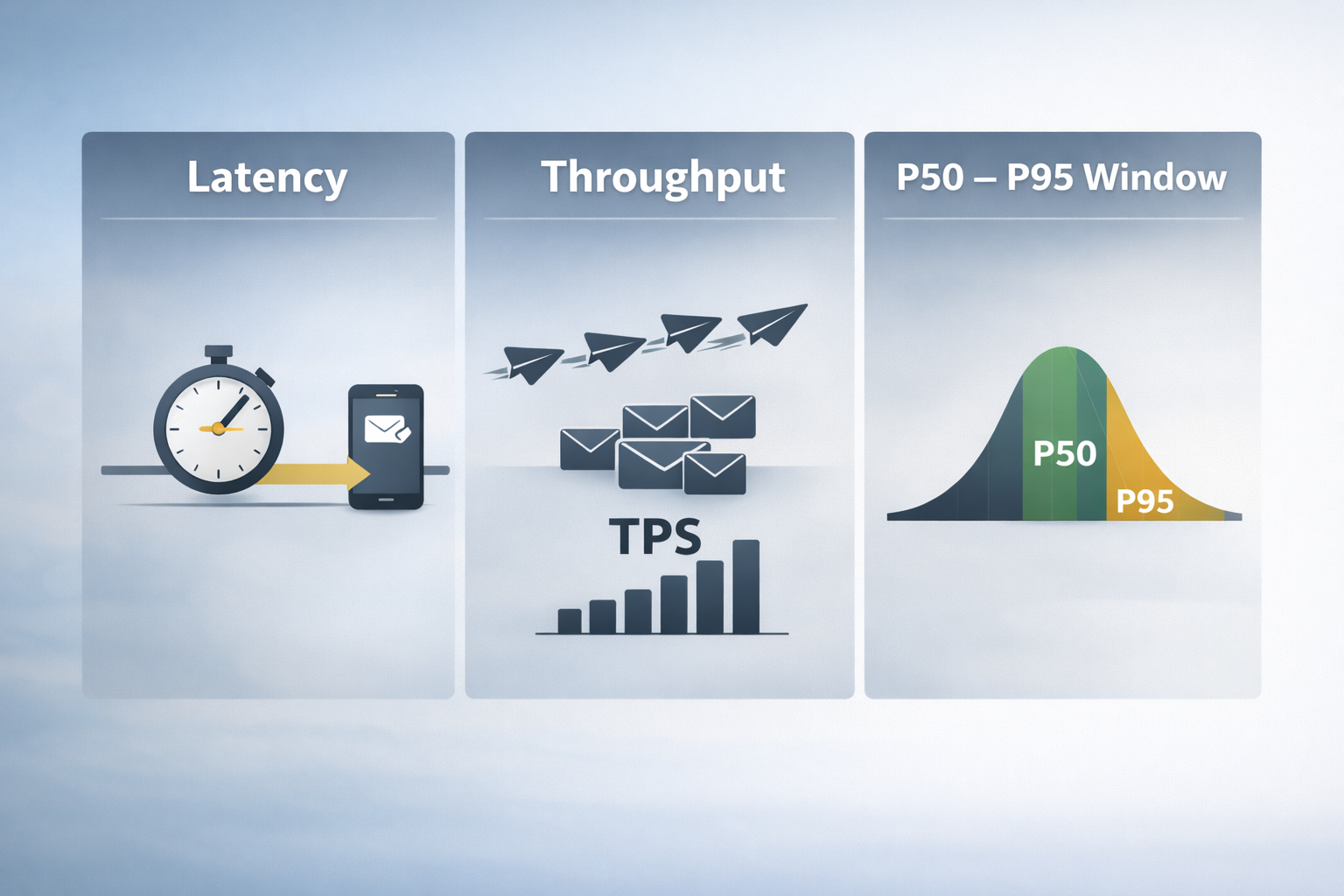
SMS delivery speed latency: the time-to-inbox users notice
Latency is the time between you sending a message and the recipient receiving it, or at least the point when the phone can surface it.
For most teams, this is what “speed” really means. Users do not care how quickly a request left your application. They care about when the code arrives, when the alert appears, or when the confirmation becomes visible.
SMS delivery speed throughput: how much traffic the system can handle without backing up
Throughput is how many messages you can push per second or per minute without creating an unhealthy queue.
This matters for scale planning, but it is not the same thing as user-visible speed. A system can support strong throughput while still showing slower end-user latency in some destinations, especially when carrier behavior and route conditions differ.
SMS delivery speed windows: why P50 and P95 matter more than average speed
Average speed can be useful, but it often hides the part users actually notice.
A more practical way to evaluate SMS delivery speed is to define a delivery window:
- Most messages arrive within X seconds.
- The slower tail arrives within Y minutes.
That slower tail is often where trust drops, support tickets rise, and time-sensitive workflows start to feel unreliable.
Two layers of SMS delivery speed: platform-side handling vs carrier-side acceptance
A simple way to understand SMS delivery speed is to separate it into two layers.
Layer 1 — Platform-side speed:
How fast your provider accepts, queues, routes, and hands off messages.
Layer 2 — Carrier-side speed:
How fast carriers accept, throttle, filter, and deliver those messages.
The first layer can perform well while the second layer still introduces delay. In many real-world cases, that second layer is where timing becomes less predictable.
A quick mini-table to keep the terms clear
| Concept | What it measures | What it’s good for | Common misunderstanding |
|---|---|---|---|
| Latency | Time to phone | User experience timing | “Latency is constant across countries” |
| Throughput (TPS) | Send capacity | Peak planning | “Higher TPS means faster delivery everywhere” |
| Delivery window (P50/P95) | Typical + tail time | Predictability | “Average speed tells the whole story” |
Why SMS Delivery Speed Changes Without Changing Your Code
SMS delivery speed under carrier throttling and carrier queues
Carriers protect their networks by managing how traffic enters and moves through them. During busy periods, throttling and queuing are not unusual exceptions. They are part of how real SMS traffic is handled.
That is why a messaging program can look stable from the sending side while timing changes on the delivery side. Your API calls may still return quickly, and your dashboard may still show that messages were submitted, but end users may feel the delay later in the path.
This is one of the main reasons SMS delivery speed should be evaluated as a delivery outcome, not only as a submission event.
SMS delivery speed differs by country and operator
SMS delivery speed is destination-specific. A route that behaves predictably in one country may show different timing in another because local filtering, local capacity, sender treatment, and operator behavior are not the same everywhere.
A practical way to think about it is this: you are not measuring one universal delivery system. You are measuring performance across many local systems that happen to sit behind the same sending workflow.
That is why global coverage should not be treated as a timing guarantee. Coverage tells you where traffic can go. It does not tell you how consistently it will arrive. If you want a broader beginner-friendly picture of the handoff chain behind that variance, see how SMS platforms connect to mobile networks.
Sender identity and local rules can quietly affect SMS delivery speed
Sender identity is often treated like a branding choice, but it can also influence how messages are handled.
In some destinations, the sender type you want may require registration or approval. In others, the sender may be replaced, restricted, or treated differently by local filtering systems.
These differences do not only affect deliverability. They can also influence SMS delivery speed, because a message may move through a different path, face different scrutiny, or enter a different queue depending on the sender setup.
That is why some speed issues are really setup issues that only become visible after traffic starts moving at volume.
Why SMS delivery speed and delivery receipt timing are not the same
Delivery receipts are useful, but they are not a perfect stopwatch.
Different carriers and routes generate receipts differently. Some are fast, some are delayed, and some represent a checkpoint that is not identical across destinations.
So receipt timestamps should be treated as one timing signal, not the only definition of speed. The more useful question is whether the pattern is consistent by country, operator, and route over time.
How to Set an SMS Delivery Speed Target That Survives Peak Traffic
Start SMS delivery speed targets with your top destinations
If most of your traffic goes to a small set of countries, start there.
Ask what delivery window you actually need in those destinations, how performance changes during peak hours, and what happens when volume increases. This makes SMS delivery speed measurable in the places that matter most to your business.
That is the point where “fast” stops being a sales phrase and becomes an operating requirement.
Match SMS delivery speed targets to the message type
Not every message needs the same timing standard.
A password code, fraud alert, or login confirmation usually needs a narrow arrival window. A routine promotional message may allow more flexibility, as long as timing stays reasonably predictable.
The useful planning move is to define speed targets by message type rather than trying to force one universal timing promise across all traffic.
Use pacing controls to protect SMS delivery speed, not just average throughput
If you want more predictable SMS delivery speed, traffic shaping matters.
Pacing helps reduce sudden bursts, protect queues from growing too quickly, and keep the slower tail of delivery from expanding during busy periods.
In practice, this means that a slightly more controlled send pattern can create a better end-user experience than a raw “push everything now” approach. Predictable SMS delivery speed often matters more than theoretical peak speed.
A quick SMS delivery speed reality check before you compare vendors
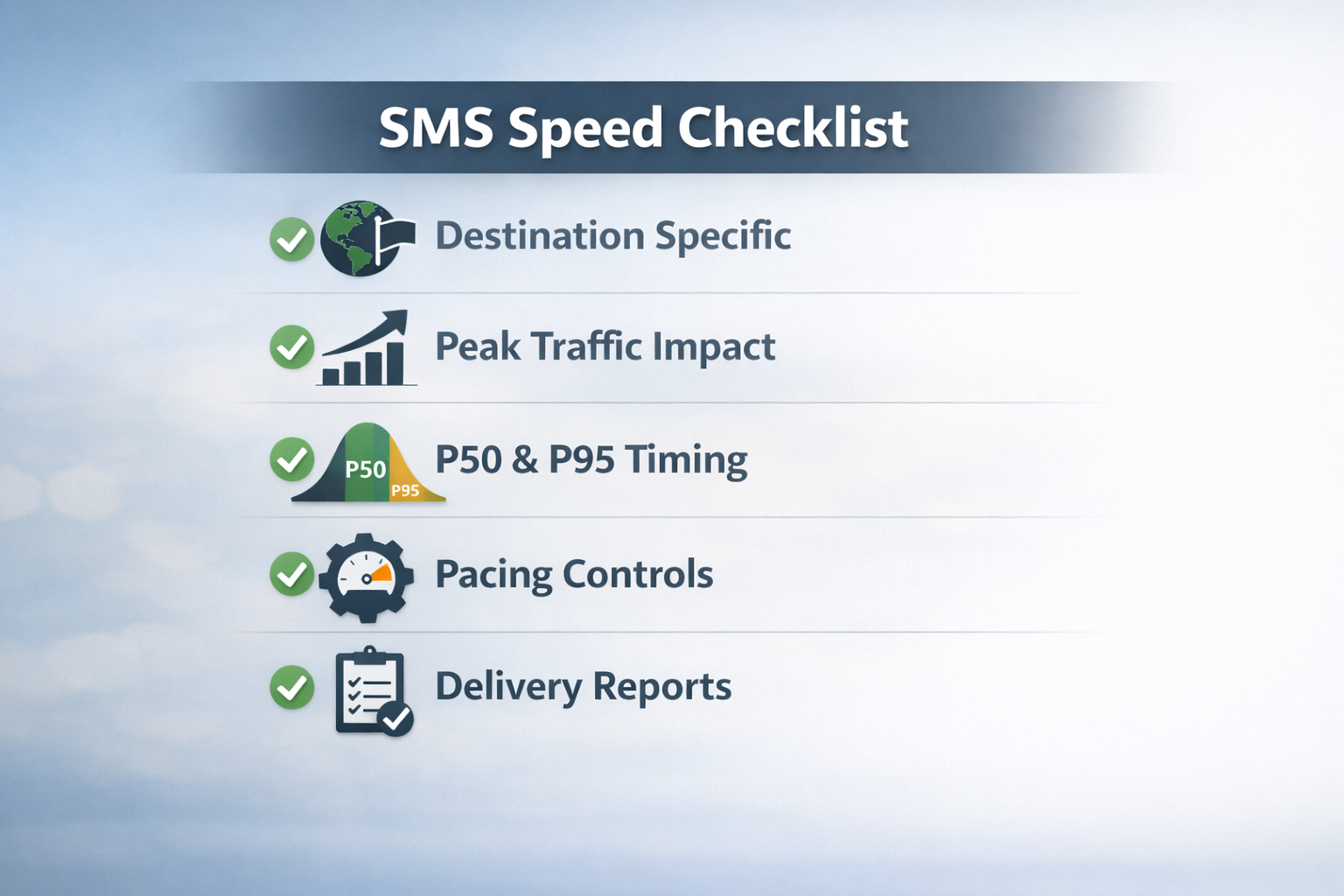
Use these questions to keep the evaluation grounded:
- Do you have a defined delivery window target, rather than a vague need for “fast delivery”?
- Can performance be broken down by country and operator?
- Do you know how timing behaves on peak traffic days?
- Do you have pacing controls you can actually apply?
- Can your reporting separate submitted, accepted, and delivered states clearly?
- If speed drops, is there an escalation path that gives you destination-level answers?
If several of those answers are still unclear, that usually means vendor speed claims will be harder to interpret than they first appear.
The Vendor Questions That Make SMS Delivery Speed Measurable
The reporting you need to explain SMS delivery speed slowdowns
Ask for reporting that can help answer a few practical questions:
- Which countries slowed down?
- Which operators were affected?
- Was the delay related to acceptance, receipts, or route behavior?
- Did timing degrade gradually, or did it change sharply?
If reporting only shows a simple delivered-or-failed view, timing issues will usually remain harder to explain.
What happens to SMS delivery speed on bad days
Peak days and degraded routes are part of real operations. The useful question is not whether they ever happen, but how your provider handles them.
Ask how congestion is detected, what changes when a route is saturated, whether fallback behavior exists, and what impact fallback typically has on delivery windows.
A platform tends to feel more reliable when it is designed to behave clearly on difficult days, not only on ideal ones.
What support does when SMS delivery speed drops
Support response is part of the real speed experience too.
When timing suddenly slips, you want a fast acknowledgment, destination-specific investigation, and a clear explanation of whether the issue looks like throttling, route change, local rule behavior, or receipt delay.
The faster those answers become visible, the faster your team can decide whether to wait, pace traffic differently, or escalate further.
The Takeaway You Can Use in Every SMS Platform Comparison
A one-sentence rule for interpreting SMS delivery speed claims
If a vendor cannot explain SMS delivery speed by destination, by peak behavior, and by delivery windows, they are probably describing a submission metric rather than a real delivery outcome.
If you are comparing providers and need a practical way to evaluate delivery speed by destination, peak traffic behavior, and delivery windows, SMSBoosting can help you pressure-test the setup before volume scales.
FAQ
1) Is SMS delivery speed the same as API response time?
No. API response time usually tells you how quickly your request was accepted by the provider’s system. SMS delivery speed is broader. It reflects how long it takes the message to move through routing, carrier acceptance, possible queues or filtering checks, and finally reach the phone in a usable window. A fast API response is helpful, but it does not prove the message arrived quickly on the handset.
2) Why can SMS delivery speed change even when our code stays the same?
Because the slowdowns often happen after submission, not inside your application. Carrier throttling, destination-specific rules, route conditions, sender treatment, and peak-hour queues can all change timing even when your sending logic does not. That is why teams sometimes see stable API performance while end users still experience late arrivals.
3) What is the difference between SMS latency and SMS throughput?
Latency is the time it takes for a message to reach the phone. Throughput is how much traffic you can push in a given period without creating unhealthy backlogs. They matter in different ways. A system can support strong throughput while still showing weak end-user latency in certain destinations, especially when carrier behavior varies.
4) Why is average SMS delivery speed not enough?
Because averages hide the slow tail. If most messages arrive quickly but a smaller share arrives much later, users will still feel the delay in password codes, alerts, or confirmations. That is why delivery windows such as P50 and P95 are often more useful than one average number when you are evaluating real SMS timing.
5) Do delivery receipts prove that SMS delivery speed was good?
Not by themselves. Delivery receipts are useful timing signals, but they are not a perfect stopwatch. Different carriers and routes may generate receipts at different checkpoints or with different delays. Receipt timing should be read together with destination patterns, operator behavior, and route context rather than treated as the only definition of speed.