
The 2026 FIFA World Cup gives global brands more than a sports marketing moment. It creates a long, multi-market campaign window where customer attention, national identity, match-day emotion, and time-sensitive offers can all intersect. For brands using SMS, the opportunity is not simply to send a football-themed discount. It is to plan relevant, permission-based messages around real tournament moments.
The 2026 tournament is especially important for international brands because it will be hosted across Canada, Mexico, and the United States, with 48 teams and 104 matches under the expanded format. FIFA also lists 16 host cities for the tournament, which means brands may need to think across countries, cities, languages, time zones, and audience segments rather than treating the event as one generic global campaign.
For ecommerce, sports retail, food and beverage, travel, apps, and membership-based businesses, SMS can support fast, timely communication during the tournament. But it works best when the message is connected to a real customer moment: a match reminder, a limited-time offer, a local event prompt, a fan poll, a restock alert, or a last-chance campaign.
This guide explains how global brands can plan 2026 FIFA World Cup SMS marketing campaigns without turning the tournament into random promotional noise.
Why the 2026 FIFA World Cup Is a Major SMS Marketing Window
The 2026 FIFA World Cup is a major SMS marketing window because it creates repeated moments of attention, not just one event day. Brands can build campaigns around the build-up, opening matches, group stage, knockout rounds, final week, and post-tournament follow-up.
It creates multiple campaign moments, not just one big event
A normal seasonal campaign often has one main date. The World Cup works differently. It gives brands several waves of customer attention.
Before the tournament, brands can collect opt-ins, promote football-themed collections, and segment audiences by region or interest. During the group stage, brands can send match-day reminders, limited offers, and local store prompts. During the knockout rounds, urgency becomes stronger because every match feels more decisive. By the final week, brands can focus on high-intent buyers, last-chance offers, and post-event retention.
The expanded 2026 format makes this planning logic even more important. FIFA states that the 2026 tournament will feature 48 teams and 104 matches, creating more fixtures and a longer planning surface for brands.
Global attention makes timing, relevance, and localization more important
A global event does not mean every customer should receive the same message. A subscriber in Mexico City, Toronto, Los Angeles, London, or Singapore may experience the tournament differently. Some may follow a national team closely. Others may only care about major matches, food deals, social viewing, or merchandise.
That is why timing and localization matter. A match-day offer sent at the wrong local hour can feel irrelevant. A team-based message sent to the wrong audience can feel careless. A generic “World Cup sale” sent too often can create fatigue.
SMS is a direct channel, so the margin for irrelevance is smaller. Brands should use SMS when the message is timely, expected, and useful enough to justify reaching someone on their phone.
SMS works best when the message is tied to a real fan moment
A strong World Cup SMS campaign starts with the customer’s context. Ask what the recipient is likely doing when the message arrives.
Are they preparing to watch a match? Shopping before a weekend game? Looking for snacks, jerseys, travel updates, or event reminders? Waiting for a limited drop? Checking whether a local store is open late?
When the message fits that moment, SMS can feel useful. When it does not, the same message can feel intrusive.
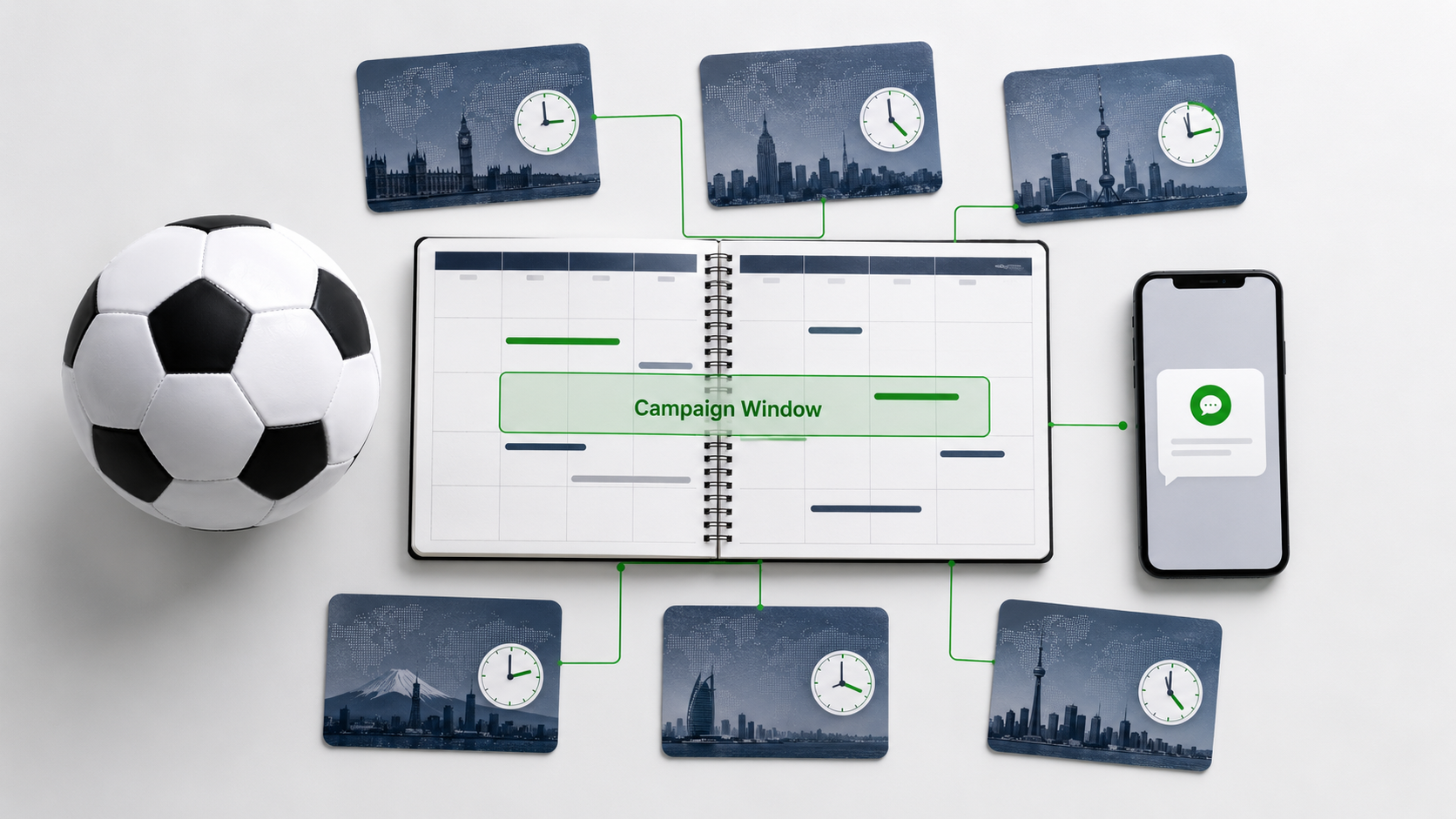
Build Your World Cup SMS Campaign Around the Tournament Timeline
The best way to plan World Cup SMS marketing is to map messages against the tournament timeline. This prevents brands from sending every idea at once and helps each message serve a clear purpose.
Before the tournament: grow opt-ins and prepare audience segments
Before the tournament starts, the main goal is preparation. Brands should avoid waiting until match week to build their SMS list or clean up audience segments. If list growth is still part of the plan, review these permission-based ways to get more SMS subscribers before scaling tournament messages.
Useful pre-tournament SMS ideas include:
- Early access sign-ups for football-themed product drops
- “Choose your match-day preferences” surveys
- VIP list invitations for tournament offers
- Reminder opt-ins for major match days
- Local store or event registration prompts
- Restock alerts for sports merchandise
This stage is best for brands that already have a relevant audience but need better permission and segmentation. It is less suitable for brands trying to force a football angle onto customers who have never shown interest in sports, events, or seasonal promotions.
A good pre-tournament SMS should not only say “World Cup is coming.” It should give the customer a reason to opt in, such as early access, reminders, local events, or exclusive campaign updates.
Opening week: welcome fans with early offers and event reminders
Opening week is the right time to introduce the campaign theme and set expectations. Customers are becoming aware of the event, but not every fan is ready to buy immediately.
Opening-week SMS can include:
- Welcome offers for tournament collections
- Match calendar reminders
- First-week food or beverage bundles
- “Get ready for match day” product recommendations
- App engagement prompts for tournament features
- Local watch-party reminders
The key is to avoid using all urgency at the beginning. If every message says “last chance” before the tournament has fully started, later campaigns will have less impact.
Match days: send timely alerts, flash offers, and local prompts
Match days are the most natural moments for time-sensitive SMS. Customers may be making quick decisions: what to buy, where to go, what to wear, what to order, or whether to join an event.
Match-day SMS ideas include:
- Flash offers that expire before kickoff
- Food and beverage bundles for viewing parties
- Store pickup reminders
- Local event check-in prompts
- “Match starts soon” reminders for app users
- Limited product drops tied to fan activity
- Two-way polls asking customers to vote for a match prediction
This approach works best when the message is operationally realistic. If a brand sends a flash sale but cannot handle inventory, delivery, or customer support, the campaign may create more frustration than demand.
A safer version is to limit match-day SMS to specific segments: customers who opted into tournament updates, recent buyers, local subscribers, or users who interacted with earlier campaign messages.
Knockout rounds: use urgency, scarcity, and fan emotion carefully
The knockout rounds create stronger emotion because each match has higher stakes. This can support more urgent messaging, but it also increases the risk of overdoing it.
Good knockout-stage SMS ideas include:
- Limited restocks for popular products
- “Final chance before the next round” offers
- Fan bundle promotions
- Loyalty rewards for repeat buyers
- Prediction polls with small incentives
- Reminder messages for registered event attendees
The mistake is to treat urgency as a replacement for relevance. A customer who has not opened, clicked, purchased, or interacted with earlier World Cup messages may not need more frequent texts during the knockout rounds.
Brands should use engagement signals to decide who receives stronger urgency. High-intent subscribers can receive more direct offers. Casual subscribers may need lighter content, reminders, or fewer messages.
Final week: focus on high-intent buyers and last-chance campaigns
Final week messaging should be more selective. By this point, some customers are highly engaged, while others may already be tired of tournament promotions.
Final-week SMS ideas include:
- Last-chance merchandise offers
- Final match viewing bundles
- Loyalty-member exclusive rewards
- “Thank you for following with us” messages
- Post-tournament discount codes for engaged subscribers
- Review, feedback, or community prompts after the final
This stage is not only about pushing one more sale. It is also a chance to retain subscribers after the event. A thoughtful post-tournament message can move customers from a temporary campaign into a longer customer relationship.
2026 FIFA World Cup SMS Marketing Ideas by Brand Type
Different brands should use the World Cup differently. A sports merchandise store, a restaurant chain, a travel brand, and a B2B company should not send the same type of SMS.
Ecommerce and sports merchandise brands
Ecommerce and sports merchandise brands have the clearest connection to the tournament. They can use SMS to promote jerseys, accessories, fan kits, limited drops, and restocks. For a broader product-fit lens, see this guide on what products to sell with SMS marketing.
Strong SMS ideas include:
- Early access to tournament collections
- Back-in-stock alerts for popular items
- Match-day outfit reminders
- Bundle offers for fan groups
- Limited-edition product drops
- Post-purchase delivery updates before key matches
This works best when inventory and fulfillment are ready. A message that creates demand for an item that is nearly sold out can work if the scarcity is real and clearly handled. It can fail if customers click through to unavailable products or uncertain delivery dates.
A practical approach is to segment by behavior. Recent buyers may receive restock or accessory recommendations. Browsers may receive first-purchase incentives. VIP customers may receive early access before the wider list.
Food, beverage, and local retail brands
Food, beverage, and local retail brands can use SMS around viewing occasions. The strongest angle is not “buy because of football,” but “make match day easier.” For adjacent retail campaign planning, this guide to SMS marketing for retail can help teams connect timing, consent, and repeat visits.
Campaign ideas include:
- Pre-match pickup reminders
- Group snack bundles
- Restaurant reservation prompts
- Local store extended-hour notices
- Watch-party package offers
- Same-day limited deals for opted-in customers
Timing is critical here. A food offer sent too early may be forgotten. A message sent too late may not give customers enough time to act. Brands should test timing around local behavior, such as lunch breaks, commute windows, or two to four hours before a major match.
This type of campaign should also respect local context. A match that matters in one market may not matter in another. Local teams, cities, and customer behavior should guide which messages go where.
Travel, hospitality, and event-adjacent brands
Travel and hospitality brands should focus on usefulness, not just promotion. World Cup-related travel can involve timing, location, booking changes, local experiences, and customer support.
SMS ideas include:
- Booking reminders
- Check-in prompts
- Local experience suggestions
- Event-day transportation reminders
- Hotel or restaurant offer alerts
- Customer service links for urgent questions
This category requires extra care because messages may affect real travel plans. Promotional SMS should be separated from operational notifications. A customer who needs check-in information should not have to search through a promotional message to find it.
Brands should also avoid implying official event partnership unless they have the right to do so. Safer language includes “match-day travel,” “football season,” “tournament visitors,” or “local viewing weekend.”
Apps, platforms, and membership-based brands
Apps and membership-based brands can use SMS to bring users back into a digital experience. This works especially well when SMS is connected to a clear action.
Campaign ideas include:
- Match reminder opt-ins
- Prediction polls
- Loyalty point prompts
- App feature reminders
- Subscriber-only tournament challenges
- Personalized content alerts
This is most useful when the app already has a relevant feature or community mechanic. If the brand has no sports, entertainment, shopping, loyalty, or social angle, a World Cup message may feel forced.
Two-way SMS can also work for simple interactions, such as voting, replying with a keyword, or confirming interest. The interaction should be easy enough to complete in seconds.
B2B brands that want to use the World Cup without forcing a sales angle
B2B brands can still reference the World Cup, but they should avoid pretending to be sports brands. The safest approach is to use the tournament as a planning metaphor or customer engagement example.
Possible B2B SMS angles include:
- Event-readiness checklists
- Peak-traffic planning reminders
- Customer communication planning content
- Internal campaign calendar prompts
- Light-touch thought leadership around global events
For B2B brands, the goal is usually awareness and education, not direct tournament sales. A short SMS linking to a practical checklist may work better than a discount message with a weak football pun.
Segment World Cup SMS Messages by Market, Interest, and Timing
Segmentation is what separates a useful World Cup SMS campaign from a generic blast. The event is global, but customer relevance is local and personal.
Segment by country, city, or language only when it improves relevance
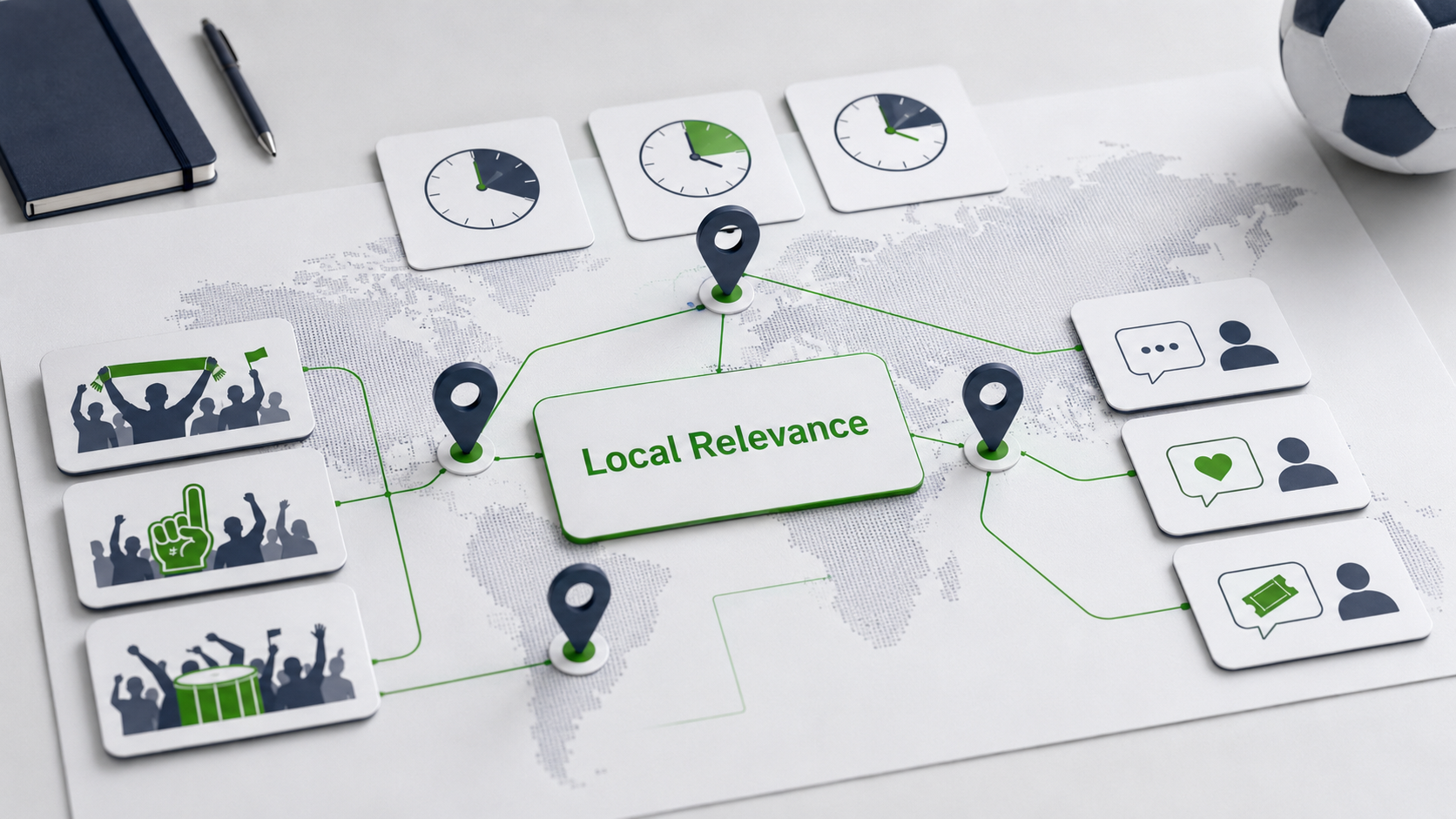
Country, city, and language segmentation can improve performance when they reflect real customer context. For example, host-city customers may care about local events, store hours, transportation, and viewing experiences. Customers in other countries may care more about team performance, ecommerce offers, or digital content.
However, segmentation should not become overcomplication. If a brand does not have reliable location data or localized campaign operations, it may be better to use broader segments and simpler timing rules.
Use team or fan interest carefully to avoid wrong assumptions
Team-based messaging can be powerful, but only when the brand has reliable preference data. A customer’s country, language, or shipping address does not always reveal which team they support.
A safer approach is to ask. Brands can use a pre-tournament SMS survey: “Want match-day alerts? Reply with your favorite team or choose your region.” This gives customers control and reduces the risk of irrelevant messaging.
If preference data is weak, use neutral language: “big match,” “final week,” “football weekend,” or “tournament season” instead of assuming a specific fan identity.
Adjust sending windows for local time zones and match-day behavior
World Cup SMS campaigns should be planned by local sending windows. A global brand should not send one message to all markets at the same time unless the campaign is intentionally global and time-neutral.
Time-sensitive SMS works best when the recipient can act immediately. If the message asks someone to order food, buy a product, join a local event, or open an app, the sending time should match that behavior.
A practical check is simple: would this message still make sense if the customer reads it within five minutes? If not, SMS may not be the right channel for that specific message.
Separate casual fans from high-intent buyers
Not every subscriber needs the same campaign depth. High-intent buyers may want product drops, restocks, and final-week offers. Casual fans may prefer occasional reminders or lighter engagement.
Useful segments include:
- VIP customers
- Recent buyers
- Browsers of tournament-related products
- Local store customers
- App users who opted into match reminders
- Customers who clicked earlier World Cup messages
- Subscribers who have not engaged and should receive fewer messages
This reduces fatigue and helps the brand protect its SMS list beyond the tournament.
What to Check Before Launching a 2026 FIFA World Cup SMS Campaign
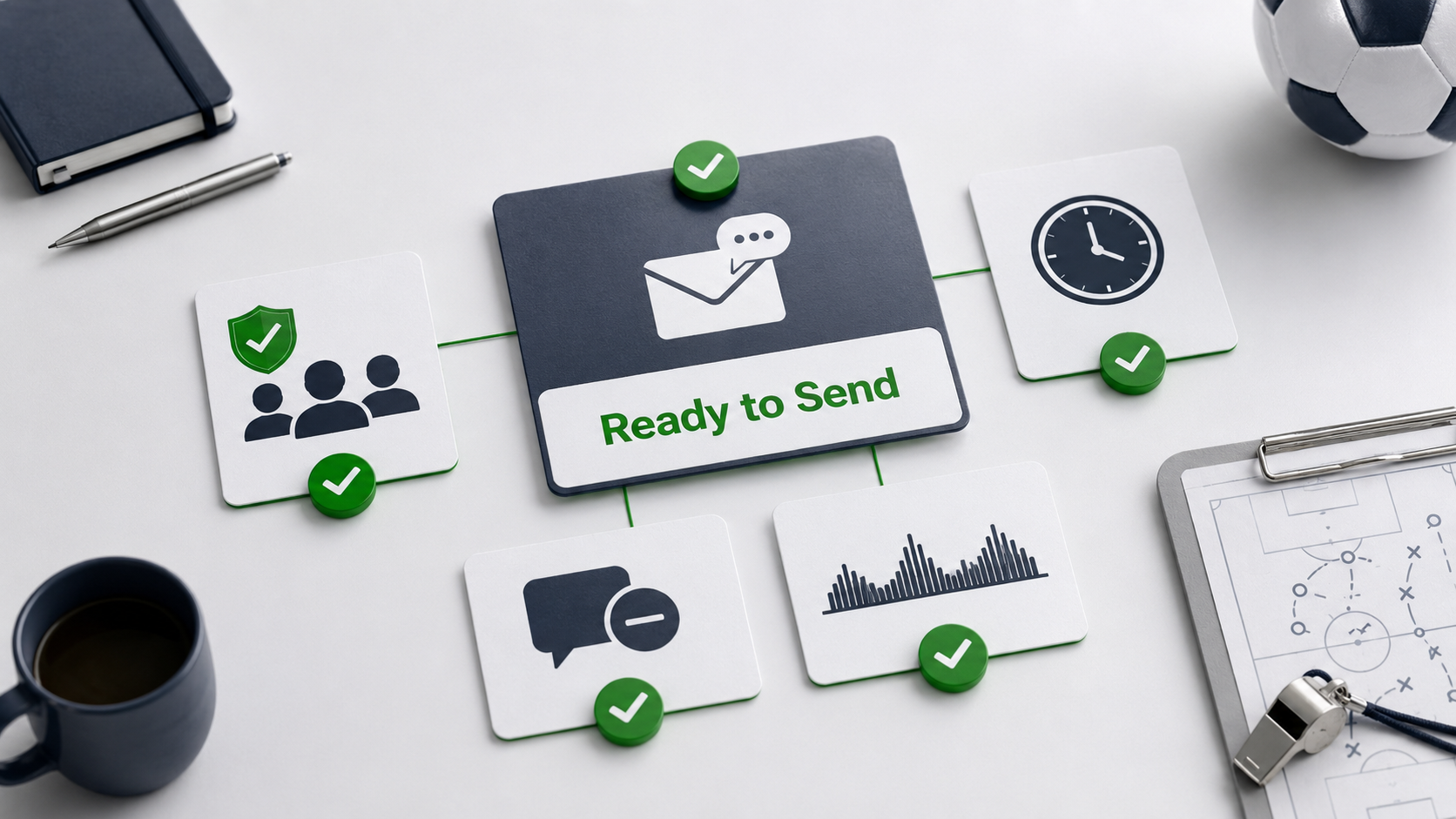
Before launching a World Cup SMS campaign, brands should check permission, sender recognition, message relevance, opt-out readiness, and scale readiness.
Permission: do users clearly expect promotional SMS from your brand?
Promotional SMS should be sent only to users who have given appropriate permission. CTIA’s Messaging Principles and Best Practices are designed to support messaging exchange while protecting consumers from unwanted messages, and CTIA materials emphasize consent and opt-out handling for non-consumer messaging.
For global campaigns, requirements may vary by market. Teams should review local rules before sending promotional messages, especially when campaigns cross borders.
A practical pre-launch check is to ask: did the customer clearly agree to receive this type of message from this brand? If the answer is uncertain, the campaign should not be sent to that segment.
Sender recognition: will recipients know who the message is from?
A customer should immediately recognize the sender. During major events, customers may receive many promotional messages, so unclear sender identity can increase distrust.
Good sender recognition includes:
- A recognizable brand name
- Clear message purpose
- Consistent tone
- Avoiding suspicious links
- Using short, direct copy
If customers cannot tell who sent the SMS or why they received it, even a good offer can feel unsafe.
Message relevance: is the offer connected to a real event moment?
A World Cup reference should not be decoration. The message should connect to a real customer need or campaign moment.
For example:
- “Order before kickoff” is relevant for food delivery.
- “Your match-day kit is back in stock” is relevant for sports merchandise.
- “Check in before the weekend crowd” is relevant for hospitality.
- “Vote for your final prediction” is relevant for community or app engagement.
A generic discount with a football emoji may get attention once, but it rarely builds a strong campaign.
Opt-out readiness: can users easily stop receiving campaign messages?
Opt-out handling should be checked before launch, not after complaints appear. CTIA’s published best-practice materials include opt-in documentation guidance, such as retaining consent acquisition details where applicable.
Brands should make sure opt-out instructions are clear, functional, and respected. If a customer opts out during a high-frequency event campaign, the system should stop promotional messages quickly.
This is especially important during a tournament because message volume can rise. The more messages a brand sends, the more important message control becomes.
Scale readiness: can your SMS setup handle peak campaign traffic?
World Cup campaigns can create traffic spikes around major matches, weekends, and final-stage moments. Brands should review sending capacity, routing plans, monitoring, and support workflows before launch. Teams that need a broader performance lens can also review what affects A2P SMS deliverability before scaling event-based campaigns.
This does not mean every brand needs a complex infrastructure project. It means the campaign calendar should match the SMS setup. A small campaign to a local segment has different requirements from a multi-country campaign with match-day flash offers.
Teams should check:
- Which markets will receive SMS
- Which time windows are most important
- Whether promotional and transactional messages are separated
- Whether opt-outs are processed correctly
- Whether campaign performance can be monitored during peak periods
Common World Cup SMS Campaign Mistakes to Avoid
The most common World Cup SMS mistakes come from treating a global event as an excuse to send more messages rather than better messages.
Treating every subscriber like a football fan
Not every customer cares about football. Even people who follow the tournament may not want every brand to message them about it.
Brands should use interest signals, opt-ins, purchase behavior, or lightweight preference collection before sending repeated World Cup messages. When in doubt, start with broader tournament-season language and let customers choose more specific updates.
Sending too many generic discount messages
Discounts can work, but repeated generic discounts can train customers to ignore the brand. A stronger campaign mixes message types.
For example:
- One message can invite opt-ins.
- One can announce a product drop.
- One can remind customers before a major match.
- One can ask for a poll response.
- One can offer a final-week reward.
This creates rhythm instead of repetition.
Ignoring local time, language, and regional context
A global campaign can fail when it ignores local reality. Messages should reflect local time, language, match relevance, and fulfillment ability.
If a brand cannot localize every market, it should prioritize its most important markets instead of pretending one global message works everywhere.
Using match results or team references without a clear brand reason
Referencing results, teams, or fan emotions can create energy, but it can also feel opportunistic. Brands should use team references only when they have a clear reason and the message is unlikely to alienate other customers.
Neutral messaging is often safer for broad lists. Specific team messaging should be reserved for segments that have shown interest.
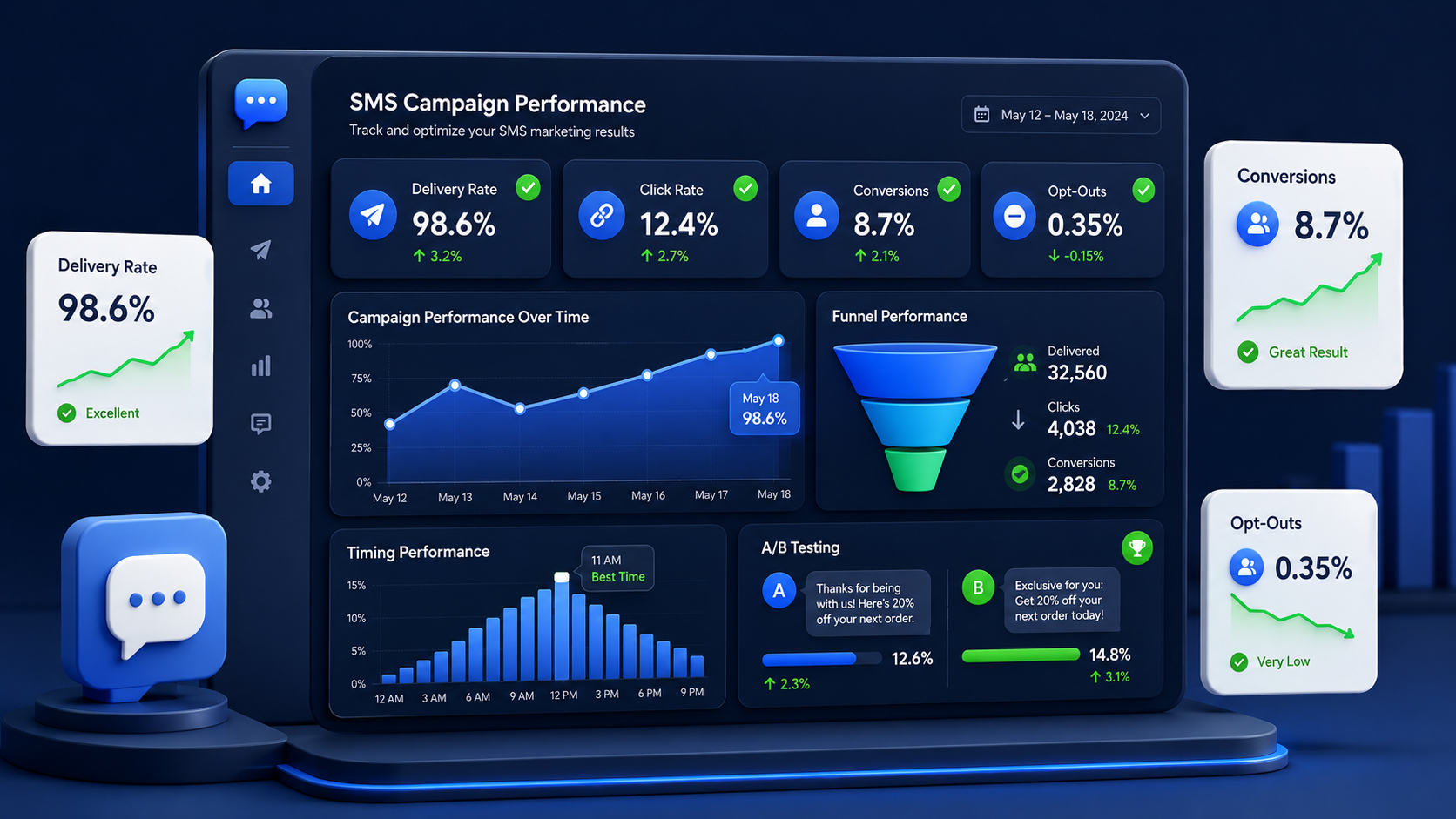
Measuring only clicks instead of campaign quality and subscriber response
Clicks are useful, but they are not enough. A World Cup SMS campaign should also look at:
- Opt-outs
- Replies
- Conversion by segment
- Timing performance
- Repeat engagement
- Revenue per campaign group
- Complaints or support issues
- Post-campaign subscriber health
A campaign that gets clicks but causes heavy opt-outs may not be a healthy success.
How SMSBoosting Can Support Event-Based SMS Campaign Planning
For global brands, the hardest part of World Cup SMS marketing is not coming up with ideas. It is sending the right message to the right market at the right time without losing control of routing, timing, compliance checks, or customer experience.
SMSBoosting supports brands that need SMS-first campaign execution across markets. Its core fit is high-volume cross-border promotional SMS, A2P messaging performance, routing visibility, cost-efficient messaging at scale, and two-way SMS for basic customer interaction. This makes it especially relevant for brands planning event-based SMS campaigns across multiple regions.
Support cross-border promotional SMS across multiple markets
A World Cup campaign may involve multiple countries, languages, time zones, and customer segments. SMSBoosting can support teams that need to plan promotional SMS across markets without treating every destination as the same.
For example, an ecommerce brand may want one campaign flow for North America, another for European fans, and another for high-intent buyers in Southeast Asia. The message logic can stay consistent, while timing and routing need market-aware planning.
Help teams review routing, timing, and traffic planning before peak periods
Major matches can create concentrated sending windows. Brands should review routing and campaign timing before those moments arrive.
A practical next step is to map the tournament campaign calendar, identify the highest-risk sending windows, and check whether the SMS setup can support those sends without disrupting other customer messages.
If provider readiness is still being compared, this bulk SMS provider evaluation checklist can help teams review market coverage, routing quality, reporting, scalability, and support before committing to high-volume campaign traffic.
Keep the CTA focused on evaluation, not hard selling
The best next step is not to send more messages immediately. It is to review whether the campaign is ready.
If your team is planning SMS campaigns around the 2026 FIFA World Cup, start by checking your audience segments, sending windows, market coverage, opt-out handling, and peak-traffic plan. Once those basics are clear, SMS can support timely campaign moments without turning the tournament into message overload.
Planning World Cup SMS campaigns across markets?
SMSBoosting can help your team review audience segments, sending windows, market coverage, opt-out handling, and peak-traffic readiness before tournament campaigns scale.
Talk to an SMS expertFAQ
When should brands start planning 2026 FIFA World Cup SMS campaigns?
Brands should start planning before the tournament begins, especially if they need to collect opt-ins, prepare audience segments, localize messages, or coordinate inventory and fulfillment. Waiting until match week can limit the campaign to last-minute discounts instead of a structured tournament journey.
What types of brands can use World Cup SMS marketing?
Ecommerce brands, sports merchandise stores, food and beverage companies, local retailers, travel and hospitality brands, apps, membership platforms, and selected B2B brands can use World Cup SMS marketing. The key is to connect the message to a real customer moment rather than using the tournament as a generic theme.
Should brands send SMS messages during live matches?
Brands should send during live-match windows only when the message is genuinely useful and expected. A live-match poll, event reminder, or time-sensitive offer may work for opted-in fans. A generic promotional message during an important match may be ignored or feel disruptive.
How many World Cup SMS messages should a brand send?
There is no universal number. The right volume depends on customer permission, campaign relevance, brand category, market, and engagement level. A safer approach is to send fewer, better-timed messages to clear segments rather than frequent messages to the entire list.
What should global brands check before sending World Cup SMS campaigns?
Global brands should check permission, sender recognition, message relevance, local timing, opt-out handling, market rules, routing readiness, and peak-traffic planning. These checks are more important when the campaign covers multiple countries or high-volume match-day sends.
Conclusion
The 2026 FIFA World Cup gives global brands a rare campaign window: many matches, many markets, and many moments when customers may be ready to engage. But SMS should not be used as a blunt promotional tool.
The strongest campaigns will be planned around permission, timing, segmentation, and real fan behavior. Brands should decide who should receive each message, why the message matters at that moment, and what action the customer can take immediately.
For global teams, the opportunity is not just to join the World Cup conversation. It is to turn tournament attention into planned customer moments that feel timely, useful, and controlled.
References
FIFA. FIFA World Cup 26 tournament format and expanded 48-team structure. Source
FIFA. Official host countries and host city information for FIFA World Cup 2026. Source
FIFA. FIFA World Cup 2026 match schedule and 104-game tournament information. Source
CTIA. Messaging Principles and Best Practices for messaging exchange, consent, and unwanted-message prevention. Source