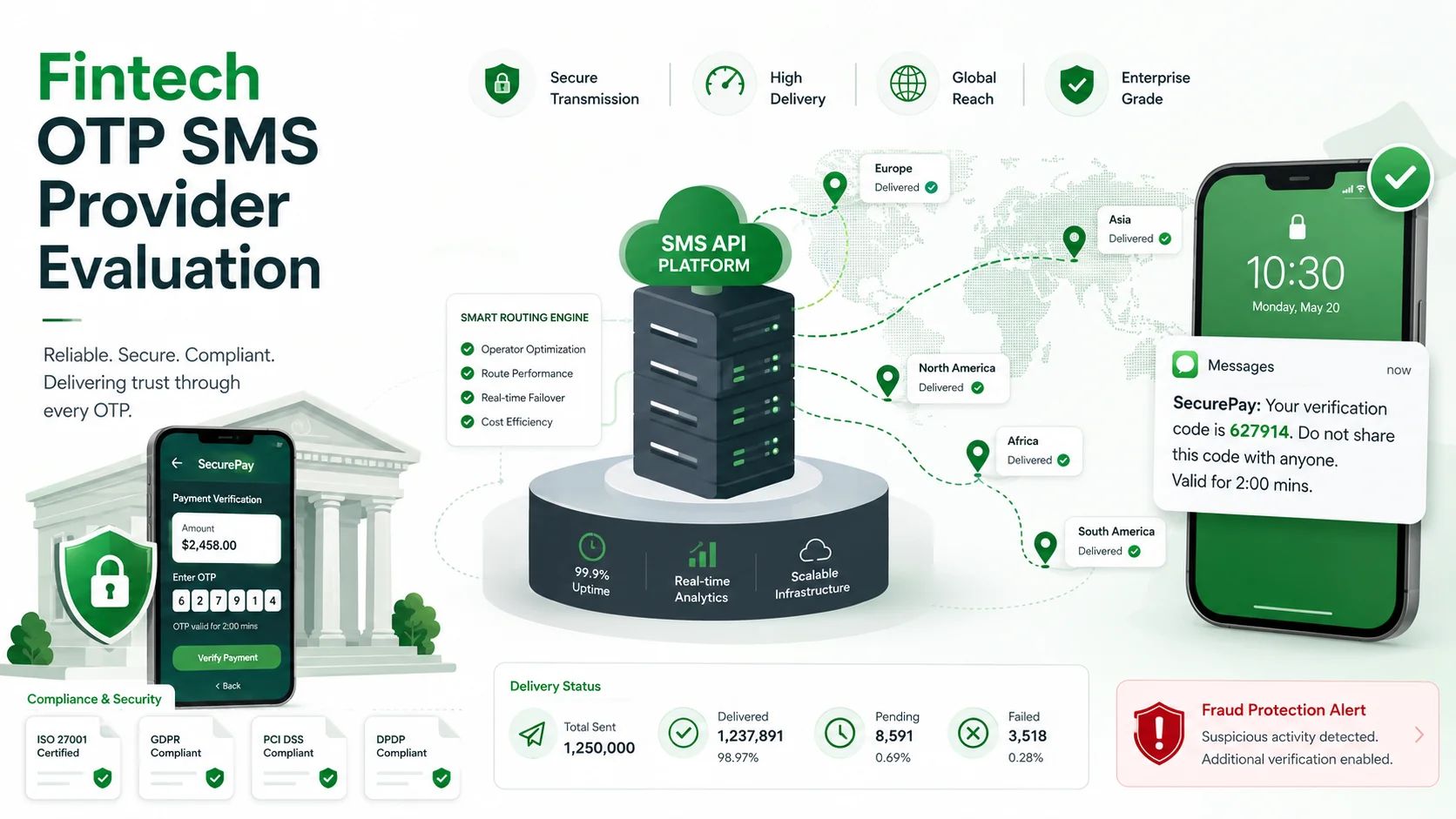
Choosing an OTP SMS provider for fintech is not the same as choosing one for e-commerce or SaaS. A missed verification code during a payment flow costs real money. A provider without PCI-DSS documentation can block your compliance audit. And a bot attack that floods your API with fake requests can drain your SMS budget overnight.
Most “best OTP provider” articles list generic features and call it a day. That does not help you. You need a provider that meets financial industry requirements: compliance certifications, fraud prevention, sub-5-second delivery, and audit-ready reporting.
This guide gives you a fintech-specific evaluation framework — seven criteria that separate fintech-grade providers from general-purpose ones, compliance requirements including PCI-DSS and SOC 2, fraud prevention capabilities you should demand, and a provider comparison evaluated against fintech needs rather than marketing claims. If you are evaluating OTP SMS vendors for a banking app, payment platform, or neobank, this guide is written for you.
What Makes an OTP Provider Fintech-Ready?
A fintech-ready OTP provider is one built to handle the security, compliance, and reliability demands of financial services. General-purpose SMS APIs can send codes. Fintech-grade providers can prove those codes were sent securely, logged completely, and protected against fraud.
Use these seven criteria to evaluate any OTP SMS provider for financial use:
- Compliance Certifications: The provider should document PCI-DSS alignment, SOC 2 Type II audits, and GDPR or regional privacy compliance. Ask for audit reports, not marketing claims.
- Fraud Prevention: Look for real-time anomaly detection, SMS pumping protection, and artificially inflated traffic (AIT) blocking. Rate limiting alone is not enough.
- Payment-Flow Latency: Payment verification codes need sub-5-second delivery. Login codes can tolerate slightly longer, but payment auth is unforgiving.
- Data Residency and Encryption: Message logs and metadata must stay within required jurisdictions. End-to-end encryption should cover data in transit and at rest.
- Audit Trails and Reporting: Financial regulators require complete delivery records. Your provider must offer granular logs, error codes, and exportable reports.
- 24/7 Support With Escalation: When OTP delivery fails during a market open or payroll window, you need a human engineer, not a ticket queue.
- Surge Handling Without Team Disruption: Payment OTPs do not wait for business hours. Your provider should absorb 10× traffic spikes without requiring your engineers to reconfigure APIs, open support tickets, or restart services. Every hour your team spends on emergency scaling is an hour not spent on product.
For a general overview of OTP SMS capabilities, see our OTP SMS guide.
Compliance and Security Requirements for Financial OTP
Compliance is not optional in fintech. Your OTP provider does not handle card numbers, but it does process phone numbers, timestamps, and delivery metadata that regulators classify as sensitive financial data.
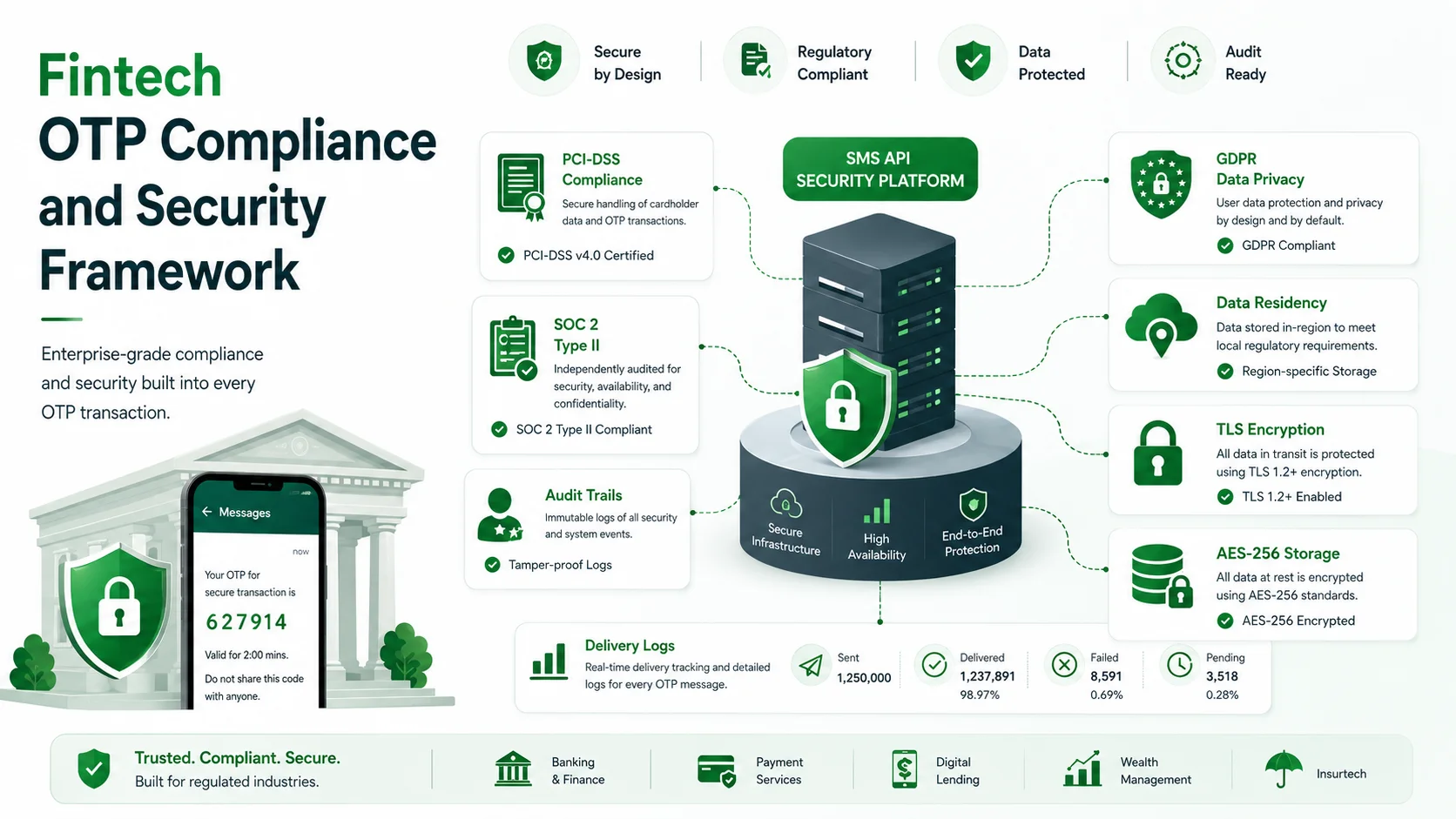
PCI-DSS alignment: While OTP providers rarely store payment card data, they must demonstrate that their infrastructure does not interfere with your PCI scope. Ask for an Attestation of Compliance (AOC) or a completed SAQ. See the PCI Security Standards Council for official guidance for service providers.
SOC 2 Type II: This audit proves the provider maintains security controls over time, not just at a single point. It covers data protection, system availability, and confidentiality. Demand the report before you sign. The AICPA publishes the official SOC 2 framework.
Data residency: EU financial data often must remain in the EU. Indian banking data must stay in India. US state laws vary. Your provider should offer region-specific routing and data storage, not just “global coverage.” See the EU GDPR guidance on cross-border data transfers.
Encryption standards: TLS 1.2+ for data in transit. AES-256 for data at rest. That is a gap if the provider cannot state these clearly.
Fraud Prevention: Why Fintechs Need More Than Basic Rate Limiting
Fintech apps face higher fraud exposure than most industries. A single botnet can fire thousands of fake OTP requests at your API, burning budget and distorting analytics. Generic rate limiting will not stop a determined attack.
Three attack vectors every fintech should know:
- SMS Pumping: Bots request OTPs to numbers they control, often through premium routes. The attacker splits revenue with the carrier. Your budget drains fast.
- Artificially Inflated Traffic (AIT): Fake app installs trigger OTP verifications. The attacker collects payout from ad networks while you pay for useless messages.
- International Revenue Share Fraud (IRSF): OTPs sent to premium-rate international numbers generate revenue for the attacker. A small list of these numbers can cost thousands.
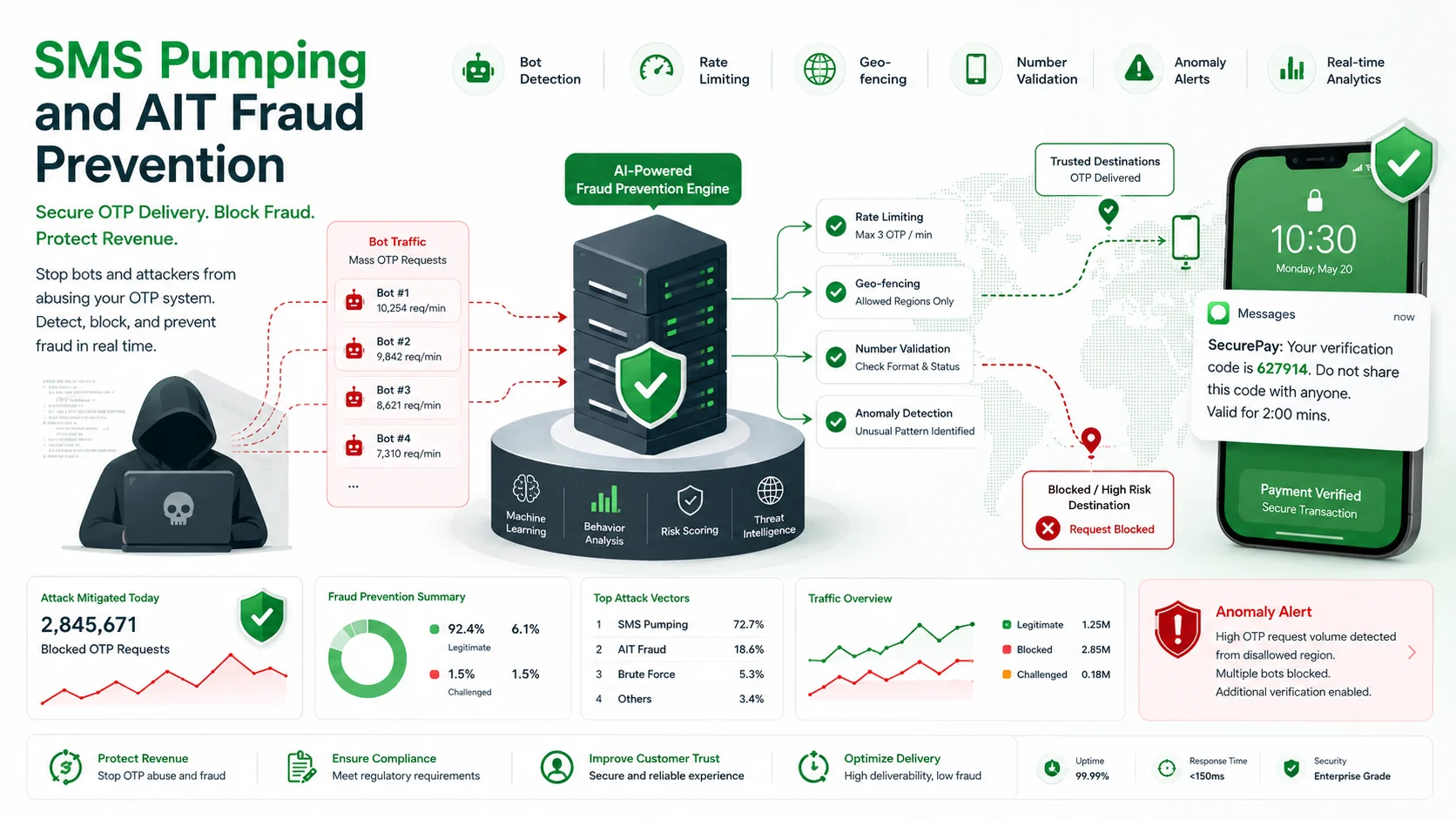
What to demand from your provider:
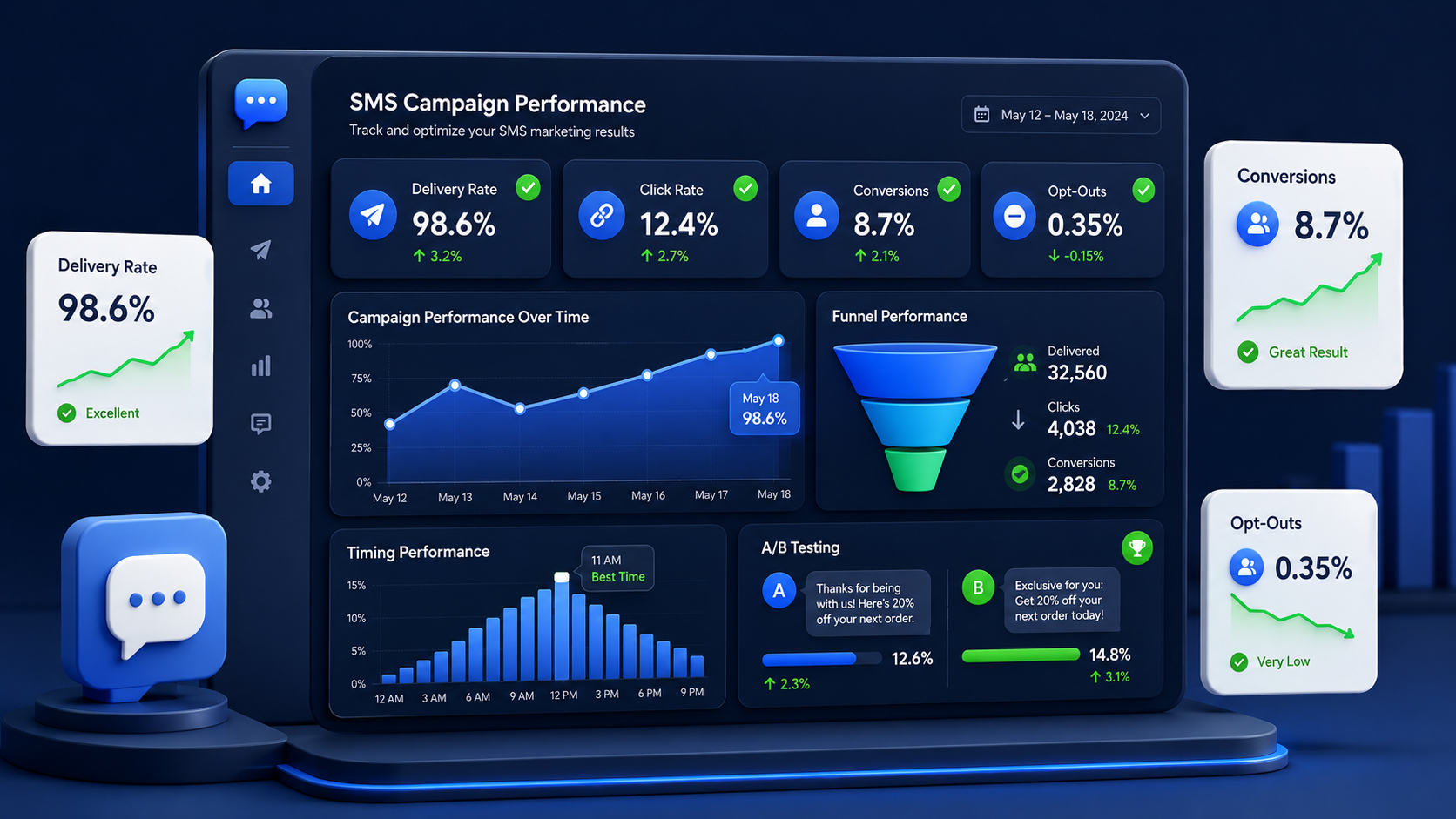
- Real-Time Anomaly Detection: Your provider should flag traffic spikes by user, IP, or destination before they drain your budget.
- Geo-Fencing: Block high-risk countries or regions entirely if you do not serve them.
- Number Validation Before Send: Catch disposable or premium-rate numbers before your API accepts the request.
- SMS Pumping Protection: Configurable thresholds that stop bots from burning through your message quota.
- Clear Fraud Billing Policy: Know whether you pay for fraudulent sends (some providers bill for everything; others waive fraud-related charges).
Unprotected fintechs often see fraud add 15–30% to their SMS costs (based on industry operational experience). Prevention is cheaper than cleanup.
Which OTP SMS Providers Are Fintech-Ready?
Here is how four leading providers stack up against fintech-specific requirements. No provider wins every category. Choose based on your priorities.
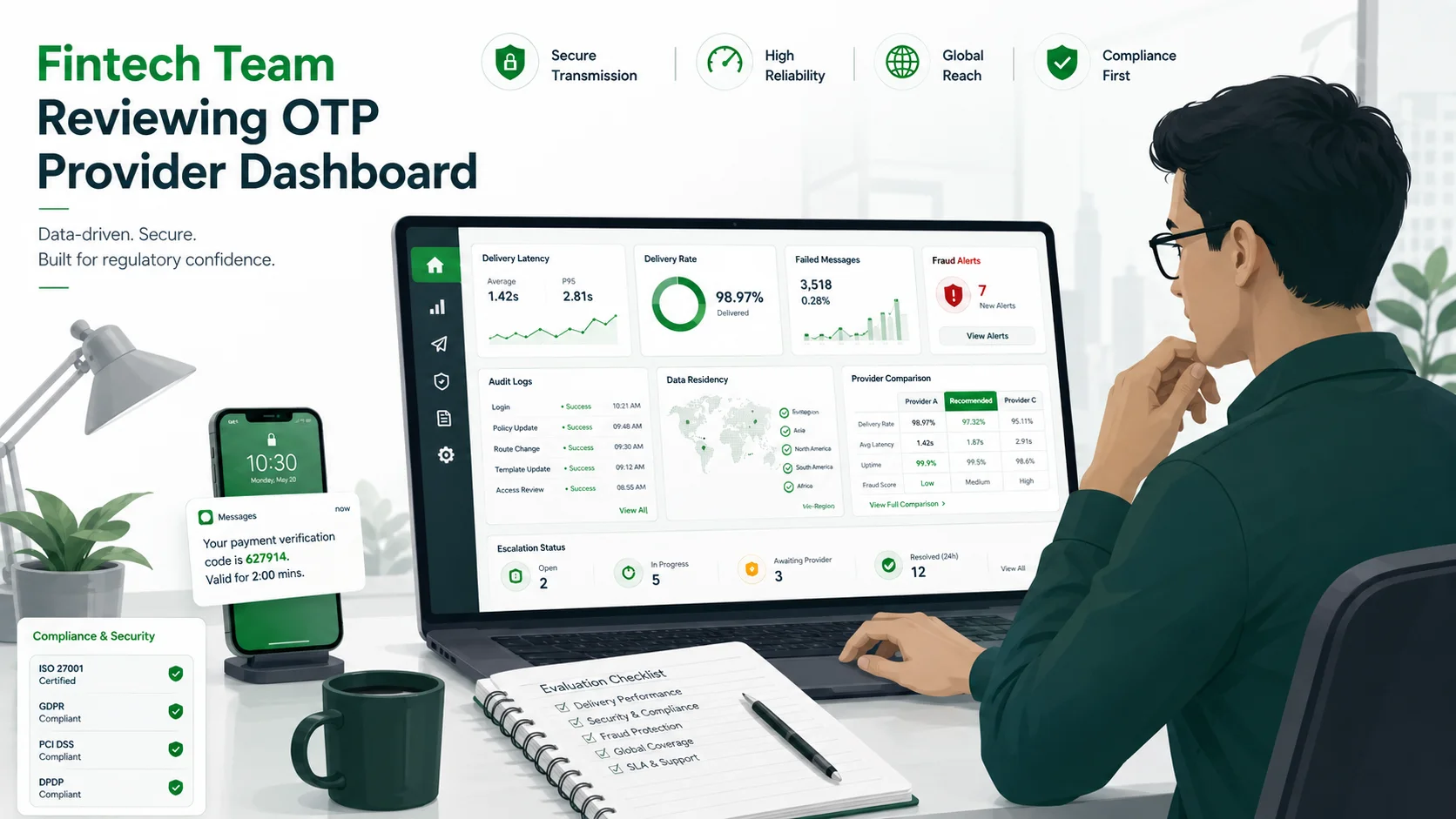
| Provider | Compliance | Fraud Prevention | Latency SLA | Est. Price (US) | Best For |
| Twilio Verify | SOC 2, GDPR | Fraud Guard (3 tiers) | Under 5s | ~$0.05/verification + SMS | Enterprise multi-channel teams |
| Vonage Verify | SOC 2, GDPR | Fraud Defender + Silent Auth | Under 5s | ~$0.057/verification | Regulated industries, step-up auth |
| Plivo Verify | SOC 2, GDPR | Fraud Shield (ML-based) | Under 5s | ~$0.0066/SMS only | Cost-conscious high-volume senders |
| SMSBoosting | SOC 2 aligned | Built-in anomaly detection + rate limiting | Under 5s | Contact for wholesale rates | Teams needing route redundancy + direct support |
Pricing data is approximate as of May 2026. Verify current rates at each provider’s website before making decisions.
Twilio Verify: Best for Enterprise Multi-Channel Authentication
Twilio Verify offers broad compliance documentation and one of the more mature developer ecosystems in the OTP market. Fraud Guard provides tiered protection, but costs can rise quickly at scale. Its per-verification pricing simplifies billing, but it may become expensive above 100,000 monthly transactions. Twilio Verify is a strong fit for enterprise teams that need multi-channel authentication and have the budget for premium infrastructure.
Vonage Verify: Best for Step-Up Authentication and EU Coverage
Vonage Verify is a strong option for fintech teams that need step-up authentication, regulated-industry support, and solid European coverage. Silent Authentication can reduce SMS dependency where supported by carriers. Fraud Defender adds real-time alerting with configurable thresholds, and Vonage’s compliance documentation is useful for teams with European data residency requirements.
Plivo Verify: Best for Cost-Conscious High-Volume SMS
Plivo Verify delivers fraud protection through Fraud Shield at a lower price point than many enterprise-focused competitors. Its SMS-based pricing can make costs more predictable for high-volume senders, but fraud rules may require more manual configuration. Plivo is best for fintech teams that want reliable OTP delivery without paying for a heavier enterprise platform.
SMSBoosting: Best for Route Redundancy and Direct Support
SMSBoosting is a better fit for fintech teams serving markets with variable carrier quality or teams that need direct engineer access instead of ticket queues. Its 1,000+ supplier partnerships support route redundancy, so traffic can shift automatically when one route underperforms. Built-in anomaly detection, rate limiting, fraud monitoring, and 24/7 technical support come standard. The HTTP GET/POST JSON API can usually be integrated in one to three days. SMSBoosting targets 99.99% delivery for OTP SMS, and its wholesale pricing model can benefit high-volume senders that need stable delivery costs.
What Does Fintech OTP SMS Actually Cost?
Per-message pricing tells only part of the story. For fintech OTP, total cost of ownership includes four components:
- Base Message Cost: Per-SMS rate, which varies by destination country and volume tier
- Retry Costs: Failed deliveries require resends. A 2% failure rate on 500,000 monthly messages means 10,000 extra sends
- Fraud Exposure: Unprotected accounts can see 15–30% budget inflation from SMS pumping and AIT
- Support Tiers: Free ticket-based support often means 24-hour response times. For payment-critical systems, you need paid plans with phone escalation
- Emergency Scaling Incidents: A provider that cannot handle bursts automatically forces your engineers into firefighting mode. At typical fintech engineering rates, a single 4-hour scaling incident costs more than the price difference of thousands of messages
Most providers offer volume discounts starting at 100,000 messages monthly. Enterprise contracts at 1M+ messages typically include custom SLAs with financial penalties.
5 Red Flags That Disqualify an OTP Provider for Fintech
Use this as a fast rejection checklist before you move into pricing talks or technical testing:
- No Current SOC 2 or PCI-DSS Documentation: If a provider cannot share audit evidence or compliance documentation, it is not ready for fintech review.
- Fraud Controls Stop at Basic Rate Limiting: Rate limits help, but they do not replace SMS pumping detection, anomaly monitoring, number validation, or country-level controls.
- No Clear Data Residency Options: Fintech teams need to know where message logs, user phone numbers, and delivery metadata are stored. “Global infrastructure” is not specific enough.
- No Written SLA or 24/7 Escalation Path: Payment OTP failures need immediate escalation. A standard email ticket queue is not enough for transaction-critical flows.
- Unclear Billing for Failed, Blocked, or Fraudulent Traffic: Ask how the provider reports delivered, failed, blocked, retried, and fraud-related messages. If the billing report cannot separate them, cost control becomes difficult.
Conclusion
Choosing an OTP SMS provider for fintech means looking beyond generic feature lists. Start with compliance certifications, then test fraud-prevention capabilities, validate latency SLAs for payment flows, confirm data residency options, review audit-trail completeness, and verify the quality of 24/7 support. These seven criteria separate vendors that can handle financial services from those that cannot.
Compliance certifications, fraud prevention, and payment-flow latency are not nice-to-haves. They are requirements.
Start your evaluation with SMSBoosting. Our OTP SMS service includes fraud monitoring, route redundancy across 1,000+ supplier partnerships, and 24/7 technical support. Start a free trial to test delivery in your target markets.
Frequently Asked Questions
Do fintechs need a separate OTP provider for different regions?
Not necessarily. A global provider with regional routing can handle multi-region delivery. The key is data residency: confirm message logs for EU users stay in the EU, Indian data stays in India, and so on.
What SLA should fintechs require for payment verification OTPs?
Demand sub-5-second delivery for payment flows. Leading providers target 99.9% uptime (claimed by providers), but verify this against your own monitoring data. Login OTPs can tolerate slightly longer, but payment authorization is time-critical.
Can we use the same provider for OTP and marketing SMS?
Yes, but use separate sender IDs and routing profiles. Marketing SMS traffic can trigger carrier filtering that affects transactional delivery. Keep them isolated.
How long does it take to integrate an OTP SMS API?
Based on typical integration experience, a well-documented REST API takes one to three days for basic integration. Add one week for fraud rule configuration, compliance validation, and staging testing.