
Choose an SMS platform by validating the factors that actually affect outcomes in the countries that matter to your business: sender identity readiness, compliance hygiene, routing resilience, reporting quality, peak controls, and incident support. Then test those claims in a short pilot before you scale.
That is the part many first-time buyers miss. Choosing an SMS platform is not mainly a feature decision. It is a predictability decision. If your team cannot explain why results change by destination, it will struggle to scale SMS with confidence.
This guide is for non-technical buyers who already know they want to send SMS, whether for promotions, alerts, support updates, or optional login codes, but do not want to get trapped by surface-level vendor comparisons.

How to Define the Right SMS Platform for Your Use Case
Many buyers start by searching for the “best SMS API.” That sounds reasonable, but it often leads to the wrong comparison. The better question is not “Which provider has the longest feature list?” It is “Which platform gives us the most predictable, explainable results in the destinations that matter to our business?”
For most teams, the right SMS platform is the one that helps them keep results understandable when sender rules, routing conditions, or filtering pressure change. That matters more than a polished demo or a low entry price.
A simple working definition is this: the right SMS platform is the one your team can explain, stabilize, and repeat in your top markets before you optimize for price.
What to Write Down Before You Compare Providers
Before you compare vendors, write down two outcomes and one constraint.
- Outcome 1: delivery outcome. Messages reach real users consistently in our top destinations.
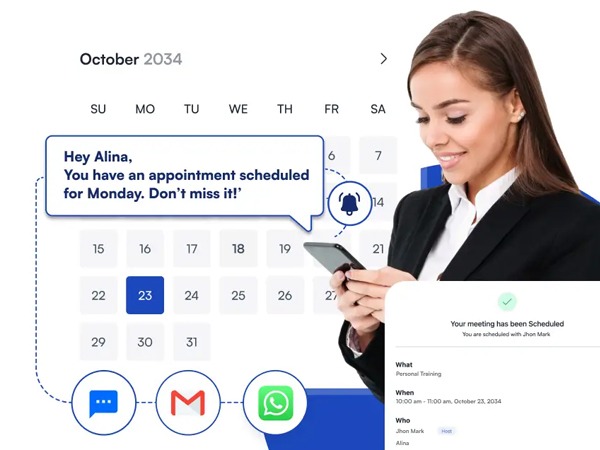
- Outcome 2: business outcome. SMS supports a result we can measure, such as fewer missed appointments, fewer support tickets, or more repeat purchases.
- Constraint: risk we cannot afford. We cannot absorb surprises in sender rules, compliance, or peak traffic behavior.
This simple framing improves almost every vendor conversation. If a provider cannot explain how they help you reach both outcomes while controlling the main constraint, they are probably not the right fit for your use case.
For non-technical teams, the fastest way to avoid a bad comparison is to use one sentence as your filter:
Pick the SMS platform your team can explain, stabilize, and repeat in your top destinations—then optimize for price.
3 Traps That Mislead First-Time SMS Platform Buyers
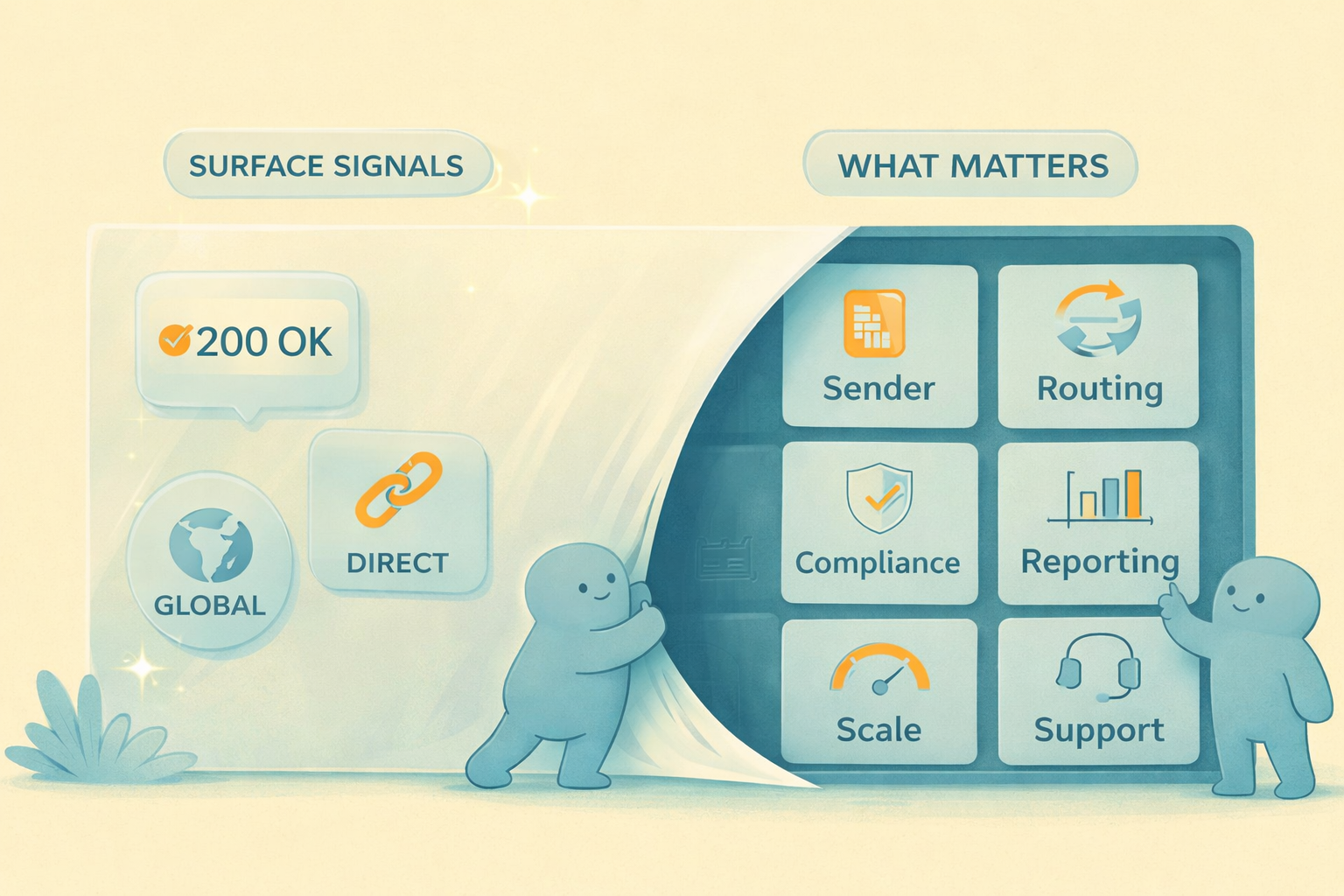
Most bad SMS platform decisions start with trusting surface signals such as “200 OK,” “direct routes,” or “global coverage.” Those signals can be real, but they do not prove what you actually need: stable outcomes that you can explain when something changes.
If you want a faster vendor filter, treat these as red flags until proven otherwise.
Why “200 OK” Is Not a Delivery Promise
A 200 OK means your API request was accepted by a provider’s system. It does not mean the message reached the phone inbox, kept your sender identity intact, or avoided filtering. In real-world SMS, outcomes are shaped by identity rules, routing choices, and carrier policies, often differently by country.
If a provider sells “API success” as “delivery success,” your team will end up debugging business outcomes with the wrong data. And if your team still assumes the platform controls everything after send, this guide on what an SMS platform cannot control is a useful next read.
Why “We’re Direct” Is Not a Stability Promise
“Direct routes” can be a real advantage in some markets. But “we’re direct” is not a stability guarantee by itself. Route quality can vary over time, and even a “direct” setup can include multiple paths, partners, or carrier conditions underneath.
A stronger buyer question is this: What happens when conditions change? Do they have fallback behavior, destination-level visibility, and a way to keep results steady when one path degrades?
Why “Global Coverage” Hides the Hard Part
A coverage map is not a launch plan. “200+ countries” does not tell you:
- whether your sender type will work in your specific destination,
- whether registration is required and how long it takes,
- what throughput limits or content restrictions exist,
- what reporting you will get when something drops.
Coverage is not a number. Coverage is a set of country-specific constraints.
A 6-Factor Scorecard for Choosing an SMS Platform
Use this scorecard to judge whether a platform is likely to stay stable when sender rules, routing conditions, or filtering pressure change. In plain English, these six factors tell you whether the provider can help your team keep SMS understandable under real operating conditions.
This is the core decision framework in the article. You can reuse it when comparing vendors, expanding into new countries, or re-checking a platform after launch.
How to Score Each Factor on a 0–2 Scale
Score each factor with a simple rubric:
- 0 = Unproven: vague answers, no destination-level proof, unclear processes
- 1 = Partial: works for some countries or some use cases, but with gaps
- 2 = Operational: clear proof, repeatable process, and realistic limitations
| Factor | 0 (Unproven) | 1 (Partial) | 2 (Operational) |
|---|---|---|---|
| Sender identity readiness | “One sender works everywhere” | Some guidance, incomplete timelines | Country-ready identity plan plus backups |
| Routing resilience | “We route automatically” | Some redundancy, unclear behavior | Predictable fallback plus explainable changes |
| Compliance readiness | “We follow rules” | Basic opt-out, limited controls | Consent, content hygiene, and monitoring |
| Debuggable reporting | Only high-level stats | Some breakdowns, inconsistent fields | Destination-level data you can triage fast |
| Scale controls | “We handle volume” | Basic throttling, few knobs | Clear pacing, queue, and retry behavior |
| Support and incidents | Generic support claims | SLAs exist, shallow RCA | Escalation path, evidence, and prevention mindset |
You do not need perfection. You need a score you can defend and a plan for the gaps you cannot avoid.
What “Pass” Looks Like Before You Sign
Before you commit, aim for three pass signals:
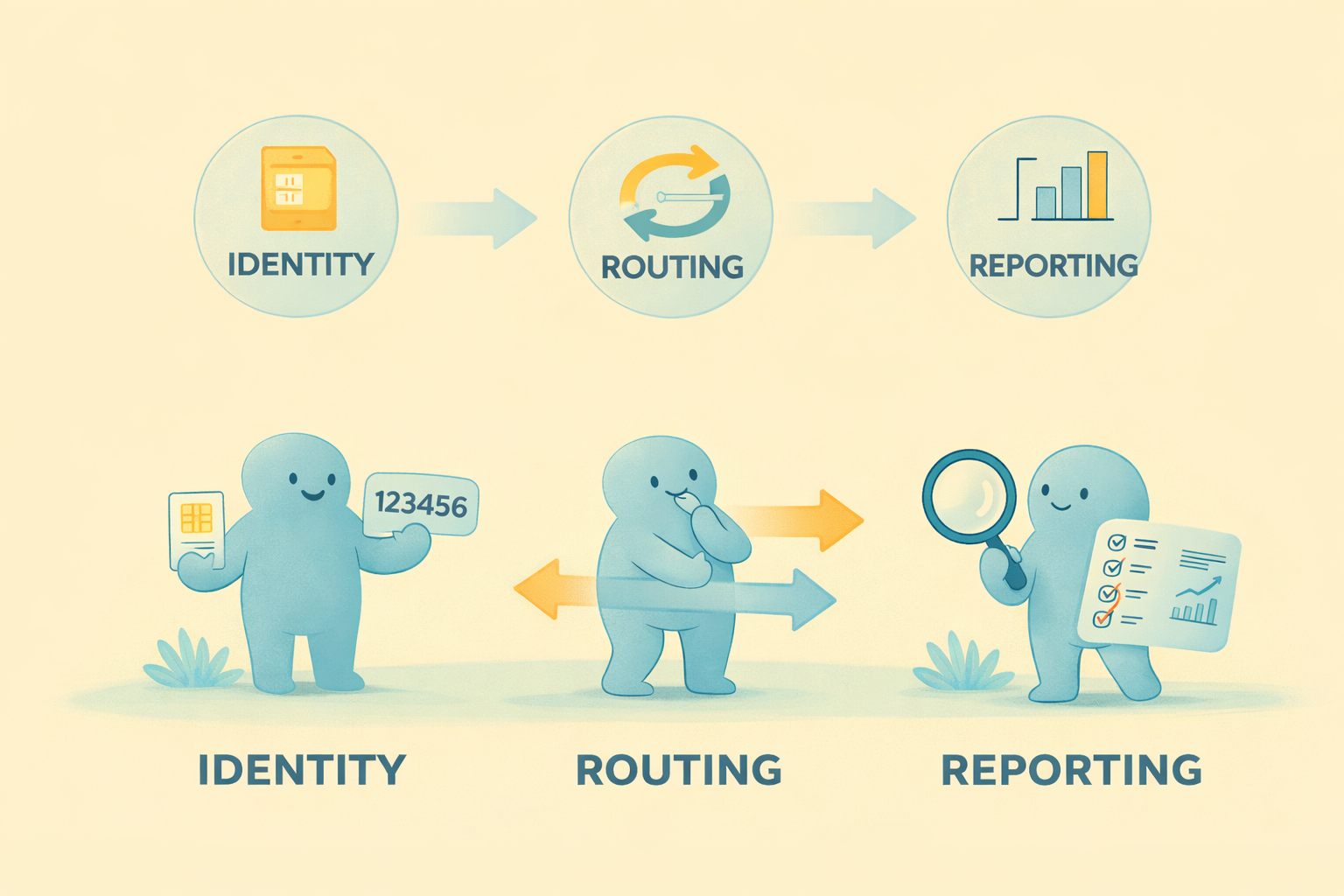
- They can explain outcomes by destination, not just aggregate charts.
- They can name real constraints such as identity, compliance, and throughput without hand-waving.
- They propose a pilot that matches your use case, not a generic “try us” setup.
If you only get sales confidence and not operational clarity, pause.
Factor 1 of 6: Sender Identity Readiness by Destination
If sender identity is not ready by destination, delivery can fail or branding can be replaced even when the API succeeds. In simple terms, sender identity means the sending name or number format that users see, and that format does not work the same way in every country.
The practical buyer goal is to plan two identity backups for your key markets, for example a registered long number plus a short code where appropriate, or a toll-free number plus a registered local number.
What to Verify for Sender Types and Registration
Check these three items early:
- Sender types that work for your destinations
Examples: 10DLC (US), toll-free (US/CA), short codes (many markets), alphanumeric sender IDs (some countries, often with restrictions). - Registration requirements and timelines
Ask what needs registration, what needs proof, and what the realistic timeline looks like. - Brand consistency under failure
Ask what happens if a sender is not accepted. Will it be replaced, blocked, or rerouted?
This is not busywork. It is the difference between “we can launch next week” and “we need a new identity plan.”
What Can Change Across Countries
A simple scenario helps. Your sender name works in Country A, but in Country B the same identity is replaced, rejected, or filtered unless it is pre-registered. Your dashboard may still show “sent,” but your brand is missing on the user’s phone, or the messages never appear.
That is why “one sender globally” is a risky assumption. If you want a more diagnostic follow-up, why business text messages fail is the best next read.
Factor 2 of 6: Routing Resilience When Conditions Change
Routing resilience means the platform can keep results steadier when one delivery path degrades. In simple terms, it is the ability to avoid depending on one fragile path when conditions change.
A buyer-friendly way to think about it is two paths and one fallback for your most important destinations. If you want a simpler map of the handoff chain behind those paths, start with how SMS platforms connect to mobile networks.
What “Fallback” Actually Means in Practice
Ask what fallback means in real operations. You are looking for clarity on behaviors such as:
- How the system decides to switch paths
What signals or thresholds matter? Is switching automatic, manual, or both? - What changes when it switches
Cost, throughput, sender constraints, and reporting fields can all change. - How quickly you will know
Ask whether there are alerts, change logs, or incident notices.
Fallback is only helpful if the behavior is predictable and visible.
What to Ask SMS API Providers About Route Changes
Here are five questions that surface reality fast:
- What triggers route changes for a destination, and who controls that decision?
- Can we request route preferences for key countries, and what tradeoffs come with that?
- How do you detect performance drops, and what signals do you watch?
- What visibility do we get when a change happens?
- What is your default stance: optimize for cost, delivery, or stability?
A good provider will not pretend there is one perfect answer. They will explain the choices.
Factor 3 of 6: Compliance Readiness That Prevents Filtering Pressure
Compliance readiness keeps filtering pressure from building up until performance suddenly collapses. If your team only looks at delivery rate, you can miss the early warning signs—complaints, opt-outs, and content mismatch—that often show up first.
Think in a 30-day risk window. Problems often build quietly before they turn into obvious blocks.
Consent, Content, and Use-Case Alignment
A practical compliance frame is a three-part fit:
- Consent: the user expects messages, and how you collected opt-in matters.
- Content: messages match what the user opted into.
- Use case: your traffic type matches the sender and route expectations, whether that is marketing, transactional, or support traffic.
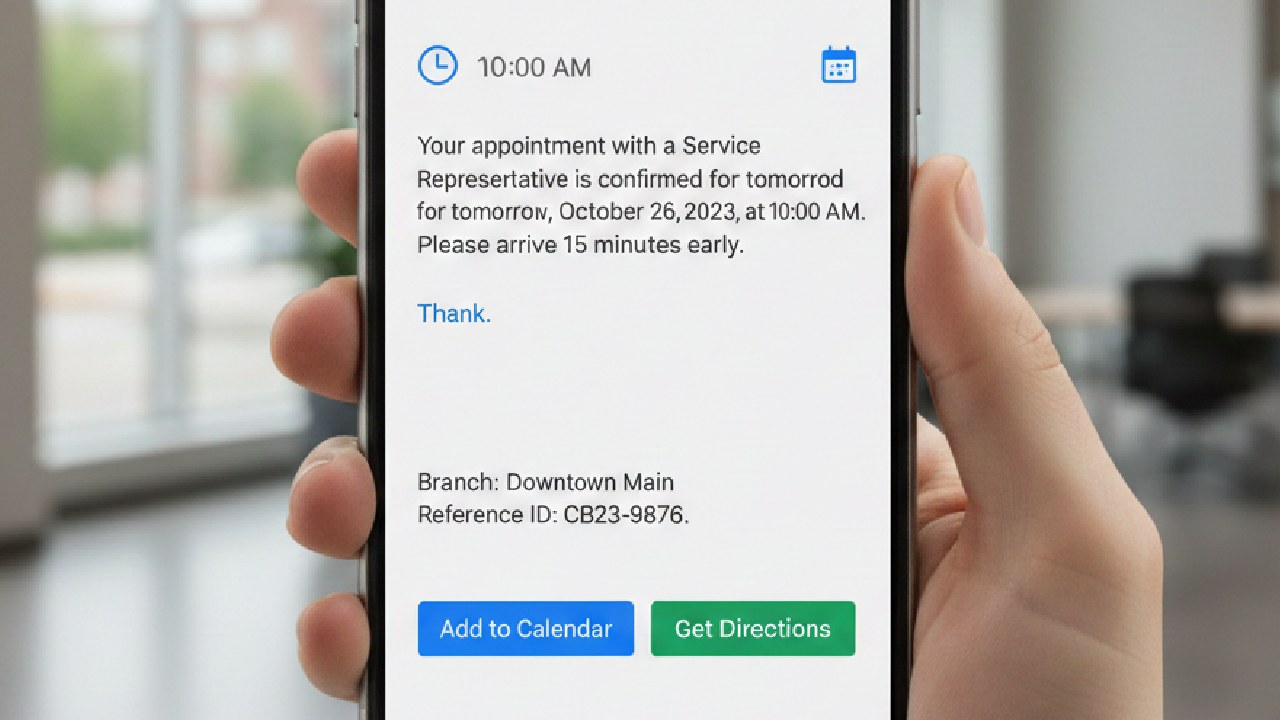
Examples help. “Order shipped” and “Your appointment is tomorrow” are very different from “Flash sale ends tonight,” and mixing them carelessly under one identity can create complaints quickly.
What “Quiet Degradation” Looks Like Before Blocks Happen
Two warning signals often appear before a dramatic failure:
- Opt-out rate creeps up while delivery still looks fine.
- Complaint signals rise or support tickets spike even though API success remains high.
If your platform cannot help you see those signals or cannot help you segment traffic to reduce them, you are flying blind.
Factor 4 of 6: Reporting You Can Debug at Destination Level
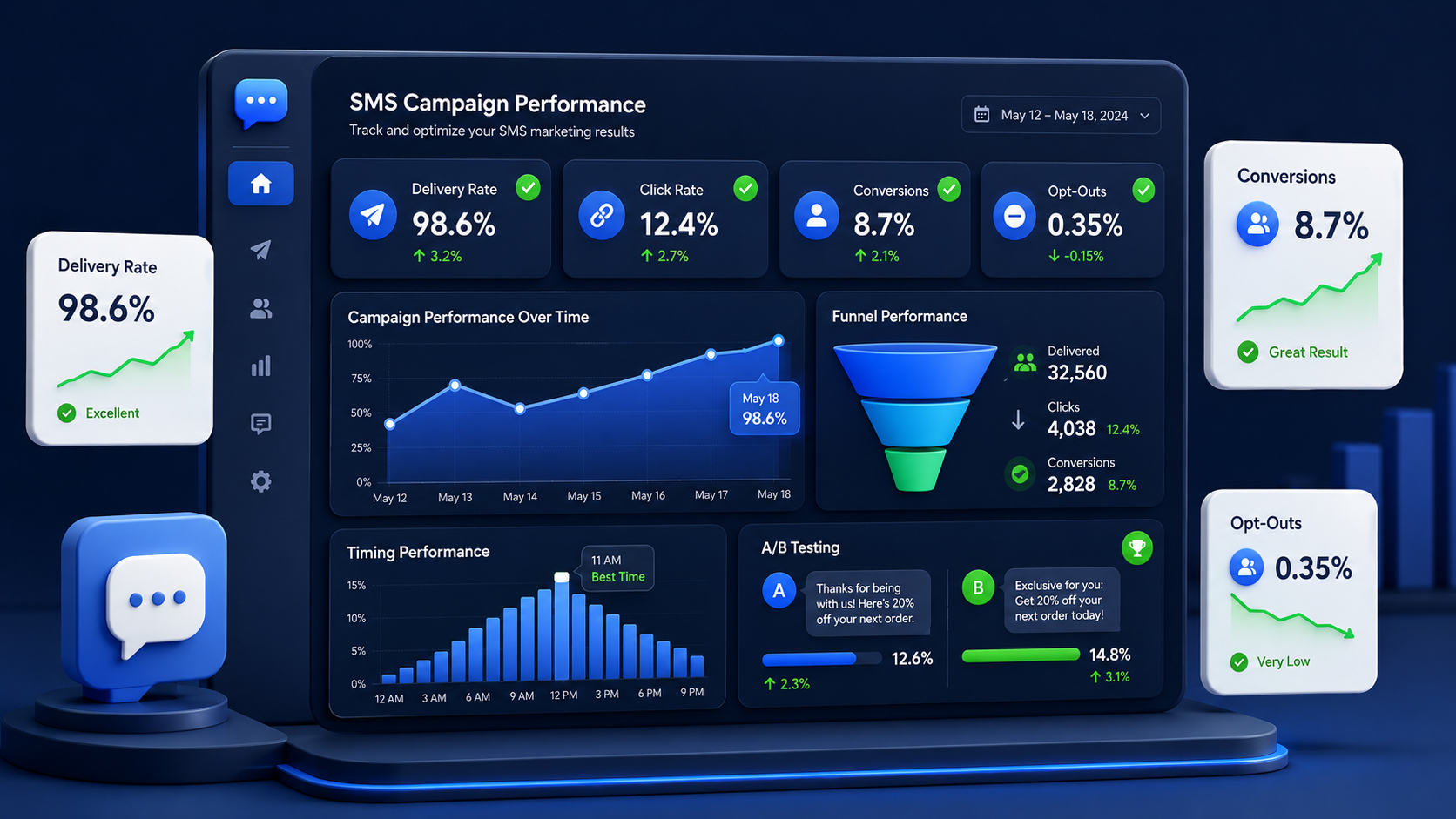
Debug-grade reporting means you can see enough detail to form a useful first diagnosis quickly. For a non-technical buyer, that usually means you can tell whether a problem is more likely tied to sender identity, routing behavior, or filtering pressure.
A realistic goal is 15-minute triage for “what changed” in your top markets.
The Minimum Fields That Make Troubleshooting Possible
Ask for reporting fields that make analysis possible. A practical minimum set often includes:
- destination country, and ideally carrier or MNO when available,
- sender identity type used,
- route label or route class, even if abstracted,
- timestamps for submission and delivery events,
- error codes or failure reason categories,
- message type tag, such as marketing vs transactional vs support.
You do not need perfect telecom forensics on day one. You need enough detail to stop guessing.
How to Separate “Carrier Filtering” vs “Routing” vs “Identity”
A simple split your team can learn:
- Identity issue: sender rejected, replaced, or not registered for the destination
- Routing issue: path quality changes, congestion, or route shifts correlate with outcomes
- Filtering issue: content or consent patterns trigger higher scrutiny even when routes are fine
Good reporting will not solve every problem. It helps you locate the problem faster.
Factor 5 of 6: Scale Controls for Peaks and Retries
Scale controls are the settings that help traffic stay orderly when volume rises. In practice, that means pacing, throttling behavior, queue handling, and retry rules that do not turn a busy moment into a delivery mess.
A simple buyer standard is one peak plan and two limits for your most important flows: a pacing limit and a retry limit.
Pacing, Throttles, Queues, and Retries
Four controls matter more than extra features in early scale:
- Pacing: how fast you send to a destination
- Throttles: what happens when you exceed allowed throughput
- Queues: whether messages wait safely or fail fast
- Retries: whether retries are controlled or accidentally multiply traffic
This is also where sender types matter. For example, short codes can often support much higher throughput than standard long numbers in many programs. Use that only as a rough mental model, though. Exact limits vary by market, program rules, and registration status.
What to Test During a Peak Simulation
Run a small peak simulation during your pilot:
- send a controlled burst to your top destination,
- observe how the platform queues or throttles,
- check whether reporting stays readable,
- confirm retries do not spiral cost or volume.
You are not trying to break the platform. You are trying to learn how it behaves under stress.
Factor 6 of 6: Support, Escalation, and Incident Response
In SMS, support is part of the product because outcomes can change even when your code does not. What matters is not just whether support exists, but whether the provider can escalate a real problem fast enough to help you stabilize results.
A buyer goal that is simple and meaningful is one SLA and one escalation path you can rely on.
What “Support Quality” Means in Telecom Terms
Ask for three promises you can measure:
- Response time for severity levels, not one generic SLA
- Escalation path that reaches routing or operations specialists when needed
- Root-cause clarity: what they can share, how fast, and how prevention works
If a provider cannot describe how incidents are handled, you will learn the hard way.
What Evidence to Request Before Committing
Request proof that support is real:
- An anonymized incident write-up showing timeline, cause category, and preventive steps
- A sample escalation process showing who gets involved, what data you provide, and what you should expect
This turns “trust us” into something you can evaluate.
15 Vendor Questions to Compare SMS API Providers
If you want a fast way to compare providers, use this list in one evaluation call. Ask for direct answers, examples tied to your top destinations, and limitations as well as strengths.
- Verify which sender types work for our top three destinations, and which require registration.
- Verify typical registration timelines and what documentation we need.
- Confirm what happens when a sender is rejected: blocked, replaced, or rerouted.
- Confirm whether we can request route preferences for key countries and what tradeoffs follow.
- Request a clear explanation of fallback behavior and how you alert us to route changes.
- Request destination-level reporting fields such as country, timestamps, reason categories, and route label.
- Verify how you classify and report carrier filtering vs routing vs identity failures.
- Confirm pacing controls and what happens during throttling: queue, fail, or retry.
- Confirm default retry behavior and how to cap retries by use case.
- Verify throughput expectations for our use case and sender setup.
- Request how opt-outs are handled and how you prevent compliance risk from building quietly.
- Verify whether we can segment traffic types in reporting.
- Confirm support SLAs by severity and the escalation path for urgent deliverability drops.
- Request a sample incident summary showing how issues were handled.
- Confirm what changes can happen under the hood without code changes, and how you communicate them.
SMS API Pricing Questions That Reveal Total Cost
When evaluating pricing, focus on total cost drivers, not just rate cards:
- Identity programs and registrations: what costs are tied to numbers, brands, or campaigns?
- Retries and billing units: what counts as billable, and how do retries affect spend?
- Support and operational overhead: what support tier do you need to run SMS reliably?
A low unit price can still produce a high total cost if surprises force rework, rerouting, or repeated testing.
Contract and Compliance Questions That Prevent Surprises
Five risk checks that prevent “we didn’t know” moments:
- What traffic types are allowed for our use case and destinations, and what is restricted?
- What happens if complaint or opt-out signals spike?
- How do you handle blocked destinations, and what is the remediation path?
- What reporting access do we get during incidents, and what is not shareable?
- What is the exit path if results do not match expectations after a pilot?
You are not looking for perfection. You are looking for clarity.
A 7-Day Pilot Plan to Validate an SMS Platform Before Scaling
A seven-day pilot turns vendor claims into measured outcomes before you commit or expand. Keep it small: 7 days, 3 markets, 1–2 use cases, and clear success criteria.
This is where the strategy line matters again: if you cannot explain outcomes by destination, you cannot scale them. The pilot is how you earn explainability.
What an SMS Deliverability Test Should Actually Do
A practical pilot should do three things:
- Send realistic traffic for your use case, not a “hello world” message
- Measure outcomes by destination and sender type, not only overall delivery
- Explain any performance differences using reporting fields and change logs
Day 1–2: Identity and Registration
- Confirm sender types and registration steps for each of the three markets.
- Set up two identity backups for at least one priority market where possible.
- Send a small baseline batch and verify sender presentation on devices.
The output you want is a simple identity-readiness table your team can reuse.
Day 3–5: Routing and Pacing
- Send controlled batches at different times of day.
- Run a small peak simulation and observe throttling or queue behavior.
- Ask the provider to explain route behavior and any adjustments they make.
The output you want is a plain-language explanation of what changes when you scale.
Day 6–7: Reporting and Support Drill
- Pick one destination and run a troubleshooting drill: “If delivery drops, what do we check first?”
- Confirm you can separate identity vs routing vs filtering using the reporting you have.
- Test the escalation path: who responds, what data you share, and what timeline you can expect.
The output you want is a 15-minute triage checklist your team can follow under pressure.

Two Decision Rules That Prevent Expensive Mistakes
Choose the platform you can explain and stabilize first. Optimize for price only after you understand how results behave in your top destinations.
Then expand in stages. Stabilize the first group of markets, document what works, and only then add new destinations or higher-risk use cases. That is how you reduce switching pain later.
Use 90 days as your first stability window. If you cannot keep outcomes steady for a quarter, you do not truly know what you bought.
What to Do Next After You Shortlist a Platform
Once you have a shortlist, keep the scorecard and run a small pilot before you commit. The goal is not to prove that everything looks good in aggregate. The goal is to understand whether results are explainable by destination, sender type, and traffic pattern.
Keep the scorecard as a working document for future changes too. Reuse it when you add a new country, change sender types, introduce a new SMS use case, or increase traffic sharply.
If you are comparing SMS providers and want to pressure-test sender readiness, routing resilience, reporting detail, and pilot design before you commit, SMSBoosting can help you review the scorecard and validate your top destinations.
FAQ
1) What should a 7-day SMS platform pilot include before signing a contract?
A 7-day SMS platform pilot should include identity setup, destination-level measurement, and a support drill before you sign. Start with 1–2 real use cases, such as order updates and appointment reminders, and test in your top three destinations. Include one peak simulation so you can see throttling and retry behavior. If the provider cannot explain differences by destination within that week, treat that as a decision signal.
2) What reporting fields do SMS API providers need to share for real troubleshooting?
They need to share reporting fields that let you debug by destination, not just overall delivery. At a minimum, ask for destination country, timestamps, reason categories or error codes, sender identity type, and a route label or route class. If you cannot separate identity issues from routing or filtering, your team will guess under pressure. A practical standard is this: can you do a first triage in 15 minutes with the data you get?
3) How do I compare SMS API pricing beyond per-message rates?
Compare pricing using total cost drivers, not only per-message rates. Ask about registration fees, retry billing rules, destination surcharges, and support requirements. A useful test is to price the same workload two ways: steady traffic and peak traffic, because retries and throttles can change spend quickly.
4) What questions reveal whether an SMS provider can handle peak traffic reliably?
Ask how the provider handles pacing limits, throttling behavior, queueing, and retry caps during peaks. Request a peak simulation during your pilot and observe what happens. Do messages queue safely, fail fast, or retry in a way that multiplies traffic? If they only answer with “we can handle volume,” you are missing the operational detail.