Ways to Improve SMS Deliverability should start with the parts of the SMS delivery path your team can actually control: consent quality, sender identity, list hygiene, message relevance, content risk, sending behavior, performance monitoring, and route visibility.
This guide does not redefine SMS deliverability. If you need the broader concept first, start with our SMS deliverability guide. This article focuses on practical actions teams can take after they already understand that SMS deliverability is shaped by more than a sent status or a delivery report.
For OTPs, service notifications, transactional updates, and marketing campaigns, the goal is not only to send more messages. The goal is to help legitimate messages reach the right users with fewer blocks, fewer delays, fewer complaints, and clearer performance signals.
Why These Ways to Improve SMS Deliverability Matter Before Scaling
Before changing copy, switching routes, or increasing volume, identify where the delivery path is weakest.
Low SMS deliverability often comes from a combination of weak consent signals, unregistered sender identity, poor list quality, risky content patterns, sudden traffic spikes, unclear monitoring, or inconsistent routes. The right fix depends on the symptom.
| If the main issue is… | Start by reviewing… |
|---|---|
| Messages are blocked or filtered | Consent, sender identity, content risk, and registration |
| Messages fail often | Number quality, destination rules, routing, and error patterns |
| Messages arrive too late | Timing, queueing, throttling, and route performance |
| Opt-outs or complaints increase | Relevance, frequency, targeting, and message clarity |
| Performance varies by country or carrier | Market-level routing, registration, and reporting visibility |
These Ways to Improve SMS Deliverability work best when teams use them as a checklist, not as isolated tips. A content rewrite will not fix a registration issue. A new route will not fix poor consent. A better report will not help if the team does not know which signal to review first.
1. Verify Consent and Opt-Out Handling Before Scaling
Consent is one of the first areas to review when SMS deliverability becomes unstable. Messages sent without clear permission are more likely to create complaints, opt-outs, filtering, or account-level risk.
The action is not simply “be compliant.” The action is to make consent visible, documented, and aligned with the message type. Industry guidance such as the CTIA Messaging Principles and Best Practices emphasizes consumer messaging practices such as opt-in and opt-out handling.
Before scaling a campaign or workflow, check:
- Where the opt-in came from
- Whether the user clearly agreed to receive SMS
- Whether the message type matches the original consent
- Whether the sender is identifiable
- Whether opt-out instructions are available where required
- Whether consent records can be reviewed if a complaint occurs
For marketing SMS, this is especially important because promotional traffic usually receives more scrutiny than one-time service messages. For OTP and transactional messages, consent and user expectation still matter because the recipient should understand why the message is arriving.
Avoid buying third-party lists, importing unclear contact sources, or sending promotional SMS to users who only expected service alerts. Those shortcuts can create filtering risk and damage sender reputation.
A simple rule: if your team cannot explain why the recipient should expect the message, the delivery path is already weaker.
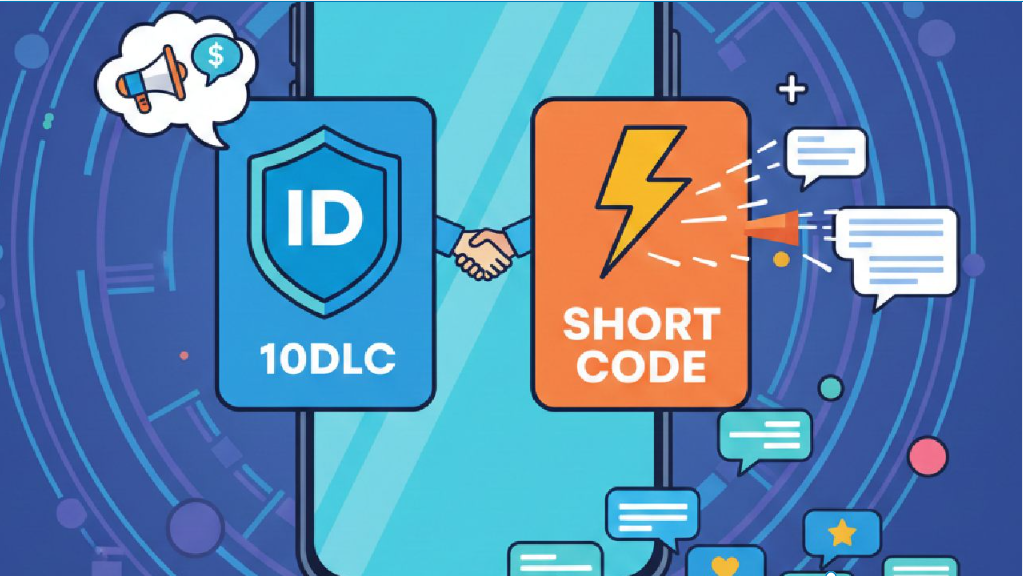
2. Register the Right Sender Type for Each Market and Use Case
Sender identity affects how carriers, networks, and users recognize business traffic. A registered and appropriate sender type can reduce filtering risk and support more consistent delivery.
The practical step is to match the sender type to the destination, use case, and volume. For example, Twilio’s A2P 10DLC documentation explains that registration can reduce message filtering and support higher messaging throughput for relevant U.S. 10DLC traffic.
Depending on the market, this may involve:
- 10DLC registration
- Toll-free verification
- Short code approval
- Alphanumeric sender ID registration
- Brand or campaign registration
- Local sender identity requirements
Do not treat sender registration as a one-time technical setup. It should be reviewed whenever the business changes message type, market, volume, or campaign purpose.
Before sending at scale, ask:
- Is this sender type allowed in the destination market?
- Is the sender registered where required?
- Does the sender match the message use case?
- Is the brand name clear to the recipient?
- Are opt-out and support signals consistent?
- Has performance changed after sender changes?
Unregistered or mismatched sender identity may work in limited cases, but it usually becomes less stable as volume increases. For long-term deliverability, sender identity should be treated as part of the delivery system, not only as a branding choice.
3. Remove Invalid, Inactive, and Low-Quality Numbers
List quality directly affects SMS deliverability. If a large share of numbers are invalid, inactive, unreachable, recycled, or unengaged, delivery performance becomes harder to trust.
Poor list hygiene can lead to:
- More failed messages
- Higher bounce patterns
- More wasted sending cost
- Weaker campaign data
- More complaints from users who no longer expect messages
Cleaning your SMS list does not mean removing every inactive user immediately. It means separating high-quality, recently engaged contacts from numbers that create repeated delivery or engagement problems.
Useful list hygiene actions include:
- Remove numbers that repeatedly fail
- Suppress contacts with repeated opt-outs or complaints
- Segment recently active users from long-inactive users
- Validate number format before sending
- Avoid uploading old lists without rechecking consent
- Review market-specific number patterns and failure reasons
For marketing campaigns, list hygiene also protects performance data. If a campaign is sent to many inactive or invalid numbers, the team may blame the offer or copy when the real issue is audience quality.
For OTP and notification workflows, list hygiene helps reduce avoidable failures before the message even enters the delivery path.
4. Segment by Use Case, Market, and Engagement
Segmentation improves deliverability by making messages more relevant and less likely to trigger complaints or filtering patterns. Sending the same message to every contact can create unnecessary risk, especially when users differ by country, language, behavior, or relationship with the brand.
Strong segmentation can be based on:
- Message type: OTP, notification, transactional, or marketing
- User status: new, active, inactive, returning, or high-value
- Market or country
- Language preference
- Purchase or account behavior
- Recent engagement
- Consent source
The goal is not to make segmentation complicated. The goal is to avoid sending irrelevant messages at scale.
For example:
- Send OTPs only inside the active verification window.
- Send order updates only to users with relevant order activity.
- Send marketing offers to users who opted in for promotional messages.
- Send re-engagement messages separately from regular campaigns.
- Adjust timing and language by market when needed.
Relevance supports deliverability because users are less likely to ignore, report, or opt out of messages that match their expectations. It also helps teams interpret performance more accurately.
If one segment performs poorly while another performs well, the issue may not be global deliverability. It may be a market, audience, consent, or message-fit problem.
5. Remove High-Risk Content Patterns Before Sending
Message content can increase or reduce filtering risk. The goal is not to make every SMS look identical. The goal is to avoid patterns that make legitimate business messages look suspicious, misleading, or unwanted.
Before sending, review the message for:
- Unclear sender name
- Too many links
- URL shorteners
- Aggressive sales claims
- Excessive capitalization
- Misleading urgency
- Unfamiliar domains
- Mismatch between the message and registered use case
- Missing opt-out language where required
- Formatting that looks like spam
A risky message might look like this:
FREE OFFER!!! CLICK NOW TO WIN $1000
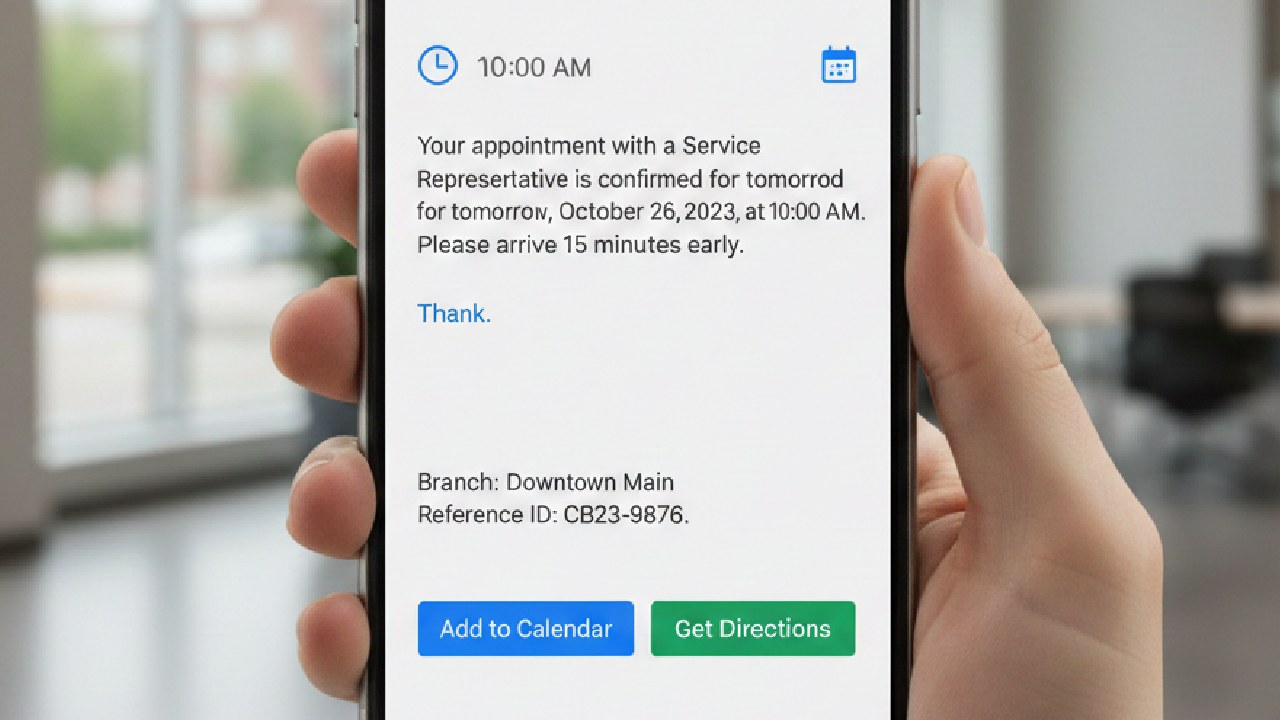
A clearer business message would look more like this:
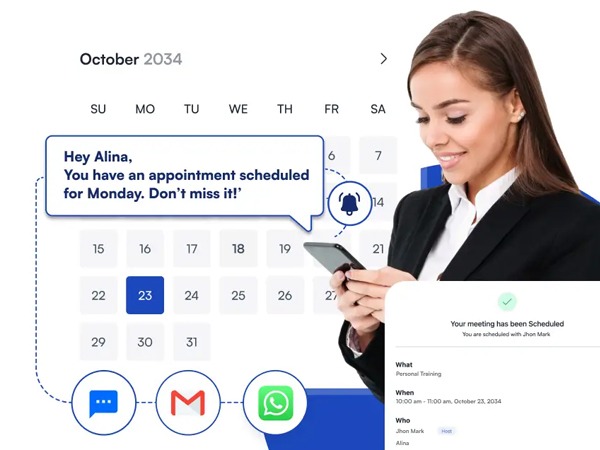
Hi Alisa, your appointment is confirmed for tomorrow at 3:00 PM. Reply STOP to opt out.
For OTP messages, keep the content short and purpose-specific. For notifications, make the service context clear. For marketing SMS, make the sender, offer, and opt-out path easy to understand.
Links deserve special attention. If a message includes a link, the domain should look trustworthy and expected. A shortened or unfamiliar link can create both filtering risk and user distrust.
Content optimization is not only about avoiding “spam words.” It is about making the message match the sender, consent, use case, and recipient expectation.
6. Control Timing, Frequency, and Volume Spikes
Sending behavior affects SMS deliverability because carriers and filtering systems may react to unusual patterns. Even legitimate traffic can look risky if volume increases too quickly, messages arrive at inappropriate times, or users receive too many messages in a short period.
Review three areas: timing, frequency, and volume growth.
For timing:
- Avoid sending during restricted or inappropriate hours.
- Match sending time to the user’s local market where possible.
- Prioritize time-sensitive messages such as OTPs and urgent alerts.
- Do not treat all campaigns as equally urgent.
For frequency:
- Set limits on how often users receive marketing messages.
- Avoid sending repeated reminders too close together.
- Separate transactional messages from promotional campaigns.
- Monitor opt-out and complaint patterns after frequency changes.
For volume:
- Avoid sudden large spikes from new senders.
- Gradually increase volume when launching new campaigns.
- Use throttling for high-volume sends.
- Watch performance by market, carrier, and route during scaling.
A sudden spike can create problems even when the content is legitimate. A controlled sending pattern gives teams more visibility and reduces the chance that normal business growth looks like abusive traffic.
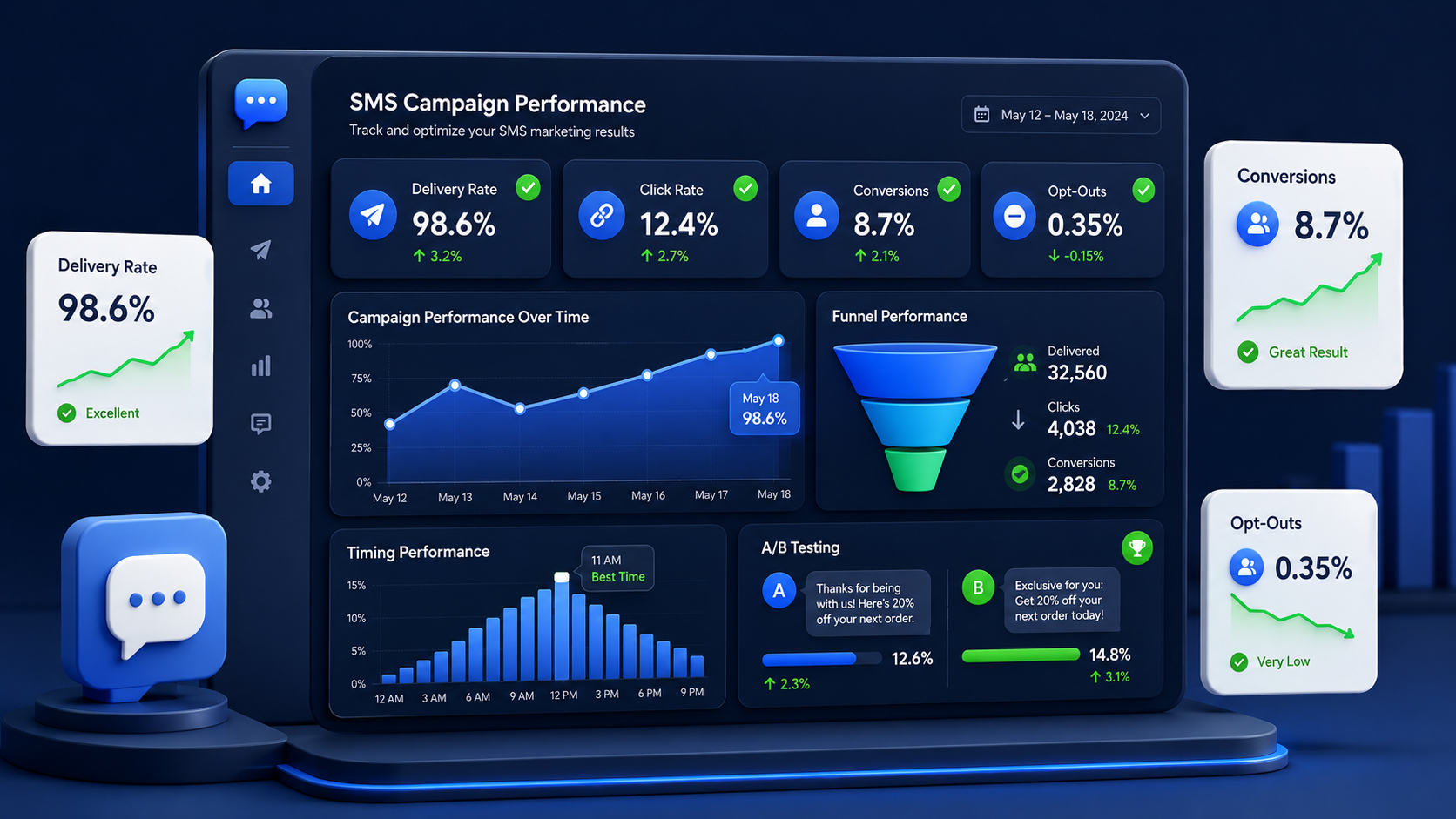
7. Monitor Delivery Signals by Market, Carrier, and Campaign
SMS deliverability improves when teams monitor delivery signals continuously instead of only checking campaign results after performance drops.
At a minimum, track:
- Delivery rate
- Failure rate
- Error codes
- Undelivered messages
- Expired messages
- Opt-out rate
- Complaint signals where available
- Click-through rate for campaigns
- OTP completion rate for verification flows
- Delivery timing or dwell time where available
The key is to review these signals by market, carrier, sender, message type, and campaign. A single global delivery rate can hide the actual problem.
For example:
- One country may have a registration issue.
- One carrier may show higher failures.
- One sender type may perform worse after a volume increase.
- One campaign may create more opt-outs than usual.
- One OTP flow may show good delivery but poor completion because messages arrive too late.
Monitoring should answer one question:
What changed, where did it change, and which part of the delivery path should be reviewed first?
If the team cannot explain what happened after sending, review delivery reports, callbacks, status data, and error patterns before changing the campaign strategy. For deeper troubleshooting, use a diagnostic guide such as Why SMS Messages Are Not Delivered: Common Causes and What to Check First.
8. Review Route Quality and Reporting Visibility
Route quality can affect SMS deliverability, especially for cross-border messaging, high-volume campaigns, OTP traffic, and destination markets with stricter rules.
The action is not simply to choose the cheapest or fastest route. The action is to review whether the route supports the use case, destination, visibility, and reliability your business needs.
When reviewing route quality, check:
- Whether the route is appropriate for the destination
- Whether it supports the message type
- Whether delivery feedback is available and useful
- Whether performance is consistent by market or carrier
- Whether delays appear during high-volume periods
- Whether fallback behavior is clear
- Whether support teams can investigate failures with real evidence
Delivery receipts and carrier events should also be interpreted carefully. For example, AWS End User Messaging SMS documentation notes that carrier-generated events or DLRs can take up to 72 hours to be received, so they should not be used alone to determine whether there is an outbound delivery delay.
Direct or higher-quality routes may support better consistency, but the right route still depends on the destination, traffic type, budget, and business priority.
For OTPs, route quality should support short delivery windows. For service notifications, it should support reliability and status visibility. For marketing campaigns, it should support scale without unnecessary filtering or inconsistent reach.
Cheap routing can appear attractive at first, but weak visibility and unstable delivery often create hidden costs: missed verifications, support tickets, campaign waste, and unclear performance data.
How to Prioritize These Ways to Improve SMS Deliverability
Not every team needs to fix all eight areas at once. Start with the issue that most directly affects the current business outcome.
| Business problem | First improvement area |
|---|---|
| OTP users abandon login or payment | Delivery timing, routing, and OTP completion monitoring |
| Campaign delivery looks unstable | Consent, list quality, segmentation, and content risk |
| Messages are blocked or filtered | Sender registration, compliance, content, and traffic pattern |
| Delivery varies by country | Destination rules, sender type, routing, and market-level reporting |
| Reports do not explain the issue | Status visibility, callbacks, error codes, and evidence collection |
| Costs rise but results do not improve | List hygiene, segmentation, route quality, and performance by market |
The safest path is to improve deliverability in stages:
- Confirm consent and sender identity.
- Clean and segment the audience.
- Remove risky content patterns.
- Control timing, frequency, and volume growth.
- Monitor performance by market, carrier, and campaign.
- Review routing quality and reporting visibility.
This order helps teams avoid random changes. It also prevents the common mistake of rewriting message copy when the real problem is list quality, sender registration, filtering, or route performance.
FAQ About Ways to Improve SMS Deliverability
What are the most important Ways to Improve SMS Deliverability?
The most important Ways to Improve SMS Deliverability are verifying consent, registering the right sender identity, cleaning SMS lists, segmenting audiences, reducing risky content patterns, controlling sending behavior, monitoring delivery signals, and reviewing route quality. The best starting point depends on the actual symptom your team sees.
Can better content alone improve SMS deliverability?
Better content can help, but it is not enough on its own. Content is only one part of the delivery path. If the real problem is weak consent, unregistered sender identity, poor list quality, or unstable routing, rewriting the message will not fully solve the issue.
How often should businesses review SMS deliverability?
Businesses should review SMS deliverability whenever delivery rates drop, opt-outs increase, OTP completion declines, campaign results become unstable, or performance changes by country, carrier, sender, or route. High-volume and time-sensitive SMS programs should review delivery signals continuously.
Do compliance rules affect SMS deliverability?
Yes. Compliance rules affect SMS deliverability because consent quality, opt-out handling, sender identity, registration, and message expectations can influence how traffic is treated. The FCC’s TCPA compliance guidance is one example of why businesses should understand consent requirements before sending certain marketing or automated text messages.
Final Takeaway
Ways to Improve SMS Deliverability are most effective when they are handled as an operating checklist, not as one-time fixes.
The strongest SMS programs usually share the same habits: they document consent, register the right sender identity, keep lists clean, segment audiences carefully, write clear messages, control sending behavior, monitor delivery signals, and review route quality before scaling.
If your team is still defining the concept, start with the SMS deliverability guide. If your team is trying to understand blocked or filtered messages, read the SMS filtering guide. If your team already sees delivery problems, use this checklist to identify which part of the delivery path needs attention first.
For businesses sending OTPs, notifications, transactional messages, or marketing campaigns, SMSBoosting can help review routing quality, sender setup, delivery visibility, and practical A2P messaging fit before delivery issues become recurring performance problems.