SMS remains one of the most reliable communication channels for financial service providers. When used correctly, it helps banks, fintech companies, and advisors deliver time-sensitive information without delay or confusion.
In practice, financial SMS should focus on appointments, security alerts, market notifications, performance updates, and onboarding messages.
In this guide, we’ll break down five SMS message types that actually belong in financial communication, explain when to send them, what to avoid, and how to stay compliant while protecting client trust.

Why Does Communication Matter in Financial Services
Clear communication is not optional in financial services—it’s part of risk control. Clients rely on timely updates to protect accounts, confirm actions, and make informed decisions.
Banks, fintech platforms, insurers, and investment firms use SMS because it reaches clients immediately, even when apps go unopened or emails are ignored. A delayed alert can mean missed appointments, unresolved fraud, or unnecessary panic.
Well-timed SMS communication helps financial firms:
•Reduce client panic during fraud alerts or market volatility, when silence often creates more damage than bad news.
•Cut unnecessary support calls by answering the most urgent questions before clients feel forced to reach out.
•Clarify what requires action—and what doesn’t—so clients don’t misinterpret normal account activity as a serious issue.
•Document communication timelines, which is often critical for internal audits, dispute resolution, and compliance reviews.
•Reinforce trust by showing clients that important updates reach them quickly, even when apps or emails go unnoticed.
Message 1: Appointment Reminders & Confirmations
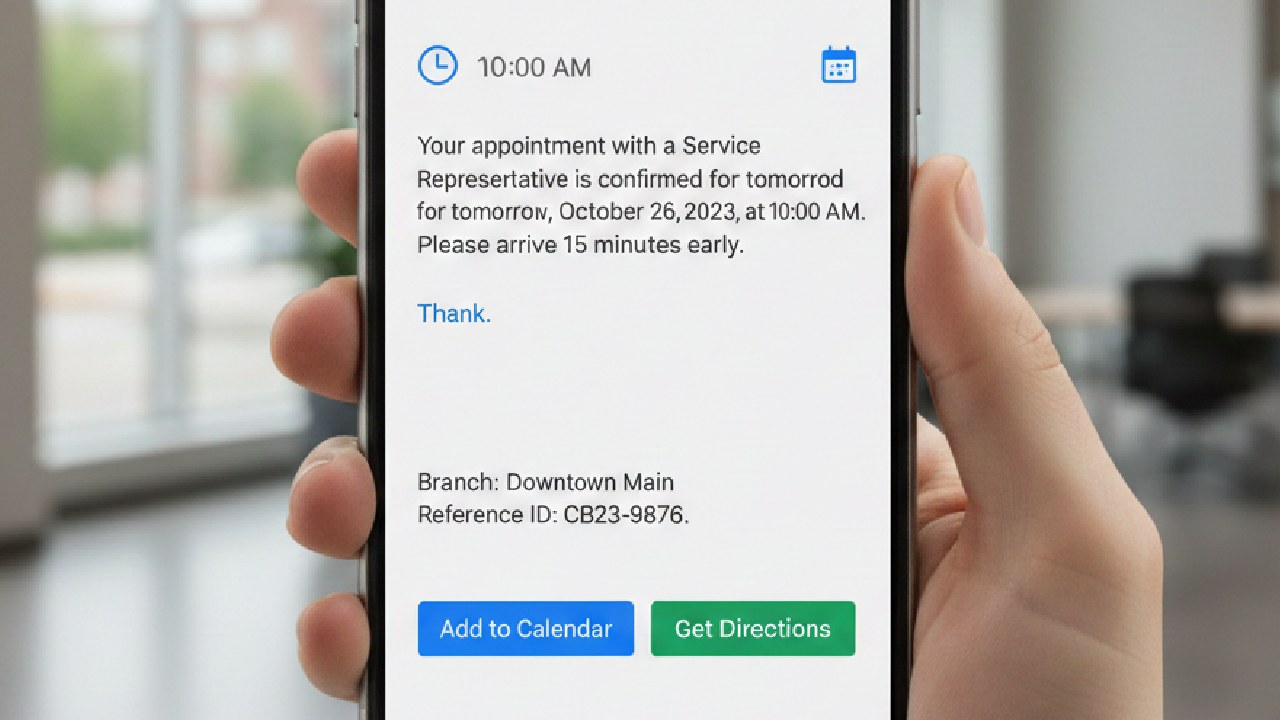
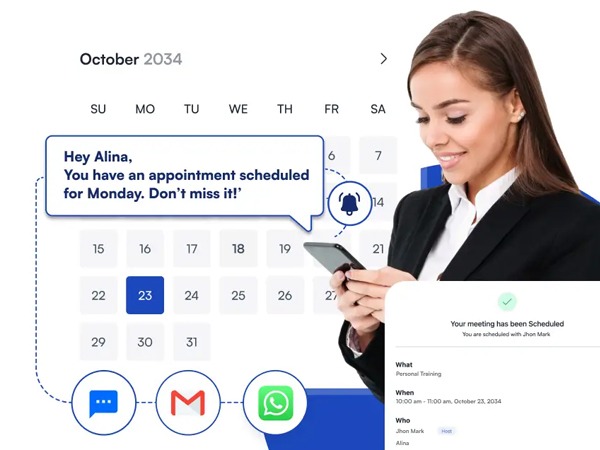
Appointment reminders and confirmations are sent to inform clients about their meetings with financial advisors, loan officers, relationship managers, and consultants. It can reduce no-shows.
For financial firms, missed appointments waste staff time and delay decisions. A simple reminder solves both problems.
Why these messages matter
- Missed financial appointments often delay approvals, reviews, or funding decisions—something clients rarely tolerate more than once.
- Clear reminders reduce last-minute cancellations that waste advisor time and disrupt client planning.
- Confirmed schedules protect both sides by setting clear expectations before sensitive financial discussions.
When to Send
- 24 to 48 hours before the appointment
- On the same day as final reminder
- Immediately after booking confirmation
Examples:
“Your appointment with our financial consultant is scheduled for 15 Dec at 12:00 PM. Reply YES to confirm or call to reschedule.”
“You have a scheduled meeting with the Loan Office on 15 Dec at 11:00 AM. Please arrive 10 minutes early.”
Message 2: Market Updates & Volatility Alerts
Market update SMS messages notify clients about unusual volatility or major market movements. It helps clients understand the market situation, major swings, and the status of their investments.
These messages are especially useful during sudden swings when clients may feel anxious or confused.
What they help prevent:
- During market swings, a short update often prevents emotional reactions driven by uncertainty rather than facts.
- Proactive messaging helps clients understand that volatility is being monitored, reducing assumptions that information is being withheld.
- Clear wording lowers the risk of clients misinterpreting silence as neglect—or mistaking updates for investment advice.
(These messages should inform, not instruct. They are meant to stabilize expectations, not trigger action.)
When to Send them:
- During significant market volatility
- Before major economic announcements
- When portfolios experience broad market impact
(These messages should never include personalized investment advice.)
Examples:
“Markets are experiencing higher volatility today. Your portfolio remains aligned with your long-term strategy. Contact us if you have questions.”
“Increased market movement has been observed today. Staying focused on long-term goals is recommended.”
Message 3: Security Alerts for Fraud Prevention
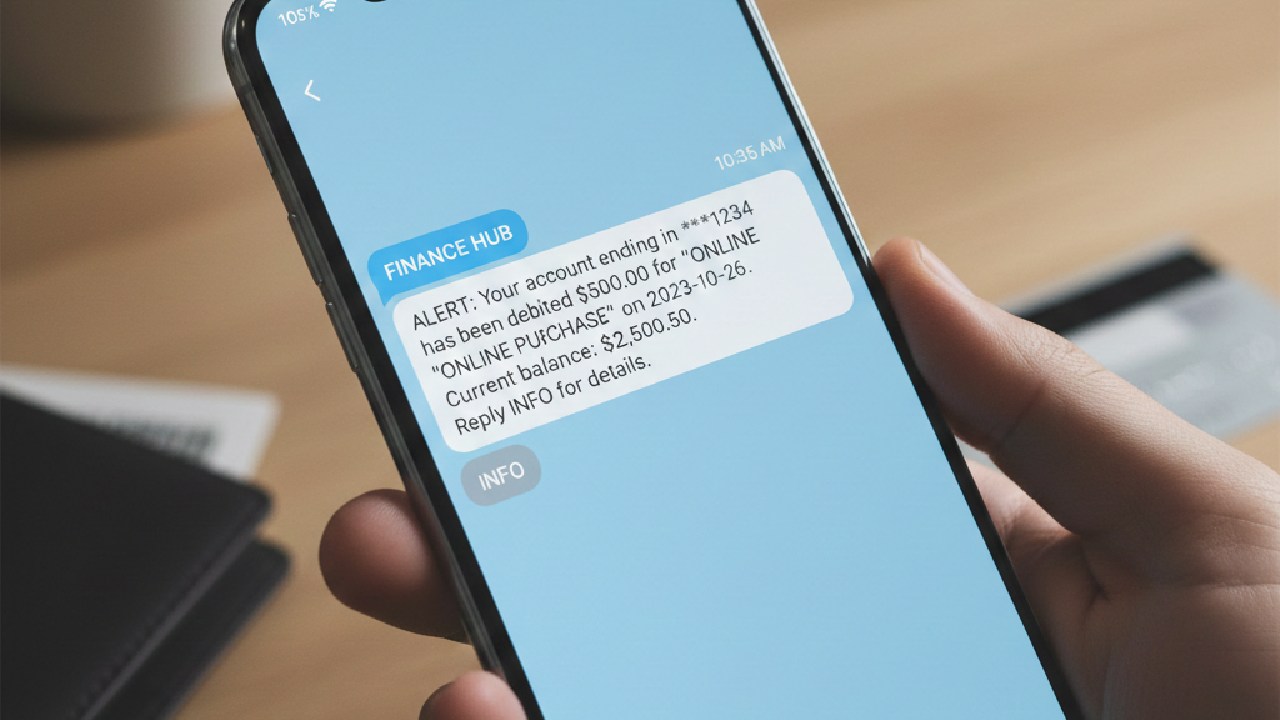
Financial service providers send SMS messages as alerts to inform about fraud and its prevention. These messages keep the clients updated and ensure unauthorized access.
These messages help by:
- Early alerts often limit financial damage; delayed alerts usually turn into disputes and formal complaints.
- Prompt notifications allow clients to act before unauthorized activity escalates.
- Clear, timely alerts demonstrate that account protection is active—not reactive.
(Security SMS should never include login links or request sensitive information.)
When to Send them:
- New or unusual login attempts
- Unauthorized transactions
- Password or account changes
Examples:
“A login attempt from a new device was detected at 2:14 PM. If this wasn’t you, call us immediately at 111-222-433.”
“A transaction attempt of $10,000 was detected. If you don’t recognize this activity, contact support now.”
(Security SMS should never include login links or request sensitive information.)
Message 4: Performance Updates & Check-Ins
Service providers usually send these SMS messages to inform clients about account performance, milestones, and overall progress. It encourages clients to invest comfortably. They work best as short check-ins—not detailed reports.
Why they’re effective:
- Short performance check-ins reassure clients that accounts are being actively monitored between formal reviews.
- Clear positioning prevents clients from mistaking brief updates for detailed reports or action signals.
- Consistent communication reduces uncertainty without overwhelming clients with data.
(These messages are not meant to replace statements or trigger decisions.)
When to Send them:
- Monthly or quarterly summaries
- After reaching major milestones
- Around scheduled portfolio reviews
Examples:
“Your investment portfolio showed steady performance this quarter. Full details are available in your account.”
“You’ve reached a new financial milestone. Let’s schedule a review to plan next steps.”
Message 5: Welcome Messages for New Clients
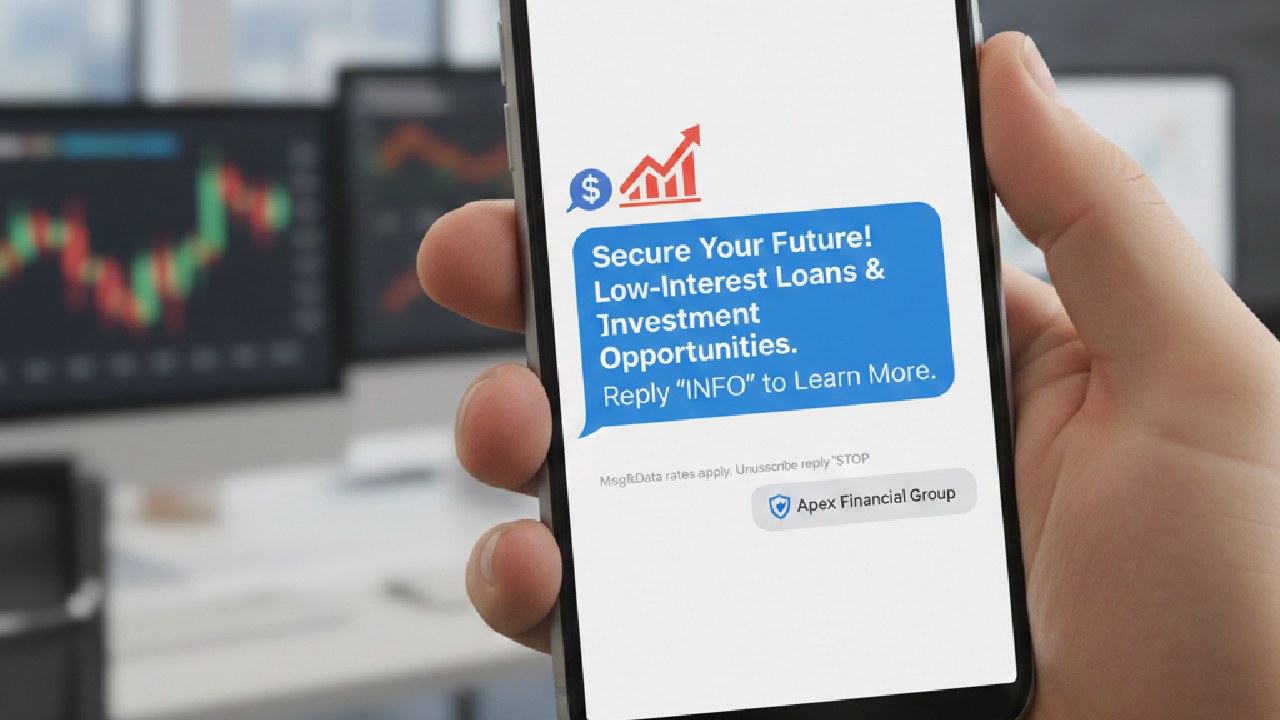
Financial service providers send welcome messages to create a better first impression on clients. First impressions matter even more in finance, where trust develops slowly. This is especially common in insurance SMS communication, where policy confirmations, onboarding notices, and claim updates often set the tone for long-term trust.
A good welcome message:
- Confirms account activation
- Provides clear support contact details
- Sets a professional tone
When to Send it:
- After account creation
- After onboarding completion
Examples:
“Welcome aboard. Your account is now active. For assistance, call 0800-43678 or visit your nearest branch.”
“Your account setup is complete now. Start exploring our services for secure and reliable financial solutions.”
What You Can and Cannot Send via SMS?
Financial Firms Can Send via SMS
- Transactional and Account Messages
- Security Alerts and OTP Messages
- Payment Reminders and Due Date Messages
- Appointment Reminders and Confirmations
- Service and Policy Updates
Financial Firms Should Never Send
- Sensitive personal or financial data, which increases exposure during interception or forwarding.
- Links requesting login credentials—one of the fastest ways to break client trust and trigger compliance reviews.
- Unsolicited promotional messages that violate consent rules and increase opt-out rates.
- Aggressive collection language that can escalate complaints and regulatory scrutiny.
- Misleading or unverified financial information that creates legal and reputational risk.
Best Practices & Common Mistakes
Best Practices for Financial SMS Messaging
- Send critical alerts immediately, since delays often turn minor issues into formal disputes.
- Keep messages concise and specific, so clients understand whether action is required—or not.
- Personalize carefully, using identifiers that add clarity without exposing sensitive data.
- Include opt-out options for non-essential messages to avoid message fatigue.
- Follow telecom and financial regulations closely, as SMS records are frequently reviewed during audits or investigations.
Common Mistakes to Avoid
- Sending messages without clear consent, which exposes firms to regulatory complaints.
- Over-messaging clients, causing them to ignore even critical alerts when timing matters most.
- Using generic or robotic language that feels impersonal during sensitive situations and reduces clients’ engagement.
- Delaying fraud or transaction alerts, which increases both financial loss and reputational damage.
- Including unclear calls to action that leave clients unsure how—or whether—to respond.
Conclusion
SMS is not a marketing shortcut in financial services—it’s a risk-control tool. When used with restraint and clear intent, SMS helps firms protect accounts, manage expectations, and document critical communication. When used poorly, it creates confusion, complaints, and unnecessary exposure. Focusing on the right message types—and sending them at the right moment—makes SMS a quiet but powerful part of responsible financial communication.
If you’re looking to deliver compliant and reliable SMS communication for financial services, working with a platform that understands regulatory requirements and security expectations matters. SMS Boosting is built to support financial messaging where accuracy, timing, and compliance come first.
FAQs
1. Do financial SMS messages need to follow TCPA or telecom regulations?
Yes. Financial SMS messages are still subject to telecom regulations such as consent requirements, sender identification, and opt-out rules. Even transactional messages must follow basic compliance standards, while non-essential messages require explicit user consent.
2. Should financial SMS messages include links to apps or websites?
In most cases, links should be avoided—especially in security-related messages. Including links increases phishing risk and can confuse clients. If links are necessary, they should be used sparingly and clearly identified as non-login resources.
3. How often should financial service providers send non-transactional SMS messages?
Non-transactional SMS messages should be used sparingly. Overuse leads to message fatigue and increases the chance that clients ignore critical alerts when timing matters most.
4. Can SMS records be used during audits or dispute resolution?
Yes. SMS delivery logs and timestamps are often reviewed during internal audits, client disputes, or regulatory inquiries. Maintaining accurate message records is an important part of financial communication risk management.