


OTP SMS for gaming can support a specific player action when a team needs to confirm access to a phone number during registration, login, account recovery, or a selected high-risk action. The useful planning question is not whether a code makes an account absolutely secure. It is whether the right eligible player receives a recognizable, usable challenge and can complete the intended step without confusion.
This article explains how OTP SMS for gaming fits the flow around the code: why the challenge appears, what the player sees, how delivery status is interpreted, and what happens when a code is delayed, expires, or is requested again. It treats SMS as one component of an account system, not as a replacement for every identity control or support path.
What OTP SMS Should Do in a Gaming Account Flow
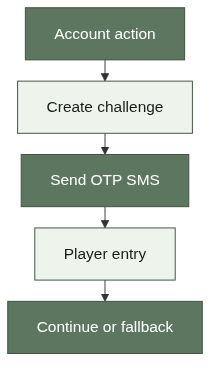
OTP SMS for gaming should connect one clearly stated account action to one time-bound verification step. The player should know why a code was requested, where to enter it, what to do if it does not arrive, and how to reach an appropriate fallback. That clarity matters more than adding technical detail that the player cannot use.
A gaming team should define the trigger before choosing message copy or delivery settings. Registration, login, recovery, and a high-risk action can have different eligibility rules and different consequences when verification fails. A code sent outside a valid flow may create support work and weaken sender recognition, while a legitimate challenge with no recovery path can strand a player who is otherwise entitled to continue.
The general SMS OTP model is commonly used for account or device verification, but the configured verification documentation does not establish a brand-owned identity system or guarantee a result [1]. SMSBoosting’s configured SMS platform overview provides related context for sending, routing, tracking, and reply handling. The important boundary is that the platform can support message delivery within a workflow; the gaming product still owns the account logic, eligibility decision, and player-facing fallback.
A useful flow records four separate states: challenge created, message sent, message delivered, and action completed. Treating these as one state makes diagnosis difficult. A player may receive a code but fail to enter it, or the product may accept an entry while the delivery record is still being reconciled. The team should define what each state means before it chooses a success signal.
Registration Verification: Confirm the Player Can Receive the Code
For OTP SMS for gaming, registration verification should confirm that the player can receive a code at the phone number submitted for the account flow. The registration screen should explain why the number is requested, how it will be used in this step, and what the player should do after receiving the message. The message itself should identify the service clearly enough that a player can connect it to the action they just started.
Eligibility comes before sending. A team should decide whether a number can be challenged, whether the player has permission for this account communication, and whether an existing account or prior attempt changes the path. If the number is malformed, recently changed, or associated with an unresolved registration state, sending another code may add noise without helping registration proceed.
The verification prompt is not proof that the account holder has supplied every required attribute. It establishes a narrower condition that the workflow can evaluate: the challenge was issued for the intended registration context and the submitted code matched the valid challenge. Avoid wording that implies a broader identity conclusion than the product can support.
The next screen also matters. Once a code is accepted, the player should see whether registration continues, needs another account step, or requires support. If the code is rejected, give a reason that is useful without exposing sensitive account details. A team with limited automation can begin with explicit states and a support owner; a more integrated workflow can connect the SMS API, webhook events, challenge record, and product state.
Login Verification: Add a Deliberate Step Without Creating Friction
Login verification should appear for a defined reason in a defined login path. The reason might be a product policy, a changed account context, or a selected risk condition, but the player-facing explanation should remain concise. Requiring an OTP SMS for gaming at every login may be unnecessary for some flows and frustrating for others; the product team should decide when the extra step is proportionate to the account action.
The login sequence should make the order deterministic: identify the account context, request the challenge, send the message, present the entry screen, validate the code, and then show the next result. Do not ask the player to start several challenges at once. If a login attempt is cancelled, the product should mark the associated challenge accordingly so a later code is not mistaken for the active request.
A delayed or unsuccessful attempt needs a clear path. The player may retry the entry, request a new code, use an approved alternative, or contact support. These choices should not silently create overlapping challenges. The configured A2P SMS foundations source describes sender identity, interaction patterns, and delivery-filter context that can affect message handling [2]. It supports planning questions around the channel, not a claim that any one login design will work in every destination.
Avoid turning this section into a complete 2FA technical history. A gaming team needs a decision about the login experience it owns: what triggers the challenge, what expires it, how many active requests the interface should show, and which failure state the player sees. More authentication terminology does not substitute for a usable sequence.
Account Recovery: Keep the Fallback Path Clear
OTP SMS for gaming needs a more careful account-recovery fallback than ordinary login because the player may already be unable to use a normal account path. OTP SMS can support a recovery step when the recovery request is eligible and the phone number is an accepted part of that flow. It should not be described as proof of every account attribute or as the only answer to every recovery case.
Start by separating recovery initiation from code verification. The product should explain how recovery begins, which information is required, and what happens after the code is accepted. If the player receives a valid code but the account still needs review, the interface should say so. A generic success message can create the mistaken expectation that every account restriction has been removed.
Expiry and repeat requests are especially important here. A player who requests several codes may not know which message is current, while an old code may be entered after a newer challenge has replaced it. The interface should identify the active request and provide a safe way to request another one. If automated recovery cannot resolve the case, the fallback should route to a defined support process rather than encouraging indefinite resends.
The configured notification SMS context can help teams distinguish concise time-sensitive account messages from broader campaign communication. The configured SMS platform overview is useful when mapping the handoff between the product, message service, status events, and support. Neither internal page is evidence of a particular recovery result, so the article does not make that claim.
High-Risk Action Verification: Match the Challenge to the Action
In an OTP SMS for gaming flow, high-risk action verification should be tied to a specific action the player understands. Examples can include a selected account change or another action that the product team has decided needs an additional challenge. The key decision is proportionality: the challenge should protect a meaningful workflow without interrupting routine play for no clear reason.
The action screen should explain what is being confirmed and what will happen after successful entry. If a player is asked for a code without a visible relationship to the action, the message can look suspicious or out of context. A clear sender, an expected destination, and an unambiguous action description help the player distinguish a real product flow from an unsolicited message.
Verification also needs a failure policy. Decide whether a failed code pauses the action, allows a fresh challenge, invokes a fallback, or sends the player to support. The policy should account for expired codes and delayed delivery, not just a correct entry. Teams with limited resources can document the action, challenge, expiry, and support owner in one workflow record before adding more automation.
An OTP step supports a workflow; it does not create an absolute security guarantee. Account security also depends on the product’s session controls, account recovery design, permissions, monitoring, and other controls that are outside this article’s scope. Keeping that boundary visible prevents the SMS channel from being marketed as a complete identity-orchestration system.
OTP Delivery and the Player Experience
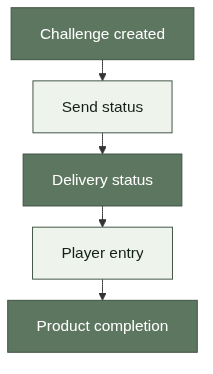
OTP delivery is part of the player experience, not a hidden transport detail. The player judges the flow by whether the message arrives, looks recognizable, contains a usable code, and leads to a clear result. If any of those points is unclear, the player may retry, abandon the action, or contact support even when the underlying sender request succeeded.
The product should separate message states from player states. A send request shows that the application handed work to a messaging path. A delivery status is a transport signal. Neither proves that the player saw, understood, or entered the code. A completion event belongs to the product’s verification record and should be evaluated separately.
Timing should be designed around the action’s context. A player trying to log in may need a fast explanation of what to do next, while a recovery flow may need more explicit fallback guidance. Do not invent a universal delivery threshold in the article. Instead, define an internal baseline for each flow and inspect sender identity, route, destination, device, and product state when results differ.
Delay and Delivery Status
OTP delivery delay should trigger a structured diagnosis rather than an immediate promise or repeated send. First distinguish whether the application created a challenge, requested delivery, received a delivery update, or received a player entry. These stages can fail for different reasons, and combining them hides the first useful clue.
Next inspect the configured sending context: sender identity, destination region, route quality, filtering risk, and monitoring records. The configured SMS deliverability guidance provides an internal path for reviewing consent, sender identity, content risk, monitoring, and route quality. It does not prove a particular message was delivered, and teams should not state that it does.
A delayed code should leave the player with one understandable choice. The interface might wait for the active challenge, offer a controlled resend, or present an approved alternative. It should show which request is current and prevent a late message from being mistaken for a new one. If the product cannot make this distinction, more retries may worsen the experience.
Expiry and Repeat Requests
OTP expiry should be explained in plain language: the player needs to use the current code within the product’s defined validity window, and an expired code will not complete the action. The article does not prescribe a universal duration because the right lifecycle depends on the account action, risk decision, and product workflow. What matters is that the message and entry screen express the same rule.
Repeat requests need an explicit model. A resend may create a new code, extend an existing challenge, or fail because the flow has already changed; the product should choose and communicate one behavior. When several requests are active, the player should know whether only the newest code is valid or whether multiple codes remain usable. Ambiguity here causes avoidable support contacts and makes delivery records harder to interpret.
When a player enters an older code, return a useful next step without revealing unnecessary account information. When the latest code does not arrive, offer the controlled recovery path rather than asking the player to tap resend repeatedly. A team can track request count, entry result, expiry state, and delivery status as separate signals, then investigate anomalies against its own baseline instead of inventing an industry threshold.
Regional and Operational Planning for OTP SMS
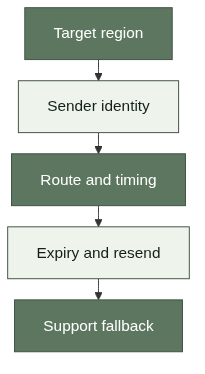
Regional planning for OTP SMS for gaming begins with sender identity and the interaction the flow requires. Sender ID, long code, short code, and one-way or two-way capability can vary by destination, so a gaming team should document the intended setup for each operating context rather than assume one configuration behaves identically everywhere [3]. This is a planning consideration, not a promise of universal reach.
Permission and opt-out handling also need a boundary. A transactional or account-related verification flow may be governed differently from promotional communication, but the team still needs clear sender recognition, appropriate list governance, and a support path for preference questions. The configured best-practices source covers these general SMS planning concerns [4]. It is not a substitute for the team’s own legal or compliance review.
Routing quality, timing, and filtering risk should be monitored together with challenge and player states. The configured SMS routing guidance provides context for route quality, delay, filtering risk, and deliverability. A regional review should record what was configured and what status was observed; it should not convert a configured route into a guaranteed verification outcome.
The fallback should also be regional where necessary. If a player cannot complete the flow through the intended route, the product needs a defined alternative or support escalation. Do not silently change sender identity, create overlapping codes, or suggest that a region has been live-verified during this run. Those decisions belong in the operational workflow and in appropriate external review.
A Practical OTP SMS Planning Checklist for Gaming Teams
Before approving an OTP SMS for gaming flow, review these questions in order:
- Trigger: What player action creates the challenge: registration, login, recovery, or a selected high-risk action?
- Eligibility: Is the player and phone number eligible for this flow, and is the account state clear?
- Message: Does the SMS identify the service, explain the next step, and avoid implying absolute security?
- Lifecycle: What makes the code current, expired, accepted, rejected, or replaced?
- Delay: How does the product distinguish send, delivery, entry, and completion status?
- Repeat requests: What happens after a resend, and how does the player recognize the active code?
- Fallback: What can the player do if the code is delayed, expired, rejected, or unavailable?
- Region: Which sender identity, route, interaction mode, timing, and monitoring process apply?
- Ownership: Who reviews challenge state, delivery evidence, support escalation, and exceptions?
Start with the trigger, eligibility, lifecycle, and fallback because those choices define the player journey. Add route monitoring, webhooks, reporting, and message templates as the workflow matures. SMSBoosting’s configured capabilities include SMS API integration, routing, sender identity, webhooks, reporting, and templates, but this article does not claim a specific gaming result or a complete security system.
For the next planning step, teams can review their existing OTP content or discuss a business SMS verification consultation. The configured SMS deliverability guidance and SMS routing guidance provide relevant internal context; the invitation is to assess fit and workflow requirements, not to assume delivery or security outcomes.
FAQ
References
Twilio Verify: general SMS OTP and account or device verification background; not evidence of an SMSBoosting-owned identity system. https://www.twilio.com/docs/verify
Twilio SMS Foundations: general A2P SMS delivery, sender identity, interaction patterns, and filtering context. https://www.twilio.com/docs/messaging/onboarding/sms-foundations
AWS Phone Number Types: general regional sender ID, long code, short code, and one-way or two-way capability considerations. https://docs.aws.amazon.com/sms-voice/latest/userguide/phone-number-types.html
AWS SMS Best Practices: general permission, sender identity, timing, opt-out, list governance, and delivery planning considerations. https://docs.aws.amazon.com/sms-voice/latest/userguide/best-practices.html