India sends over 30 billion SMS messages every month. For entrepreneurs, that volume represents a business opportunity — but one that comes with a regulatory maze most guides gloss over. TRAI’s DLT requirements, biometric verification, and real-time monitoring have raised the barrier to entry. The resellers who succeed are the ones who treat compliance as their foundation, not an afterthought.
This article walks through the complete process of launching an SMS marketing business in India. From business registration and DLT compliance to choosing providers, setting prices, and finding your first clients — every step includes the regulatory reality you need to navigate.
Quick answer: Starting an SMS marketing business in India requires a registered company, TRAI DLT registration (₹5,900), ₹1–3 lakhs in startup capital, and partnerships with 2–3 SMS aggregators. The entire setup takes 4–6 weeks, with the DLT process consuming the bulk of that timeline.

What Do You Need to Start an SMS Marketing Business in India?
A few essentials must be in place before you register on any DLT portal or sign agreements with aggregators.
Registered Business Entity: A Private Limited company is strongly recommended over a proprietorship. DLT portals and enterprise clients both view Pvt Ltd status as a credibility signal. The registration cost ranges from ₹6,000 to ₹15,000 through online services, and the process typically completes within 10–15 days.
GST Registration: This is mandatory for DLT registration. If your annual turnover is below ₹20 lakhs, you can opt for voluntary registration specifically for this purpose. The GST certificate is one of the documents every DLT portal requires.
Basic Digital Presence: A simple website with pricing, contact information, and a brief explanation of your services is sufficient for the early stage. A professional business email (name@yourcompany.com) also helps when dealing with aggregators and enterprise clients.
Startup Capital: Plan for ₹1–3 lakhs in initial capital. The breakdown looks like this: ₹15,000–25,000 for company registration and GST, ₹5,900 for DLT registration, ₹30,000–50,000 for initial SMS credit purchases, ₹20,000–40,000 for website and basic tools, and the remainder as working capital for the first 2–3 months of operations.
Step-by-Step Guide to Launching Your SMS Business
Step 1 — Register Your Business Entity
The type of business entity you choose affects everything from DLT registration speed to client trust.
Private Limited Company: This structure offers the credibility that enterprise clients expect. Banks, fintech companies, and large retailers typically refuse to work with unregistered proprietorships for compliance reasons. The downside is the slightly higher registration cost and annual compliance burden (ROC filings, audited financials).
Proprietorship: Cheaper and faster to set up, but severely limits your client pool. Small local businesses may not care, but any client with a compliance team will require a registered entity. Most successful resellers eventually convert to Pvt Ltd within their first year.
Required Documents for DLT Registration:
- PAN Card: Of the company or the proprietor
- GST Certificate: Mandatory for all DLT portals
- Business Registration Proof: Certificate of incorporation (Pvt Ltd) or Udyam/MSME registration (proprietorship)
- Letter of Authorization: On company letterhead, authorizing the person who will manage the DLT account
- Valid Email and Mobile Number: For OTP verification and ongoing communications
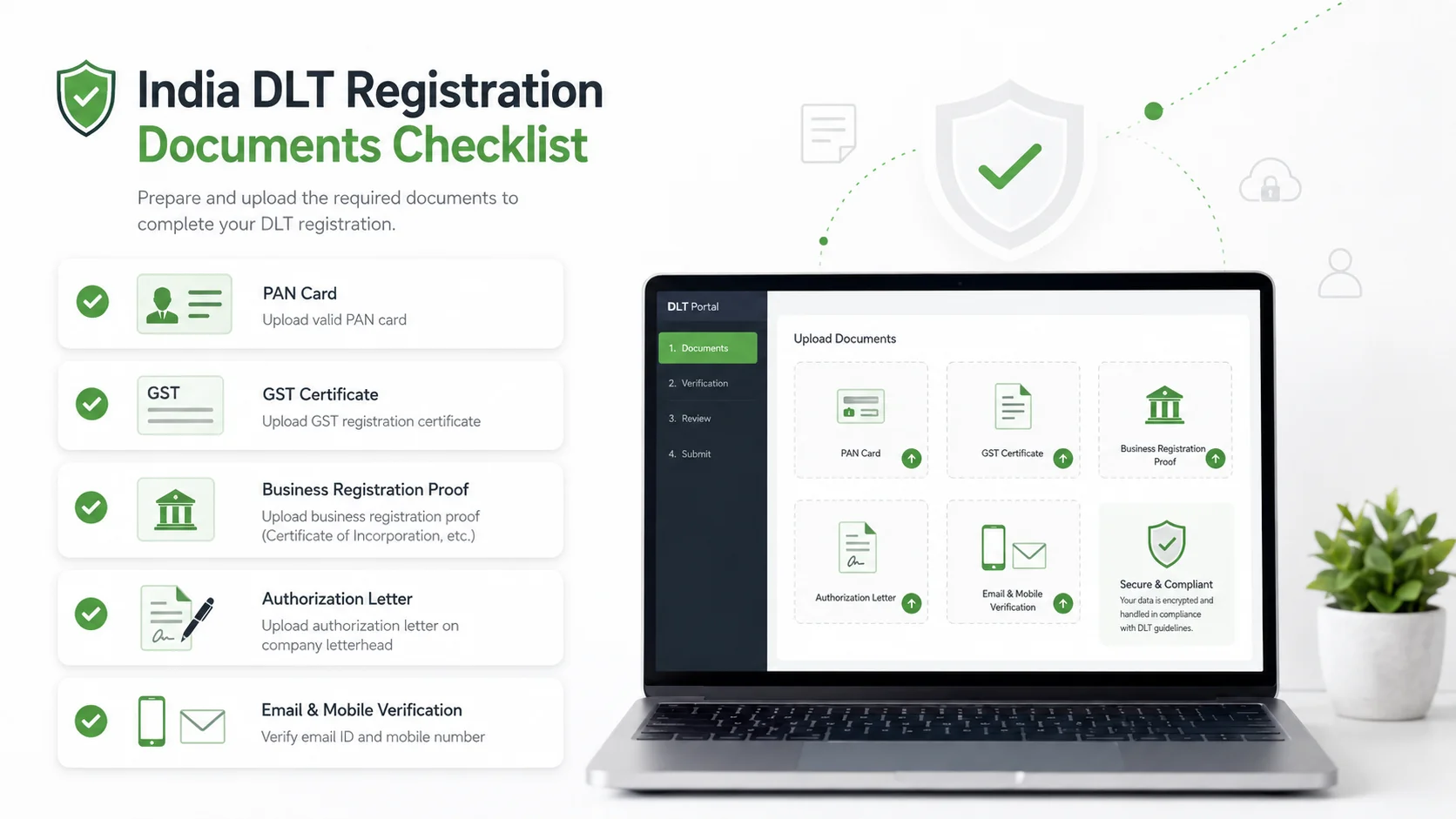
Many first-time resellers underestimate the time needed for business registration. Starting the Pvt Ltd process 2–3 weeks before you plan to begin DLT registration prevents unnecessary delays.
Step 2 — Complete TRAI DLT Registration
DLT (Distributed Ledger Technology) registration is not optional. Since 2021, every business sending commercial SMS in India must register. The 2025 amendments introduced biometric verification and real-time monitoring, making the process stricter but also more standardized across operators.
The Six Approved DLT Portals:
You need to register on only one portal — the blockchain propagates your registration across all operators automatically. The six approved portals are Airtel, Jio TrueConnect, Vodafone Idea, BSNL, TATA, and Videocon. Airtel and Jio tend to have faster template approval; BSNL is cost-effective for government-facing resellers.
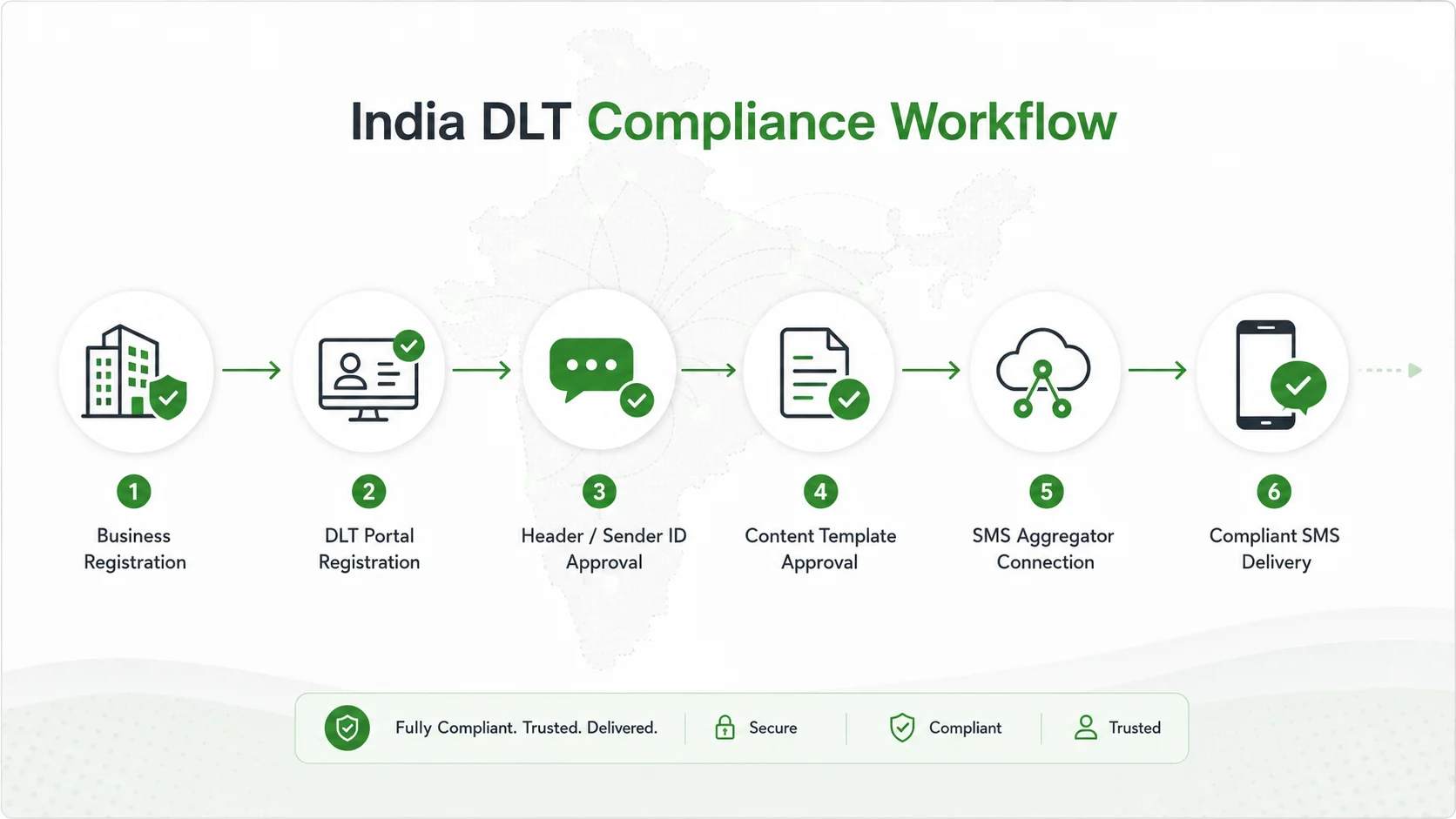
Step-by-Step Registration Process:
- Create an Account: Visit your chosen portal and register as a “Principal Entity” (if sending your own messages) or “Telemarketer” (if reselling to others). Most resellers register as both.
- Submit Entity Documents: Upload PAN, GST, business registration, and the authorization letter. Ensure all documents are clear, legible, and match exactly — mismatched names are the most common reason for rejection.
- Pay Registration Fee: ₹5,000 plus 18% GST (₹5,900 total). This is a one-time fee per portal.
- Complete Biometric Verification: The 2025 amendment added biometric verification. You or an authorized representative must visit a designated center or complete video KYC to verify identity.
- Wait for Approval: Most portals process registrations within 7–14 business days. BSNL and Jio tend to be faster; Vodafone Idea and Airtel can take longer during peak periods.
Common Rejection Reasons and How to Avoid Them:
- Document Mismatch: The name on your PAN, GST, and business registration must match exactly. Even minor variations (“ABC Solutions” vs. “ABC Solution Pvt Ltd”) trigger rejection.
- Blurry or Cropped Documents: Upload high-resolution scans. Mobile photos often fail quality checks.
- Missing Authorization Letter: Every portal requires a signed letter on company letterhead. Generic templates found online are usually rejected — write a custom letter.
- Incorrect Entity Type: Choosing “Principal Entity” when you intend to resell creates complications later. Register as “Telemarketer” if your primary business is reselling SMS credits.
One reseller in Delhi reported a 3-week delay because their authorization letter used a different company address than their GST certificate. The fix was simple — regenerating the letter — but the delay cost them a prospective enterprise client.
Step 3 — Register Headers and Message Templates
Once your entity is approved, you need two more registrations before you can send a single message: headers (sender IDs) and message templates.
Header Categories:
| Category | Format | Use Case | Timing |
|---|---|---|---|
| Transactional | 6-digit numeric | OTPs, alerts, notifications | 24/7 |
| Service Implicit | 6-char alphabetic | Order confirmations, shipping | 24/7 |
| Service Explicit | 6-char alphabetic | Service reminders, renewals | 24/7 |
| Promotional | 6-digit numeric | Marketing, offers | 10 AM – 9 PM only |
Template Registration Rules:
Every message you send must match an approved template exactly. Variables are allowed using the {#var#} placeholder format. For example: “Dear {#var#}, your order {#var#} has been shipped. Track at {#var#}.”
Critical Rules for 2026:
- Your brand name must appear in every template (mandatory)
- No free text is allowed — deviations as small as an extra space can cause blocking
- Variables cannot exceed 30 characters each
- Promotional templates require separate consent template registration
Approval Timeline: Headers typically approve in 3–5 business days. Templates can take 24–48 hours. Plan to submit templates in batches rather than one at a time.
Many new resellers submit 50 templates on day one and wait days for approvals. A better approach is to submit 10–15 core templates first — OTPs, order confirmation, appointment reminder, promotional offer — and add more as clients request them.
Step 4 — Choose Your Business Model
Not every SMS business looks the same. The model you choose determines your capital needs, margins, and daily work.
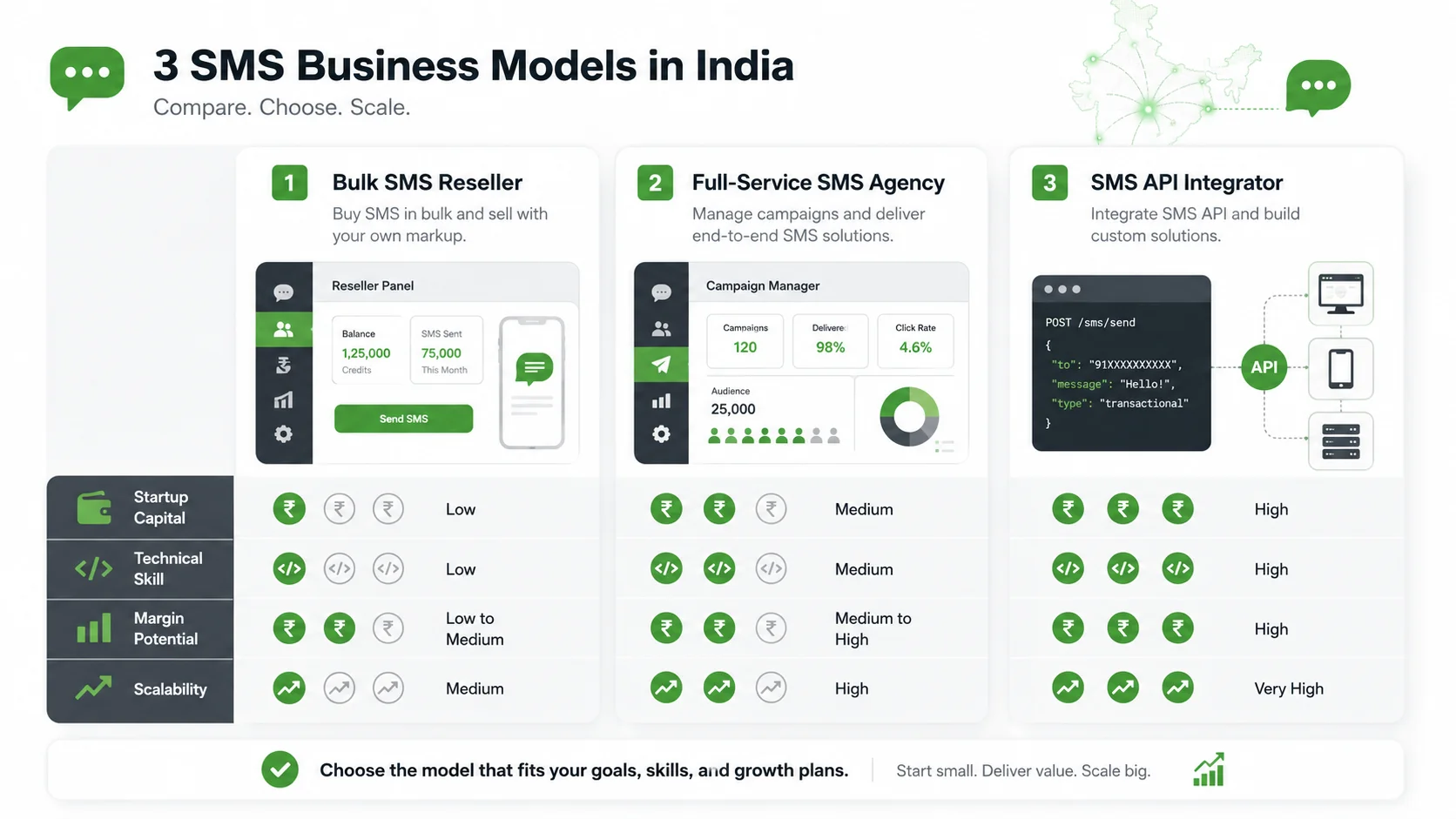
Model A: Bulk SMS Reseller
The reseller purchases SMS credits wholesale from aggregators and sells them to end clients at a markup. This is the lowest-barrier entry point.
- Startup Capital: ₹50,000–2,00,000
- Typical Margin: 50–100% per SMS
- Skills Needed: Sales, basic account management, DLT compliance oversight
- Scalability: High — add clients without adding infrastructure
- Risk Profile: Low to medium — provider dependency is the main risk
Most resellers start here because it requires no technical development. The challenge is differentiation — with low barriers, competition is fierce on price.
Model B: Full-Service SMS Agency
The agency handles end-to-end campaign management: DLT registration for clients, template creation, scheduling, analytics, and reporting. Clients pay monthly retainers rather than per-SMS rates.
- Startup Capital: ₹3–10 lakhs
- Revenue Model: Monthly retainers (₹15,000–1,00,000 per client)
- Skills Needed: Campaign strategy, copywriting, analytics, account management
- Scalability: Medium — each client requires ongoing attention
- Risk Profile: Medium — client churn affects predictable revenue
Agencies command higher margins but require more skilled staff. The sweet spot is 10–15 retainer clients, which can generate ₹2–8 lakhs in monthly recurring revenue.
Model C: SMS API Integrator
The integrator develops custom connections between SMS gateways and client systems (CRM, ERP, e-commerce platforms). Revenue comes from setup fees and ongoing maintenance.
- Startup Capital: ₹10–25 lakhs
- Revenue Model: Setup fees (₹50,000–5,00,000 per project) + monthly maintenance
- Skills Needed: API development, system integration, technical support
- Scalability: High — one integration can serve multiple clients in the same industry
- Risk Profile: Medium to high — technical complexity and client dependency
This model suits teams with development capabilities. The entry cost is higher, but setup fees create positive cash flow quickly, and maintenance revenue is sticky.
Comparison at a Glance:
| Factor | Reseller | Agency | Integrator |
|---|---|---|---|
| Startup Capital | ₹50K–2L | ₹3–10L | ₹10–25L |
| Monthly Revenue Potential | ₹50K–5L | ₹2L–15L | ₹3L–20L |
| Technical Skill Required | Low | Medium | High |
| Client Acquisition Difficulty | High (price competition) | Medium (value sell) | Low (technical fit) |
| Compliance Burden | Medium | High (managing multiple clients) | Low |
Step 5 — Select and Partner With SMS Aggregators
The aggregator you choose determines whether your messages reach recipients reliably. Delivery failures, outages, or routing problems at their end become your problems with clients. Evaluating providers carefully reduces the risk of these issues.
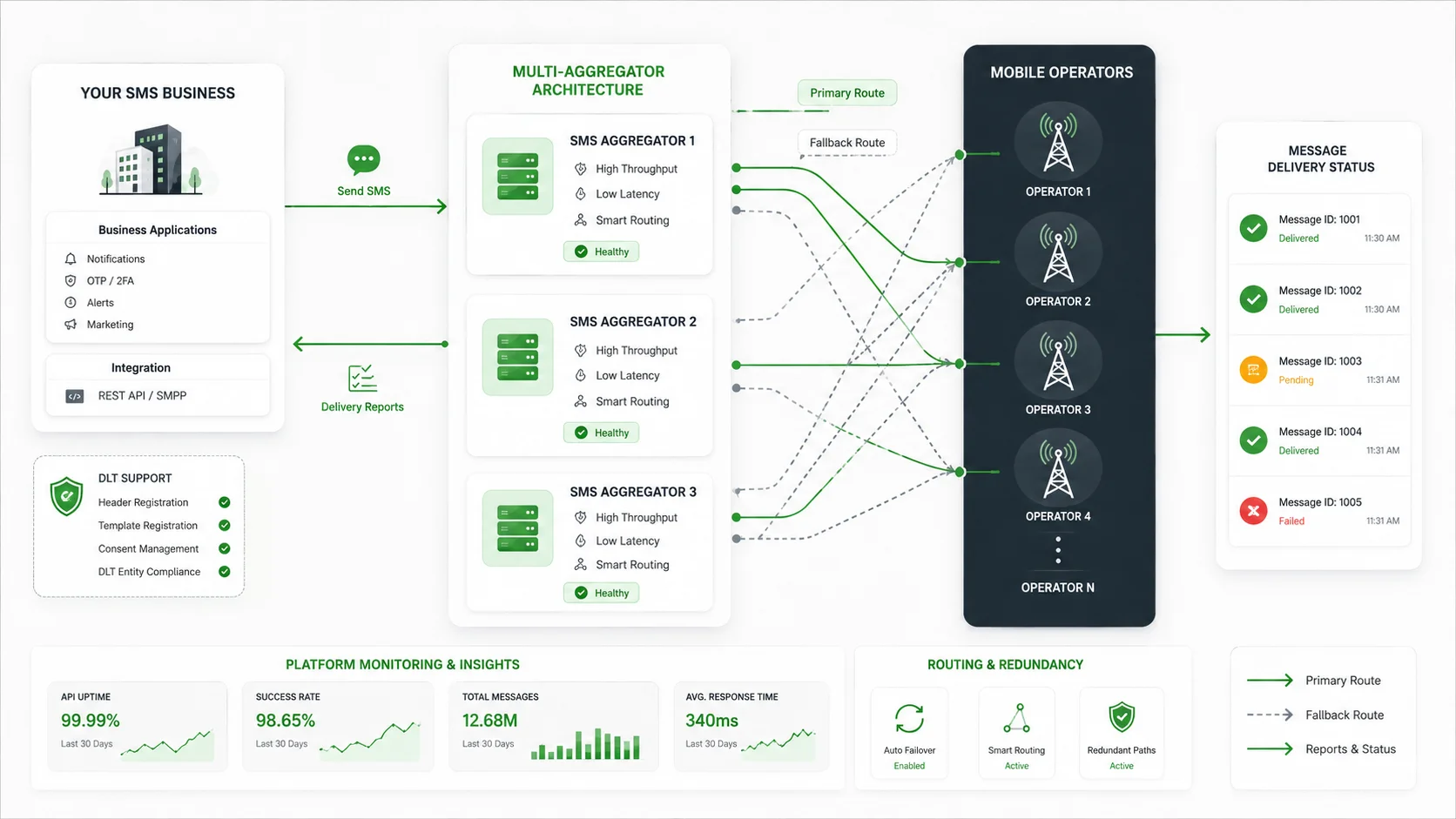
The Evaluation Framework:
Before signing with any aggregator, ask these questions and verify the answers independently:
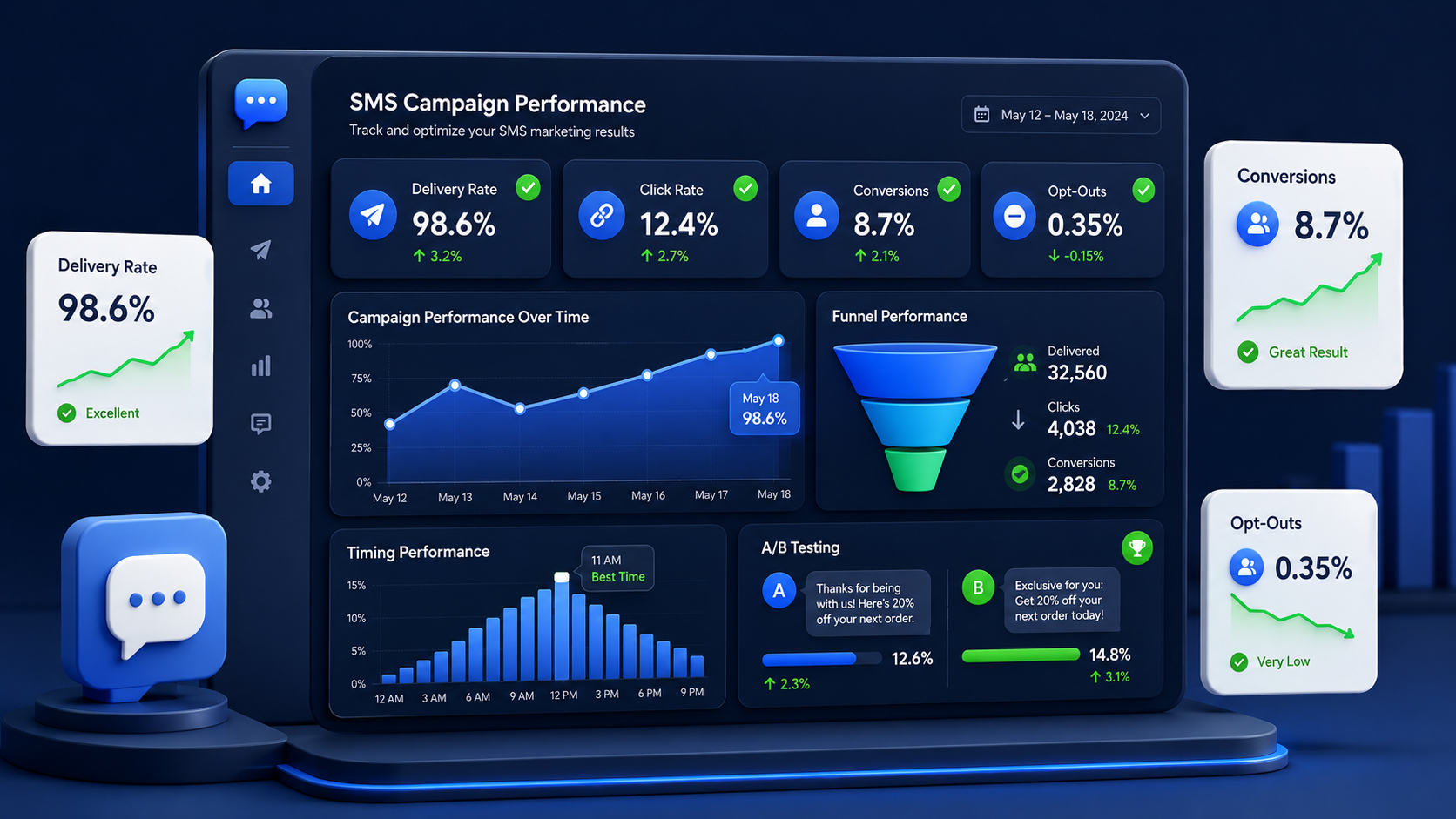
- Delivery Rate Benchmarks: What is their average delivery rate to major operators (Airtel, Jio, Vi, BSNL)? Rates below 90% indicate routing problems. Ask for a delivery report from a live campaign, not a marketing datasheet. If they cannot provide real-time delivery reports, look elsewhere — you have no way to verify their claims or troubleshoot SMS delivery failures for your clients.
- DLT Support Quality: Do they provide hands-on assistance with entity registration, header approval, and template submission? Some aggregators charge extra for DLT support; others include it. The ones that include it usually have faster onboarding times. If they tell you to “handle DLT yourself,” they are a commodity supplier, not a partner.
- API Reliability: What is their SMS API uptime SLA? Look for 99.5% or higher. Ask for incident history — how many outages in the last 12 months, and how long did they last?
- Routing Redundancy: Do they have direct operator connections or rely on downstream partners? Direct connections offer better delivery rates and faster issue resolution. Ask explicitly: “Do you connect directly to Jio’s SMSC, or through another aggregator?” Vague answers about “multiple routes” without naming specific SMSCs usually mean indirect, low-quality routing.
- Hidden Fees and Contract Terms: Are there setup fees, monthly minimums, API access charges, or DLT registration fees? Some aggregators advertise low per-SMS rates but recoup margin through fixed charges. Reputable aggregators offer flexible credit purchases. Pressure to sign large-volume lock-in contracts is a warning sign for new resellers.
Minimum Viable Partnership:
Work with at least 2–3 aggregators from day one. If your primary provider has an outage, you need a fallback ready. The cost of maintaining secondary relationships is minimal — most aggregators do not charge monthly fees — but the protection against client churn is significant.
A reseller in Bangalore lost a ₹40,000-per-month client because their sole aggregator had a 6-hour outage during a festival sale. The client switched to another provider the same week. A ₹10,000 credit balance with a secondary provider would have prevented the loss.
Step 6 — Set Your Pricing and Packages
Pricing is where most new resellers either undercut themselves into unprofitability or price themselves out of the market.
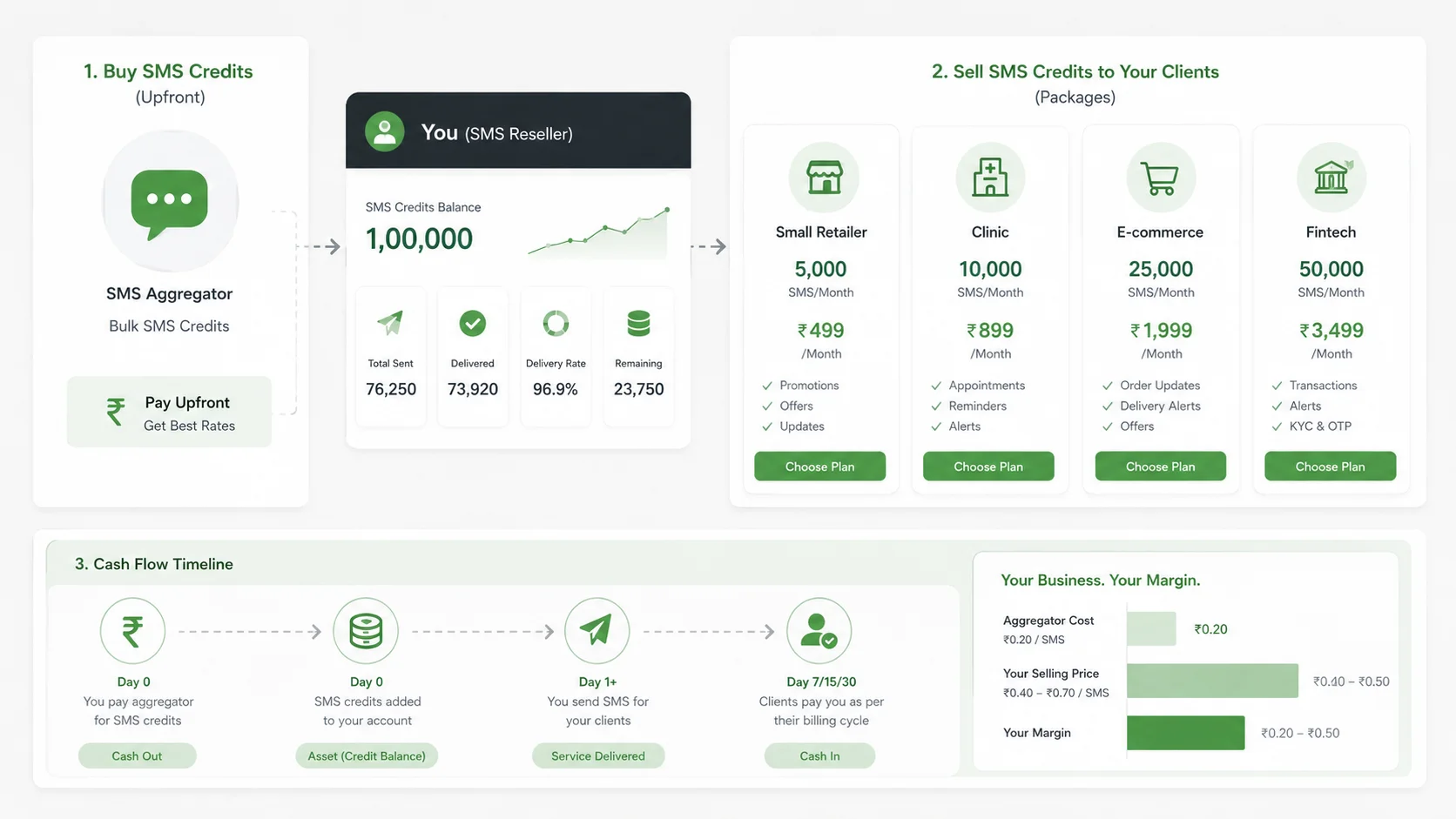
Two Approaches to Pricing:
Cost-Plus Pricing: Calculate your cost per SMS (wholesale rate + DLT fees + overhead) and add your target margin. This is simple but ignores market positioning.
Value-Based Pricing: Price according to the value you deliver. Transactional SMS (OTPs, alerts) command higher prices because delivery speed and reliability are critical. Promotional SMS is commoditized and competes on volume.
Sample Pricing Structure:
| Client Type | Volume (Monthly) | Your Cost | Recommended Price | Margin |
|---|---|---|---|---|
| Small Retailer | 5,000 | ₹0.12 | ₹0.25 | 108% |
| Clinic/Healthcare | 10,000 | ₹0.11 | ₹0.22 | 100% |
| E-commerce | 50,000 | ₹0.10 | ₹0.18 | 80% |
| Fintech (OTP) | 100,000 | ₹0.09 | ₹0.20 | 122% |
| Enterprise | 500,000+ | ₹0.08 | ₹0.14 | 75% |
Note: These are illustrative figures. Actual rates vary by aggregator, volume commitments, and negotiation.SMSBoosting offers rates starting from approximately €0.0045 per SMS for the Indian market, with volume-based discounts available at higher tiers.For a detailed breakdown, see how much SMS marketing costs at scale.
Package Design:
- Starter Package: 5,000 SMS/month, basic DLT support, web dashboard access — targets small businesses testing SMS marketing
- Growth Package: 25,000 SMS/month, API access, delivery reports, template assistance — targets established SMEs
- Enterprise Package: Custom volume, dedicated account manager, SLA guarantees, multi-route failover — targets large clients
Hidden Costs to Factor Into Your Pricing:
- DLT Scrubbing Fees: Some aggregators charge per-message fees for DND list scrubbing (₹0.01–0.02 per SMS)
- Failed Message Charges: Not all aggregators refund failed deliveries. Clarify this before pricing your packages.
- Template Rejection Costs: Frequent template rejections waste time. Some providers offer template review services for a fee.
- Working Capital Gap: You pay aggregators upfront for credits, but clients often pay net-30. The float can strain cash flow.
How to Find Your First Clients
Once the infrastructure is in place, the next step is finding clients who will use it.
Target the Right Industries First:
Some sectors in India buy SMS at higher volumes and with less price sensitivity than others.
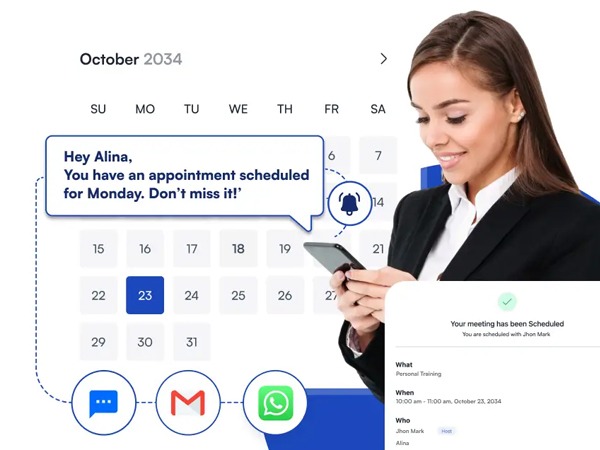
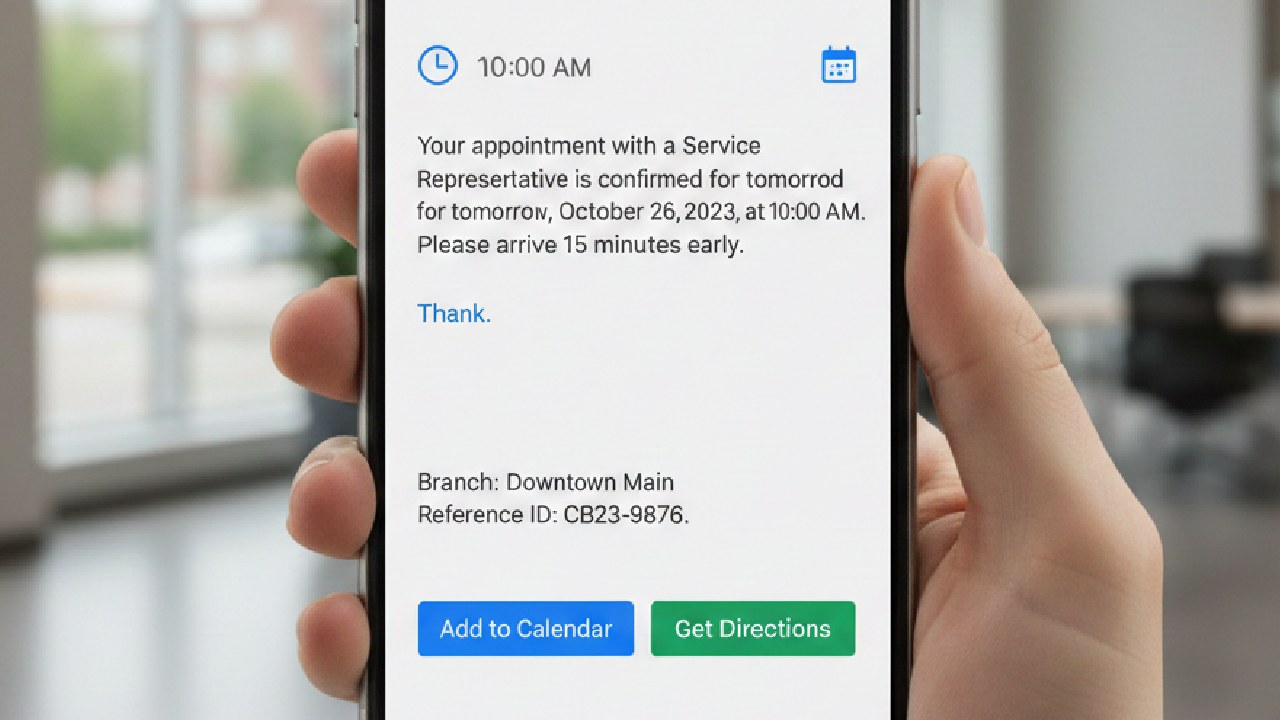
- Healthcare (Clinics, Diagnostics): Appointment reminders, test result notifications, prescription alerts. High open rates and clear ROI. Doctors understand the value of reducing no-shows.
- Education (Coaching Centers, Schools): Fee reminders, exam schedules, admission campaigns. High volume during admission seasons. One coaching center in Kota sends 50,000 SMS per month during peak season.
- Retail and E-commerce: Order confirmations, delivery updates, flash sales. Very high volume potential but price-sensitive.
- Real Estate: Project launches, site visit reminders, EMI alerts. Lower volume but higher per-message willingness to pay.
- BFSI (Banks, NBFCs, Fintech): OTPs, transaction alerts, loan reminders. The highest reliability requirements and strictest compliance needs. Also the highest margins if you can meet their SLAs.
Digital Acquisition and Partnerships:
Target hyperlocal SEO keywords like “bulk SMS service in [city]” for low-competition, high-intent traffic. LinkedIn outreach to marketing managers works best with a specific value proposition rather than generic pitches. Web development agencies and CRM providers (Zoho, Salesforce, Freshworks) are natural referral partners — every system they implement needs SMS integration, and most lack the execution capability.
The Pilot Client Approach:
Rather than chasing 100 leads, identify 5–10 businesses in one vertical and offer them a pilot program: 30 days of service at a discounted rate with a clear success metric (e.g., “reduce no-shows by 20%”). Use the results as case studies to sell to similar businesses.
A reseller in Hyderabad targeted dental clinics exclusively. After 3 pilot clients showed 30% no-show reduction, they used those case studies to sign 12 more clinics in 6 weeks. Specialization beats generalization in the early stage.
What Mistakes Shut Down New SMS Marketing Businesses?
Even experienced entrepreneurs make these errors. Catching them early prevents operational and financial problems that are difficult to recover from.
- Mistake 1 — Skipping Client DLT Onboarding: Many resellers focus on selling credits and leave DLT compliance to the client. When a client sends unregistered traffic, the operator blocks the messages — and often suspends the reseller’s account too. The fix: Make DLT registration a mandatory step in your client onboarding checklist. Charge a setup fee for handling it on their behalf.
- Mistake 2 — Single Provider Dependency: Relying on one aggregator is efficient until it is catastrophic. Outages, price hikes, or route quality degradation leave you with no alternatives and angry clients. The fix: Maintain active relationships with at least 2–3 providers. Split traffic 70/30 or 60/40 between primary and secondary.
- Mistake 3 — Underpricing to Win Clients: Price competition against established resellers with larger volumes is a losing battle. Your cost per SMS is higher because you buy smaller volumes. The fix: Differentiate on service instead — faster support, DLT assistance, template libraries, and campaign strategy advice.
- Mistake 4 — Ignoring Template Matching: A message that deviates even slightly from the approved template gets blocked. Common causes: extra spaces, different punctuation, or variables that exceed 30 characters. The fix: Build a template validation tool or process. Test every new template with a single message before sending to the full list.
- Mistake 5 — No Consent Records: Promotional SMS without documented opt-in consent exposes both you and your client to penalties. TRAI’s 2025 amendments increased enforcement. The fix: Require written or digital consent proof before sending any promotional message. Maintain records for at least 12 months.
- Mistake 6 — Cash Flow Mismanagement: Buying large SMS credit blocks to get volume discounts sounds smart — until clients delay payment or churn, leaving you with prepaid credits and no revenue. The fix: Match credit purchases to committed client volume. Negotiate monthly billing with aggregators rather than large upfront blocks.
Conclusion
Starting an SMS marketing business in India is not complicated, but it is regulated. The entrepreneurs who succeed treat TRAI compliance as the foundation of their operation — not a box to check and forget. Register your company, complete DLT registration, choose your business model, partner with reliable aggregators, price for sustainability, and acquire clients one vertical at a time.
For those ready to compare aggregator partnerships and pricing structures, SMSBoosting offers direct routing to Indian operators with competitive per-SMS rates. Contact the team for a customized quote based on your volume and delivery requirements.
If your SMS business will serve India and other markets, our global SMS gateway coverage guide can help you compare route quality, country coverage, and sender requirements.
FAQ
How much does DLT registration cost in India?
DLT registration costs ₹5,000 plus 18% GST, totaling ₹5,900. This is a one-time fee per DLT portal. You only need to register on one portal — the blockchain propagates your registration across all operators.
Can I start an SMS business without GST registration?
No. GST registration is mandatory for DLT registration, and DLT registration is mandatory for sending commercial SMS. Voluntary GST registration is available even if your turnover is below ₹20 lakhs.
How long until I get my first client?
With focused outreach, most resellers sign their first client within 4–8 weeks. The fastest path is targeting one industry vertical with a pilot program offer. Generalist approaches typically take 3–6 months to gain traction.
What happens if I violate TRAI rules?
Penalties range from message blocking and account suspension to fines of ₹1,000–₹10,000 per violation. Repeated violations can result in blacklisting for up to 2 years across all operators. In severe cases, telecom disconnection is possible.