

SMS customer engagement is easy to claim and hard to measure. A business can send more messages, but engagement is not message volume: it is whether customers act on what they receive. Two-way messaging changes the equation by giving customers a reply path, which turns a one-way broadcast into a measurable exchange. When a customer confirms, answers, or opts out, the business gets a signal it can count, and that signal is what makes engagement concrete instead of vague.
This article explains how two-way messaging supports SMS customer engagement, what response rates actually tell you, and which customer interactions create the most measurable value. It also covers the limits of the channel, so teams can set expectations that match what SMS can deliver. The goal is to help you define engagement in terms you can track, not in terms you can claim.
How Two-Way Messaging Supports SMS Customer Engagement
SMS customer engagement starts with the reply path. A message that asks nothing and expects nothing can still inform, but it cannot engage, because there is no way for the customer to act inside the channel. Two-way messaging adds that way: the customer replies from the same thread, and the business receives the reply in a system it controls.
From Broadcast to Conversation
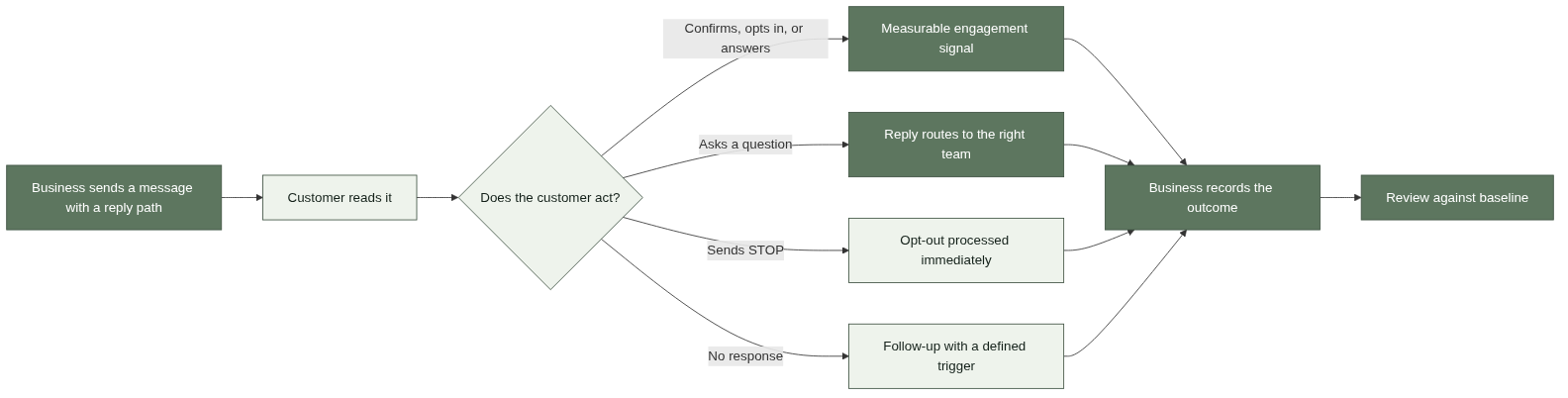
A promotional text is a broadcast. A confirmation request, a feedback question, or a follow-up check-in is a conversation. The difference is not the channel; it is the reply path. Once replies are possible, every message can produce a measurable outcome: a confirmation, a reschedule, a question, or an opt-out. Each outcome is a point of engagement the business can count and act on.
Why the Reply Path Changes Behavior
Customers reply when the effort is low and the benefit is clear. Replying “yes” to confirm an appointment is easier than calling or finding a link, which is why confirmation and opt-in flows produce the most reliable engagement signals. The reply path only works when the business handles what comes back, so the receiving side has to be ready before the message goes out.
What Response Rates Do and Do Not Tell You
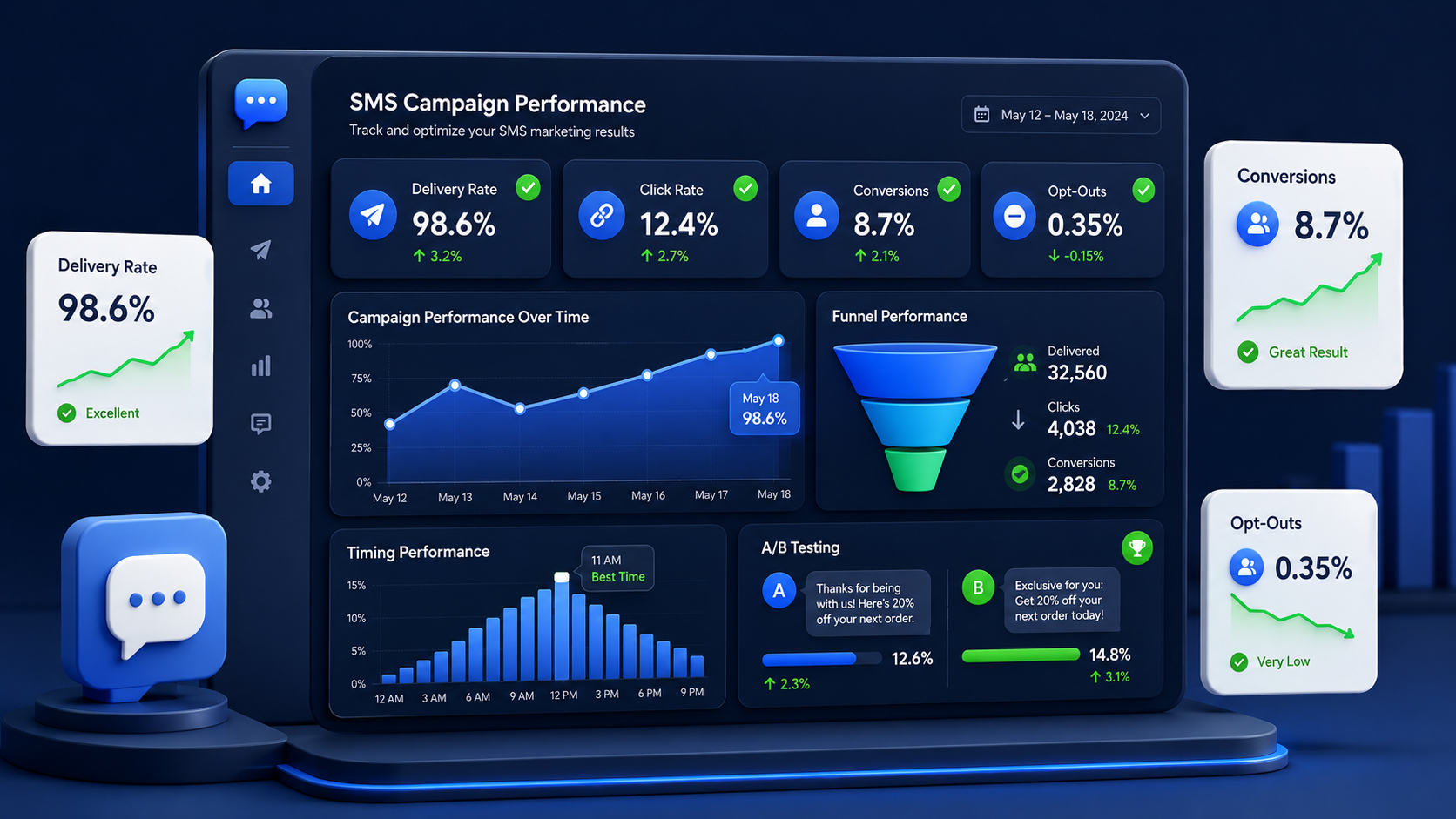
A response rate is a useful metric when it is tied to a specific message and purpose. It tells you how many customers acted on that message, and it lets you compare one flow against another. It does not tell you whether the action was valuable, whether the customer is satisfied, or whether the business handled the reply well. The rate is a starting point, not a verdict.
Choosing the Right Engagement Metric
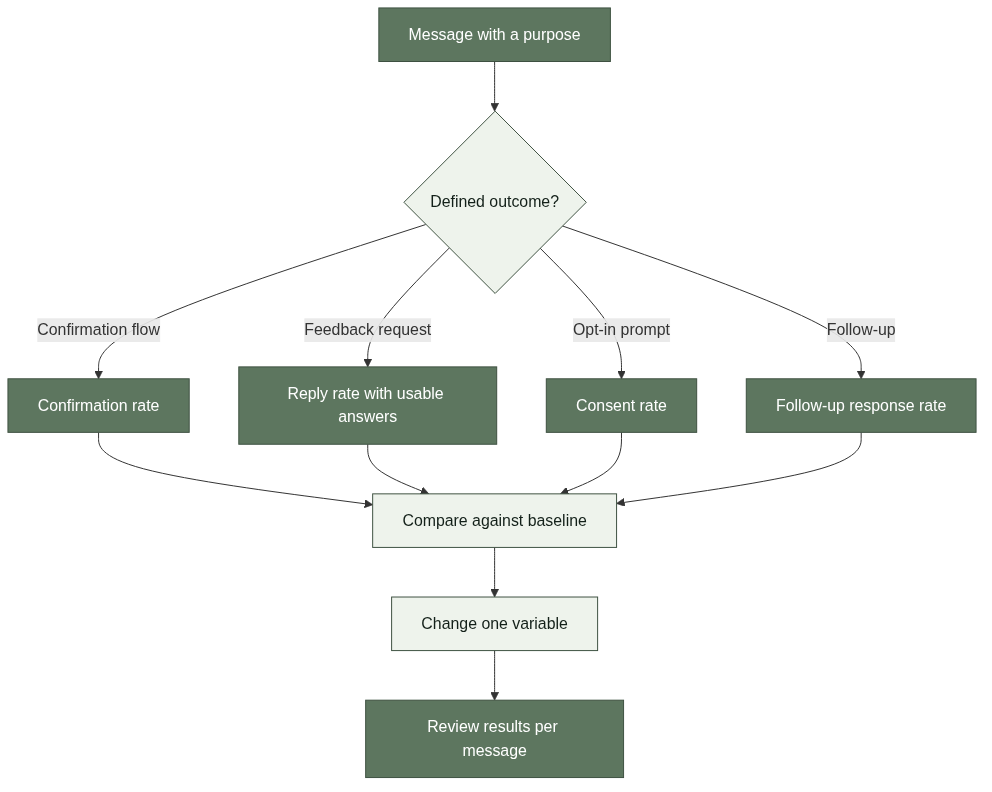
Pick the metric that matches the message’s purpose. For a confirmation flow, the confirmation rate matters. For a feedback request, the reply rate with usable answers matters. For an opt-in prompt, the consent rate matters. Each metric answers a different question, and mixing them hides more than it reveals.
Comparing Against a Baseline
An engagement metric only means something with a baseline. Measure the current flow, change one variable such as message timing or wording, and compare the result. A single high rate without a baseline is hard to interpret, and a rate that rises with message volume is not the same as engagement that rises per customer.
Customer Interactions That Create Measurable Engagement
The most measurable SMS customer engagement comes from interactions with a clear action and a narrow window. Confirmations, feedback collection, and follow-up communication all fit because each produces a signal the business can count.
Confirmations and Opt-Ins
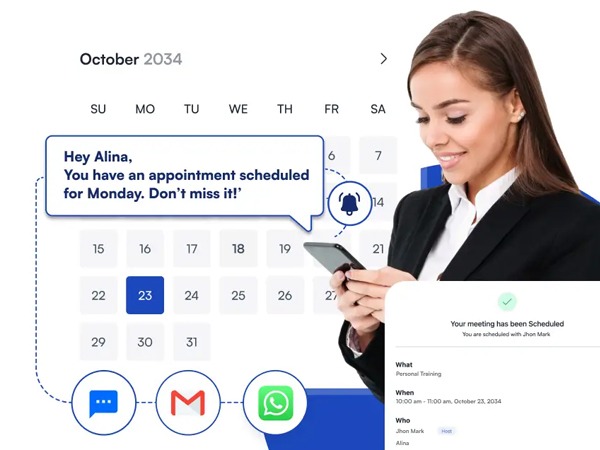
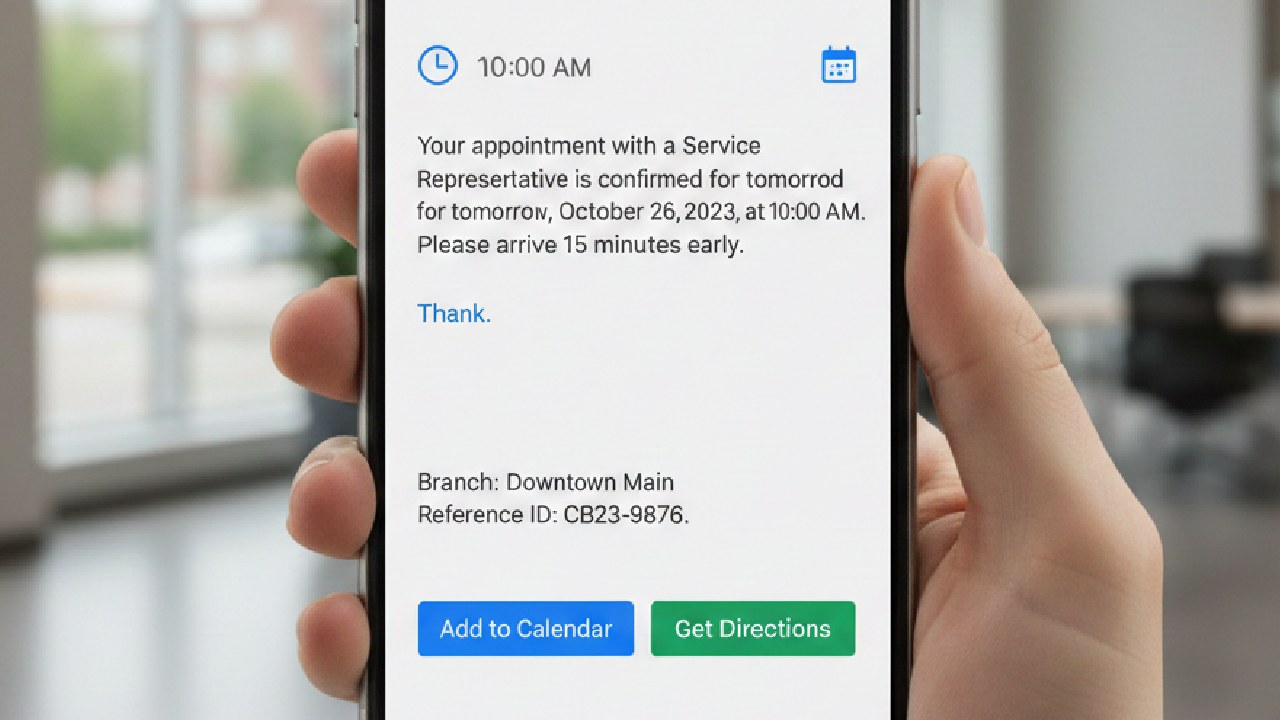
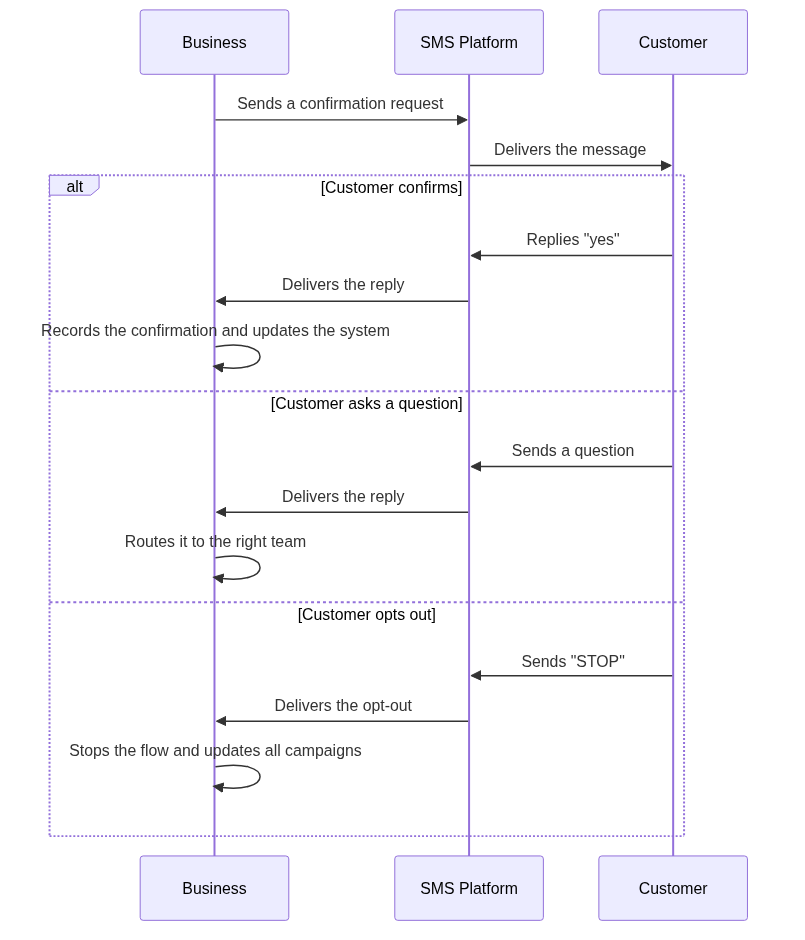
Confirmation flows are the strongest engagement pattern in SMS. The customer sees a clear choice and replies with a single word, and the business records the outcome instantly. Opt-in flows work the same way: the reply is the consent signal, and it is both engagement and compliance evidence [1].
Feedback Collection
A short feedback question gets more replies when the answer can be brief. The reply is a direct signal about the customer’s experience, and it is easy to route to the team that can act on it. Feedback works when the question is specific and the reply is usable; an open-ended survey by text tends to produce fewer useful answers.
Follow-Up Communication
Follow-ups keep a conversation alive after the first message. A customer who did not reply to a confirmation might respond to a follow-up, and that response is another measurable point of engagement. Follow-ups work when they have a reason and stop when the customer opts out, so they add signal without adding noise.
How to Make SMS Customer Engagement Measurable
SMS customer engagement becomes measurable when the business defines the signal before sending. Decide what counts as engagement for each message, record the outcome, and review the results against the baseline. The mechanics matter less than the definition.
Define the Signal Before You Send
For each message, write down what a successful outcome looks like: a confirmation, a reply with a usable answer, an opt-in, or an opt-out. If the message cannot produce a defined outcome, it is a broadcast, and it should not be counted as engagement. This step is what separates an engagement program from a sending program.
Record and Review Outcomes
Record each reply type and its result, and review the numbers regularly against the baseline. Watch for signs that engagement is actually declining, such as rising opt-outs or falling reply rates per message. A review that looks at outcomes, not just volume, catches problems before they become customer complaints.
Where SMS Customer Engagement Has Limits
Two-way SMS supports engagement, but it is not a full engagement platform. Long conversations, complex troubleshooting, and rich content are better served by other channels. SMS engagement is strongest in short, structured interactions, and expecting more than that sets up the channel to fail.
Short Interactions Are the Sweet Spot
Confirmations, quick questions, and brief feedback are where SMS engagement earns its keep. The channel rewards low-effort replies and punishes long threads. Teams that treat SMS as a place for deep conversations usually end up with frustrated customers and an unstaffed inbox.
Do Not Promise Fixed Improvements
Engagement results depend on the customer base, the message, and the context. No provider can guarantee a fixed improvement in response rates, and no business should promise one internally. The honest approach is to measure the current baseline, change one variable at a time, and let the data decide.
Building an Engagement Flow That Works
A practical engagement flow starts with one interaction and a defined outcome. Choose the scenario with the clearest action, set the metric, and expand when the baseline supports it.
Start with One Scenario and One Metric
Pick a single scenario, such as appointment confirmations, and define the one metric that matters for it. Run the flow for a few weeks, review the outcome, and use that baseline to decide whether the next scenario deserves the same treatment. A single clean flow produces data; several vague flows produce noise.
Use a Platform That Handles Replies and Opt-Outs
Engagement flows depend on inbound message handling and immediate opt-out processing. When evaluating a provider, check how inbound replies are delivered, how opt-outs are handled across campaigns, and how delivery works in the regions you send to [3]. The Two Way SMS guide explains how replies come back, the Notification SMS Service page describes related delivery capabilities, and the SMS campaign examples article shows message patterns that support engagement.
FAQ
References
Twilio, “Messaging Services.” https://www.twilio.com/docs/messaging/services. Public platform documentation describing message flows, consent, and opt-out management for SMS programs.
Twilio Help Center, “Managing Opt-Outs and Unsubscribes.” https://help.twilio.com/articles/360027580933-Managing-Opt-Outs-and-Unsubscribes-for-Messaging-Services. Public documentation describing STOP keyword handling and opt-out requirements.
AWS, “Two-way SMS messaging.” https://docs.aws.amazon.com/pinpoint/latest/developerguide/channels-sms-two-way.html. Public platform documentation describing two-way messaging setup and inbound reply handling.