
What Is Transactional SMS?
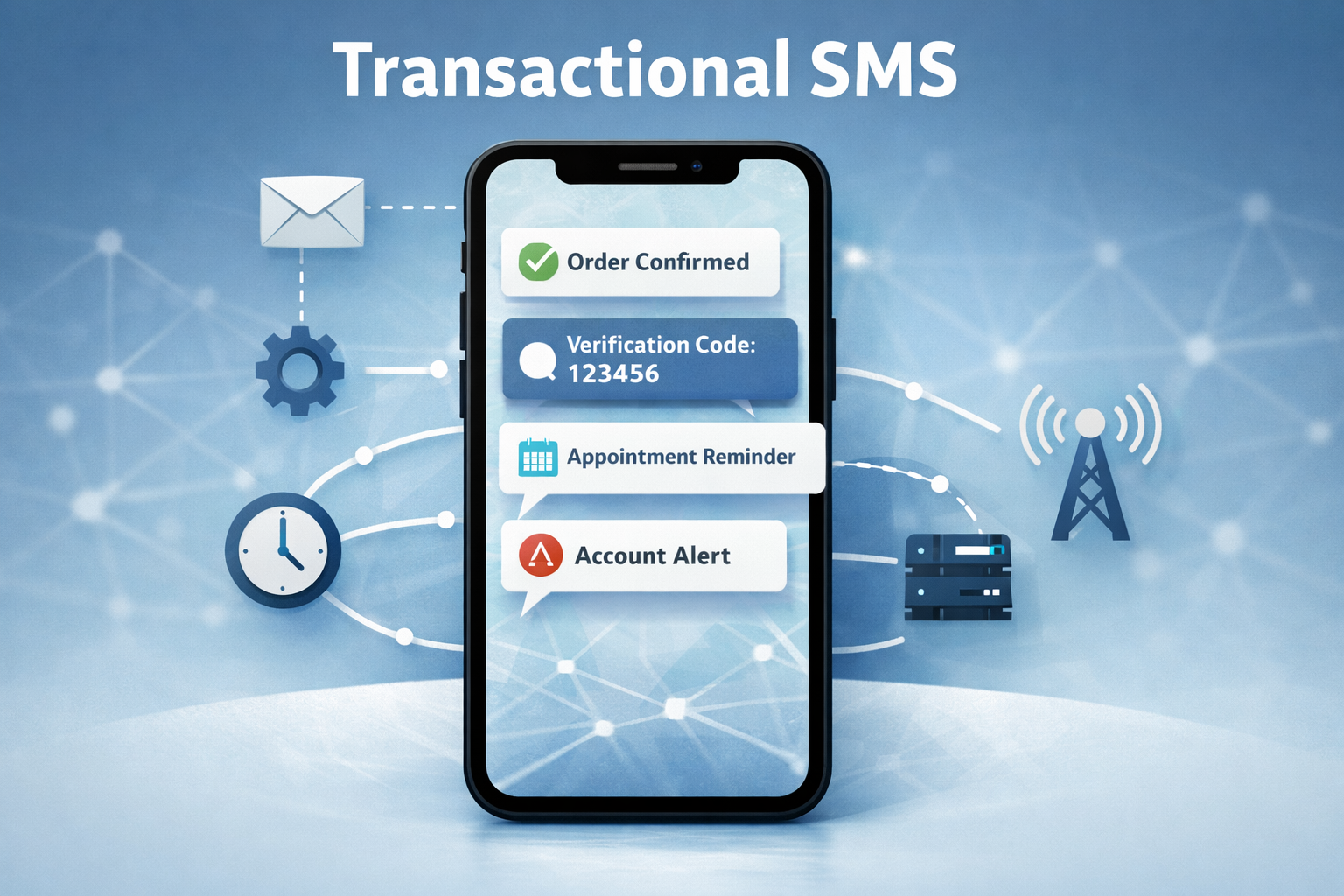
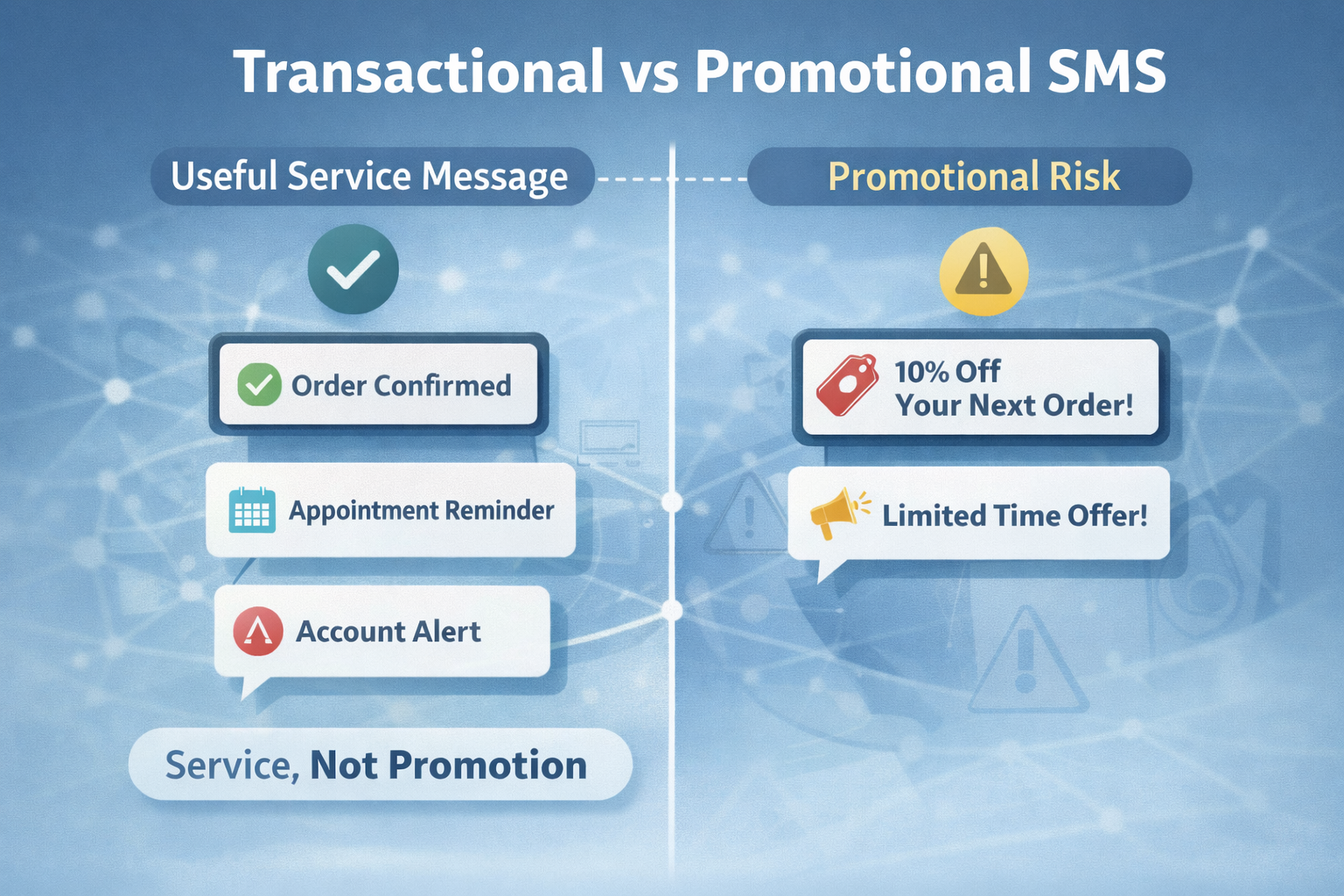
Transactional SMS refers to text messages sent to support an existing relationship or an action a customer has already taken. Unlike promotional SMS, which is used to market products or offers, transactional SMS is used to confirm, verify, update, or alert. Common examples include order confirmations, shipping updates, appointment reminders, account alerts, and one-time verification codes.
The easiest way to understand the category is by looking at the message’s purpose. A transactional SMS helps a customer complete, track, or respond to something already in progress. It is expected, tied to a real event, and meant to deliver useful information quickly.
In practice, the line between transactional and promotional content is not always perfectly clean. A shipping notification is usually transactional. But if the same message adds a discount code or a strong sales push, the classification may become harder to defend. In many markets, message treatment depends less on what the sender calls it and more on what the message is actually doing for the recipient.
That distinction matters for three reasons. First, it affects compliance requirements. Second, it can influence deliverability and filtering risk. Third, it shapes customer trust. When businesses keep transactional messages focused and useful, those messages are more likely to be understood as service communication rather than marketing. If you need a broader starting point on sender rules, consent handling, and filtering risk, see our SMS compliance guide.
How Transactional SMS Works
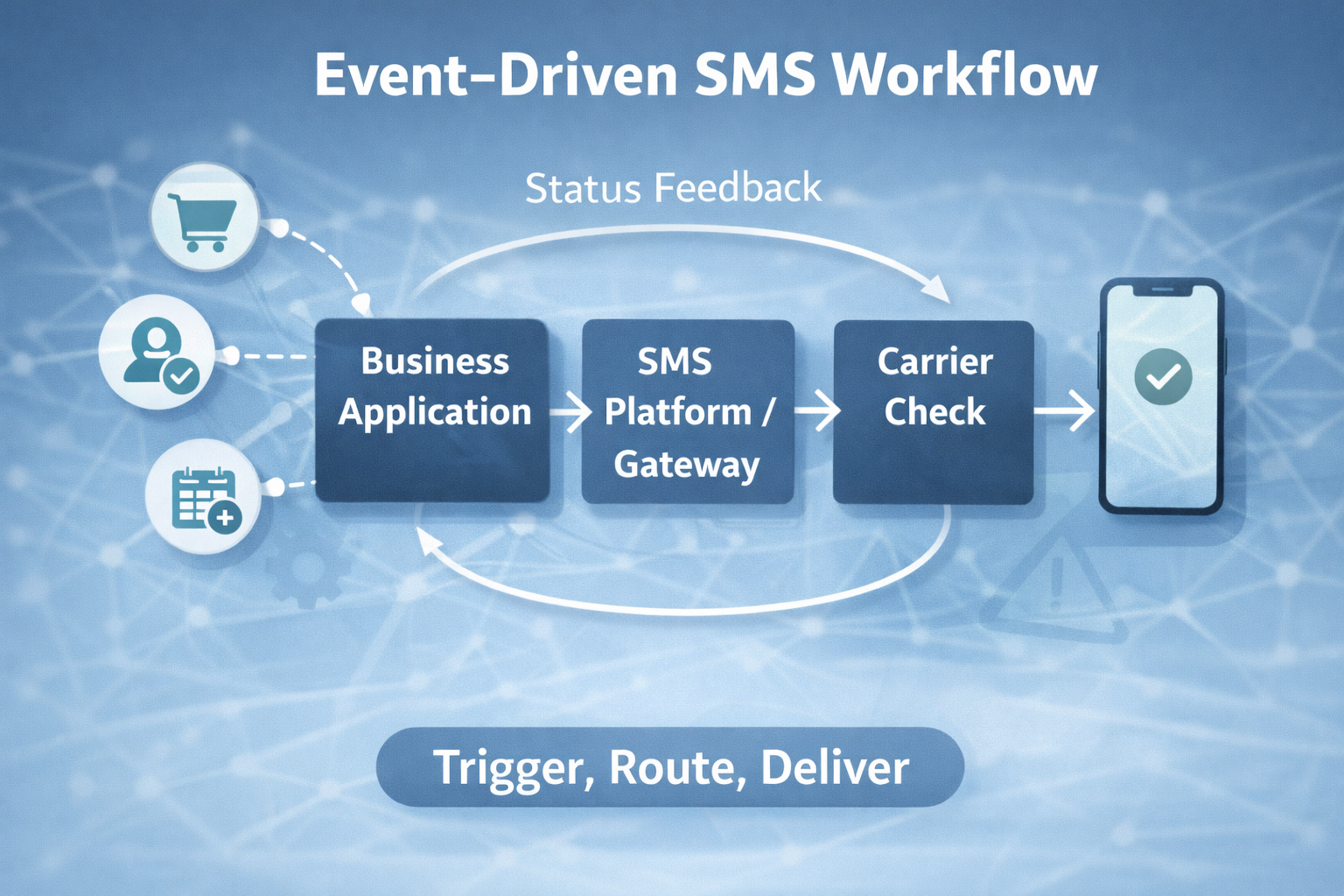
Transactional SMS usually starts with an event inside a business system. A customer places an order, requests a password reset, books an appointment, or triggers a security check. That event tells the application to generate and send a message.
From there, the application passes the message request to an SMS platform or gateway. The request typically includes the recipient number, sender identity, message content, and any tracking or status settings the business uses. The platform then checks basic requirements such as number formatting, sender setup, and any destination-specific rules that apply to that route.
Once the request passes validation, the SMS provider routes the message toward the destination carrier. That routing process can vary by provider and market. Some providers rely on stronger direct carrier relationships, while others use additional intermediaries. The quality of that route affects delivery speed, visibility, and reliability.
The receiving carrier then performs its own checks before the message reaches the user’s device. If the message is accepted and delivered, status information may travel back through the provider to the business system. That feedback helps teams understand whether a message was submitted, delivered, delayed, or rejected.
For most teams, the important takeaway is simple: transactional SMS is not just a text template. It is an event-driven workflow that depends on trigger logic, sender setup, routing quality, and delivery monitoring. If you want a clearer picture of the path behind that workflow, read how SMS platforms connect to mobile networks.
Delivery Rates: What the Numbers Mean
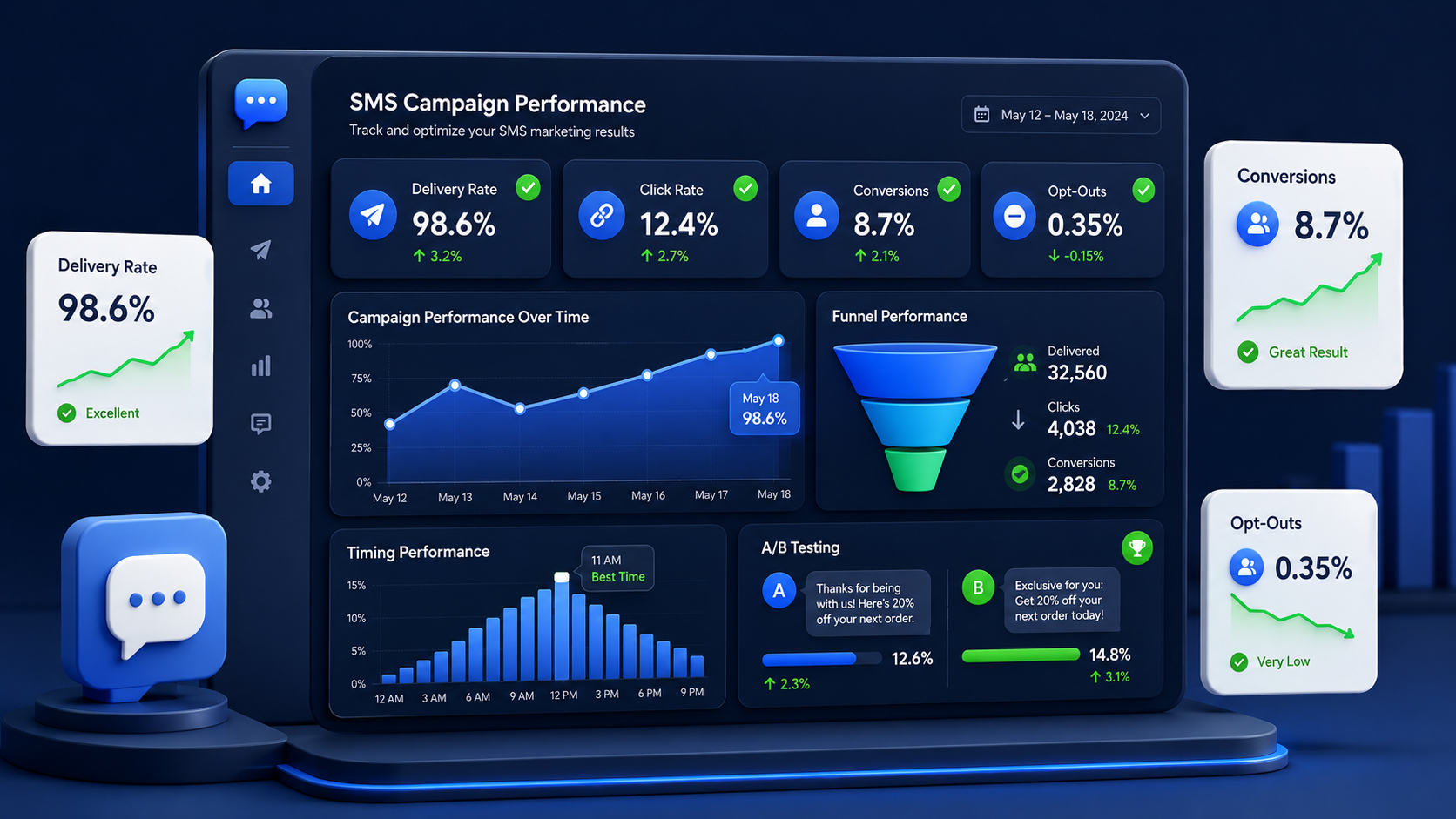
For transactional SMS, the number that matters most is delivery performance, not headline open-rate claims. A message is only useful if it arrives when the customer still needs it. That matters especially for login codes, fraud alerts, appointment reminders, and time-sensitive status updates.
Delivery performance can vary widely depending on the provider, route quality, sender setup, destination market, and message content. A message that looks fine in one country may face delays, filtering, or registration issues in another. That is why businesses should avoid treating transactional SMS performance as a single universal benchmark.
Several factors commonly affect deliverability. Sender ID registration rules differ across markets. Content that looks too promotional can increase filtering risk. Routing quality may vary by carrier or destination. Local network congestion, formatting issues, and outdated number information can also reduce success rates.
Strong monitoring goes beyond checking whether messages were “sent.” Teams should track delivery behavior by country, carrier, message type, and failure reason where possible. It is much easier to fix a delivery issue when you know whether it comes from routing quality, content rules, sender setup, or invalid numbers.
A useful operational mindset is this: measure transactional SMS based on whether it reaches the recipient in a usable moment, not just whether it enters a provider dashboard successfully. For a practical companion read, see how to improve SMS deliverability.
Top Use Cases and Examples
Transactional SMS is most useful when customers need short, time-sensitive information tied to an action or service event already underway.
E-commerce and Retail
Order confirmations reassure customers that a purchase went through successfully. Shipping updates and delivery alerts reduce uncertainty after checkout and help customers track what happens next. These messages also reduce avoidable support pressure because customers do not have to check multiple channels just to confirm order status.
Financial Services
Banks, fintech products, and payment platforms often use transactional SMS for account alerts, verification codes, suspicious activity warnings, and payment confirmations. These messages support both service communication and risk management because they help users respond quickly when something changes.
Healthcare and Appointment-Based Services
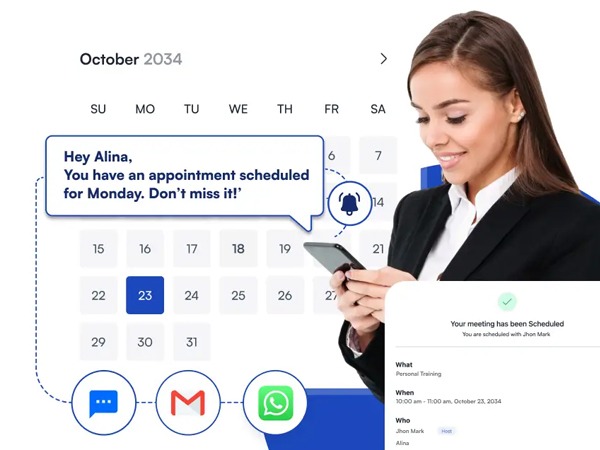
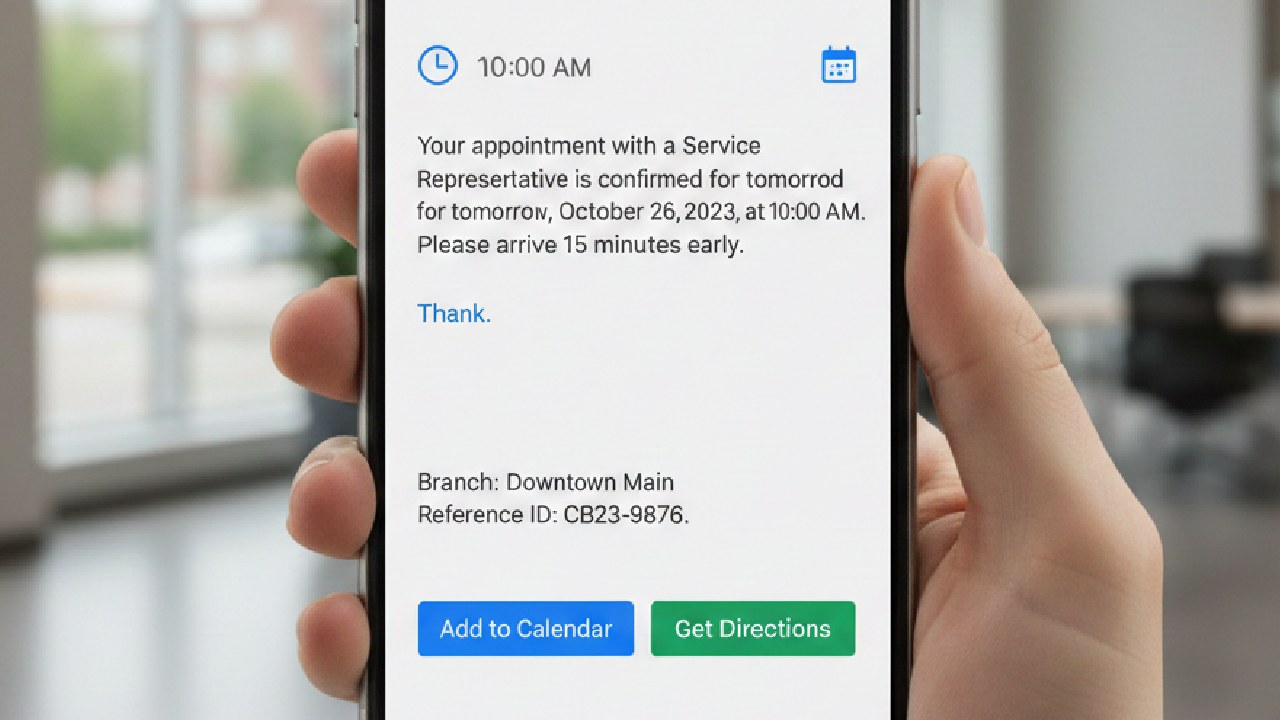
Appointment reminders, schedule changes, and pre-visit instructions are common transactional SMS use cases in healthcare and service businesses. These messages help reduce missed appointments, improve operational planning, and give customers enough time to confirm or reschedule when needed.
SaaS and Technology
Software companies often use transactional SMS for login verification, security notifications, account-change alerts, renewal reminders, or usage-related updates. In these cases, the message is meant to support account access, continuity, or awareness rather than drive a broad marketing action.
Logistics and Transportation
Ride confirmations, arrival alerts, pickup notifications, delivery updates, and travel changes are all common examples. These messages work well because the customer usually needs the information immediately and may not be actively checking an app or email at that moment.
API Integration: A Practical Checklist
Transactional SMS integration is usually straightforward at a high level, but the decisions teams make early can affect reliability, maintenance effort, and delivery visibility later.
Choose a Provider Based on Real Delivery Needs
Start by evaluating providers based on the markets you actually serve, not just headline pricing. Routing depth, sender support, documentation quality, webhook handling, and regional registration support often matter more than the lowest advertised per-message rate.
Build Around Event Triggers, Not Manual Sends
Transactional SMS works best when it is tied to clearly defined business events. Teams should know exactly which events trigger a message, which messages are required versus optional, and what outcome each message is supposed to support.
Use Queueing and Retry Logic Carefully
It is usually safer to send transactional SMS through asynchronous queues rather than directly inside customer-facing workflows. Retry logic should handle temporary failures, but it should also be controlled. The goal is to recover from short-lived issues without creating duplicate sends or unnecessary delivery pressure.
Normalize and Validate Numbers
Phone number handling should be standardized before messages are sent. Normalizing numbers into a consistent format helps reduce avoidable failures and makes routing behavior easier to manage across regions.
Monitor Status and Failure Patterns
Teams should log provider responses, delivery updates, and failure reasons in a way that can be tied back to business events. That visibility matters because “message requested” and “message received in time” are not the same thing.
Treat Compliance as Part of the Build
Registration, template approval, consent handling, suppression logic, and message logging should not be treated as last-minute tasks. In many markets, compliance handling is part of reliable delivery, not a separate legal afterthought.
Compliance: A Multi-Region View
Transactional SMS rules vary by market, and businesses should be careful not to treat one country’s standards as a global default. What counts as service communication in one jurisdiction may require different documentation, registration, or consent handling somewhere else.
United States
In the U.S., transactional and promotional messages are often treated differently, but the distinction depends on the relationship, the content, and the role the message plays. A message tied closely to an account, order, appointment, or security event is generally easier to classify as transactional than a message that adds sales language or promotional offers.
European Markets
In Europe, businesses usually need to think about both data-processing rules and direct-marketing rules. Service-related messages are often handled differently from marketing messages, but the exact treatment depends on what data is used, why it is processed, and whether the message stays within a genuine service context.
India and Other Registration-Heavy Markets
Some markets place much more emphasis on sender registration, template approval, and formal message classification. In these environments, delivery depends not only on message purpose but also on whether the sender setup, content structure, and approval process match local requirements.
Canada, the UK, and the Middle East
These markets also distinguish between service communication and marketing, but the details vary. The safer approach is not to assume that a message stays transactional just because it includes some operational information. Once promotional language becomes too visible, classification risk usually increases.
Across regions, the practical lesson is consistent: businesses should keep transactional messages tightly focused, document why they are sent, and review local requirements before scaling into new markets. Compliance is not only about avoiding penalties. It is also part of protecting deliverability and customer trust.
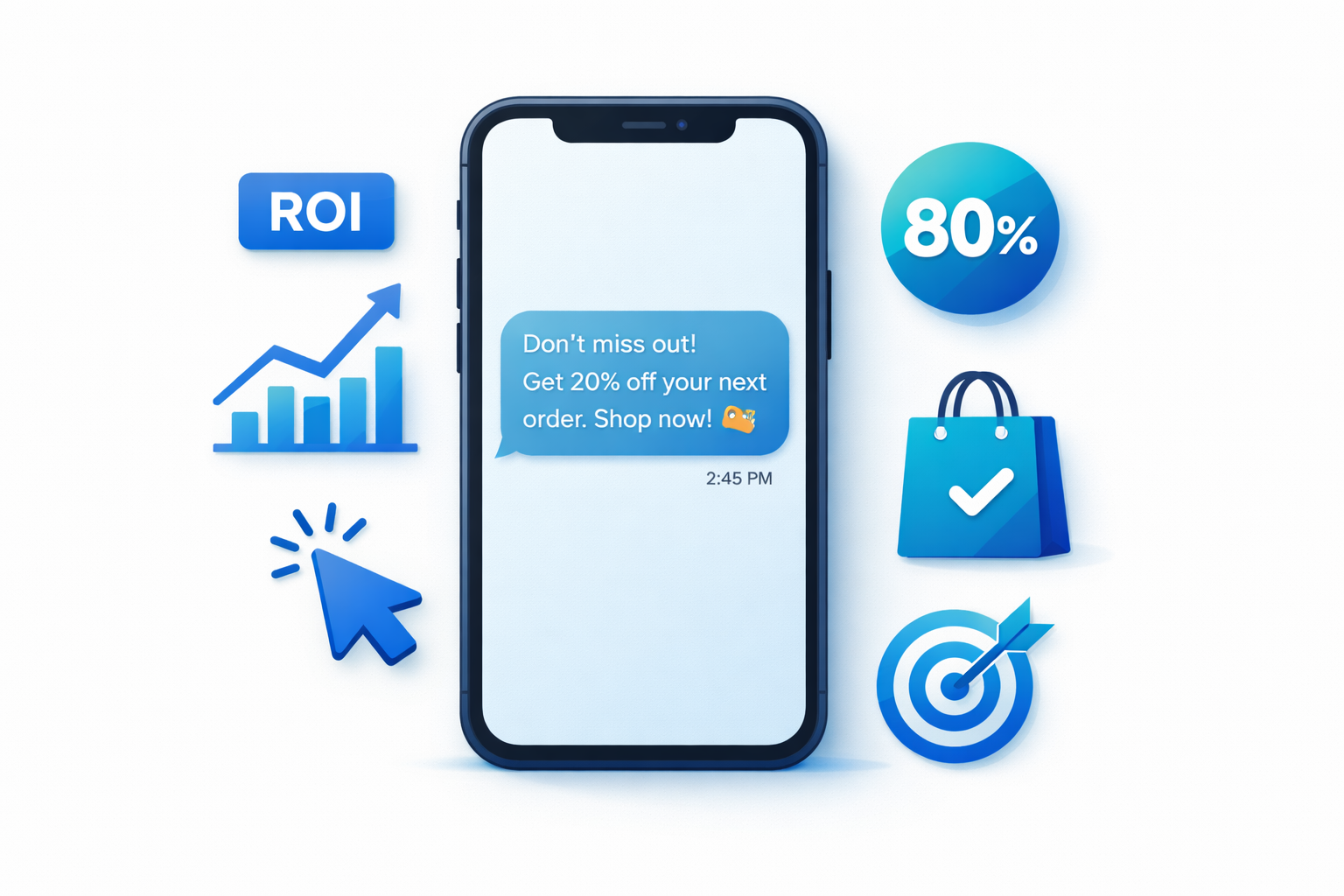
Cost and ROI Calculation
Transactional SMS costs are rarely defined by headline message price alone. The more useful question is not “What does one message cost?” but “What does a successful and reliable notification workflow cost over time?”
Direct messaging costs may include message fees, sender setup, platform charges, or destination-specific surcharges. But the real business impact also includes delivery failures, customer support load, authentication friction, and lost confidence when messages arrive late or not at all.
That is why cost should be evaluated together with performance. A cheaper route is not automatically the better option if it creates more retries, weaker delivery visibility, or more downstream operational issues. In many cases, the better metric is cost per successful outcome rather than cost per message submitted.
ROI depends on the use case.
- For order updates, the value may show up in lower support pressure and better post-purchase confidence.
- For authentication, the value may come from smoother access and fewer failed verification moments.
- For appointment reminders, the value may appear in stronger attendance and fewer last-minute gaps.
A practical way to evaluate ROI is to compare messaging costs against measurable business outcomes such as reduced support demand, improved completion rates, lower no-show risk, or fewer avoidable service failures. The exact model will vary by workflow, but the principle stays the same: transactional SMS earns its place when it reduces uncertainty in moments that matter.
Choosing a Transactional SMS Provider: What Actually Matters
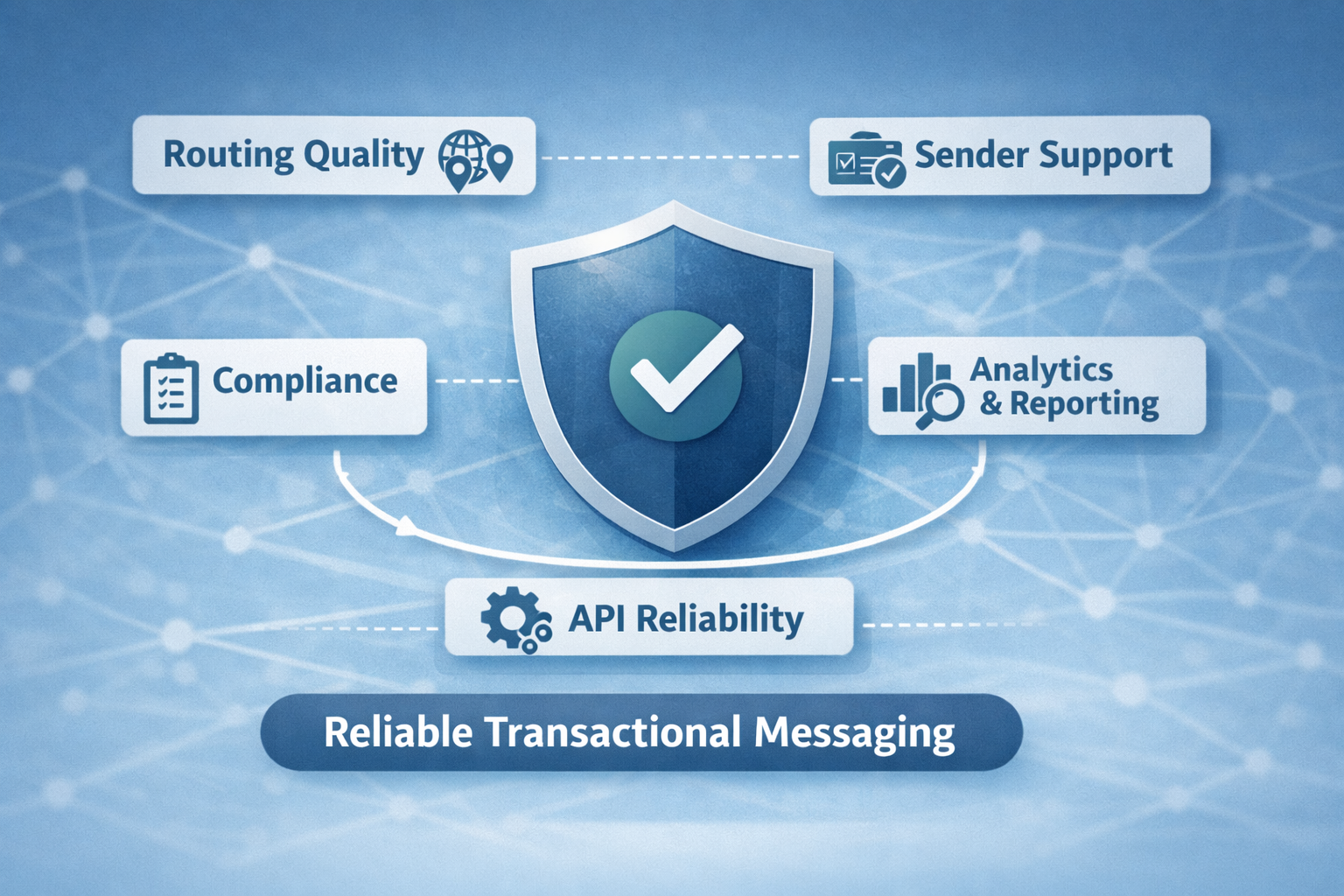
The best transactional SMS provider is not simply the cheapest one. It is the provider that can deliver reliably in your real markets, support the sender setup you need, and give you enough visibility to manage delivery performance over time.
1. Routing Quality
Ask how the provider handles your target regions, not just how many countries appear on a coverage list. Delivery consistency matters more than broad but shallow reach.
2. Sender and Registration Support
If your traffic depends on approved sender IDs, templates, or local registration workflows, that support should be clear before you commit.
3. API and Webhook Reliability
The provider should make it easy to submit messages, track status, and handle delivery updates in a stable way. Clear documentation and predictable behavior reduce long-term integration risk.
4. Compliance Support
Some providers offer strong operational support around message classification, template workflows, and destination requirements. Others leave that burden almost entirely on the customer. That difference matters.
5. Pricing Transparency
Look beyond the headline rate. You want to understand how pricing changes by destination, message type, sender model, or route quality so there are fewer surprises at scale.
6. Support and Escalation
When transactional messaging breaks, the issue is usually urgent. Teams should understand what escalation paths exist and how quickly real technical support is available.
7. Reporting Depth
You cannot improve what you cannot see. Delivery visibility, failure categorization, and route-level insight all matter when transactional SMS becomes operationally important.
Final Thoughts
Transactional SMS is best understood as event-driven customer communication. It is used when a customer needs a clear message tied to something already happening: a purchase, a booking, a login, a delivery, a security event, or an account change.
The strongest transactional SMS programs usually do three things well. They keep message purpose clear. They treat delivery and compliance as part of the same operational system. And they measure success based on whether the message reached the customer in time to be useful.
If you are evaluating your own setup, start with the basics: which events trigger a message, how those messages are classified, what delivery visibility you have today, and where routing or compliance gaps may be creating unnecessary risk.