
An SMS platform becomes infrastructure when your business depends on SMS outcomes that need to stay predictable—not just accepted by an API, but stable enough to support revenue, time-sensitive workflows, or customer expectations. At that point, SMS is no longer “just sending.” It becomes a system you need to explain, control, and stabilize.
Here is the simplest definition to keep in mind: SMS becomes infrastructure when you need to predict, explain, and reduce delivery variance week after week.
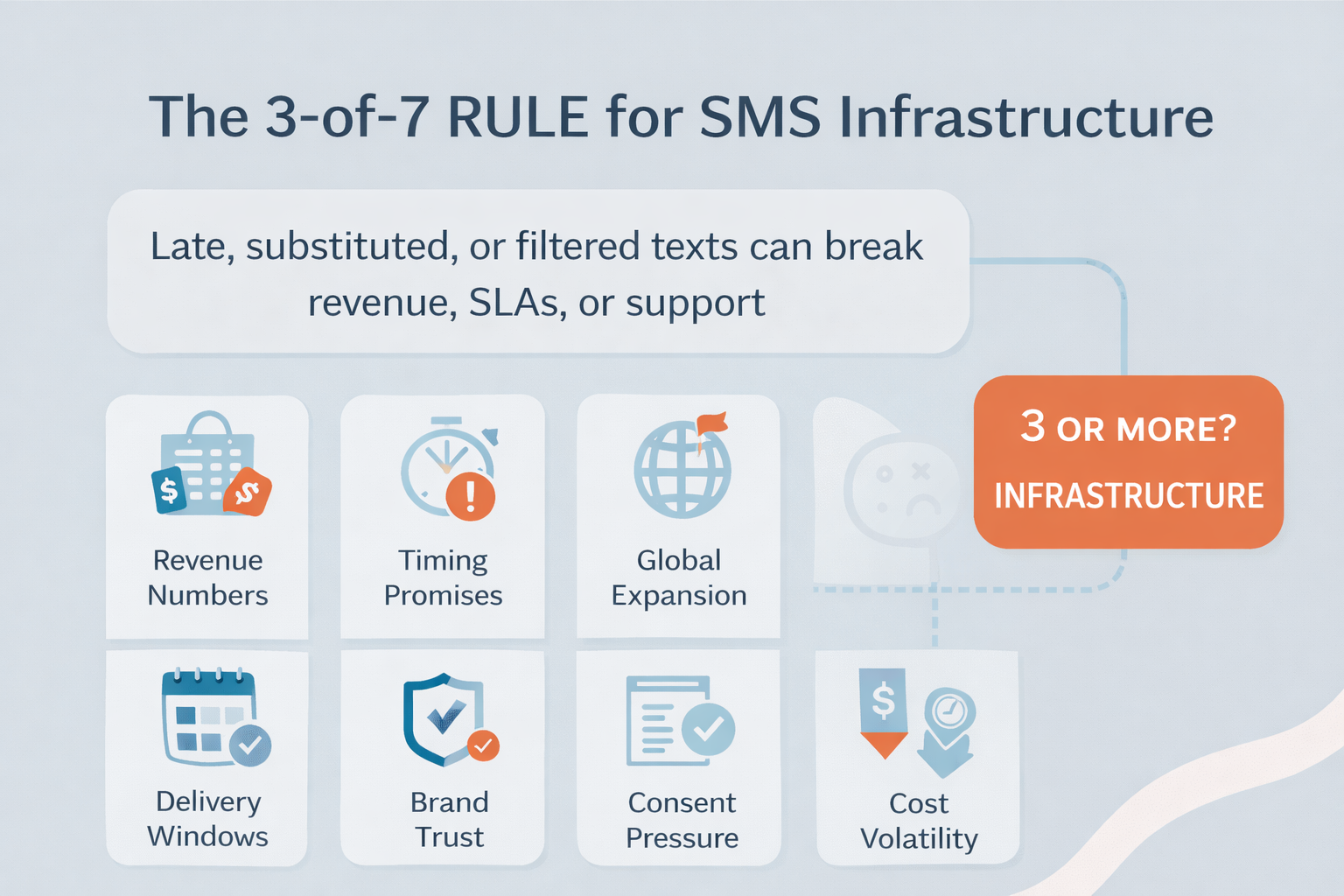
A quick decision rule is the 3-of-7 rule: if three or more of the seven business situations below apply to you, stop treating SMS like a one-off campaign and start treating it like operational infrastructure.
Once that threshold is crossed, the practical controls usually become the same: validate sender identity by destination, choose routes intentionally, set pacing for peaks, and keep reporting strong enough to explain what changed.
The One-Sentence Definition of SMS Infrastructure for Business Texting
If a late, substituted, or filtered text can change revenue, break a time promise, or trigger support tickets, then SMS is infrastructure.
Infrastructure is not “more features.” It is a higher expectation.
How the 3-of-7 Rule Works for Deciding When SMS Becomes Infrastructure
If three or more of the seven moments below apply, stop treating SMS like a one-off campaign. Treat it like a system.
7 Moments an SMS Platform Becomes Infrastructure for Your Business
If you want the scannable version, these seven moments are your checklist.
- SMS drives revenue, such as flash sales, renewals, or BFCM peaks
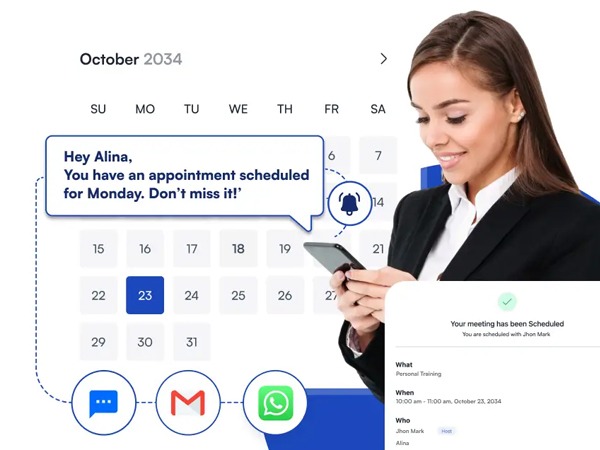
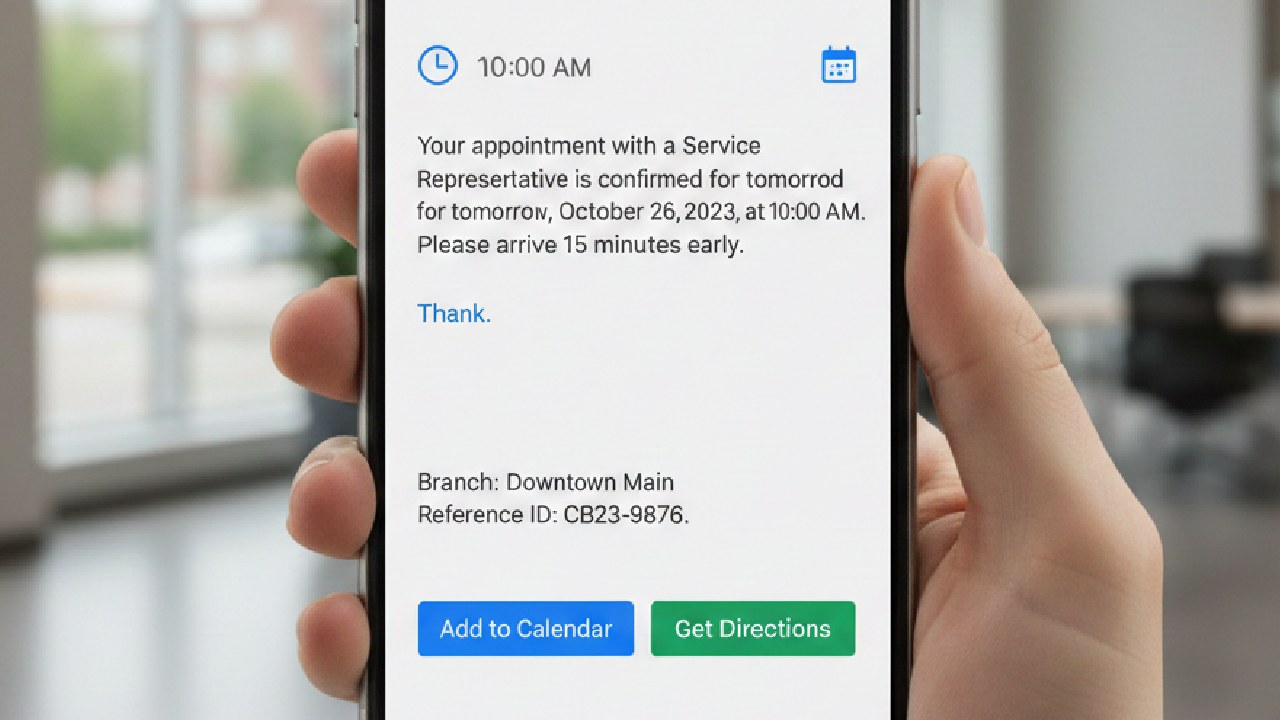
- Support depends on timing, such as alerts, reminders, or 2FA fallbacks
- You expand countries and sender rules change
- You promise a delivery window for appointments, logistics, or verification backups
- Brand trust is at risk because of spoofing concerns or complaints
- Consent and compliance directly affect deliverability
- Cost volatility forces route trade-offs between price and predictability
When SMS Has a Revenue Number Attached
Once campaigns are tied to revenue, timing becomes part of the metric. A text that lands 30 minutes late can still show as delivered and still lose money.
During peak seasons, volume usually jumps sharply as well, which makes queueing, throughput, and latency much more visible than they look during normal weeks.
Breaks: “Delivery rate is enough.” You start caring about latency and throughput.
When Support Tickets Start Depending on SMS Delivery Latency
When customers expect alerts or reminders, delays do not just reduce clicks. They create tickets.
Now marketing, product, and support all end up caring about the same queue.
Breaks: “SMS is only a growth channel.”
When You Add a New Country and the Sender Identity Rules Change
An alphanumeric sender ID can work in Country A and get replaced or blocked in Country B. Some destinations require registration before traffic is accepted.
So you plan identity per destination. For example, you may need a registered long code in one market and an approved sender ID in another. For a broader map of how these handoffs sit behind business messaging, see how SMS platforms connect to mobile networks.
Breaks: “One sender works everywhere.”
When You Promise an SLA or Time Window for SMS Alerts
If you promise “arrives within 2 minutes,” you need a plan for throttling, congestion, and retries—even if the API never errors.
That makes “a little delay” a real failure.
To make this more operational, read how to measure SMS reliability beyond delivery rate, especially if average metrics are hiding country-, carrier-, or timing-level problems.
Breaks: “200 OK means we’re done.”
When Brand Trust Is on the Line
SMS is high-visibility. If messages look sketchy, users opt out or report you, and filtering pressure rises.
Trust is not a soft metric here. It affects delivery.
Breaks: “Copy is the only lever.”
When Compliance and Consent Become a Deliverability Risk
Consent and local rules shape carrier trust. Rising opt-outs, missing STOP handling, or bad timing can hurt deliverability before anything “breaks.”
Compliance is an operations input, not a checkbox.
Breaks: “Compliance is separate from performance.”
When SMS Cost Volatility Becomes an Operations Problem
At scale, cheaper routes can behave differently in latency, filtering, or reporting detail—especially during peaks.
Cost becomes linked to predictability.
Breaks: “Cheapest is fine.”
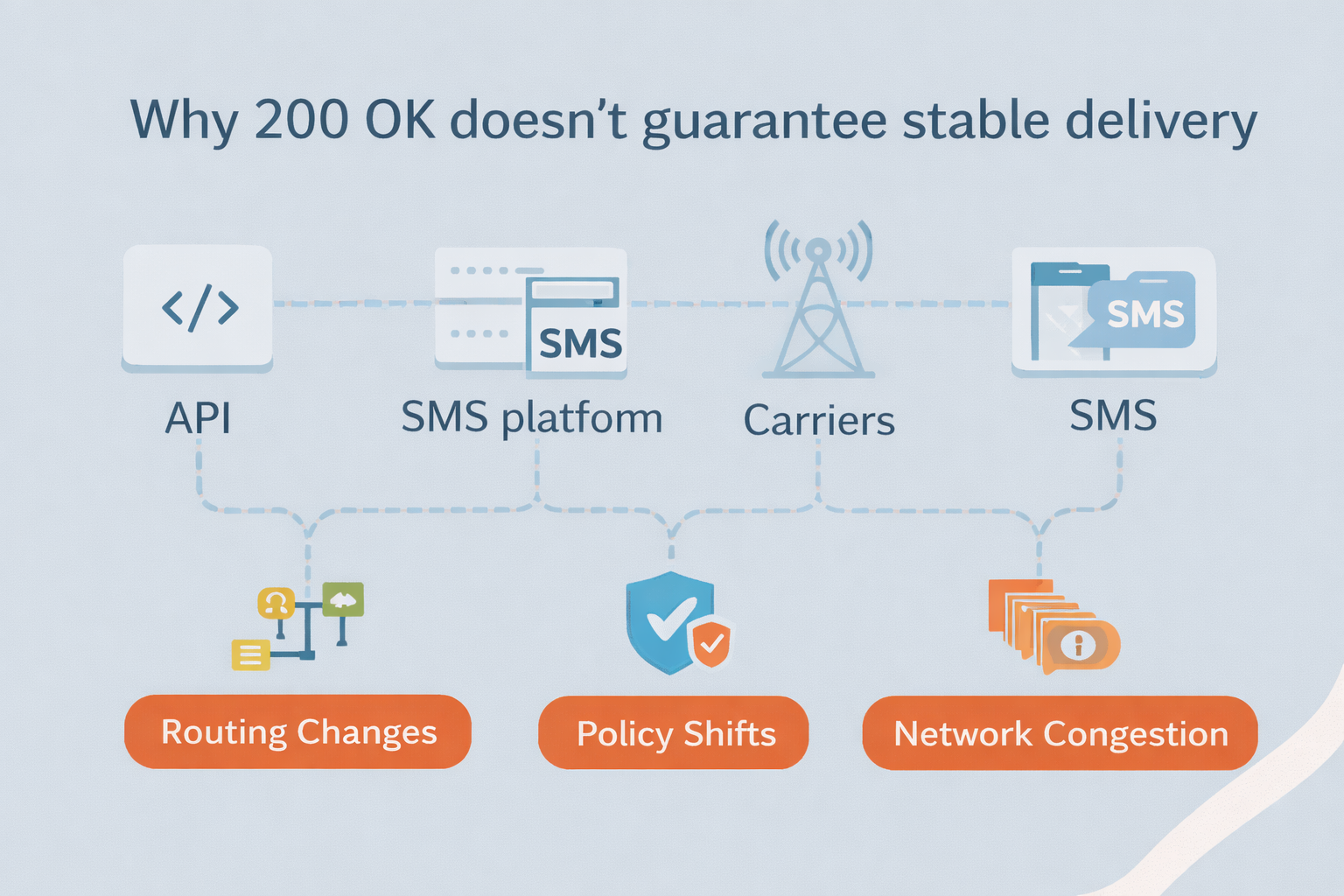
Why an SMS API Can Return 200 OK While Delivery Changes
A 200 OK response usually means your provider accepted the request. It does not guarantee stable inbox outcomes.
Shift 1: Routing Changes Without Your Code Changing
Traffic can flow through different paths based on coverage, congestion, backups, or policy.
Result: sender display, latency, or filtering behavior shifts while your payload stays the same.
Shift 2: Carrier or Country Policies Change
Requirements evolve. Registration steps tighten, filters change, and enforcement becomes stricter.
Result: substitution or blocking can rise in one destination while others look normal. If you need a companion diagnostic read for destination-specific variance, why business text messages fail is the most natural next step.
Shift 3: Network Congestion and Throttling Change Throughput and Latency
Peaks make queues visible. Messages are accepted, then delayed or rate-limited.
Result: “delivered” happens later than your business can tolerate.
5 Controls in an SMS Platform That Reduce Variance at Scale
When SMS is infrastructure, your goal is lower variance.
An SMS platform typically reduces variance with five controls:
- Set destination-ready sender identities
- Choose routes with redundancy and visibility
- Cap throughput with pacing and queues
- Watch early signals such as latency and opt-outs
- Close the loop with DLRs and runbooks
Set Sender Identity Rules Per Destination
Pick identities that are valid where you send, and keep at least one fallback identity for key markets.
Before adding a country, run a small device test to confirm what displays and what fails.
Choose and Compare Routes Intentionally
Routing is a design choice, not a moral badge. You want coverage, a backup path, and enough visibility to answer “what changed?”
Even a simple strategy—primary route plus backup for top destinations—prevents avoidable surprises.
Cap Throughput and Pace Traffic
Pacing turns peaks into something boring. Define safe send rates per destination, queue bursts, and retry within a bounded window.
This reduces throttling pain and duplicate bursts.
Watch the Right Metrics Early
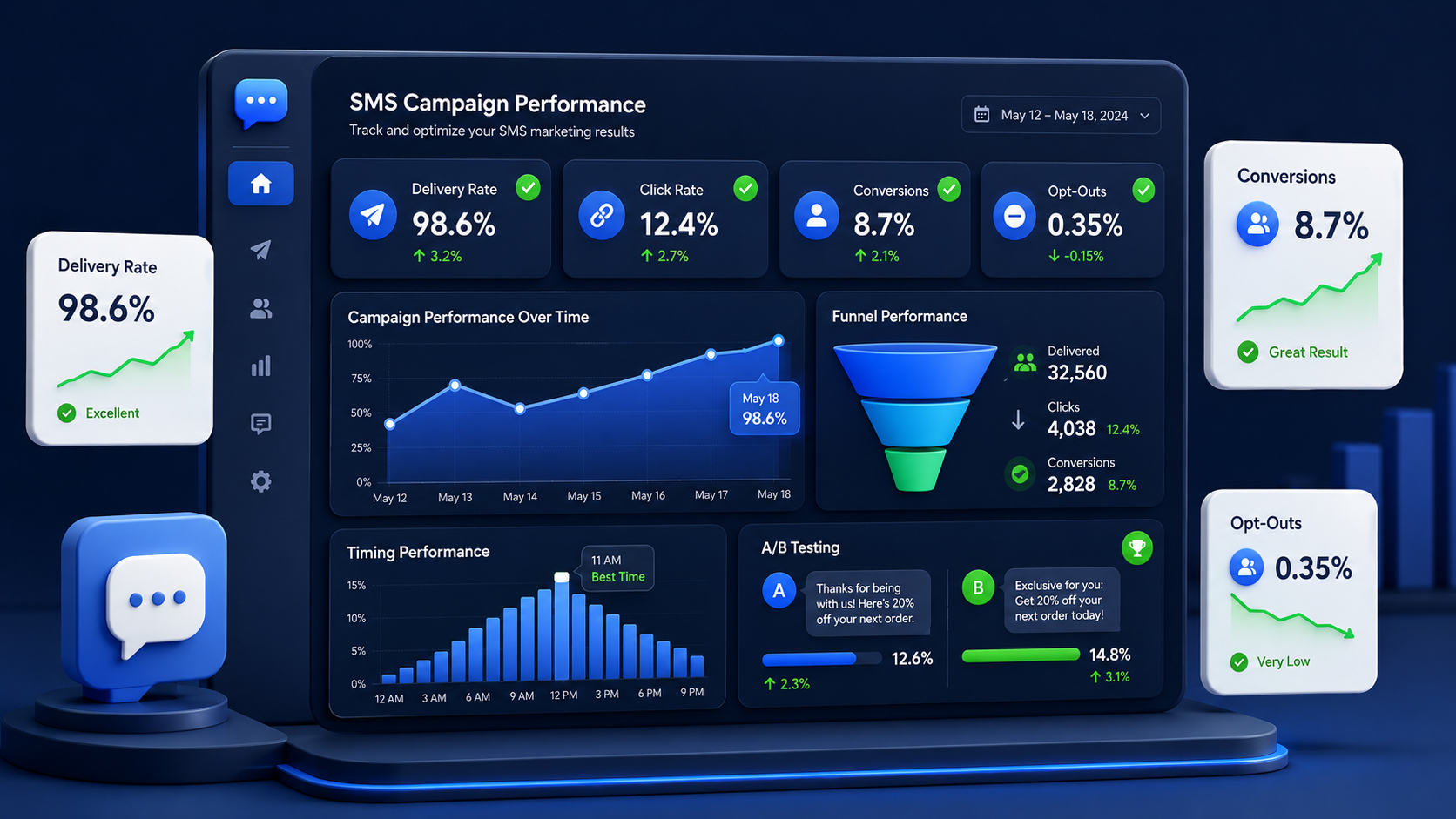
Delivery rate is a late signal. Add latency and opt-outs as early warnings, and split views by destination.
Averages hide problems. Country-by-country views surface them.
Close the Feedback Loop Fast
When outcomes shift, you need evidence: DLRs, timestamps, destination info, and a short change log covering sender, route, and compliance setup.
Write a one-page runbook for “latency spike” and “sender substitution.” That is enough to start.
If you are about to expand destinations or run a peak event, a quick infrastructure readiness sanity-check often beats debugging under pressure.
What an SMS Platform Cannot Control
Even a strong SMS platform cannot command carriers.
These boundaries help you stop blaming the wrong layer. If your team still over-attributes control to the platform, read what an SMS platform cannot control next.
Carriers Decide Acceptance and Filtering
Carriers and destination networks decide final acceptance and filtering.
A platform reduces risk and improves visibility, but it cannot override carrier policies.
Each Country Can Enforce Different Sender Identity Requirements
Sender rules are local. That is why the same sender can be valid in one market and substituted in another.
Plan identity per destination, not globally.
User Devices and Inbox Behavior Are Outside Platform Control
After delivery, user behavior and device settings affect engagement.
A platform can separate “delivered” from “engaged,” but it cannot force opens.
Regulators and Industry Bodies Can Change Compliance Rules
Rules evolve. Registration requirements appear. Enforcement tightens.
Build a habit of reviewing compliance when you scale.
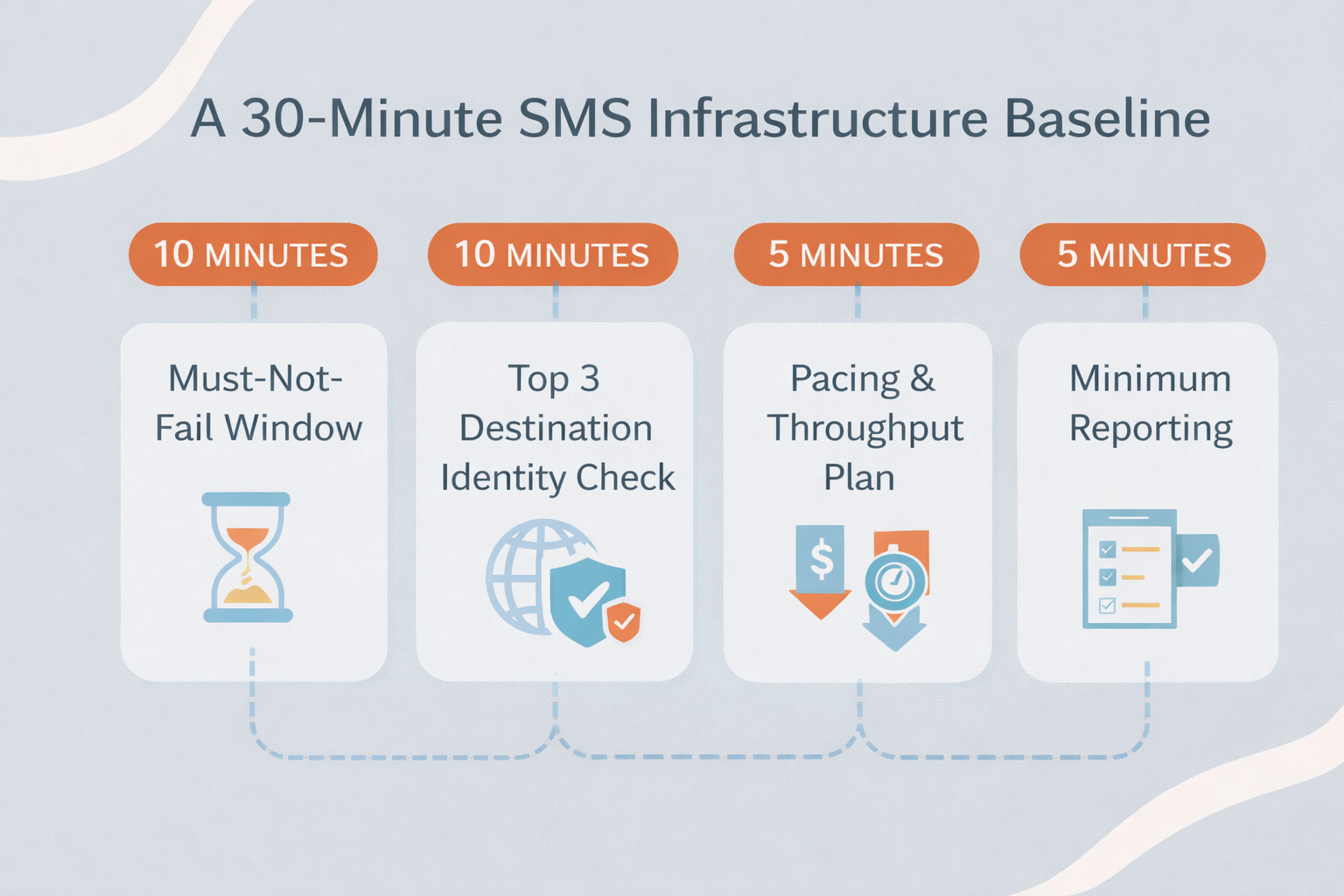
A 30-Minute SMS Infrastructure Baseline for Beginners
You can get meaningfully infra-ready in 30 minutes. Not perfect—just safer.
Use this baseline to make future troubleshooting faster.
10 Minutes: Define the Must-Not-Fail Use Case and Success Window
Pick one must-not-fail use case and a time window. For example: “password reset within 60 seconds.”
That line prevents endless arguments about what “good” means.
10 Minutes: Verify Sender Identity Readiness in Your Top 3 Destinations
Choose your top three destinations and confirm identity type, registration needs, and real-device display.
If you can, test two identities so you have options.
5 Minutes: Set Pacing Limits and a Peak-Day Throughput Plan
Define a safe send rate per destination and decide what happens when volume doubles: queue, throttle, or split traffic.
5 Minutes: Confirm the Minimum Reporting You Need
Make sure you can see destination, accepted vs delivered timestamps, DLR status, and recent changes.
When to Ask for an SMS Infrastructure Readiness Review
If outcomes feel variable—or you are about to scale—this is the moment to sanity-check the system.
A readiness review should give you a prioritized stability plan.
What a Readiness Review Covers in 30 Minutes
Expect: top risks, fix order, and weekly metrics.
What to Bring: 3 Destinations, 1 Peak Scenario, and a 7-Day Snapshot
Bring your top three destinations, one peak scenario, and a 7-day snapshot covering volume, latency, and opt-outs.
If you are about to expand destinations or prepare for a peak event, a short readiness review can help you spot the biggest stability risks early—especially around sender identity, routing choices, pacing, and debug-ready reporting.
FAQ
1) How Do I Know If SMS Is Already Infrastructure for My Business?
SMS is infrastructure if outcomes can change revenue, SLAs, or support load—and the 3-of-7 rule is the quickest decision aid. If you hit three moments, such as peak promos, cross-border expansion, and time-window alerts, treat SMS like a system. Start with sender identity, pacing, and reporting.
2) What Should I Monitor Daily to Catch SMS Issues Early?
Daily monitoring should include latency and opt-out rate, plus destination-level breakdowns. Minimum reporting should show destination, accepted vs delivered timestamps, and DLR status so you can answer “what changed?” Split views by destination so problems do not hide in averages.
3) What Is the Simplest Pacing Plan to Avoid Throttling During Peak Traffic?
The simplest pacing plan is destination-based rate limits plus queues for bursts. For peaks, decide ahead of time whether you will queue, throttle, or split traffic across routes. Add a bounded retry window to avoid duplicate bursts.
4) Which Sender Identity Checks Should I Run Before Adding a New Country?
Sender identity checks should confirm valid identity types, registration needs, and what displays on real devices. If possible, test two workable identities so you have options if one gets substituted or blocked. A small test batch prevents sender substitution surprises.
5) When Should I Request an SMS Infrastructure Readiness Review?
Request a readiness review when you are expanding destinations, planning a peak event, or seeing variable outcomes despite stable code. Prepare three destinations, one peak scenario, and a 7-day snapshot of volume, delivery, latency, and opt-outs. The goal is a prioritized stability plan.