Digital marketing SMS is the use of text messages to send promotional and transactional messages directly to customers who have opted in.
What makes SMS different is speed and certainty. In modern SMS marketing, over 98% of text messages are opened within minutes of delivery. Email gets skipped. Social posts get buried. But a text message lands straight on a customer’s phone, where it’s almost impossible to miss.
In this guide, we’ll explain what digital marketing SMS actually is, how businesses use it across the customer lifecycle, and how to do it the right way—without annoying customers or risking compliance issues.
What Is Digital Marketing SMS?
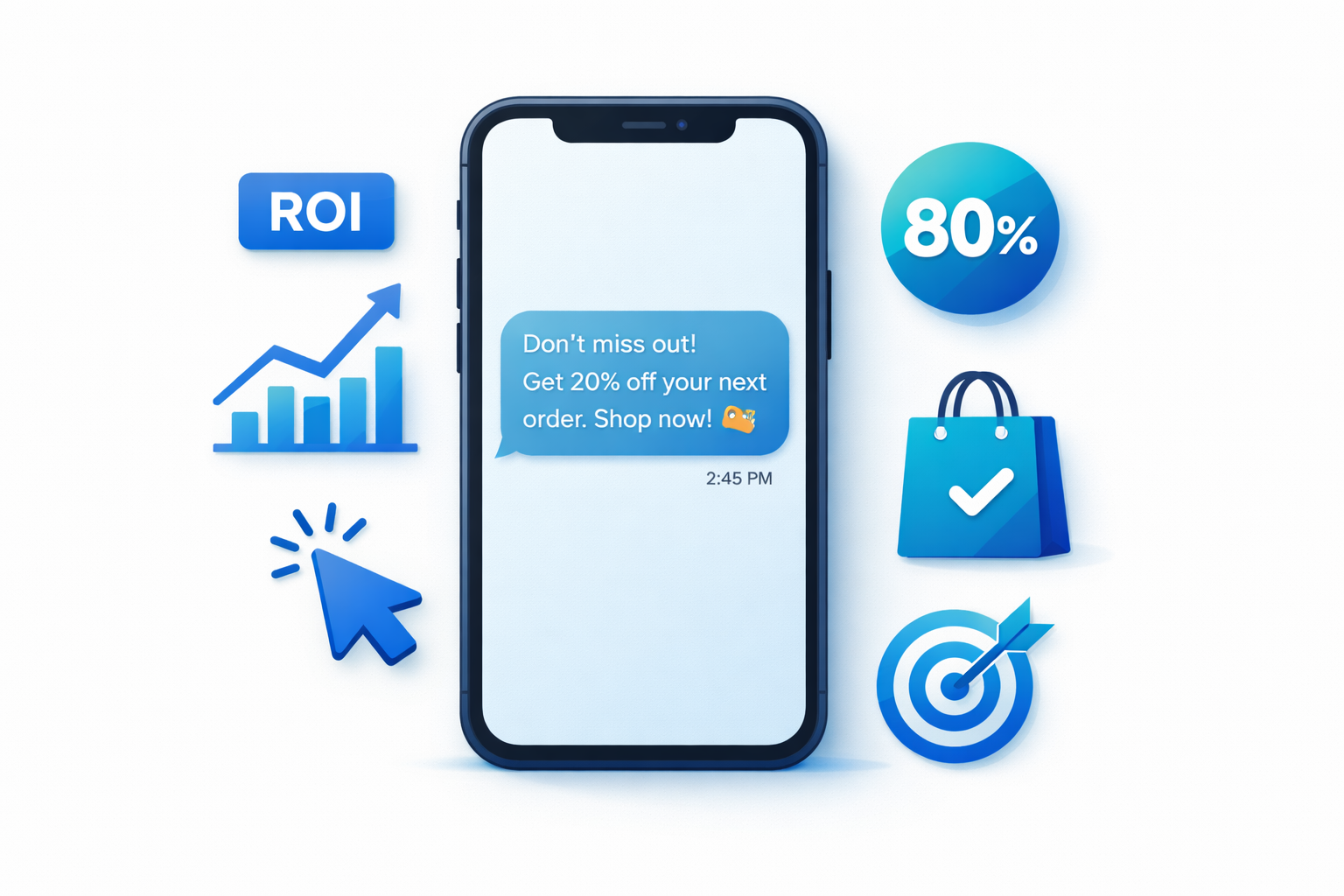
Digital marketing SMS is how businesses use text messages to reach customers directly with promotional offers, transactional updates, and personalized communications.
Source: Vecteezy
It’s straightforward. You collect phone numbers from willing customers, then send them targeted messages. But here’s the catch: it only works if you respect consent, segment carefully, and deliver actual value.
Businesses use SMS for marketing outreach because it cuts through the noise. No algorithms. No feeds. Just a message that lands directly on someone’s phone.
Promotional vs Transactional SMS
These two categories serve different purposes, and understanding the difference matters for compliance and customer experience.
Promotional SMS includes marketing messages: flash sales, membership perks, event invitations, discount codes, limited-time offers. These are purely business-focused. They exist to drive action,clicks, purchases, sign-ups.
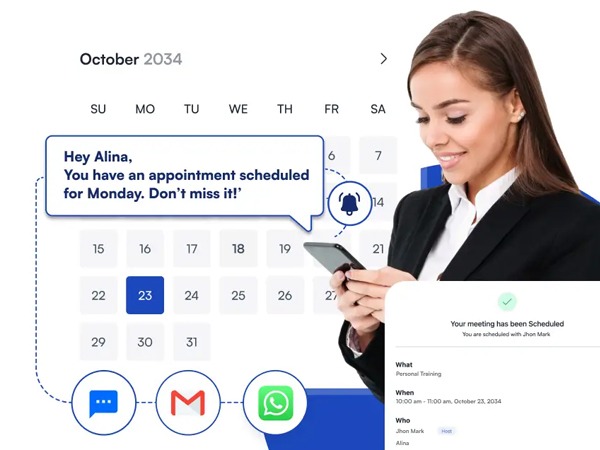
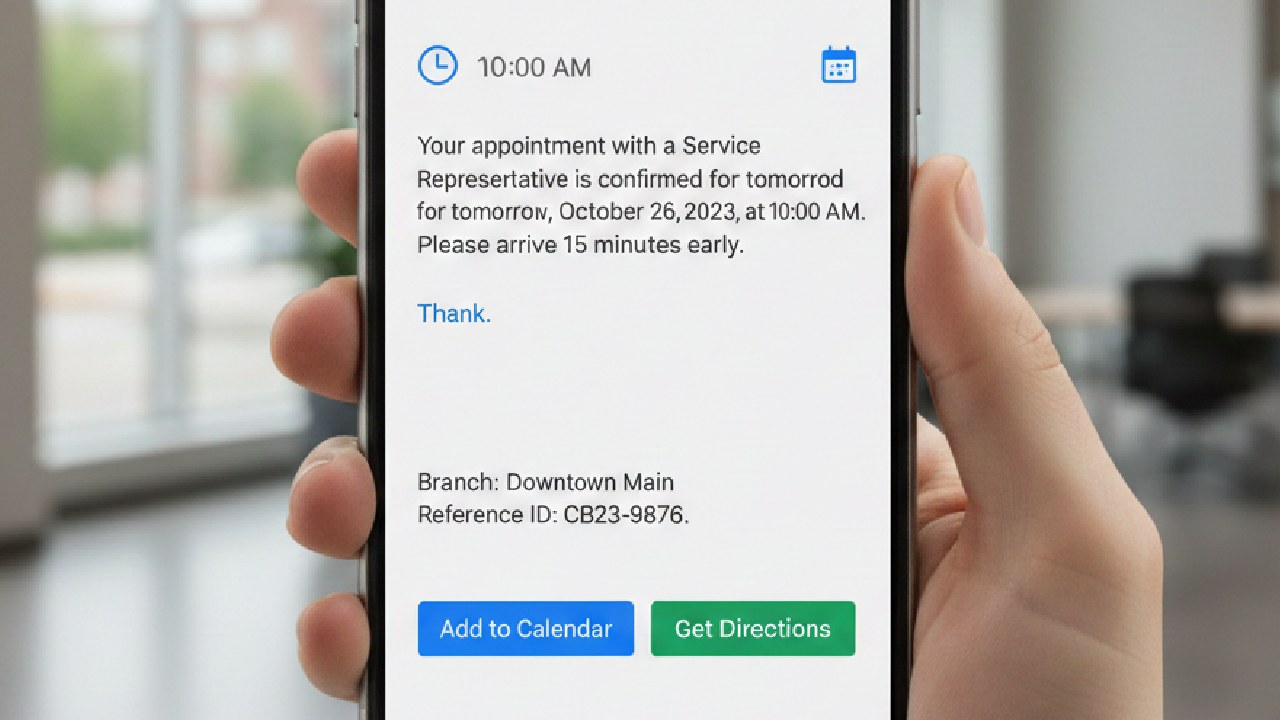
Transactional SMS includes operational messages: order confirmations, tracking updates, appointment reminders, password resets, delivery notifications, security alerts. These exist to keep customers informed about something they initiated or agreed to receive.
Where do OTP (one-time passwords) and payments fit? They’re transactional. Messages such as otp SMS are sent only after a customer requests account access or initiates a secure action. It’s not marketing. It’s infrastructure.
Here’s why this distinction matters: Transactional messages have far more relaxed compliance rules. Promotional messages require explicit opt-in consent under regulations like TCPA in the US. Transactional messages still need clear identification and opt-out options, but they’re treated differently legally and by carriers.
Pro tip: Some businesses blur these lines, sending a promotional message disguised as a transactional one. Carriers catch this. You get blacklisted. Don’t do it.
How Does SMS Fit Into Digital Marketing?
SMS works across the entire customer lifecycle: acquiring new subscribers, converting them into buyers, keeping existing customers engaged, and winning back people who’ve gone quiet.
Think of SMS as the glue connecting your other channels. Here’s how it fits:
Acquisition (Getting New Subscribers)
SMS is how you reach someone after they’ve shown initial interest. Someone browsed your site? Text them. Someone attended a webinar? Text them. Someone filled out a form? Text them. SMS gets in the door fast, before competitors do.
The key: Offer something valuable in exchange for their number. A discount. Exclusive content. Free shipping. Something worth their trust.
Conversion (Driving Purchases and Actions)
This is where SMS shines. Someone abandoned their cart? A single text reminder recovers 10-15% of abandoned orders. Someone looked at a product? A “back in stock” message converts more than email ever will.
SMS creates urgency. Time-sensitive offers feel different when they arrive as texts. They demand immediate attention.
Retention (Keeping Customers Engaged)
After someone buys, SMS keeps them coming back. Order updates. Loyalty rewards. Exclusive member previews. Regular engagement without feeling like spam.
The retention power of SMS is underrated. It’s cheaper than acquisition. It converts at higher rates. And it creates habit loops, customers expect your texts because they’ve become valuable.
Reactivation (Winning Back Inactive Users)
Got customers who haven’t purchased in months? SMS works better than email for reactivation. A single well-timed text often brings dormant customers back faster than email campaigns.
The reason: Text feels personal. A customer sees a text from you and thinks, “They remembered me.” It’s harder to ignore.
Digital Marketing SMS vs Email vs WhatsApp vs Push
SMS beats other channels for speed and reach, but each channel serves different purposes, the best strategy uses them together.
Here’s how they compare:
| Metric | SMS | Push Notifications | ||
| Open Rate | 98% (within 3 min) | 20-30% | 50-70% | 3-7% (depends on app) |
| Reach | ~99% (requires phone) | ~80-85% | ~25-40% (adoption varies) | Requires app install |
| Time to Action | Immediate (3 min avg) | 1-24 hours | 15-30 minutes | Immediate (if app open) |
| Best For | Urgency, time-limited offers | Long-form, evergreen content | Rich media, customer service | App-native audiences |
| Cost per Message | $0.01–$0.05 | $0.001–$0.01 | Varies (often free) | ~$0.001–$0.01 |
| Opt-in Required | Yes (explicit, TCPA) | Yes (CAN-SPAM) | Yes (implicit, via contact) | Yes (app permission) |
| Compliance Complexity | High (TCPA strict) | Moderate (CAN-SPAM) | Moderate (Facebook rules) | Low |
When SMS Is the Best Choice
SMS works best for urgent, time-sensitive messages that require immediate attention. It’s the fastest channel available, with most messages read within minutes of delivery.
Use SMS when timing matters more than storytelling. Flash sales, limited-time discounts, appointment reminders, delivery alerts, and payment verification codes all fit naturally into SMS. These messages create urgency and prompt quick action in a way email and social channels rarely can.
SMS also shines when you need certainty. There are no feeds, algorithms, or inbox clutter standing in the way. The message goes straight to a customer’s phone and gets seen.
When Email Makes More Sense
Email works better for long-form content, education, and non-urgent communication.
If your message requires explanation, visuals, or multiple links, email is the better tool. Newsletters, product announcements, educational content, and onboarding sequences all benefit from email’s flexibility and lower cost per send.
Email also works well for messages that don’t demand immediate action. Customers can read and respond hours later without losing context. That makes email ideal for nurturing relationships over time rather than driving instant decisions.
Where WhatsApp Fits Best
WhatsApp is strongest for conversational messaging and customer service. WhatsApp supports rich media, two-way conversations, and ongoing threads. That makes it a good fit for support interactions, order questions, follow-ups, and markets where WhatsApp adoption is already high.
However, WhatsApp requires users to opt in through the platform itself, often by saving your number or starting a conversation. This limits reach compared to SMS and makes WhatsApp less effective for broad outbound marketing campaigns.
When Push Notifications Are a Better Fit
Push notifications work best for app-native audiences and real-time updates.
If you already have an app installed on a user’s phone, push notifications are a low-cost way to drive engagement. They’re effective for reminders, in-app events, and real-time updates tied directly to app activity.
The downside is reach. Push notifications only work if users install your app and allow notifications. Without an app, push isn’t an option at all.
Cost, Reach, and Compliance Trade-offs
Each channel comes with different cost structures, reach limits, and compliance expectations.
SMS has the highest compliance burden, especially in the US under TCPA rules. Explicit opt-in is mandatory, and unsubscribe handling must be immediate. The cost per message is higher than email, but the speed and reach often justify the expense.
Email is cheaper and more forgiving from a compliance standpoint, but engagement is lower. WhatsApp sits somewhere in the middle, with platform-specific rules but less legal risk in most regions. Push notifications are inexpensive but depend entirely on app adoption.
The strongest digital marketing strategies don’t choose one channel. They use each where it performs best.
What Makes SMS Marketing Effective (and When It Backfires)
SMS works when you have permission, send the right message at the right time, and respect customer expectations, it backfires when you spam or ignore compliance.
Permission and Expectations (Why Consent Is Everything)
This is non-negotiable. A customer who opted in is a customer who wants to hear from you. A customer who didn’t is a lawsuit waiting to happen.
Explicit opt-in means they saw your message and said yes. Not some buried checkbox. Not a pre-checked box. And not vague language like “receive updates.” Clear, specific language: “Receive weekly flash sale offers via SMS.”
When consent is clear, customers don’t complain. They expect your messages, engage and buy.
Source: Vecteezy
Segmentation and Personalization (Avoid Blasting Everyone)
Sending the same message to your entire list is how you get unsubscribes. Sending the right message to the right person is how you get conversions.
Segment by behavior: Recent buyers. Abandoned carts. Window shoppers. VIP customers. One-time buyers.
Personalize beyond the name. If someone browsed shoes, show them a shoe offer, not a random discount. If someone bought a dress, message them about complementary items.
The goal: Every customer should feel like that message was meant for them.
Frequency and Timing
Send too often and customers unsubscribe. Send too little and they forget you exist.
The sweet spot? For promotional messages, 1-4 times per week for engaged audiences. For highly promotional lists, 1-2 times per week. Monitor your unsubscribe rate, if it climbs above 0.5% per campaign, you’re sending too much.
Timing matters. Tuesday–Thursday afternoons see higher engagement than weekends. But test your specific audience. Lunch breaks, evening commutes, early mornings, different segments respond at different times.
Message Design Basics (Structure That Works)
Keep it short. 160 characters is the ideal length. Under 200 characters if possible. This fits in one SMS without segmentation.
Start with the hook. “Flash sale ends in 6 hours: 40% off everything” lands better than “Hi, we have a special offer for you.”
Include a clear call-to-action. “Shop now” or “Claim your discount” or “See details” beats vague language.
Always identify who’s sending the message. “Thanks for your order! Track it here: [link]” is clear. An anonymous link is suspicious.
Consent and Compliance Basics (Opt-in, Opt-out, and Trust)
SMS marketing requires explicit opt-in consent, clear unsubscribe options, and careful message content to avoid carrier blocking and legal risk.
How to Collect Opt-in Properly
Never buy lists. Never scrape numbers. Only collect numbers from people who explicitly opt in.
The process:
- Clear offer: Tell them what they’re signing up for. “Get weekly flash sales via SMS” is clear. “Receive updates” is vague.
- Visible consent: Use a checkbox or form field, not hidden language.
- Record the opt-in: Save the date, time, method, and what they agreed to. You need this proof if regulators ask.
- Send confirmation: A welcome message that confirms their subscription builds trust.
Collecting opt-ins through SMS itself works well. Someone texts a keyword to a shortcode, and you confirm their subscription. This creates documented consent.
Opt-out and Unsubscribe Requirements
Every SMS must include an easy way to opt out. In the US under TCPA rules, you must honor opt-out requests within one business day.
Standard approach: End your message with “Reply STOP to unsubscribe.” Include it every time. Yes, it eats characters, but it’s required and protects you.
Keep your unsubscribe list current. If someone unsubscribes, remove them immediately from all future campaigns. Sending to someone after they’ve opted out is illegal and expensive.
Content Rules That Reduce Complaints
Don’t impersonate other companies or create false urgency. Don’t use misleading subject lines (though SMS doesn’t have subject lines, the message itself can be misleading). And don’t hide identity behind vague language.
Be transparent about what the message is: promotional or transactional. Be honest about offers,no hidden terms.
Avoid spam trigger words too frequently: “Congratulations,” “Claim,” “Urgent,” “Act now.” Overusing these increases carrier filtering and complaint rates.
Transactional Messages Still Need Care
Even though transactional messages have looser compliance rules, they still need respect.
Include context. If it’s an OTP code, say why: “Your SMS Boosting login code is 874329. Don’t share this code.”
If it’s an order confirmation, include a tracking link and contact info.
People complain about transactional messages too. Too many reminders about the same order. Too many redundant notifications. Carriers notice and may filter you.
Common Digital Marketing SMS Campaign Examples (Copy-Friendly)
These are the campaigns that actually work, proven examples you can adapt to your business.
Welcome / Onboarding Messages
Scenario: New subscriber just opted in.
Sample copy:
- “Welcome! Here’s your exclusive 20% off code: WELCOME20. Shop now: [link]”
- “Thanks for joining! Check out our bestsellers: [link]. Questions? Reply to this message.”
Flash Sale / Limited-Time Offers
Scenario: You’re running a time-limited promotion.
Sample copy:
- “🚨 Ends TODAY: 40% off everything. Shop: [link]”
- “Last chance: Your favorite items are on sale for 6 more hours. [link]”
Abandoned Cart Reminders
Scenario: Customer added items but didn’t check out.
Sample copy:
- “Your cart is about to expire. Claim your 15% off: [link]”
- “You left some great items. Come back for free shipping: [link]”
Back-in-Stock Alerts
Scenario: Customer was interested in a sold-out item that’s now available.
Sample copy:
- “It’s back! The Black Hoodie you loved is in stock again. Grab it: [link]”
- “Restock alert: Size M now available. Shop before it sells out: [link]”
Appointment Reminders and No-Show Reduction
Scenario: Customer has an upcoming appointment.
Sample copy:
- “Reminder: Your appointment with Sarah is tomorrow at 2 PM. Reply CONFIRM or cancel here: [link]”
- “Your haircut is in 24 hours. Running late? Let us know: [link]”
Key Metrics to Track for Digital Marketing SMS
Track these metrics to understand what’s working, what isn’t, and where your SMS strategy needs adjustment.
Delivery Rate and Failure Rate
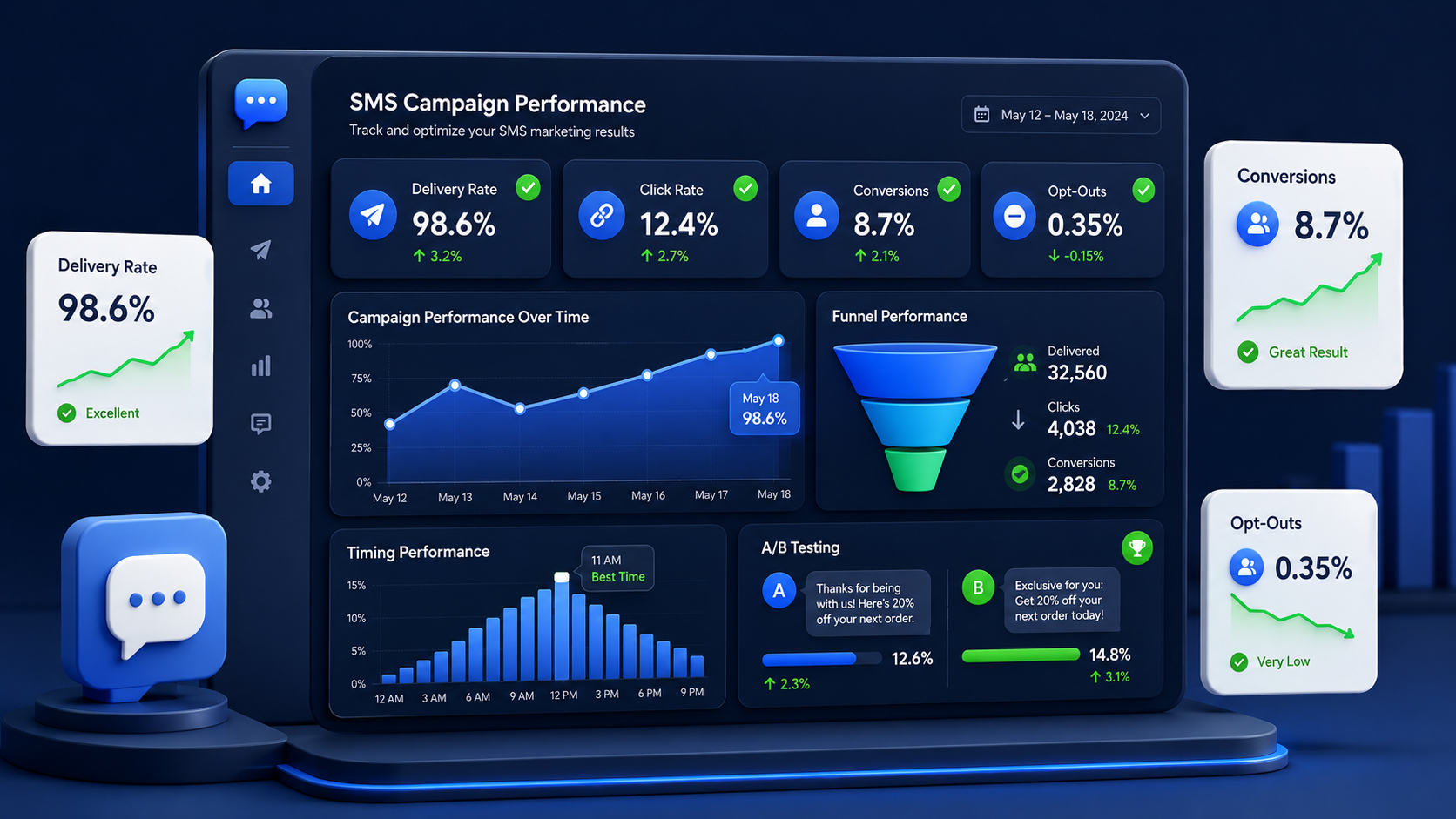
Not every message arrives. Delivery rate tells you the percentage that made it to customers’ phones. Track this monthly, it should be 95%+ for legitimate marketing.
A dropping delivery rate signals a problem: bad list quality, carrier filtering, or spam complaints. Investigate immediately.
Failure rate (bounces) reveals invalid numbers, disconnected phones, or carrier blocks. More than 5% failure rate means your list needs cleaning.
CTR and Conversion Rate
Click-through rate (CTR) shows how many recipients clicked your link. For SMS, 10-15% CTR is solid. Anything above 20% is excellent.
But clicks don’t equal sales. Track conversion rate: How many people who clicked actually completed a purchase or target action? A 5-10% conversion rate from SMS clicks is healthy.
Low CTR? Your offer isn’t compelling or your link isn’t clear. Low conversion rate? Your landing page or follow-up is weak.
Opt-out Rate and Complaint Signals
Monitor your unsubscribe rate per campaign. Anything above 0.5% is a warning sign. If it hits 1%, you’re sending too much or targeting wrong.
Complaints matter more than unsubscribes. When customers complain to carriers, carriers block your messages. Even 3-4 complaints per million messages can get you filtered.
Track complaint rate obsessively. It’s invisible until it’s too late.
Revenue Per Message/ROI
This is the metric that matters. Divide total revenue from SMS-driven purchases by total messages sent.
If you send 100,000 messages and generate $50,000 in revenue, your revenue per message is $0.50. At $0.02–$0.05 per message cost, your ROI is easily 10:1.
Compare this to other channels. SMS almost always wins on ROI.
How to Get Started With Digital Marketing SMS
Starting with SMS is straightforward if you follow these five steps, skip any and you’ll hit problems.
Step 1: Define Your Use Case and Message Types
Before sending a single message, know why you’re using SMS. Are you acquiring new customers? Retaining existing ones? Driving flash sales? Reducing no-shows?
Define your message types: Are you sending promotional, transactional, or both? What do customers expect to receive? How often?
Clarity here prevents mistakes later.
Step 2: Build an Opt-in List (Don’t Buy Lists)
Never, ever buy phone number lists. You’ll burn through money fast, hit compliance issues, and destroy your sender reputation.
Build your own list organically. Use your website, checkout process, app, and in-store signage to collect opt-ins. Yes, it’s slower. Yes, it’s worth it.
Offer incentives: A discount, early access to sales, exclusive content. Make opting in a no-brainer.
Step 3: Choose a Sending Method (Platform vs API vs Automation)
You have options:
- SMS Platform: Best for beginners. You log in, upload your list, write your message, send. No coding needed. Higher per-message cost but lower setup friction.
- SMS API: Best for developers. Integrate SMS directly into your systems for programmatic sending. Lower per-message cost but requires technical setup.
- Automation Platform: Best for workflows. Set up triggered messages (welcome, abandoned cart, birthday) that send automatically.
Start with a platform. Once you understand SMS, move to API for scale.
Step 4: Start Small, Test, Then Scale
Don’t blast your entire list with your first campaign. Send to a small segment first (5-10% of your list). Test different offers, copy, timing, and CTAs.
What works? Scale it. What doesn’t? Adjust or kill it.
Run A/B tests on copy, timing, and CTAs. Even small improvements compound.
Step 5: Create a Basic Automation Flow
After your first manual campaigns, set up simple automation:
- Welcome flow: New opt-in → Welcome message + offer (day 1) → Follow-up (day 3)
- Abandoned cart flow: Cart abandoned → Reminder (4 hours) → Final reminder (24 hours)
- Post-purchase flow: Purchase confirmation → Thank you + review request (day 7)
These run on their own. You set them up once, and they generate revenue passively.
Final Thoughts
Digital marketing SMS may look simple, but the results depend on how well you execute the fundamentals. Consent, message intent, timing, and audience segmentation matter far more than volume.
When done right, SMS becomes one of the highest-ROI channels in digital marketing. When done wrong, it quickly damages trust and creates compliance risk.
If you’re ready to get started, a compliant SMS platform like SMS Boosting is the easiest first step. We help you collect opt-ins properly, send promotional and transactional messages. From there, you can expand into OTP or payment messaging as your needs grow.