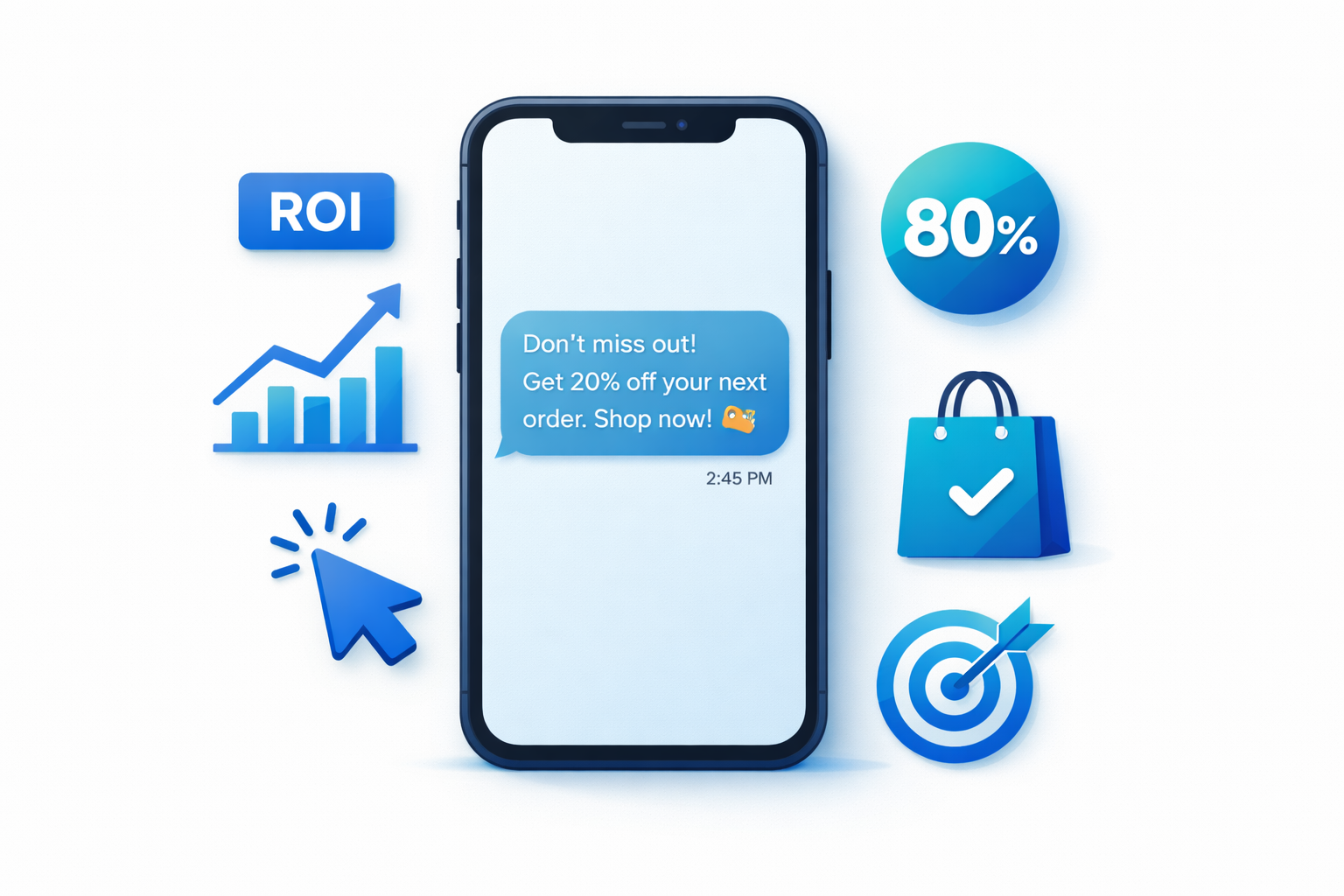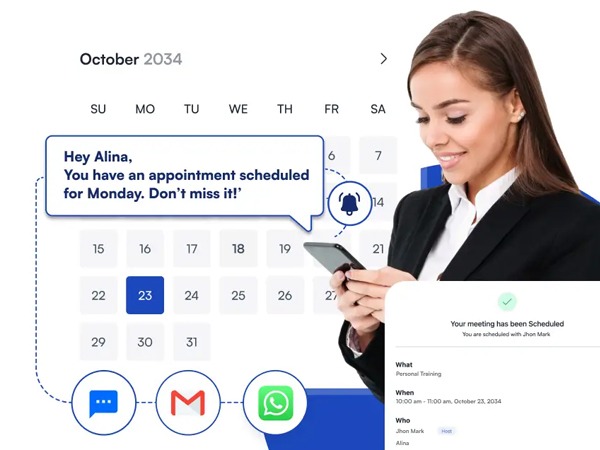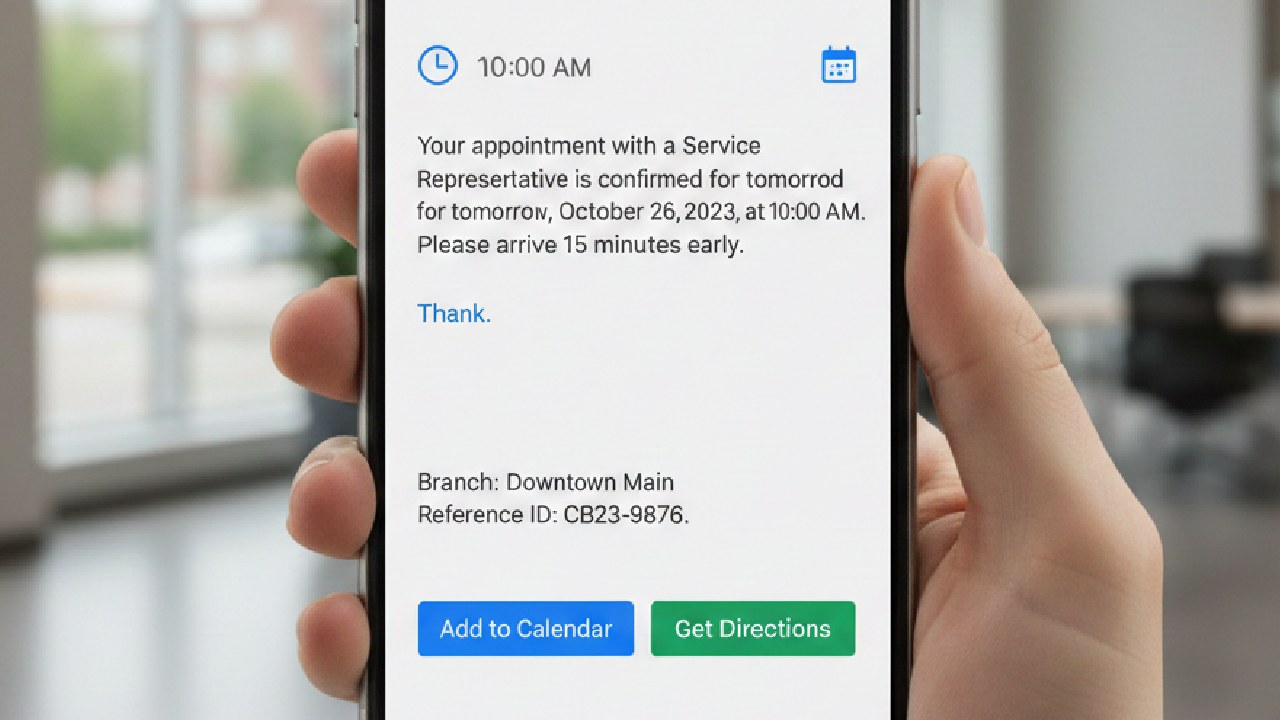
An SMS gateway in Pakistan connects your application to local mobile networks such as Jazz, Zong, Telenor, and Ufone. It sends OTP codes, branded business alerts, and promotional SMS to Pakistani mobile numbers through carrier routes rather than manual SIM devices.
This guide explains how a Pakistan SMS gateway works in practice: branded SMS, masking SMS, short codes, PTA sender ID rules, common documents, pricing, and API setup.
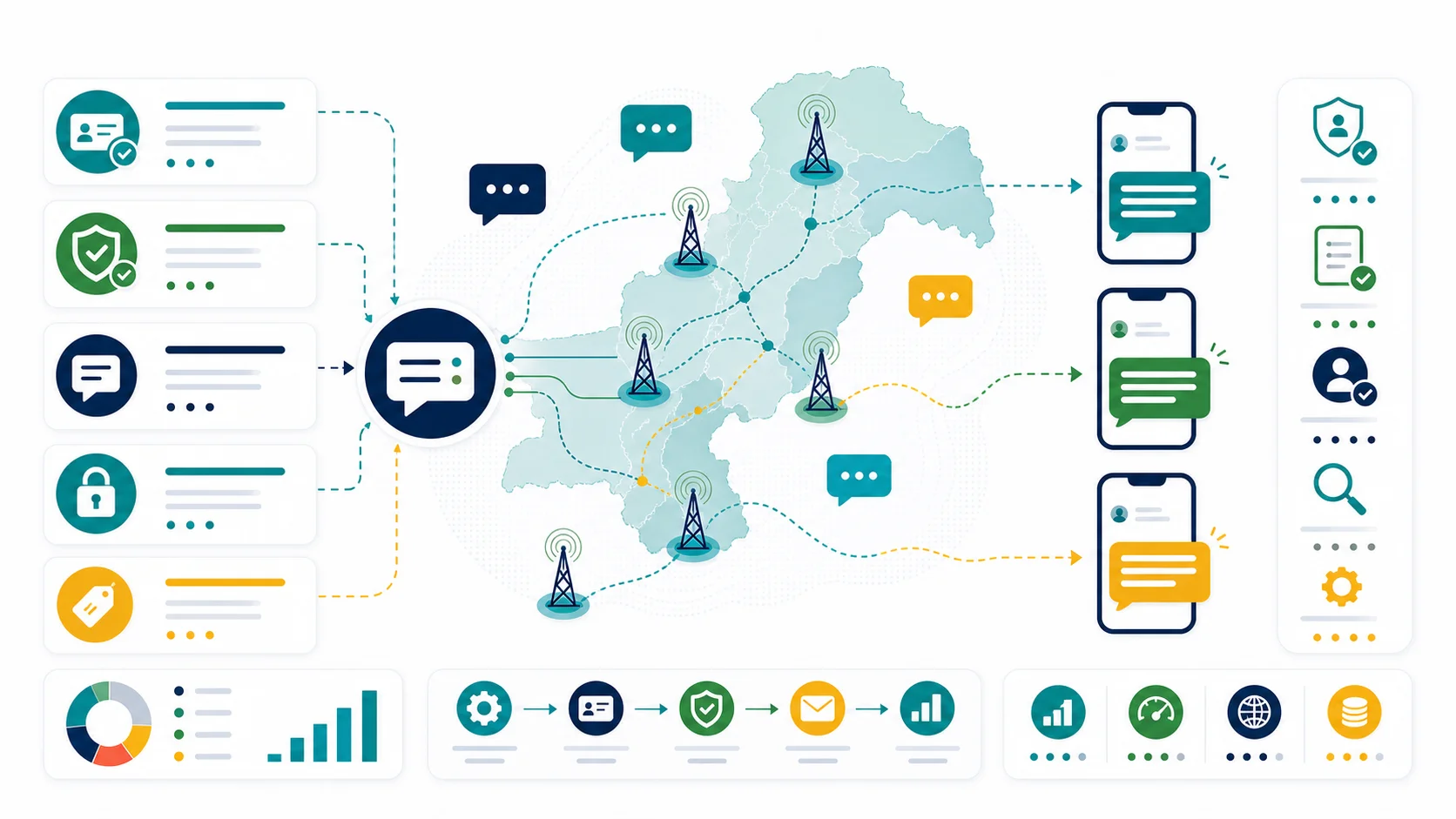
Quick answer: A reliable Pakistan SMS gateway needs broad route coverage across Jazz, Zong, Telenor, and Ufone; a PTA-approved sender ID or mask for business messaging; direct routing for OTP and transactional traffic; consent records for marketing SMS; and transparent per-SMS pricing. Global providers offer rates starting from approximately EUR 0.0075 per SMS for the Pakistan market, with custom rates for higher volumes.
Pakistan Mobile Market and Regulatory Context
Pakistan is a large, prepaid-heavy mobile market with well over 190 million cellular subscriptions. SMS still works because bank alerts, wallet OTPs, ecommerce updates, courier notices, and retail promotions must reach basic phones as well as smartphones.
Older Pakistan telecom materials or provider reports may still mention Mobilink and Warid as legacy labels.
The PTA (Pakistan Telecommunication Authority) regulates telecom services and commercial messaging in Pakistan. For short-code and content-based messaging, PTA’s official SOP for allocation of short codes and content-based services says content-based short codes are allocated from the 8xxx and 9xxx levels, alphanumeric IDs require Authority approval, and opt-in or closed-user-group rules apply to content-based services.
| Operator Label | Local Note | Why It Matters for SMS |
|---|---|---|
| Jazz | Includes the legacy Mobilink and Warid context | Test both urban and rural delivery, especially for fintech and ecommerce traffic |
| Zong | Strong data and youth-market presence | Useful for app, wallet, and ecommerce OTP testing |
| Telenor | Still appears as a route/reporting label with many providers | Check current routing labels because ownership and integration can change |
| Ufone | Important national route with regional strength | Include it in every pre-launch test batch |
What Is Branded SMS in Pakistan?
In Pakistan, “branded SMS” and “masking SMS” often mean the same thing: the recipient sees an approved business name instead of a random number. If a local provider asks whether you need “masking,” they usually mean an approved alphanumeric sender ID.
Branded SMS: The message displays your company or approved brand name as the sender ID. Banks, wallets, ecommerce stores, SaaS platforms, schools, and clinics use it when customers need to trust the message source.
Masked SMS: The sender name is masked to show a chosen business name. Local providers often use “masking” when discussing PTA or operator registration.
Short Code SMS: A short code is a compact number used for inbound interaction, keyword replies, polls, opt-ins, and high-volume enterprise messaging. PTA’s short-code SOP refers to 8xxx and 9xxx content-based short codes, with extensions requiring written approval.
SIM-Based SMS: Messages are sent through physical SIM cards or modems. It may look cheap for testing, but it has weak throughput, poor delivery reporting, and higher blocking risk.
| Type | Sender Display | Best For | Operational Risk |
|---|---|---|---|
| Branded or masked SMS | Approved company or brand name | OTP, alerts, banking, ecommerce, marketing | Low when documents and consent are in order |
| Short code | Approved short number | Two-way engagement, opt-ins, contests, banks | Medium setup effort and more documentation |
| Non-branded numeric SMS | Generic number | Low-volume non-sensitive alerts | Lower recognition and weaker trust |
| SIM-based SMS | Random mobile number | Very small tests only | High blocking and reporting risk |
For production traffic, use branded or masked SMS through a licensed gateway. SIM-based sending is not a serious base for OTP, payment alerts, or customer-facing campaigns in Pakistan.
SMS Types You Can Send in Pakistan
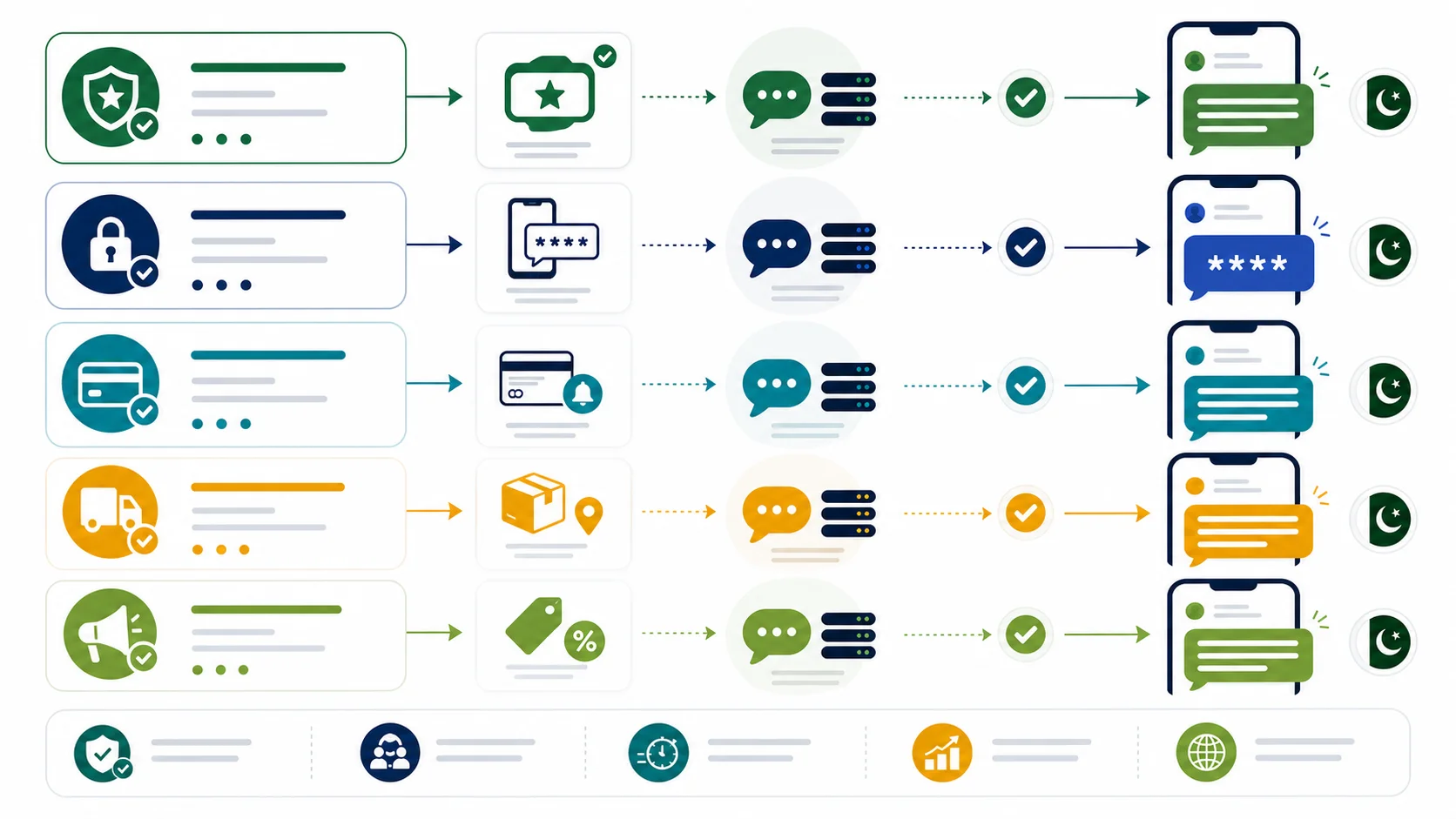
Pakistani businesses usually split SMS into OTP, transactional, and marketing traffic. Keep these streams separate because routing, consent, and sender ID expectations differ.
- OTP and Verification SMS: Banks, wallet apps such as JazzCash and Easypaisa, ecommerce stores, and SaaS platforms send OTP SMS for logins, payments, password resets, and account changes. These messages need direct routes and fast delivery reports.
- Transactional SMS: Order confirmations, COD payment updates, courier status alerts, fee reminders, appointment notices, and service messages work well as automated SMS notification traffic. These messages should stay tied to an actual customer action or account event.
- Marketing SMS: Retail promotions, Ramadan campaigns, Eid offers, loyalty rewards, and reactivation messages fall under marketing SMS. These campaigns need opt-in records, a clear brand identity, and an opt-out process.
Keep promotional wording out of OTP and transactional templates. Operators can filter or reclassify a message when a transaction alert starts to look like an advertisement.
Sender ID Registration in Pakistan
Sender ID registration in Pakistan is usually handled through your SMS gateway provider. The provider collects business documents, checks whether the requested sender name matches your company or brand rights, and submits the request to the relevant approval channel.
Supported sender ID types include:
- Alphanumeric Sender ID: Company names such as YOURBRAND are common for branded SMS and masking SMS.
- Short Code: Banks, public campaigns, large enterprises, and two-way messaging programs may use approved short codes.
- Numeric Sender: Generic numeric traffic may be available, but it does not provide the same brand trust as an approved mask.
A practical registration flow usually looks like this:
- Prepare company identity documents. Providers commonly ask for SECP or Chamber of Commerce documents, FBR NTN details when applicable, and a request letter on company letterhead.
- Add brand authorization if the requested sender ID is not identical to the legal company name.
- Submit the sender ID request through your gateway provider. The provider should tell you whether the request is for an alphanumeric mask, short code, or numeric route.
- Wait for operator or PTA-related approval. Many providers quote about 5-10 business days for simple alphanumeric masks, while short codes can take longer.
- Test the approved sender ID across Jazz, Zong, Telenor, and Ufone before moving live traffic.
Do not assume an unapproved mask will behave the same as an approved one. It may be replaced, filtered, delayed, or reported under a generic sender label.
PTA Compliance Checks for Business SMS
PTA compliance affects how your campaign is routed, whether your sender name is accepted, and how opt-outs are handled.
PTA’s short-code SOP gives several useful signals for business senders: alphanumeric IDs need Authority approval, content-based services should be opt-in or closed user group, unsolicited or obnoxious messaging is prohibited, and short-code holders must maintain a Do-SMS-register to avoid sending unwanted messages.
Use this checklist before you send at scale:
- Consent Records: Keep proof that each marketing recipient opted in. A purchase or account relationship does not automatically mean the customer agreed to promotional SMS.
- Opt-Out Handling: Keep suppression lists current and make sure your provider can stop messages to users who opt out.
- Sender Name Accuracy: Use a sender ID that matches your business documents or brand authorization. Avoid names that could impersonate banks, government bodies, carriers, or other companies.
- Content Separation: Keep OTP and transactional templates free from discounts, sales copy, and campaign language.
- Sending Windows: Many providers apply daytime sending windows for promotional traffic. Confirm the exact rule before scheduling a campaign.
This is not legal advice. Treat it as an operational checklist, then confirm the exact rule with your provider and the relevant PTA guidance for your message type.
Pakistan SMS Pricing Factors
SMS pricing in Pakistan depends on route quality, sender ID setup, operator destination, message type, and monthly volume. A cheap quote can become expensive if OTP failures create support tickets.
- Route Quality: Direct routes cost more than grey or multi-hop routes, but they usually provide faster delivery and better delivery reports.
- Sender ID Setup: Some local providers charge separate masking, short-code, or registration fees. Ask whether setup, renewal, and operator submission are included in the quoted SMS rate.
- Operator Split: A rate card may vary by Jazz, Zong, Telenor, or Ufone routing. This matters if most of your users sit on one network.
- Message Length: GSM-7 English or Roman Urdu fits up to 160 characters per SMS part. Urdu Unicode uses 70 characters per part, so longer messages can cost more.
- Volume Commitments: Larger monthly volume can reduce the per-SMS rate, but compare quotes only after you know the route type and sender ID status.
If you are evaluating SMSBoosting, Pakistan reference pricing starts from approximately EUR 0.0075 per SMS. Treat this as a brand-specific starting point, not a market average.
For businesses sending to Pakistan and other countries, review our international SMS gateway routes guide to compare route quality, sender ID requirements, and market-specific setup needs.
API Integration: REST API or Dashboard?
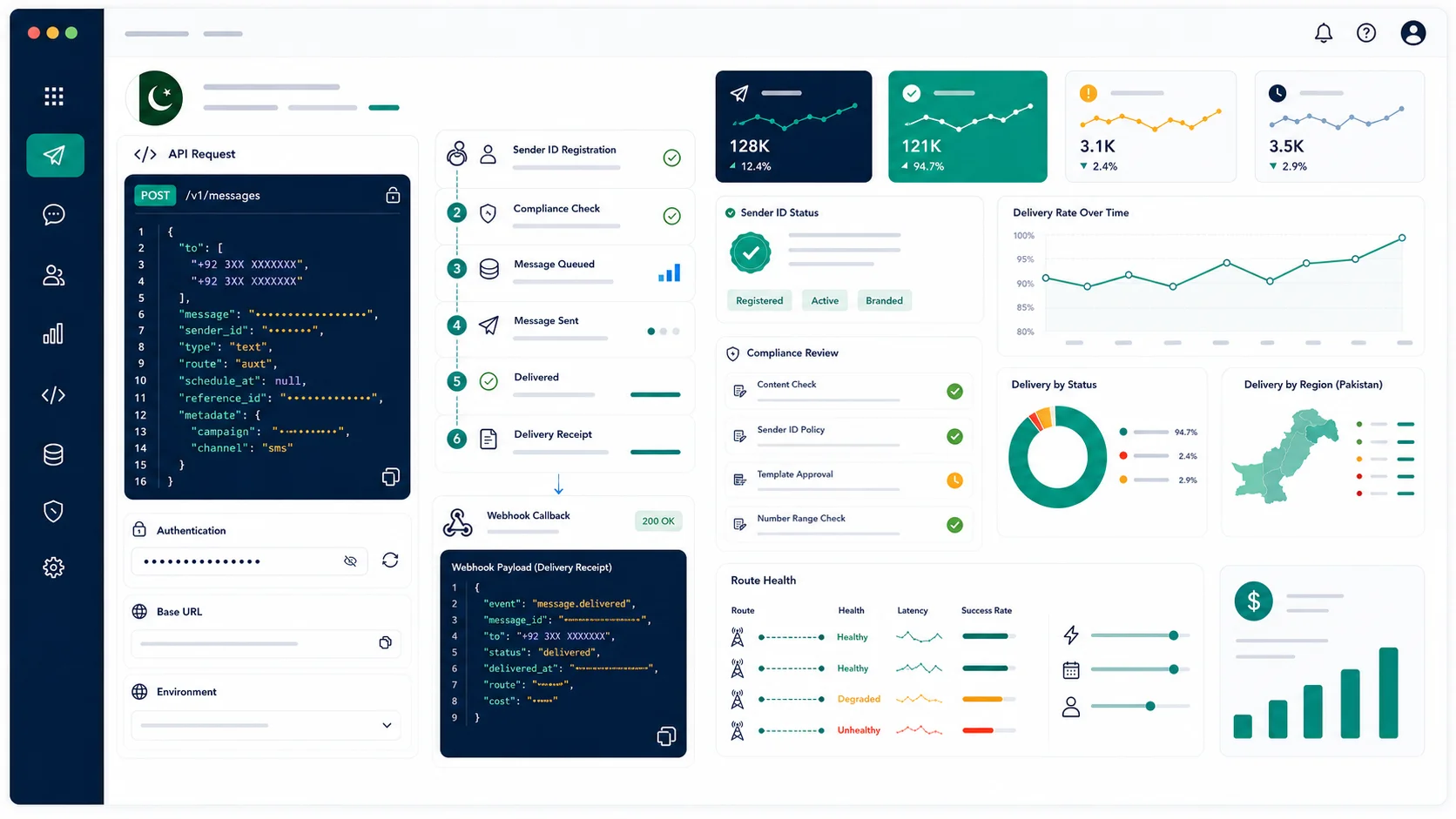
A Pakistan SMS API lets your app send messages automatically. A dashboard lets a marketing or operations team upload contacts and schedule campaigns without developer work. Many businesses need both.
Use an SMS API for OTP, payment alerts, order updates, CRM automation, and wallet activity messages. Use a dashboard for campaign planning, one-off announcements, contact-list uploads, and non-technical workflows.
Here is a basic cURL example for sending an SMS to a Pakistani number. Replace the endpoint, credentials, sender ID, and content with your provider’s values.
curl -X POST “https://api.smsprovider.com/send” \
-H “Content-Type: application/json” \
-d ‘{
“account”: “your_account”,
“password”: “your_password_or_md5_hash”,
“numbers”: “923001234567”,
“content”: “Your verification code is 123456.”,
“sender”: “YOURBRAND”,
“smstype”: 0
}’
Use the international format 92 followed by the mobile number without the leading zero. For example, use 923001234567 instead of 03001234567. URL-encode message content, test Urdu Unicode before launch, and confirm whether your provider supports webhooks for delivery reports.
Delivery Quality and Common Failures
Delivery quality in Pakistan is strongest when the provider uses stable routes to Jazz, Zong, Telenor, and Ufone and keeps sender IDs aligned with approved templates. Problems usually appear with grey routes, unapproved masks, or promotional copy inside transactional traffic.
Watch for these common failure points:
- Wrong Number Format: Pakistan mobile numbers should be sent in international format, such as 923001234567, not domestic 03xx format.
- MNP and Prefix Assumptions: A number prefix does not always prove the current operator because mobile number portability can move numbers between networks.
- Unapproved Sender ID: An unregistered or mismatched sender name can be filtered, overwritten, or delayed.
- Legacy Operator Labels: Mobilink and Warid may still appear in local wording, but current testing should focus on Jazz, Zong, Telenor, and Ufone route results.
- Event Congestion: Ramadan, Eid sales, cricket events, and large retail campaigns can create short delivery delays.
- Unicode Segmentation: Urdu messages split sooner than English GSM-7 messages, so cost and delivery reporting can look different.
If delivery drops, review your delivery failure logs by operator, sender ID, route type, number format, and message content. A small test batch across all four networks is often faster than guessing.

Conclusion
A reliable SMS gateway in Pakistan starts with the right local setup: operator coverage across Jazz, Zong, Telenor, and Ufone; an approved sender ID or mask; consent controls for marketing traffic; and direct routes for OTP and transactional messages.
Before choosing a provider, test delivery to all four networks, confirm the sender ID approval process, ask how opt-outs are handled, and compare pricing at your expected monthly volume. If you are evaluating Pakistan SMS delivery, start with a free trial or request a tailored quote before moving live traffic.
FAQ
Do I need a Pakistani company to send SMS in Pakistan?
No. International businesses can send A2P SMS to Pakistan through a gateway provider. You still need business documents or brand authorization for an approved sender ID, especially if you want branded or masked SMS.
Is SMS masking the same as branded SMS in Pakistan?
In most local sales conversations, yes. “Masking SMS” usually means your approved business name appears as the sender ID. Always ask the provider whether the mask is PTA or operator approved.
How long does sender ID approval take in Pakistan?
Simple alphanumeric sender IDs are often quoted at about 5-10 business days, but the timeline can vary by provider, operator, document quality, and sender ID type. Short codes usually need more time and more paperwork.
Can I send SMS in Urdu?
Yes. Urdu uses Unicode encoding, which allows 70 characters per SMS part. Roman Urdu usually uses GSM-7 encoding and can fit up to 160 characters per SMS part.
What number format should I use for Pakistan?
Use international format starting with 92. For example, send to 923001234567 instead of 03001234567