
The Two-Sentence Answer on SMS Aggregators
What an SMS Aggregator does in SMS delivery
An SMS aggregator is an intermediary that helps SMS providers reach multiple mobile networks without building direct connections to every carrier in every market. It can improve coverage and speed-to-launch, but it can also reduce visibility into the delivery path and introduce more variance when routing or destination rules change.
Here is the simplest rule to remember: aggregators can make reach possible, but stable SMS performance still has to be validated destination by destination.
Why an SMS Aggregator exists in business messaging
Business texting is usually not as simple as “your app → one carrier.” In many cases, it looks more like a supply chain:
Your app → SMS provider → routing partners or aggregator paths → carrier acceptance → phone inbox
At scale, business messaging can involve a very large network of devices, operators, and interconnections across markets, which is one reason intermediaries exist in the first place. If you want a broader beginner-friendly walkthrough of that delivery chain, see how SMS platforms connect to mobile networks.
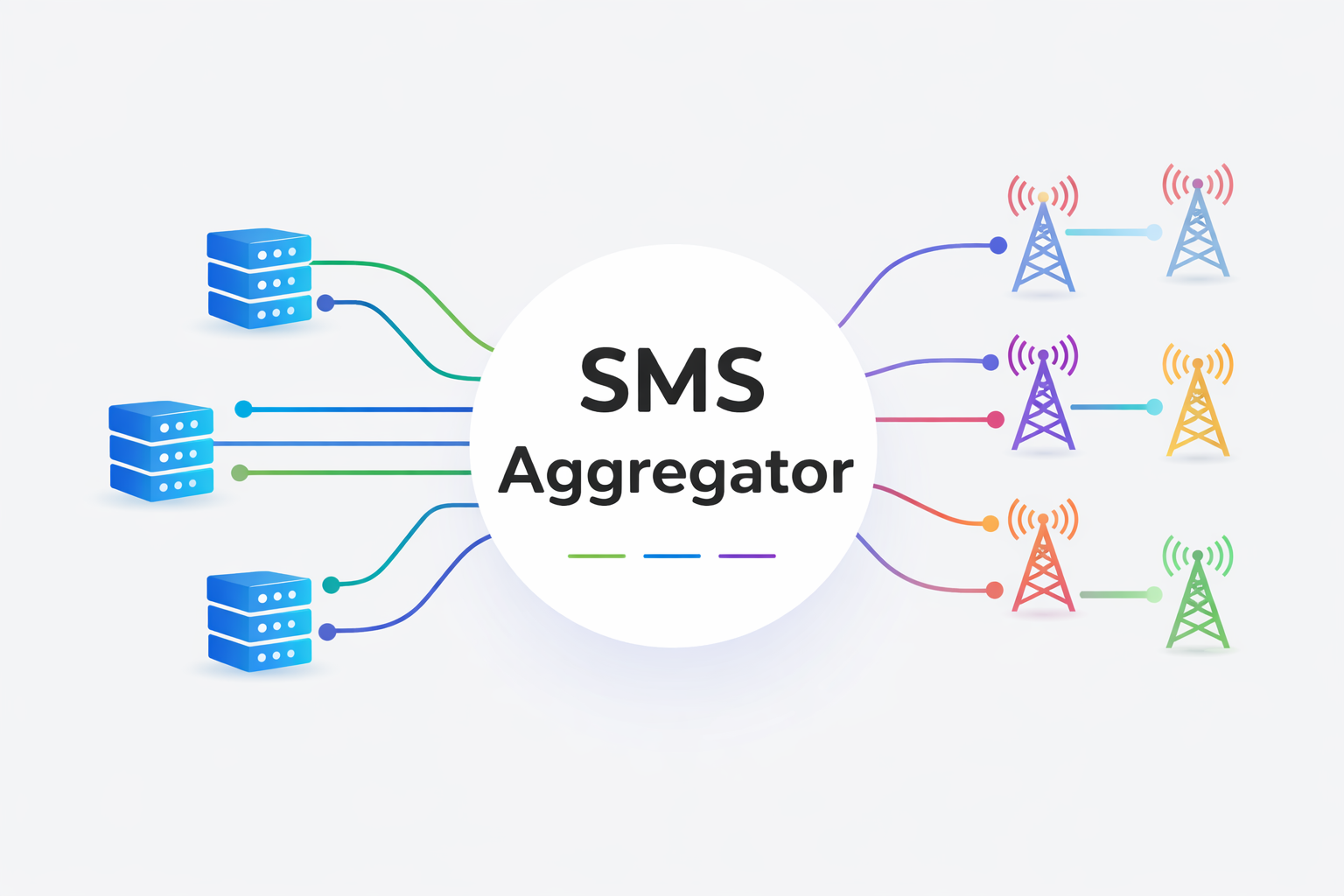
Why Business SMS Delivery Is Not a Straight Line
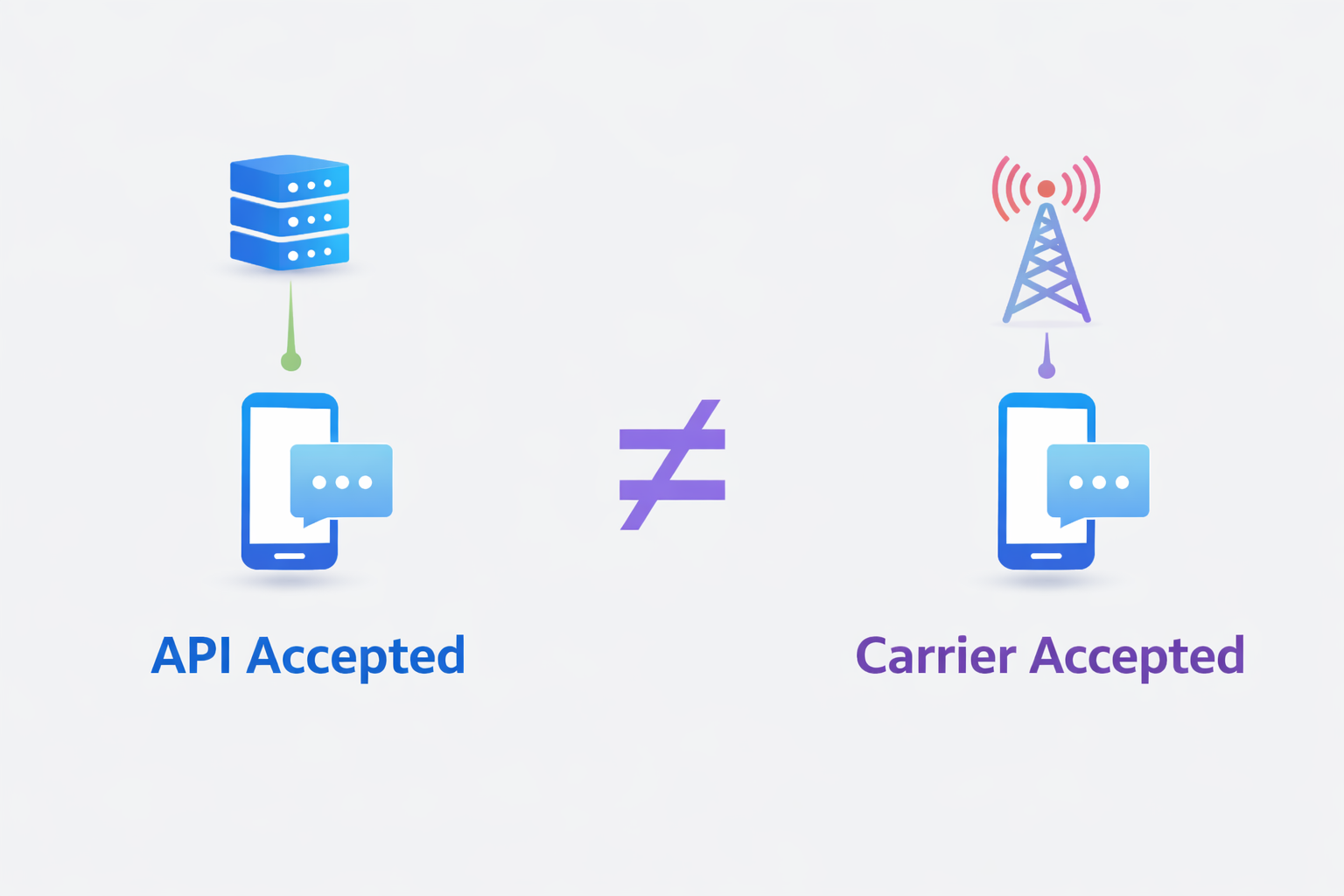
The difference between API accepted and carrier accepted
When your API call returns 200 OK, it usually confirms one thing: your SMS provider received and accepted your request.
It does not automatically confirm that the destination carrier accepted the message, displayed the sender the way you expected, or delivered it within the time window your business actually cares about. Those steps happen later, and they may involve more than one handoff.
In other words, API acceptance confirms provider-side receipt, not end-to-end delivery quality in the destination network.
If you only look at API success, you will miss the failure modes that show up further downstream. If your team still assumes the platform controls everything after send, this guide on what an SMS platform cannot control is a useful next read.
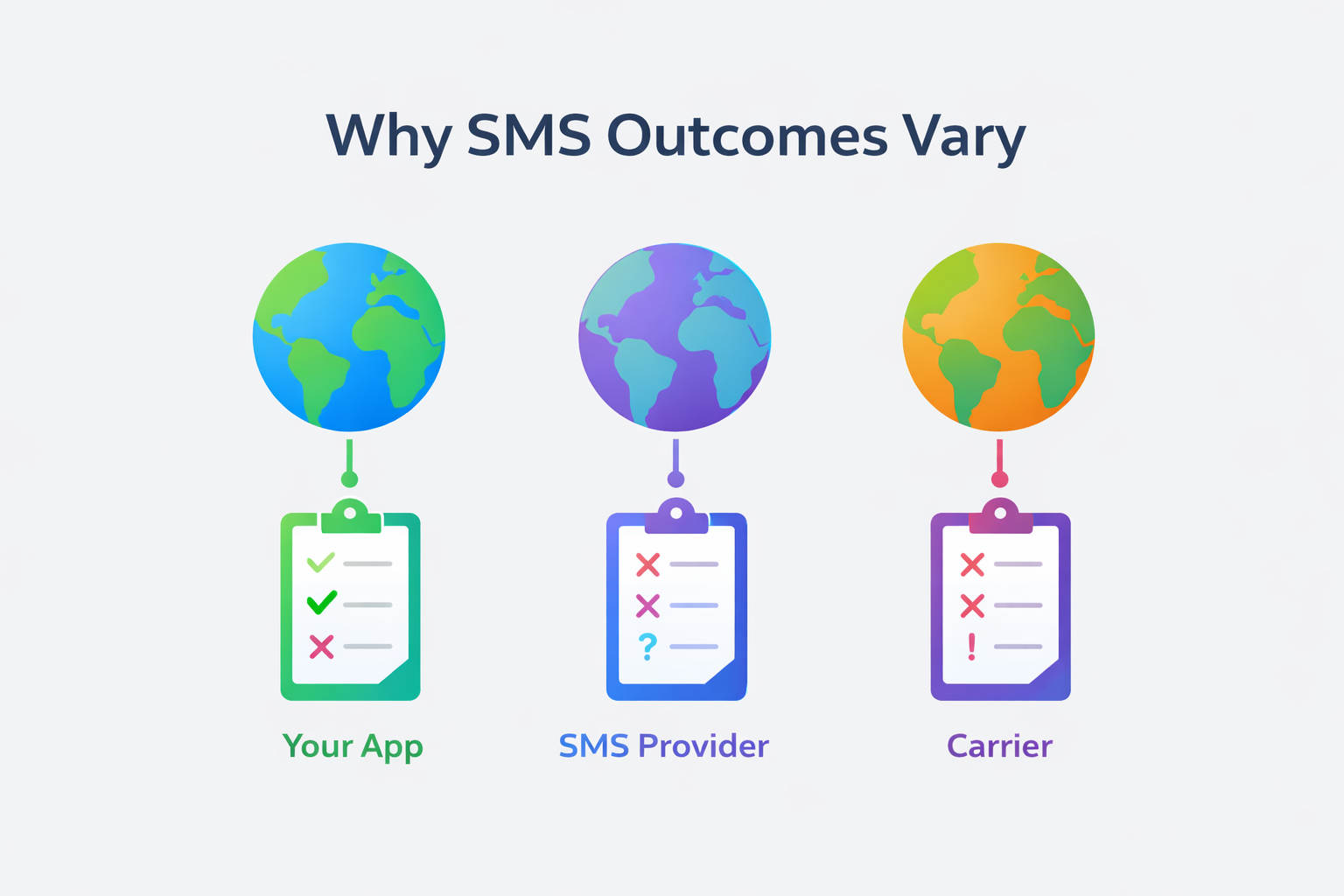
Why SMS outcomes vary by country even with the same sender and copy
SMS outcomes vary because acceptance rules are local.
One market may allow an alphanumeric sender ID such as BRAND, while another may replace it, restrict it, or require pre-registration first. A message body that performs normally in one destination can also be reviewed differently in another because filtering logic, sender policies, and traffic patterns are not globally uniform.
Even when the copy is identical, the environment is not. If you want a more diagnostic view of this problem, why business text messages fail breaks down common country-specific and setup-related failure causes.
What an SMS Aggregator Is in Plain English
What an SMS Aggregator is not
An SMS aggregator is not:
- A mobile carrier
- A guarantee of deliverability
- A shortcut around consent or compliance requirements
- A magic “global sender ID” that works everywhere
- Your entire SMS platform
Think connector and route broker, not final decision-maker.
The simplest mental model for non-technical teams
For a simple mental model:
- The SMS provider is the company you integrate with and buy service from.
- The SMS aggregator is one of the ways that provider may extend reach across destinations without managing every carrier connection directly.
- The carrier is the network that ultimately decides how the message is accepted, filtered, throttled, or delivered.
That is why two providers can both “have an API” and still behave very differently in the same destination.
How an SMS Aggregator Shapes the Delivery Path
Message handoff from an SMS provider into aggregator routes
Once your provider receives the message, it decides how to hand it off into the network.
That handoff may go into routes such as:
- A direct MNO route in a specific market
- An international wholesale route used for broader reach
- A regional aggregator path that specializes in certain destinations
Same message. Different paths.
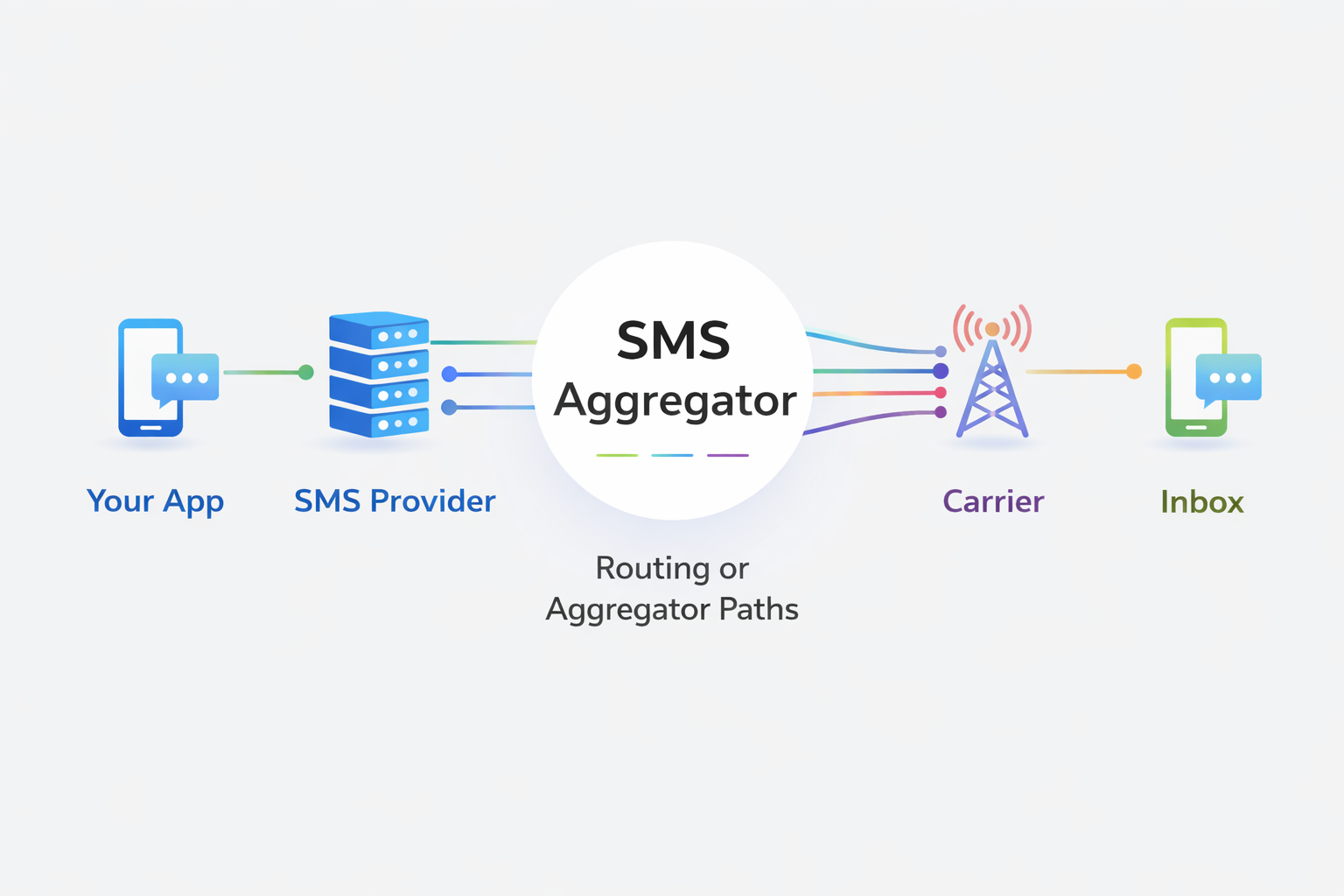
Route selection and route switching across destinations
Routing decisions can change over time because of cost, congestion, carrier behavior, policy updates, or quality signals.
That is why a campaign can look stable for weeks and then suddenly change in one destination even when your sender, copy, and sending workflow have not changed.
If you want fewer surprises, you need two things:
- visibility into what routing controls actually exist, and
- a destination-first testing habit
Carrier acceptance, filtering, and throttling on the destination side
Carriers do not simply pass messages through unchanged.
In many markets, A2P traffic is reviewed by carrier-side filtering systems, sometimes including SMS firewalls, before it reaches the handset. These controls are meant to reduce spam and fraud, but they can also delay, throttle, or block legitimate traffic when patterns look risky or non-compliant.
So the aggregator helps your provider reach the carrier. It does not override the carrier’s decision.
Why SMS delivery receipts can be delayed or inconsistent
Delivery receipts (DLRs) are useful, but their quality and timing can vary by route and destination.
Receipts may arrive late when reporting has to travel back through multiple layers, and in some cases a positive delivery status still does not tell you how the sender displayed on the handset, whether the message was actually noticed, or whether the user trusted it enough to act.
Treat DLRs as an operational signal, not a complete picture. Pair them with what you can actually observe, such as sender display, reply behavior, opt-outs, and destination-level stability.
When Teams Rely on SMS Aggregators
Expanding SMS coverage to new countries quickly
If you are launching in multiple destinations, an aggregator is often one of the fastest ways to get started, especially where direct carrier relationships would take time.
That said, speed-to-coverage is not the same thing as stable performance. You still need to validate each important destination.
Adding backup paths for congestion and outages
Teams also rely on aggregators for redundancy.
If one path becomes congested or degraded, having an alternate path can protect delivery. This is the practical reason “one route forever” is a risky assumption.
Launching A2P SMS without building telecom relationships country by country
Most non-telecom teams do not want to negotiate dozens of interconnects. Aggregators make it possible to start with a broader footprint and then improve quality as you learn.
That is the trade-off: you gain time and reach, and you pay closer attention to control and visibility.
What You Gain and What You Trade Off with SMS Aggregators
Faster coverage and more reachable destinations
Aggregators are excellent at expanding reach.
They can help your provider deliver into many markets without requiring you to manage operator-by-operator complexity. For a first-time sender, that is often the difference between launching this month and postponing the project.
Less visibility into the exact path of every message
The common downside is transparency.
You may not always know which specific route carried each message or why a routing change happened. Some providers offer stronger reporting and routing controls than others, and that difference matters more as you scale.
More variance when routes change underneath stable campaigns
Route changes can introduce variance.
From the outside, that can feel irrational: same sender, same message, same workflow, but suddenly different outcomes in one country. In practice, that often means the network layer changed underneath you.
It is also worth noting that lower-visibility or lower-quality routing can increase brand risk in some cases, including sender inconsistency, trust erosion, and a higher chance of traffic behavior you do not want associated with your brand.
A Beginner Checklist for Evaluating SMS Aggregator Delivery
Country coverage and sender identity requirements by destination
Before you scale volume, validate each important destination with a short practical checklist:
- Confirm the sender types allowed in that market
- Confirm whether sender or campaign pre-registration is required
- Test sender display on real devices, ideally including both iOS and Android
A practical starting point is a small pilot of roughly 20 to 50 messages per destination over two or three days, including at least one link, one plain-text variant, and one reply prompt. The goal is not perfect data. The goal is to surface surprises before volume grows.
Routing controls and fallback options that affect stability
Ask what routing controls exist and how failover works:
- Ask whether you can pin important destinations to a preferred route when quality matters
- Ask what typically triggers route switching
- Plan a fallback path for critical traffic such as transactional alerts
This is where stability often comes from: validate each destination, then keep the working setup as controlled as possible.
Reporting signals beyond delivery rate that reveal quality
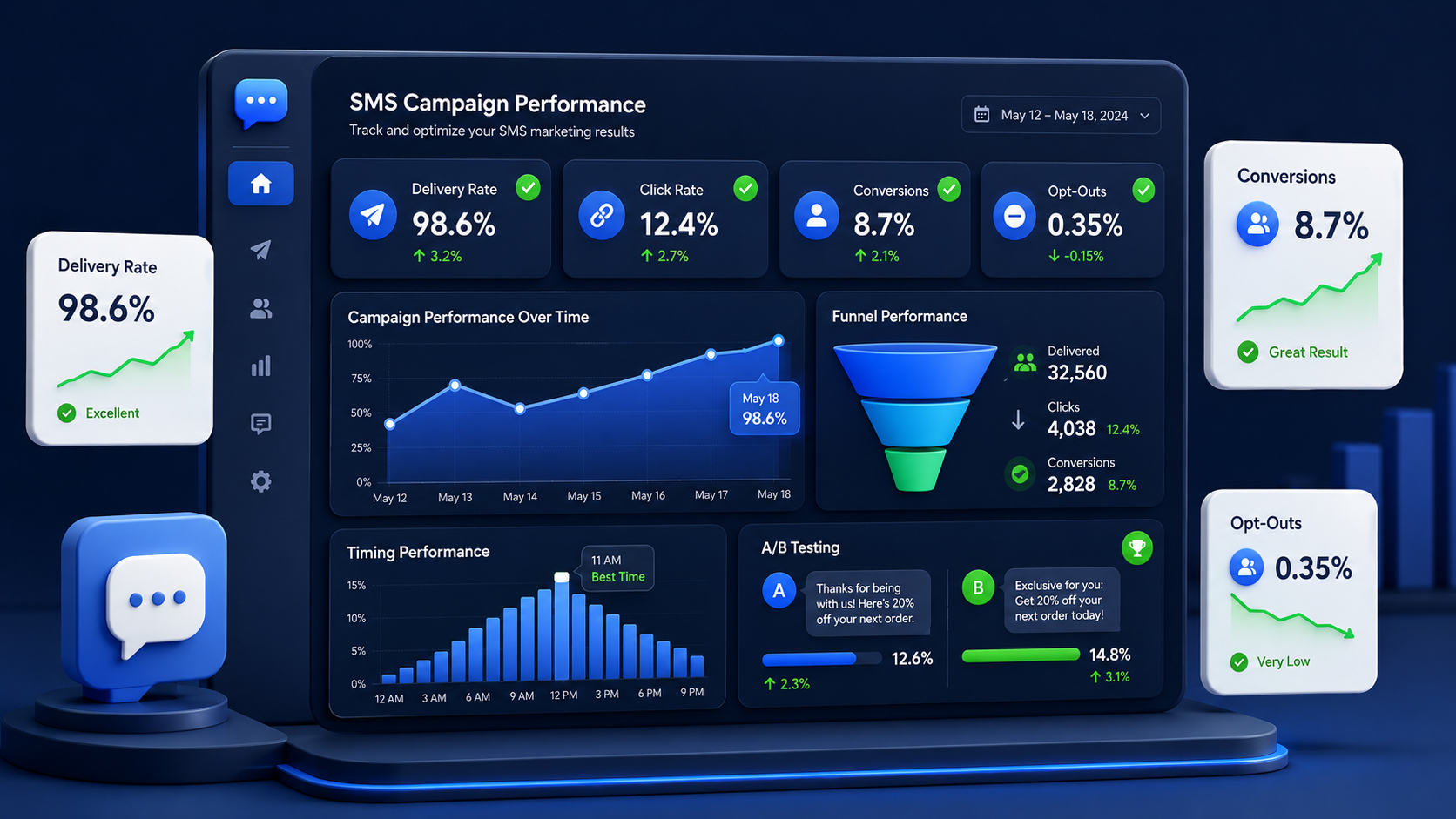
Delivery rate alone can be comforting and misleading at the same time.
Monitor signals that tell you whether delivery is healthy:
- Monitor sender integrity
- Monitor DLR timing and pattern quality
- Monitor opt-outs, negative replies, and complaint proxies where available
If a destination still looks “delivered” while opt-outs or anomalies rise, something may be changing underneath the surface.
Support and escalation expectations when performance changes
Finally, confirm what happens when a destination breaks.
Ask for a clear escalation path:
- Confirm how country-specific incidents should be reported
- Confirm what logs or message IDs will be needed
- Confirm expected response times for route investigation
- Confirm whether you will be notified about major route changes that could affect performance
If you are reviewing multiple destinations, seeing unstable sender display, or trying to separate routing issues from content issues, SMSBoosting can help you build a country-first test plan without turning the process into a hard sales conversation.
The Takeaway for First-Time SMS Senders
The one mental model to remember about SMS aggregators
An SMS aggregator is a reach multiplier, not a guarantee.
It helps your provider connect to more carriers. It does not remove local sender rules, eliminate filtering, or guarantee consistent outcomes across countries. That is why your real job is to validate performance where it matters: in each destination.
The first validation step to do before scaling volume
Before you ramp volume, do one simple thing:
Pick your top destinations and run a controlled pilot that includes:
- Two sender options where possible
- Two different sending windows to catch timing or throttling patterns
- Checks for sender display, DLR timing, replies, and opt-outs
You will usually learn more from that than from any single “we’re direct” claim.
A Simple Brief for Reviewing SMS Aggregator Routes
The destination list and message types to bring to a route review
Bring a short, concrete brief that includes:
- Destinations: your country list, plus any must-work markets
- Message types: marketing, transactional, and optional OTP traffic
- Sender plan: which sender identity you want per destination
- Volume expectations: normal daily volume and expected peaks
- Timing needs: any use case that must arrive within a defined time window
This keeps the conversation practical.
The success metrics to agree on before ramping traffic
Agree on metrics that match the real job:
- Delivery stability by destination
- Sender integrity where brand identity matters
- Receipt usefulness within a usable operational window
- User reaction, including replies, opt-outs, and complaint signals
If you are planning a multi-country rollout, troubleshooting destination-specific instability, or evaluating fallback paths for important traffic, talk to SMSBoosting. A short route review can reduce guesswork before volume and risk both increase.