SMS marketing helps businesses get fast attention, drive quick action, and keep customer communication simple. It works best when you need people to do something soon, not someday.
For many businesses, that means using text messages for reminders, flash offers, cart recovery, delivery updates, and follow-ups. In this guide, we’ll explain what SMS marketing is, how it helps revenue and retention, where it fits best, and where it usually falls short.
Quick Answer
SMS marketing can help businesses in 5 main ways:
- Increase Visibility: Text messages are usually seen faster than email.
- Drive Faster Action: SMS works well for limited-time offers, reminders, and booking confirmations.
- Support Retention: You can use it for reorder prompts, loyalty offers, and follow-ups.
- Improve Customer Response: Service updates and appointment reminders reduce missed steps.
- Protect Revenue: A short text can recover a cart, fill an open time slot, or cut support friction.
SMS works best when the message is brief, timely, and useful. A clinic can remind patients about tomorrow’s appointment. A retailer can send a same-day offer before it expires. An e-commerce store can bring shoppers back to checkout with one direct link.
A simple rule helps here: use SMS for urgency and action. Use email when you need more explanation. Use social media when you want reach and discovery.
What Is SMS Marketing and Why Do Businesses Use It?
SMS marketing is the use of permission-based text messages to promote offers, remind customers, or prompt a specific action. Businesses use it because it reaches people fast and works well when timing matters.
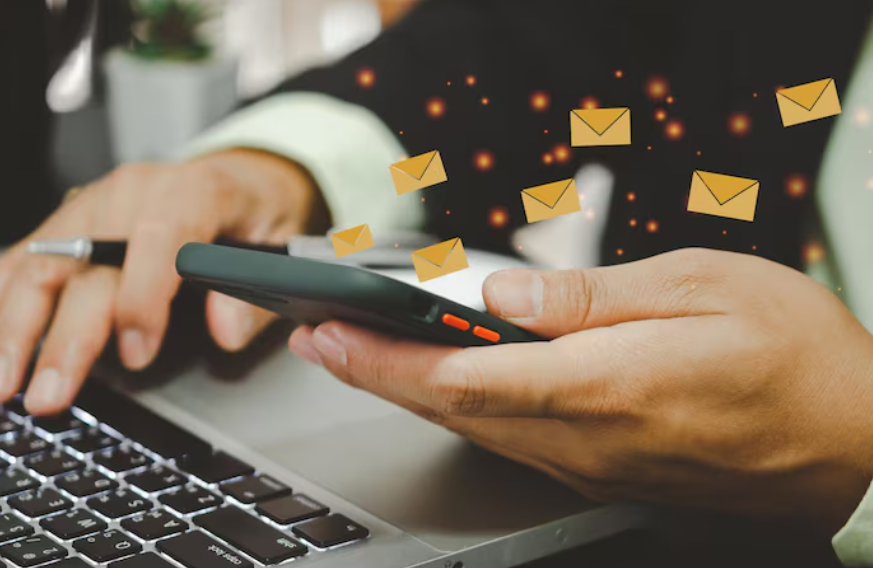
There are two basic types of business texts. Promotional SMS includes messages like discounts, flash sales, loyalty offers, and back-in-stock alerts. Transactional SMS covers service messages like order updates, appointment reminders, delivery notices, and verification codes. Many businesses use both, but customers expect them for different reasons, so you should not treat them the same way.
The easiest way to think about SMS is this: it is a channel for short, useful messages with a clear next step. If you need to explain a product in detail, email usually makes more sense. If you need a customer to confirm, book, click, or reply soon, SMS is often the better choice.
That is why businesses keep SMS in the mix. It is simple, direct, and hard to ignore when the message actually helps the customer.
How Can SMS Marketing Help Businesses Grow Revenue, Retention, and Customer Response?
SMS marketing helps businesses grow in 3 practical ways: it can bring in revenue faster, improve retention, and get customers to respond when timing matters.
Recover or Create Revenue Quickly
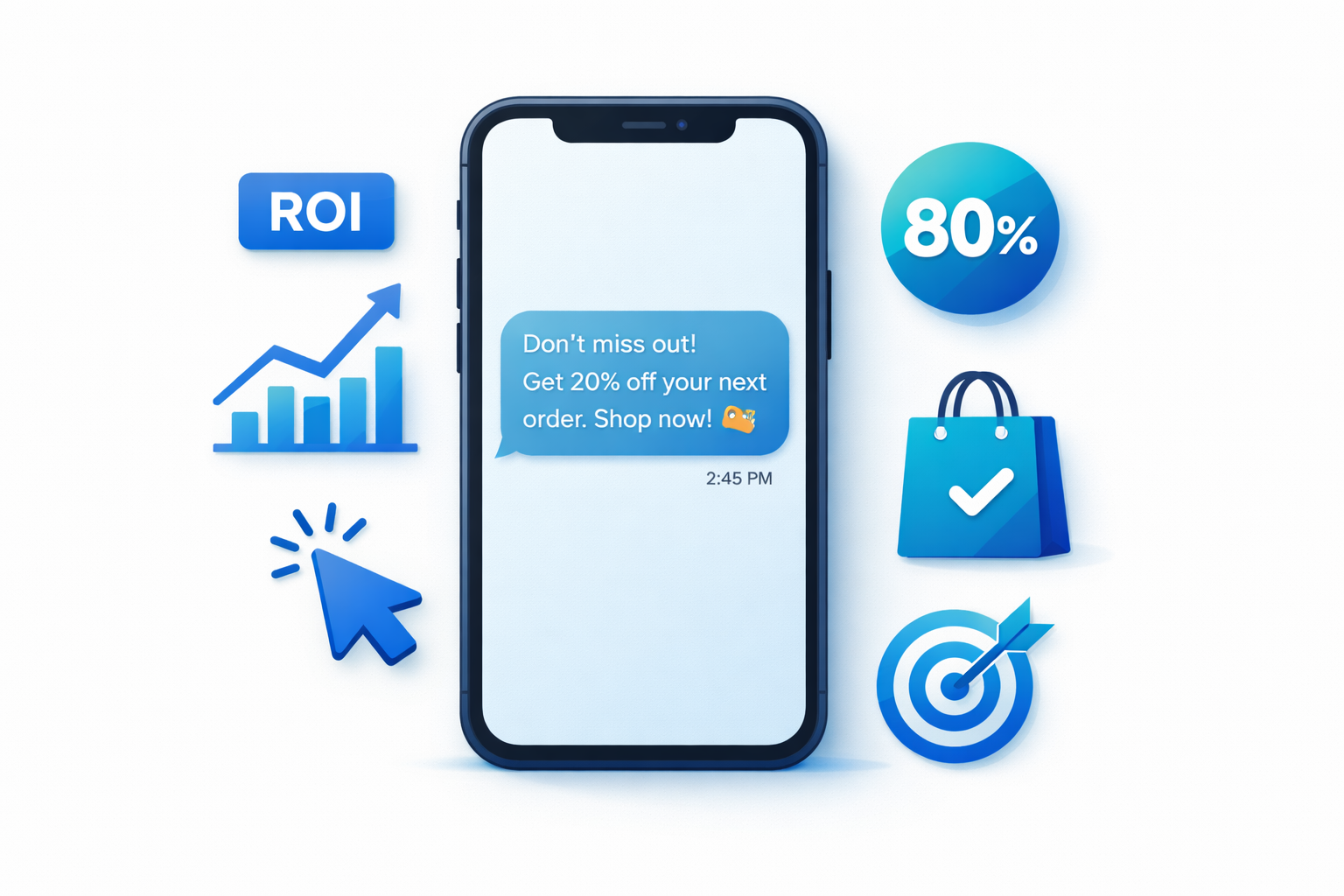
SMS is strong when a delayed message means lost money. A restaurant can send a lunch offer before noon. A salon can fill a last-minute opening. An e-commerce store can recover an abandoned cart while the shopper still remembers what they wanted.
That speed is valuable because the window is often short. If the customer sees the message tomorrow instead of now, the sale may already be gone.
Support Retention and Repeat Purchases
SMS also helps businesses stay in front of existing customers without sending long campaigns. You can use it for reorder reminders, loyalty updates, back-in-stock alerts, and post-purchase follow-ups.
This usually works best for businesses with repeat buying patterns. Think skincare refills, supplements, pet supplies, or any service customers book more than once. When the timing lines up with real customer behavior, a short text can bring people back without much friction.
Improve Customer Response and Service Communication
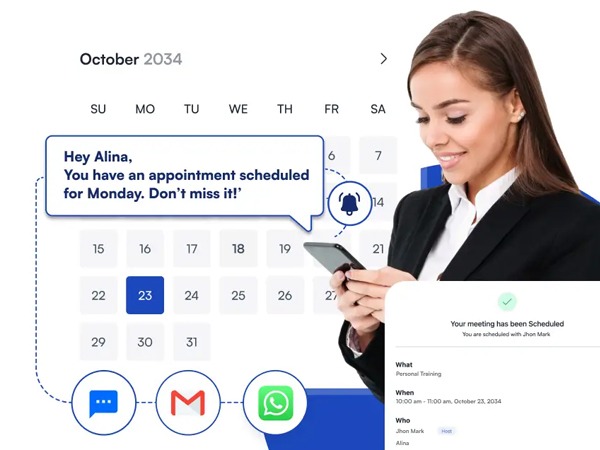
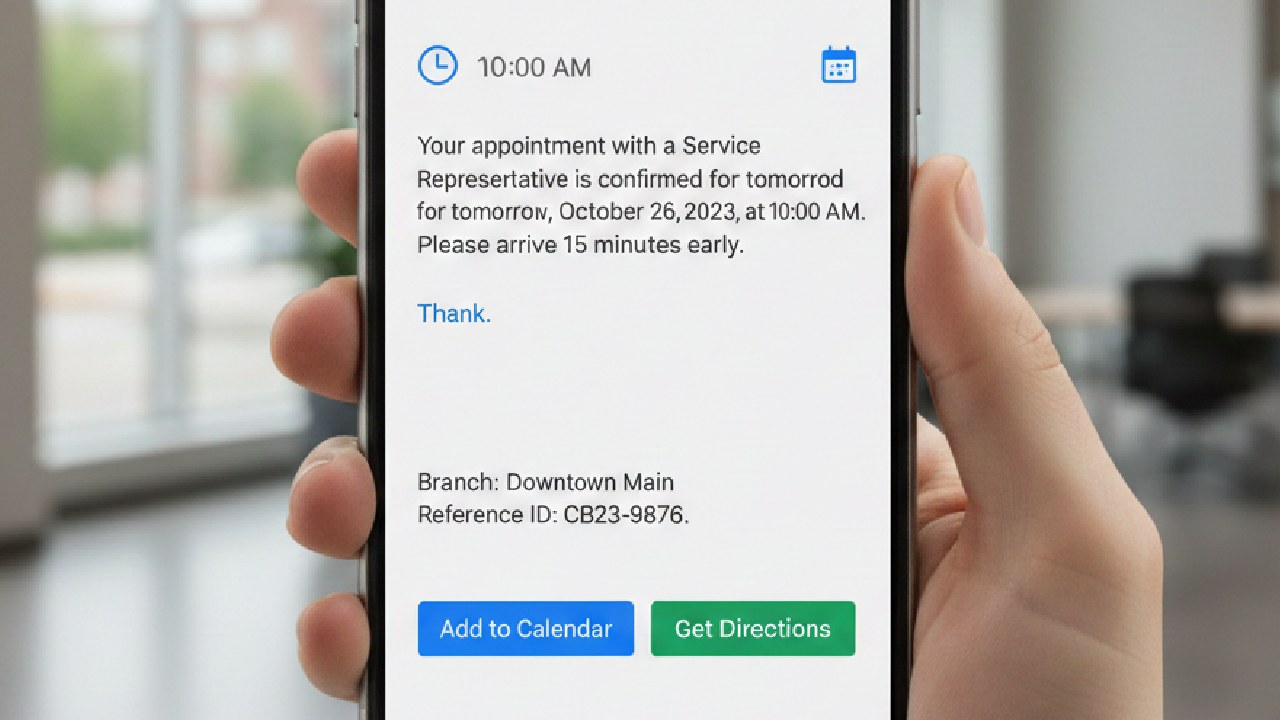
Some of the best SMS results come from simple service communication. Appointment reminders reduce no-shows. Delivery updates cut “where is my order?” questions. Arrival alerts help customers prepare before your team shows up.
In other words, SMS does not only help with selling. It also helps with response speed, customer convenience, and day-to-day operations. That matters more than vanity metrics for most businesses.
A useful test is simple: if seeing the message in the next hour is much more valuable than seeing it later, SMS is probably worth using.
What Use Cases and Business Types Are the Best Fit for SMS?
The best SMS use cases are the ones where one timely message can change a clear business outcome. That usually means bookings, checkouts, replies, arrivals, or repeat orders.
Best SMS Use Cases
SMS is usually a strong fit for:
- Cart Recovery: Bring shoppers back while purchase intent is still high.
- Appointment Reminders: Reduce no-shows for clinics, salons, and service businesses.
- Flash Offers: Promote same-day or short-window deals before they expire.
- Delivery and Arrival Updates: Keep customers informed and cut support questions.
- Reorder and Loyalty Messages: Encourage repeat purchases at the right time.
Best Business Types for SMS
SMS often works well for businesses that depend on timing, repeat activity, or direct customer response. Common examples include:
- E-commerce Brands: Cart recovery, back-in-stock alerts, shipping updates
- Clinics and Salons: Appointment reminders, confirmations, follow-ups
- Restaurants and Local Retail: Same-day promotions, reservation messages, pickup alerts
- Home Service Businesses: Arrival windows, technician alerts, estimate follow-ups
- Subscription or Replenishment Brands: Reorder reminders and renewal prompts
SMS is usually a weaker fit when your offer needs a lot of explanation before someone buys. For example, a high-ticket B2B service or a complex software product may still use SMS, but usually in a narrower way, like meeting reminders or trial-expiry notices.
A simple planning rule helps here: use SMS when you want quick action from people who already know you. Use email first when the customer still needs more context.
How Does SMS Compare With Email, Social Media, and Push?
SMS is best for fast, action-focused communication. Email is better for detail. Social media is better for reach and discovery. Push works best when you already have active app users.
SMS vs Email
Use SMS when timing matters more than explanation. A cart reminder, booking confirmation, or last-minute offer usually fits text better than email because the customer can act right away.
Use email when the message needs more space. Product education, launch updates, newsletters, and longer promotions are usually easier to read in an inbox than in a text thread.
SMS vs Social Media
Social media helps people find you. SMS helps known contacts respond to you.
That is the key difference. Social is useful for awareness, content distribution, and brand visibility, but it does not guarantee direct reach. SMS is narrower, but it is often stronger when you already have permission and want someone to click, confirm, or buy.
SMS vs Push Notifications
Push notifications can also drive fast action, but they only work if the customer has your app installed and notifications turned on. SMS reaches a much wider portion of your contact list because it does not depend on app behavior.
A simple rule helps here: use SMS for urgency, use email for depth, use social media for discovery, and use push for app engagement.
How Much Does SMS Marketing Cost and What ROI Can It Deliver?
SMS marketing usually costs more per message than email, so it makes the most sense when one timely text can protect revenue, recover a sale, or save staff time.

In most cases, your cost includes two parts: a platform fee and a per-message charge. Your actual cost will vary by provider, country, message type, and sending volume. MMS and international messages often cost more than basic SMS.
The bigger question is not “Is SMS cheap?” It is “Does this message create enough value to justify the cost?”
SMS usually delivers the clearest ROI in cases like these:
- Recovered Carts: One completed order can cover many sends.
- Saved Bookings: One filled appointment slot can justify a small campaign.
- Repeat Orders: Reorder reminders work well when customers buy on a known cycle.
- Reduced Service Friction: Delivery or arrival texts can cut support questions and missed visits.
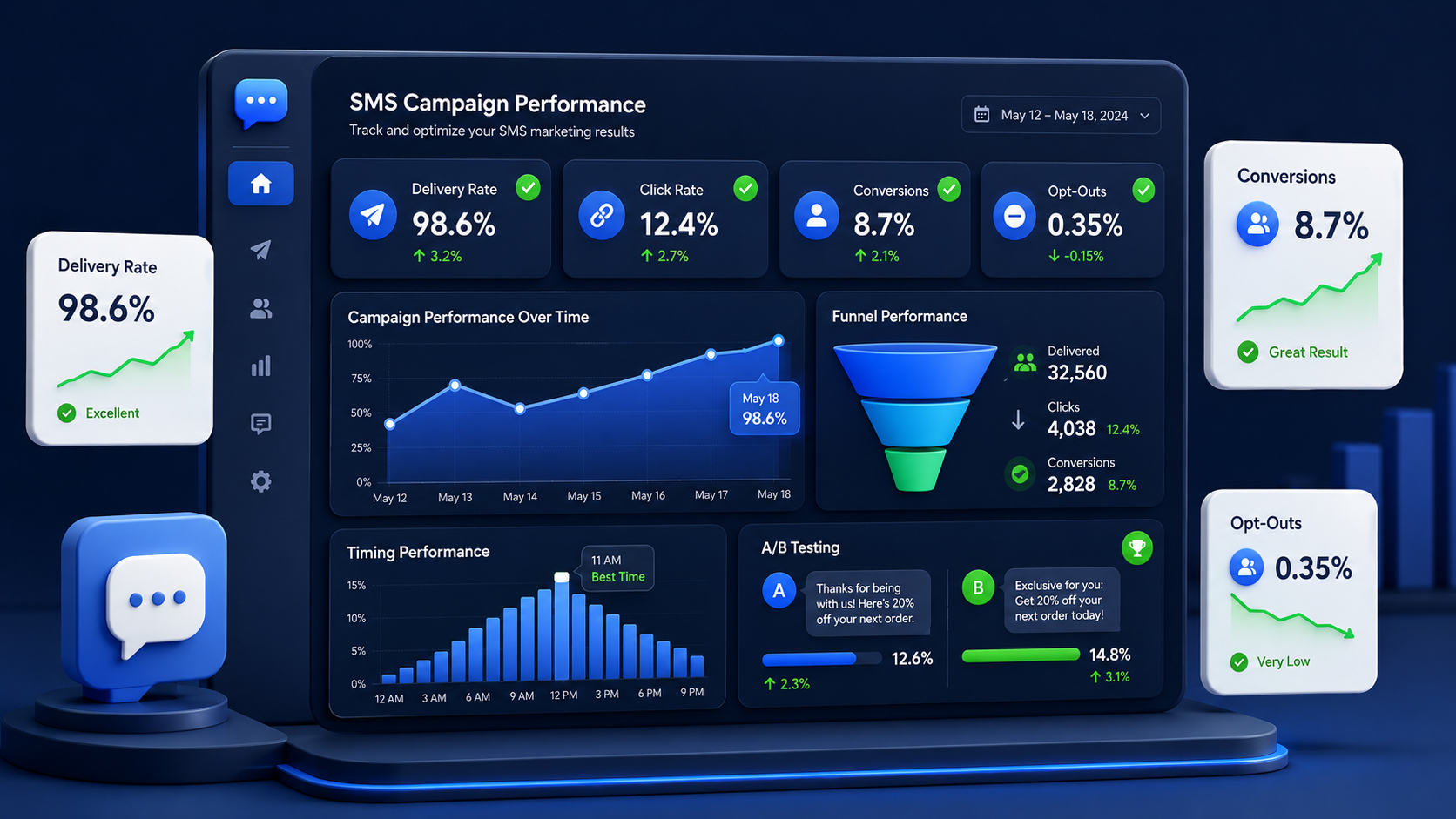
The most useful metrics to track are conversion rate, revenue per recipient, unsubscribe rate, and cost per conversion. Service businesses should also look at saved bookings and lower no-show rates, because those outcomes often matter more than click data alone.
A simple decision rule helps here: SMS is easier to justify when one conversion can pay for many messages.
What Are the Main SMS Risks, Limits, and Compliance Rules?
SMS can work very well, but it is easy to damage results if you send too often, target the wrong people, or ignore consent rules.
The first rule is simple: do not send promotional texts without clear permission. Customers should know what they signed up for, how often you may text them, and how to opt out. You also need to respect local rules, sending hours, and market-specific requirements. If you plan to send across countries, legal review is a smart step.
Beyond compliance, the biggest business risk is overuse. Text messages get attention, but that does not mean people want them all the time. If you send weak offers to a list that rarely buys, unsubscribe rates will climb fast.
SMS also has practical limits:
- It Is Not Ideal for Long Explanations: Some offers need more education than a text can give.
- Costs Can Rise Fast: A large list with low engagement can get expensive quickly.
- Carrier Filtering Can Happen: Messages that look spammy may not reach the customer.
- Some Audiences Are a Poor Fit: Businesses with long sales cycles or low repeat contact often get less value from SMS.
A useful way to stay on track is to ask one question before every campaign: would this message feel expected, useful, and easy to stop if you were the customer receiving it? If the answer is no, the program needs work.
How Can Businesses Start SMS Marketing Without Wasting Budget?
Businesses should start SMS marketing with one clear use case, one small segment, and one simple test. That keeps costs under control and makes results much easier to judge.
A low-risk rollout usually looks like this:
Start With One High-Value Use Case
Do not launch with five campaigns at once. Pick one use case where timing clearly affects results, like cart recovery, appointment reminders, or reorder prompts. Those are easier to measure, and they usually show value faster.
Send to a Small, Relevant Segment
Your first messages should go to people who are most likely to act. That could be recent shoppers, repeat customers, booked appointments, or subscribers who already asked for updates. A smaller, better-fit segment will teach you more than a big list with weak intent.
Measure Before You Scale
Watch the basics first: conversions, saved bookings, unsubscribe rate, and customer response. If the message performs well, expand slowly. If it does not, fix the offer, timing, or audience before you send more.
The goal at the start is not to build a huge SMS program overnight. It is to prove that one useful message can create real business value without annoying your list.
Conclusion
SMS marketing helps businesses most when timing matters. It is strongest when a short message can recover a sale, fill an appointment, prompt a reply, or keep a customer informed at the right moment.
That is also why SMS is not a fit for every goal. If your message needs more explanation, email usually does the heavier lifting. But if speed, convenience, and direct action matter more, SMS can earn its place pretty quickly.
Our main takeaway is simple: start narrow, stay useful, and measure the business outcome instead of chasing vanity metrics. One good SMS flow can do more for a business than a long list of random campaigns.If you want to put that into practice, SMS Boosting can help you build smarter SMS campaigns for reminders, promotions, and customer follow-ups without making your messaging feel forced.