If you’ve ever searched for “free bulk SMS,” you’re not alone. Almost every business looks for a way to send text messages without adding another line item to the budget.
Here’s the reality, though: truly free bulk SMS doesn’t exist for real business use. Platforms that promise unlimited free messages always limit volume, hurt deliverability, or push the risk into compliance and account bans.
In this guide, we’ll break down what’s actually possible with free or “free-like” bulk SMS, why those options fail in real campaigns, and which low-cost alternatives give you reliable delivery without wasting money on messages customers never see.
Can You Really Send Bulk SMS for Free?
No, not in any way that supports real business objectives or scales beyond testing.
The reason is simple: SMS delivery isn’t free on the carrier side. Every message travels through telecom networks that charge for transmission, even if you never see that cost directly. When a platform claims “free bulk SMS,” it usually means the limits or risks are hidden somewhere else.
In practice, “free” platforms do one of three things. They cap your sending volume so tightly that campaigns become unusable, route messages through low-quality shared sender pools that hurt deliverability, or push the risk onto your business through data monetization and compliance gaps.
Free trials and starter credits do exist, but they’re meant for evaluation, not ongoing use. Once you move past 50–100 recipients or start sending messages regularly, legitimate providers switch you to paid plans. That’s the point where SMS becomes a real business channel instead of a demo.
What many businesses call “free SMS” usually means personal phone numbers, consumer apps, or email-to-SMS workarounds. These shortcuts violate carrier rules, trigger spam filtering, and often end with blocked numbers, banned accounts, or permanent damage to your sender reputation.
What Free or “Free-Like” Methods Do Businesses Use to Send Bulk SMS?
When businesses try to avoid SMS costs entirely, they usually fall back on a handful of “free” or nearly free options. On the surface, these methods look harmless. In real campaigns, they almost always break down fast.
Below are the most common approaches we see, along with why they fail once you move beyond casual testing.
Free Trials and Limited Credits From SMS Providers
Most SMS platforms offer free trials with 10–50 message credits so you can test the interface and basic delivery. This is a legitimate way to evaluate tools before committing.
The problem is scale. Trial credits disappear quickly, often mid-test, and they’re designed to expire. Once you need to message more than a small internal list, you’re forced onto a paid plan or your campaigns stop cold. That makes trials useful for evaluation—but useless for ongoing business communication.
App-Based Free Bulk Messaging Tools
Consumer apps like WhatsApp, Telegram, or Google Voice allow free messaging but prohibit commercial bulk sending in their terms of service. Some businesses ignore these restrictions and blast marketing messages to hundreds of contacts.
Platforms detect bulk sending patterns and permanently ban accounts without warning or appeal. You lose your entire contact list, message history, and sender identity instantly. Recipients also report commercial messages as spam, accelerating account termination. These apps lack delivery confirmation, analytics, opt-out management, and compliance features that business SMS requires.
Email-to-SMS and Other Workarounds
Carrier email-to-SMS gateways (like phonenumber@carrier.com) let you send texts through email interfaces. You send messages from an inbox and avoid SMS platform fees altogether.
Carriers know this trick well—and they filter it aggressively. Most email-to-SMS traffic is flagged as spam, blocked outright, or delivered inconsistently. You can’t track delivery, control sender identity, or manage opt-outs properly. This approach violates TCPA compliance requirements for commercial messaging. For commercial messaging, this approach creates compliance gaps that are hard to defend later.
Using Personal Phones or P2P Numbers for Mass Texting
Some businesses start by texting customers directly from personal phones or standard 10-digit numbers. It feels free because the phone plan is already paid for.
That approach breaks as soon as volume increases. Carriers monitor sending patterns closely, and personal numbers aren’t meant for bulk traffic. Once flagged, numbers get blocked—sometimes permanently. There’s no automation, no segmentation, no scheduling, and no continuity. If the employee who owns that phone leaves, your entire messaging history leaves with them.
What Are the Biggest Limitations of Free Bulk SMS Solutions?
Every “free” bulk SMS option cuts corners that matter once messaging becomes part of your business operations. The limitations aren’t subtle—and they show up fast.
Severe Message Volume Limits
Free methods typically cap sending at 10–100 messages per day. That’s fine for testing, but it makes real campaigns impossible. You can’t run flash sales, send appointment reminders, or reach your full list when artificial limits stop you halfway through a send.
Poor Deliverability and Higher Spam Filtering Risk
Most free SMS traffic runs on shared infrastructure that carriers already associate with spam. As a result, legitimate messages get filtered aggressively. Delivery rates often land around 40–60%, which means half your audience never sees your message. At that point, “free” becomes expensive in lost revenue and missed opportunities.
Lack of Brand Control, Reporting, and Reliability
Free tools offer little control over sender identity, reporting, or reliability. Messages arrive from random numbers or generic IDs that customers don’t recognize. There’s no clear visibility into who received your messages, who clicked, or who opted out. When delivery fails, there’s no support team to call and no service guarantees to fall back on.
Missing Features Needed for Real Business Use
Compliance tools, scheduled sending, audience segmentation, A/B testing, API integration, and automated workflows don’t exist in free solutions. You’re manually copying phone numbers, typing individual messages, and hoping carrier systems don’t block you. This is the point where free methods start to look less like marketing tools and more like spam tactics.
What Compliance and Legal Risks Come With “Free” Bulk SMS?
Free bulk SMS doesn’t just create delivery problems—it creates legal exposure that can spiral fast. In the U.S., TCPA violations carry penalties of $500 to $1,500 per message, and those fines apply whether the message was “free” or not.
The core issue is proof. Regulations require clear opt-in consent, working opt-out mechanisms, and records that show when and how permission was granted. Free or improvised SMS methods rarely provide any of this. When complaints happen, you’re left with no audit trail to defend yourself.
Sending messages from personal phones or consumer apps makes things worse. These tools violate carrier rules and aren’t designed for commercial messaging. Once customers flag your texts as spam, carriers shut down numbers first and ask questions later. At that point, service interruptions often come before any formal investigation.
The real risk isn’t a single mistake—it’s accumulation. Free tools don’t reliably suppress opted-out contacts or track consent history across campaigns. Over time, small gaps add up. What starts as a few questionable messages can turn into hundreds of violations you can’t explain or document.
For regulated industries like finance or healthcare, the stakes are even higher. Financial and payment-related messages—such as SMS payment notifications—require secure, auditable delivery. Free SMS options don’t meet those standards, which puts both compliance and customer trust at risk.
When Is Free Bulk SMS Actually Acceptable for Businesses?

Free bulk SMS only makes sense in a few tightly defined situations—and none of them involve ongoing, customer-facing campaigns. The moment delivery or compliance affects revenue, free options stop being safe.
Internal Testing and Small-Scale Experiments
Using free trial credits is reasonable when you’re evaluating SMS as a channel. Sending test messages to your own team helps you check basic delivery, review the interface, and understand how a platform works before spending money. At this stage, free access supports decision-making, not real communication.
Non-Promotional or Internal Notifications
Free messaging tools work for internal coordination, such as shift schedules or team reminders sent to a small group. Compliance rules and sender reputation aren’t factors here because the messages aren’t promotional and don’t go to customers. This is internal communication—not bulk SMS marketing.
One-Time Proof-of-Concept Campaigns
Free credits can also support a limited proof-of-concept. Sending 30–50 messages to highly engaged customers helps confirm whether SMS gets responses in your audience. This controlled experiment provides data for investment decisions without risking large-scale failures.
When Is Free Bulk SMS a Bad Idea for Businesses?
Free bulk SMS becomes a problem the moment your business depends on messages being delivered correctly and on time. In these situations, “free” doesn’t just underperform—it creates real risk.
Customer-Facing Marketing or Sales Campaigns
When texts represent your brand, reliability matters more than saving a few cents. Free SMS tools often deliver inconsistently, use unrecognizable sender IDs, or get filtered as spam. Customers don’t see those technical details—they just see a brand that didn’t show up. Missed promotions and half-delivered campaigns cost far more than paid SMS ever would.
Time-Sensitive Messages Like OTPs or Alerts
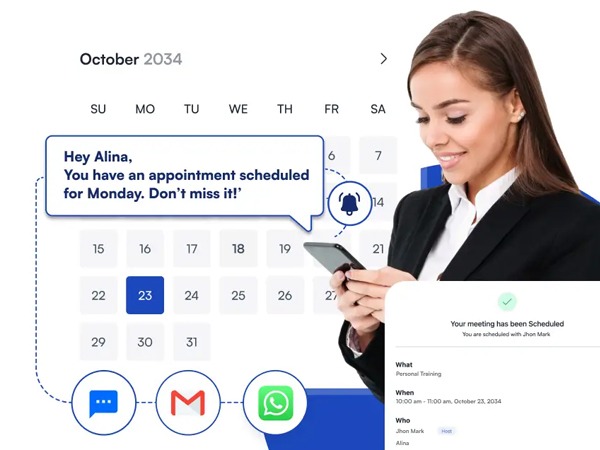
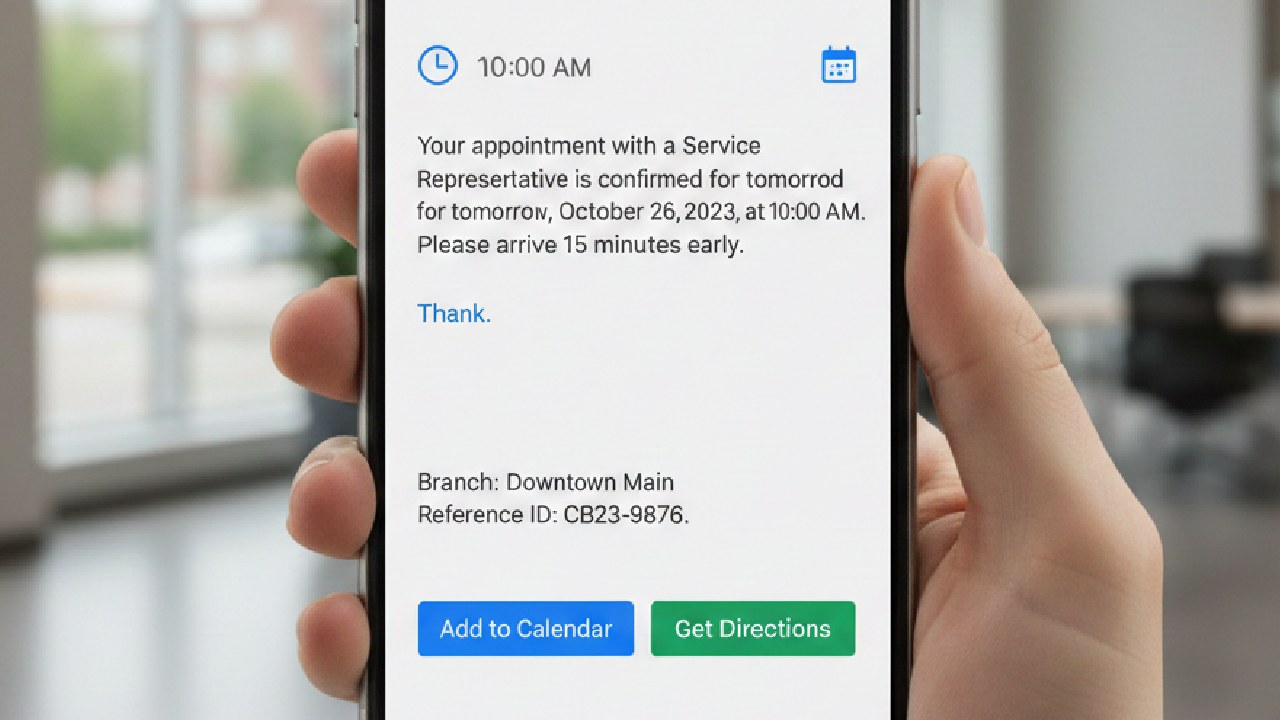
One-time passwords, order confirmations, and appointment reminders require instant, reliable delivery. Free methods introduce delays, failures, and uncertainty that destroy user experience. Free methods introduce delays and uncertainty that frustrate users and break critical workflows.
Regulated Industries or Brand-Critical Communication
In regulated industries, messaging failures carry consequences beyond lost engagement. Healthcare, finance, and legal services require secure, auditable communication channels. Free SMS tools don’t offer the controls these environments demand. A missed reminder or failed notification can quickly turn into compliance issues, customer complaints, or legal exposure that outweighs any short-term cost savings.
What Are Smarter Alternatives to “Free” Bulk SMS?
The real alternative to free bulk SMS isn’t spending more—it’s gaining control through proper SMS marketing that allows testing, measurement, and predictable scaling.
Using Free Trials or Starter Credits the Right Way
Free trials work best as a screening tool. Use them to test delivery speed, review reporting features, and understand how a platform handles opt-outs and compliance. Compare a few providers, decide which one fits your needs, and move on. Trials help you choose wisely—but they’re not meant to run live campaigns.
Pay-As-You-Go SMS for Cost Control
Pay-as-you-go pricing keeps SMS predictable. You pay only for messages you send, without long-term contracts or unused credits. For businesses with uneven or seasonal messaging, this model provides professional delivery at a low entry cost—often just a few cents per message—without locking you into monthly fees.
Testing SMS Campaigns With Small, Segmented Sends
Instead of blasting your full list, begin with a small, engaged segment. Sending 50–100 messages gives you real data on delivery, clicks, responses, and opt-outs. If the numbers make sense, you scale. If they don’t, you adjust. This approach turns SMS into a testable channel rather than a gamble.
The key difference is intent. Free methods avoid cost. Smarter alternatives manage risk and spending at the same time.
How Much Does Bulk SMS Actually Cost for Businesses?
For most businesses, professional bulk SMS costs between $0.01 and $0.15 per message, depending on volume, destination, and service level. What matters more than the headline rate is how that cost shows up at your actual sending volume.
Typical Pricing Models
Most platforms fall into three pricing models.
- Pay-as-you-go charges per message with no monthly commitment, which works well for testing or irregular sending.
- Monthly plans bundle message credits with platform access and lower per-message costs for consistent volume.
- Enterprise setups provide dedicated infrastructure and support for businesses sending at very high scale.
Factors That Affect Bulk SMS Costs
Message volume has the biggest impact on what you actually pay.
For example, a business sending around 10,000 messages per month typically pays $0.03–$0.05 per message, or roughly $300–$500 total. At higher volumes, pricing drops quickly. Companies sending 1 million or more messages monthly often see rates fall to $0.01–$0.02 per message through volume discounts.
At that scale, SMS stops being an experiment and becomes an operational channel—one where delivery reliability matters far more than shaving fractions of a cent off the unit price.
Other Cost Factors to Consider
Message type affects pricing. Standard SMS costs less than MMS, and messages with images or video carry higher per-send fees.
Sender identity also plays a role. Long codes are inexpensive but limit throughput. Short codes support high-volume sending but come with monthly fees of $500–$1,000. Toll-free numbers sit in between, offering branded sending at moderate cost.
Destination matters as well. Domestic U.S. messages usually cost $0.01–$0.05, while international SMS can range from $0.05 to $0.50 depending on country and carrier.Ultimately, cost isn’t just about price per message. It’s about delivery rates, customer response, and operational efficiency. Paying $0.03 per message with 95% delivery consistently outperforms “free” methods that only reach half your audience.
How Can Businesses Test SMS Marketing Without Wasting Budget?
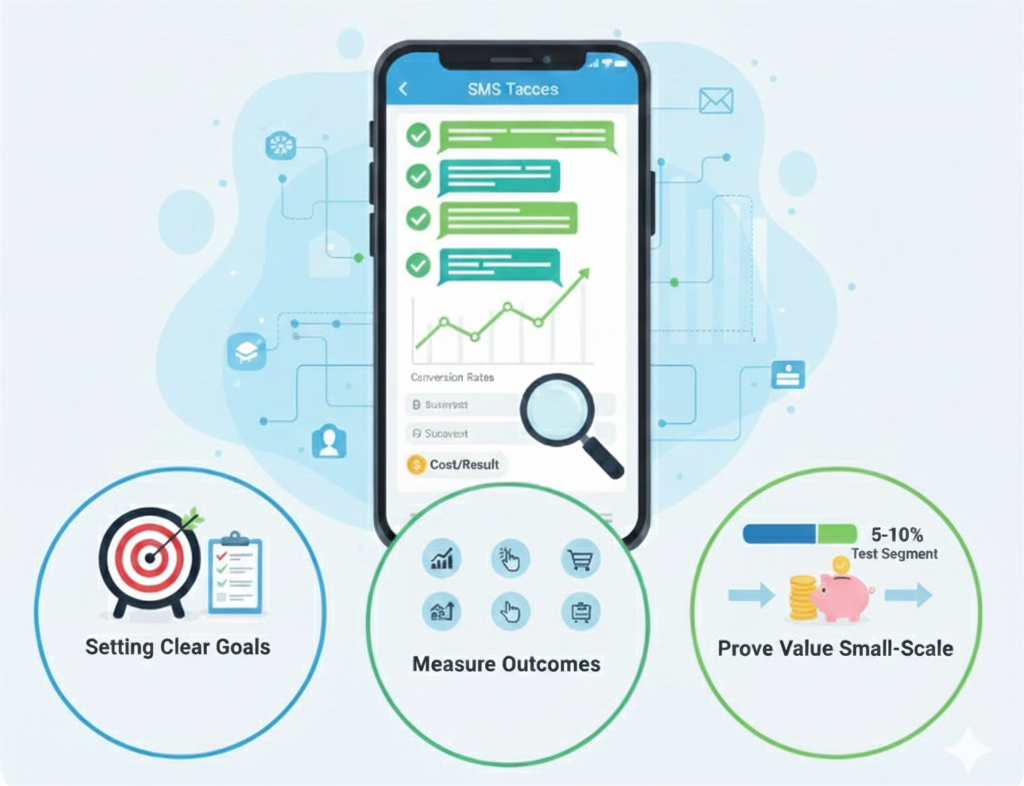
The fastest way to waste money on SMS isn’t high pricing—it’s scaling before you know what works. Smart testing keeps costs low while showing you exactly where SMS delivers value.
Setting Clear Goals Before Sending Anything
Decide what success looks like before your first message goes out. Goals like “increase appointment show rates by 15%” or “generate 50 online orders” give you a clear pass-or-fail benchmark. Without defined targets, even cheap messages turn into wasted spend because there’s nothing to measure against.
Measure Outcomes, Not Just Sends
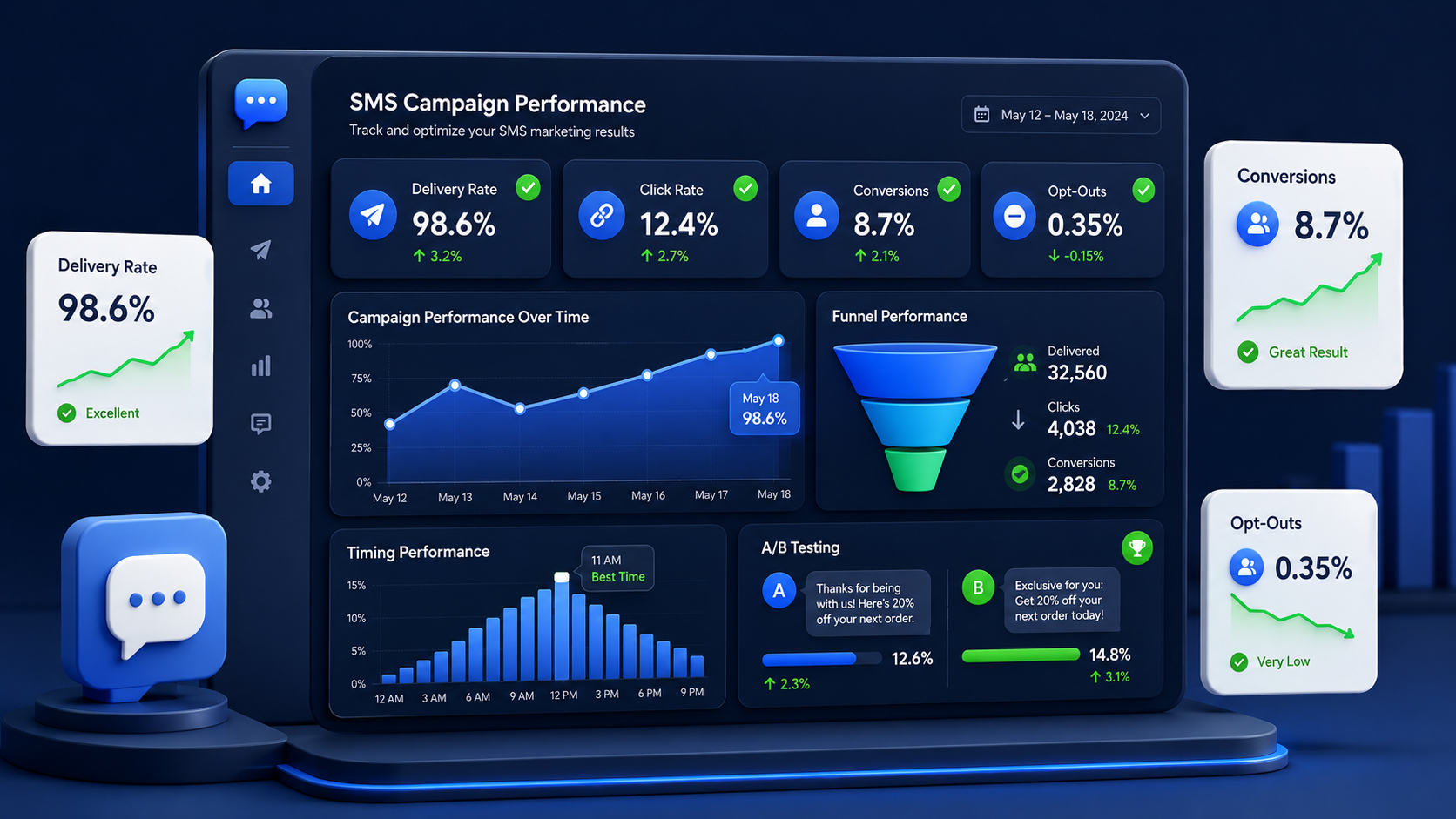
Message volume alone doesn’t tell you if SMS is working. Focus on delivery rates, clicks, conversions, and opt-outs. These numbers show whether messages are reaching real customers and driving action. Calculating cost per result—or revenue per message—quickly reveals whether SMS is profitable or just adding noise.
Prove Value on a Small Scale Before Expanding
Start with a limited segment, usually 5–10% of your list, and treat it as a controlled test. A small send might cost only a few dollars, but it can save you hundreds by exposing weak messaging early. Once results are consistent, you can scale with confidence instead of guessing.
Testing isn’t about slowing growth—it’s about making sure every additional message you send has a reason to exist.
Conclusion
Completely free bulk SMS isn’t realistic for legitimate business use—and chasing it usually costs more than paying for professional service from the start.
“Free” methods cut corners on deliverability, compliance, and reliability to avoid small per-message fees. The tradeoff shows up quickly: missed messages, blocked numbers, compliance risk, and lost revenue. By contrast, professional SMS typically costs just a few cents per message and gives you predictable delivery and full control over how messages are sent.
The real decision isn’t whether SMS should be free. It’s whether the messages you send actually reach customers and drive results. Spending $300–$500 a month on SMS that produces measurable returns is a business investment—not wasted budget.
The smart approach is simple: start small, measure outcomes, and scale only what works. If you want to test SMS this way—with pay-as-you-go pricing, clear reporting, and no long-term contracts—SMS Boosting is designed to support exactly that kind of controlled rollout.