

What Is Two Way SMS and Why It Matters
Two way SMS is a messaging setup in which a business can send text messages to customers and customers can reply from their own phones, with both sides communicating through the same phone number or short code. The reply lands in a system the business controls rather than in an unattended inbox, which is what separates it from a one-way notification. That capability sounds simple, but it changes the role of SMS inside a business: instead of broadcasting and hoping, teams can close loops, answer questions, and confirm intent inside the channel the customer already prefers.
How Two Way SMS Differs from One-Way Notifications
A one-way notification sends information and expects nothing back. Delivery updates, OTP codes, and payment receipts are classic examples: the message is complete by itself. Two way SMS, by contrast, opens the door for a response. The customer can reply “yes”, ask a clarifying question, or request a change, and the business must be ready to receive that reply and do something with it. The practical difference is operational: one-way requires only sending infrastructure, while two way requires receiving, routing, and response handling as well.
The Value of a Conversation the Customer Already Uses
Text messaging is familiar, immediate, and already on the phone the customer carries. Two way SMS builds on that familiarity rather than asking customers to adopt a new app or channel. For time-sensitive decisions — confirming an appointment, approving a delivery window, answering a quick question — a short text exchange can finish in minutes. The value is not that SMS is a magical channel; it is that the conversation happens where the customer already is, at a speed that suits both sides.
How Customers Reply to Two Way SMS
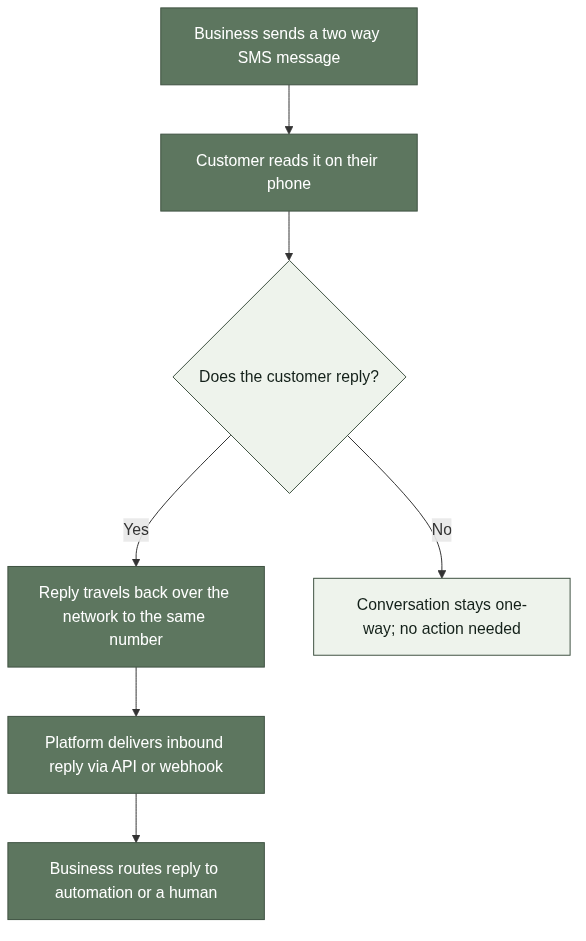
Customers reply the same way they reply to any text: they open the message thread and type. No app is required, which is why two way SMS works across virtually any phone and any mobile network. When a business sends from a dedicated number or short code, the customer’s reply is delivered back over the network to that same number, and the messaging platform captures it as an inbound message.
What Inbound Replies Look Like
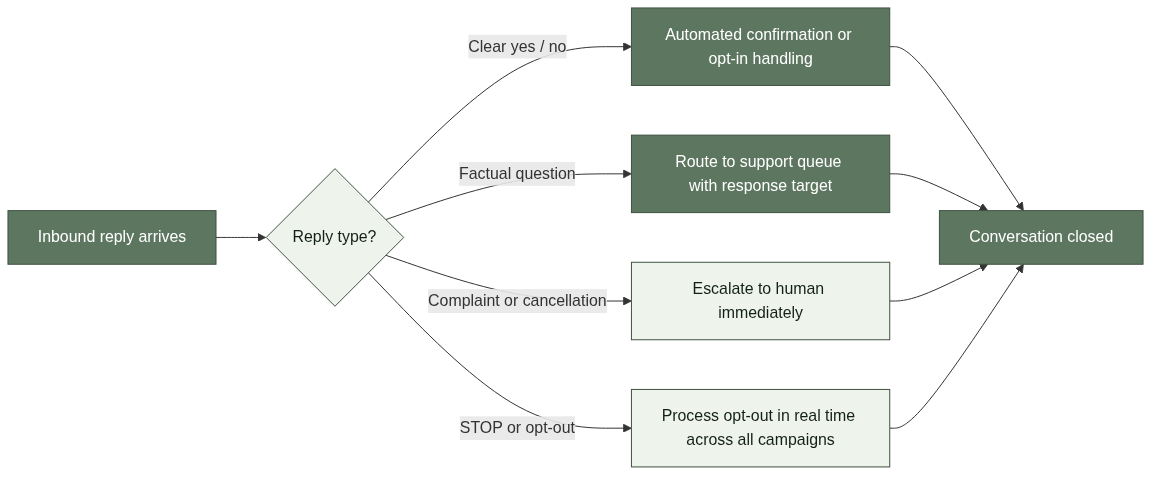
Inbound messages come in different shapes. A simple “yes” or “no” is the most common pattern for confirmations and opt-ins. A question such as “What time is my appointment?” requires a real answer. A complaint or cancellation request needs to reach the right person quickly. The reply format matters less than the fact that the business must handle all of these, not just the easy ones.
How Businesses Receive Replies
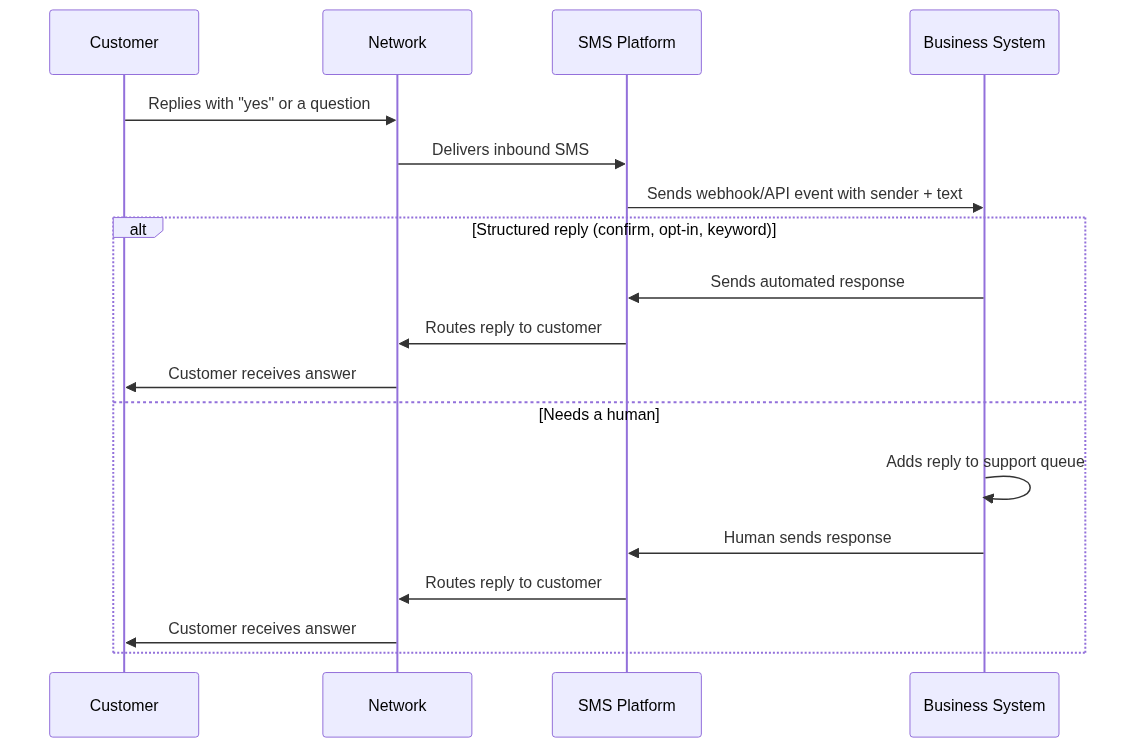
Most SMS platforms expose inbound messages through an API or a webhook, so the reply can be read by software the moment it arrives. The platform delivers the message content, the sender’s number, and a timestamp, and the business decides what happens next. Without that integration, replies sit in an inbox that no one monitors, which is the fastest way to turn a two way SMS program into a customer complaint.
How Businesses Manage Customer Replies
Receiving a reply is only the start. The operational question is what happens after the message arrives, and that is where well-run two way SMS programs succeed or fail.
Routing Replies to the Right Destination
Not every reply deserves the same treatment. A clear “yes” can trigger automation immediately. A question about pricing or availability should route to a human. A support issue needs a queue with response-time expectations. Businesses typically define rules that classify replies by content or keyword, then route them to automation, a support queue, or a manual workflow. The simpler the rule set, the fewer messages fall through the cracks.
Automation, Support Queues, and Manual Handling
Two way SMS does not mean everything is automated. Automation fits structured exchanges: confirmations, opt-ins, status checks, and simple keyword responses. Anything ambiguous, sensitive, or emotionally charged should go to a person. A good setup treats automation as a filter that handles the routine replies and escalates everything else, instead of a system that tries to answer every message.
When Manual Handling Is Necessary
Manual handling is necessary whenever a wrong automated answer would cost trust or money: refund requests, cancellations, complaints, and anything involving personal data. The threshold varies by business, but the principle is stable: if a mistake is expensive, a human should be in the loop. Many teams start with heavy manual review and automate only the reply patterns that prove safe over time.
Where Two Way SMS Works Best
Two way SMS is not a universal fix, and knowing where it does not fit is as useful as knowing where it does.
Customer Support and Service Conversations
Support is the most natural fit. Customers ask short, factual questions — order status, store hours, delivery timing — and a two way SMS conversation can resolve them without a phone call or a support ticket. It works best for high-volume, low-complexity questions where a fast text answer satisfies the customer. Complex troubleshooting or account security issues still belong in dedicated support channels.
Confirmations, Scheduling, and Appointment Flows
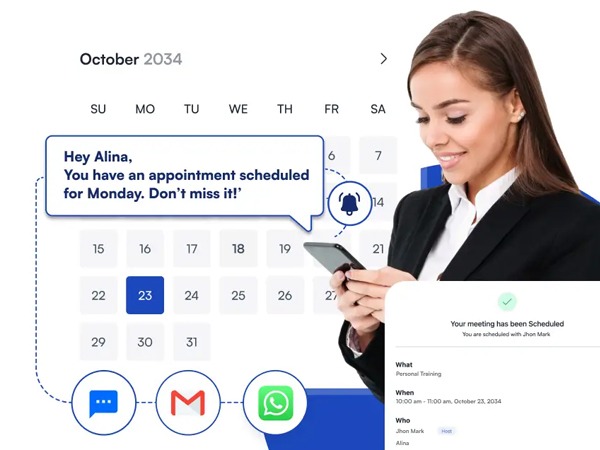
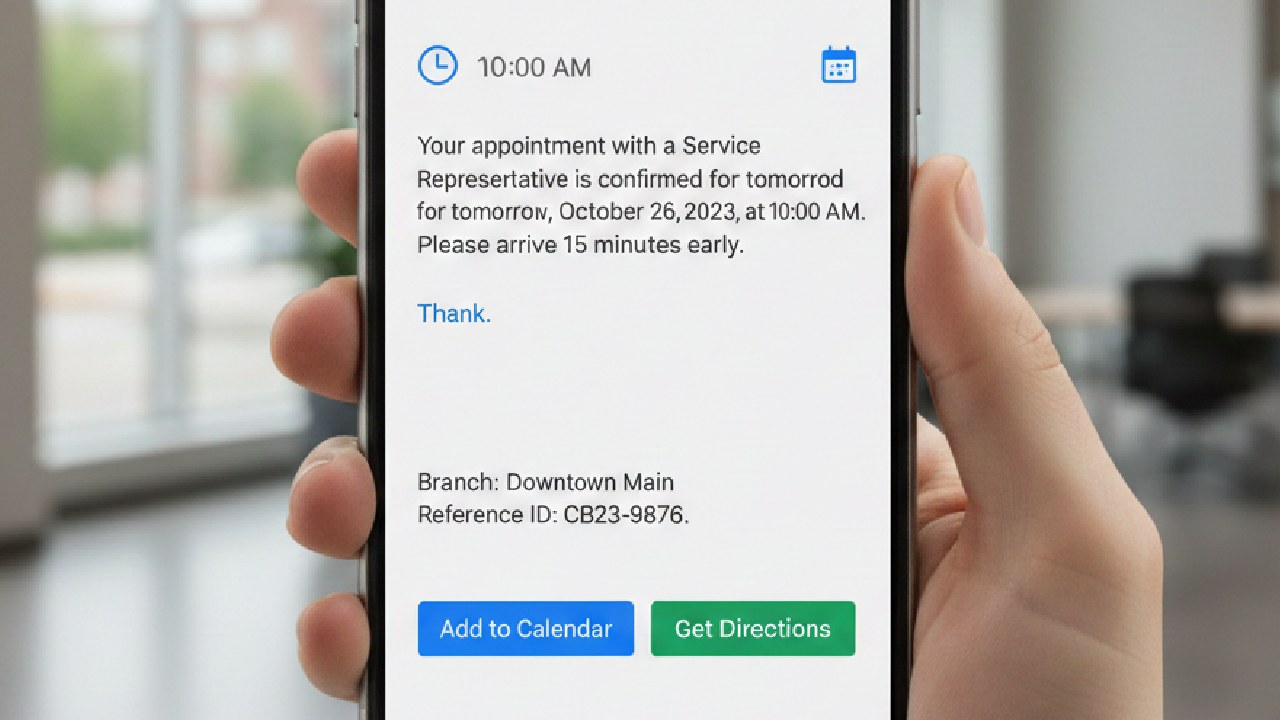
Confirmations are the other strong fit. Whether the business confirms an appointment, a delivery window, or a service visit, a simple “reply YES to confirm” exchange removes friction and gives the customer a convenient way to respond. Follow-up messages can catch changes early, so the business can refill a slot or adjust a route. This is where two way SMS most directly reduces missed appointments and rework.
Feedback Collection and Quick Polls
Short feedback and survey exchanges fit two way SMS because they respect the channel’s limits. A single question with a one-tap answer — rating a delivery, choosing a callback time — can collect real responses without forcing the customer into a long form. The caveat is volume: asking customers to reply to long surveys over SMS will not work, and most customers will simply ignore anything that asks for more than a few taps.
Common Mistakes with Two Way SMS
The same operational gaps appear again and again when businesses launch two way SMS without preparation.
Not Planning for Inbound Volume
The most common mistake is building the sending side and forgetting the receiving side. Once customers realize they can reply, inbound volume grows, and an unattended inbox becomes a reputational problem. Teams should decide response ownership, expected reply volume, and escalation rules before launch, not after the first complaint.
Treating Automation as a Chatbot
Two way SMS automation is not a chatbot. Customers expect short, useful replies, not conversational AI personas. Automating structured keywords and confirmations works; pretending the business has a full conversational agent tends to frustrate customers and creates false expectations. The honest setup is explicit about what is automated and what requires a person.
Ignoring Consent and Opt-Out Handling
Two way SMS runs on the same consent rules as any commercial messaging. Customers must have agreed to receive messages, and every conversation must honor opt-out requests immediately. An automated system should process “STOP” replies in real time and update the opt-out status everywhere, including future campaigns. Consent and opt-out handling are operational requirements, not legal add-ons.
How to Start with Two Way SMS
Starting small is the reliable path. Pick one scenario — confirmations, support questions, or feedback — and run it cleanly before expanding.
Choose One Scenario and Measure It
A single scenario with a clear metric, such as confirmation rate or replies resolved within a time target, tells you more than a broad launch. Define what a successful reply looks like, track it over a few weeks, and use that baseline to decide whether the next scenario deserves the same treatment. The metric should be tied to the business outcome, not to message volume.
Plan the Response Workflow First
Before sending the first message, decide who sees each reply and how fast they must act. Map the reply types to automation, support queues, and manual handling, and test the routing with real messages. Most two way SMS programs fail not on the sending side but on the receiving side, so the workflow plan is the part to get right first.
Work with a Platform That Supports Inbound Messaging
Two way SMS requires a platform with inbound message delivery, webhook or API access, and reliable reply routing. A sending-only provider is not enough. When evaluating options, check how inbound messages are delivered, whether the platform handles reply routing across regions, and whether opt-out handling is built in. For broader context on how SMS campaigns fit together, the SMS Marketing Use Cases Beyond Promotions article covers related messaging scenarios, and the Appointment Reminder SMS guide shows a single-scenario follow-up flow. Teams ready to evaluate delivery capabilities can review the Notification SMS Service page.
FAQ
References
Twilio. “Two-Way SMS: Getting Started.” https://www.twilio.com/docs/messaging/services/two-way-messaging. Public platform documentation describing two-way messaging mechanics.
Twilio. “What is two-way SMS?” https://www.twilio.com/docs/glossary/what-is-two-way-sms. Public platform documentation explaining reply handling concepts.
Twilio Help Center. “What is a short code and how is it used for two-way SMS?” https://help.twilio.com/articles/223181268-What-is-a-short-code-and-how-is-it-used-for-two-way-SMS-. Public platform documentation covering reply routing basics.
Amazon Web Services. “Two-way SMS messaging (Pinpoint documentation).” https://docs.aws.amazon.com/pinpoint/latest/developerguide/channels-sms-two-way.html. Public platform documentation describing inbound reply handling.