

SMS alerts remain one of the most reliable tools enterprises have for reaching customers and internal teams with time-sensitive information. When a package ships, a server goes down, a password is reset, or a security event triggers — the SMS channel delivers where email gets buried and push notifications go unread. With 7.4 billion smartphone users worldwide and open rates exceeding 98%, text messaging is the closest thing to guaranteed delivery for critical communications.
This article breaks down the four primary categories of SMS alerts enterprises deploy — customer alerts, urgent alerts, account alerts, and service alerts — along with implementation guidance for each.
What Are SMS Alerts and Why They Matter for Enterprise Communication
SMS alerts are text messages sent to notify recipients of specific events, changes, or actions that require their attention. Unlike marketing SMS, which promotes products or services, alert messages are triggered by user actions, system events, or operational needs. Their primary purpose is to inform, not to sell.
The scale of mobile messaging
As of 2025, nearly 7.4 billion registered smartphones worldwide can receive SMS messages [1]. Text messages boast a 98% open rate, with most messages read within three minutes of delivery [2]. For enterprise communicators, this means SMS alerts reach recipients faster and more reliably than any alternative channel.
Why SMS remains irreplaceable
Email open rates average 20-30%, and push notification opt-in rates hover around 60% on iOS. SMS requires no app installation, no internet connection, and no opt-in beyond standard carrier access. It works across every mobile device, regardless of operating system or network. These characteristics make SMS alerts the default choice for scenarios where delivery certainty matters more than rich media or interactivity.
Customer Alerts — Keeping Users Informed Throughout Their Journey
flowchart LR
    A[Customer Action] --> B{Alert Type?}
    B -->|Order| C[Order Confirmation]
    B -->|Shipping| D[Shipping Update]
    B -->|Appointment| E[Reminder]
    B -->|Service| F[Status Update]
    C --> G[SMS Gateway]
    D --> G
    E --> G
    F --> G
    G --> H[Carrier Routing]
    H --> I[Customer Mobile]
    style A fill:#EEF3EC,stroke:#3F5242,color:#132019
    style B fill:#F5F8F3,stroke:#C9D5C5,color:#39433C
    style G fill:#EEF3EC,stroke:#3F5242,color:#132019
    style I fill:#E8F0E6,stroke:#3F5242,color:#132019
Customer alerts encompass the broadest category of SMS notifications: any message triggered by a customer action or transaction that keeps the user informed about the status of their engagement with your business.
Order confirmations and shipping updates
E-commerce businesses rely heavily on SMS for post-purchase communication. When a customer places an order, an SMS confirmation provides immediate reassurance. Shipping updates — from warehouse processing to out-for-delivery status — keep customers informed without requiring them to check a portal. Studies show that 75% of consumers want shipping status updates via text [3]. These messages reduce support inquiries by preempting the most common question: "Where is my order?"
Appointment reminders and service status notifications
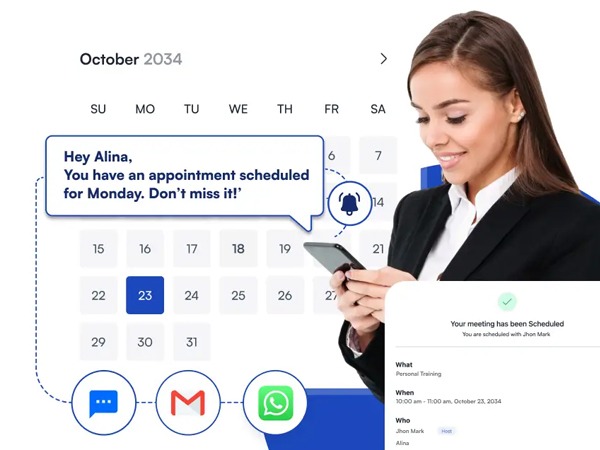
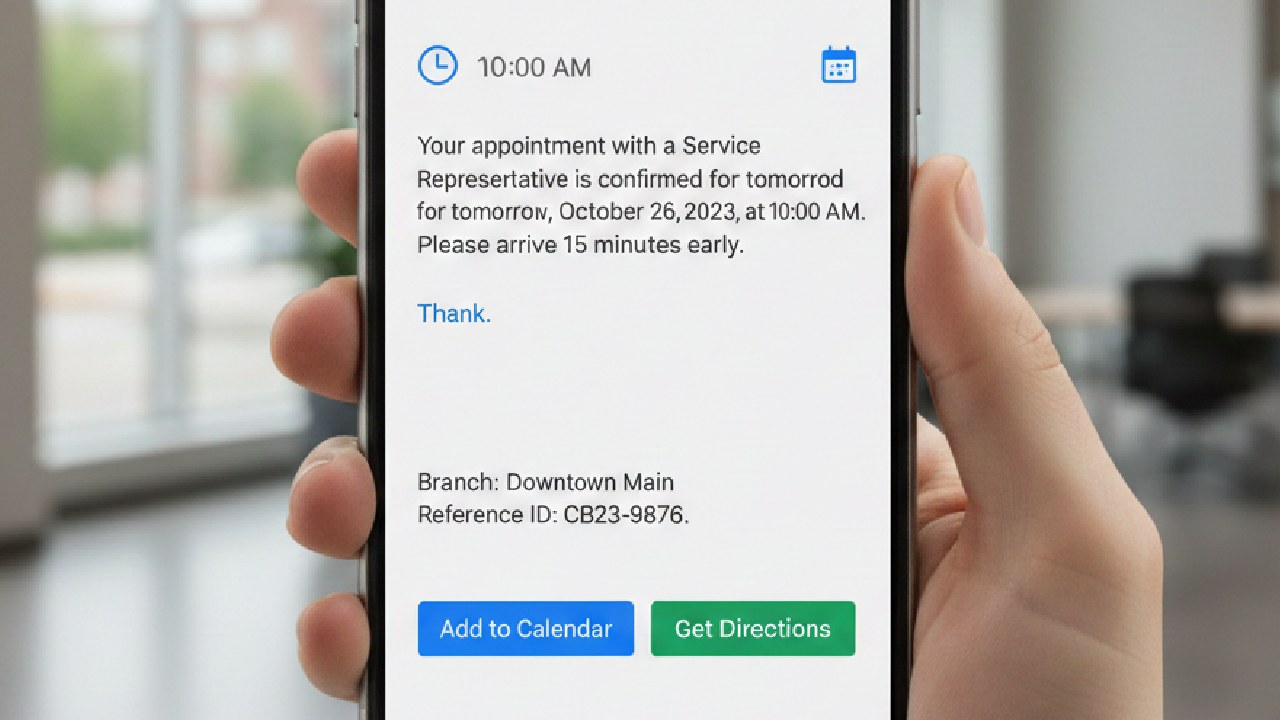
Healthcare, professional services, and field service businesses use SMS to reduce no-show rates. Appointment reminders sent 24-48 hours in advance give recipients time to reschedule if needed. According to industry data, 83% of consumers prefer receiving appointment reminders via SMS rather than email or phone calls [3]. Service status notifications, such as repair completion updates or technician arrival windows, further improve customer experience.
Best practices for high-volume customer alert messaging
Customer alerts are typically high-volume, predictable, and triggered by specific events. Implement an unsubscribe mechanism that respects regulatory requirements like the TCPA in the US or GDPR in Europe. Keep messages concise — under 160 characters when possible — and include clear sender identification. SMS Boosting's Notification SMS services provide smart routing and real-time monitoring to ensure these high-volume messages reach recipients reliably across 200+ countries and territories.
Urgent Alerts — When Every Second Counts
flowchart TD
    A[Incident Detected] --> B{Severity?}
    B -->|Critical| C[Broadcast SMS]
    B -->|High| D[Targeted Alert]
    B -->|Medium| E[Group Notification]
    C --> F{Delivery OK?}
    D --> F
    E --> F
    F -->|Yes| G[Confirmation Logged]
    F -->|No| H[Failover Carrier]
    H --> I{Retry Success?}
    I -->|Yes| G
    I -->|No| J[Escalate: Voice/Email]
    style A fill:#F8E8E8,stroke:#A33,color:#600
    style B fill:#FFF0F0,stroke:#C55,color:#800
    style C fill:#FFD6D6,stroke:#A33,color:#600
    style H fill:#EEF3EC,stroke:#3F5242,color:#132019
    style J fill:#F5F0E0,stroke:#997A00,color:#663300
Urgent alerts are the highest-priority messages an enterprise sends. These are the alerts where delivery delay or failure carries real consequences — safety risks, financial loss, or reputational damage.
Emergency notifications and security breach alerts
When a security incident occurs, internal and external stakeholders need immediate notification. SMS bypasses network-dependent channels — if the breach involves a compromised system, email may be unavailable, but mobile networks continue operating. Enterprise emergency notification systems use SMS as their primary channel precisely because messages are typically read within minutes [4]. Incident response teams use group SMS broadcasts to coordinate containment efforts and notify affected parties simultaneously.
System outage communications for IT operations
IT teams use SMS alerts to communicate system outages, service degradations, and restoration updates. These alerts are often integrated with monitoring tools like PagerDuty, Datadog, or custom NOC workflows, automatically triggering SMS when predefined thresholds are met [5]. An effective outage alert includes the affected system, impact summary, current status, and ETA for resolution.
Designing urgent alert workflows for maximum reliability
Urgent alert systems require redundancy at multiple levels: multiple carrier connections, failover routing, delivery confirmation tracking, and escalation paths if initial delivery fails. Enterprises should work with providers that offer intelligent routing — automatically switching between carriers if initial delivery attempts fail. SMS Boosting's transactional SMS infrastructure includes real-time monitoring and smart routing that automatically optimizes for the highest deliverability on each message.
Account Alerts — Protecting Access and Building Trust
Account alerts are security-critical messages that directly impact user access, authentication, and account integrity. These are often the highest-stakes messages an enterprise sends.
OTP verification and password reset messages
One-time passwords (OTPs) and verification codes remain the most common account alert type. A reliable OTP template includes a 6-8 digit code, a brief expiration window (typically 5-10 minutes), and clear brand identification [6]. Unlike marketing messages, transactional SMS for account alerts generally does not require opt-out language under most regulatory frameworks, though best practice is to keep messages focused on the action needed.
Suspicious activity alerts and login notifications
When a user logs in from an unrecognized device or location, an SMS alert serves as both a security measure and a trust signal. These messages should include specific details — login location, device type, and timestamp — so the recipient can immediately assess whether the activity is legitimate. Failed delivery of account alerts can lock users out of their accounts or delay fraud detection, making delivery reliability a security concern, not just a communication one [6].
Security-first template patterns for account alerts
Account alerts should avoid trigger phrases like "urgent" or "immediate action required," which can activate spam filters without adding clarity [6]. Instead use clear, neutral language: "[Brand] — new login from San Francisco, CA. If this was you, no action needed. If not, reply STOP or visit [URL]." Keep templates under 140 characters to accommodate variable encoding and appended compliance text.
Service Alerts — Operational Transparency for Enterprise Customers
Service alerts are messages that communicate the operational status of services your enterprise customers depend on. These messages build trust through transparency and set expectations around service reliability.
Scheduled maintenance and planned downtime notifications
When planned maintenance affects service availability, proactive SMS notifications demonstrate operational maturity. These messages should include the service name, expected downtime window, impact description, and alternative arrangements where applicable. Advance notice — typically 48-72 hours — gives customers time to adjust their workflows.
Service degradation updates and SLA communication
During unplanned incidents, regular SMS updates reduce support ticket volume by keeping stakeholders informed. A good incident communication cadence includes: initial alert (problem detected), investigation update (scope and impact assessment), resolution update (fix in progress or ETA), and post-incident summary (root cause and preventive measures). MessageDesk research highlights that IT SMS alerts provide real-time updates during system outages with high open rates, making them effective for urgent IT notifications [5].
Proactive vs reactive service messaging strategies
Proactive service alerts — maintenance notices, upgrade announcements, performance improvement reports — strengthen customer relationships by demonstrating operational competence. Reactive alerts — incident notifications, degradation reports — preserve trust by demonstrating transparency during failures. Enterprises should implement both and measure customer satisfaction response to each type.
Choosing the Right SMS Alert Strategy for Your Enterprise
flowchart LR
    A[Use Case] --> B{Needs Immediate Action?}
    B -->|Yes| C{Time-Critical?}
    B -->|No| D[Customer Alert]
    C -->|Yes| E{Life/Security Risk?}
    C -->|No| F[Account Alert]
    E -->|Yes| G[Urgent Alert]
    E -->|No| H[Service Alert]
    D --> I[Standard SLA 99%]
    F --> J[High SLA 99.5%+]
    G --> K[Maximum SLA 99.9%+]
    H --> L[High SLA 99.5%+]
    style A fill:#EEF3EC,stroke:#3F5242,color:#132019
    style B fill:#F5F8F3,stroke:#C9D5C5,color:#39433C
    style C fill:#F5F8F3,stroke:#C9D5C5,color:#39433C
    style E fill:#F5F8F3,stroke:#C9D5C5,color:#39433C
    style G fill:#FFD6D6,stroke:#A33,color:#600
    style K fill:#FFE0E0,stroke:#A33,color:#600
Selecting the appropriate SMS alert type and infrastructure depends on multiple factors including message volume, urgency, delivery reliability requirements, and regulatory environment.
Alert type comparison matrix
| Alert Category | Primary Use Case | Urgency Level | Recommended Delivery SLA | Typical Volume |
|---|---|---|---|---|
| Customer Alerts | Transaction confirmations, shipping updates, reminders | Low to Medium | Standard (99%) | High, predictable |
| Urgent Alerts | Security incidents, system outages, emergency comms | Critical | Maximum (99.9%+) | Low, sporadic |
| Account Alerts | OTP, password reset, login notifications | High | High (99.5%+) | Medium, per-user |
| Service Alerts | Maintenance notices, degradation updates | Medium to High | High (99.5%+) | Low, periodic |
Implementation decision checklist for enterprise teams
Before implementing or expanding your SMS alert infrastructure, evaluate each use case against these criteria:
- What is the acceptable delivery window for this message type? (seconds, minutes, or hours)
- Does this message require immediate recipient action or is it informational only?
- Is two-way communication (reply handling, confirmation) required?
- What are the compliance requirements in your target markets (opt-in, opt-out, consent records)?
- What delivery reliability SLA does your provider guarantee for this message type?
- Does your provider support intelligent routing with failover to alternative carriers?
- How will you track delivery success and handle failed deliveries (retry logic, escalation)?
- What is your budget per message segment, and does volume pricing apply?
Evaluating SMS providers for reliability and global reach
When selecting an SMS provider for enterprise alert infrastructure, prioritize providers with direct carrier connections in your target markets, intelligent routing that fails over between carriers automatically, real-time delivery tracking with webhook support, and proven reliability for high-volume transactional messaging. SMS Boosting offers enterprise-grade notification SMS with global coverage across 200+ countries, smart routing for optimal deliverability, and real-time monitoring dashboards. Explore our Notification SMS services to see how your enterprise can implement reliable SMS alerts at scale.
FAQ
What is the difference between SMS alerts and SMS marketing?
SMS alerts are triggered by specific events or user actions to inform recipients about status changes, security events, or operational updates. SMS marketing promotes products or services and follows different compliance rules regarding opt-in and opt-out requirements.
How reliable are SMS alerts compared to email or push notifications?
SMS alerts achieve 98% open rates and are typically read within three minutes. Email averages 20-30% open rates, and push notification delivery depends on app installation and notification permissions. SMS works on any mobile device without requiring an internet connection.
What compliance requirements apply to SMS alerts?
Compliance requirements vary by region. In the US, the TCPA governs SMS communications. In Europe, GDPR applies. In many jurisdictions, transactional SMS (account alerts, order confirmations) has different opt-in requirements than promotional SMS. Consult legal counsel for your specific use cases and markets.
Can SMS alerts be used for two-way communication?
Yes, many SMS alert systems support reply handling. Account alert confirmations, customer service updates, and opt-out management are common two-way use cases. Enterprises should evaluate whether two-way SMS aligns with their operational needs, as it requires additional infrastructure.
How should enterprises handle failed SMS alert delivery?
Implement retry logic with carrier failover, configure delivery receipt tracking via webhooks, and establish escalation paths — alternative channels like email or voice fallback for critical alerts — when delivery fails. Regular monitoring of delivery success rates helps identify routing issues before they affect users.
What is the recommended message length for SMS alerts?
Keep SMS alerts under 160 characters for single-segment delivery. Messages longer than 160 characters are split into multiple segments, increasing cost and potentially causing display issues. For account alerts, target 140 characters or fewer to accommodate variable encoding and appended compliance text.
Do SMS alerts require opt-in from recipients?
Transactional SMS alerts — such as account notifications, order confirmations, and service updates — may not require separate opt-in when sent to existing customers in many jurisdictions. However, this varies by region and regulatory framework. Always verify compliance requirements for your specific use case and target markets.
How quickly can an enterprise implement an SMS alert system?
Implementation timelines depend on complexity. Simple notification SMS via a provider API can be operational within days. More complex systems with custom workflows, two-way messaging, and integration with existing monitoring tools may take weeks. A provider with a well-documented API and responsive support significantly reduces implementation time.
References
- Statista - Number of Smartphone Users Worldwide — Data on global smartphone adoption and SMS accessibility
- Textedly - SMS Notifications Guide — SMS notification use cases, open rate statistics, and consumer preference data
- Textedly - SMS Consumer Preferences — Statistics on customer communication channel preferences
- mobile-text-alerts.com - Best SMS Alert Services — SMS open rates and urgency characteristics for enterprise communication
- MessageDesk - IT SMS Alerts Guide — IT SMS alert use cases for system outage communication
- Notilify - Account Alert SMS Templates — OTP template standards, security notification best practices, and delivery considerations