

When a time-sensitive SMS leaves your application and arrives on a user's phone, the path it travels is far more complex than a simple send command. Behind each message sits a carefully engineered pipeline: a system that decides when to send it, how to prioritize it alongside thousands of others, which carrier route will carry it, and what to do if something goes wrong along the way. Understanding how an SMS alert system works at the mechanism level matters because the design decisions in each layer directly determine whether critical messages — password resets, fraud alerts, delivery status updates — arrive within the window that makes them useful. This article breaks down the six core mechanisms that define a modern SMS alert system: how they work, how they interact, and what to look for when evaluating one.
What Makes an SMS Alert System Tick? A Look Under the Hood
An SMS alert system is not a single piece of software. It is a chain of coordinated subsystems, each responsible for one stage of the message lifecycle. From the moment a trigger condition is met to the moment a delivery receipt (DLR) confirms arrival, the message passes through ingestion, classification, routing, carrier handoff, and post-delivery verification. A failure or bottleneck at any stage can delay the entire alert.
Most businesses interact only with the top layer — a dashboard or API that accepts message content and a destination number. What happens underneath matters because it determines delivery speed, reliability at scale, and the system's ability to recover from partial failures. For enterprise teams sending alerts that affect revenue, security, or customer trust, the difference between a well-architected system and one that just "works most of the time" can be substantial.
Trigger Mechanisms — How an SMS Alert Knows When to Fire
flowchart LR
    subgraph Triggers[SMS Alert Trigger Mechanisms]
        T1[Event-Driven]
        T2[API-Triggered]
        T3[Scheduled]
        T4[Manual]
    end
    subgraph Attributes[Key Attributes]
        A1[Real-time Reaction]
        A2[Programmatic Access]
        A3[Time-based Dispatch]
        A4[Human Authorization]
    end
    T1 --> A1
    T2 --> A2
    T3 --> A3
    T4 --> A4
    A1 --> P[Alert Pipeline]
    A2 --> P
    A3 --> P
    A4 --> P
    style Triggers fill:#EEF3EC,color:#132019
    style Attributes fill:#F5F8F3,color:#132019
    style P fill:#5D765F,color:#fff
The first decision an SMS alert system makes is whether to send a message at all. This decision is governed by trigger mechanisms — the conditions under which an alert is generated and dispatched. Most systems support four trigger archetypes, each suited to different use cases and latency requirements.
Event-Driven Triggers
Event-driven triggers react to state changes in a connected system. A payment completes, a user changes their password, a server crosses a CPU threshold — these events fire hooks that instruct the alert system to construct and dispatch a message. This is the most common trigger type for transactional alerts: OTP codes, order confirmations, and fraud notifications all depend on real-time event detection.
The critical design choice here is whether the trigger is synchronous or asynchronous. A synchronous trigger blocks the originating process until the message is accepted by the alert system, which can introduce latency in the calling application. Asynchronous triggers decouple the event from the message dispatch, allowing the source system to continue processing immediately. Most enterprise SMS alert systems prefer asynchronous models for scalability, though synchronous handling may be preferred when delivery confirmation is required before proceeding.
API-Triggered Alerts
API-triggered alerts give external systems direct programmatic access to the alert pipeline. Instead of wiring event hooks, an application calls a REST or SMPP endpoint with the message payload, recipient, and optional parameters like priority or template ID. This approach is common when the source system is not directly integrated with the alert infrastructure but needs to send messages on demand.
API triggers offer the most flexibility but also introduce the most variability in message quality. The system must validate incoming payloads, sanitize content, and enforce rate limits at the entry point. Without proper API governance, a misconfigured integration can flood the pipeline with duplicate or malformed messages.
Scheduled and Recurring Triggers
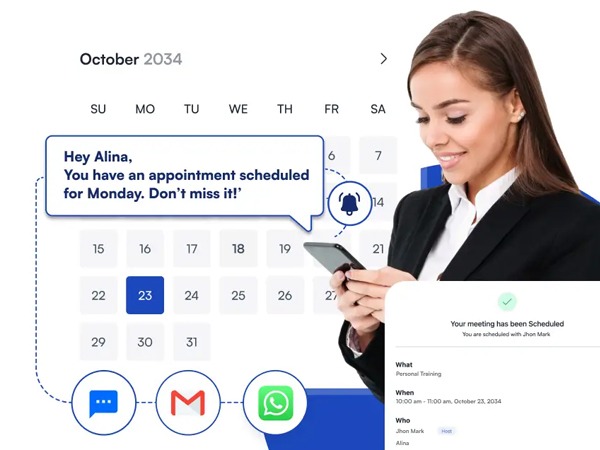
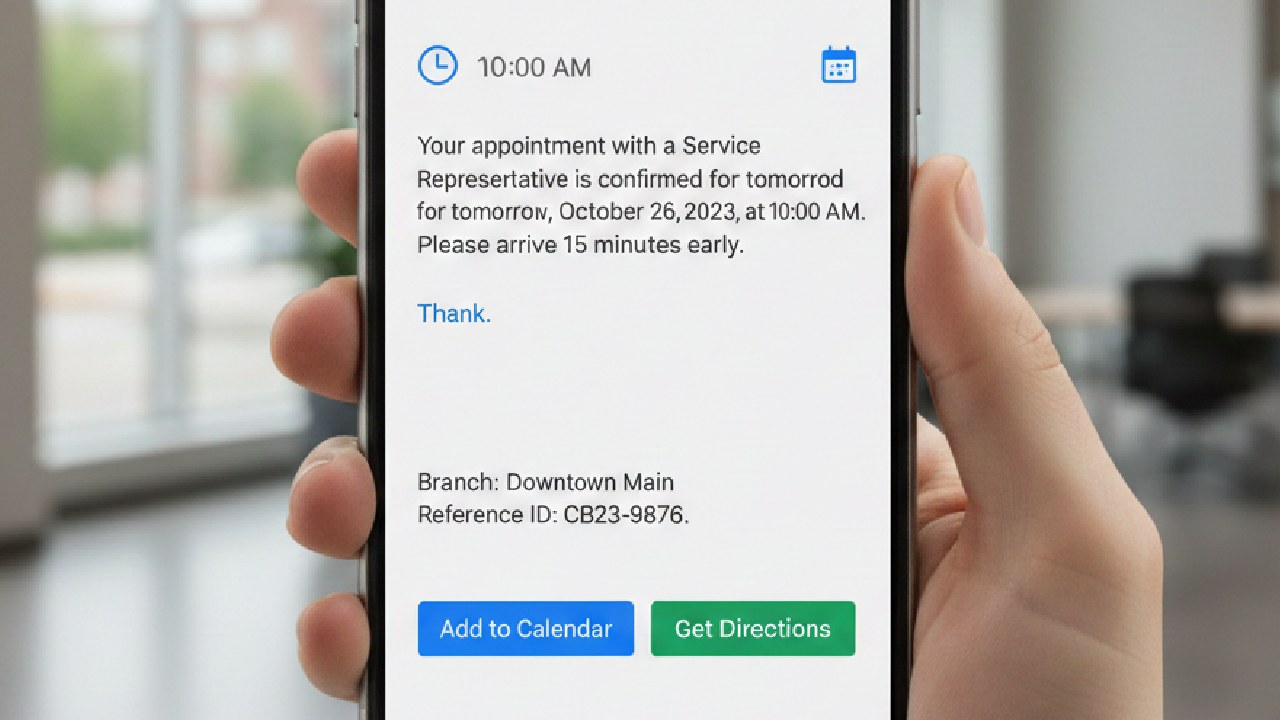
Scheduled triggers dispatch alerts at predetermined times or intervals. These are used for appointment reminders, recurring billing notifications, and periodic status updates. The scheduling engine maintains a timeline of upcoming dispatches and submits them to the pipeline at the appropriate moment.
The main engineering challenge with scheduled triggers is timezone handling and daylight saving transitions. A system that serves users across multiple regions must resolve each recipient's local time and schedule accordingly. Batch scheduling — where messages are prepared in advance and released at specific windows — adds another layer of complexity around queue ordering and deduplication.
Manual Triggers
Manual triggers allow authorized users to initiate broadcasts through a dashboard or command interface. These are typically reserved for emergency alerts, service outage notifications, or time-critical announcements where automated conditions alone are insufficient.
The key differentiator for manual triggers is the approval workflow. A well-designed system requires confirmation steps, audience scoping, and pre-send preview before dispatching. Manual triggers carry higher operational risk because they bypass the automated validation gates that event-driven and API-triggered messages normally pass through.
The Delivery Pipeline — From Queue to Inbox
flowchart LR
    A[Trigger Event] --> B[Ingestion Queue]
    B --> C[Priority Classification]
    C --> D{Route Selection}
    D -->|Primary Route| E[Carrier A]
    D -->|Backup Route| F[Carrier B]
    E --> G[MNO Network]
    F --> G
    G --> H[Recipient Device]
    H --> I[DLR Receipt]
    I --> J[Delivery Confirmed]
    I -->|Failure| K[Retry Logic]
    K --> C
    style A fill:#5D765F,color:#fff
    style B fill:#5D765F,color:#fff
    style D fill:#EEF3EC,color:#132019
    style J fill:#5D765F,color:#fff
    style K fill:#EEF3EC,color:#132019
Once a trigger fires, the message enters the delivery pipeline: a multi-stage processing flow that prepares, prioritizes, routes, and transmits the message to the recipient's mobile network. This pipeline is the core engine of any SMS alert system.
Message Ingestion and Queueing
The first stage of the pipeline is ingestion. All incoming messages — regardless of trigger type — enter a shared ingestion queue before any processing begins. This queue acts as a buffer, absorbing traffic spikes and preventing the downstream stages from being overwhelmed by sudden bursts of messages.
The ingestion layer typically uses a message broker (such as RabbitMQ, Apache Kafka, or AWS SQS) that provides persistence and ordering guarantees. Messages are not discarded if downstream processing fails; they remain in the queue until successfully consumed. This persistence is essential for reliability but introduces a design trade-off: queue depth affects latency, and very deep queues can delay time-sensitive messages behind lower-priority traffic [3].
Priority Classification and Ordering
Not all messages are equally urgent. A password reset code must arrive within seconds; a newsletter announcement can tolerate minutes or hours of delay. After ingestion, the system classifies each message by priority, using either explicit priority flags from the sender or implicit rules based on message type and sender reputation.
Most enterprise systems implement between three and five priority tiers. The scheduler processes higher-priority messages first, pulling from their dedicated queue or priority lane before serving lower-priority traffic. Starvation prevention mechanisms ensure that low-priority messages are eventually served even under sustained high-priority load.
Route Selection Logic
Route selection is the decision layer that determines which carrier path a message takes. An SMS alert system typically maintains connections to multiple mobile network operators (MNOs) and aggregators, each with different characteristics in terms of cost, delivery speed, and reliability.
The routing engine applies a scoring function to available routes based on factors such as historical delivery rate, current latency, cost per message, and any active restrictions or outages. This evaluation happens for each individual message or small batch, allowing the system to adapt dynamically to changing network conditions [2].
Static routing — where the same route is always used for the same destination — is simpler to implement but leaves no room for recovery when that route degrades. Dynamic routing, which evaluates route health in near real-time, provides better reliability at the cost of higher computational overhead.
Carrier Handoff and DLR Processing
Once a route is selected, the message is handed to the carrier network through a protocol such as SMPP (Short Message Peer-to-Peer) or SS7 signaling. The carrier network routes the message to the recipient's home network and ultimately to the user's device.
After transmission, the system waits for a delivery receipt (DLR). The DLR is a status message from the carrier confirming whether the delivery succeeded, failed, or was queued. Receipt processing is asynchronous — the DLR may arrive seconds or minutes after the message was sent, depending on the target network and the recipient's device status.
DLR processing feeds back into the routing engine and the monitoring layer. A sustained pattern of failed DLRs on a particular route can trigger automatic re-routing of future messages, forming a closed-loop control system [1].
Template System — Dynamic Content at Scale
When an SMS alert system sends thousands or millions of messages, constructing each message individually is impractical. Template systems solve this by separating message structure from content, allowing the system to assemble personalized messages at scale from reusable components.
Variable Insertion and Parameterized Messages
A template defines the fixed structure of a message with placeholders for dynamic content. When a message is dispatched, the system replaces these placeholders with actual values: the recipient's name, the dollar amount of a transaction, the time of an appointment.
The variable system must handle type coercion (numbers formatted as currency, dates adjusted to local timezone), missing values (what to display if a variable is absent), and length constraints (SMS messages are limited to 160 characters per segment, and multi-segment messages increase cost). A robust template engine validates these constraints at build time, not at send time, catching errors before they reach production.
Multi-Language Template Management
For businesses operating across multiple markets, the template system must support language variants without duplicating the entire message structure. Each template can have multiple translations, and the system selects the appropriate variant based on the recipient's language preference or locale.
Multi-language support introduces complexity around character encoding. Messages in Chinese, Arabic, or Cyrillic scripts require UCS-2 encoding, which halves the per-segment character limit from 160 to 70. The template system must track encoding requirements per language variant and adjust message segmentation accordingly.
Template Versioning and Compliance
In regulated industries, message content must be approved before sending. Template versioning provides an audit trail: who created the template, what changed in each version, who approved it, and when it went live. Combined with variable rendering, versioning also allows compliance teams to review the exact message content that will be sent, without needing to inspect every possible variable combination.
The trade-off is operational overhead. Strict versioning workflows can delay urgent message deployments, and teams managing hundreds of templates need tooling to track which templates are active, deprecated, or pending approval.
Routing Stability — Keeping Messages Flowing When Carriers Falter
Route stability is the single most important factor in SMS alert reliability. A message that is triggered, queued, prioritized, and templated correctly will still fail to arrive if the carrier route chosen for delivery is congested, misconfigured, or offline.
Intelligent Routing Engines
An intelligent routing engine does not simply alternate between carriers in round-robin fashion. It builds a model of each available route's performance over time, using metrics like DLR success rate, average delivery time, and error code distribution. When a new message arrives, the engine scores each candidate route and selects the one that best matches the message's delivery requirements.
The quality of this scoring depends on the freshness and granularity of the data feeding it. A route that performs well for OTP messages (short, high-priority, immediate delivery) may perform poorly for longer marketing messages due to content filtering at the carrier level. Separating performance data by message type and destination region produces more accurate routing decisions [2].
Multi-Carrier Redundancy and Automatic Failover
No carrier is available 100% of the time. Scheduled maintenance, network congestion, SS7 link failures, and software faults can all interrupt service on any given route. A system connected to only one carrier has no recourse when that carrier's path fails.
Multi-carrier redundancy means the alert system maintains active connections to two or more carriers for each target region. When the primary route fails, the system automatically reroutes to a backup. The failover decision is not binary — it can be triggered by DLR failure, latency exceeding a threshold, or even preemptive switching based on scheduled maintenance windows.
The engineering challenge is balancing failover speed against stability. Switching routes too aggressively on transient failures causes message duplication and increased cost. Switching too slowly leaves messages stuck in the failed route's queue. Most implementations use a combination of immediate failover on hard errors (invalid destination, rejected message) and gradual failover on soft errors (timeout, delayed DLR).
Connection Pool Management and Carrier Throttling
SMS carriers enforce rate limits — a maximum number of messages per second or per minute that the connection will accept. Exceeding these limits causes messages to be rejected or throttled, which can cascade into mass delivery failures for high-volume senders.
Connection pool management maintains multiple parallel SMPP connections to the same carrier, distributing the outbound load across them. When one connection approaches its rate limit, the system shifts traffic to another connection in the pool. This approach requires careful monitoring of individual connection utilization and carrier-side limits, which can change without notice.
Monitoring — Seeing Inside the Pipeline
An SMS alert system without monitoring is operating blind. Problems accumulate silently until a user complaint or a business metric drop reveals that messages have been failing for hours. Effective monitoring requires tracking the right metrics, at the right granularity, with appropriate alerting thresholds.
Delivery Rate Monitoring
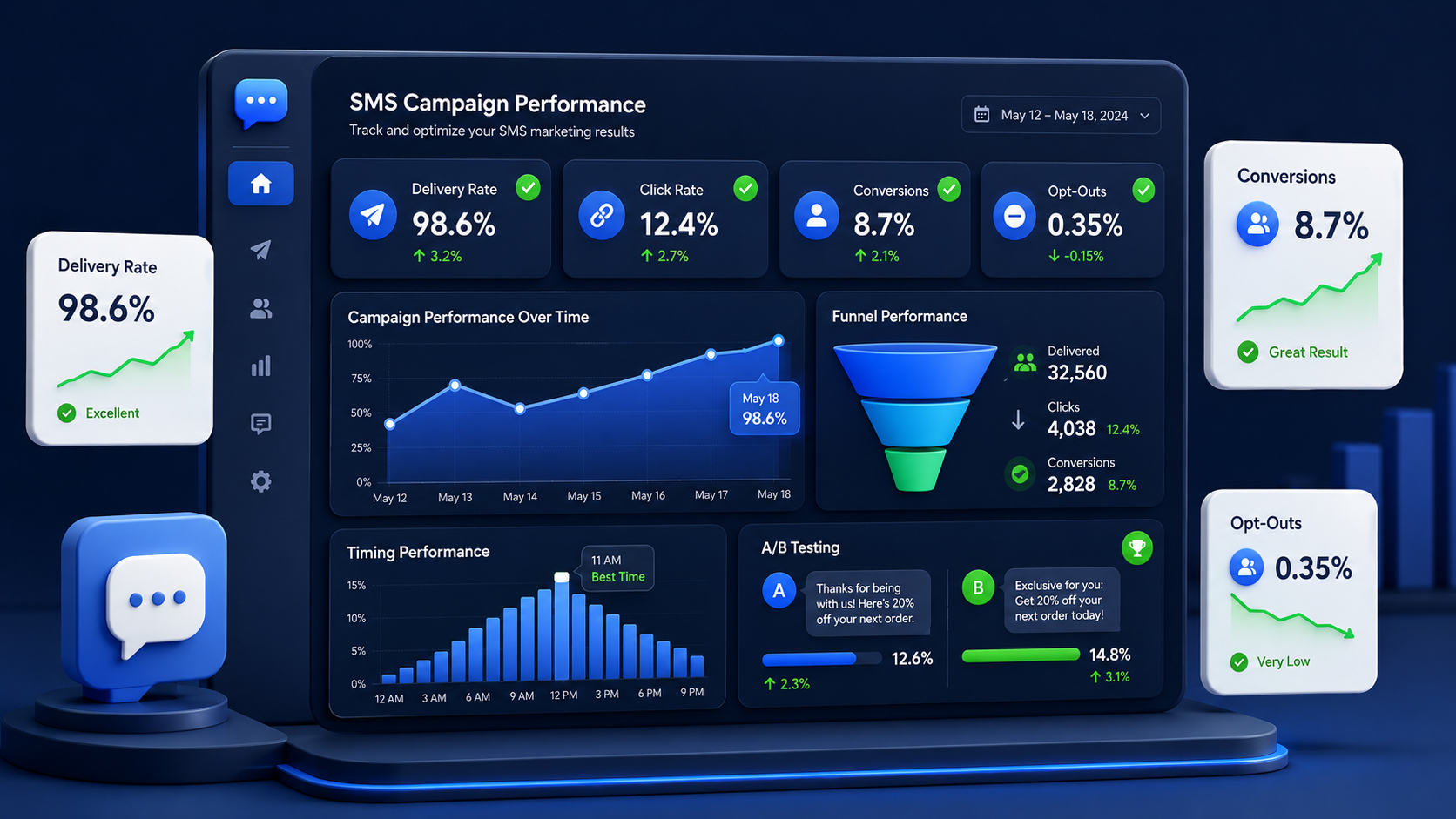
Delivery rate — the percentage of messages that return a successful DLR — is the most commonly tracked metric, but it is also the most easily misinterpreted. A 97% delivery rate looks good until you realize that the 3% failure rate represents thousands of undelivered alerts per day.
The more useful signal is delivery rate segmented by carrier, destination region, message type, and time of day. A system with 99% delivery on domestic traffic and 90% on international traffic has a routing problem that aggregate metrics mask entirely. Segmenting by failure reason (invalid number, network error, content filtered, expired) reveals whether the issue is on the sender side or the carrier side.
Latency Tracking
For time-sensitive alerts, delivery speed matters as much as delivery rate. Latency monitoring tracks the time from message submission to DLR receipt, broken down by the stages in the pipeline: queue wait time, route selection time, carrier processing time, and final delivery time.
Latency distribution is more informative than average latency. A system with a 5-second average but a 90th percentile of 45 seconds has a queue-depth or capacity problem that the average hides. Tracking p50, p90, p99, and p999 latency gives a complete picture of user experience for the slowest deliveries.
Failure Rate Alerting
Alert thresholds must be calibrated to the system's normal failure baseline, not set to an arbitrary number. A carrier that consistently delivers at 98.5% will trigger false alerts if the threshold is 99%, while a system-level problem that drops delivery to 90% goes undetected if the threshold is 85%.
The most effective approach is dynamic thresholding based on rolling windows — comparing current failure rates against the same time window from the previous day or week. This accounts for daily traffic patterns and distinguishes between genuine degradation and normal variation.
Failure Handling — When Messages Don't Go Through
flowchart TD
    F[Message Delivery Failed] --> G{Error Type?}
    G -->|Transient| H[Exponential Backoff Retry]
    H --> I{Retries Exhausted?}
    I -->|No| J[Retry on Same Route]
    J --> F
    I -->|Yes| K[Route Fallback]
    K --> L{Alternative Route?}
    L -->|Yes| M[Resend via Backup Carrier]
    M --> N[Delivery Attempt]
    N --> O{Success?}
    O -->|Yes| P[DLR Confirmed]
    O -->|No| F
    L -->|No| Q[Dead Letter Queue]
    Q --> R[Operator Review]
    G -->|Persistent| K
    style F fill:#EEF3EC,color:#132019
    style G fill:#EEF3EC,color:#132019
    style H fill:#5D765F,color:#fff
    style Q fill:#EEF3EC,color:#132019
    style P fill:#5D765F,color:#fff
Even the best-designed SMS alert system will encounter delivery failures. Carrier outages, invalid numbers, content filtering, and network congestion are part of the operating reality. The difference between a resilient system and a fragile one is how it handles the failures it cannot prevent.
Retry Strategies: Linear vs. Exponential Backoff vs. Immediate
When a message fails, the system must decide whether to retry, how long to wait before retrying, and how many times to attempt before giving up. These decisions are governed by the retry strategy.
Immediate retry — resending as soon as the failure is detected — is suitable for transient errors like a temporarily overloaded SMPP connection. It is not suitable for persistent failures because it multiplies the load on a connection that is already failing.
Exponential backoff — waiting progressively longer between attempts (1 second, then 2, then 4, then 8) — is the standard approach for network-level failures. It reduces pressure on recovering systems while still allowing eventual delivery. Linear backoff (fixed interval between retries) is simpler but less adaptive to changing network conditions [4].
The ideal retry configuration depends on message urgency. Time-sensitive alerts (OTPs, fraud alerts) need a limited number of fast retries before falling back to an alternative route. Non-urgent messages can tolerate longer backoff schedules.
Degradation Plans: Route Switching and Carrier Fallback
Retrying on the same failed route is often pointless — if the route is down, retrying the same operation will produce the same result. Degradation plans define what happens when the primary route fails after exhausting its retries.
The most common degradation is route switching: sending the message through a secondary carrier connection. The secondary route may have different cost, latency, or reliability characteristics, but it keeps the message moving instead of discarding it.
For critical alerts, some implementations use parallel sending — dispatching through two routes simultaneously and accepting whichever DLR arrives first. This maximizes delivery speed at the cost of paying for both deliveries (though one may be canceled if the DLR protocol supports cancellation).
Callback Notifications and the Dead-Letter Queue
When all retries and degradation paths are exhausted, the system must record the failure and notify the sending application. Callback notifications (webhooks POSTed to a configured URL with the failure details) allow the source system to take corrective action: flagging the recipient, updating a database, or alerting an operator.
Messages that cannot be delivered after exhausting all strategies go to the dead-letter queue (DLQ). The DLQ is not a trash bin — it is a storage area for messages that need human or automated review. Periodic DLQ inspection reveals systemic issues: a batch of identical failures often points to a carrier configuration error, a misconfigured template, or a blocked sender ID [5].
Practical Application — How to Evaluate an SMS Alert System
Understanding the mechanisms is useful only if it leads to better decisions. When evaluating an SMS alert system for your use case, the evaluation should focus on the specific mechanisms that matter for your message types, volume, and latency requirements.
Prioritization Framework
Not every mechanism is equally important for every use case. The table below maps business requirements to the mechanisms that matter most:
| If your priority is | Focus on these mechanisms |
|---|---|
| Fast delivery (< 5 seconds) | Priority queueing, intelligent routing, multi-carrier failover |
| High volume (> 1M messages/day) | Ingestion queue capacity, connection pool management, carrier throttling |
| Global reach (multiple countries) | Multi-language templates, regulatory compliance, regional route scoring |
| Cost efficiency | Route selection with cost scoring, batch scheduling, template optimization |
| Regulatory compliance | Template versioning, audit trails, consent management integration |
Scenario-Based Checks
For each of the following scenarios, the alert system should be able to describe how it handles the specific challenge:
- Carrier A goes down at 2 PM. Does the system detect this within seconds or only after the next batch of DLRs arrives? Does it reroute in-flight messages or only new ones?
- A scheduled campaign sends 500,000 messages at once. Does the ingestion queue absorb the burst? Do OTP messages from the same period get delayed behind the campaign messages?
- A template variable fails to render for 5% of recipients. Does the template system catch this at build time or does the message go out with "null" or "{name}" in the text?
- A carrier returns an error code for "spam content." Does the system distinguish this from a network failure? Does it retry through a different route or discard the message type entirely?
Decision Checklist
Before selecting or configuring an SMS alert system for time-sensitive messaging, verify these items:
- Queue architecture: Does the system use separate queues or priority lanes for urgent vs. non-urgent messages?
- Route diversity: How many carriers are connected per region? Is failover automatic or manual?
- Template validation: Are template errors caught before sending or only after failure?
- Retry configurability: Can retry count, interval, and backoff strategy be configured per message type?
- DLR visibility: Can you inspect delivery status at the individual message level with timestamps?
- Degradation paths: What happens to a message when all configured routes fail?
- Alerting setup: Are monitoring thresholds configurable per metric and segment?
If you're evaluating your current setup against these criteria, an architecture review focused on routing, failover, and prioritization can help identify gaps before they cause delivery failures. Teams assessing their SMS routing and delivery infrastructure often start with a pipeline audit to understand where latency and failures actually occur.
Key Takeaways and Next Steps
An SMS alert system is defined by its internal mechanisms — the trigger logic that decides when to send, the pipeline that processes and prioritizes, the routing engine that chooses the path, the template system that constructs the content, the monitoring that tracks results, and the failure handling that recovers from problems.
The most important takeaway is that no single mechanism operates in isolation. A fast pipeline is useless if the routing engine sends every message through a congested carrier. A sophisticated retry strategy cannot fix a message that was templated with incorrect data. The system's overall reliability depends on the weakest link in the chain, not the strongest.
For teams sending time-sensitive alerts, the practical next step is a pipeline assessment: map out each stage of your current setup, identify where latency accumulates and where failures recur, and prioritize improvements based on your specific message types and delivery requirements. Understanding the mechanism structure gives you the language to ask better questions — and that alone improves the odds of getting reliable delivery.
FAQ
Q1: What is the difference between an SMS alert system and a standard SMS gateway?
An SMS alert system is a specialized subset of an SMS gateway, focused on event-driven, time-sensitive message delivery. While a standard SMS gateway handles all types of SMS traffic (including marketing and bulk messaging), an alert system adds priority queueing, multi-carrier failover, and real-time delivery monitoring specifically optimized for transactional and critical messages. The core infrastructure may overlap, but the architectural decisions differ.
Q2: How many carriers should an SMS alert system connect to for reliable delivery?
There is no universal minimum, but most enterprise deployments connect to at least two carriers per region, with a third as a backup for critical routes. The number depends on the delivery reliability requirements of your use case — higher stakes (fraud alerts, emergency notifications) justify more carrier redundancy. A system connected to a single carrier has no recovery path when that carrier's route fails.
Q3: Can a template system handle real-time variables like one-time passwords?
Yes. Template systems designed for transactional messaging support real-time variable insertion, including dynamically generated values like OTPs. The critical requirement is that the variable value is computed and passed at send time, not pre-rendered. The template system should also enforce per-segment character limits after variable substitution, since dynamic content can push a message beyond the 160-character single-segment limit.
Q4: What is the typical latency for an SMS alert through a well-configured pipeline?
End-to-end latency for a well-configured SMS alert system, from trigger to DLR receipt, ranges from under one second to several seconds for domestic traffic. International messages add cross-carrier handoff time and may take longer. Latency increases under high load if queue depth is not managed, and during carrier fallback if the primary route fails and the secondary route is slower.
Q5: What happens to messages that enter the dead-letter queue?
Dead-letter queue messages are not automatically retried — they are stored for inspection. An operator or automated script reviews the messages, diagnoses the failure reason, and decides whether to re-process (e.g., after fixing a carrier configuration error), discard (e.g., for invalid numbers), or forward to an alternative delivery channel. The DLQ should include full message metadata and failure history for each retained message.
Q6: How does routing handle messages to destinations in different countries?
Routing for international destinations adds regulatory complexity. The routing engine must account for country-specific sender ID requirements, content filtering rules, and applicable consent laws. Some countries require local sender IDs or registration with national telecom authorities. The routing engine should maintain separate route configurations per destination country, not treat all international traffic as a single category [6].
Q7: Is SMS still a reliable channel for time-sensitive alerts given the rise of push notifications and chat apps?
SMS remains the most universally reachable channel for time-sensitive alerts because it does not require an internet connection, a specific app installation, or an active data plan. Push notifications fail if the app is background-killed or if the device is offline. Chat apps require both the sender and recipient to use the same platform. SMS works on any mobile phone with cellular signal, which makes it the default fallback for critical communications across banking, healthcare, logistics, and emergency services.
Q8: What is the most common mistake businesses make when setting up an SMS alert system?
The most common mistake is treating all messages as equal priority and routing them through a single carrier connection. Without priority queueing, time-sensitive alerts compete with bulk traffic for pipeline resources, introducing unpredictable latency. Without carrier diversity, a single carrier outage can bring down all alert delivery. These two design choices — priority classification and multi-carrier redundancy — have the largest impact on real-world delivery reliability.
References
- ComCode Tech — SS7 SMSC for A2P Messaging —— 提供了 SMSC 作为存储转发中间件的技术说明,支撑正文中 DLR 处理和回执验证的描述。
- MessageTrade — SMS Routing Best Practices —— 提供了路由类型分类(直连、1-hop、2-hop)和路由质量评估维度的说明,支撑正文中智能路由选择和动态路线评分的内容。
- System Design Handbook — How to Design a Notification System —— 提供了通知系统的队列设计、优先级分类和投递状态追踪架构说明,支撑正文中 ingestion queue 和 priority classification 部分。
- AWS — Amazon SNS Message Delivery Retries —— 提供了退避策略(immediate/backoff)的官方文档说明,支撑正文中线性退避、指数退避和立即重试的分类说明。
- Sharief — Dead Letter Queues & Retry Strategies —— 提供了死信队列(DLQ)在分布式系统中的设计原理和结构化处理路径,支撑正文中 DLQ 审计和重试策略内容。
- Infobip — International SMS Messaging —— 提供了跨运营商国际 SMS 路由和合规要求的说明,支撑正文中国际路由的多国法规适配内容。