

Nearly 70 out of every 100 shoppers who add items to an online cart leave without completing the purchase [1]. That number is not a flaw in your product or pricing — it is a standard feature of ecommerce behavior. What separates brands that recover those sales from those that write them off is often one thing: how they follow up.
SMS has become a preferred recovery channel for ecommerce teams, and for good reason. Text messages get opened within minutes, not hours, and they land in a space where promotional noise is still low compared to email. But the difference between a welcome reminder and an unwanted interruption comes down to a handful of decisions around timing, frequency, message content, and compliance. This article walks through each of those decisions from a practical, execution-oriented perspective — not as a marketing pitch, but as a framework for building a cart recovery SMS flow that converts without burning trust.
Why Cart Abandonment SMS Works for Recovery — and Where Most Brands Miss the Mark
The scale of the problem: cart abandonment by the numbers
Shopping cart abandonment consistently hovers around 70% across ecommerce categories [1]. That figure has remained stable for years, which means the lost revenue is not a seasonal anomaly — it is a structural opportunity. For a store doing $1M in monthly revenue, a 70% abandonment rate represents roughly $2.3M in monthly uncompleted transactions. Even recovering a fraction of that has a direct bottom-line impact.
Why SMS outperforms email in the first recovery window
Email open rates average around 20–25% for marketing messages, and even triggered emails rarely exceed 40–50% [2]. SMS, by contrast, sees open rates above 90% within the first three minutes [2]. For cart recovery, where the user’s purchase intent is still warm, that speed matters. A reminder that lands one hour after abandonment reaches a shopper who may still be browsing other tabs on their phone. A reminder that lands 24 hours later reaches a shopper who has moved on.
The common mistake: treating SMS like another email channel
The most frequent error ecommerce teams make with cart abandonment SMS is treating it as a shorter version of their email sequence. SMS is not email in 160 characters. Users expect SMS to be immediate, personal, and respectful of their attention. An SMS that reads like a condensed marketing newsletter — full of brand language, multiple CTAs, or qualifying conditions — underperforms a direct, human-sounding message by a wide margin [3]. The channel works best when it feels like a helpful nudge from someone you already know, not a broadcast from a brand database.
When to Send: Timing Strategies That Drive Recovery
The golden hour: why the first 60 minutes matter most
The strongest signal of purchase intent is recency. A shopper who abandoned a cart ten minutes ago is far more likely to complete the purchase than one who abandoned it three days ago. For most ecommerce brands, the first SMS reminder sent within one hour of abandonment sees the highest click-through and conversion rates [4]. This window works because the user still remembers what they were buying and why they wanted it — they may simply have been interrupted, distracted, or comparison shopping.
That said, not every abandoned cart benefits from an immediate message. If the shopper has a history of cart abandonment without conversion, or if the cart value is below a threshold that makes SMS cost-effective, a delay of several hours or even a day may produce better per-message ROI.
Behavioral signals over fixed schedules: when to wait and when to act
A fixed “send at 1 hour” rule is a good starting point, but the most effective flows layer behavioral signals on top of the schedule:
- If the user has returned to the site since abandonment but did not complete the purchase, they may be weighing options. A “still thinking about it?” message 24 hours later can feel considerate, not pushy.
- If the user has not returned at all, they may have lost intent. A time-sensitive offer in the first message (e.g., “free shipping on your cart — valid until midnight”) can re-engage higher-intent users.
- If the user has already received a cart recovery email, shift the SMS to a complementary role — shorter, more direct, and focused on the product rather than the offer.
Time-of-day windowing: respecting the 9 AM–8 PM send rule
Industry guidelines and carrier policies in most markets recommend sending commercial SMS only between 9 AM and 8 PM in the recipient’s local time zone [5]. Sending outside this window increases the risk of complaints, opt-outs, and carrier filtering. For cross-border ecommerce brands serving multiple time zones, this means segmenting your SMS schedule by the shipping or billing address time zone, not by your headquarters time zone.

How Many Messages? Finding the Frequency Sweet Spot
The 1-to-3 message range: why less is more
The most commonly recommended frequency for cart abandonment SMS is one to three messages total [4]. A single message works for low-value carts or high-intent segments where a simple reminder is enough. Two to three messages work for mid-to-high-value carts where the user may need more than one touchpoint to return.
Beyond three messages, the law of diminishing returns sets in quickly. Each additional message after the third has a lower conversion rate and a higher opt-out rate. The goal is to recover the sale, not to fill a sequence.
Pacing the sequence: hour-gap vs day-gap approaches
Two common pacing strategies exist, and the right choice depends on the cart value and user segment:
- Hour-gap pacing: Send the first message at 1 hour, the second at 24 hours. This works best for high-intent, moderate-value carts where the user’s intent is still fresh but they may need a second nudge.
- Day-gap pacing: Send the first message at 24 hours, the second at 72 hours. This works better for lower-value carts, users who were comparison shopping, or segments where early messages historically underperformed.
- Three-message pacing: 1 hour → 24 hours → 72–96 hours. Use this only for high-value carts ($100+) where the additional touchpoint is justified by the potential return.
Channel coordination: avoiding SMS-email clash in multi-touch flows
Many ecommerce brands run both SMS and email cart recovery flows simultaneously. Without coordination, a user can receive an email reminder at 1 hour and an SMS reminder at 1.5 hours — which feels less like helpful follow-up and more like platform-driven repetition.
A cleaner approach: let one channel lead and the other support. Start with SMS for the first touchpoint (fast, direct, high open rate) and follow with email for the second (richer content, product images, social proof). Reverse the order if your audience responds better to email as the primary channel. The key is that the two channels should not send the same message at the same time.
What to Say: Message Content That Recovers Without Pushing
The three-part structure: product reminder + value cue + direct link
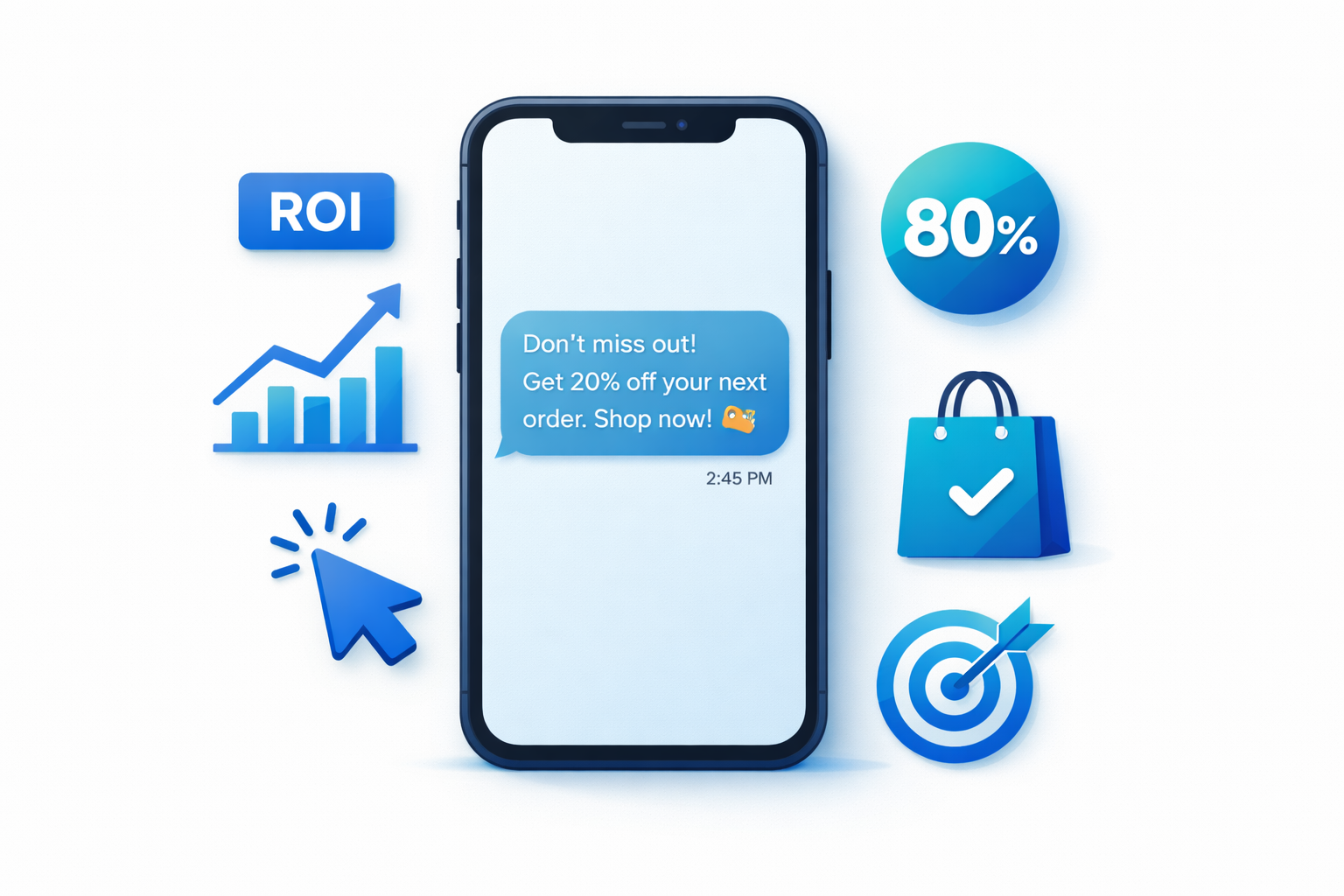
The most effective cart abandonment SMS messages follow a simple three-part structure within the 160-character limit:
- Product reminder: Name the product(s) the user left behind. Use the product name, not a generic “your cart.”
- Value cue: One reason to return — low stock warning, free shipping, or a gentle “we saved your items.”
- Direct link: A single clickable link back to the cart, ideally pre-populated.
Example: “Hey Jen — your Leica leather tote is still waiting. Free shipping ends tonight → [link]. Reply STOP to opt out.”
Notice what is absent: brand taglines, multiple offers, social proof, and qualifying conditions.
When to use offers and when to skip them
Discounts and free shipping can boost cart recovery conversion rates by 10–30% in the short term [4]. But habitual offer use trains users to abandon carts intentionally, waiting for the discount message. For brands with thinner margins or subscription-based models, offers in cart recovery should be reserved for:
- First-time buyers (where the offer serves as a conversion catalyst)
- Cart values above a certain threshold (where the offer cost is justified by the AOV)
- Seasonal or promotional windows where discounts are already planned
For returning customers with medium-to-high cart values, a pure reminder (no offer) often performs well enough without eroding margin.
Personalization within 160 characters: what’s worth including
Not every personalization field fits in an SMS. Prioritize:
- Customer first name (if available and reliable)
- Product name or category
- Cart value (optional, especially for high-value items)
Avoid: full address, last order date, loyalty points balance, or multi-product lists. These consume characters without adding recovery value.
Compliance First: Opt-In, Opt-Out, and Consent Boundaries
Opt-in requirements under TCPA, GDPR, and CTIA guidelines
Sending cart abandonment SMS without proper consent is not just bad practice — it carries real regulatory risk. Key requirements by market:
- US (TCPA / CTIA): Brands must obtain prior express written consent before sending commercial SMS. Consent must be clear, separate from general terms acceptance, and documented. CTIA’s 2024 guidelines also require brands to disclose message frequency, help commands, and opt-out instructions [6].
- EU (GDPR): SMS marketing requires consent that is freely given, specific, informed, and unambiguous. Pre-checked boxes or implied consent through purchase history do not satisfy GDPR requirements [7].
- Other markets: Many countries (Canada, Australia, UAE, Singapore) have their own SMS consent regulations. For cross-border brands, the safest approach is to follow the strictest applicable standard.
The “Reply STOP” rule and what happens when users opt out
Every commercial SMS in the US and most regulated markets must include a clear opt-out instruction — typically “Reply STOP to unsubscribe” [6]. The opt-out process must be immediate and irreversible from the user’s perspective. On the brand side, the unsubscribe must be processed automatically across all SMS flows, not just the cart recovery sequence. A user who opts out of one campaign should not receive messages from another.
Why cart abandonment does not equal SMS consent
A shopper who added items to their cart has expressed purchase intent, but that is not the same as consent to receive SMS marketing. Consent for cart recovery SMS must be obtained through a dedicated opt-in mechanism — typically a checkbox during checkout, a signup form on the product page, or a separate SMS consent flow. Relying on general checkout agreement as SMS consent is a compliance risk in most regulated markets.
Pairing SMS with Email and Other Channels
SMS-first vs email-first: which channel leads the recovery sequence
There is no universal answer to this question, but a practical rule of thumb: if your brand has strong SMS consent rates and a clean, segmented SMS list, lead with SMS for speed. If your SMS list is small or your email engagement rates are unusually high, lead with email and use SMS as the follow-up.
What does not work: sending both channels the same content at the same time. This creates a poor user experience and makes attribution difficult.
Multi-channel orchestration without over-messaging
A coordinated recovery flow might look like this:
- Hour 1: SMS (product reminder + direct link)
- Hour 24: Email (product images + reviews + offer if applicable)
- Day 3: SMS (light follow-up with a time cue — “your cart is still saved”)
This sequence limits SMS to two touches (spaced far apart), gives email the richer content role, and avoids same-channel concentration.
Attribution: how to measure SMS contribution in a multi-channel setup
Measuring the true impact of SMS in a multi-channel recovery flow requires more than total recovered revenue, since the same user may have converted after an email if the SMS had not been sent. Use UTM-tagged links or unique promo codes per channel to isolate SMS-driven conversions. Track opt-out rates by channel and sequence position, not just by total campaign — a spike in opt-outs after message 2 in the SMS flow is a signal worth investigating.
<
A Practical Action Guide for Your Next Cart Recovery Campaign
Scenario planning matrix for different cart values and customer segments
| Segment | Cart Value | SMS Sequence | Offer Strategy | Send Window |
|---|---|---|---|---|
| New visitor | Under $50 | 1 message (24h) | No offer | Local 10 AM–2 PM |
| New visitor | $50+ | 2 messages (1h → 24h) | Free shipping on 2nd message | Local 9 AM–8 PM |
| Returning customer | Under $50 | 1 message (24h) | No offer | Local 10 AM–2 PM |
| Returning customer | $50–$150 | 2 messages (1h → 24h) | Loyalty discount on 2nd | Local 9 AM–8 PM |
| Returning customer | $150+ | 3 messages (1h → 24h → 72h) | Free shipping + urgency cue | Local 9 AM–8 PM |
| VIP/loyalty | Any | 1–2 messages (1h → 48h) | Exclusive/brand-building | Local 9 AM–8 PM |
Pre-launch checklist: 10 items to verify before your first SMS goes out
- [ ] Consent mechanism confirmed — opt-in was obtained separately from general checkout agreement
- [ ] Send time window set to local 9 AM–8 PM for each recipient’s time zone
- [ ] Inventory verified — every product in the cart is still in stock
- [ ] Sequence capped at 3 messages (or fewer, based on cart value)
- [ ] Each message contains Reply STOP instruction
- [ ] SMS and email flows are coordinated (no same-channel, same-time overlap)
- [ ] Links use UTM parameters for channel attribution
- [ ] Offer codes have clear expiration and single-use controls (if applicable)
- [ ] Opt-out is processed across all SMS flows, not just cart recovery
- [ ] SMS throughput and carrier compliance checked for target countries
Soft next step: campaign review or expert consultation
Next steps for your messaging strategy
If your team is building or optimizing a cart recovery SMS flow, a practical next step is a structured review of your current setup — mapping consent flows, send times, sequence design, channel coordination, and compliance posture. For brands evaluating their SMS strategy or looking to improve delivery performance, SMSBoosting offers a Marketing SMS service that supports recovery campaigns, consent management, and multi-country routing. A campaign review can help identify gaps in timing, frequency, and compliance before you scale.
Talk to an SMS Expert
FAQ
What is the best time to send a cart abandonment SMS?
The strongest conversion window is within the first hour after abandonment, when purchase intent is still fresh. For most brands, a message sent 30-60 minutes after abandonment sees higher click-through and conversion rates than messages sent after 24+ hours. However, time-of-day matters: sending outside 9 AM-8 PM local time increases opt-out risk.
How many cart abandonment SMS messages should I send?
One to three messages is the effective range. A single message works for low-value carts or high-intent users. Two messages (1 hour + 24 hours) covers most mid-value scenarios. Three messages (1 hour → 24 hours → 72 hours) is best reserved for high-value carts above $100. Beyond three messages, conversion drops and opt-outs increase.
Should I include a discount in cart abandonment SMS?
Discounts can boost short-term recovery rates by 10-30%, but they also risk training users to wait for offers before purchasing. A balanced approach: reserve discounts for first-time buyers or carts above a certain value threshold, and use plain reminders for returning customers with mid-to-high value carts.
Do I need opt-in consent to send cart abandonment SMS?
Yes. Under TCPA and GDPR, sending commercial SMS requires explicit consent — a separate opt-in mechanism, not a pre-checked box during checkout. Cart abandonment does not equal SMS consent. Brands should also include a Reply STOP instruction in every message and process opt-outs across all SMS flows, not just the recovery sequence.
How do cart abandonment SMS and email work together?
SMS and email should not send the same content at the same time. A common pattern: lead with SMS (fast, direct, high open rate) and follow with email (richer content, product images, reviews). Staggering the channels prevents over-messaging and makes attribution clearer.
What should a cart abandonment SMS say?
Keep it to three elements within 160 characters: the product name(s), one reason to return (low stock, free shipping, or “we saved your cart”), and a direct link back. Include the recipient’s first name if available. Leave out brand taglines, multiple offers, and social proof — those belong in the email follow-up.
Can cart abandonment SMS work for cross-border ecommerce?
Yes, but it requires time zone segmentation for send times, compliance checks for each target market, and carrier delivery confirmation for international numbers. Brands serving multiple countries should work with an SMS provider that supports country-level routing and compliance. SMSBoosting supports global SMS delivery for recovery campaigns across 200+ countries.
References
- Baymard Institute — Provides the average cart abandonment rate of ~70% across ecommerce, supporting the scale-of-problem claim.
- G2 — Supplies the SMS open rate benchmark (>90% within 3 minutes) and comparison with email open rates.
- Sinch — Provides data on SMS performance factors, including the negative impact of marketing-style messaging on engagement.
- Klaviyo — Documents timing frameworks (1-hour, 24-hour, 72-hour intervals) and discount impact on recovery rates.
- CTIA — Defines the 9 AM–8 PM commercial messaging window and opt-out disclosure requirements in their 2024 guidelines.
- CTIA — Details the US opt-in, opt-out, and Help command requirements for A2P SMS.
- European Commission — Provides the legal basis for GDPR consent standards described in the compliance section.