

Most ecommerce brands treat SMS as a flash sale broadcaster. Drop a discount code, wait for conversions, then go quiet. And it works — for that one hour. But the gap between what SMS is used for and what it can do across the customer lifecycle is wide.

This article maps out seven ecommerce SMS marketing campaign use cases that go beyond one-off promotions: repeat purchase triggers, event reminders, membership touchpoints, lifecycle communication, and the segmentation and frequency control strategies that make them work. Along the way, we’ll cover when promotional SMS still has a role and how to keep it from becoming noise.

Beyond the Flash Sale: Why Ecommerce SMS Deserves a Broader Role
SMS has an advantage over email that is easy to overlook: direct access to the subscriber’s most personal device. A text message lands on the same screen where users talk to family, check two-factor codes, and receive appointment reminders. That proximity means SMS commands attention that email inboxes and push notification trays struggle to match.
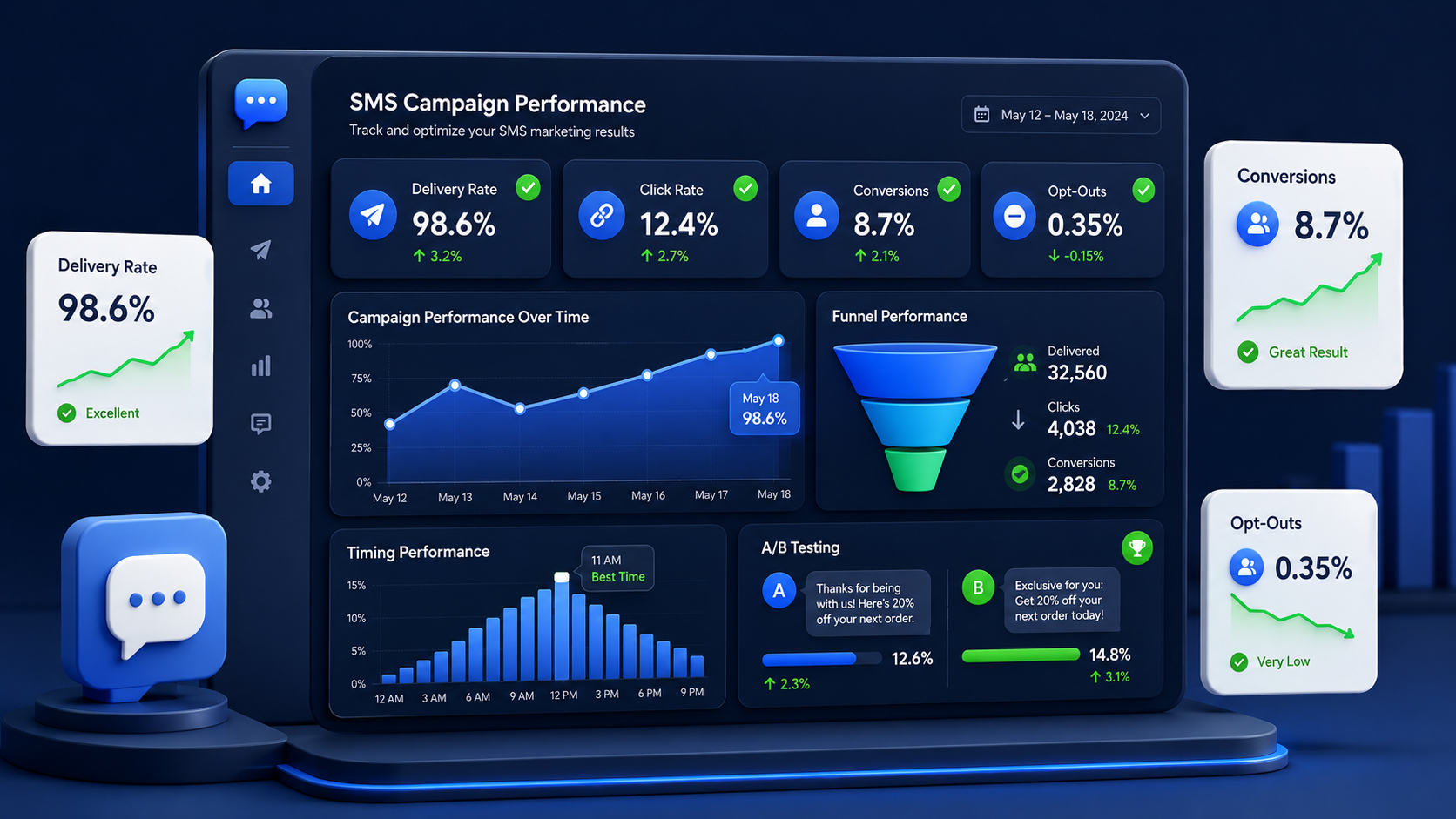
According to Klaviyo’s benchmarks, SMS campaigns drive an average 5.76% click-through rate and $0.11 in revenue per recipient [1]. Those numbers are modest on their own, but they become significant when layered with volume, segmentation, and campaign frequency — especially compared with email’s typical click rates in the 2–3% range.
The broader opportunity lies in expanding SMS beyond the one-time promotion. Recurring purchase triggers, event reminders, milestone messages, and lifecycle touchpoints each tap into a different kind of user intent. They require different content strategies, timing models, and frequency controls than a straight discount blast.
The gap between what SMS is used for and what it can do
A 2025 survey of ecommerce SMS practices shows most brands still send fewer than three campaign types: promotional offers, abandoned cart reminders, and order confirmations [2]. The first is a broadcast play, the second is a triggered automation, the third is transactional. None of them requires customer segmentation beyond “opted in” or “recently purchased.”
The campaigns that drive higher engagement and retention tend to layer behavioral segmentation on top of those basics — sending different messages to first-time buyers, repeat purchasers, lapsed customers, and VIP subscribers. Each segment has a different relationship with the brand and a different tolerance for message frequency.
Article scope: campaign use cases across the customer lifecycle
This article covers five campaign use cases:
- Promotional SMS — when and how to send offers without over-messaging
- Repeat purchase triggers — post-transaction engagement and replenishment
- Event and campaign reminders — online and offline touchpoints
- Membership and lifecycle communication — segment-based automation
- Customer segmentation methods — precision targeting that drives relevance
Each section includes timing guidance, segmentation logic, and frequency considerations. A practical checklist at the end helps you audit your own SMS campaigns against these principles.
Strategic Promotional SMS — When and How to Send Offers Without Over-Messaging
Promotional SMS is not the problem. The problem is treating promotional SMS as the only type of campaign worth running.
Where promotional SMS still wins
Product launches, flash sales, and seasonal events remain strong use cases for SMS. The channel’s immediacy — messages are typically read within three minutes — makes it ideal for time-sensitive offers [3].
Emma O’Rourke, email and SMS marketing manager at CURIO Agency, puts it plainly: “People check their text messages more quickly and frequently than they check their email, so it’s convenient for subscribers to hear about sales and new products directly through text and have the ability to quickly purchase right away” [1].
HOMAGE, an Ohio-based apparel brand, launched an SMS campaign for a line of NFL Starter jackets and generated 100 orders in the first hour. The campaign delivered 87% click-through and $167 in revenue per recipient [1]. Those numbers are exceptional, but they illustrate a principle: promotional SMS works best when the offer is genuinely time-sensitive and the audience has been pre-qualified through opt-in.
The risk of over-sending
The same traits that make SMS powerful — high open rates, immediate delivery, personal device presence — make it dangerous when overused. Sending promotional SMS too frequently drives opt-outs and can trigger carrier filtering, which reduces deliverability for the entire sending pipeline.
Industry practice suggests a weekly cap of 3–4 promotional SMS per subscriber [3]. That limit applies only to promotional content, not transactional or triggered messages. Even within that cap, consecutive sends to the same segment should be separated by at least 72 hours and, ideally, by a different type of content (informational one day, promotional another).
Segmentation-first approach to promotional blasts
The safest way to scale promotional SMS volume without increasing opt-out rates is to segment before you send. Instead of one blast to your entire subscriber list, apply filters:
- Recency: exclude anyone who received a promotional SMS in the past 72 hours
- Recency of purchase: exclude recent buyers from a general offer; target them with personalized upsell or cross-sell instead
- Engagement: exclude subscribers who haven’t opened the last 3 SMS messages — they are candidates for re-engagement or frequency reduction, not another promotion

These filters are simple to implement with any SMS platform that supports dynamic segmentation and reduce opt-out risk significantly.
Repeat Purchase Triggers — Using SMS to Drive Post-Transaction Engagement
Recurring purchases are the backbone of ecommerce profitability. A customer who buys twice is significantly more likely to become a long-term subscriber than one who buys once and never returns. SMS is well suited to trigger and support repeat purchases, provided the messages are tied to specific post-transaction events.
Post-purchase follow-up and cross-sell
The window immediately after a purchase is the highest-engagement period for any ecommerce customer. They have their phone nearby, they are waiting for delivery updates, and they are positively disposed toward the brand.
A well-timed SMS after delivery confirmation can serve a personalized cross-sell:
“Your [product] arrived yesterday. Customers who bought this also picked up [related item]. Here’s a 10% code if you want to try it — valid for the next 48 hours.”
The key variables are timing (24–48 hours after delivery, not immediately after purchase) and relevance (the recommendation must be based on the purchased item, not a generic bestseller).
Replenishment and restock reminders
For consumable products — supplements, skincare, pet food, coffee, contact lenses — SMS can serve as a replenishment reminder. The trigger is a time window based on product consumption rate: for a 30-day supply, the reminder goes out around day 25.
These messages perform well because they are expected and useful rather than promotional:
“Your [product] is running low. Reorder now and get free shipping on orders over $50.”
The message does not require a discount. The value is in the convenience reminder itself. Brands that implement replenishment SMS see repeat purchase rates 15–25% higher than those that rely on email alone for post-purchase communication [4].
Loyalty reward triggers and VIP treatment messages
Loyalty programs generate a steady stream of SMS-ready trigger events: points earned, tier upgrades, reward redemption opportunities, birthdays, and membership anniversaries. Each event is a natural contact point that the subscriber has explicitly opted into.
“You’ve earned enough points for a $20 reward. Redeem it on your next order — here’s your code: [CODE].”
The distinguishing feature of loyalty-triggered SMS is that it communicates value the subscriber has already earned. It is not a cold offer; it is a fulfillment message. That shift in framing reduces the perception of spam and keeps opt-out rates low.
Event and Campaign Reminders — Bridging Online and Offline with Timely SMS
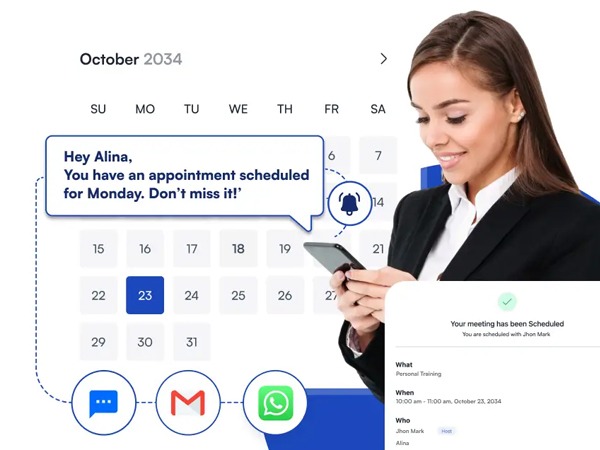
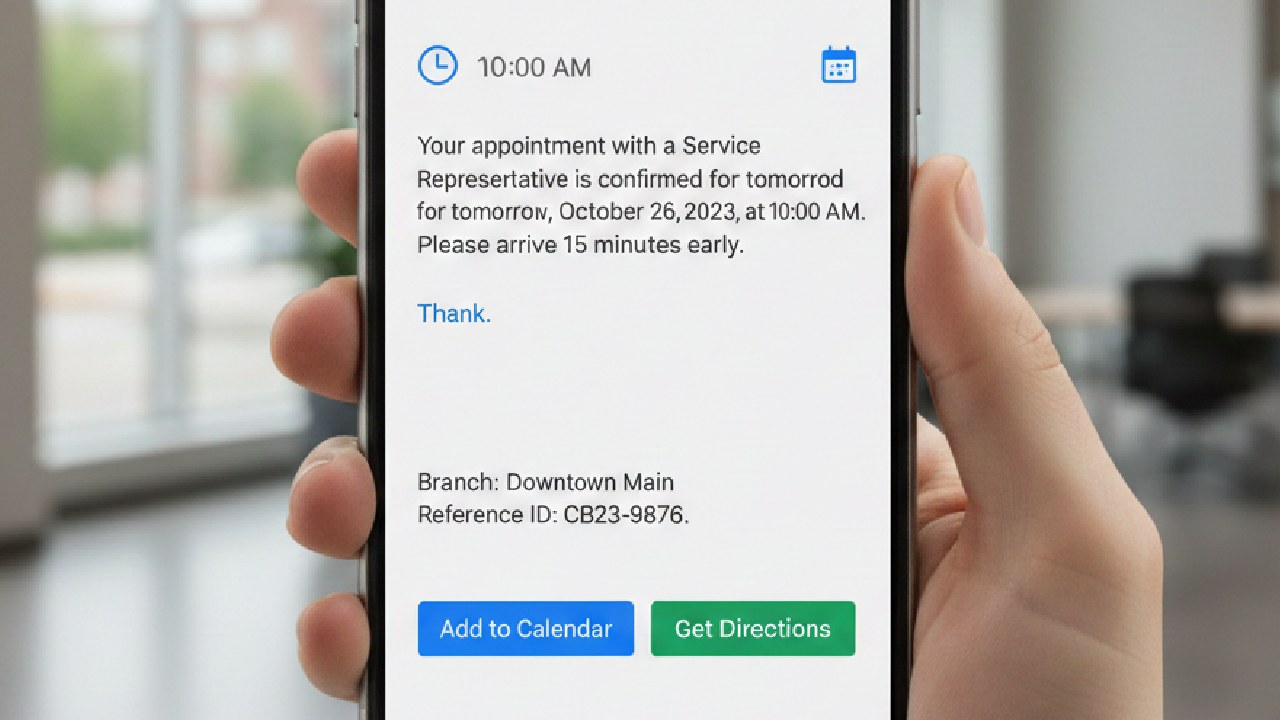
Time-sensitive events — flash sales, webinars, product drops, in-store promotions — rely on last-minute reminders to drive attendance or conversion. SMS is the natural channel for these reminders because it reaches users without requiring them to open an app or check an inbox.
Webinar, flash sale, and limited-time event reminders
A typical reminder sequence includes three messages:
- 48 hours before: save-the-date with a calendar link or “add to cart now” preview
- 2 hours before: the actual reminder with a direct link to participate or purchase
- During the event (if applicable): a live reminder with any scarcity cues (limited stock, doors closing)
Each message should include a single call to action. Multiple links or complex instructions reduce conversion.
Timing windows that maximize conversion
Optimal send times for event reminders vary by audience, but general guidance applies:
- B2C retail: late morning (10:00–11:30 AM) or early evening (6:00–8:00 PM) local time
- B2B / professional services: mid-morning (9:00–11:00 AM) on weekdays
- Flash sales: send the initial announcement 24 hours before, the final reminder 1 hour before
Time-zone segmentation is critical for global audiences. Sending a reminder at 3 PM New York time means delivering it at midnight in Shanghai. Most SMS platforms support per-subscriber time zone detection or allow you to set delivery windows per campaign.
Membership and Lifecycle Communication — Segment-Based SMS at Every Journey Stage
The customer journey includes multiple stages where SMS can play a distinct role. Each stage requires different messaging, different frequency, and different measurement criteria.
Welcome and onboarding sequences
A welcome SMS sequence should accomplish three things within the first week:
- Confirm the opt-in and set expectations for message frequency
- Deliver the promised value (discount, guide, exclusive access)
- Drive the first engagement (visit a page, make a purchase, complete a profile)
The welcome sequence should be short — typically 2–3 messages over 5–7 days — and should not include promotional content beyond the initial offer. The goal is activation, not immediate revenue.
Win-back and re-engagement campaigns
Subscribers who have not engaged with SMS messages for 60–90 days are candidates for a win-back sequence. The sequence should escalate gradually:
- Week 1: a single message with a curiosity hook (“We’ve missed you — here’s what’s new”)
- Week 3: an incentive offer (discount or free shipping)
- Week 5: a final message that makes it easy to opt out (“If you’d rather not hear from us, just reply STOP”)
If the subscriber does not engage after the third message, move them to a reduced-frequency cohort or suppress them from promotional sends entirely.
Customer Segmentation for SMS Campaigns — Targeting Precision That Drives Relevance
Segmentation is the foundation of every campaign type described above. Without it, even the most well-crafted message will underperform because it lands in front of the wrong recipient at the wrong time.
Behavior-based segmentation
The most actionable SMS segments are based on observable customer behavior:
| Segment | Trigger | Example Message |
|---|---|---|
| First-time buyer | Purchase confirmed + 7 days post-delivery | Thank-you + cross-sell recommendation |
| Repeat buyer (3+ orders) | Loyalty tier upgrade threshold crossed | VIP access or early-bird preview |
| Lapsed buyer (90+ days) | No purchase in 90 days | Win-back offer |
| High AOV buyer (>$200) | New product launch in purchased category | Curated preview, no discount needed |
| Cart abandoner | Cart abandoned >1 hour ago | Abandoned cart SMS (single reminder) |
Each segment gets a different message. The message does not need to be complex — a single sentence with a personalized link is often enough — but it must be relevant to the segment’s defined behavior.
Dynamic segmentation for real-time campaigns
Dynamic segments update automatically based on triggered events. A customer who abandons their cart moves into the abandonment segment. A customer who completes that purchase moves into the post-purchase segment. A customer who makes a second purchase moves into the repeat buyer segment.
This automation eliminates the need for manual list management and ensures that each subscriber receives the message appropriate to their most recent behavior. Most SMS marketing platforms support dynamic segmentation natively; setup typically requires integrating purchase and browsing data from the ecommerce platform.
Frequency Control and Cross-Channel Coordination — Keeping SMS Welcome
As campaign types multiply, the risk of cumulative over-messaging grows. A subscriber might receive a promotional SMS on Monday, a replenishment reminder on Wednesday, and a win-back message on Friday — all from the same brand. Even if each message is individually relevant, the aggregate volume can trigger opt-out.
Setting frequency caps and cooldown periods
The most common frequency control mechanisms are:
- Weekly cap: 3–4 promotional SMS per subscriber per week (transactional messages excluded)
- Cooldown period: minimum 72 hours between promotional messages to the same subscriber
- No-contact day: at least one day per week with no SMS sends to any subscriber
- Engagement-based throttling: reduce frequency for subscribers who haven’t opened the last 5 messages
These caps should be configured at the platform level and apply to all campaigns, not managed individually per campaign.
Cross-channel deduplication
A subscriber who sees the same offer in SMS, email, and push within the same 24-hour window experiences message fatigue, not reinforcement. Cross-channel deduplication prevents the same message from being delivered through multiple channels to the same recipient.
The simplest approach is to assign each campaign to a primary channel (email for detailed information, SMS for urgent or time-sensitive content, push for app-based updates) and suppress the other channels for that campaign to that subscriber.
Opt-in/opt-out and re-permissioning best practices
Every SMS message must include a clear opt-out instruction (typically “Reply STOP to unsubscribe”). Compliance with TCPA and GDPR requires that opt-outs are processed immediately and permanently.
For subscribers who have been inactive for 6 months or more, a re-permissioning campaign is recommended: send a single message asking them to confirm their opt-in, and suppress those who do not respond. This keeps the subscriber list healthy and reduces the risk of carrier filtering.
FAQ
Core Takeaways and Next Steps for Your SMS Campaign Strategy
Ecommerce SMS marketing becomes far more valuable when it moves beyond one-time promotions. The same channel that delivers a flash sale alert can also send a replenishment reminder, a loyalty reward notification, a webinar reminder, and a win-back message — each targeted to a specific segment at a specific timing.
The key principles to take away:
- Segment before you send. Behavioral segmentation — first-time buyer, repeat buyer, lapsed buyer, high AOV — determines relevance more than message content alone.
- Control frequency across campaigns. A weekly cap of 3–4 promotional messages, a 72-hour cooldown, and cross-channel deduplication keep SMS welcome.
- Match message type to journey stage. Promotional SMS works for urgency; triggered SMS works for convenience; lifecycle SMS works for relationship building.
- Measure the right metrics. CTR and conversion matter for promotional campaigns. Repeat purchase rate and retention matter for lifecycle campaigns.
Next steps for your messaging strategy
For brands looking to expand their SMS campaign capabilities globally, explore SMSBoosting’s Marketing SMS services for reliable delivery across 200+ countries with intelligent routing and real-time monitoring.
References
- SMS Marketing Examples: 6 Use Cases & 11 Real-World Campaigns — Klaviyo — Provides benchmark CTR (5.76%) and RPR ($0.11) data, plus HOMAGE case study (87% click-through, $167 RPR).
- 15 Best SMS Marketing Use Cases in 2025 — Infobip — Comprehensive guide covering SMS use case categories and campaign strategies for ecommerce brands.
- 10 Essential Text Message Marketing Best Practices for 2025 — CallLoop — Industry best practices for SMS opt-in, frequency control, and compliance (TCPA, GDPR).
- Top 10 SMS Marketing Examples & Case Studies — Mailmodo — Salt Strong case study: 25% reply rate increase, 35% revenue growth, 42x ROI through hyper-segmentation.