SMS marketing in the UK can work well for e-commerce, fintech, healthcare, education, logistics, hospitality, charities, and local services, but the UK is not a “send first, fix later” market. Teams need PECR-aware consent, UK GDPR controls, clean opt-out handling, and delivery routes tested across EE, O2, Vodafone UK, Three UK, and MVNO users.
This guide explains how to choose a UK bulk SMS gateway, what PECR means for text campaigns, how pricing is usually compared, and how to set up an SMS API for +44 mobile numbers.
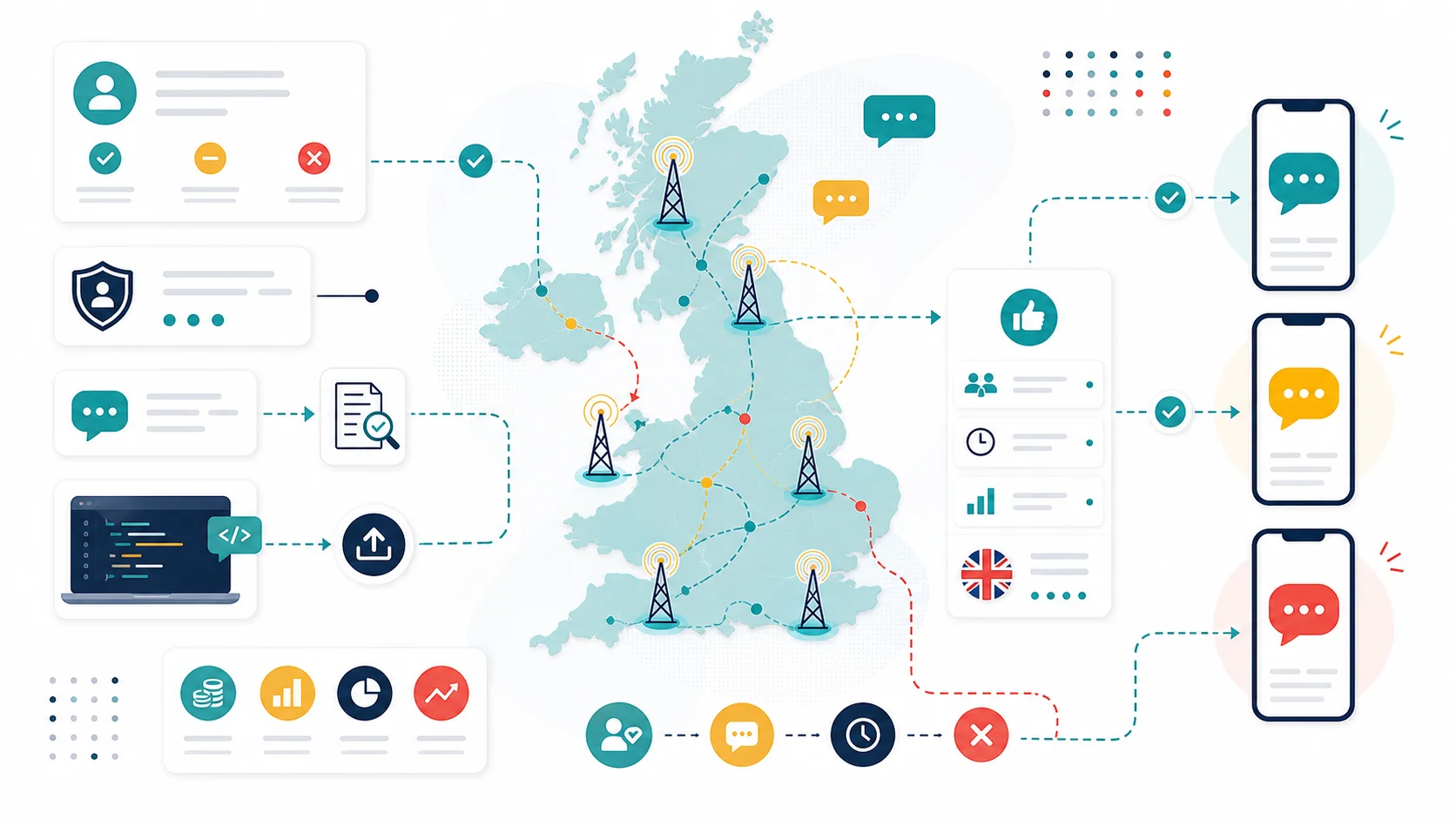
Quick answer: A reliable UK SMS marketing setup needs valid consent or a carefully checked soft opt-in basis, a clear sender identity, easy opt-out, suppression-list handling, route testing across major UK mobile networks, delivery reports, and +44 number formatting. Pricing should be compared by route quality, message type, sender ID behavior, delivery reporting, API limits, support response, and monthly volume.
UK Mobile Market and Regulator Context
UK SMS delivery should be tested across EE, O2, Vodafone UK, and Three UK. MVNO brands such as Tesco Mobile, giffgaff, Sky Mobile, Lebara, and iD Mobile also matter because many UK lists include customers on virtual networks that depend on host-network routing.
The telecom regulator is Ofcom, while direct marketing and personal-data rules are enforced and explained by the Information Commissioner’s Office (ICO). For SMS marketing, the main rule set is PECR (Privacy and Electronic Communications Regulations), alongside the UK GDPR and Data Protection Act 2018 for personal data handling. For rule checks, start with the ICO’s PECR electronic mail marketing guidance.
The ICO’s PECR guidance treats text messages as electronic mail marketing. That means UK SMS marketers should not treat a mobile number as fair game just because it appears in a CRM. The route may deliver, but the campaign still needs a lawful marketing setup.
| UK Route Area | Why It Matters for SMS |
|---|---|
| EE | Major UK network and required for route testing |
| O2 | Major network with many consumer and business users |
| Vodafone UK | Major network and common enterprise test group |
| Three UK | Major network with a distinct customer base |
| MVNO users | Useful for prepaid, youth, budget, and niche audience segments |
PECR and UK GDPR Checks for SMS Marketing
PECR is the first compliance checkpoint for UK SMS marketing. The ICO says businesses must not send marketing emails or texts to individuals without specific consent unless a limited soft opt-in applies. The soft opt-in is mainly for existing customers who bought or negotiated to buy a similar product or service, and who were given a clear opt-out when their details were collected and in every message.
Use this UK campaign checklist before sending:
- Specific Consent: Use a clear opt-in action for UK prospects, such as an unticked checkbox that names SMS marketing.
- Soft Opt-In Review: Use the soft opt-in only for your own existing customers, similar products or services, and messages that include an opt-out.
- Opt-Out in Every SMS: Give recipients a simple way to stop messages, such as a reply keyword or unsubscribe process.
- Suppression List: Keep a do-not-contact list and screen UK campaigns against it before every send.
- Sender Identity: Do not hide who is sending the message, especially for finance, healthcare, charity, and delivery-related content.
UK GDPR still matters because a mobile number is personal data when it identifies a person. Keep records of consent, data source, campaign purpose, retention period, and opt-out status. This guide is not legal advice, so regulated sectors should confirm their PECR and UK GDPR position with counsel before sending.
What SMS Marketing Is Used For in the UK
UK SMS marketing works best when the message has a clear reason to arrive on a phone. Generic blasts to weak lists are more likely to create complaints and weak performance.

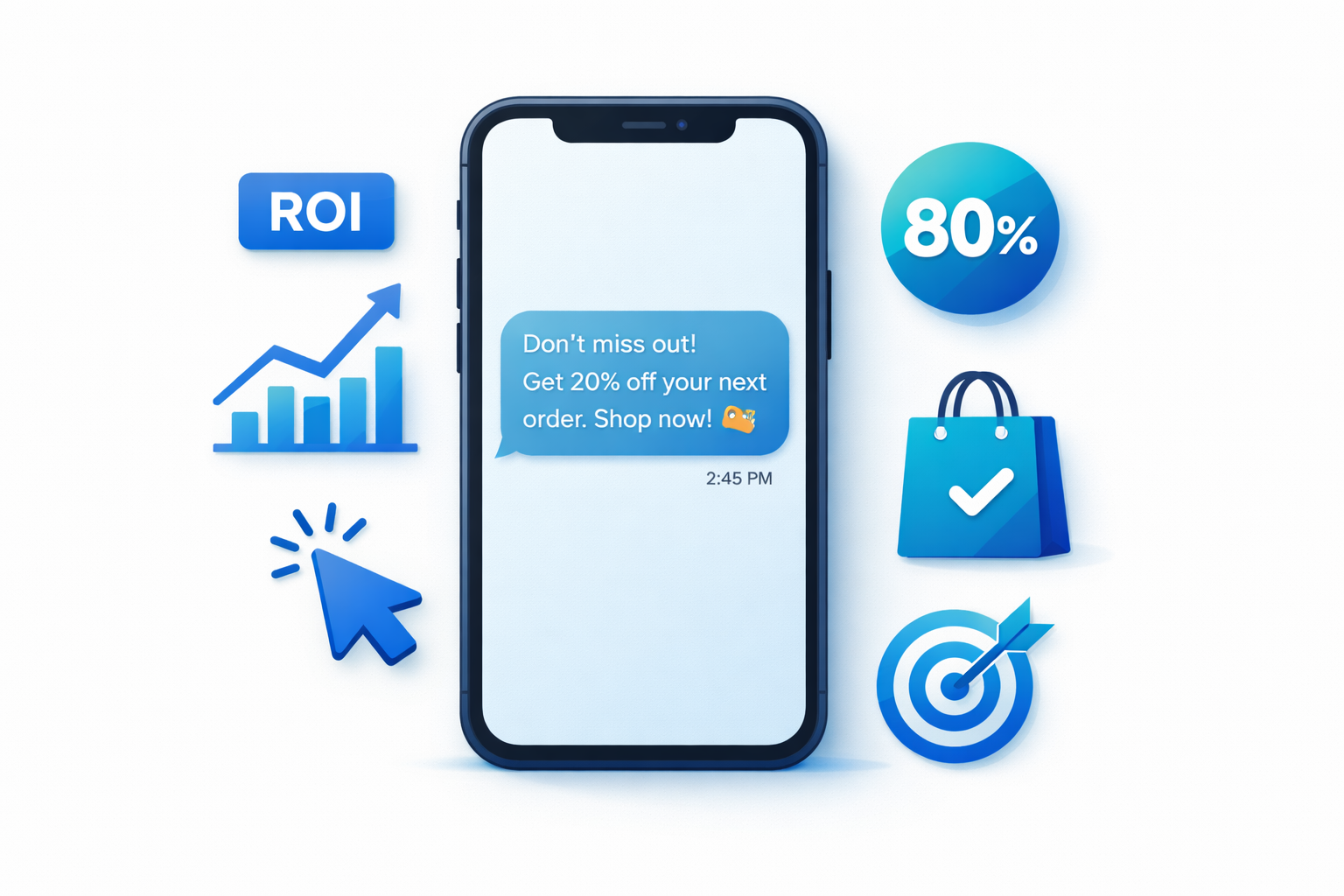
Retail and Ecommerce Campaigns: UK brands use marketing SMS for sale alerts, abandoned cart reminders, back-in-stock notices, loyalty offers, and store events. The safest campaigns use opt-in lists and clear brand language.
Fintech and Account Security: Banks, lenders, payment platforms, and SaaS products use OTP SMS for login, payment approval, password reset, and account alerts. UK OTP traffic should stay separate from promotional traffic.
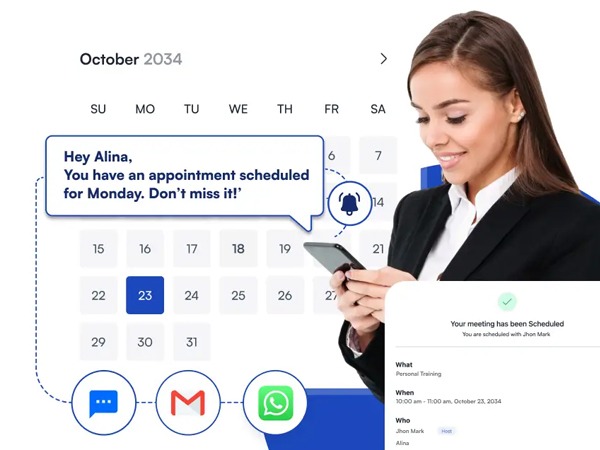
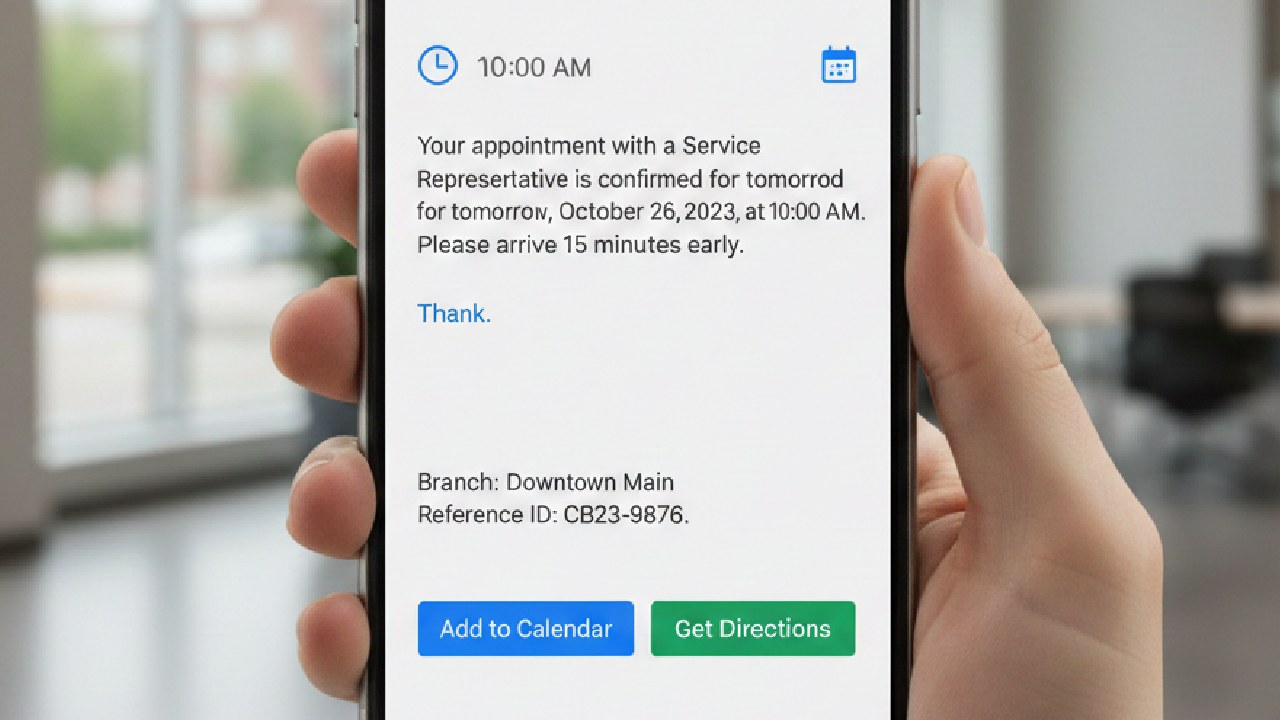
Healthcare and Appointment Reminders: Clinics, dental practices, pharmacies, gyms, salons, and private healthcare providers use SMS notification messages for appointment reminders and service updates. These messages should stay factual unless the recipient has opted in to marketing.
Logistics and Delivery Updates: UK ecommerce and logistics teams use SMS for delivery windows, missed-delivery notices, pickup codes, return updates, and driver coordination.
Do not add a discount line to a UK appointment reminder or OTP code unless the consent basis supports marketing. A mixed-purpose text can create compliance and customer-trust problems.
Sender ID, Opt-Out, and Template Setup
UK sender ID behavior depends on route type, provider setup, and device display. Alphanumeric sender IDs are common in UK business messaging, but teams should still test what recipients actually see.
Alphanumeric Sender ID: A brand-style sender ID can improve recognition, but it should match the business or service name.
Reply-Capable Numbers: Promotional campaigns that use STOP replies may need a long number, short code, or provider-managed inbound setup. Ask whether reply handling works across EE, O2, Vodafone UK, Three UK, and MVNO users.
Template Review: UK copy should identify the sender, explain the offer or notice, avoid misleading urgency, and include opt-out instructions for marketing messages.
Link Handling: Short links can look suspicious in banking, delivery, and healthcare SMS. Use branded links where possible and test click display on iOS and Android devices.
Sending Hours: PECR does not set a simple universal “UK SMS sending window” for all marketing, but common sense does. Avoid very early or late promotional sends, especially for consumer campaigns.
UK SMS Pricing Factors
UK SMS pricing depends on route quality, message type, sender ID setup, inbound reply handling, delivery reports, support speed, and monthly volume.
Route Quality: Higher-quality A2P routes usually cost more than low-grade routes, but they reduce delay and improve delivery reporting. OTP, payment, and healthcare reminders should not be routed like low-risk promotions.
Inbound Replies: STOP handling, keyword replies, two-way messaging, and short-code programs may add setup or monthly costs.
Sender ID: Some providers include alphanumeric sender ID support. Others charge setup or restrict certain sender names.
Message Length: English SMS usually fits GSM-7, but special characters, emojis, and curly quotes can affect message parts. Test character count before large UK campaigns.
Volume and Support: Higher volume can improve rates, but compare quotes only after checking reporting depth, support hours, API limits, and opt-out handling.
Ask providers for a UK quote that separates marketing SMS, OTP SMS, notification traffic, inbound reply costs, sender ID setup, delivery reports, API access, monthly minimums, and support response time.
For broader market planning, see our country-by-country bulk SMS guide to compare the UK with other international SMS destinations.
SMS API Setup for UK Numbers
A UK SMS API should support single sends, batch sends, delivery reports, webhook callbacks, reply handling, and error codes that help teams act quickly. For regulated or security-related messages, reporting quality matters as much as request speed.
Use an SMS API for login codes, delivery alerts, payment reminders, appointment notices, and CRM automation. Use a campaign dashboard when UK marketing teams need segmentation, scheduling, list uploads, and performance reports.
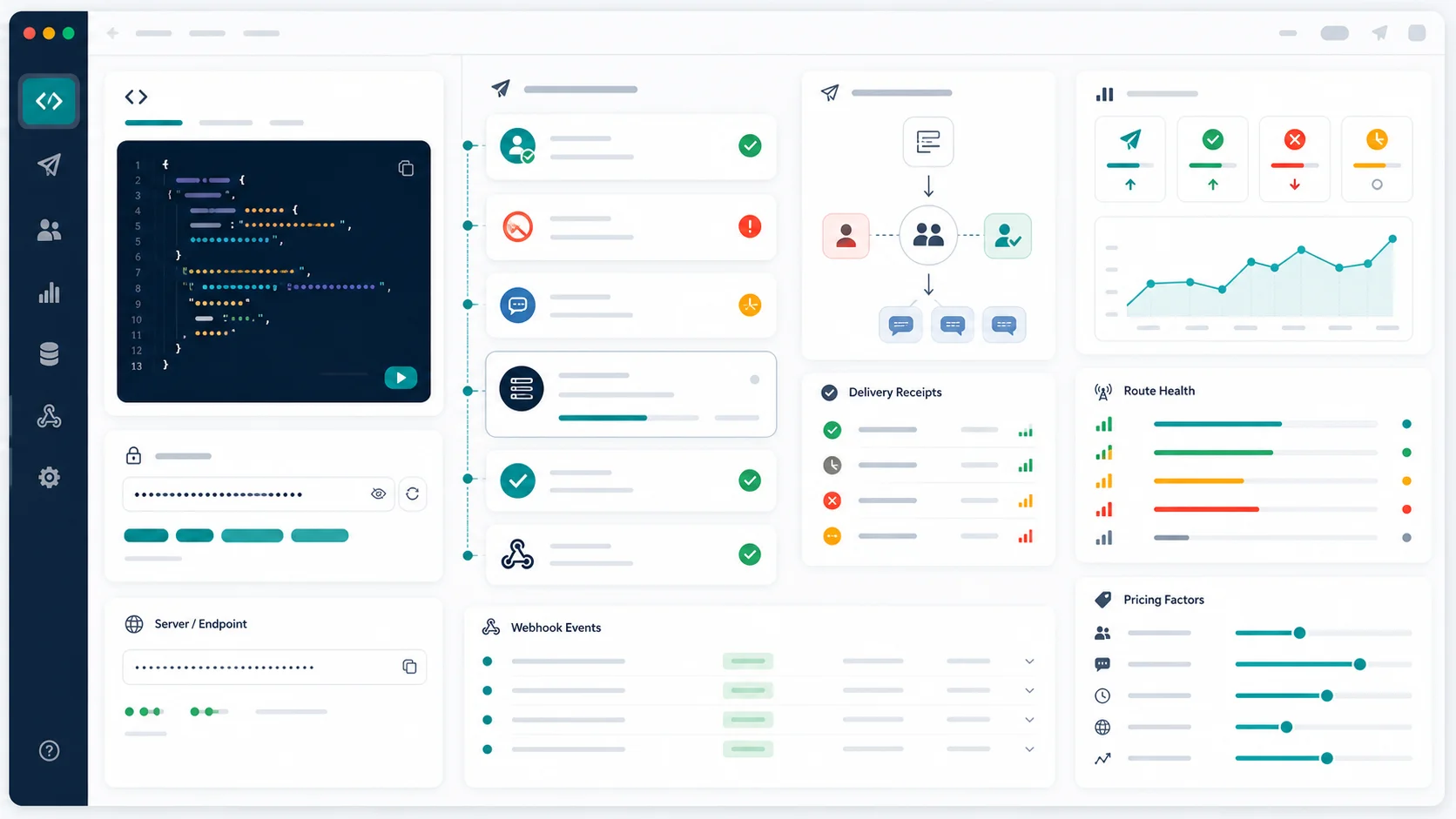
Here is a basic cURL example for a UK destination number. Replace the endpoint, credentials, sender ID, and content with your provider’s values.
curl -X POST “https://api.smsprovider.com/send” \
-H “Content-Type: application/json” \
-d ‘{
“account”: “your_account”,
“password”: “your_password_or_md5_hash”,
“numbers”: “447700900123”,
“content”: “Your verification code is 123456.”,
“sender”: “YOURBRAND”,
“smstype”: 0
}’
Use country code 44 and remove the domestic leading zero. For example, a UK mobile number written as 07700 900123 becomes 447700900123 in numeric international format. Confirm plus-sign handling with the API provider.
Delivery Reports and Common Failures
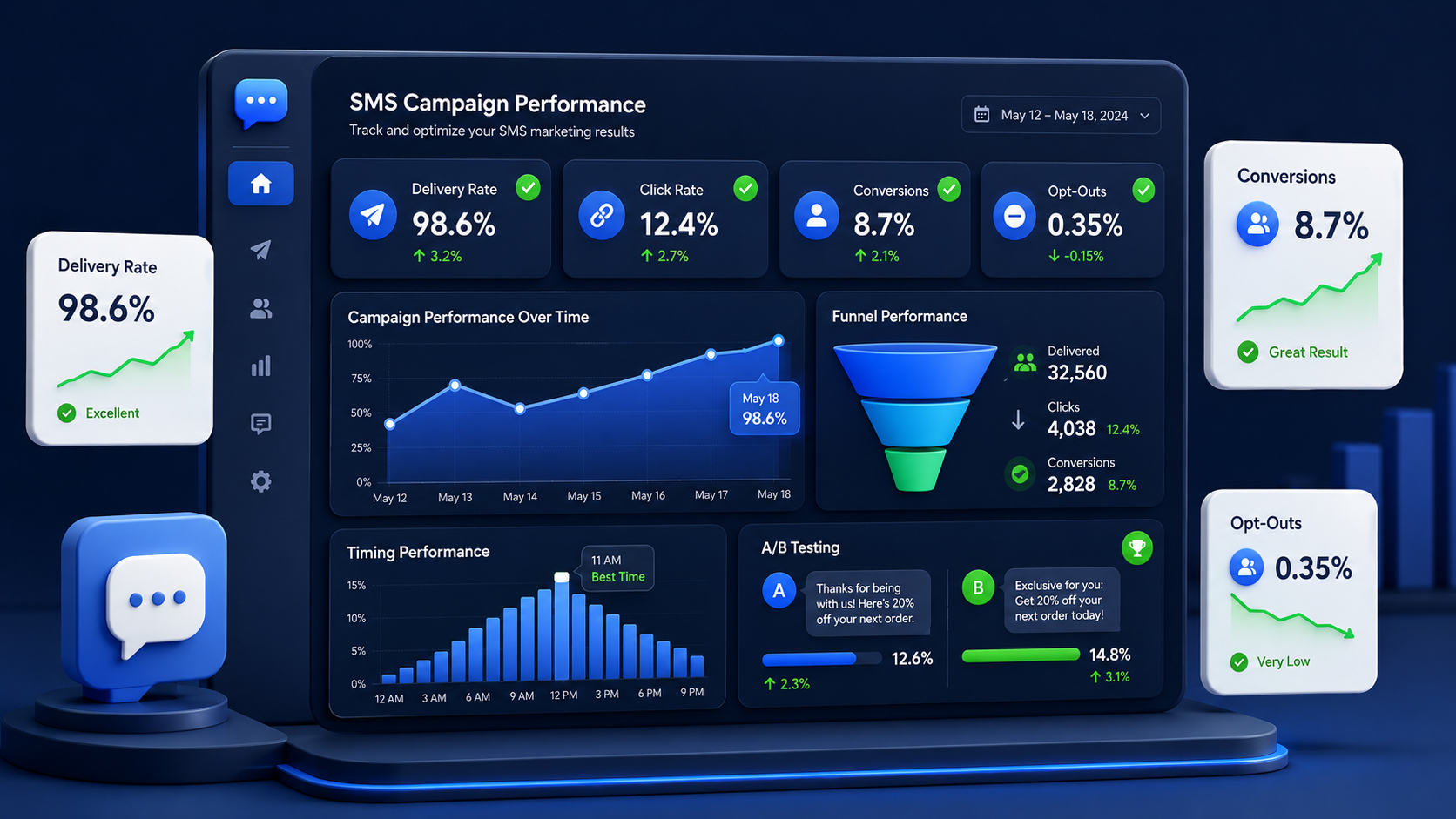
UK delivery quality depends on route class, sender ID behavior, number formatting, opt-out handling, template wording, and operator coverage. A provider should help you distinguish submitted, delivered, expired, invalid, blocked, and opted-out records where available.
Watch for these UK-specific issues:
- Weak Consent Records: UK marketing sent without consent or a valid soft opt-in can create PECR risk even if delivery succeeds.
- Missing Opt-Out: Promotional texts without a clear stop path can increase complaints and suppression-list errors.
- Wrong +44 Formatting: Domestic numbers with a leading zero should be normalized before API submission.
- MVNO Coverage Gaps: A campaign may look fine on major-network test phones but fail among MVNO users.
- Unclear Sender Identity: Numeric or mismatched senders reduce trust in finance, healthcare, delivery, and charity messages.
When UK delivery drops, review delivery failure logs by operator, route, sender ID, template, number format, and suppression status. For UK marketing, also audit the list source and opt-out process.

Conclusion
SMS marketing in the UK needs more than a cheap bulk SMS rate. A strong setup combines PECR-aware consent, UK GDPR records, clear sender identity, practical opt-out handling, +44 number formatting, and route testing across major networks and MVNO users.
Before choosing a UK SMS gateway, review consent records, test delivery, confirm STOP handling, and compare quote details beyond the per-message price. If you are evaluating UK SMS delivery, start with a free trial or request a tailored quote based on campaign type, route needs, and monthly volume.
FAQ
Is SMS marketing legal in the UK?
Yes, but UK SMS marketing must comply with PECR and UK GDPR. Individuals usually need specific consent unless the soft opt-in applies, and every marketing text should offer an opt-out.
What is the PECR soft opt-in for SMS?
The soft opt-in may apply to existing customers who bought or negotiated to buy similar products or services and were offered an opt-out when their details were collected, and in every message.
What UK number format should I use for SMS API sending?
Use country code 44 and remove the domestic leading zero. For example, 07700 900123 becomes 447700900123.
Which UK networks should I test?
Test EE, O2, Vodafone UK, Three UK, and MVNO users. MVNO testing helps reveal delivery issues that a small, major-network test may miss.
How should I compare UK SMS gateway pricing?
Compare route quality, sender ID, inbound reply handling, opt-out support, delivery reports, API limits, monthly minimums, and support response time.