
An International Children’s Day SMS marketing campaign should start with consent, message value, timing, and trust before promotion. For retail and e-commerce CRM teams, the goal is to plan a respectful seasonal SMS campaign that customers recognize, understand, and can respond to without feeling pressured.
This matters because International Children’s Day is not just another retail date to place on a promotional calendar. UNICEF materials describe June 1 as International Children’s Day, while wider UN and UNICEF children’s rights materials frame children-related observances around protection, participation, education, safety, and well-being [1][2]. A brand does not need to turn a campaign into a public-service announcement. But it does need to treat the moment with more care than a standard weekend sale.
A trust-first International Children’s Day SMS marketing campaign earns attention by protecting consent, message value, timing, and customer confidence before asking for a click.
Why an International Children’s Day SMS Marketing Campaign Should Not Start With a Discount Blast
An International Children’s Day SMS marketing campaign should start with trust, not a generic discount blast. The mistake is simple: a brand sees a seasonal date, adds a coupon, sends it to the widest possible SMS list, and calls it relevance.
That is not planning. It is decoration.
The Risk Behind Generic Holiday Mass Texting
Generic holiday mass texting creates two risks at once. First, the message may feel emotionally mismatched. International Children’s Day has a family, child, and community context, so an aggressive “buy now” message can feel careless even if the offer is legitimate.
Second, the message may behave like the kind of text customers are already trained to distrust. The FTC warns consumers not to click links in unexpected messages and not to assume a text is legitimate just because it seems to come from a known company [4]. That does not mean brands should avoid SMS links. It means link clarity, sender recognition, and customer expectation matter.
Where Trust-First Planning Changes the Campaign Brief
Trust-first planning changes the question from “What promotion should we send?” to “What message would an opted-in customer expect, understand, and appreciate in this context?”
That shift affects everything: the audience, the wording, the link, the timing, the reply option, and the metric you review after sending. A discount may still fit. But it should not be the first decision.
What an International Children’s Day SMS Marketing Campaign Should Mean for Retail and E-commerce Brands
For retail and e-commerce brands, an International Children’s Day SMS marketing campaign should mean timely, consent-based customer engagement around a family-relevant moment. It should not be a generic holiday greeting, a broad charity message, or a hard-selling product page.
Definition
An International Children’s Day SMS marketing campaign is a seasonal SMS campaign sent to opted-in customers around June 1 or a locally relevant Children’s Day moment. Its purpose is to create useful, respectful customer engagement through a clear message, safe link or reply path, careful timing, and measurable trust signals.
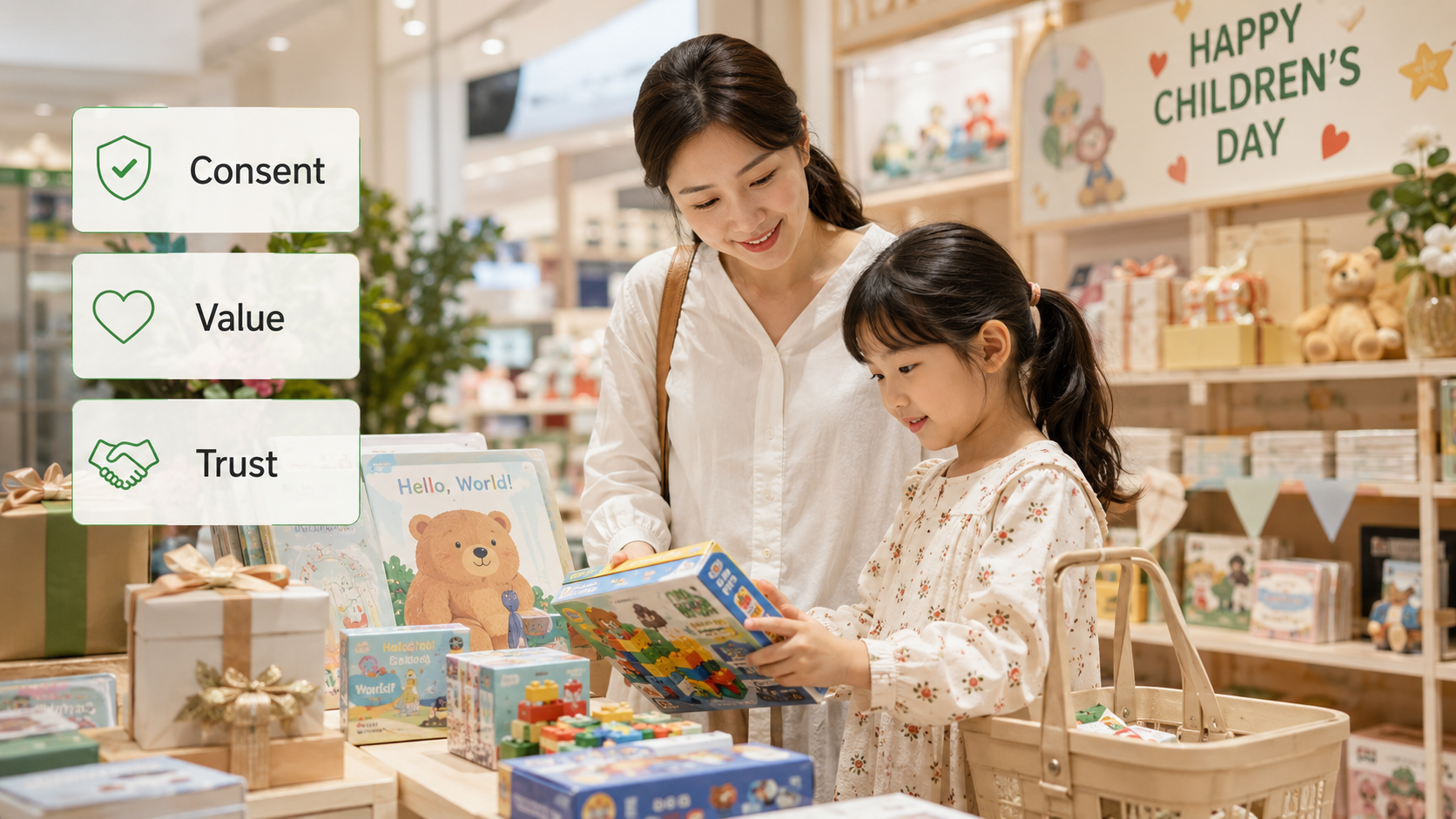
The Definition of a Trust-First Seasonal SMS Campaign
A trust-first seasonal SMS campaign has four basic conditions:
- Consent: the customer has opted in to receive this kind of message.
- Context: the message fits the seasonal moment without exploiting it.
- Clarity: the sender, offer, link, and action are easy to understand.
- Control: the customer can ignore, reply, click, or opt out without friction.
This is why the campaign should be planned as a CRM moment, not just a promotion. The SMS is short, direct, and visible. That makes it powerful. It also makes weak planning more obvious.
The Difference Between Holiday Context and Holiday Exploitation
Holiday context means the message respects why the date matters. Holiday exploitation means the brand borrows emotional meaning to push an unrelated offer.
A toy retailer might send a family event reminder, a children’s apparel brand might offer a parent-friendly bundle, and an education brand might share a useful activity guide. Those examples connect the brand, the audience, and the moment. A random sitewide discount with “Children’s Day” added to the first line does not.
How to Set One Clear Goal Before Writing the International Children’s Day SMS Message
One clear campaign goal should come before copywriting, because the goal decides the audience, offer, timing, and metric. Without a goal, every later decision becomes guesswork.
A good SMS campaign can support one primary goal and 2–3 supporting goals. More than that usually makes the message crowded.
Engagement Goals That Fit a Family-Focused Moment
For International Children’s Day, engagement goals should feel useful and low-pressure. Examples include:
- Invite loyalty members to a family-friendly store event.
- Remind parents about a limited-time children’s product collection.
- Share a useful gift guide or activity page.
- Ask customers to reply with a simple preference keyword.
- Reward existing customers with early access to a relevant offer.
These are still commercial actions. They are not charity claims. The difference is that the customer can see why the message arrived now.
Commercial Goals That Still Need a Trust Boundary
A commercial goal can fit the campaign if the boundary is clear. A retailer may want more clicks, more store visits, more gift-bundle orders, or more loyalty redemptions. That is normal.
The trust boundary is the part many campaigns miss. The offer should not pressure customers through guilt, exaggerate social purpose, imply support for children without a real basis, or send to contacts who did not expect promotional SMS. If the campaign goal needs emotional pressure to work, the goal is probably wrong.
How to Build the Audience Around Consent, Opt-Out Expectations, and List Quality
A consent-friendly SMS campaign should only target customers whose permission, expectation, and list status are clear. For U.S. commercial texting, FCC consumer guidance states that commercial texts require written consent, while informational texts may have different consent expectations [3]. Brands operating across markets should treat this as a planning reminder, not a full legal checklist.
The practical point is simple: do not let a seasonal idea override permission.
For teams that need a broader framework for list-building discipline, see our guide on how to get more SMS subscribers.
Opted-In Customer Segments to Include
Use this consent-safe checklist before building the audience for an International Children’s Day SMS campaign:
- Confirm the customer opted in to receive marketing SMS.
- Match the message type to the consent originally given.
- Check whether the customer has recently engaged with SMS, email, loyalty, or purchase activity.
- Segment by relevance, such as parents, gift buyers, loyalty members, children’s product shoppers, or local event subscribers.
- Include an easy opt-out path where required or expected.
- Review recent opt-out and complaint behavior before sending.
A smaller list with clear permission is often better than a large list that includes people who forgot they ever subscribed.
Audience Groups to Exclude or Handle Carefully
Some audience groups should be excluded or handled with extra care:
- Customers with unclear consent records.
- Inactive numbers with no recent engagement.
- Customers who recently opted out of another marketing channel.
- Broad “all customers” groups with no Children’s Day relevance.
- Sensitive segments where the brand cannot explain why the message is appropriate.
This is not only about compliance. It is about list quality. A campaign that creates short-term clicks but raises opt-outs has weakened the next campaign.
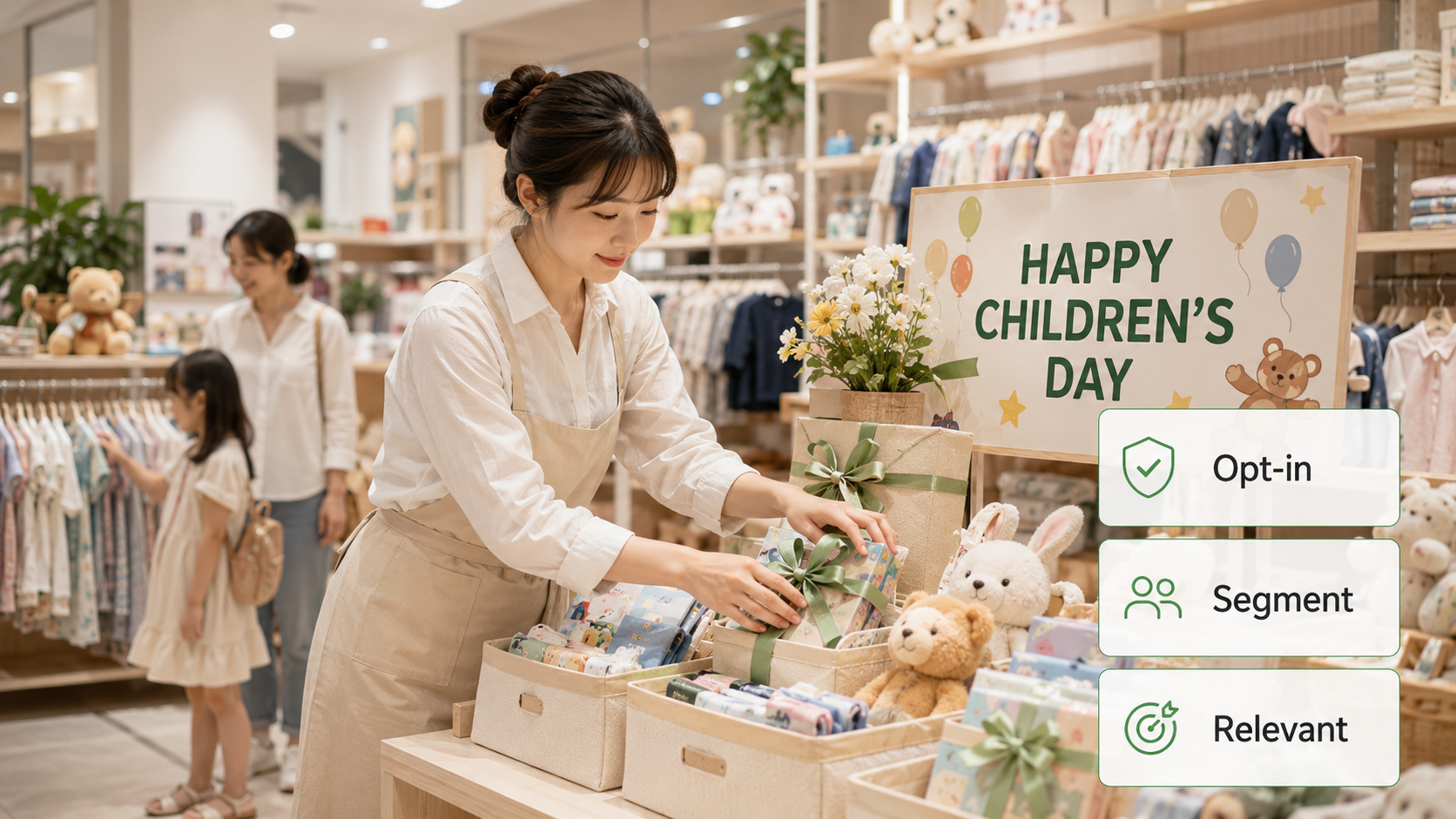
How to Design Message Value Before Choosing the Offer
Message value should come before the offer, because relevance decides whether the SMS feels useful or intrusive. The customer will not judge the message only by the discount. They will judge whether the text belongs on their phone.
Use this message value framework before writing the final copy.
| Value Type | What It Means | Retail / E-commerce Example | Trust Check |
|---|---|---|---|
| Useful | The message helps the customer do something | Gift guide, event reminder, size guide, pickup reminder | Would this help even without a discount? |
| Relevant | The message fits the customer segment | Children’s apparel buyers receive a collection alert | Is the audience specific enough? |
| Respectful | The message avoids pressure or guilt | “Family weekend offer” instead of emotional manipulation | Does the wording feel calm? |
| Measurable | The message has a clear action and metric | Click, reply, redeem, RSVP, visit | Can the team learn from the result? |
Useful Value for Parents, Families, and Gift Buyers
Useful value is specific. A parent may appreciate a reminder about a store event. A gift buyer may appreciate a short list of age-appropriate products. A loyalty member may appreciate early access to a relevant bundle.
The key is to avoid pretending that every customer is in the same situation. Some people buy children’s products for their own children. Some buy gifts. Some may have no direct reason to receive the message. Segmentation protects both relevance and tone.
Respectful Value That Avoids Pressure or Guilt
Respectful value avoids emotional overreach. An International Children’s Day SMS should not make customers feel that buying from the brand is a moral obligation.
Good wording tends to be simple: a useful offer, a clear reason, a direct link or reply option, and no inflated claim. If the brand supports a real initiative, the message can mention it carefully. If not, keep the campaign focused on customer value.
When to Send the SMS Campaign and How Often to Message
SMS timing and frequency should protect attention before they try to increase clicks. A well-timed message can feel helpful. A poorly timed one can feel invasive, even if the offer is relevant.
Avoid fake precision. The right time depends on the market, customer behavior, store hours, shipping deadlines, and the campaign goal. Still, a planning table helps.
| Campaign Situation | Better Timing Logic | Frequency Boundary |
|---|---|---|
| Online gift guide | Send before customers need to decide | 1 main message + optional reminder only if behavior supports it |
| Local store event | Send close enough to be useful | 1 reminder before the event, not repeated daily |
| Loyalty reward | Send when customers can act | 1 message, then suppress recent redeemers |
| Family weekend offer | Send before the weekend window | Avoid stacking with unrelated promos |
| Post-purchase engagement | Send after order or pickup context | Do not mix with a new hard-sell offer too quickly |
Timing Windows That Reduce Interruption Risk
Timing is part of customer respect. A campaign for a family-focused occasion should avoid hours that feel disruptive or careless. It should also account for market differences, especially for cross-border retail brands.
For example, a local store event reminder may work better during daytime planning hours. A last-minute flash offer late at night may look urgent, but it can also look spammy.
Frequency Limits That Protect Customer Trust
Frequency is where many seasonal campaigns lose discipline. The team creates one campaign, then adds a reminder, then adds a final reminder, then adds a “last chance” message. At that point, the customer no longer sees a thoughtful seasonal campaign. They see pressure.
A simple rule helps: send the fewest messages needed to support the goal. If the second message does not add new value, do not send it.
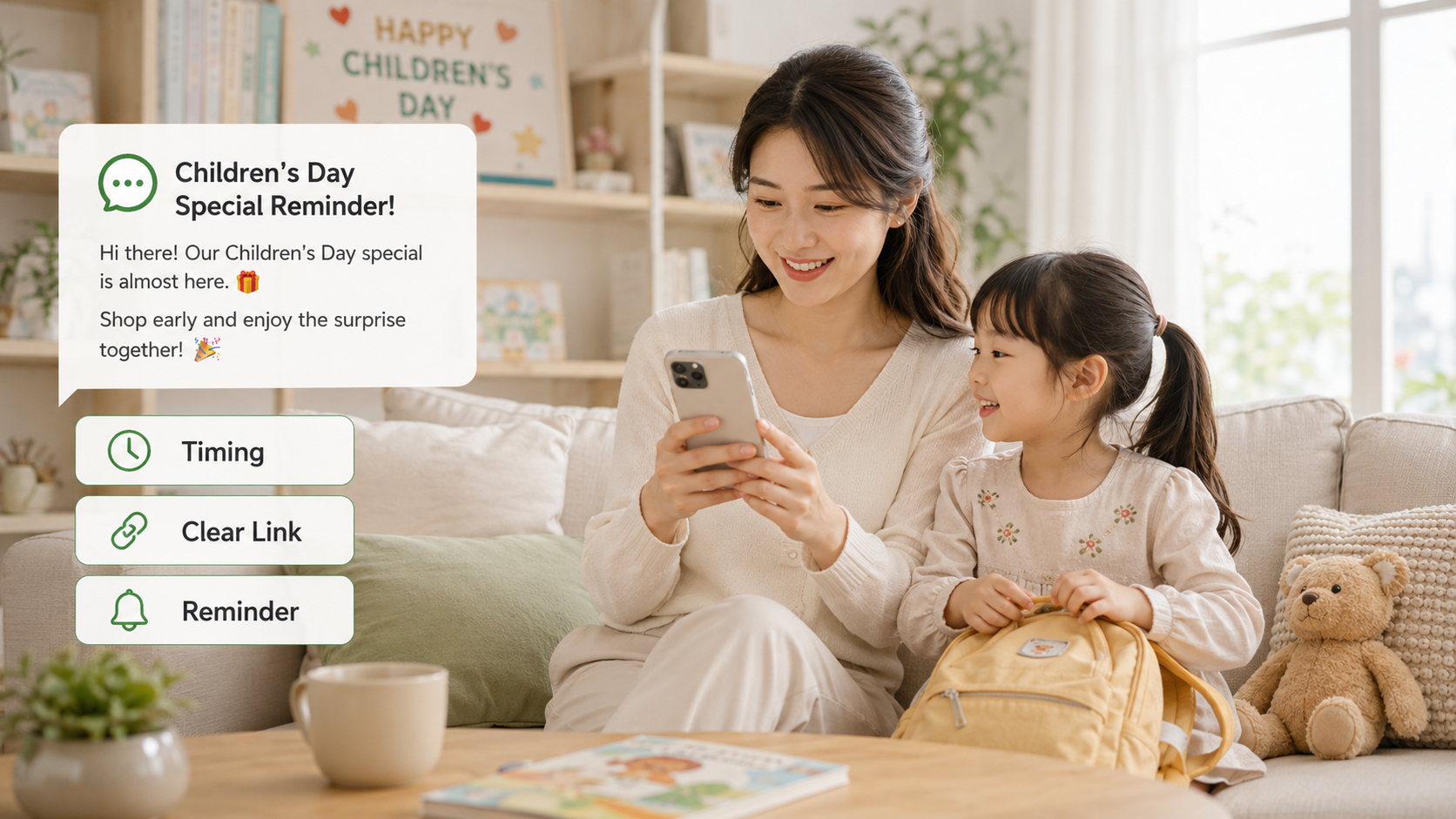
How Links, Replies, and Two-Way SMS Can Support Customer Engagement
Links and replies can improve customer engagement when they feel clear, safe, and easy to act on. This is especially important because consumers are regularly warned about unexpected texts, suspicious links, and impersonation attempts [4][5].
A brand’s SMS campaign should therefore make the action feel expected, not risky.
Link Clarity and Tracking Without Scam-Like Signals
Use this interaction checklist before adding an SMS link:
- Identify the brand clearly in the sender or message body.
- Explain why the customer is receiving the message.
- Describe what the link opens before asking for the click.
- Use a landing page that matches the SMS promise.
- Avoid exaggerated urgency or vague prize language.
- Track clicks with campaign parameters, but keep the link experience recognizable.
- Test the link on mobile before sending.
The issue is not tracking itself. Tracking is useful. The issue is asking customers to click without enough context.
Reply Keywords, Polls, and Simple Customer Responses
Two-way SMS can make the campaign feel less like a broadcast. It can also create useful feedback.
Examples include asking customers to reply “EVENT” for store details, “GIFT” for a gift guide, or “YES” to receive a reminder. A short poll can also work: “Reply 1 for toys, 2 for apparel, 3 for learning gifts.” Keep it simple. If the reply path needs explanation, it is probably too complex for SMS.
Two-way engagement should not become a support burden the team cannot handle. If customers reply, someone or something needs to process those replies reliably.
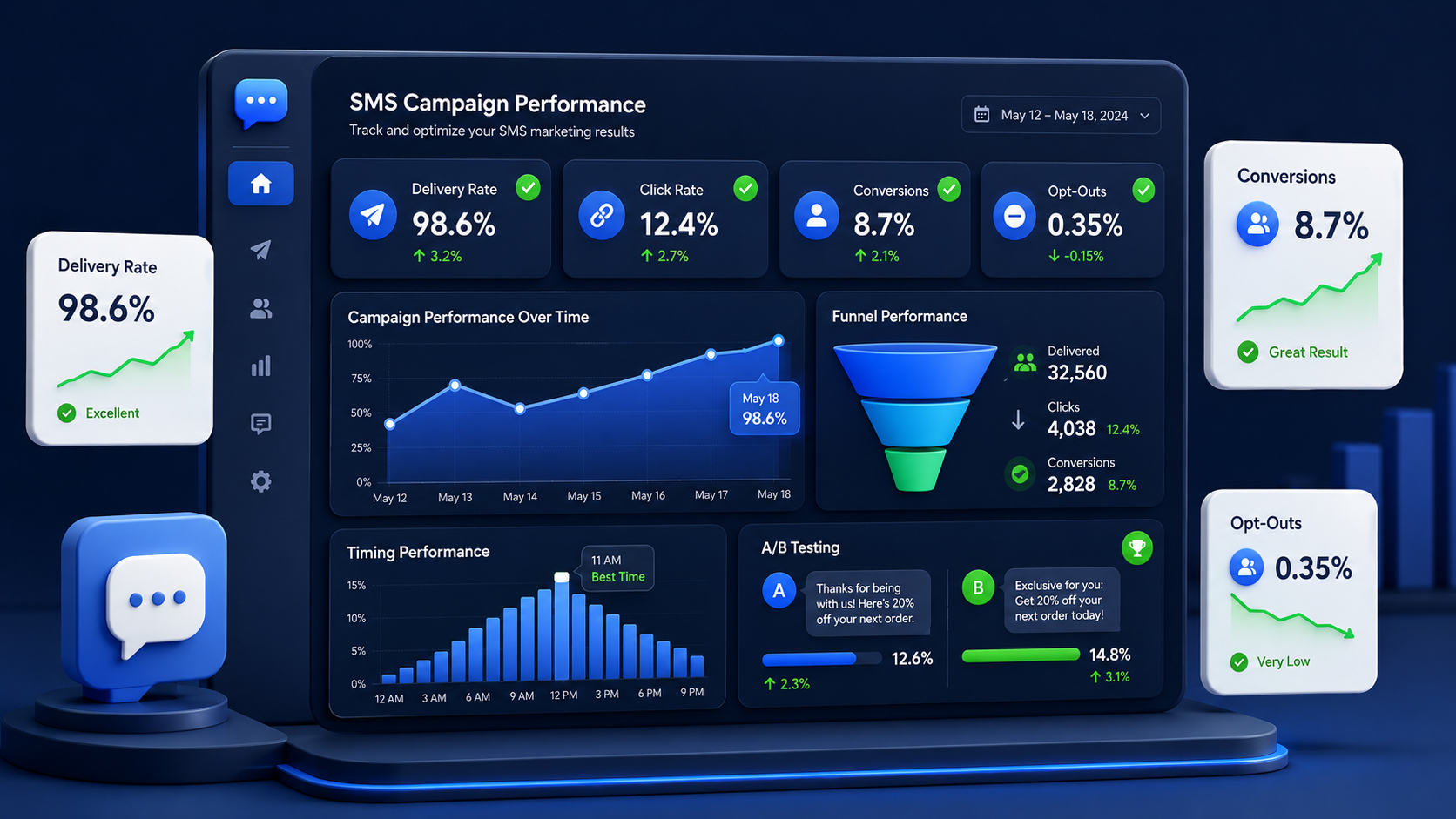
Which SMS Campaign Metrics Show Trust and Performance
SMS campaign performance should be measured by both engagement signals and trust signals. Clicks matter, but they do not tell the whole story.
A campaign can get clicks and still damage list quality. We’ve seen retail teams get strong clicks from a seasonal SMS campaign, then lose list quality the next week because the message went to too broad an audience and made opt-outs spike. The issue was not the holiday. It was planning.
For a fuller view of campaign outcome measurement, see our guide on how to measure SMS marketing ROI.
| Metric Group | Metric | What It Shows | Planning Response |
|---|---|---|---|
| Engagement | Click-through behavior | Whether the message and link created action | Compare by segment, not only total clicks |
| Engagement | Replies | Whether customers wanted to interact | Review reply quality and support load |
| Engagement | Redemption or conversion signal | Whether the action matched business goal | Tie result to campaign objective |
| Trust | Opt-out rate | Whether the message damaged permission | Investigate audience, timing, and tone |
| Trust | Complaint signals | Whether customers saw the message as unwanted | Pause similar campaigns and review consent |
| Trust | List quality | Whether future SMS reach remains healthy | Suppress weak or risky segments |
Engagement Metrics: Clicks, Replies, and Conversion Signals
Engagement metrics show whether the campaign moved customers toward a useful action. Clicks may show interest. Replies may show involvement. Redemption or conversion signals show whether the message matched a business outcome.
Do not average everything too quickly. A loyalty segment, a recent buyer segment, and a dormant subscriber segment may behave very differently. The value is in the pattern.
Trust Metrics: Opt-Outs, Complaints, and List Quality
Trust metrics show whether the campaign cost more than it gained. Opt-outs, complaint signals, and weaker list quality are not side notes. They are campaign outcomes.
A trust-first International Children’s Day SMS marketing campaign should leave the brand with a healthier understanding of its audience. If it leaves the team with a larger suppressed list and more complaints, the campaign failed even if one link performed well.
Where SMS Campaign Reliability and Branded Messaging Fit Naturally
SMS campaign reliability matters when a trust-first plan needs stable routing, recognizable messaging, and visible performance feedback. This is where SMS capability belongs in the article: not as a hard product pitch, but as an execution layer that supports the plan.
For retail and e-commerce teams, the campaign idea is only one part of the result. The message still has to be sent at the right volume, across the right markets, with enough visibility to understand what happened.
Routing Stability for High-Volume or Cross-Border SMS Campaigns
High-volume or cross-border SMS campaigns can expose weak execution quickly. A campaign may look good in the CRM plan but perform unevenly across regions if routing, sender setup, or destination conditions vary.
This is where an SMS-first provider can support the campaign without taking over the marketing strategy. For a brand running International Children’s Day campaigns across multiple markets, SMSBoosting can naturally fit as the delivery and visibility layer: branded SMS communication where available, routing support for high-volume or cross-border sending, and practical visibility into message performance.
That is not a promise that a provider will design the whole holiday campaign. The brand still owns audience strategy, consent records, offer quality, and customer tone.
Delivery Visibility and Tracking as Planning Feedback
Delivery visibility and tracking turn the campaign into a learning loop. The team can compare engagement signals, trust signals, and delivery feedback after the campaign instead of guessing.
For teams that want a deeper foundation on execution quality, our guide to SMS deliverability can help clarify what affects message outcomes beyond the campaign brief itself.
For example, if one segment clicks but also opts out at a higher rate, the next action is not simply “send more.” It may be to narrow the audience, change the value proposition, improve sender recognition, or reduce frequency. Reliable SMS execution supports better judgment.
Need help planning a trust-first seasonal SMS campaign?
If your team is preparing a larger or cross-border International Children’s Day campaign, SMSBoosting can help you review routing support, branded messaging options, and delivery visibility before volume scales.
Talk to an SMS expertFAQ About International Children’s Day SMS Marketing Campaign Planning
Can brands send promotional SMS for International Children’s Day?
Yes, brands can send promotional SMS for International Children’s Day if the message is consent-based, relevant, and respectful. The campaign should not treat the holiday as a free excuse to message every contact. In the U.S., commercial texts require written consent under FCC consumer guidance [3]. A safer planning rule is to send only to opted-in customers who would reasonably expect this type of SMS.
What should an International Children’s Day SMS message include?
An International Children’s Day SMS message should include a clear sender identity, a relevant reason for the message, a useful offer or action, and a simple response path. For example, a retailer might send a gift guide, a store event reminder, or a loyalty reward. If the message uses a link, explain what the link opens. Avoid vague urgency, emotional pressure, or unclear prize language.
How can retailers make a Children’s Day SMS campaign consent-friendly?
Retailers can make a Children’s Day SMS campaign consent-friendly by checking opt-in records, matching the message to the consent type, and keeping opt-out expectations clear. They should also exclude unclear or inactive contacts instead of sending to the full CRM list. A three-part consent gate works well: permission, expectation, and list quality. If one part is weak, hold the segment back.
What metrics should a retail SMS campaign track after sending?
A retail SMS campaign should track both engagement metrics and trust metrics. Engagement metrics include clicks, replies, redemptions, and conversion signals. Trust metrics include opt-outs, complaint signals, and list quality changes. If clicks rise but opt-outs also rise, the campaign may have created short-term action at the cost of future SMS permission.
When should a brand use a provider for SMS campaign reliability?
A brand should use a provider for SMS campaign reliability when volume, cross-border reach, routing stability, sender recognition, or delivery visibility affect the outcome. This is common for retail and e-commerce teams sending to multiple markets or larger customer segments. A provider should support execution, tracking, and delivery feedback. It should not replace the brand’s responsibility for consent, message value, and customer trust.
How many International Children’s Day SMS messages should a brand send?
Most brands should start with one main International Children’s Day SMS message and add a reminder only when the customer context supports it. For example, an event reminder may justify a second message; a generic discount usually does not. Frequency should follow value, not anxiety. If the second message does not add new information, it is probably noise.
Should an International Children’s Day SMS campaign use links or two-way replies?
An International Children’s Day SMS campaign can use links or two-way replies if the action is clear and safe. Links work well for gift guides, event pages, loyalty offers, or product collections. Two-way replies work well for simple choices, reminders, polls, or keyword-based requests. The safest version tells customers exactly what will happen when they click or reply.
References
UNICEF. International Children’s Day public context.
United Nations / UNICEF. World Children’s Day and children’s rights context.
FCC. Stop Unwanted Robocalls and Texts consumer guidance.
FTC. Is that unexpected text a scam?
FTC. New FTC Data Show Top Text Message Scams of 2024.