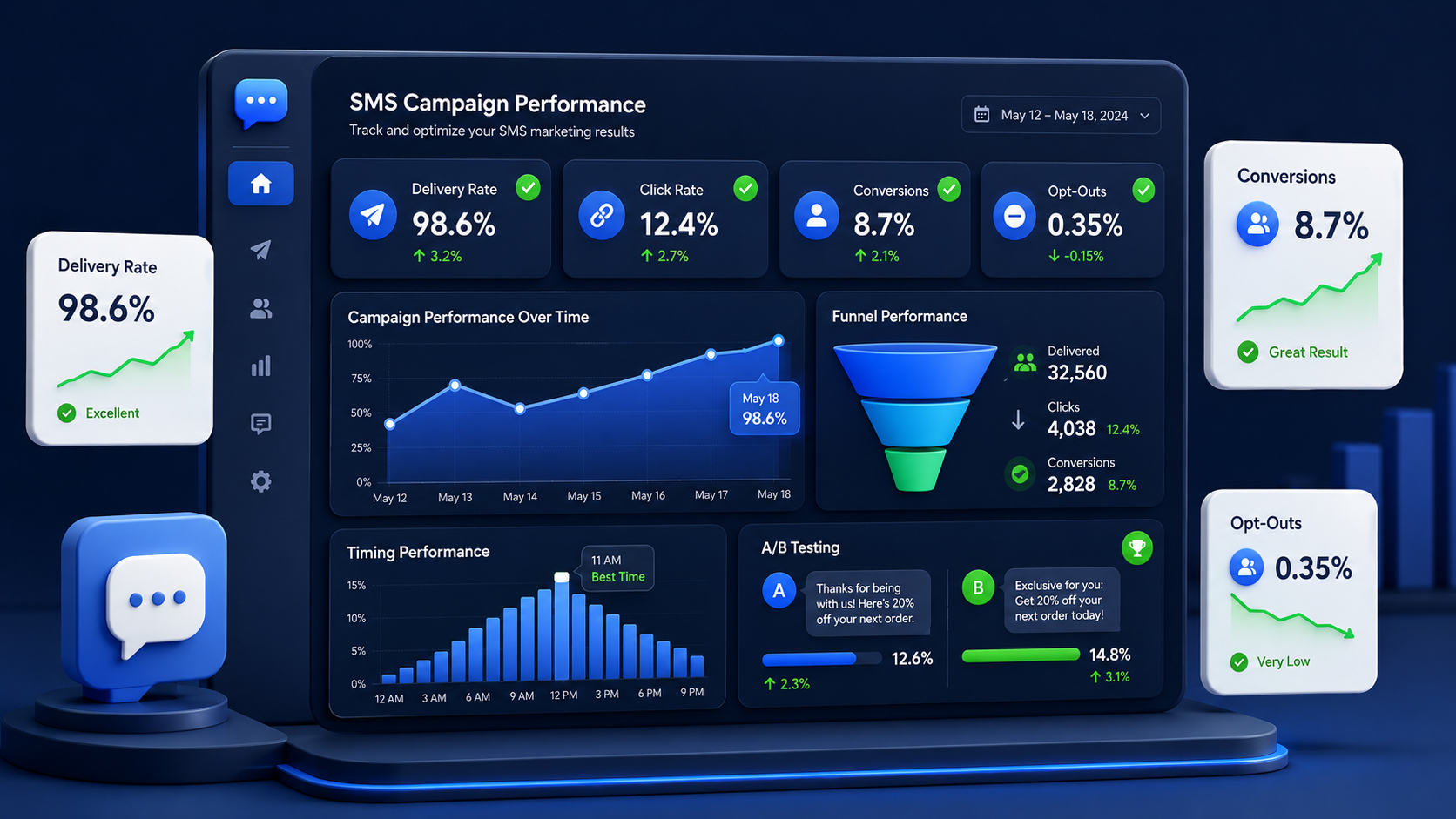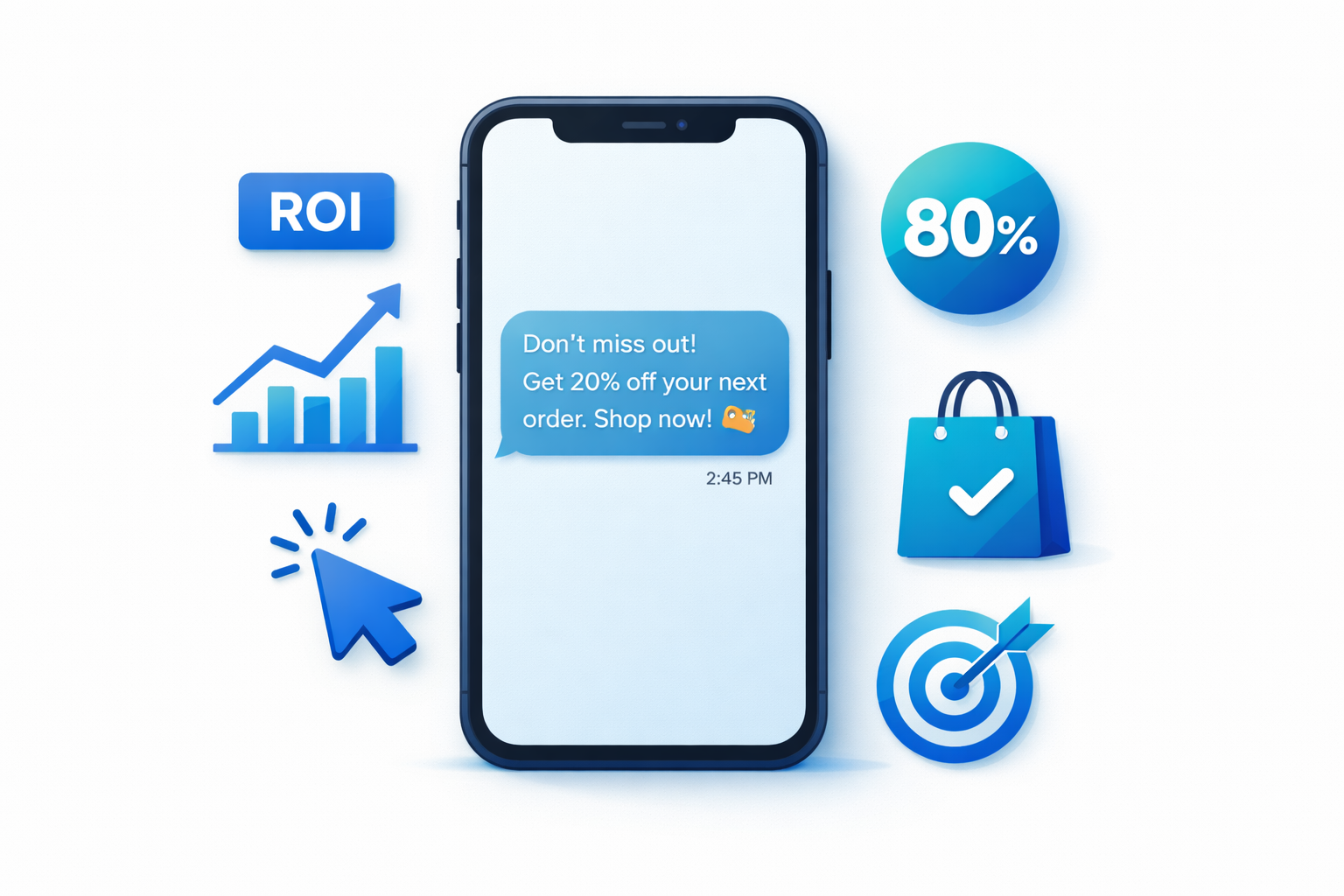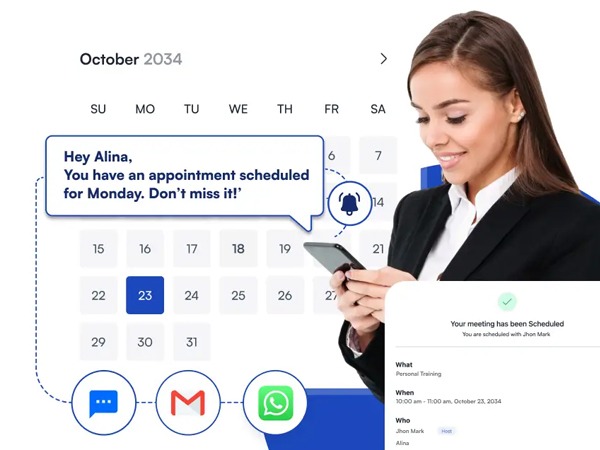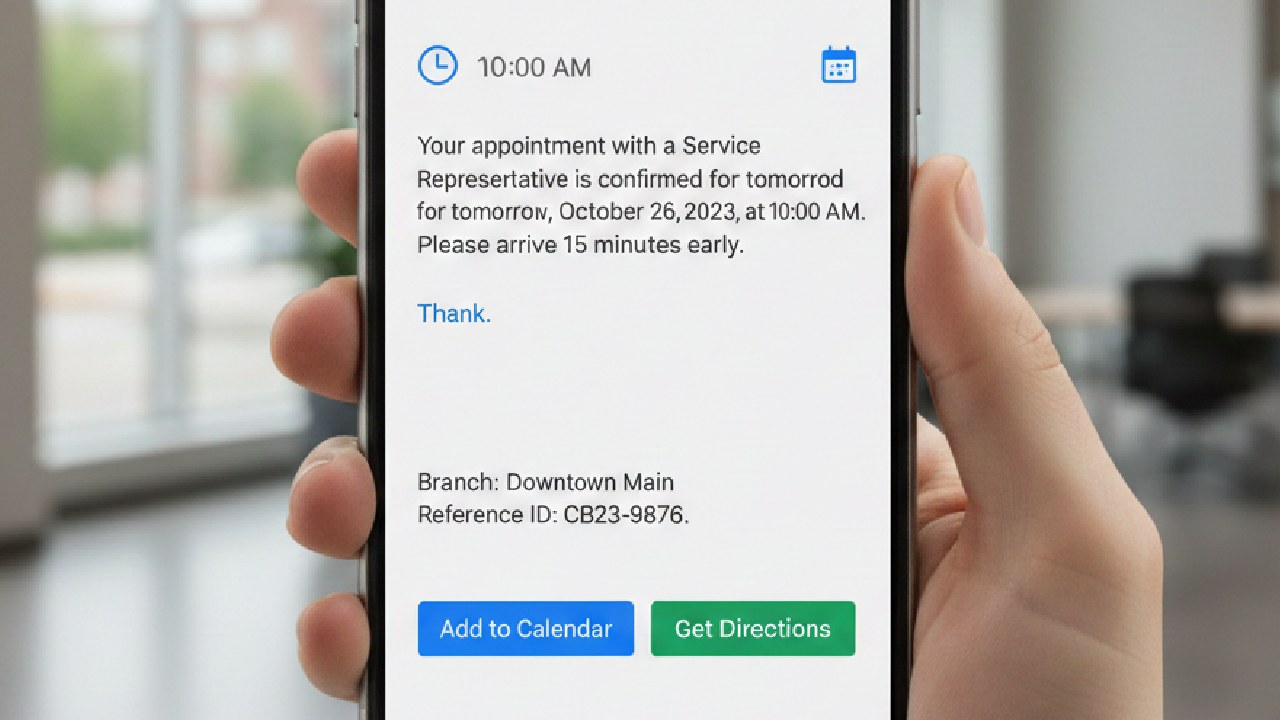

Promotional and transactional SMS are different because they serve different purposes, run on different triggers, and create different expectation and consent boundaries. If a message is meant to drive marketing action, it belongs on the promotional side; if it exists to deliver necessary service or status information, it belongs on the transactional side.
That sounds simple until a real team has to approve a real send. The hard part is rarely the label itself. The hard part is deciding what the message is primarily for when urgency, customer value, and business goals start to overlap.
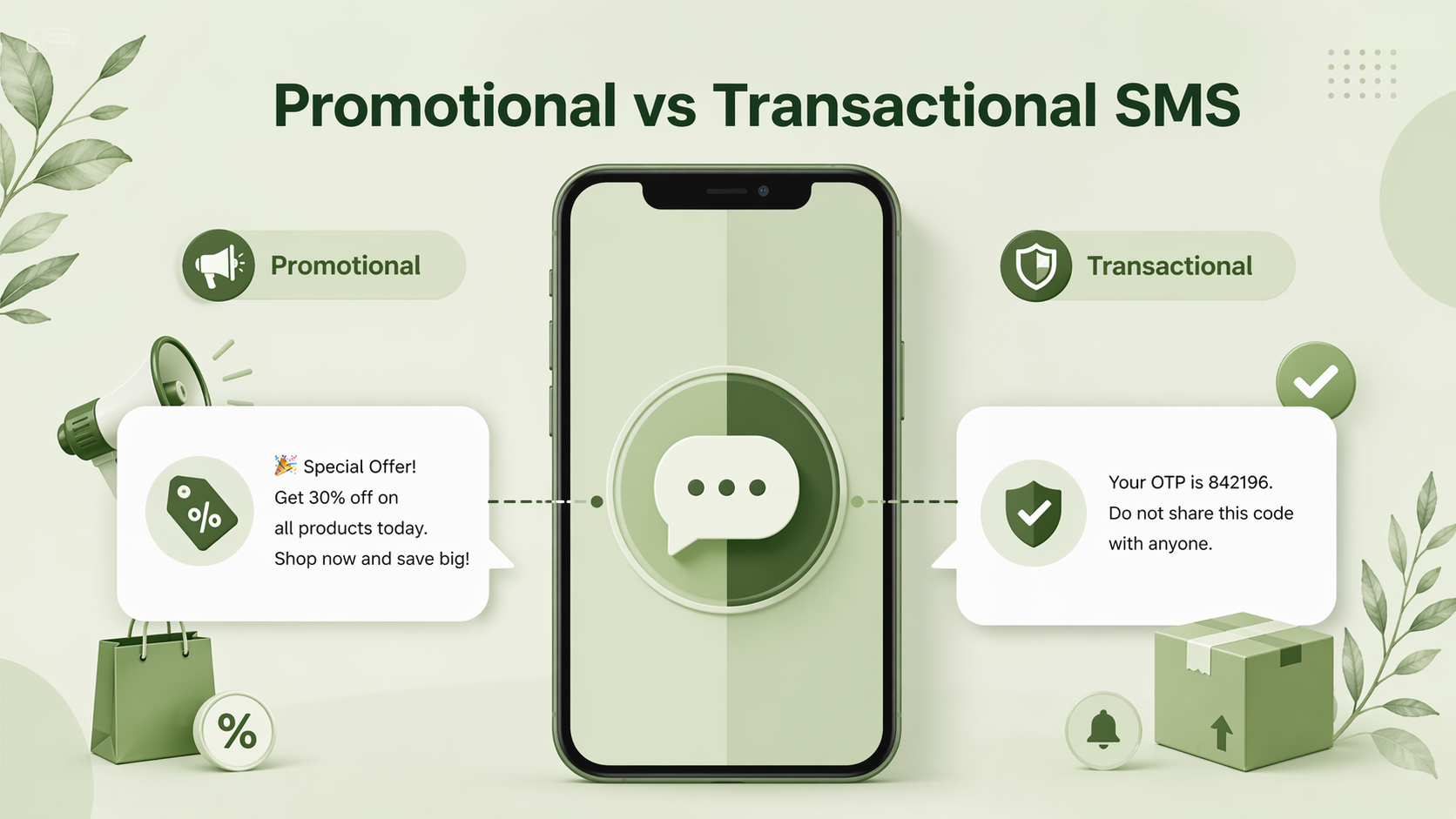
What Promotional SMS and Transactional SMS Actually Mean
Why Message Purpose Defines the Boundary Between Promotional SMS and Transactional SMS
The cleanest way to classify an SMS is to ask what job the message exists to do. If the primary function is to promote, persuade, re-engage, upsell, or generate revenue, it is promotional. If the primary function is to confirm, verify, notify, alert, or help the recipient complete an expected service interaction, it is transactional. That purpose-first boundary is more reliable than judging by tone, length, or whether the message contains a link.[1][2][3]
That is also why this page is not a full introduction to transactional SMS. If you need the broader foundation first, start with what transactional SMS is and how businesses use it. This article focuses on the comparison layer: how to decide whether a real message belongs on the promotional or transactional side.
In practice, the first useful question is not “Does this look promotional?” It is “Would this message still need to be sent if no marketing outcome were attached to it?”
Why Message Format Alone Does Not Define Promotional vs Transactional SMS
Teams often misclassify SMS because they overread surface cues. A short message is not automatically transactional. A link does not automatically make a text promotional. Even urgency can mislead. A password reset text is urgent for a service reason. A flash sale text is urgent for a commercial reason. The visible format can overlap while the underlying purpose stays different.
That is why the boundary should be set before copy review. Once a team starts by reading copy alone, it tends to debate words instead of function. The better sequence is: define the primary purpose, confirm the trigger, check what the customer is expecting, and only then review the message content itself.
Promotional vs Transactional SMS: The Differences That Change Classification
Compare Message Purpose, Trigger, and Customer Expectation
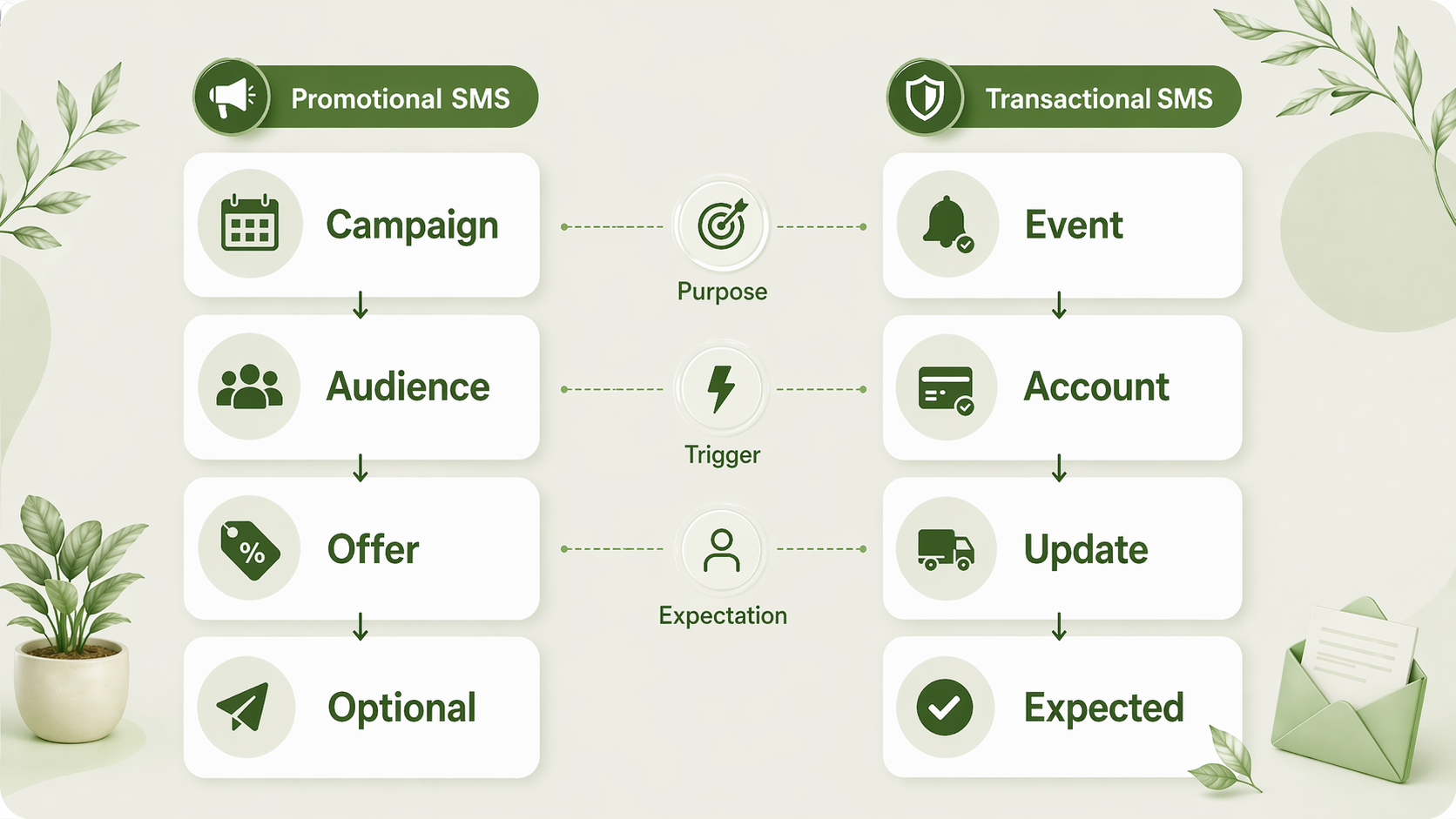
If you are comparing promotional vs transactional SMS in a real workflow, three dimensions do most of the classification work: purpose, trigger, and customer expectation.
| Dimension | Promotional SMS | Transactional SMS |
|---|---|---|
| Primary purpose | Drive attention, clicks, conversion, or re-engagement | Deliver necessary service, status, verification, or account-related information |
| Typical trigger | Campaign schedule, audience segment, promotional calendar, business initiative | User action, account event, order event, security event, service workflow |
| Customer expectation | “This brand wants me to consider an offer or take a marketing action” | “This brand is updating me about something I already did, asked for, or need to complete” |
This is the most important comparison block in the article because it prevents false shortcuts. A customer who just requested a login code expects a service message. A customer who opted into weekend offers expects a marketing message. Confusion starts when teams treat those two expectations as interchangeable simply because both are time-sensitive.
Compare Urgency, Allowed Action, and Business Outcome
Urgency matters, but it is not the deciding factor on its own. A transactional SMS can be highly urgent because the service event itself is urgent: suspicious login activity, account access, delivery failure, payment confirmation, or appointment timing. A promotional SMS can also be urgent, but its urgency is created to motivate behavior rather than complete an already expected service event.
Allowed action is another useful test. Promotional SMS usually invites an optional next step: shop, browse, redeem, join, return, or claim. Transactional SMS usually supports a required or expected next step: verify, confirm, review, track, reset, or acknowledge. The business outcome follows that difference. Promotional SMS is judged by campaign performance. Transactional SMS is judged by completion, clarity, timeliness, and trust.
If your internal discussion keeps circling around wording, move the conversation to this question instead: “Is the user free to ignore this without affecting a service interaction they already started or depend on?” If the answer is yes, you are usually closer to promotional territory. If the answer is no, you are usually closer to transactional territory.
Compare Consent and Compliance Boundaries Without Turning Classification Into a Legal Checklist
You do not need to turn every classification review into a legal memo, but you do need to understand that consent standards and sending rules can differ once a message crosses into promotional or telemarketing territory. FCC materials treat text messages as calls under the TCPA, distinguish prior express consent from prior express written consent in telemarketing contexts, and require revocation requests for robocalls and robotexts to be honored within a reasonable time not exceeding 10 business days.[1] CTIA’s messaging principles similarly say consumers should give express written permission before receiving promotional text messages and that senders should clearly disclose the type and purpose of the messaging program in the call to action.[2]
That does not mean classification should become a compliance-only exercise. The point is simpler. When teams misclassify a marketing message as transactional, they are not making a harmless wording mistake. They may be applying the wrong sending assumptions to a message whose primary function is commercial. That is exactly why the boundary has to be set early and why “mostly useful” is not the same as “transactional.”
When to Use Promotional SMS and When to Use Transactional SMS
Use Promotional SMS When the Goal Is Attention, Clicks, or Revenue
Use promotional SMS when the message is trying to create demand, bring someone back, increase order value, drive traffic, or move a segment toward conversion. The offer can be strong or soft. The timing can be planned or triggered. The message can still feel relevant and helpful. But if its reason for existing is commercial lift, it belongs on the promotional side.
That includes more than obvious discount blasts. Back-in-stock nudges tied to merchandising goals, VIP early-access invites, loyalty point redemption prompts, replenishment campaigns, and abandoned cart recovery usually sit in promotional territory because the business purpose is still to drive conversion or revenue, even when the message feels personalized or timely.
Use Transactional SMS When the Goal Is Service, Status, or Required Action
Use transactional SMS when the message exists to support a service event the recipient has already initiated, depends on, or reasonably expects. The classic pattern is event-driven communication: account verification, password reset, order confirmation, shipping status, fraud alert, appointment reminder, or service interruption notice.
The safest operator test here is necessity. If the message helps the recipient complete access, understand status, reduce uncertainty, or respond to a real account or service event, it usually fits transactional use. The message may contain a link, but that link should support the service function rather than open a new promotional journey.
If you want to see how this looks across common service scenarios, read these transactional SMS examples for real business use cases.
Use a Pre-Send Decision Check When a Message Could Reasonably Be Classified Either Way
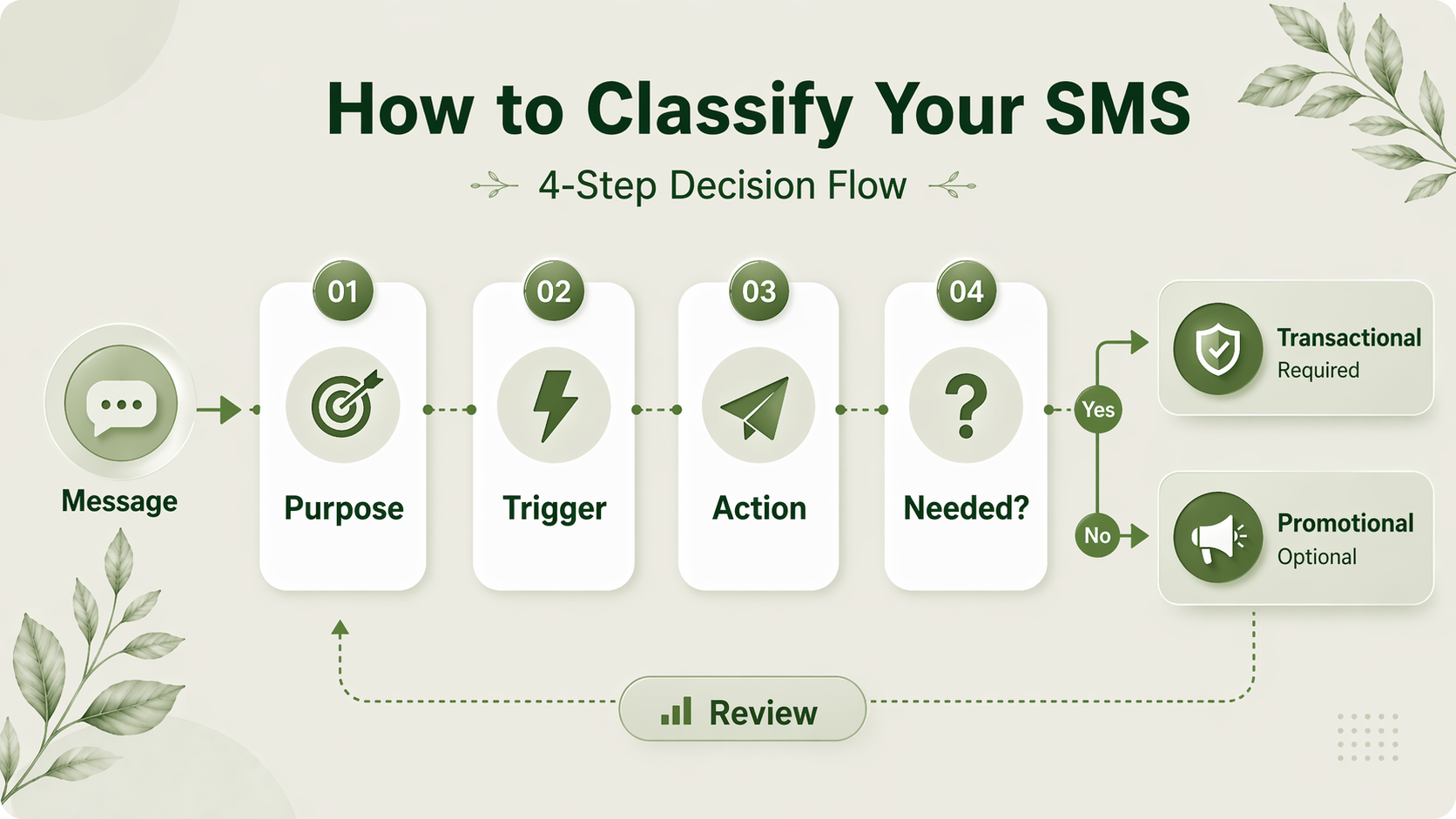
The most useful teams do not wait until copy approval to classify borderline sends. They use a pre-send decision check:
- Identify the primary function. What must this message achieve for the user first?
- Trace the trigger. Did a campaign calendar trigger it, or did a user or service event trigger it?
- Check the expected action. Is the next step optional and commercial, or required and service-related?
- Review the fallback question. If all promotional language were removed, would the message still need to be sent?
If that last answer is no, the message is probably promotional. If the answer is yes, it may be transactional. That single question is often more useful than debating whether one sentence sounds “too salesy.”
How to Classify Gray-Area and Mixed-Purpose SMS
Why Mixed-Purpose SMS Creates the Highest Risk of Misclassification
Mixed-purpose SMS is where most classification mistakes happen. The message starts with a legitimate service reason, then adds a recommendation, upgrade prompt, related offer, or soft cross-sell. Operationally, that may feel efficient. From a classification standpoint, it creates ambiguity.
Public frameworks increasingly acknowledge that multiple use cases can exist in one messaging program, but they do not erase the need to classify each message responsibly. TRAI has publicly distinguished promotional, service, and transactional message types in sender identification rules, and The Campaign Registry includes both “Marketing” and “Mixed” use cases alongside categories like 2FA, Account Notification, Customer Care, Delivery Notification, and Fraud Alert Messaging.[3][4] That is useful context because it shows the gray area is real. It does not mean every mixed message is safe to treat as transactional.[4]
Separate the Primary Function From the Secondary Message Before Sending
The right way to handle a gray-area SMS is to separate primary function from secondary message. Ask which element justifies the send. If the notification would still need to go out without the extra commercial line, the base message may still be transactional. But once the commercial element becomes the reason the brand wants to send the text, the classification starts to shift.
This is why “small” promotional additions are not automatically small classification risks. A delivery update followed by “shop again and save 15%” is no longer just a delivery update in practical review. A payment reminder followed by “upgrade now for premium benefits” may no longer be functioning as a pure service message. The real issue is not whether the upsell is subtle. The issue is whether it competes with or changes the primary function of the send.
Rewrite or Split the Message When Promotional and Transactional Purposes Compete
When promotional and transactional purposes compete, the cleanest fix is usually to rewrite or split the communication.
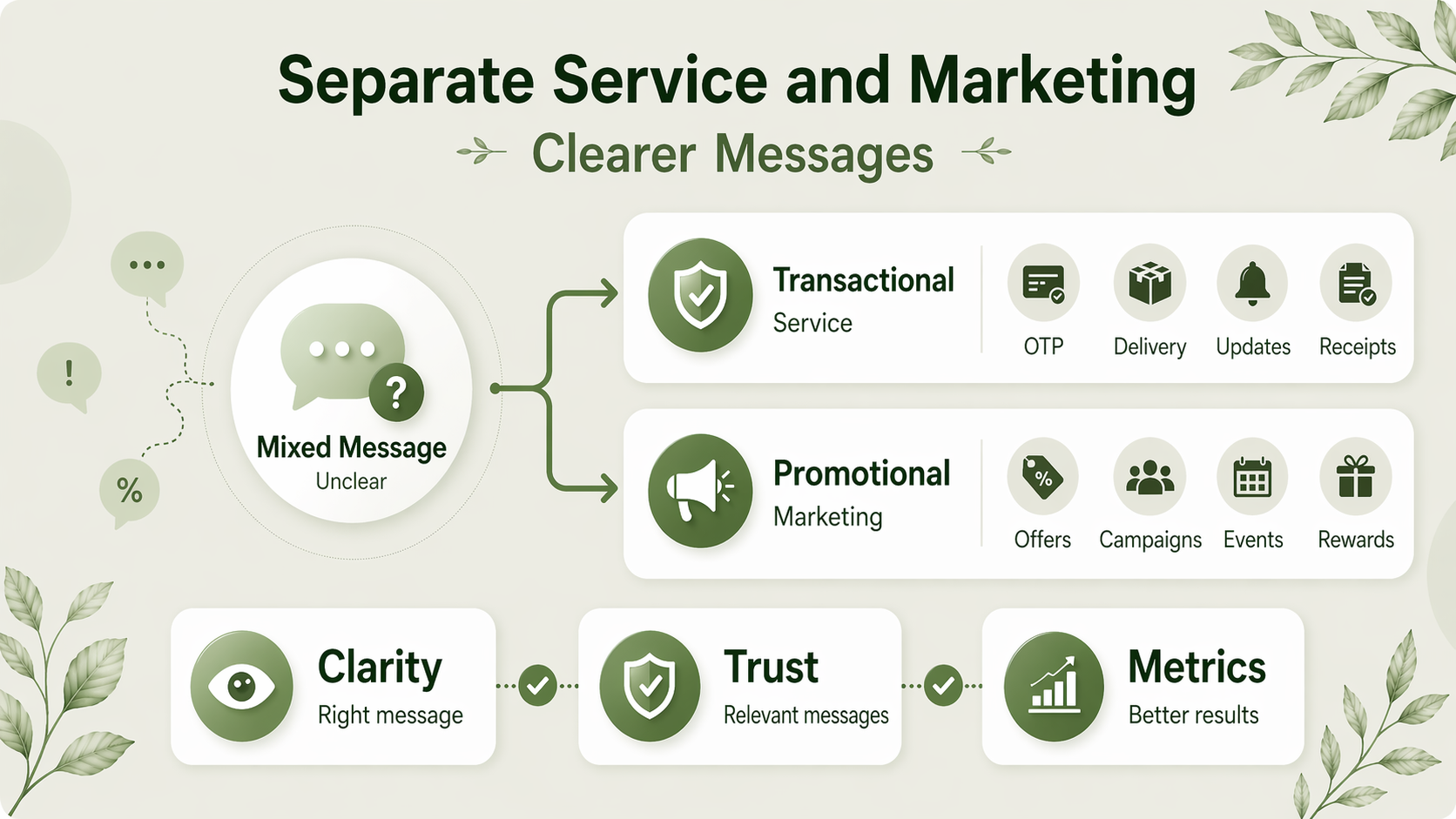
Rewrite when the promotional element is unnecessary and can be removed without harming the service value. Split when both purposes matter but should not live inside the same SMS. In practice, that means sending the transactional update as its own message and moving the commercial follow-up into a properly handled promotional stream or a later, clearly separate campaign.
That approach usually improves more than compliance posture. It also improves clarity. The recipient instantly understands what the message is for. The operator team gets a cleaner decision trail. And performance measurement becomes more honest because service completion is no longer mixed into campaign analysis.
Frequently Asked Questions About Promotional vs Transactional SMS
Is an SMS Reminder Promotional or Transactional?
An SMS reminder can be either promotional or transactional because “reminder” describes timing, not purpose. A dentist appointment reminder, payment due reminder tied to an existing obligation, or pickup reminder for an existing order usually fits transactional use. A reminder to use a coupon before it expires is still promotional because the primary goal is commercial action, not service completion.
Can a Transactional SMS Include a Link, Recommendation, or Upsell?
A transactional SMS can include a link when the link supports the service function, such as verifying an account, tracking an order, viewing an invoice, or confirming an appointment. A recommendation or upsell is where the risk rises. If the added content starts to compete with the service reason for sending, the message should be rewritten or split rather than defended as “mostly transactional.”[1][2]
Are Abandoned Cart SMS Messages Promotional or Transactional?
Abandoned cart SMS messages are generally promotional, even though they are behavior-triggered and highly personalized. The trigger is a shopping behavior, but the purpose is still to recover revenue. That makes them very different from a password reset, fraud alert, or order status message, where the business is responding to an expected service event rather than trying to create a sale.
What Should Teams Do When One SMS Appears to Serve Two Purposes?
Teams should classify the message by its primary function, not by whichever line seems easier to defend. If the purpose is genuinely split, treat that as a design problem, not a labeling trick. In most cases, the fix is to separate the service communication from the promotional communication so each message can be sent, measured, and governed on its own terms.
Review Promotional and Transactional SMS Rules Before You Scale
The practical takeaway is simple: classify by purpose first, not by format first. When you do that, the difference between promotional and transactional SMS becomes much easier to defend, much easier to operationalize, and much less likely to create mixed-purpose mistakes later.
If your team is reviewing real message flows and needs a second opinion on classification, sending logic, or how to separate service messaging from commercial messaging before launch, SMSBoosting can help you pressure-test the use case without turning the review into a sales process.
References
[1] Federal Communications Commission. FCC 24-24: consent revocation and robotext rules; related FCC TCPA materials confirming that text messages are treated as calls and that telemarketing contexts require prior express written consent.
[2] CTIA. Messaging Principles and Best Practices (May 2023). Used for promotional text consent expectations and disclosure of message type and purpose in the call to action.
[3] Telecom Regulatory Authority of India (TRAI). Telecommunication Commercial Communications Customer Preference Regulations, 2025 and Press Release No. 11/2025. Used for public category distinction among promotional, service, transactional, and government messaging.
[4] The Campaign Registry. CSP User Guide. Used only as a secondary operational reference for “Mixed” campaign handling and use-case classification context.