
Transactional SMS delivers time-sensitive, user-triggered information directly to a customer’s phone. Unlike promotional messages, transactional SMS is used to confirm, verify, update, or alert, making it most useful when the customer expects operational information and needs it quickly.
This guide walks through practical transactional SMS examples across common business scenarios. Each example explains what the message does, when SMS makes sense, and where teams should be careful about message scope, compliance, and notification fatigue.
If you want the broader foundation first—what transactional SMS is, how it works, and how it differs from promotional messaging—start with Transactional SMS: What It Is, How It Works, and Why Businesses Use It. This article focuses on transactional SMS examples, showing what these messages look like in practice and when each type fits.
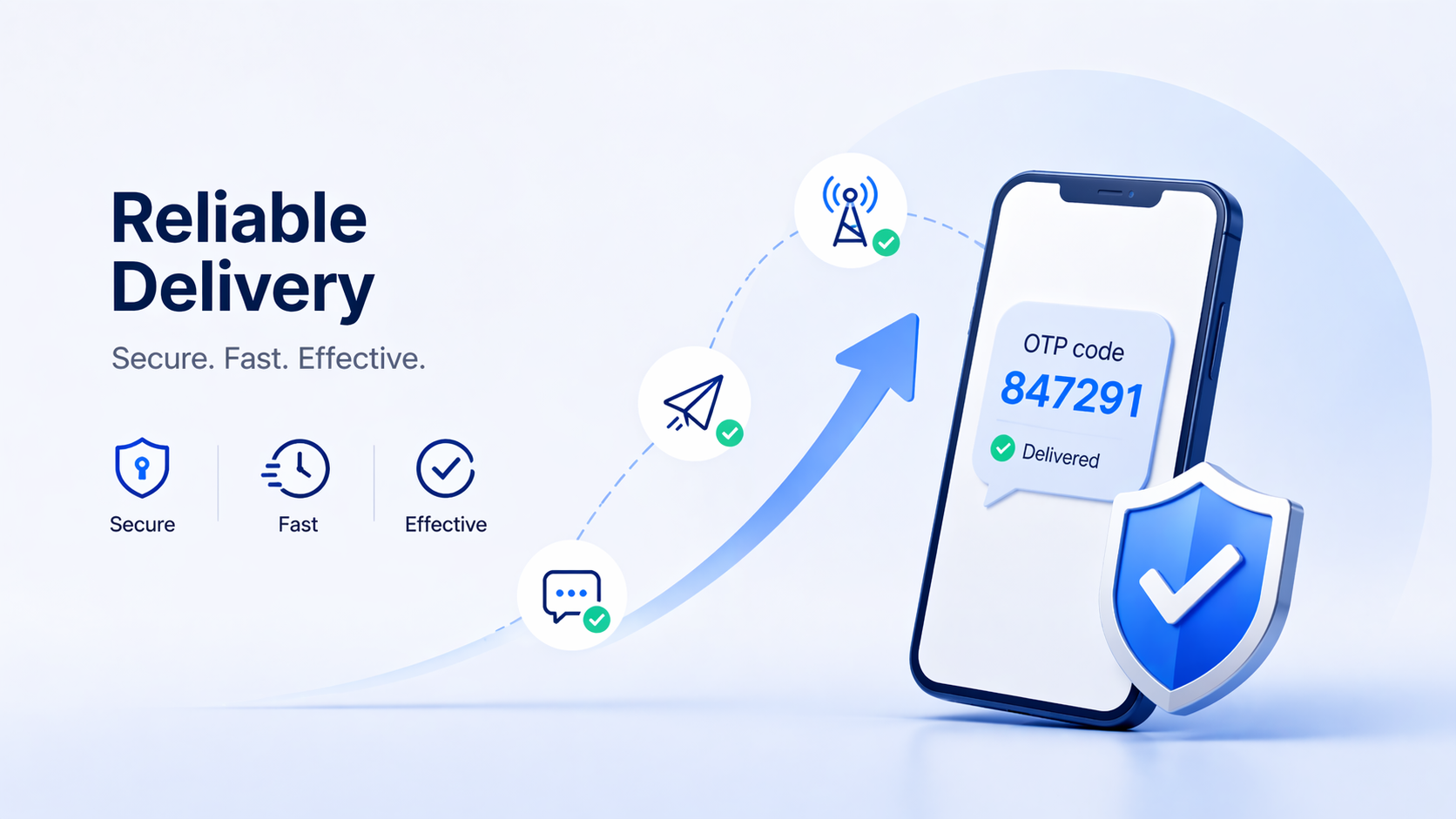
Transactional SMS OTP Verification Examples
Transactional SMS examples often start with OTP delivery because it is one of the clearest operational use cases. When a user tries to log in, reset a password, or approve a sensitive action, the message has one job: deliver the code quickly and clearly.
Standard Numeric OTP
“Your verification code is 847291. Valid for 5 minutes. Do not share this code with anyone.”
This works because it puts the code first, states the expiration clearly, and adds a short security warning without clutter. In most cases, the best OTP messages are not clever. They are direct.
Alphanumeric OTP with Context
“Amazon sign-in code: 7X9K2M. If you didn’t request this, visit amazon.com/security”
Adding context reduces confusion. When users know why the code arrived, they are less likely to ignore it or mistake it for spam. A security path also gives them a next step if the request was not theirs.
Voice-Backup OTP
“Your PayPal code is 482739. To hear this code again, reply CALL. Standard messaging rates may apply.”
This kind of fallback can improve accessibility and reduce login friction for users who cannot read the message immediately. It is especially useful when the action is urgent and a missed code creates drop-off.
When SMS-Only Is Not Enough
SMS delivery can fail for reasons your application does not fully control, including carrier filtering, device issues, or temporary routing problems. For higher-risk use cases, it is safer to offer fallback options such as app push, email, or voice rather than treating SMS as the only path. If your team is also reviewing delivery consistency, this guide on how to improve SMS deliverability is a useful companion read.
Boundary judgment: SMS-only verification may be acceptable for lower-risk actions, but high-risk workflows such as large financial transfers or access to sensitive records usually need stronger verification design and clearer fallback logic.
Compliance flag: OTP traffic should stay operational. Do not combine verification codes with promotional copy, and make sure delivery attempts can be traced where your audit or security process requires it.
Account Verification and Welcome Messages
Another common transactional SMS use case is the moment a user moves from signup to verified usage. These messages should reduce friction, not create more of it.
Phone Number Verification
“Your verification code is 582947. Enter this code in the app to confirm your number.”
This is simple and clear. It tells the user what the code is for and where to use it. If a specific route or local rule requires additional wording, add it carefully without burying the main action.
Email-SMS Dual Verification
“Verify your account: Click the link in your email or use code 739284. Both expire in 15 minutes.”
This works well when users may respond faster in one channel than the other. It also gives support teams a practical backup if one channel is delayed.
Post-Verification Welcome
“Welcome to Stripe! Your account is verified. Get started: stripe.com/dashboard Need help? Reply HELP.”
A good post-verification message shifts immediately from confirmation to next step. The user should know what just happened and what to do now.
Multi-Step Welcome Sequence
Message 1 (immediate):
“Welcome to Shopify! Your store is live at mystore.myshopify.com”
Message 2 (24 hours):
“Tip: Add your first product in under 5 minutes. Watch: shopify.com/guides”
Message 3 (72 hours):
“Questions about setup? Our team is here: shopify.com/support”
This sequence works because it spreads onboarding across time instead of forcing too much into a single message. The first text confirms. The second teaches. The third supports.
When to Combine Verification with Welcome
Combining verification and welcome content can reduce message volume, but it is not always the right trade-off. Keep them separate when you need a clean audit trail, when the verification step is security-sensitive, or when extra copy could reduce clarity.
Transactional SMS Order Confirmation and Shipping Notification Examples
Ecommerce is one of the most visible environments for transactional SMS because customers actively wait for status updates after purchase.
Order Confirmation
“Order #45892 confirmed. Total: $127.50. Expected delivery: Jan 15-17. Track: bit.ly/3xK9m2n”
This works because it answers the first three questions most buyers have: Did the order go through? How much was charged? When should it arrive?
Shipping Notification Variations
Standard shipping alert:
“Your order #45892 has shipped via UPS. Track: bit.ly/3xK9m2n Expected delivery: Jan 16”
Out for delivery:
“Your package is out for delivery today (Jan 16). Track live location: bit.ly/3xK9m2n”
Delivery exception:
“Delivery delay for order #45892. New expected date: Jan 18. Details: bit.ly/3xK9m2n”
Successful delivery:
“Delivered: Order #45892 left at front door. Questions? Contact support: yourstore.com/help”
These messages are useful because each one matches a real customer concern at a real moment. Delay notices are especially important because proactive communication reduces support tickets and frustration.
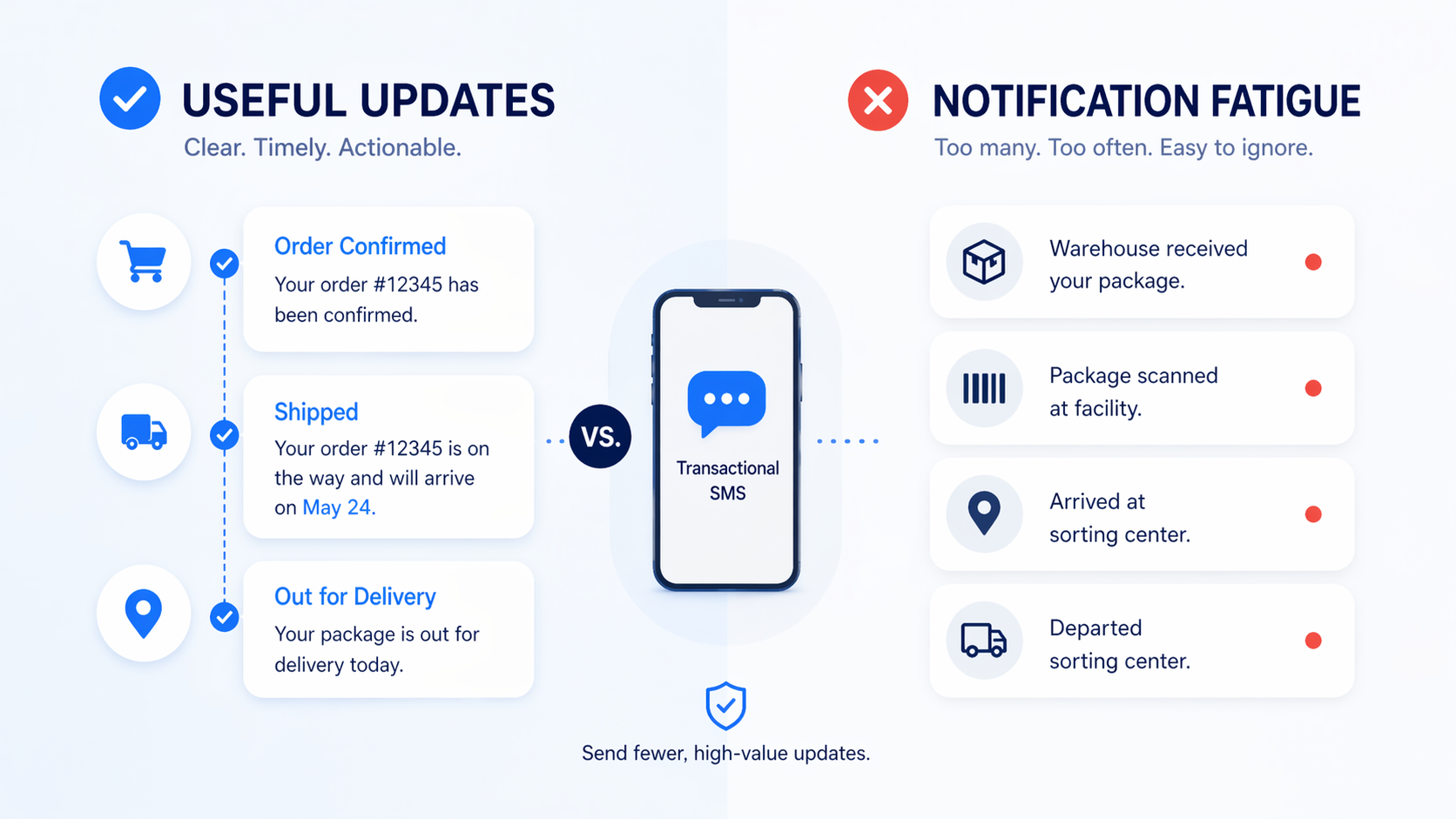
When Updates Become Noise
Not every internal status change needs a text. Reserve SMS for updates the customer is likely to care about immediately, such as order confirmation, shipped status, out-for-delivery, delivery exception, and final delivery. Warehouse scans and routine transit hops usually do not justify a separate SMS unless they change the expected outcome.
Boundary judgment: The operational value of transactional SMS drops when updates become too granular. Over-notifying users may reduce trust and increase opt-outs from messages they actually need later.
Appointment Reminders and Payment Notifications
Service businesses often use transactional SMS to reduce missed appointments and keep billing communication simple.
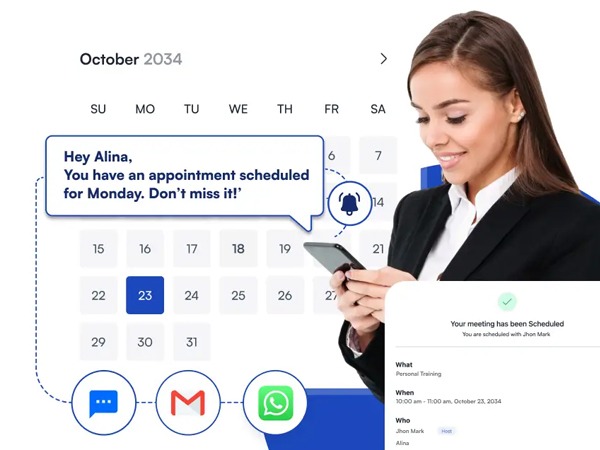
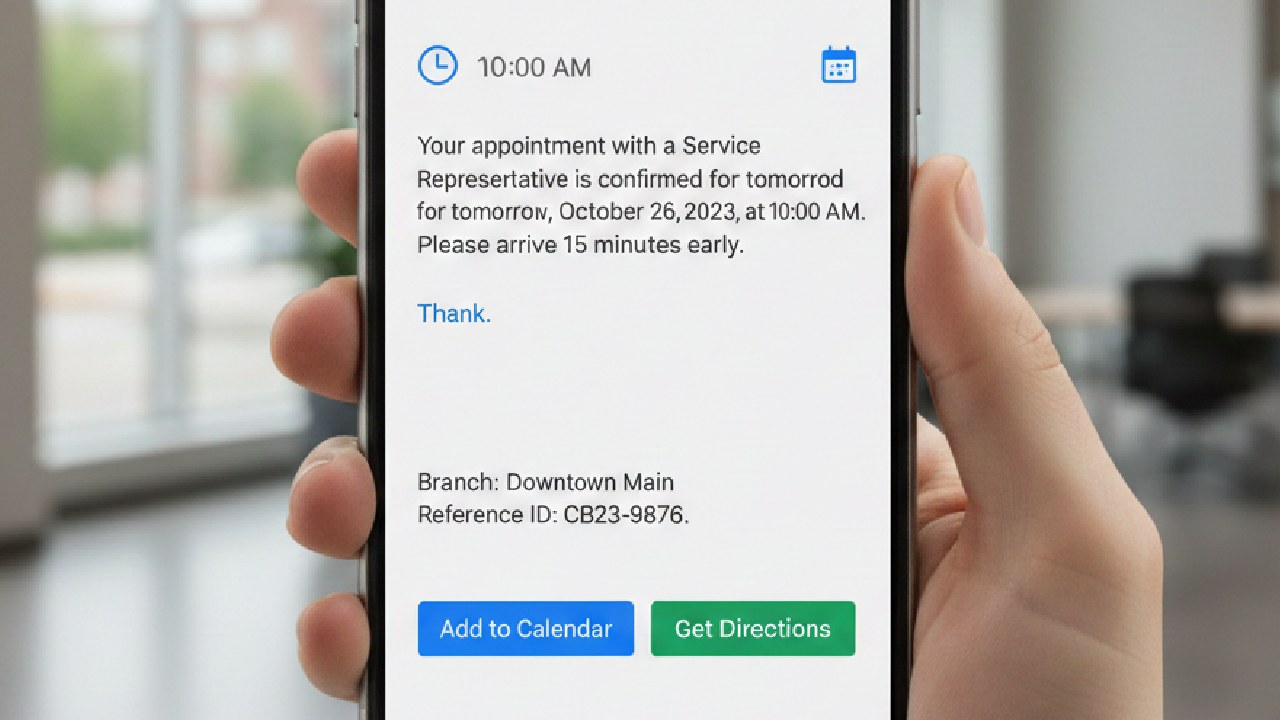
Appointment Reminders
72-hour notice:
“Reminder: You have an appointment with Dr. Smith on Thursday, Jan 18 at 2:00 PM. Location: 123 Main St. Reply CONFIRM or RESCHEDULE.”
24-hour notice:
“Tomorrow: Appointment with Dr. Smith at 2:00 PM. Arrive 15 minutes early for paperwork. Need to reschedule? Call (555) 123-4567”
Same-day alert:
“Your appointment is today at 2:00 PM. Reply CHECKED-IN when you arrive.”
The timing logic matters. Earlier reminders support rescheduling. Same-day reminders support attendance and punctuality.
Payment Notifications
Payment received:
“Payment of $89.00 received for invoice #2847. Thank you! Receipt: bit.ly/3xK9m2n”
Payment due soon:
“Invoice #2847 ($89.00) is due in 3 days. Pay now: bit.ly/3xK9m2n Questions? Reply HELP”
Overdue notice:
“Invoice #2847 ($89.00) is now overdue. Please submit payment to avoid late fees: bit.ly/3xK9m2n”
Recurring payment confirmation:
“Your monthly subscription ($29.00) has been processed. Next billing date: Feb 15. Manage: bit.ly/3xK9m2n”
These messages should always make the financial action clear. The amount, the reason, and the next step should all be easy to find without scrolling or interpreting vague wording.
Timing Boundaries
Appointment and payment reminders should respect the recipient’s local time and the actual urgency of the event. A useful operating rule is to define message windows by use case before launch instead of pushing every reminder as early and as often as possible.
Boundary judgment: Frequency and send windows should be set by message type, business risk, and user expectation. A missed appointment reminder and an overdue invoice notice may justify different timing rules even if both are transactional.
Multi-Step Transactional SMS Sequences
Some workflows are not one-message events. They unfold over multiple steps, and each step needs the right amount of information at the right time.
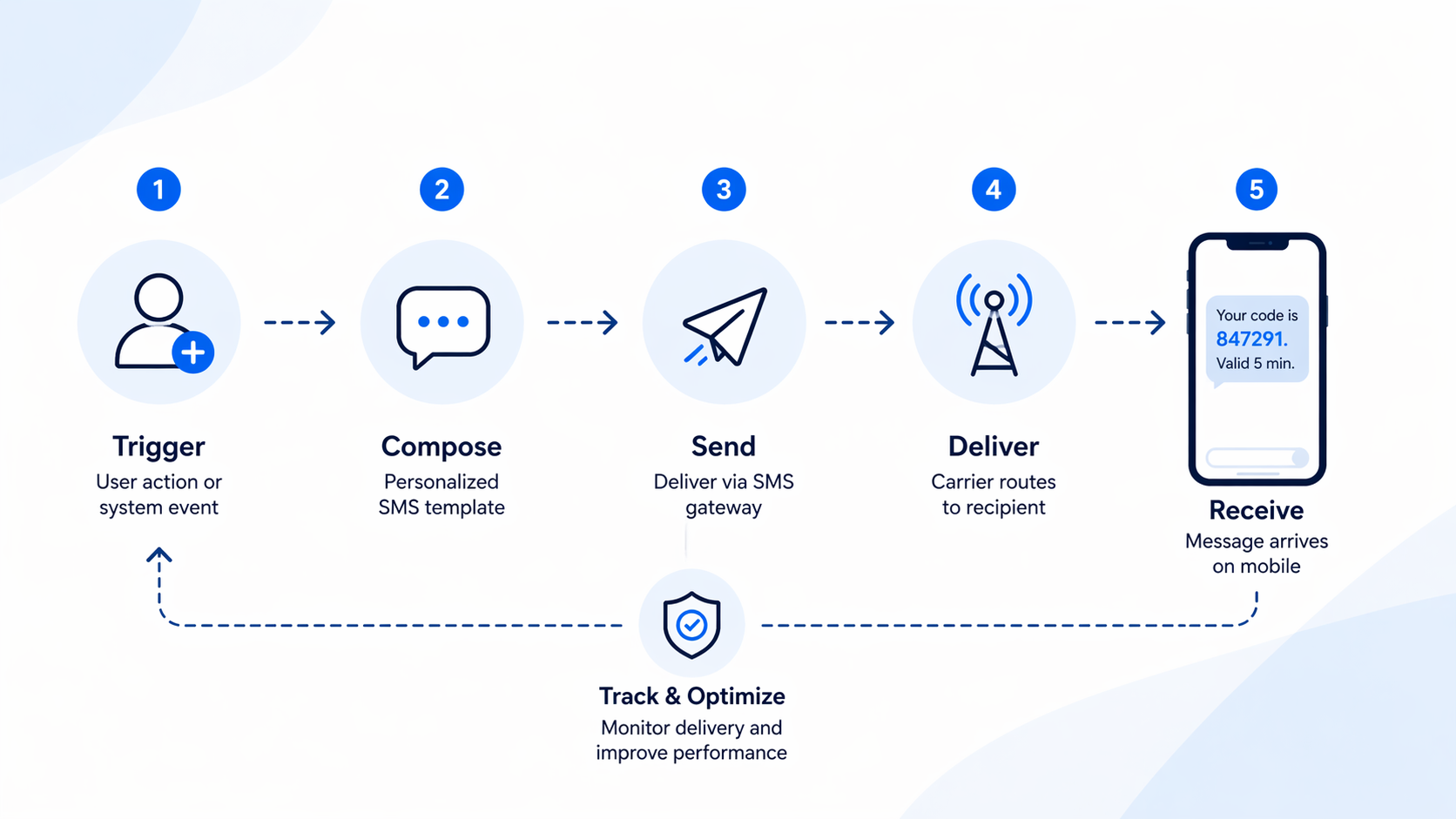
Sequence Building Principles
Effective transactional SMS sequences usually follow three rules:
- Reveal information only when the user needs it.
- Make the trigger for the next step obvious.
- Give the user a clear response or exit path when appropriate.
Application Status Sequence
Step 1 – Application received:
“Your loan application (ID: L-8847) has been received. We’ll review within 24 hours. Check status: bit.ly/3xK9m2n”
Step 2 – Additional documents required:
“Action needed: Please upload your recent pay stubs to complete application L-8847. Upload: bit.ly/3xK9m2n”
Step 3 – Decision notification:
“Application L-8847 approved! Funds will transfer within 2 business days. Questions? Call (555) 123-4567”
This sequence works because every message refers to the same application and moves the user toward the next real action.
Fraud Alert Sequence
Step 1 – Suspicious activity detected:
“Unusual activity detected on your card ending in 4582. Reply YES if you made this purchase, NO if not.”
Step 2A – If YES:
“Thank you for confirming. No further action needed.”
Step 2B – If NO:
“Your card has been temporarily blocked. Call (555) 123-4567 immediately to secure your account.”
Fraud alerts work best when the response path is simple. In a stressful moment, binary actions reduce hesitation and confusion.
Preventing Message Bombardment
Transactional SMS should still have frequency controls. The right threshold depends on the use case, urgency, and user expectation, but teams should define per-user limits and escalation rules before launch. For very high-frequency events such as delivery tracking, it is often better to batch lower-value updates or move part of the flow to push or email.
Cross-Border Transactional SMS
Cross-border transactional SMS gets harder because sender identity rules, message treatment, and reporting quality can vary by destination. The template logic may stay the same, but execution often does not.
Multi-Language OTP Example
English:
“Your code is 847291. Valid for 10 minutes. Do not share it.”
German:
“Ihr Code lautet 847291. Gültig für 10 Minuten. Nicht weitergeben.”
French:
“Votre code est 847291. Valable 10 minutes. Ne le partagez pas.”
Spanish:
“Su código es 847291. Válido por 10 minutos. No lo comparta.”
Japanese:
“認証コード: 847291(10分間有効)。他人に教えないでください。”
Chinese:
“您的验证码是847291,10分钟内有效。请勿泄露给他人。”
Even a short OTP message expands differently by language. That matters for character limits, readability, and template consistency.
Common Regional Checks
| Region | Common operational checks | Sender ID considerations | Notes |
|---|---|---|---|
| USA | Program setup and message treatment vary by traffic type and route | 10DLC, toll-free, or short code may be used depending on use case | Review carrier and campaign requirements before launch |
| EU | Consent and data handling obligations may apply depending on context | Alphanumeric sender IDs are often supported, but country-level differences remain | Check destination-specific rules rather than treating the EU as one uniform setup |
| UK | Similar operational checks to many EU markets, with local differences | Alphanumeric sender IDs are commonly used | Validate UK-specific sender and compliance expectations |
| Canada | Message classification and consent handling matter | Short code, toll-free, or local number strategy may vary by use case | Review CASL implications where applicable |
| Australia | Unsubscribe and operational message expectations can depend on the program type | Alphanumeric sender IDs are often supported | Confirm destination-specific requirements before scaling |
| Japan | Sender setup and filtering expectations can be stricter | Sender registration and delivery behavior can be market-specific | Test carefully on real devices before volume ramps |
Boundary judgment: Build a global baseline for consent, recordkeeping, and message governance, then adapt sender identity, content, and routing practices to each destination. This is usually safer than assuming one region’s strictest or loosest model should automatically become your rule everywhere. If you are also evaluating network path complexity across destinations, how SMS platforms connect to mobile networks helps frame what changes after your system submits the message.
Template Selection Guide
The best transactional SMS template is not the longest or the most polished. It is the one that matches the user’s moment.
Complexity Matching Framework
| User state | Template complexity | Example |
|---|---|---|
| High urgency + high stress | Minimal | “Code: 847291” |
| Routine transaction | Standard with context | “Your order #45892 ships today. Track: [link]” |
| Complex multi-step process | Structured sequence | Application status updates |
| International use case | Localized and validated | Destination-specific OTP or alert template |
Common Template Mistakes
Over-explaining:
“We are writing to inform you that your recent order placed on our platform has been processed and is now being prepared for shipment…”
This is too long and too formal for the channel.
Under-explaining:
“Shipped.”
This is too vague to be useful.
Mixed messaging:
“Your order ships today. Also, get 20% off your next purchase!”
This weakens the operational purpose of the message and can create classification and trust problems.
Template Maintenance Checklist
- Review delivery patterns regularly, not just once at launch
- Recheck any links after template updates
- Audit character count after translation changes
- Test on real devices, not only in internal previews
- Separate operational templates from promotional copy libraries
Boundary judgment: Regulated industries and sensitive use cases usually need tighter review than generic order updates. A medical reminder, banking alert, or fraud notification should follow stricter approval and escalation rules than a standard shipping text.
Best Practices for Getting Started with Transactional SMS
Most teams do not need every transactional SMS use case on day one. They need the ones where timing, clarity, and user expectation matter most.
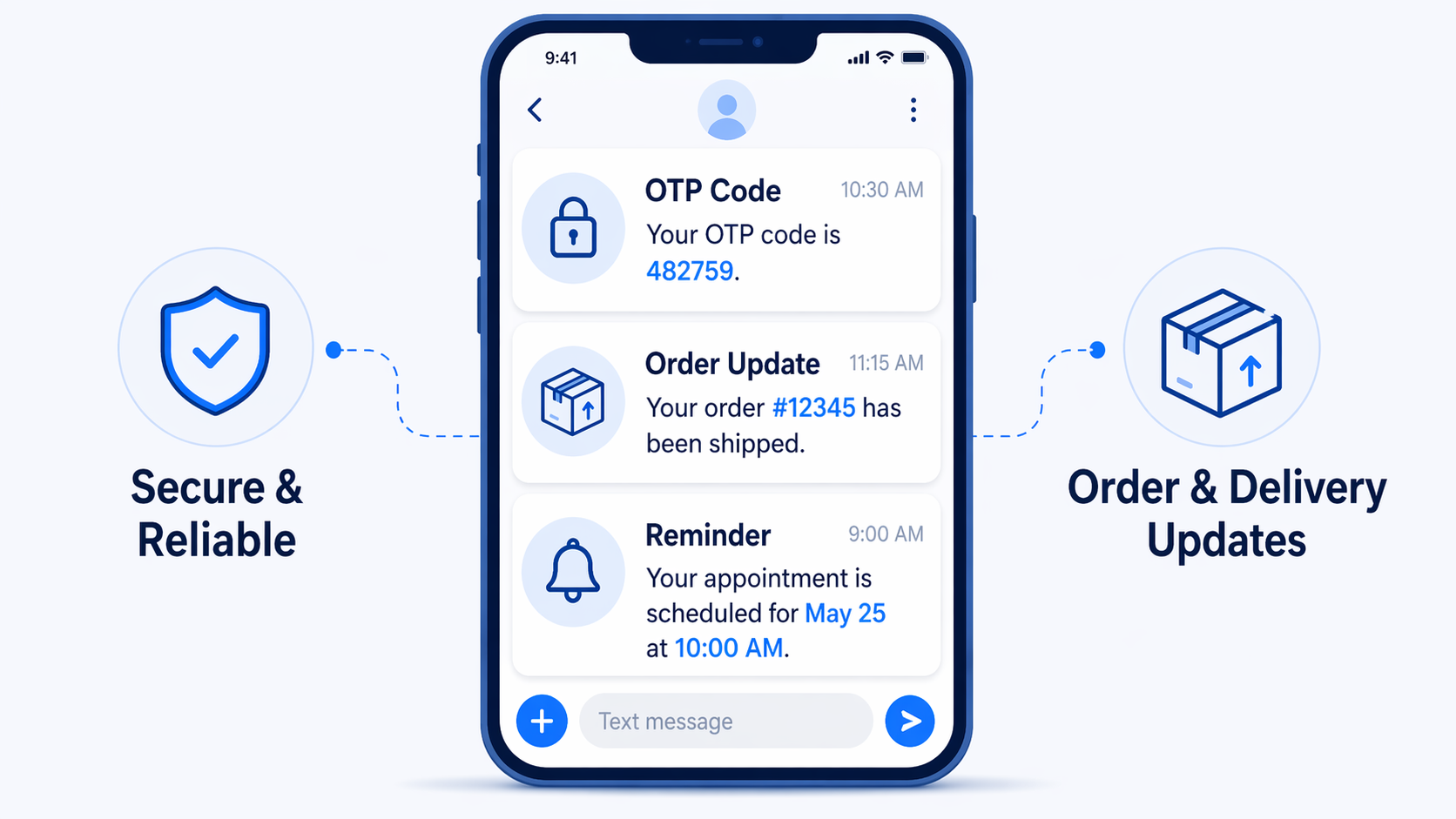
Five Message Types to Prioritize First
- Security codes
- Order confirmations
- Shipping updates
- Appointment reminders
- Payment confirmations
These are usually the highest-value starting points because the user already expects them and the next step is easy to understand.
How to Organize Templates Internally
A practical way to organize transactional SMS templates is by:
- trigger type: user-initiated or system-initiated
- urgency: immediate or scheduled
- review level: standard or regulated
- locale: separate versions by destination or language
This prevents teams from mixing compliance-sensitive traffic with simple operational reminders.
What to Evaluate Before You Scale
Before adding more countries, message types, or volume, check:
- whether the sender setup works for each destination
- what happens when SMS is delayed or fails
- whether your logs and support process can explain delivery issues
- whether message frequency limits are defined by use case
- whether the workflow belongs in SMS, or partly in email, push, or in-app messaging
Transactional SMS works best as one part of a broader communication system, not as a substitute for every other channel.
References
[1] CTIA. Messaging Guidelines for Short Code Programs. CTIA, 2024. https://www.ctia.org/
[2] Twilio. SMS Compliance Guide for Global Messaging. Twilio Documentation, 2024. https://www.twilio.com/
[3] GDPR.eu. SMS Marketing and GDPR Compliance. GDPR.eu, 2024. https://gdpr.eu/
[4] Federal Communications Commission. TCPA Rules and Regulations. FCC, 2024. https://www.fcc.gov/
[5] GSMA. Universal Profile for Advanced Messaging. GSMA, 2024. https://www.gsma.com/