A good marketing SMS is short, relevant, and built around one clear action. For B2B brands, the best messages usually connect to a live moment, like booking a demo, confirming attendance, following up with a lead, or bringing a contact back into the funnel. If the text tries to do too much, response usually drops.
In this guide, we’ll show you a simple formula, campaign-specific examples, CTA options, and a quick decision table you can use when you need to write faster without making your messages feel stiff or overly sales-heavy.
If you want broader context before getting into copy structure, our guide to business text messages explains how SMS fits into reminders, alerts, and promotional campaigns.
What Should a Good Marketing SMS Get Done in One Message?
A good SMS marketing should move one person toward one next step. That is the real job. It is not there to explain your whole offer, tell your brand story, and answer every question at once. It should create one clear action.

The first part is having one goal. Your message should ask for one thing only, like clicking a link, replying to book, or claiming an offer. The second part is giving people one reason to care. That reason needs to feel relevant now, not vague or generic.
The third part is using one CTA. If your text asks people to click, reply, and call, most of them will do nothing. Too many choices slow people down. The last part is timing. A message works better when it matches the user’s situation, like a live offer, a demo invite, or a reminder tied to something they already showed interest in.
What Is a Simple Marketing SMS Formula You Can Reuse?
A reusable marketing SMS formula is: brand, context, value, timing, and CTA. That order helps people understand the message fast. They know who sent it, why they are getting it now, what is in it for them, how long they have, and what to do next.
Start With the Brand
Start with your brand name or place it very close to the front. If people cannot tell who sent the text in the first few words, they may ignore it, especially when a link is involved.
Add the Context
Add one reason the message matters now. That could be a live offer, a booked event, a recent signup, a product page visit, or an unfinished trial. Context keeps the message from feeling random.
Put the Value Up Front
Put the main value near the front, not after a long setup line. Show the reader what they get, what they avoid, or what they can do next. In B2B, that often means saved time, easier follow-up, fewer missed appointments, or a simpler next step.
Close With One CTA
Close with one CTA and keep it easy. Ask for one action only, like book, reply, confirm, or view. The more decisions you force into one text, the easier it is for the reader to do none of them.
Which Marketing SMS Style Fits Your Goal?
The best marketing SMS style depends on what you want the reader to do next. If your CTA, message angle, and campaign goal do not match, the text usually feels off even when the wording sounds fine.
Use this quick guide before you write:
Promo Offer:
- Use a click CTA.
- Lead with the offer and the deadline.
- Best for discounts, limited-time bundles, and short sales windows.
Demo Or Consultation:
- Use a click CTA or a reply CTA.
- Lead with the business problem you help solve.
- Best for booked interest, warm leads, and high-intent follow-up.
Event Or Webinar Reminder:
- Use a join CTA or a reply CTA.
- Lead with the time and the event purpose.
- Best for confirmation flows, attendance reminders, and same-day follow-up.
Re-Engagement:
- Use a softer click CTA.
- Lead with the last action the reader took and one reason to come back.
- Best for paused trials, inactive leads, and unfinished signups.
If you are not sure which one to use, start with the goal, not the wording. That usually clears things up fast.
How Do You Write Marketing SMS for Different Campaign Goals?
Write marketing SMS around the next action you want. A promo text should drive a click. A demo invite should make the meeting feel worth taking. A reminder should reduce friction. A win-back text should reconnect the message to a past action. Once the goal is clear, the wording gets much easier to write.
Promotional SMS for Limited-Time Offers
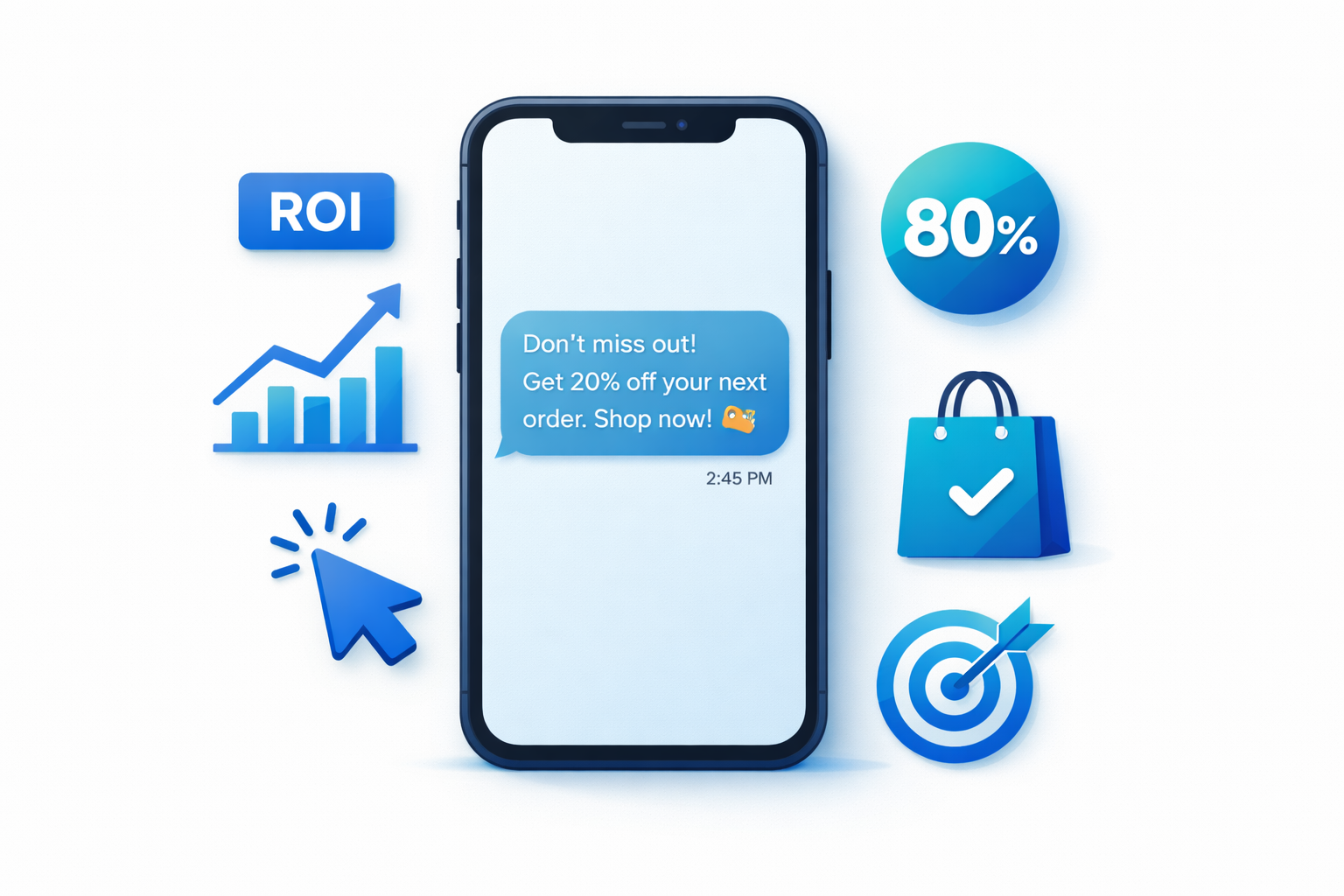
A promotional SMS works best when it leads with a specific offer, a real deadline, and one easy click. Readers should understand the value in the first few words.
Use this structure:
- Lead with the offer: Say what they get right away.
- Add the deadline: Give the offer a real end point.
- Keep the CTA light: Use a simple click action.
For example:
[Brand]: Get 20% off your first order through Friday. Shop here: [link]
Demo or Consultation Invitation SMS
A demo or consultation SMS works best when it ties the invite to a real business pain point. In B2B, people do not book meetings just because a brand asks. They book when the message feels useful.
Use this structure:
- Lead with the problem: Show what the demo helps improve.
- Keep the scope tight: Say what the session covers.
- Use a direct CTA: Make booking feel simple.
For example:
[Brand]: Want to reduce missed appointments and slow follow-up? Book a 15-minute demo here: [link]
Event or Webinar Reminder SMS
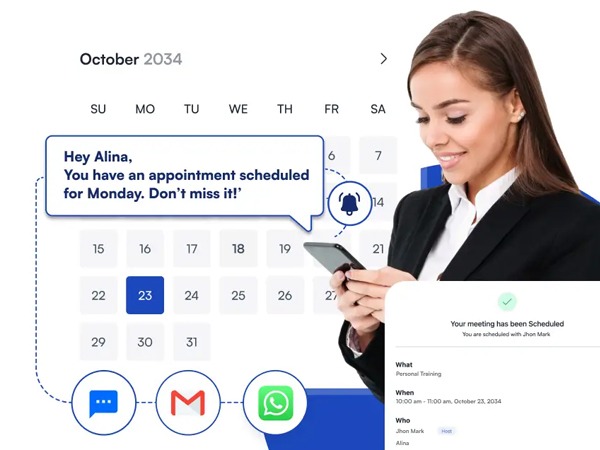
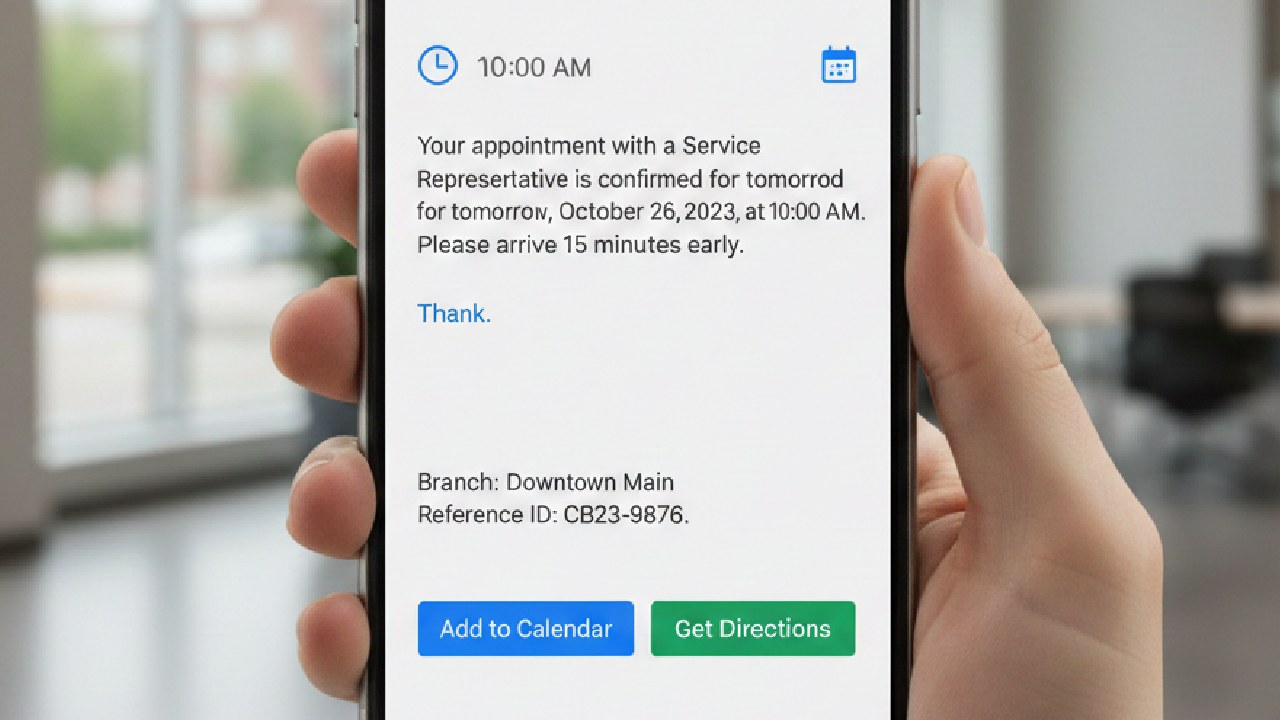
An event or webinar reminder SMS works best when it leads with timing and removes friction. You do not need to sell the whole event again. You just need to help people join, confirm, or show up.
Use this structure:
- Lead with the time: Start with when it happens.
- Name the event: Remind the reader what they signed up for.
- Choose one action: Join or reply, not both.
For example:
[Brand]: Your retail trends webinar starts today at 2 PM PST. Join here: [link]
Or:
[Brand]: Your retail trends webinar starts in 1 hour. Reply YES if you’re joining.
Re-Engagement or Win-Back SMS
A win-back SMS works best when it reconnects the message to something the reader already did. That could be a trial signup, a product view, a downloaded guide, or a page they visited before leaving.
Use this structure:
- Bring back the past action: Show why they are getting this text.
- Add one reason to return: Give them new value or a useful update.
- Use a softer CTA: Invite the click without pushing too hard.
For example:
[Brand]: You left your free trial before setup was complete. Restart this week and get onboarding help here: [link]
How Do You Write a CTA That Still Feels Natural?
A natural CTA matches the goal of the message and sounds like a reasonable next step. That is why some CTAs get clicks and replies while others feel too hard, too sales-heavy, or too vague. The wording needs to fit both the campaign and the audience.
Click CTAs work well when the main action happens on a page. Phrases like Book your demo, View the offer, See pricing, or Join the webinar tell people exactly where they are headed. These are a good fit when the page does the rest of the selling.
Reply CTAs work well when you want a fast response inside the text thread. Phrases like Reply YES, Reply DEMO, or Reply BOOK reduce effort and can help qualify leads quickly. They are especially useful for event reminders, appointment flows, and warm sales conversations.
Low-friction CTAs work well when the audience is colder or the offer needs a softer tone. Phrases like See details, Reserve your spot, or Take a look feel lighter, but they still move the reader forward. That softer tone can lift response rates when a harder CTA feels too abrupt.
How Can You Create Urgency Without Sounding Spammy?
Create urgency by giving people a real reason to act now. The message should feel timely, not forced. If the deadline is vague or the pressure feels fake, readers stop trusting the text.
Use urgency in 3 simple ways:
- Name the deadline: Say when the offer, registration, or booking window ends.
- Explain the reason: Tie the timing to something real, like a launch, a live event, or limited availability.
- Keep the tone calm: Let the timing create the pressure. You do not need to shout.
For example:
[Brand]: Last day to save 15% on your first order. Offer ends tonight at 11:59 PM. Shop here: [link]
This works better because the reader gets 3 things fast: the offer, the cutoff time, and the next step.
Avoid urgency like this:
- Vague lines like “ending soon”
- Fake scarcity that shows up in every campaign
- All caps and heavy punctuation
In campaigns, urgency often lands better when it connects to something concrete. A demo calendar may be filling up. A webinar may start in one hour. A setup bonus may end on Friday. That feels more believable than trying to force pressure into every text.
Marketing SMS Examples: Weak vs Better
One of the fastest ways to improve your SMS copy is to compare weak wording with a version that gives the reader more clarity, more context, and a cleaner next step. The better version usually wins because it answers 3 questions faster: what is this, why should I care, and what should I do now?
Promo Example
Weak:
[Brand]: Big sale happening now. Don’t miss out. Click here: [link]
Better:
[Brand]: Get 20% off all spring styles through Friday. Shop here: [link]
The second version names the offer and the deadline. The first one sounds vague, so the reader has no strong reason to click now.
Demo Invite Example
Weak:
[Brand]: Book a demo with us today: [link]
Better:
[Brand]: Want to see how our platform cuts scheduling time for busy clinics? Book a 15-minute demo here: [link]
The second version explains why the demo matters. That makes the invite feel more relevant and much less cold.
Win-Back Example
Weak:
[Brand]: We miss you. Come back now: [link]
Better:
[Brand]: You looked at our starter plan last month. We’ve added a simpler setup option. See it here: [link]
The second version brings back a past action and adds a reason to return. The weak version asks for attention without offering much value.
What Should You Test to Improve Marketing SMS Performance?
Test the parts of your marketing SMS that are most likely to change action. You do not need to test everything at once. Start with the pieces that shape the click, reply, or conversion.
Focus on these 4 test areas:
- Offer Framing:
Test how you present the value. “Get 20% off” may land differently from “Save $20,” even when the offer is close.
- CTA Wording:
Test phrases like Shop Now, See Details, Book Your Demo, or Reply YES. Small wording changes can shift how much effort the action feels like.
- Message Length:
Test a tighter version against one with a little more context. Some audiences act fast on short copy. Others need one more line before they trust the click.
- Send Timing:
Test when the message arrives. A same-day reminder may beat a next-day reminder. A lunch-hour offer may beat an early-morning send.
A good testing rule is simple: change one variable at a time. If you test the offer, CTA, and timing all at once, you will not know what moved the result.
If you are short on time, start with offer framing and CTA wording first. Those two usually change performance faster than minor copy edits.
Quick Compliance Checklist Before You Send
Check the basics before you send any marketing SMS. A quick review can save you from poor delivery, confused users, and avoidable compliance problems.
Use this checklist before launch:
- Confirm Opt-In: Make sure the contact agreed to receive marketing messages.
- Match The Promised Purpose: Send the kind of content people expected when they signed up.
- Include An Easy Opt-Out: Let users stop messages in a clear, simple way.
- Check Your Brand Name And Link: Make sure the sender name and destination link are correct.
- Review The Final Copy: Check timing, offer details, and CTA before the message goes out.
This step is easy to skip when the campaign is moving fast. It still saves you from some of the most annoying mistakes.
Conclusion
A good marketing SMS is easy to recognize, easy to understand, and easy to act on. The best ones stay focused on one audience, one reason, and one next step. They also match the campaign goal. A promo text should feel different from a demo invite, and a reminder should not read like a sales push.
If you want better clicks and replies, start by tightening your message around one clear action and one clear CTA. Then build repeatable versions for your main campaign types. If your team needs help managing sends, follow-up flows, and recurring B2B campaigns at scale, SMSBoosting can help you run that process with more control.