
An SMS platform sits between your business systems and the carrier-facing connectivity that helps messages reach phones. It is the control layer for sender identity, routing, pacing, and reporting, while carriers and local rules still influence final acceptance and delivery behavior.
For first-time buyers, the key mental model is simple: you are not buying “the network.” You are buying better control over the parts of SMS operations that your team can actually manage. If you need a simpler reset first, start with our guide to what an SMS platform is.
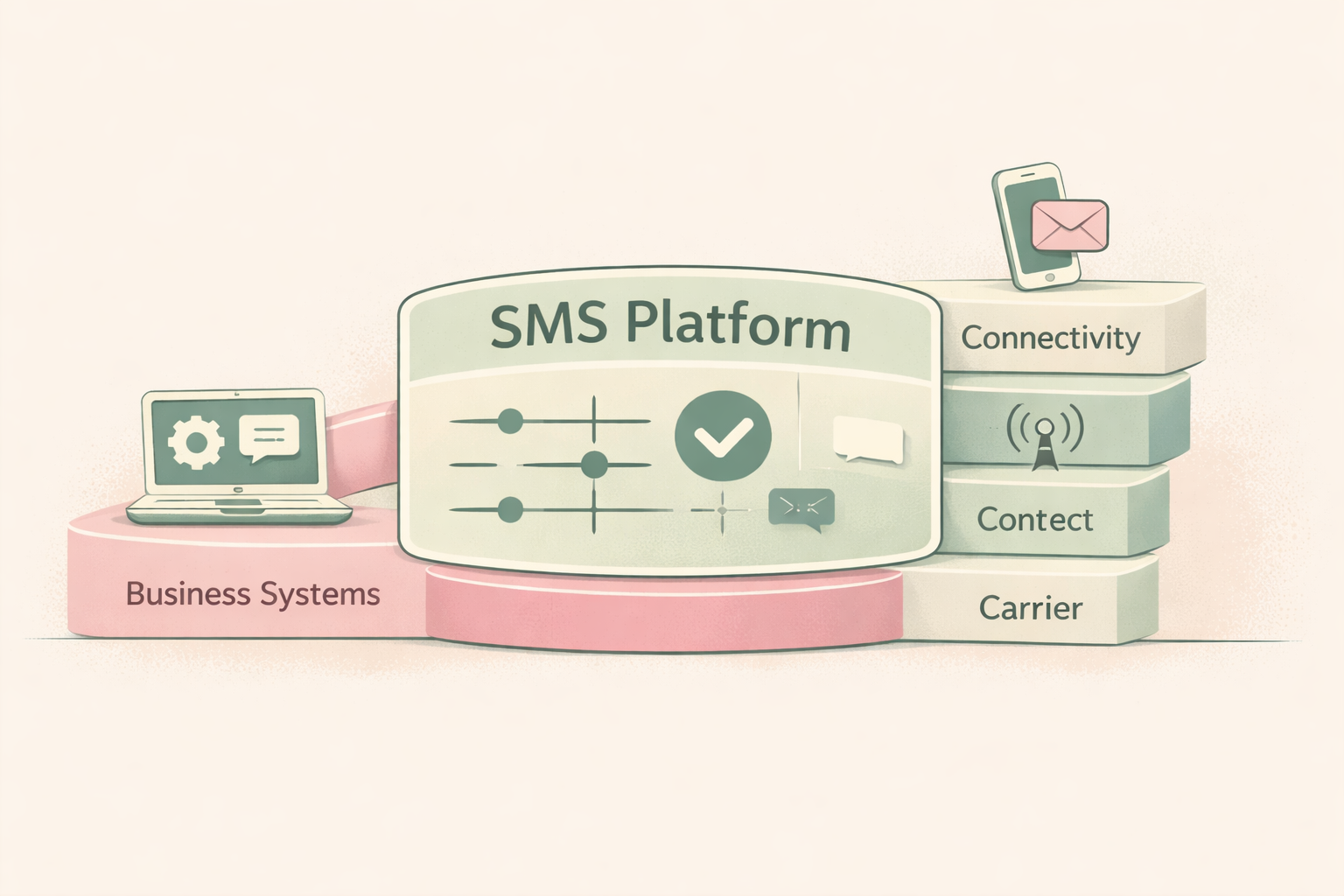
Where Do SMS Platforms Sit in the SMS Messaging Stack?
The simplest placement answer: where the SMS platform sits between your app and carriers
Most first-time buyers picture SMS like this:
Your app → carrier → phone
In business messaging, it is closer to this:
Your app & tools → SMS platform → connectivity → carrier rules → phone inbox
That “platform” layer is not the mobile network. It is the layer that helps you run SMS like a channel—repeatably, safely, and with fewer surprises.
SMS platform vs SMS gateway vs aggregator vs carrier: one-line definitions you can reuse
If the terms feel fuzzy, keep these one-liners:
- Carrier: the mobile operator that ultimately decides whether a message is accepted, filtered, throttled, or delivered.
- Aggregator: an intermediary network that helps providers reach many carriers more quickly, with tradeoffs in visibility and consistency.
- SMS gateway: the technical handoff point that submits messages into routes and receives delivery receipts where available.
- SMS platform: the operational control layer around sending, including identity setup, routing logic, pacing controls, and reporting.
If you want the gateway boundary in more detail, see SMS Platform vs SMS Gateway: What’s the Difference?.
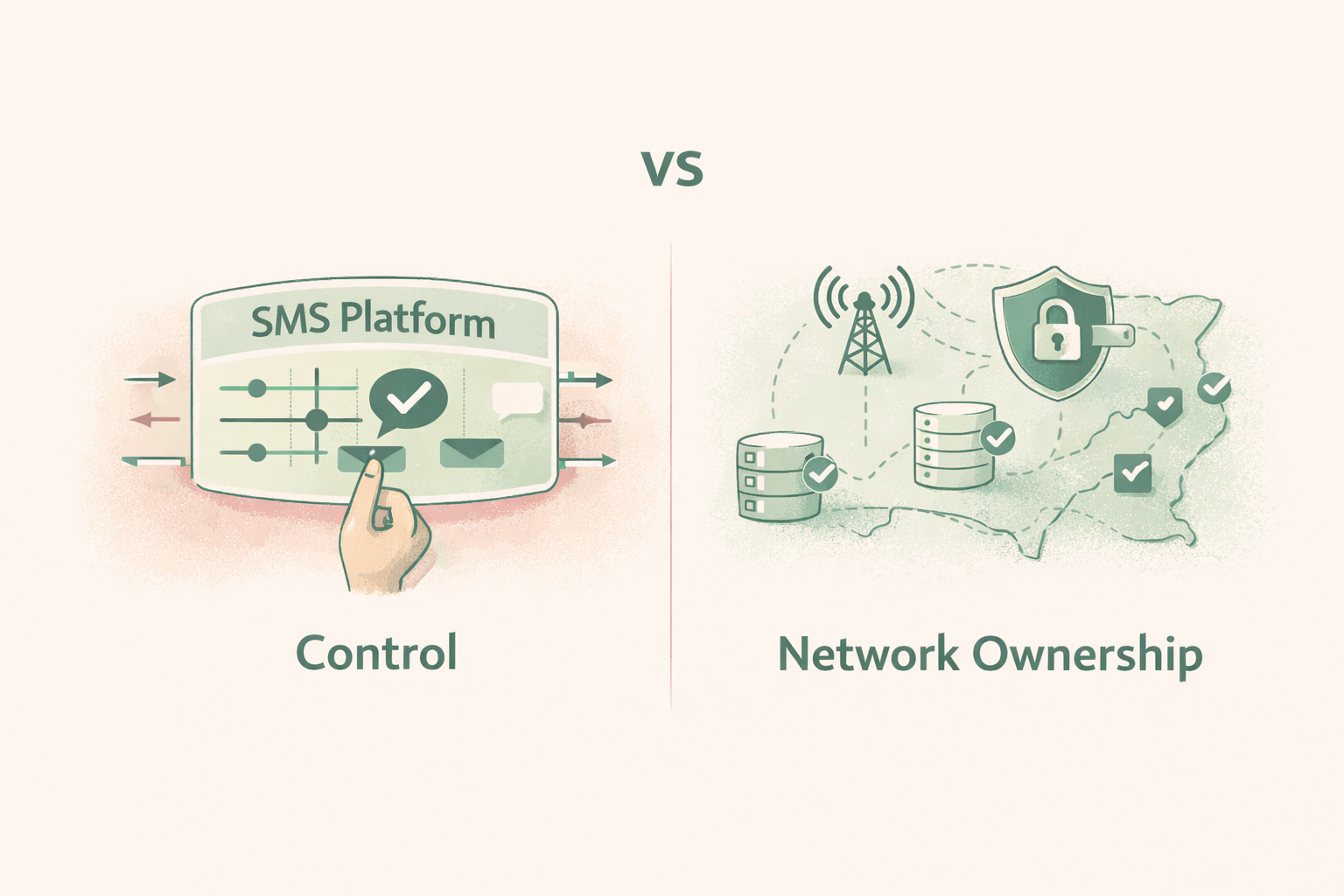
“Control layer” vs “network ownership”: the mental model first-time buyers need
A useful rule:
If you are buying an SMS platform, you are not buying “the network.”
You are buying control over the parts you can control.
And yes, this matters because business SMS is a large global operating environment, not a tiny edge case. At that scale, layered systems are normal: they exist because countries, carriers, and sending rules are not all the same.
Why the SMS Messaging Stack Has Multiple Layers
The scale reason: many countries, many carriers, many rulebooks
You can send one API request, but you are delivering into thousands of real-world rule sets.
- Different carriers apply different policies.
- Different countries enforce different sender identity rules.
- Different routes behave differently at different times.
That is why “global SMS” becomes a stack.
The expectation trap: API accepted vs carrier accepted (and why outcomes still change)
One of the most common misunderstandings:
- API accepted means your provider accepted your request.
- Carrier accepted means the message was accepted into the carrier’s delivery system.
Between those two, outcomes can still change, because the carrier decides filtering, pacing, and what “delivered” really means.
The local-rule reason: why the same sender or content behaves differently by destination
If you have ever seen a sender name appear correctly in Country A and get replaced or blocked in Country B, you have bumped into stack reality: identity rules live at multiple layers, and the strictest layer wins.
A campaign can stay stable in one country and wobble in another without any copy or code change because the connectivity and carrier rules underneath the platform shifted.
How the A2P SMS Delivery Path Moves Through the Five Layers
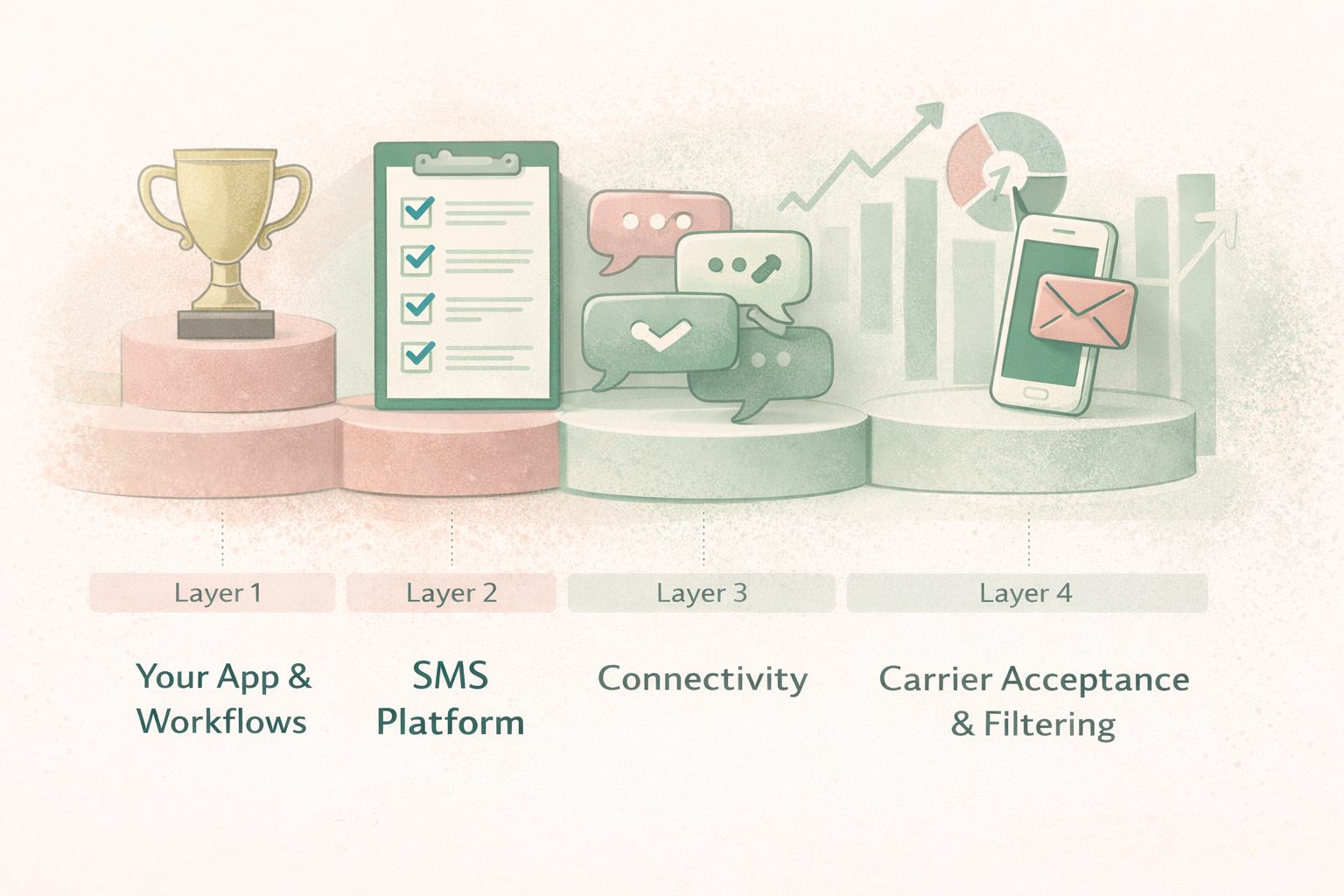
Here is the five-layer map you can keep in your head:
- Layer 1 — Your app & workflows
- Layer 2 — SMS platform
- Layer 3 — Connectivity (direct routes and/or aggregator routes)
- Layer 4 — Carrier acceptance & filtering
- Layer 5 — Phone inbox & user actions
If you want a dedicated walkthrough of the connectivity layer, read How an SMS Platform Connects to Mobile Networks.
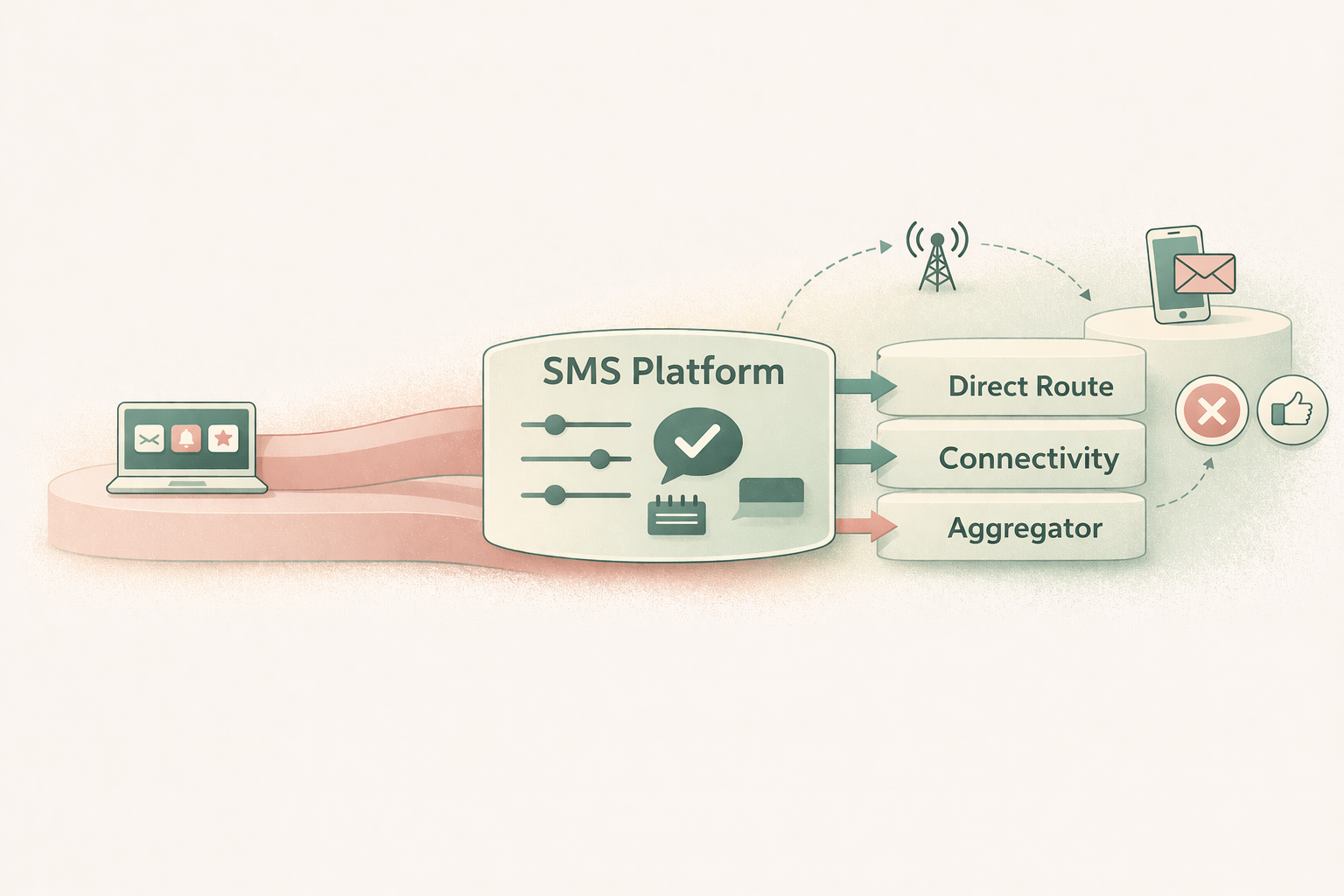
Layer 1: Your app and workflows that decide what to send and when
This is where your business logic lives: who you message, what you send, and when.
Examples:
- marketing journeys
- one-time alerts
- support notifications
- reminders
Even here, choices matter: content type, link usage, and send timing can affect outcomes downstream.
Layer 2: The SMS platform layer that manages sending operations
This is the ops layer for SMS. A good platform helps you manage:
- identity setup and registration workflows
- routing choices and fallbacks
- pacing controls to avoid spikes and throttling
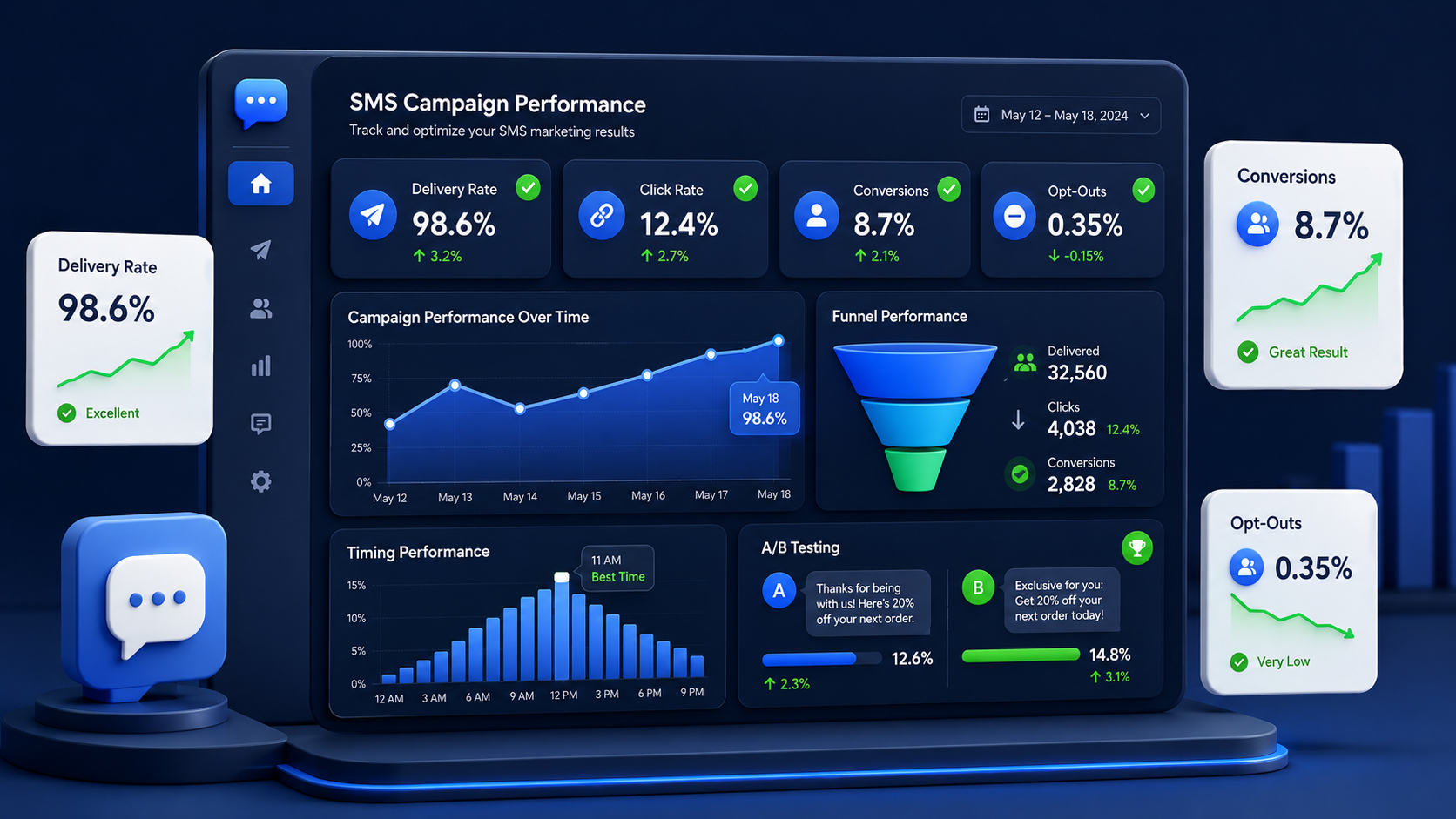
- reporting and visibility, including country breakdowns, timestamps, and status mapping
Layer 3: Connectivity layer: direct routes and aggregator routes
There are two common connectivity patterns:
- Direct routes: the provider has direct connections into carriers, often making behavior more predictable in specific destinations and giving better path clarity.
- Aggregator routes: the provider uses an aggregator to reach many carriers, often making coverage expansion faster but with tradeoffs in path stability and transparency.
In practice, many providers use a mix. The real question is not which one is morally better. The question is which mix fits your footprint and your stability needs.
Layer 4: Carrier layer: acceptance, filtering, pacing, and delivery receipts
This is where the final say happens. Carriers may:
- block or filter messages
- throttle throughput
- require registration before accepting certain traffic
- return delivery receipts that vary in detail and meaning
Layer 5: Phone inbox layer: what users can do after delivery
Even if a message arrives, users can:
- opt out
- report spam
- block senders
- ignore messages
A platform cannot control users, but it can help you see trends early.
What an SMS Platform Controls in the SMS Messaging Stack
Sender identity setup: number types, sender IDs, and registration workflows
Identity is not just “pick a sender.” It is a set of rules by destination.
A platform can help you manage:
- which sender types you use where allowed
- registration workflows where required
- safe defaults and fallback identities when a sender type is not supported
Routing choices: primary paths, fallback paths, and country-level overrides
Routing is where “global” becomes real.
A platform can:
- choose primary routes per country
- maintain fallback routes for congestion or failures
- apply country overrides when performance changes
No magic. Just controls.
Send pacing controls: rate limits, queues, and burst protection
Pacing is an underrated lever. Even good traffic can get throttled if you spike volume too suddenly.
A platform can help you:
- smooth bursts
- enforce rate limits
- queue intelligently
- detect pacing-related drops
Reporting you can debug with: country splits, timestamps, and route changes
The fastest teams debug by layer.
Reporting that helps:
- country-by-country performance
- timestamps, including submission vs carrier events where available
- route changes and routing history
- status normalization so “delivered” is not a mystery
What the SMS Messaging Stack Still Depends On (and Why No One Can “Guarantee Delivery”)
Carrier filtering: content enforcement, trust scoring, and sudden policy shifts
Carriers can tighten rules quickly. Content patterns, complaint signals, and trust signals all matter, and they are not fully visible from the outside.
Country gating: registration requirements, sender replacement, and blocked traffic
Many destinations enforce registration rules. If you skip them, outcomes can include:
- blocked traffic
- sender replacement
- reduced throughput
- inconsistent delivery
Network congestion: delays, time-of-day effects, and variable throughput
Congestion can cause delays even when your API returns success. If you only look at API success, you will misdiagnose.
Handset outcomes: opt-outs, complaints, and user-driven blocking
User signals are often leading indicators of future filtering. High delivery with rising opt-outs is not healthy.
If you want a clean boundary map of this topic, see What an SMS Platform Cannot Control.
How to Evaluate an SMS Provider Using the Stack
The three questions that reveal what you are actually buying
Use these as a shortcut:
- Which layer are you strongest at—control, connectivity, or both?
- What can you show me at the country level, not just global averages?
- What is your fallback plan when performance changes?
The proof to request: logs, country coverage detail, and route-level breakdowns
Here is the high-density checklist:
- Country coverage: supported sender types per country, not just “global coverage”
- Identity readiness: what registration is required where, and expected lead times
- Routing clarity: whether routes are direct, aggregator, or mixed, at least at a high level
- Fallback design: documented fallback behavior for outages or congestion
- Pacing guidance: recommended throughput practices per destination
- Reporting detail: country splits, timestamps, and normalized statuses
- Support reality: what happens during an incident, including escalation paths and communication expectations
Micro-friction rule #1: If you cannot get country-level breakdowns, assume you cannot debug outcomes.
A quick self-check: are you comparing control, connectivity, or marketing claims?
When vendors say “best deliverability,” ask yourself:
- Are they describing connectivity?
- Are they describing controls such as identity, pacing, and reporting?
- Or are they just describing marketing?
Micro-friction rule #2: If a claim cannot be mapped to a layer, it cannot be validated.
Mid-article self-check
If you are currently comparing providers, pause and label what you are comparing:
- control layer features
- connectivity footprint
- or a slogan
That alone prevents a lot of bad decisions.
A Beginner Validation Path Before You Scale an SMS Messaging Stack
Start narrow: one country, one identity, one use case, one success metric
Start with a controlled pilot:
- pick one priority country
- choose one identity type you can support reliably
- run one use case, such as alerts or lifecycle messaging before pure promos
- define one metric you will trust, not just API success
Expand safely: per-country tests, backup identities, and pacing milestones
Then expand step by step:
- add countries in batches
- keep a backup identity option for each region where possible
- increase volume in milestones instead of jumping 10× overnight
Monitor by layer: delivery signals vs user signals
Track both:
- delivery signals: carrier acceptance and delivery receipts where available
- user signals: opt-outs, complaints, and response rates if two-way messaging exists
Delivery can look fine while user signals degrade. That is your early warning.
A reusable layer-by-layer checklist for rollout decisions
- Layer 1: content type, send timing, segmentation, consent
- Layer 2: identity setup, pacing limits, reporting readiness
- Layer 3: routing mix, fallback design, coverage reality
- Layer 4: destination rules, registration gates, filtering patterns
- Layer 5: opt-out handling, complaint monitoring, user experience
FAQ: SMS Messaging Stack Questions First-Time Senders Actually Search
What is the SMS messaging stack in plain English for business texting?
It is the set of layers a business text passes through—from your app to connectivity routes to carriers to the phone—each with its own rules and failure modes.
Where does an SMS platform sit in the SMS messaging stack, exactly?
Between your workflows and the carrier-facing connectivity. It is the control layer that manages identity, routing, pacing, and reporting.
Is an SMS platform the same thing as an SMS gateway?
Not exactly. A gateway is often the handoff endpoint. A platform is the operational layer around sending that helps performance stay more predictable as you scale.
Do I need an aggregator route, a direct route, or both in my A2P SMS delivery path?
Often both. Aggregators help coverage and speed-to-launch. Direct routes can improve predictability in key destinations. The best mix depends on your footprint.
What should I test first before scaling to more countries in the SMS messaging stack?
Start with identity readiness, meaning sender type and registration, plus pacing at your expected volume. Then validate country-level reporting so you can debug.