SMS marketing isn’t dead. What’s dead is the old playbook: buying lists and blasting generic promos.
In 2026, carriers filter harder, TCPA enforcement is real, and customers opt out fast when messages feel random.
The upside is simple: SMS still works when you text opted-in contacts and tie each message to intent—demo follow-ups, appointment reminders, account updates, and other time-sensitive moments.
In this guide, we’ll cover what changed, why performance drops happen, and how to run SMS that drives clicks and revenue.
Is SMS Marketing Dead?
No. SMS marketing isn’t dead—but the way most people used to run it is.
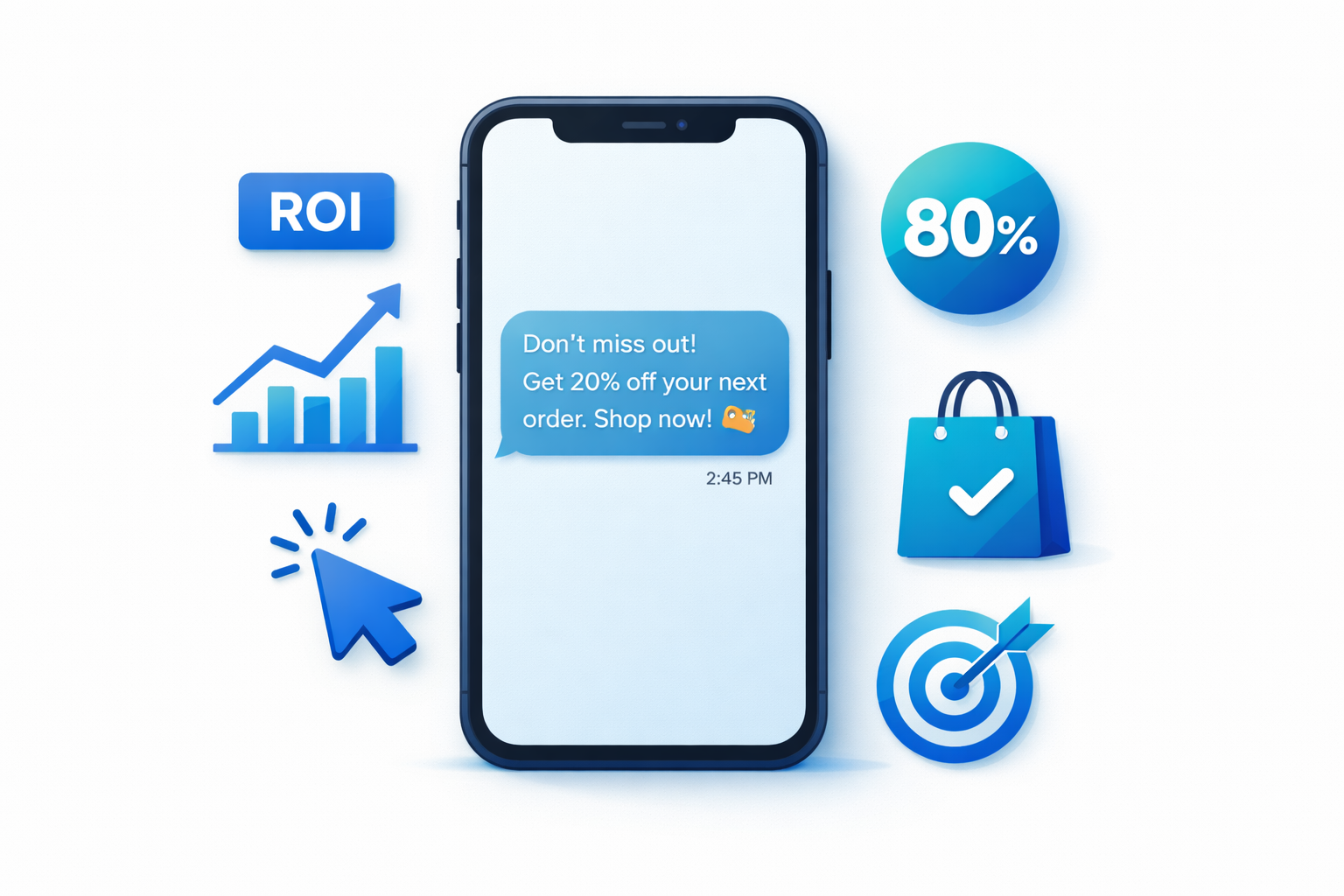
Generic bulk blasts, bought lists, and permissionless messaging no longer work. Permission-based, intent-driven SMS campaigns, however, are still highly effective.
Source: Vecteezy
If your SMS performance dropped over the past few years, it doesn’t mean the channel failed. It means the bar got higher. And that’s where the real distinction starts.
Bulk Blasting Is Dead, Permission-based SMS Is Not
Bulk blasting to anyone and everyone is effectively dead. Carriers filter it. People ignore it. Compliance rules penalize it.
Permission-based SMS tells a very different story. A business that buys a list of 100,000 phone numbers and sends generic promotions often sees double-digit unsubscribe rates, spam complaints, and zero ROI. That approach doesn’t fail slowly—it gets blocked.
By contrast, businesses that build smaller opt-in lists and send messages tied to customer behavior routinely see 5–15% click-through rates, strong conversion, and minimal opt-outs. The channel didn’t change. The expectations did.
What “Dead” Usually Means
When people say “SMS is dead,” they usually mean one of these things:
- “My SMS campaigns aren’t performing.”
Your list is outdated, your offer is irrelevant, or you’re sending too often. - “Carriers are blocking more messages.”
Your list quality, sender reputation, or compliance setup is poor. - “People complained or unsubscribed.”
Recipients never clearly consented—or didn’t expect this type of message. - “Email works better for us.”
You’re running email properly and SMS like a shortcut.
None of these mean SMS stopped working. They mean the strategy behind it broke—and broken strategies can be fixed.
Why SMS Marketing Feels Less Effective Today?
SMS feels less effective today because filtering is stricter, compliance rules have real consequences, audiences are more selective, and outdated metrics create false expectations.
This isn’t channel decline—it’s market maturation. And every major communication channel goes through it.
Stricter Filtering and Higher Expectations From Carriers and Platforms
Carriers no longer treat SMS as a neutral delivery pipe. They actively protect inbox quality.
Modern filtering systems evaluate spam complaints, sender reputation, message patterns, list quality signals, and compliance indicators. A sender who once slipped by with mediocre practices now gets throttled or blocked.
This shift exists for one reason: SMS is still a trusted, personal channel. Carriers protect it aggressively because once customers lose trust, the channel collapses for everyone.
In other words, SMS didn’t become weaker. The tolerance for low-quality messaging disappeared.
Compliance Pressure: Opt-In and Opt-Out Matter More Than Ever
Compliance isn’t theoretical anymore. It’s enforced.
TCPA enforcement is stricter, penalties are real, and carriers actively block senders with unclear consent practices. Businesses that relied on gray-area lists or vague opt-ins now feel the impact directly—through delivery issues, complaints, or fines.
This doesn’t kill SMS. It removes bad actors.
When consent is explicit and expectations are clear, compliant SMS programs continue to deliver strong engagement without carrier interference.
Audience Fatigue and List Decay
SMS volumes increased. Attention didn’t.
Most customers now receive texts from multiple brands. That makes tolerance lower and relevance more important. When messages feel repetitive or off-topic, people unsubscribe quickly.
At the same time, list decay is unavoidable. Phone numbers change. People churn. Inactive subscribers pile up. A list built in 2022 simply isn’t as responsive in 2026.
This means SMS now requires active list hygiene, frequency control, and relevance checks. It’s no longer a “set it and forget it” channel.
Measurement Confusion (SMS Doesn’t Have a Real “Open Rate”)
One reason SMS feels weaker is measurement confusion.
The industry spent years promoting “98% open rates,” even though SMS has no true open tracking. When real results don’t match that hype, teams assume the channel failed.
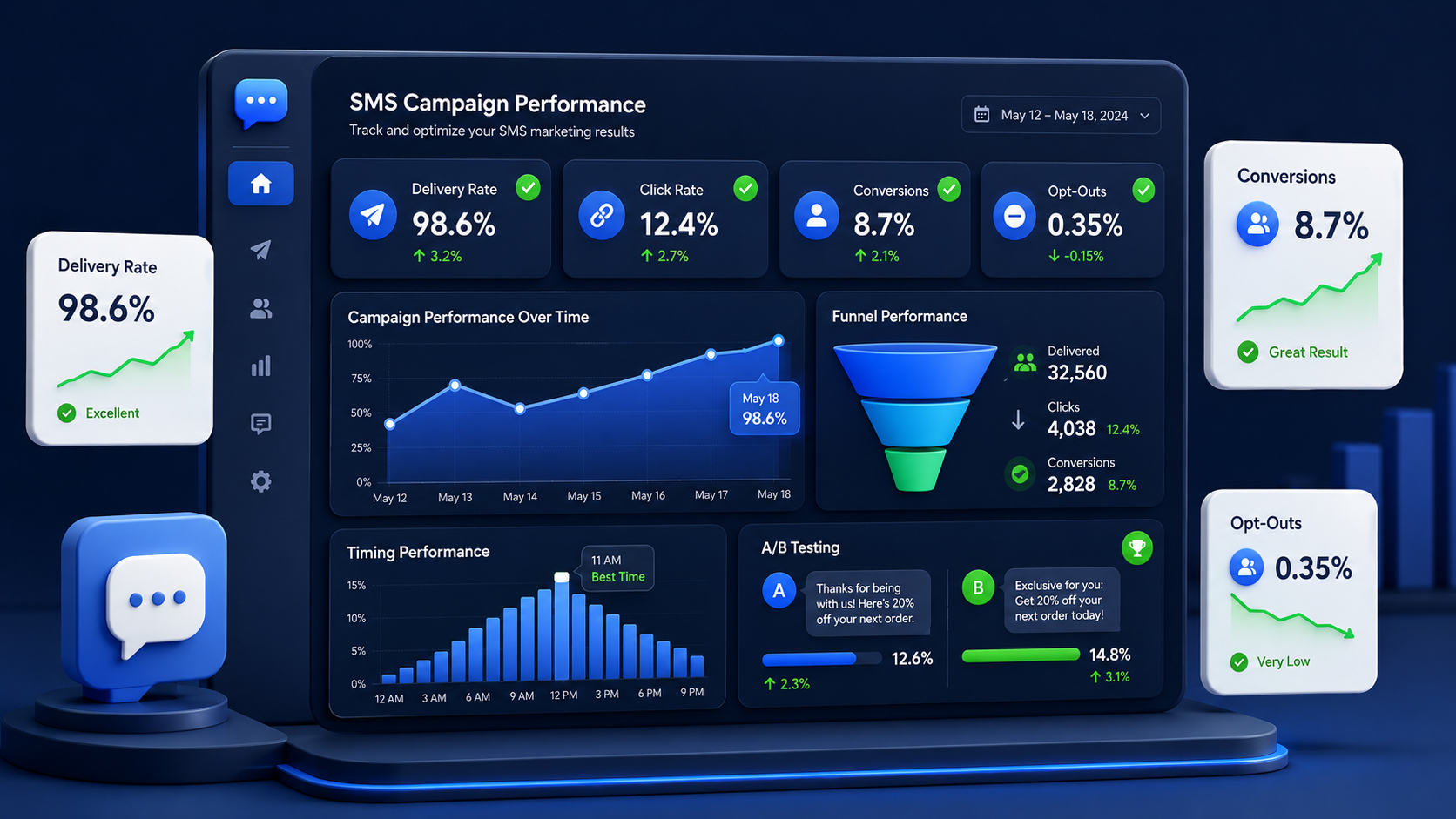
In reality, SMS should be measured by delivery rate, click-through or reply rate, conversion, and revenue impact. When evaluated correctly, performance often looks far healthier than expected.
Bad metrics create bad conclusions. SMS isn’t underperforming—expectations were misaligned.
Simple Case Study: SaaS Lead Follow-Up
A B2B SaaS company used SMS to follow up with demo requests within 30 minutes of signup.
Old approach (2022):
Every demo request received the same generic SMS: “Thanks for signing up—click here to book a demo.”
The results looked acceptable on the surface but told a different story underneath: 8% CTR, 1.5% conversion, and frequent unsubscribes.
New approach (2025):
SMS messages were personalized based on the use case selected during signup. Each text referenced a specific pain point and linked directly to a relevant booking page.
Results improved immediately: 18% CTR, 4.5% conversion, and just 0.1% unsubscribe.
Same channel. Completely different execution. The takeaway is simple: relevance, timing, and intent matter more than volume—and SMS rewards teams that respect that.
When SMS Marketing Still Works Extremely Well (Especially for B2B)?
SMS performs best when speed, intent, and timing matter more than message length. In B2B especially, SMS excels in moments where a prospect or customer is already paying attention—and expects a fast response.
Used this way, SMS isn’t a broadcast channel. It’s a precision tool.
Source: Vecteezy
High-Intent Moments (Lead Follow-up, Quotes, Time-sensitive Actions)
SMS works best when the recipient is already in decision mode.
A prospect who just requested a demo, asked for a quote, or flagged an urgent issue expects fast feedback. In these moments, SMS cuts through inbox noise and gets immediate attention.
Examples where SMS consistently outperforms email:
- Demo or consultation requests that need follow-up within minutes
- Quote delivery and approval reminders
- Time-sensitive actions like expiring offers or pending documents
In low-intent situations, SMS feels intrusive. In high-intent moments, it feels helpful—and that’s the difference.
Triggered Messaging Beats Scheduled Blasts
Scheduled SMS blasts treat everyone the same. Triggered messages respond to specific behavior.
A scheduled campaign says, “We’re running a promotion this Friday.” A triggered message says, “You took this action—here’s what happens next.”
Triggered SMS consistently outperforms blasts because timing and context are built in. Messages feel relevant instead of promotional.
Common high-performing triggers include:
- Cart abandonment or incomplete form submissions
- Lead stage changes (MQL → SQL, proposal sent, contract pending)
- Key lifecycle events like renewals, upgrades, or onboarding steps
When SMS reacts to behavior, it stops feeling like marketing and starts feeling like assistance.
Customer Notifications That Protect Revenue and Retention
Some of the highest-performing SMS messages don’t feel like marketing at all.
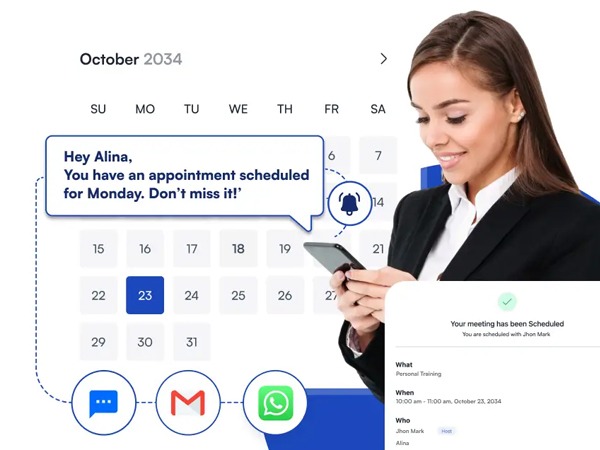
Appointment reminders, delivery updates, payment alerts, and account notifications protect revenue by preventing no-shows, chargebacks, and customer frustration. People expect these messages—and rarely opt out.
For B2B teams, this includes:
- Meeting and onboarding reminders
- Implementation milestones and status updates
- Renewal windows and contract deadlines
These messages build trust because they serve the customer first. The revenue impact follows naturally.
Simple Case Study: E-commerce Appointment Reminders
A furniture company relied on email reminders to confirm delivery appointments. The result was a 35% no-show rate, creating avoidable delays, rescheduling costs, and lost revenue.
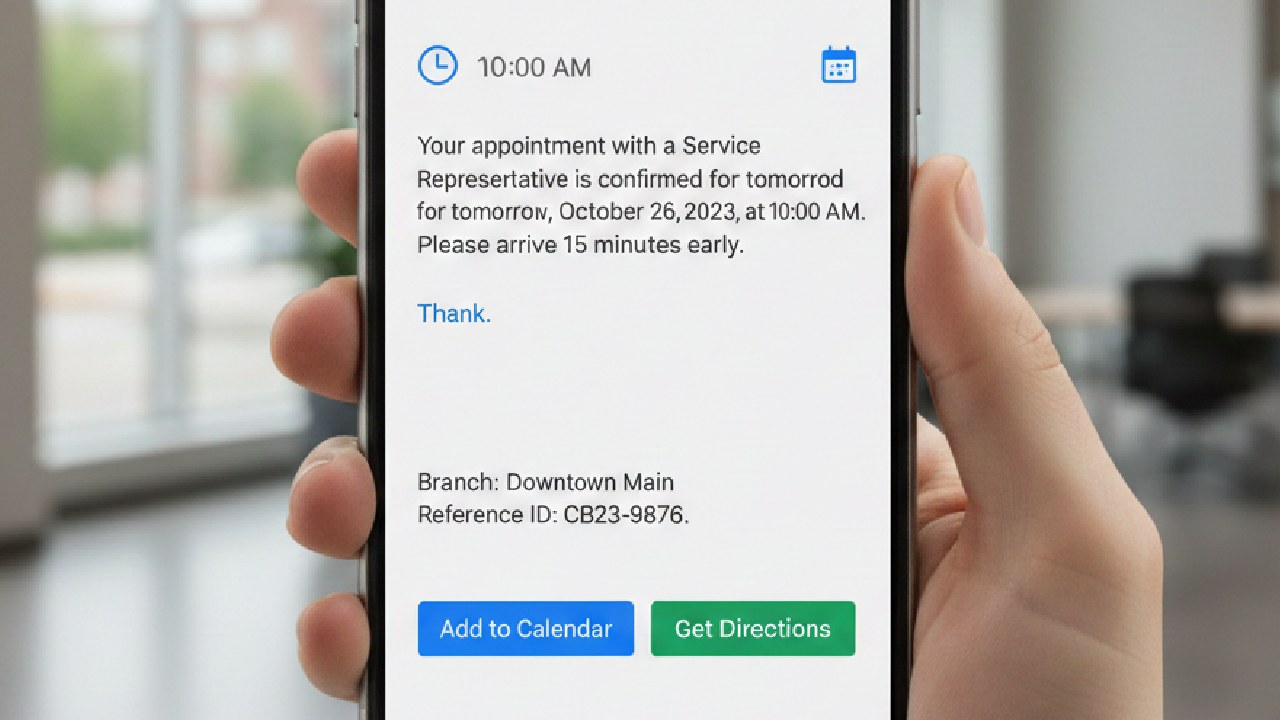
They switched to SMS reminders sent 24 hours before delivery and again 2 hours before, with a one-click confirmation option. The message wasn’t promotional—it was purely service-focused.
The impact was immediate. No-shows dropped to 12%, and the reduction alone recovered $85,000 in annual revenue.
Same channel. Different purpose. When SMS is used for customer service and expectation-setting, it protects revenue instead of chasing clicks.
When SMS Marketing Fails (and Gets You Blocked or Ignored)?
SMS doesn’t fail quietly. When it fails, messages get filtered, delivery drops, complaints rise, and senders lose trust—sometimes overnight.
In almost every case, failure isn’t about the channel. It’s about violating expectations, consent, or relevance. Here’s where most SMS programs break down.
No Consent (Cold Lists) and Unclear Subscriber Expectations
SMS fails immediately when there’s no clear consent.
Sending messages to cold lists—or to people who never explicitly agreed to receive texts—leads to complaints, opt-outs, and carrier blocks. Even worse, damage often appears after several campaigns, not the first one.
Unclear expectations are just as dangerous. If someone opted in for order updates but receives frequent promotions, they feel misled. Complaints follow, and filtering kicks in.
In SMS, consent isn’t a checkbox. It’s an agreement—and breaking it has consequences.
Over-frequency and Irrelevant Content
Too many messages turn SMS from helpful into annoying.
High-frequency promotional texts exhaust attention quickly, especially when content isn’t relevant to the recipient. What feels like “staying top of mind” to the sender feels like spam to the customer.
Context matters. A customer waiting for a quote tolerates reminders. The same customer receiving unrelated promotions does not.
When relevance drops, tolerance disappears—and opt-outs spike.
“One Message Fits All” Campaigns Without Segmentation
Broadcast messaging fails because it ignores intent.
Sending the same SMS to leads, customers, and inactive subscribers assumes everyone cares about the same thing at the same time. They don’t.
A promotion that excites one segment frustrates another. Engagement drops, complaints rise, and filtering follows.
Segmentation isn’t a “nice to have” for SMS. It’s the difference between relevance and rejection.
Poor Sender Identity and Trust Signals
SMS fails fast when recipients don’t recognize the sender.
Messages from anonymous numbers, vague shortcodes, or unclear brand names trigger immediate distrust. Even relevant messages get ignored—or marked as spam—if the sender isn’t obvious.
Strong sender identity sets expectations instantly. People read texts from brands they recognize and trust. They ignore everything else.
In SMS, trust isn’t built over time. It’s evaluated in seconds.
Simple Case Study: Compliance Failure (and Recovery)
A real estate company purchased a list of 30,000 phone numbers and sent cold SMS messages asking, “Are you interested in real estate opportunities?”
The response was immediate—and damaging. Complaints surged, carriers flagged the sender, and the FTC issued a warning. The company was delisted for six months, effectively shutting down its SMS program.
Later, the same company rebuilt its approach. They collected phone numbers through their website by offering a free property valuation guide, creating a fully opt-in list of 5,000 prospects. SMS messages were personalized with neighborhood-specific market reports and sent only to subscribers who expected them.
The results flipped completely: 22% click-through rate, 8% conversion to consultation, and zero complaints.
Same industry. Same channel. The difference wasn’t SMS—it was consent, expectations, and execution.
Where SMS Fits in 2026, SMS vs Email vs WhatsApp vs Push?
No single messaging channel does everything well. The teams that win don’t replace email with SMS or push WhatsApp everywhere—they assign each channel a clear role.
In 2026, SMS is strongest at speed and urgency, weakest at length and cost, and most effective when used alongside email, chat apps, and push notifications. Here’s how each channel fits into a modern mix.
| Metric | SMS | Push Notifications | ||
| Best For | Urgency, High-Intent Actions | Nurturing, Long-Form Content | Customer Service, Two-Way Conversations | App-Native Alerts, Habit Loops |
| Speed To Engagement | ~3 Minutes | 1–24 Hours | 15–30 Minutes | Immediate (If App Is Active) |
| Reach | ~99% (Phone Required) | 80–85% (Inbox Dependent) | 25–40% (Adoption Varies) | Requires App Install |
| Cost Per Message | $0.02–$0.05 (Prices may vary by region) | $0.001–$0.01 | Often Free | $0.001–$0.01 |
| Message Length | ~160 Characters | Unlimited | Unlimited | Limited |
| Opt-In Friction | High (Explicit Consent) | Moderate | Low (Contact-Based) | Low (App Permission) |
| Compliance Risk | High | Moderate | Low–Moderate | Low |
| Engagement Quality | High (Intentional) | Medium (Crowded) | High (Conversational) | Low–Medium (Interruptive) |
SMS Strengths
SMS excels when speed and certainty matter. It reaches nearly everyone within minutes and works best for time-sensitive, high-intent actions—like lead follow-ups, reminders, and urgent account notifications.
When used sparingly and with consent, SMS feels direct and purposeful.
SMS Limits
SMS costs more per message, allows limited context, and carries strict compliance requirements. It’s a poor choice for long-form education, broad nurturing, or exploratory messaging.
Trying to force SMS into those roles leads to fatigue and filtering.
The modern channel mix approach
Each channel works best when it owns a specific job:
- Email: Long-term nurturing, newsletters, education, and content people read on their own schedule.
- WhatsApp / Telegram: Two-way conversations, support, and relationship-driven communication where users opt into chat.
- Push Notifications: Real-time alerts and habit-based engagement for active app users.
- SMS: The trigger channel. Urgent moments. Last-mile conversion. The safety net when other channels aren’t fast enough.
SMS doesn’t replace email. It amplifies it.
How to Run SMS Marketing That Still Performs (B2B-Friendly)?
High-performing SMS programs don’t treat texting as a broadcast tactic. They treat it as a lifecycle channel—used differently at each stage of the customer journey, with clear rules around timing, frequency, and intent.
This is what actually works in 2026.
Reposition SMS as a Lifecycle Channel (Not a Promo Blast Channel)
SMS performs best when it supports the customer journey instead of interrupting it.
Different stages require different messages, urgency levels, and frequency. Treating SMS as a single promotional channel ignores context—and context is everything.
A practical lifecycle approach looks like this:
- Lead: Demo requests, quick clarifications, and time-sensitive follow-ups
- MQL: Event reminders, surveys, and light engagement prompts
- SQL: Quote delivery, proposal reminders, and scheduling nudges
- Opportunity: Contract status updates and decision deadlines
- Customer: Onboarding steps, milestones, and renewal alerts
When SMS aligns with lifecycle stage, it feels relevant instead of intrusive.
Build on First-party Opt-in and Clear Expectations
Every SMS program starts—or fails—at opt-in. Subscribers need to know why you’re texting them and what kind of messages to expect. Vague consent leads to confusion, complaints, and filtering.
High-performing teams set expectations upfront:
- What types of messages will be sent
- How often subscribers will hear from you
- How to opt out at any time
Clear expectations don’t reduce list size. They improve list quality.
Segment by Intent and Sales Stage
Not every subscriber should receive the same SMS.
A lead evaluating options has different needs than a customer awaiting renewal. Sending identical messages to both groups guarantees disengagement.
Effective segmentation typically includes:
- Funnel stage (Lead, MQL, SQL, Customer)
- Behavior (form submissions, page visits, inactivity)
- Timing signals (recent activity vs dormant)
Segmentation keeps SMS relevant—and relevance keeps it deliverable.
Prioritize Triggered Journeys Over Calendar Campaigns
Triggered messages respond to behavior. Calendar campaigns ignore it.
A scheduled blast announces an event. A triggered SMS reacts to what someone just did—abandoned a form, downloaded a guide, or reached a decision milestone.
Triggered journeys outperform blasts because timing is built in. The message arrives when attention already exists.
When SMS reacts instead of broadcasts, performance follows.
Set Channel Guardrails: Frequency, Priority, and Preferences
SMS needs rules. Without guardrails, even good messages become noise. High-performing programs define clear limits and enforce them consistently.
Common guardrails include:
- No more than 1–2 promotional messages per week unless users opt into more
- Transactional and service messages don’t count toward promo limits
- Subscriber preferences for marketing-only, transactional-only, or both
- Monitoring opt-out rates per campaign (above 0.5% signals a problem)
Rules protect deliverability—and your reputation.
Design for Trust and Continuity in a Stricter Filtering Environment
Every SMS should answer three questions immediately:
- Who is texting me?
- Why does this message matter now?
- How do I stop receiving these messages if I want to?
Clear sender identity, a concise value statement, and an obvious opt-out option aren’t compliance formalities. They’re trust signals. In SMS, trust isn’t built slowly. It’s judged instantly.
Measure SMS as a Business System, Not a Single Metric
SMS doesn’t have a true open rate—and that’s not a problem.
What matters is whether messages get delivered, engaged with, and converted into business outcomes. High-performing teams track:
- Delivery rate (system health)
- Click or reply rate (engagement)
- Conversions or pipeline impact (outcome)
- Opt-out rate (risk indicator)
When SMS is measured properly, its value becomes clear.
Run a 30-day B2B Pilot to Prove Value Before Scaling
Before scaling SMS, prove it with a controlled 30-day pilot.
Start with one high-intent use case—such as demo follow-ups, quote delivery, or renewal reminders—and send SMS only to a small, opted-in audience (300–500 contacts). Keep the scope narrow and measurable.
Track four signals:
- Delivery rate (system health)
- Click or reply rate (engagement)
- Conversions or pipeline impact (business value)
- Opt-out rate (risk indicator)
If engagement is strong and opt-outs stay below 0.5%, scale gradually.
If not, refine messaging or timing and rerun the pilot.
A short pilot like this turns SMS from a gamble into a data-backed decision.
Should You Invest in SMS Marketing?
Before deciding whether to scale SMS, two questions matter more than anything else:
What should you measure—and is SMS actually right for your business?
This final check helps you avoid the two most common mistakes: judging SMS by the wrong metrics, or forcing it into a business where it doesn’t fit.
What to Measure (and What to Ignore)
SMS doesn’t have a true open rate—and that’s not a weakness. What matters is whether messages reach people, prompt action, and support real business outcomes. High-performing teams focus on:
- Delivery rate: System health and carrier trust
- Click or reply rate: Real engagement
- Conversions or pipeline impact: Business value
- Opt-out rate: Risk indicator (above 0.5% signals a problem)
If you measure SMS like email, it will always look disappointing. Measured correctly, it becomes one of the most reliable channels for high-intent actions.
A Simple Decision Checklist
SMS is worth investing in if:
- You have a permission-based list (or can build one quickly)
- You know your use case (follow-ups, reminders, notifications)
- You can segment by intent or lifecycle stage
- You’re prepared to follow compliance rules
You should pause or reconsider if:
- You’re buying lists or relying on cold outreach
- You plan to send frequent, generic promotions
- You can’t measure beyond open rate
- You expect SMS to behave like email
SMS works best for teams that treat it as a precision channel, not a shortcut.
If the foundation is right, the returns are real. If it isn’t, fixing that comes first.
Closing Thoughts
SMS marketing isn’t dead—but the margin for error is gone.
When SMS is permission-based, intent-driven, and tied to clear use cases, it remains one of the fastest ways to reach people at moments that actually matter. When it’s treated like a cheap broadcast channel, it fails quickly and visibly.
If you’re unsure whether SMS fits your business, start small. A focused pilot is the safest way to validate value without risking deliverability or trust.
And if you’d rather not figure it out alone, SMS Boosting works with B2B teams to design compliant SMS strategies, run controlled pilots, and scale what proves ROI—without guesswork.