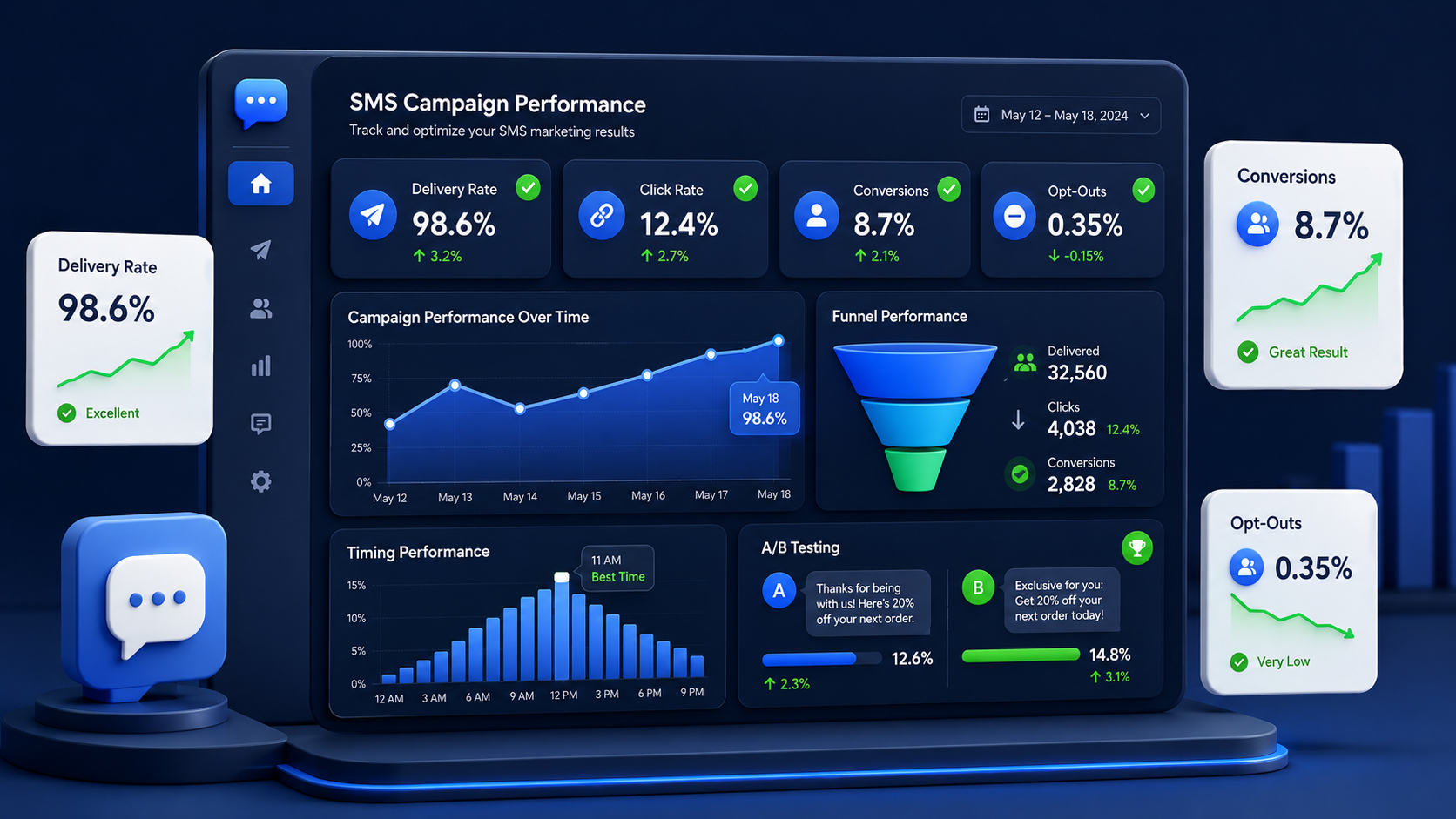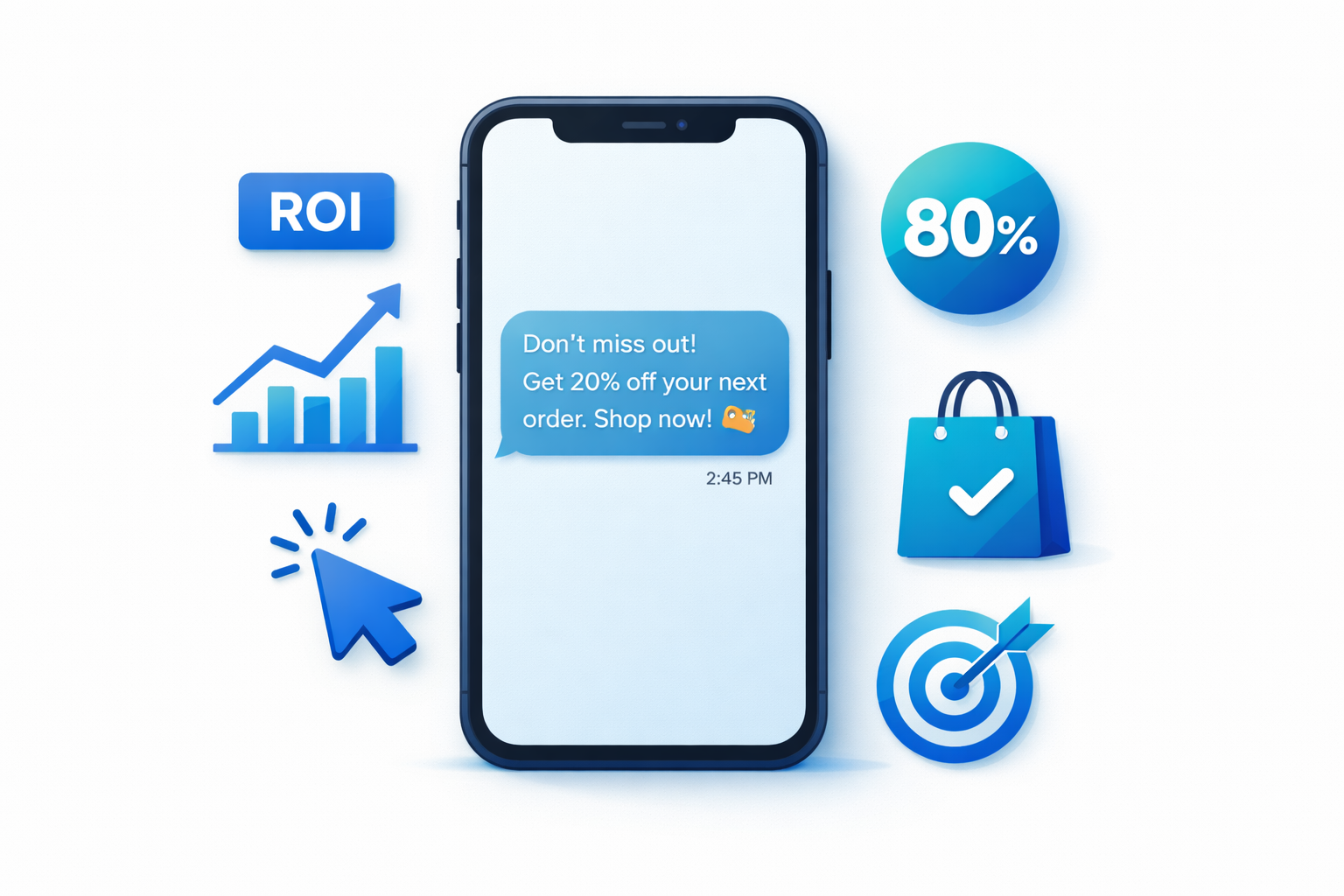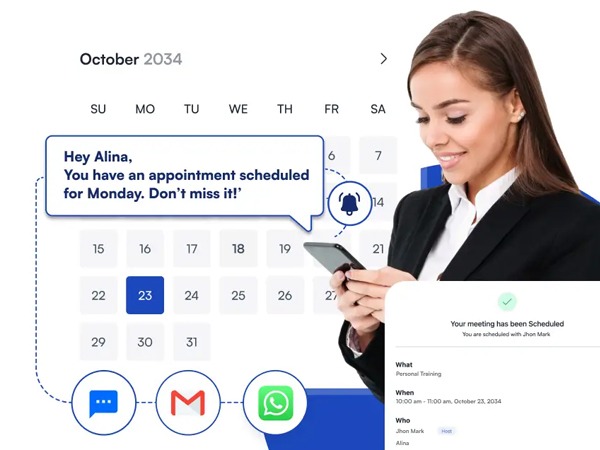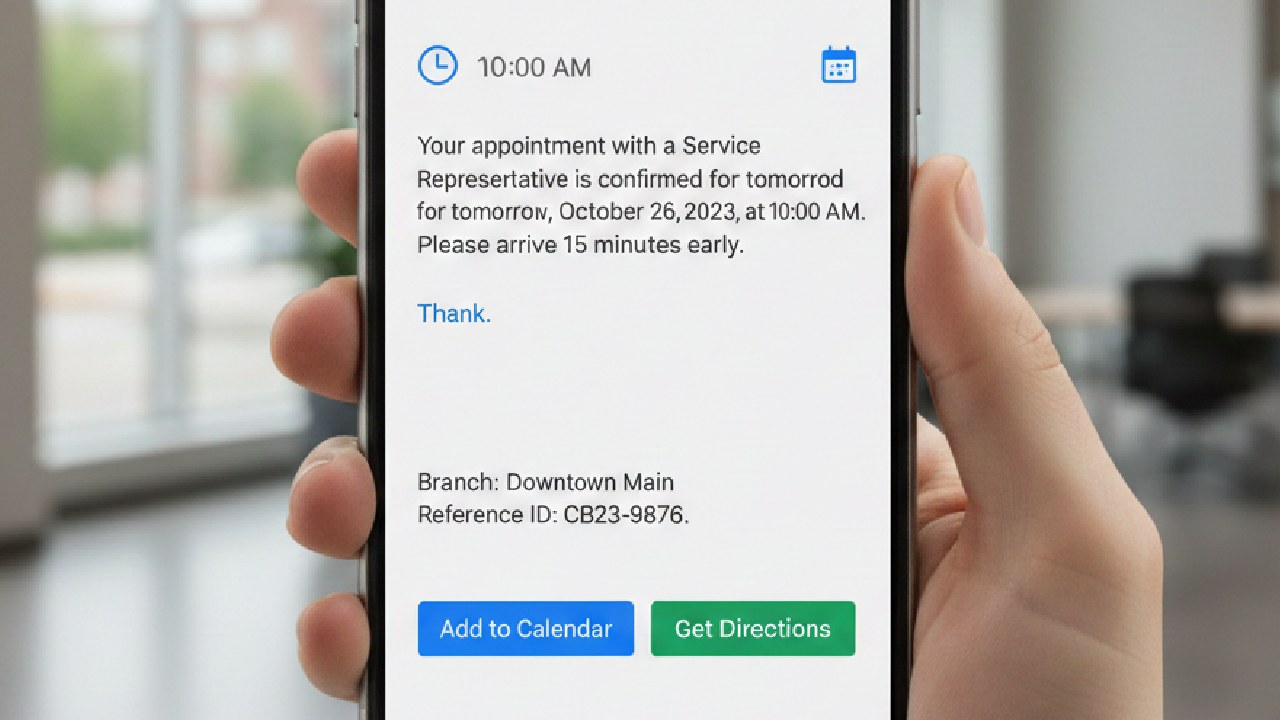
If you judge your SMS campaigns only by the delivery report, you’re missing the real story. A “delivered” status simply means your message reached a device. It doesn’t tell you whether your customer opened it, clicked your link, or took action. And in today’s competitive landscape, those behaviors matter far more than a green checkmark.
In this guide, we’ll explain why relying on delivery reports leads to misleading results, and what you should track instead to improve engagement, conversions, and overall ROI.
What Does “Delivered” Actually Mean?
A delivered SMS only confirms that the carrier handed the message off to the recipient’s device. It doesn’t verify that the user opened it, read it, or acted on it. This is the biggest reason delivery reports can create a false sense of success.
Most businesses assume “delivered = effective.” But here’s the problem: it’s not true.

Example:
Delivery rates often reach 95–98%, yet read rates are usually 60–70%, depending on industry. And if you send marketing messages to a busy audience, that percentage can drop even lower. People ignore notifications, silence alerts, or clear messages without reading them (we’ve all done it… especially when the message lands at 6am).
That’s why delivery alone tells you nothing about message engagement. You need visibility into opens, clicks, and behavioral patterns to understand what users actually care about. As a result, you can optimize your content, timing, and targeting to drive real results, not just happy delivery numbers.
Why Delivery Reports Don’t Tell You About Clicks?
Delivery reports can’t track clicks, visits, or conversions. And if your SMS includes a link—whether it’s for a promo, signup page, or checkout—clicks are the only thing that prove interest.

Here’s what delivery reports miss:
i) Clicked Links: You can’t see who interacted or which CTA performed best.
ii) Conversions: Your delivery reports can’t tell you whether a user completed an action. For example, signing up, purchasing a product, or filling out a form. So without this information, you can’t know if your campaign is successful.
iii) User Actions: You can’t see whether a user opened a link, visited a website, or interacted with your brand.
iv) Tracking Links: With the help of tracking, you can see which links were clicked and which calls to action received attention. This tells you what’s working and what’s not.
v) Improve campaigns with click data: Using click data can help you improve your SMS strategy. You can improve content, adjust calls to action, and target users better.
Why Delivery Reports Don’t Reveal User Experience?
As your SMS reaches your users, it doesn’t tell you how they felt about it. You see that your message was delivered, but you don’t know whether it annoyed, confused, or delighted the user. That’s why relying on delivery reports can give you a false sense of success.

a) Users can have a negative experience: If you send too many messages or share irrelevant content, users can get annoyed. Even though the SMS has been delivered, such experiences can lead them to opt out.
b) Understanding the user experience is important: When you understand their experience, you can improve your content, timing, and targeting. This makes your messages more relevant and engaging.
c) Collect direct feedback: You can ask your users for feedback through short surveys or polls. Even simple questions like “Was this message helpful?” also give valuable information.
d) Track engagement patterns: By monitoring clicks, replies, and interactions, you can understand which messages users like and which they ignore.
e) Use data to improve future campaigns: By combining feedback and engagement data, you can improve your SMS campaigns. This will reduce subscriber churn and ensure your messages truly connect with your audience.
Delivery Reports Cannot Detect Spam Filtering or Blocking
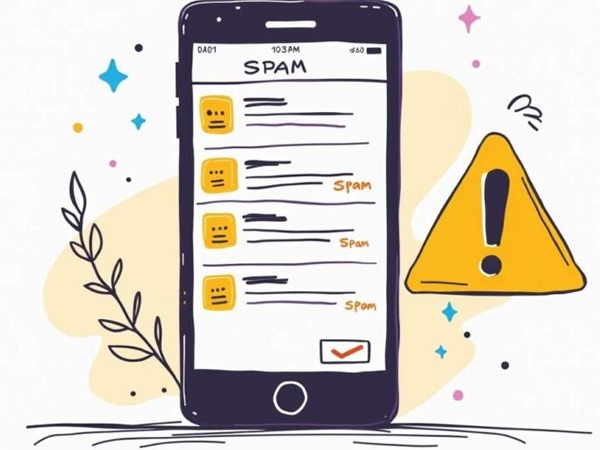
One of the hidden problems in SMS marketing is spam filtering. Here, learn how to detect spam or block it.
Messages can get filtered or blocked: Your SMS can get marked as spam or blocked before it reaches your user’s inbox. This is due to strict carrier rules, mobile apps, or the user’s own settings. As a result, the message is never read, and your impact is diminished.
Delivery status can be misleading: Your delivery reports show your message as “Sent,” even if it hasn’t reached the user. In this case, it becomes difficult for you to understand whether your campaign is really effective or not. So your delivery appears high, but actual engagement may be very low. That is why you should focus on quality, not just status.
Focus on quality, not just status: Instead of just checking delivery statuses, focus on the quality of delivery. You use anti-spam technologies to improve inbox placement, bypass spam filters, and ensure that messages are actually seen by users. This way, engagement increases and your SMS campaigns achieve real results.
Conclusion
Relying on SMS delivery reports alone is not enough. Because delivery shows that your messages reached your user, but it doesn’t tell you whether they clicked, engaged, or converted. So you need to track interactions and collect feedback. By analyzing engagement and behavior, you can improve your campaigns. And you can also personalize messages, reduce opt-outs, and increase ROI.
AtSMS Boosting, we offer you a complete SMS solution. Through marketing SMS, OTPs, and sms notification services. If you want your SMS campaigns to drive real business results—not just high delivery rates—our strategies give you the control and clarity you need.
FAQs
1. Why can my SMS be “delivered” even if the user never saw it?
Your SMS can be delivered but still invisible if the message was filtered as spam or pushed into a “blocked senders” folder. Carriers and mobile phones use automated filters that catch messages they think look suspicious. Your delivery report will still show “Success,” even though the user never sees it.
2. Can delivery reports show whether users clicked my links?
No. Delivery reports can’t track clicks, page visits, or conversions. To see who interacted with your link, you need a tracking URL or a built-in analytics tool. Click data tells you which message resonated and which CTA needs rework.
3. Can SMS delivery reports detect routing or carrier-level issues?
No. A delivery report can’t reveal poor routing, slow delivery paths, or low-quality international routes. If your messages arrive late or at random times, it’s usually a routing issue. In cases like this, you need routing analytics or a provider with direct carrier connections.
4. How do I know if my SMS is stuck in carrier filtering?
You can usually detect carrier filtering when delivery reports look “successful,” but engagement suddenly drops. If your clicks, replies, or conversions fall without any change in your content or timing, it’s often a sign your messages are getting flagged. You may also notice delays, inconsistent sending times, or differences between countries. Using inbox placement tools or routing analytics makes this easier to confirm.
5. What’s a good SMS engagement rate in 2025?
A good SMS engagement benchmark varies by how you define “engagement.” For most marketing campaigns, click-through rates (CTR) typically fall between 3% and 10%, with high-performing campaigns reaching 10%–15%.Transactional SMS (like OTPs or alerts) don’t usually measure engagement, instead they focus on delivery speed and completion rates. If your CTR is below 3%, you may need to adjust timing, segmentation, or the strength of your offer.