If you’re trying to choose between Email vs SMS marketing, here’s the short answer:
Email wins on scale and cost. SMS wins on speed and urgency. The highest-performing brands use both — at different moments.
This isn’t about picking a winner. It’s about using the right channel at the right time.
In this guide, you’ll learn:
- When email clearly outperforms SMS
- When SMS drives faster conversions
- How to combine both for maximum ROI
- A real cost and conversion breakdown
- A simple decision checklist for your business
Let’s break it down clearly.
Which Is Better, Email or SMS Marketing?
Neither is universally better. The better channel depends on what you need right now.
Source: Vecteezy
Use Email when you need scale, education, and repeated communication.
Use SMS when you need fast action from high-intent users.
Use both when you want growth and acceleration at the same time.
Now let’s get specific.
When Should You Choose Email Marketing?
Choose email when you need to educate, nurture, and reach large audiences at low cost.
Email works best for:
- Educational Content
- Long-Form Storytelling
- Weekly Promotions
- Product Launch Explanations
- B2B Lead Nurturing
- Re-Engagement Campaigns
Email is asynchronous. People open it when they’re ready. That makes it perfect for content-heavy messaging.
You can include:
- Multiple images
- Several CTAs
- Case studies
- Detailed comparisons
- Testimonials
- Long-form sales copy
And the economics are powerful. If you send 100,000 emails at $0.005 per send, you spend around $500. That same 100,000-message campaign via SMS at $0.03 per send costs $3,000.
Email gives you volume at low risk. If you’re sending 3–5 campaigns per week, email can handle that frequency. SMS cannot.
When Should You Choose SMS Marketing?
Choose SMS when you need immediate action from people who already trust you.
SMS works best for:
- Flash Sales
- Cart Recovery Final Push
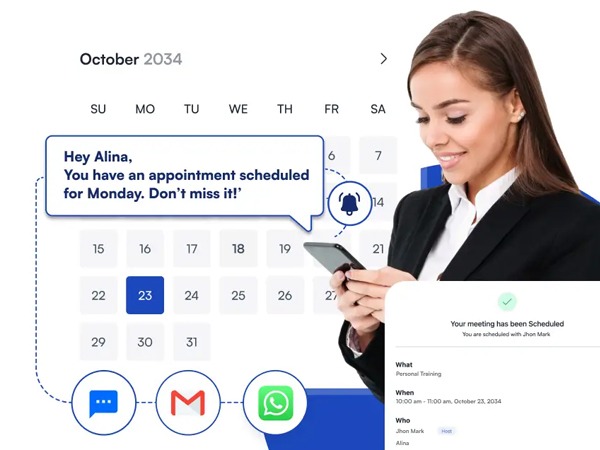
- Appointment Reminders
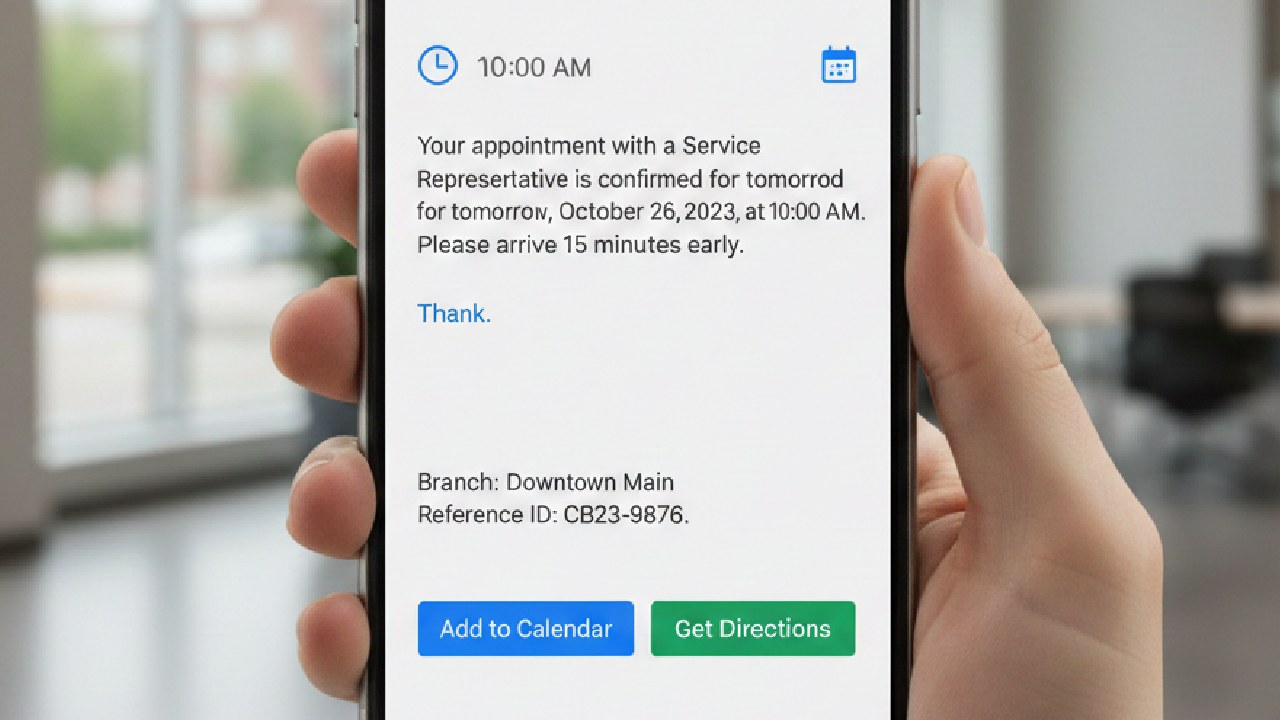
- Demo Confirmations
- Shipping Alerts
- Limited-Time Offers
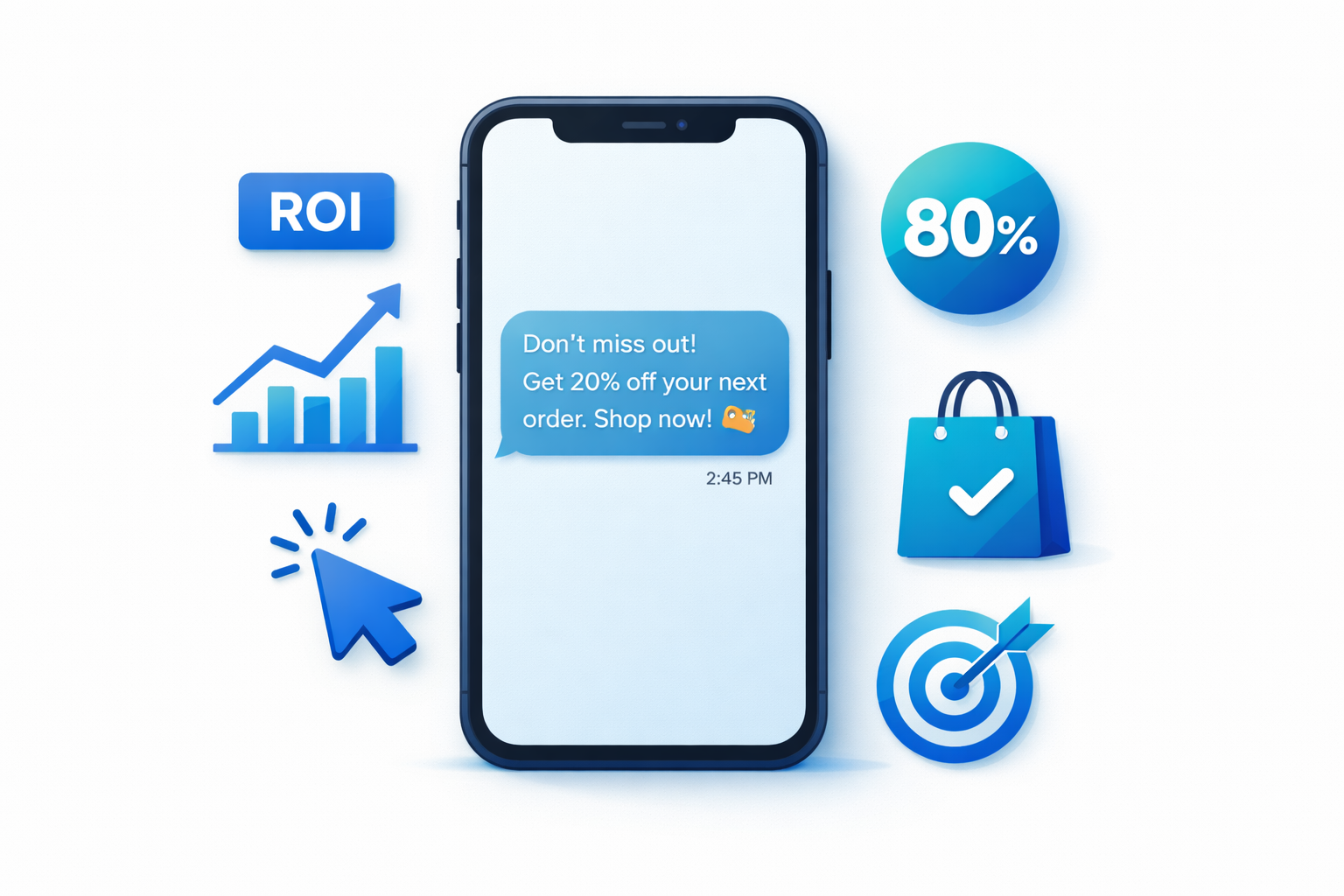
SMS gets attention fast. Most text messages are read within minutes. People treat SMS like urgency by default.
But here’s the reality: SMS is expensive and sensitive. Send too many texts and opt-outs spike immediately. Most brands should not exceed 1–2 SMS campaigns per week.
Email vs SMS Marketing: Key Differences That Impact Results
Email and SMS differ in speed, cost, content depth, frequency tolerance, and conversion behavior.
Here’s how they compare side by side:
| Factor | Email Marketing | SMS Marketing |
| Best Use | Education, Scale, Nurturing | Urgency, Action, High-Intent |
| Speed | Builds Over Hours | Drives Action Within Minutes |
| Cost Per Send | $0.001–$0.01 (Mostly) | $0.02–$0.05 (Mostly) |
| Content Depth | Long-Form, Visual, Multiple Links | Short, Direct, Single CTA |
| Frequency Tolerance | High (3–7x Weekly) | Low (1–2x Weekly) |
| Conversion Behavior | Builds Gradually | Spikes Quickly |
What These Differences Actually Mean
Speed:
Email builds momentum. SMS creates immediate action.
Cost:
Email protects your margins at scale. SMS demands higher ROI per message.
Content Depth:
If your offer needs explanation, email wins. If your offer needs urgency, SMS wins.
Frequency:
Email can run consistently. SMS must stay selective.
Risk:
SMS mistakes cost more. Email mistakes recover faster.
If your business depends on education and repeat exposure, email should be your backbone. If your business depends on timing and urgency, SMS should be your accelerator. If you want scale and speed, combine them.
Use-Case Rulings, For Each Scenario, Pick Email, SMS, or Both
Different business moments require different channels. Instead of guessing, match the tool to the situation.
Here’s the quick decision table:
| Scenario | Channel | Why It Wins | Example |
| Flash Sale / Last Chance | SMS or Both | Urgency matters more than detail | “Sale ends in 6 hours – 40% off” |
| Weekly Deals / Seasonal Campaigns | Email or Both | Needs visuals and storytelling | Newsletter + segmented SMS follow-up |
| Initial Abandoned Cart | Customer needs explanation first | “You left $200 in your cart” | |
| Final Cart Push | SMS | High intent + time pressure | “Complete checkout. Expires in 2 hours.” |
| B2B Lead Nurturing | Education builds trust over time | Case studies, comparisons, ROI docs | |
| Demo Confirmation | SMS | Reduces missed meetings | “Demo tomorrow at 2PM. Confirm here.” |
| Appointment Reminders | SMS | Functional, time-sensitive | “Appointment in 24 hours. Reply CONFIRM.” |
| Long Instructions | Email + SMS | Detail via email, reminder via SMS | Setup guide email + text reminder |
| Low-Value Re-Engagement | Cheap reach across large list | “We miss you – 20% off.” | |
| High-Value Winback | SMS | Personal outreach works better | Custom offer for top customers |
Instead of memorizing rules, think about the situation you’re in.
If you’re running a flash sale that ends tonight, you don’t need a beautifully designed email explaining every detail. You need attention — fast.
That’s where SMS earns its place.
For weekly campaigns or seasonal launches, it’s different. Those benefit from visuals, product highlights, and context. Email handles that better.
The pattern is simple:
When timing matters more than explanation, lean toward SMS.
When explanation matters more than timing, lean toward email.
The Best Strategy for Most Businesses, Email plus SMS Together
For most growing businesses, the highest returns don’t come from choosing one channel. They come from sequencing both.
Here’s what that looks like in practice.
Blueprint 1 — Email Builds the Case, SMS Captures the Moment
Email handles depth. It explains the offer, positions the value, and warms the audience. SMS enters later, when attention matters more than explanation.
Example:
Day 1 — Email:
Introduce the product, show benefits, add testimonials.
Day 3 — SMS (to engaged readers only):
“Early access ends tonight. Claim here.”
Blueprint 2 — Email for Scale, SMS for High-Intent Segments
Email goes wide. SMS goes narrow. Send your campaign to the full list via email. Then send SMS only to:
- Clickers
- Cart starters
- Repeat buyers
- VIP customers
This protects margin while increasing conversion rates.
Blueprint 3 — SMS Handles Timing, Email Handles Detail
When timing is critical, SMS leads. When explanation is required, email follows.
Example:
SMS:
“Your trial expires in 48 hours.”
Email:
Feature breakdown, case studies, pricing comparison.
Cost and Frequency Rules (So You Don’t Burn Your List)
Cost and frequency determine whether your channel scales profitably — or quietly destroys your list.
Email and SMS operate on completely different economic rules.
Email: Built for Consistency and Volume
Email supports high-frequency communication because the marginal cost is low.
Typical send cost: $0.001–$0.01 per recipient. That means you can email 100,000 subscribers for roughly $500. Even multiple campaigns per week remain financially sustainable.
Most healthy lists tolerate 3–5 emails per week if content is relevant and segmented properly. Email builds familiarity through repetition. It’s a rhythm channel. If your strategy relies on consistent exposure, email carries the load.
SMS: Designed for Selective Pressure
SMS costs significantly more per send — usually $0.02–$0.05. That same 100,000-recipient campaign could cost $3,000 or more. Because of that cost — and because SMS feels more personal — frequency must stay controlled.
For most brands:
1–2 SMS campaigns per week is the upper limit. Push beyond that and opt-outs rise quickly. Unlike email fatigue, SMS fatigue shows up fast.
Measurement Traps (Don’t Compare the Wrong Metrics)
Email and SMS use different metrics, comparing them directly leads to bad decisions.
Email metrics, Open rate (industry standard but problematic), CTR, conversion rate, revenue per email.
But here’s the trap, email open rates are inflated by smartphones auto-loading images. SMS has no such mechanism. Don’t compare email open rate to SMS open rate. They’re measuring different things.
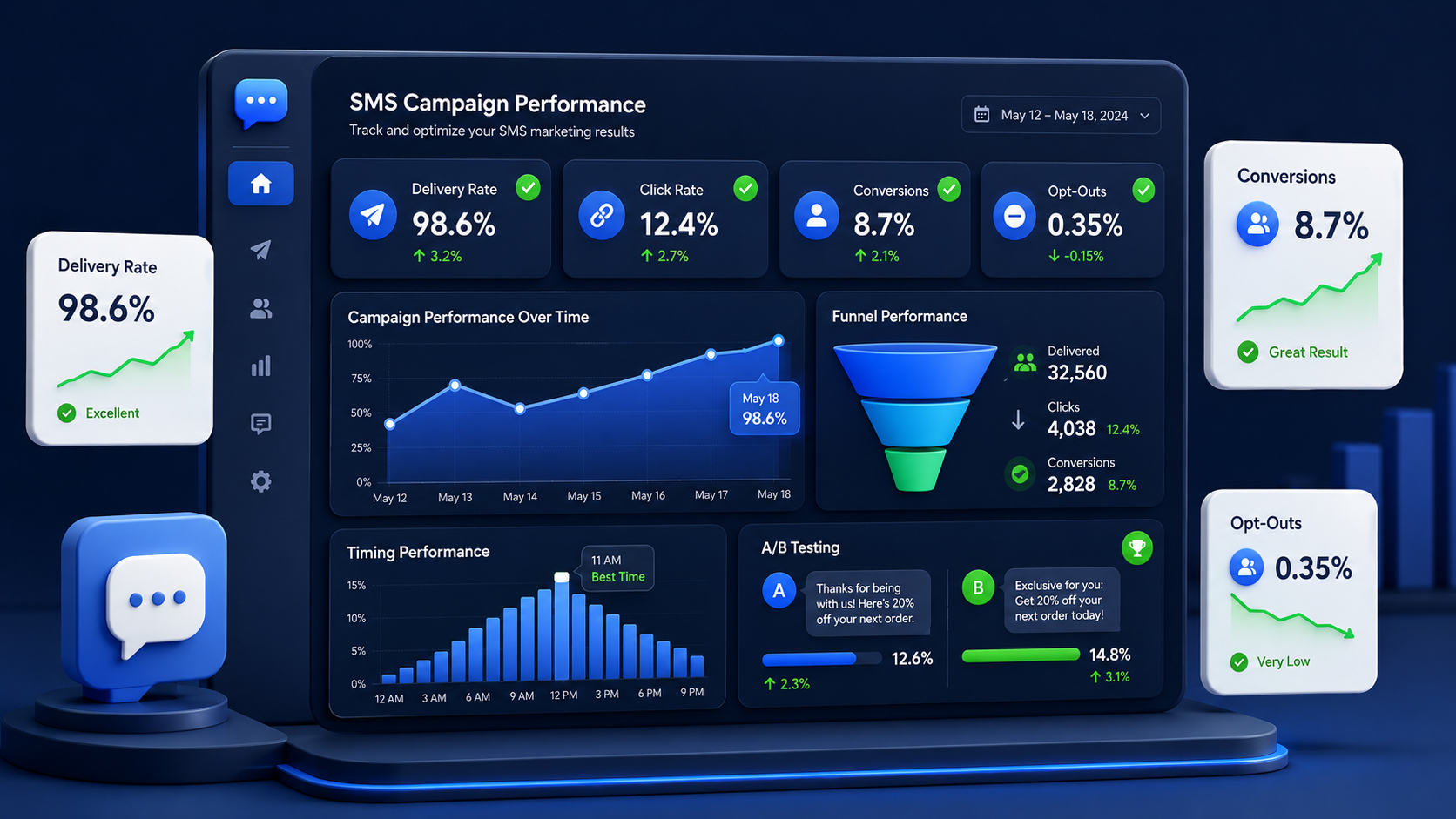
SMS metrics, Usually lacks a “real open” metric (SMS doesn’t have tracking pixels). Instead, track CTR, reply rate, conversion rate, opt-out rate.
Don’t say, “SMS has 50% open rate and email has 25% open rate, so SMS is better.” That’s a false comparison. Compare SMS CTR to email CTR. Compare SMS conversion to email conversion.
If email converts at 2% and SMS converts at 4%, SMS is outperforming on that metric. That’s a fair comparison.
Decision Checklist, What’s Better for Your Business?
Answer these questions to determine if Email, SMS, or both is right for you.
Check the boxes that apply to your business,
- I have 10,000+ email subscribers (use Email)
- I have 1,000+ opted-in phone numbers (use SMS)
- I need to reach people with detailed educational content (use Email)
- I need to drive immediate action on time-sensitive events (use SMS)
- I’m sending content 3+ times per week (use Email primarily)
- I’m sending 1-2 messages per week (use Email plus SMS)
- My budget is under $500/month (use Email primarily)
- My budget is $500-5,000/month (use Email plus SMS)
- My audience tolerates high frequency (use Email)
- My audience gets fatigued easily (use Email for scale, SMS for key moments)
- I measure success by open rate (reconsider, track CTR and conversion instead)
- I measure success by conversion and revenue (use Email and SMS together)
Final Thoughts
Choosing between email and SMS isn’t about finding a winner. It’s about understanding how each channel influences behavior at different stages of the customer journey.
Email gives you space. It allows you to educate, position value, and stay present without overwhelming your audience. SMS works differently. It compresses attention and pushes decisions forward when timing matters.
When businesses rely on email alone, momentum builds but urgency fades. When they rely only on SMS, conversion spikes but fatigue follows. The strongest results usually come from combining both — using email to build intent and SMS to activate it at the right moment.
If you’re looking to strengthen your SMS marketing strategy, SMS Boosting is built specifically for performance-focused text campaigns. It helps you segment high-intent users, control frequency, and apply SMS where it increases conversion — not where it creates fatigue.