
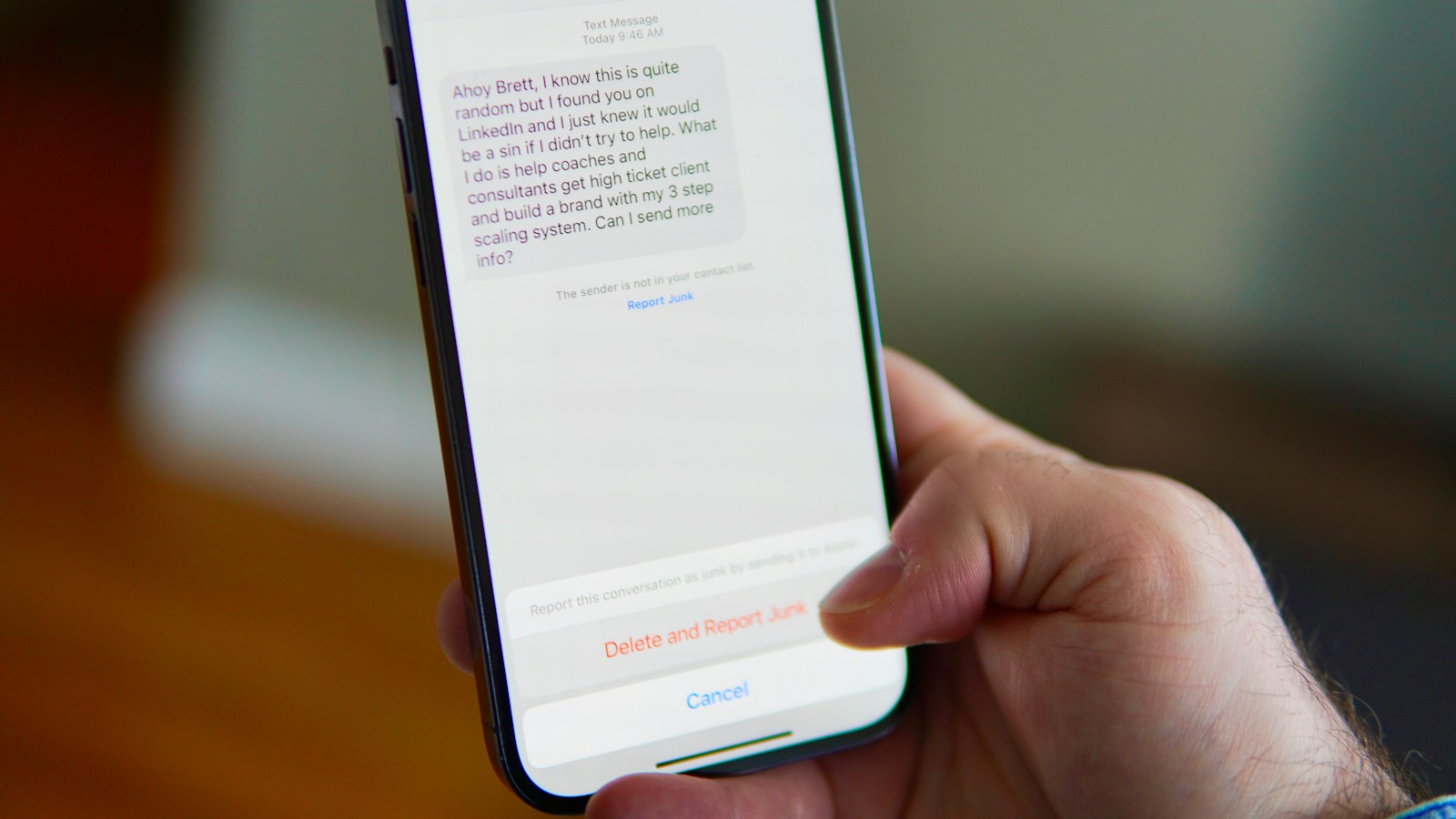
The same SMS can look completely different depending on who receives it. One person sees SMSBOOSTING at the top of their screen, another sees +1 555 0100, and a third sees a string of digits they have never seen before. Nothing about the message text changed — only the label that identifies who sent it.
That label is the SMS sender ID. It is the small piece of identity that sits in the "From" field of every text message, and it is one of the most misunderstood parts of enterprise messaging. Beginners often assume the sender ID is just a phone number, or that whatever name they type into a dashboard will appear exactly as written on every phone in every country. Neither assumption holds up once you start sending across borders.
This guide builds a clear, beginner-friendly mental model of what an SMS sender ID is, where recipients actually see it, the two broad types you will encounter, and why the same brand can appear differently in different markets. It is a framework article: it explains the concepts you need before choosing a sender ID, and it links out to deeper Support articles for the mechanics, registration steps, and country-by-country rules.
Why the Same SMS Shows a Different Sender Every Time
flowchart TD
    S0["Start: sms sender id"]
    S1["1. name"]
    S0 --> S1
    S2["2. return address"]
    S1 --> S2
    S3["3. This is not a bug."]
    S2 --> S3
    S4["4. The easiest way to hold this in your he…"]
    S3 --> S4
    S5["5. An SMS sender ID is like that name on t…"]
    S4 --> S5
    Done["Outcome: Why the Same SMS Shows a Different Send…"]
    S5 --> Done
Before defining anything, it helps to look at the symptom that sends most people searching for answers.
The recipient's screen tells the story
Imagine a business sends one promotional message to three customers in three different countries. On the first phone, the sender shows as the brand name. On the second, it shows as a long phone number. On the third, it shows as a short numeric code the customer has never seen. The message content is identical, but the identity is not.
This is not a bug. It reflects how sender identity is negotiated between the sending platform, the destination carrier, and local rules. A sender ID is not a fixed property of your account — it is a value that each network may accept, rewrite, or replace depending on its own policy.
The envelope analogy
The easiest way to hold this in your head is to think about physical mail. When you send a letter, the envelope carries two different things: a name in the top-left corner (who it is from) and a return address (where a reply should go).
An SMS sender ID is like that name on the envelope. It can be a brand name such as SMSBOOSTING, or it can be a number. The phone number, by contrast, is closer to the return address — it is the thing that determines whether someone can actually write back. A sender ID tells the recipient who the message claims to be from; it does not automatically give them a channel to reply to.
This distinction — label versus reachable channel — is the single most useful idea in this article, and we return to it in a dedicated section below.
What this guide covers
This article establishes the overall framework: the definition, the two main types, the misconception that a sender ID equals a phone number, and the reasons sender IDs vary. It deliberately does not go deep on alphanumeric mechanics, the full registration process, country-by-country rule lists, or a detailed sender ID versus short code comparison — each of those is handled in its own dedicated Support article, and this guide links to them where relevant.
What Is an SMS Sender ID, and Where Do Recipients See It?
flowchart TD
    S0["Start: sms sender id"]
    S1["1. It is what the recipient sees — the vis…"]
    S0 --> S1
    S2["2. It comes in two broad families — alphan…"]
    S1 --> S2
    S3["3. It is what the recipient sees"]
    S2 --> S3
    S4["4. It comes in two broad families"]
    S3 --> S4
    S5["5. It is not fully under your control"]
    S4 --> S5
    Done["Outcome: What Is an SMS Sender ID, and Where Do…"]
    S5 --> Done
A plain-language definition
An SMS sender ID is the name or number that appears in the "From" field of a text message. As one industry glossary puts it: "A Sender ID is what the recipient sees in the 'from' field of an SMS: either an alphanumeric name such as a brand (up to 11 Latin characters, no spaces in most networks) or a numeric sender such as a long code or short code. Carriers decide which types they accept and whether the sender must be registered, so the right Sender ID depends on the destination country" [1].
That definition packs in three ideas worth separating:
- It is what the recipient sees — the visible identity, not an internal account setting.
- It comes in two broad families — alphanumeric (a name) or numeric (a number).
- It is not fully under your control — carriers decide what they accept, and whether registration is required.
Where the sender ID sits in the sending chain
The sender ID is easiest to understand as a value that travels through the delivery path:
Business → SMS gateway / API → carrier network → recipient's phone
When your application submits a message, it includes a sender field alongside the destination number and the message body. Your SMS gateway passes that through to the carrier network responsible for the destination. The carrier decides whether the sender value you supplied is acceptable for that route, and the phone then displays whatever the carrier ultimately delivers.
This is why the sender ID is best understood as a request rather than a guarantee. What you specify and what the recipient sees can differ, and the gap between them is usually explained by the destination carrier's policy. SMS Boosting's gateway is built around multi-carrier routing with automatic failover, so messages can be routed across carrier connections — but the sender value that finally appears is still governed by the destination network, not by the sender alone.
The two jobs a sender ID does
A sender ID is more than a cosmetic label. It performs two practical jobs:
- Identification — it tells the recipient which organization the message is associated with, so they can decide whether to trust and act on it.
- Trust and recognition — a recognizable brand name in the "From" field supports recognition, which matters for time-sensitive messages such as one-time passcodes, delivery notifications, and alerts.
Because of the second job, sender identity is not purely a technical detail. It shapes whether recipients open, trust, and respond to a message — which is why choosing the right sender ID is a business decision as much as a technical one.
The Main SMS Sender ID Types: Numeric vs Alphanumeric
At the highest level, every sender ID falls into one of two families. Understanding the difference between them is the core of understanding "SMS sender ID types."
Numeric Sender ID
A numeric sender ID is, as the name suggests, made up of numbers. Recipients see digits rather than a name. The common forms include:
- Long code — a standard-length phone number. In many markets, long codes can support two-way messaging, so recipients can reply.
- Short code — a shortened numeric sender, typically 4–6 digits, leased from carriers and usually provisioned per country. Short codes are often used for high-volume campaigns and registration-based programs [1].
- Toll-free number (TFN) — a toll-free number enabled for SMS in supported markets.
The trade-off with numeric senders is identity: a string of digits does not communicate a brand name. What it gains is reachability. Long codes, short codes, and toll-free numbers are generally two-way — point the number's inbound traffic at a webhook and replies arrive as events — whereas alphanumeric sender IDs are one-way only [2]. That makes numeric senders the natural fit when a use case needs replies, confirmations, or opt-out keywords.
Alphanumeric Sender ID
An alphanumeric sender ID replaces the number with a name — typically your brand. Recipients see something like SMSBOOSTING instead of a phone number.
The technical constraints are specific. Alphanumeric sender IDs are limited to 11 characters, may include upper- and lowercase ASCII letters, the digits 0 through 9, and the space character, and must include at least one alphabetic character [3]. In practice, most brands keep the name short and recognizable to fit the limit.
Crucially, alphanumeric sender IDs are built for a particular purpose: they are "used for branded one-way messaging" [4]. They are not designed as a conversational channel, and recipients generally cannot reply by SMS to an alphanumeric sender [5].
The core trade-off: reply capability vs brand identity
The two families pull in opposite directions, and the choice usually comes down to which matters more for a given message.
| Dimension | Numeric Sender ID | Alphanumeric Sender ID |
|---|---|---|
| What the recipient sees | A number (long code, short code, or TFN) | A brand name (up to 11 characters, letters required) |
| Typical use | Replies, conversations, compliance-strict markets | Brand recognition, one-way notifications and marketing |
| Reply capability | Generally two-way | Generally one-way (no SMS reply) |
| Brand visibility | Low (a string of digits) | High (brand name shown directly) |
| Registration | Varies by country (e.g., required in the US due to carrier regulations) | Some countries require pre-registration; timelines can be long |
| Main limitation | Weak brand recognition | Length/character limits; limited replies; not supported everywhere |
The takeaway is simple: if you need a reply, lean numeric. If you need the brand name front and center and the message is one-way, lean alphanumeric — provided the destination market supports it.
A Sender ID Is Not the Same as a Phone Number
This is the misconception that causes the most wrong expectations before a campaign goes live, so it is worth stating plainly: a sender ID and a phone number are not the same thing.
Identity label vs reachable channel
A phone number is an addressable channel. It has an owner, it can receive inbound traffic, and it can be dialed or messaged back. A sender ID is an identity label. It tells the recipient who the message claims to be from, but it does not automatically provide a way to respond.
Going back to the envelope: the name written on the envelope is not the same as the return address. You can write a brand name on the outside, but if there is no return address, the recipient cannot mail anything back. An alphanumeric sender ID behaves like a name with no return address; a long code or short code behaves like a name paired with a working return address.
Why "can the customer reply?" depends on the type
Whether a recipient can reply is determined by the type of sender you send from, not by the message itself. If you send from an alphanumeric sender ID, the recipient generally cannot reply by SMS [5]. If you send from a long code, short code, or toll-free number in a route that supports two-way traffic, replies can be routed back to your system [2].
This means the same business can have different reply behavior in different campaigns simply because it used different sender types. It also means a "reply STOP to opt out" instruction only makes sense when the sender type actually supports inbound messages.
Common mix-ups to avoid
A few assumptions trip people up repeatedly:
- Assuming a brand name will always show. Alphanumeric display depends on the destination market accepting it.
- Assuming replies will always work. Reply capability depends on the sender type and the route.
- Assuming the sender ID is a fixed account property. It can be rewritten or replaced by the destination network.
- Assuming one sender ID works globally. Availability is destination-specific.
Each of these is really the same underlying mistake: treating the sender ID as a guaranteed, universal channel rather than a market-dependent label.
Why Your Sender ID Changes by Country, Carrier, or Sending Setup
If the sender ID were simply a setting you controlled, it would never change. It changes because availability is decided by forces outside the sender's account.
Availability is decided by destination, carrier, and registration
The availability of a given sender ID is determined by three things working together: the destination country, the carrier's policy, and the registration status of the sender. It is not decided by the sender alone [1][6].
This is why a brand that displays perfectly in one market can appear as a plain number in another. The carrier at the destination is the final authority on what it will display, and its rules reflect local regulation and network policy.
Why a brand name can arrive as a random number
One of the most common support questions is: "Why did my sender ID show as a random number?" The answer is usually structural. As one glossary explains: "The destination carrier does not accept alphanumeric senders, or the sender is not registered there; the message was delivered from a numeric fallback sender" [1].
In other words, when the requested identity cannot be honored, the network may substitute a numeric fallback so the message can still be delivered. The message arrives, but the branding does not. This is not a failure of the sending platform so much as a consequence of the destination network's policy — and it is exactly why fallback planning belongs in your sender ID decision.
Some markets go further and actively transform sender IDs. According to a published country requirements list, Angola overwrites all numeric senders to alphanumeric ones to avoid local carrier filtering, while certain markets replace sender IDs with a registered toll-free number or a static short code [6]. These are local policy decisions that a sender cannot override.
Why some markets require Sender ID registration
Some countries require sender IDs to be pre-registered before they can be used, and this is a concept worth understanding even at a high level. The reason is filtering: local carriers in these markets impose content filtering on non-registered traffic. As one provider's requirements page states: "Failure to register Sender ID for countries that require pre-registration may result in failed delivery due to local carriers in these countries impose content filtering for non-registered message traffic" [6].
Registration usually involves submitting details such as the sender ID (up to 11 characters), the SMS type (for example OTP or marketing), message content including any URLs, the company name, company address, and website URL [6]. Timelines can vary, and in some alphanumeric scenarios registration setup has been cited as taking up to 90 days [6].
The full registration workflow is covered in a dedicated Support article — here, the important point is conceptual: registration is a market requirement, not a formality you can skip, and it should be planned into your timeline.
How to Choose a Sender ID: What to Check Before You Send
With the framework in place, choosing a sender ID becomes a structured decision rather than a guess. Run through the following checks before a campaign goes live.
Destination and reply capability
Start with the destination. Does the target market accept alphanumeric sender IDs, or is it a numeric-only market? Is it a market that requires pre-registration or one that transforms sender IDs by policy? Because availability depends on the destination country and carrier [1][6], the market is the first variable, not the last.
Then ask whether your use case needs replies. If customers must confirm, reply with a keyword, or hold a two-way conversation, a numeric sender such as a long code, short code, or toll-free number is generally the right family, because alphanumeric senders are one-way [2][5]. If the message is a one-way notification or marketing push and the market supports it, alphanumeric is the natural fit for brand visibility.
Brand identity and registration readiness
Next, weigh brand identity. Is it worth having your brand name visible in the "From" field to build recognition and trust? If yes, and the market supports alphanumeric, that points toward a branded sender ID.
Then check registration readiness. If the target market requires pre-registration, confirm you can supply the required materials — sender ID, SMS type, message content with URLs, company name, address, and website URL [6] — and that the registration timeline is acceptable for your launch date.
Fallback and compliance check
Finally, plan for fallback and compliance. Because a destination network may not honor your requested sender, decide in advance whether a numeric fallback is acceptable and what the experience looks like if the recipient sees a number instead of your brand [1]. A numeric fallback preserves delivery but changes the branding, so it is a trade-off to make deliberately rather than discover after launch.
On compliance, use only names you are entitled to use. Impersonating third-party brands is prohibited and gets blocked by carriers [1]. A sender ID that misrepresents who you are is a compliance risk, not a clever workaround.
A final planning note: sender ID requirements are market-specific, and they can change. Country-specific rules should be verified against current carrier guidance rather than assumed from a single market's behavior.
Key Takeaways and Your Next Step
The three things to remember
If you take away only three ideas from this guide, make them these:
- A sender ID is a label, not a channel. It identifies who a message is from; it does not by itself provide a way to reply.
- The type drives reply capability. Numeric senders generally support replies; alphanumeric senders are generally one-way.
- The destination decides what is possible. Availability depends on the destination country, the carrier's policy, and registration status — not on the sender alone.
Where to go next
This article is the framework. The deeper mechanics live in dedicated Support articles:
- Alphanumeric Sender ID mechanics — how branded senders are configured and where they are supported.
- Sender ID registration — the full process, materials, and timelines for markets that require pre-registration.
- Country-specific Sender ID rules — how individual markets treat sender IDs and what to verify before sending.
- Sender ID vs Short Code — a detailed comparison for teams deciding between branded names and numeric programs.
Learn more about sender ID decisions at scale
Choosing a sender ID is really a question about routes and markets. SMS Boosting provides an enterprise SMS API and SMS gateway with multi-carrier intelligent routing, automatic failover, real-time delivery status tracking, and coverage across 200+ countries and regions — the operational foundation that lets you configure sender IDs per destination and monitor how they perform. You can explore SMS Boosting's SMS API to see how routing and delivery tracking support sender ID decisions across markets.
FAQ
Q: What does SMS sender ID mean in plain terms?
A: The SMS sender ID is the name or number a recipient sees in the "From" field of a text message — for example a brand name like SMSBOOSTING or a numeric sender such as a long code or short code [1]. It is the visible identity of the message, not an internal account setting.
Q: What are the main SMS sender ID types?
A: There are two broad families. Numeric sender IDs include long codes, short codes, and toll-free numbers, and they generally support two-way replies [2]. Alphanumeric sender IDs display a brand name of up to 11 characters and are used for branded one-way messaging [3][4].
Q: Can recipients reply to an alphanumeric sender ID?
A: Generally no. Alphanumeric sender IDs only support one-way messaging, so customers receiving a message from an alphanumeric sender cannot reply by SMS [5]. If you need replies, use a long code, short code, or toll-free number where the route supports two-way traffic [2].
Q: Is an SMS sender ID the same as a phone number?
A: No. A phone number is an addressable channel that can receive inbound traffic, while a sender ID is an identity label showing who the message is from. Whether a recipient can reply depends on the sender type, not on the message itself — an alphanumeric sender provides no reply path [5].
Q: Why did my sender ID show up as a random number?
A: This usually happens when the destination carrier does not accept alphanumeric senders, or when the sender is not registered in that market; in those cases the message is delivered from a numeric fallback sender [1]. The message still arrives, but the brand name is replaced by a number.
Q: Why do some countries require sender ID registration?
A: Local carriers in those markets impose content filtering on non-registered message traffic, so failing to register a sender ID where pre-registration is required may result in failed delivery [6]. Registration typically involves submitting the sender ID, SMS type, message content, and company details [6].
Q: Does the same sender ID work in every country?
A: Not necessarily. Availability is decided by the destination country, the carrier's policy, and registration status rather than by the sender alone [1][6]. Some markets transform sender IDs by policy — for example replacing them with a registered toll-free number or a static short code [6].
Q: What should I check before choosing a sender ID?
A: Check four things: whether the destination market accepts your preferred type, whether your use case needs replies, whether brand visibility is worth it, and whether registration is required and its timeline is acceptable [1][6]. Also plan for a numeric fallback and use only names you are entitled to use [1].
References
1] [Rune SMS — Sender ID glossary —— Provides the definition of a Sender ID, the 11-character alphanumeric limit, the role of carriers and registration, the numeric fallback explanation, and the impersonation warning.
2] [Bird — SMS FAQs: numbers, compliance, sending, and routing —— States that long codes, short codes, and toll-free numbers are two-way and that alphanumeric sender IDs are one-way only.
3] [Twilio Docs — What is an Alphanumeric Sender ID —— Documents the 11-character limit, allowed ASCII letters, digits 0–9 and space, and the requirement to include alphabetic characters.
4] [Twilio Docs — Alphanumeric Sender IDs in Messaging Services —— States that alphanumeric sender IDs are used for branded one-way messaging and describes carrier due-diligence and registration.
5] [Sakari Support Center — Alphanumeric Sender ID FAQ —— Confirms that alphanumeric sender IDs only support one-way messaging and that recipients cannot reply by SMS.
6] [LimitlessTXT — International SMS Sender ID regulations and requirements by country —— Provides the country-by-country sender ID requirements list, the pre-registration content-filtering explanation, the standard registration materials, examples of markets that transform sender IDs (Angola, Anguilla, Argentina, Belgium), and registration setup timelines of up to 90 days.



