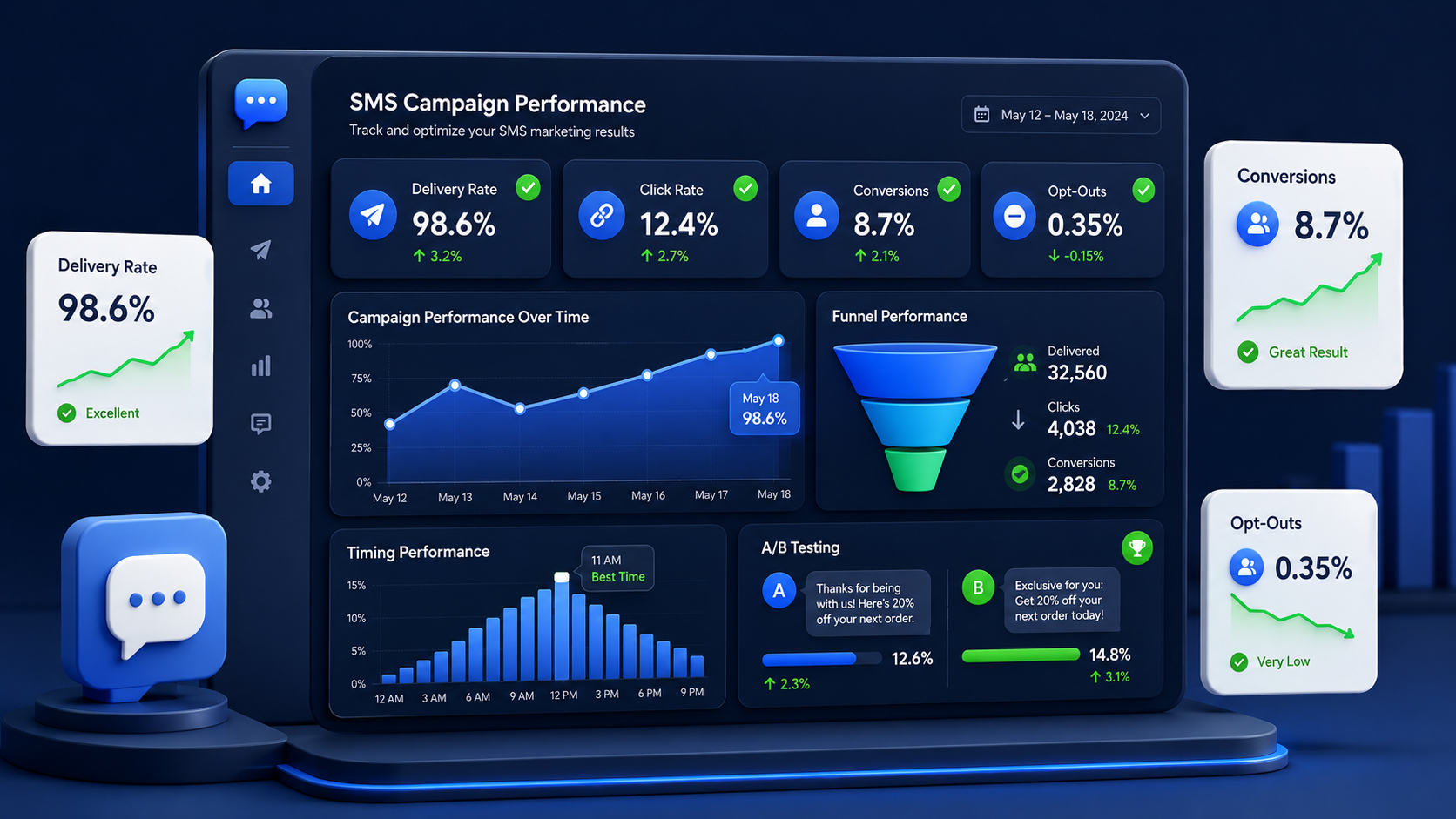

The World Cup Final is one of the few global events where billions of people across time zones are simultaneously engaged, emotionally invested, and actively checking their phones. For brands, this concentrated attention window is a rare chance to connect with customers through a channel that reaches them instantly. World Cup Final SMS marketing works because SMS consistently delivers open rates above 98%, with 90% of messages read within three minutes[1] — performance no other digital channel can match during a live-event window. But most brands approach it incorrectly: they start too early with too many generic messages, or they go completely silent after the final whistle. This 5-day campaign plan gives you a structured approach to run SMS campaigns that drive measurable engagement before, during, and after the biggest match in sports.

Day -4: Segment Your Audience and Warm Up Your List
A successful World Cup Final SMS marketing campaign starts four days before the match — not with messages, but with preparation. The 2026 tournament projects approximately 6 billion global engagements, making it the most digitally active World Cup in history[2]. That volume means consumer attention will be fragmented across multiple channels. The brands that win are the ones that segment early and send purposefully.
Build engagement segments based on team affiliation and past behavior
Divide your SMS list into groups that matter for Final messaging: customers who engaged with previous sports-related campaigns, subscribers in competing team markets, dormant subscribers who haven't opened a message in 90+ days, and high-value customers who convert consistently. Each segment needs a different message strategy on match day. For example, subscribers who previously clicked sports-related promotions may respond well to real-time offers during the game, while dormant subscribers need a warmer re-engagement message a few days earlier.
Send a "get ready" teaser to re-engage dormant subscribers
Dormant subscribers should receive the first message of your campaign — a low-pressure teaser that simply announces what's coming. The goal is not conversion; it's re-establishing permission and priming engagement. A message like "Big match coming this weekend. We'll send you real-time offers during the game — stay tuned." is enough to reactivate interest without creating fatigue.
Set up behavioral triggers for real-time match-day messaging
This step is technical but critical. Configure your SMS platform to send messages based on time-based triggers (pre-match, half-time, post-match) and, if your platform supports it, event-based triggers tied to match developments. Pre-built message sequences ensure your campaign runs smoothly even when your team is watching the game instead of monitoring a dashboard.
When this step is less useful: Brands with very small lists (under 500 subscribers) may not see meaningful differences between segments. In that case, skip detailed segmentation and focus on timing and message quality instead.
Day -3: Build Anticipation with Interactive Content
Once your list is organized, shift to building engagement. Day -3 is about giving subscribers a reason to keep their SMS notifications on.
Run a prediction-based SMS campaign
Prediction campaigns generate high reply rates because they tap into the competitive energy of the Final. Ask subscribers to reply with their predicted winner or final score. This does two things: it increases engagement before match day, and it gives you a data signal — subscribers who reply to a prediction message are showing high intent, making them strong candidates for match-day real-time offers.
This works best for: Brands with established subscriber relationships. If your list is cold or mostly acquired through opt-in incentives, prediction campaigns may see lower participation. In that case, skip the interactive layer and send a curated piece of content instead.
What often goes wrong: The follow-up. If you collect predictions but never acknowledge or act on them, the engagement feels one-sided. Plan a post-match follow-up that references the prediction — even a simple "Hope your team won! Here's a consolation offer 😉" message performs better than silence.
Share exclusive pre-match content
Not every message needs a CTA. Day -3 is a good moment to send something purely useful: team lineup insights, historical Final stats, or viewing guide information for the big day. Content-driven messages build trust and keep your brand top-of-mind without feeling promotional.
Set expectations for match-day messaging
Tell subscribers exactly when and how they will hear from you on match day: "On Sunday, we'll send you 3 messages: pre-match at 2:30 PM, half-time offer, and post-match surprise." Setting expectations reduces opt-out risk because subscribers know what's coming and have consented to the cadence.
Day -2: Pre-Match Preparation and Reminders
With two days to go, your campaign shifts from building anticipation to removing friction.
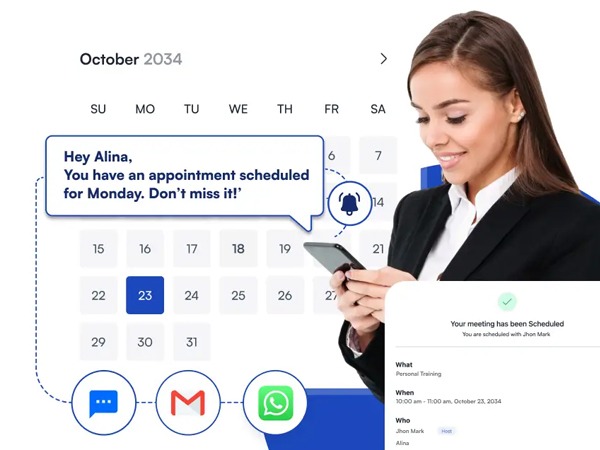
Send match-day logistics and timing reminders
Remind subscribers of match timing in their time zone and what to expect. For brands with physical locations (restaurants, bars, retail stores), this is the moment to highlight in-person viewing options. For e-commerce and digital brands, remind subscribers to save payment details or set up a quick-checkout flow so match-day offers convert faster.
Deploy early-bird offers tied to Final viewership
Limited-time offers that expire before the match create urgency without competing for attention during the game itself. Industry data shows SMS marketing conversion rates range between 21% and 40%[3], and offers with clear time constraints — "48 hours only" — tend to perform at the higher end of that range.
This approach is less suitable for: Brands selling high-consideration products (B2B services, premium subscriptions). A time-limited discount may feel pushy in those contexts. Instead, send an informational reminder about how your service helps customers during major events.
Final segmentation check
Verify opt-in status, time-zone delivery windows, and message frequency caps before match day. A single message sent to a subscriber who has already opted out can damage sender reputation and reduce deliverability for future campaigns[4].
Segment & Warm Up"] D3["Day -3
Interactive Content"] D2["Day -2
Reminders & Prep"] end subgraph Match["Match Day"] PM["Pre-Match
60-90 min before"] HT["Half-Time
Engagement"] FW["Final Whistle
Immediate Offer"] end subgraph Post["Post-Match"] D1["Day +1
Follow-up & Retention"] end D4 --> D3 --> D2 --> PM --> HT --> FW --> D1
Game Day: Real-Time Engagement That Adds to the Experience
Match day is where World Cup Final SMS marketing either delivers or falls flat. The difference comes down to timing and relevance.
Pre-match opening message
Send your first message 60-90 minutes before kick-off. This should do three things: acknowledge the event, state the offer or engagement hook, and remind subscribers what to expect next. Keep it short — SMS performs best at 120-160 characters for time-sensitive reads.
Half-time engagement window
Half-time is the highest-engagement window of the match. Fans are taking a break, checking their phones, and open to messages that add to the experience rather than interrupt it. Use this slot for: (1) a quick poll or reaction prompt, (2) a contextual offer tied to the match flow (e.g., score-dependent discounts), or (3) a social sharing prompt that extends your reach beyond SMS.
A common risk here: Sending a message during a particularly exciting moment on the pitch. SMS is immediate — a goal scored in the 43rd minute while your half-time message arrives at the 45th can feel poorly timed if the offer doesn't align with the emotional state of the viewer. Consider using a delayed trigger that sends exactly at the 45-minute mark regardless of match events.
Post-match immediate engagement
The final whistle creates the most emotionally charged moment of the entire campaign. Some subscribers are celebrating, others are disappointed — but almost all are looking at their phones. This is the moment for a message that acknowledges both outcomes. A neutral celebration offer ("The Final delivered. Here's something for everyone who watched 🏆") performs better than a binary winner/loser framing that alienates half your audience.
SMS marketing campaigns using well-segmented, event-triggered messaging during high-engagement windows can see conversion rates reaching the upper range of the 21%-40% benchmark[3], particularly when the offer feels like a natural part of the viewing experience rather than an interruption.
Day +1: Post-Match Follow-Up and Retention
The day after the Final is the most overlooked window in event SMS marketing. While most brands have already stopped messaging, the audience is still emotionally engaged and actively discussing the match.
Personalized post-match messaging
Reference the match outcome and each subscriber's engagement history. If someone opened your pre-match message but didn't click your half-time offer, send a different follow-up than someone who converted during the game. Simple behavioral segmentation — clicked vs. didn't click, replied vs. didn't reply — is enough to differentiate your Day +1 messages.
Limited-time offers tied to the Final outcome
Post-match offers that expire within 24-48 hours capture residual engagement before it fades. The framing should tie back to the Final experience — "Celebrate (or commiserate) with 20% off" — rather than generic post-event discounting. According to SMS marketing benchmarks, brands that send a follow-up within 24 hours of a major event see higher click-through rates than those waiting longer[5].
Where brands get this wrong: Making the offer too complex. Post-match attention spans are short. A single clear CTA — one link, one discount code, one action — outperforms multi-option messaging on Day +1.
Extend the conversation with recap content and community prompts
Share a match recap, best moments content, or a community discussion link. This extends the conversation beyond your brand's products and positions your SMS channel as a source of event-related value, not just promotional messages. 74% of sports fans use digital platforms to follow or engage with sport[2], and SMS that serves as a content channel — not just a sales channel — builds long-term subscriber retention.
Capture learnings and update segments
Run through your campaign metrics: delivery rate, open rate, click-through rate, conversion rate, and opt-out rate per segment. Document what worked for each audience group and update your segments accordingly. This data directly improves your next event-based campaign, whether it's another World Cup match, a major league final, or a seasonal promotion.
Practice Application & Action Guide
Campaign message templates for each day
| Day | Message Type | Template Example |
|---|---|---|
| Day -4 | Warm-up | "World Cup Final is almost here. We've got something special planned. Reply STAY TUNED and we'll keep you posted. 📱" |
| Day -3 | Interactive | "Who's taking the trophy? Reply with your prediction — 1 for Team A, 2 for Team B. Winner gets a surprise on Monday 🏆" |
| Day -2 | Reminder | "Final is THIS Sunday! Kick-off at [time]. We'll send you 3 quick messages during the game. Keep your phone nearby 📲" |
| Game Day | Pre-match | "Kick-off in 60 minutes ⏰ Here's [offer]. Show this message at [location/use code] to claim. Let's go! ⚽" |
| Game Day | Half-time | "Halftime! [Score update]. Quick poll: who's winning? And here's a half-time special: [offer]. 45 min only ⏳" |
| Game Day | Final whistle | "What a match! 🏆 Hope you enjoyed it. Here's something for everyone: [offer]. Valid until midnight. Cheers!" |
| Day +1 | Follow-up | "Hope you enjoyed the Final! Your [prediction/reward] is ready. Tap here to claim: [link]. See you for the next one! ⚽" |
Quick-reference checklist for Final-week SMS execution
- [ ] Segment list by engagement history and team preference
- [ ] Set up time-based triggers for pre-match, half-time, and post-match
- [ ] Test all message sequences before Day -2
- [ ] Verify opt-out handling and frequency caps
- [ ] Prepare post-match messages in advance (don't write them during the game)
- [ ] Set up a dedicated short code or sender ID for the campaign
- [ ] Monitor delivery rates in real time during match day
- [ ] Document segment-level performance for future event campaigns
Common pitfalls to avoid
The most frequent mistake is treating the Final as a single-day campaign instead of a 5-day sequence. Without the warm-up days, your match-day messages land on a cold audience. Without the post-match follow-up, you leave engagement on the table. Another common error is over-messaging — sending more than 3 messages on match day typically increases opt-out rates without proportional lift in conversions[6]. Some brands also overlook time zones: if your audience spans multiple regions, schedule messages to align with local kick-off times rather than sending a single blast.
Who should simplify this plan: Brands running their first event SMS campaign. Focus on three core days (Day -2, Game Day, Day +1) instead of the full five. The warm-up and interactive layers can be added in subsequent campaigns once you have baseline performance data.
Core Conclusions & Next Steps
The World Cup Final is not just another marketing calendar date — it's a concentrated engagement window where SMS uniquely outperforms every other channel for real-time reach and response. But the difference between a campaign that drives results and one that drives opt-outs comes down to structure: segmenting early, sending with purpose, respecting attention limits, and, most importantly, planning for the post-match window that most brands ignore.
The 5-day approach works because it matches message intensity to audience attention. Light engagement early, focused offers on game day, and retention-minded follow-ups after. This structure prevents the two most common failures — over-messaging before the match and silence after it.
Your next move: Start planning your Final campaign calendar now, even if the match is weeks away. Set up your segments, draft your message templates, and configure your timing triggers before the pre-match noise begins. If you're running high-volume SMS campaigns across multiple markets, explore how SMSBoosting's global messaging infrastructure handles real-time event delivery at scale — visit smsboosting.com to learn more about our intelligent routing and delivery optimization for time-sensitive campaigns.
FAQ
Q: How many SMS messages should I send on match day?
A: Three messages is a safe maximum for most brands: pre-match (60-90 min before kick-off), half-time, and post-match. Sending more than three on match day typically increases opt-out rates. If you have strongly engaged segments (e.g., subscribers who replied to prediction messages), you can add a fourth, but keep it value-added rather than purely promotional.
Q: Should I send different messages to winners and losers after the match?
A: Only if you have reliable data on each subscriber's team affiliation. Without it, a neutral offer tied to the match experience performs better than a binary winner/loser split. If you ran a prediction campaign on Day -3, you can use reply data to personalize post-match messaging.
Q: What time should I send pre-match SMS on game day?
A: 60-90 minutes before kick-off. This gives subscribers time to see the message, act on an offer, or prepare for the match without feeling rushed. Sending earlier than 2 hours before kick-off risks the message getting buried before match time.
Q: Is SMS marketing during the Final intrusive?
A: It depends entirely on permission and relevance. Subscribers who have opted in and received expectation-setting messages (Day -2) are far less likely to perceive match-day SMS as intrusive. The key is matching message timing to natural attention breaks — avoid sending during active play, and align with pauses like half-time.
Q: Can small brands run a 5-day campaign effectively?
A: Yes, with simplification. Focus on Days -2, 0 (Game Day), and +1. Skip the interactive and content layers if your team or resources are limited. Even a three-message sequence — pre-match, half-time offer, post-match follow-up — outperforms sending nothing during the Final.
Q: Which industries see the best results from World Cup SMS campaigns?
A: Restaurants, sports bars, retail, e-commerce, streaming services, and entertainment brands typically see the strongest engagement. However, B2B brands can also participate by sending industry-relevant content tied to match-day attention trends — the key is aligning the message with your audience's interests, not forcing a football connection.
Q: How do I measure success for my World Cup Final SMS campaign?
A: Key metrics include: delivery rate (target >97%), click-through rate (benchmark: 21%-35%), conversion rate (range: 21%-40%), and opt-out rate (watch for spikes above 0.5% on match day). Compare these against your typical campaign performance to isolate the Final's impact.
Q: What's the biggest mistake brands make with Final SMS campaigns?
A: Going silent after the match. Most brands stop messaging at the final whistle, missing the 24-48 hour post-match window where engagement remains high. A single well-timed follow-up message on Day +1 consistently outperforms the marginal gain from adding one more pre-match message.
References
- Sakari.io — SMS Marketing Benchmarks 2025 — Provides SMS open rate (98%), read time (<3 min), and conversion rate (21%-40%) benchmarks used throughout the article.
- The Global Statistics — FIFA World Cup Social Media Statistics 2026 — Provides the 6 billion projected global engagement figure and 74% sports fan social media usage data for the 2026 tournament.
- SimpleTexting — 2025 Texting and SMS Marketing Statistics — Provides SMS click-through rate distribution data and finance industry CTR benchmarks (72% seeing >20% CTR).
- Omnisend — SMS Marketing Statistics: Key Data for 2026 — Provides SMS deliverability and sender reputation guidance used in the pre-match preparation section.
- OptiMonk — 43 SMS Marketing Statistics for 2026 — Provides ROI data ($4 for every $1 spent) and post-event campaign response time guidance.
- DMText — 2025 SMS Marketing Benchmarks — Provides message frequency benchmarks and opt-out rate analysis used in the common pitfalls section.