

SMS is the only marketing channel that consistently delivers a 98% open rate, with 90% of messages read within three minutes of delivery [1]. For ecommerce stores, that number changes everything. It means a flash sale announcement reaches customers before the sale window closes. A shipping alert lands exactly when the buyer is tracking their package. An abandoned cart reminder arrives while the purchase intent is still fresh.
But SMS for ecommerce is not just a marketing tool. It is a customer experience infrastructure that supports the entire shopping journey — from the moment a shopper browses your store to the day they receive their order and beyond. This guide covers the five core ways online stores use SMS across the ecommerce lifecycle: promotional campaigns, order updates and delivery notifications, customer follow-ups, and cart abandonment recovery. If you are an ecommerce marketing manager, operations lead, or growth team member evaluating how SMS fits into your stack, the goal here is to help you see where each use case fits and what it actually takes to make it work.
Why SMS for Ecommerce Matters More Than Ever
The 98% Open Rate That Email Can't Touch
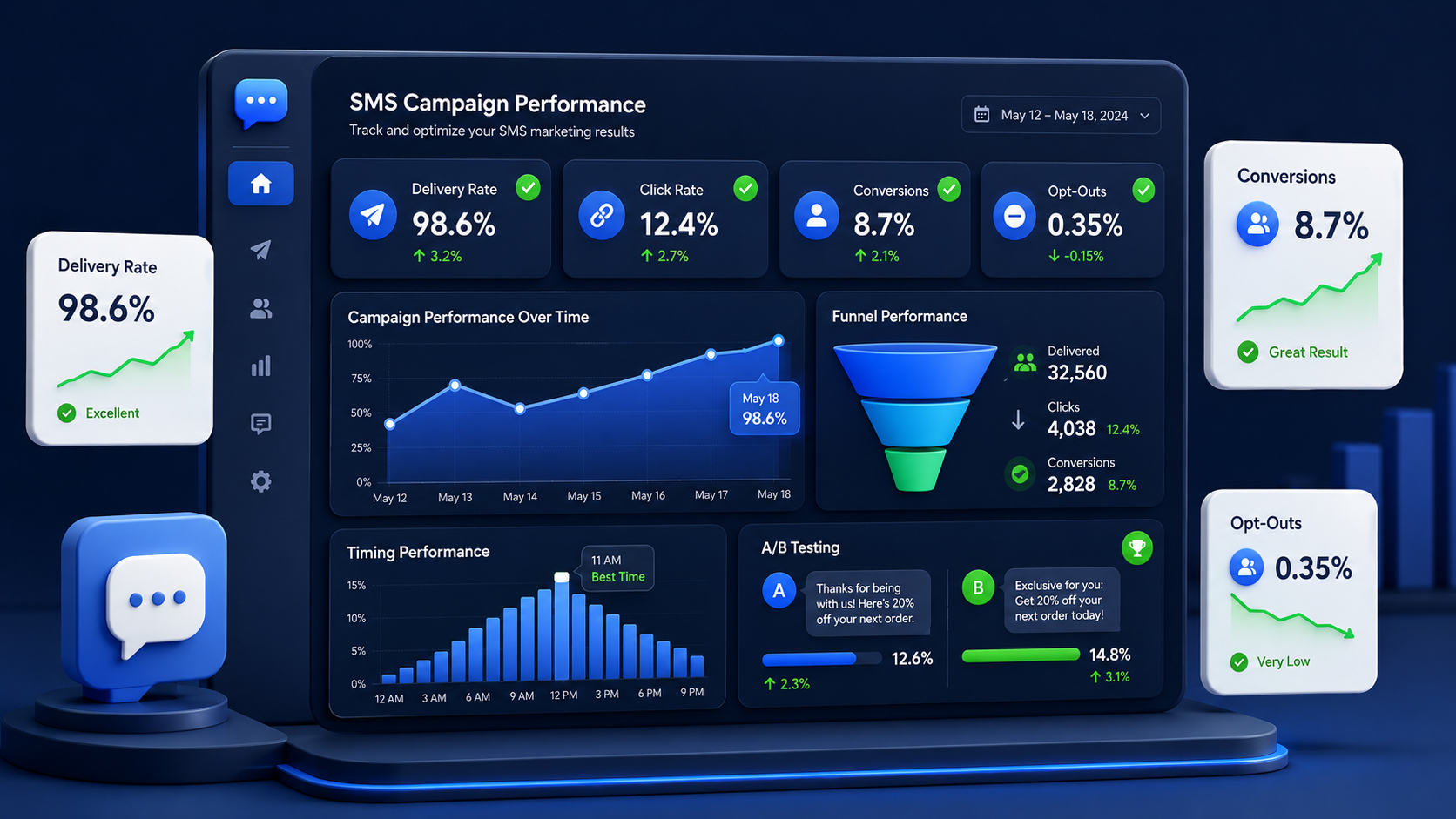
Email open rates average around 20%. Social media ad click-through rates hover near 2%. SMS, by comparison, operates in a different league. Industry data consistently shows SMS open rates at 98%, with click-through rates between 10% and 15% — roughly five times higher than email [1][2]. The difference is not marginal. It reflects a fundamental difference in how people interact with the two channels. Email inboxes are crowded, filtered, and often ignored. SMS is personal, immediate, and demands attention.
SMS as a Customer Experience Infrastructure, Not Just a Marketing Channel
Many ecommerce teams think of SMS as "another channel to send promotions." That view undersells what SMS can do. In practice, the same infrastructure that supports a flash sale campaign also handles order confirmations, shipping updates, customer follow-ups, and cart recovery. These are not separate systems. They are different use cases running on the same SMS delivery backbone.
For a global ecommerce brand, that backbone needs to handle cross-border routing, cost predictability, and real-time delivery monitoring. SMSBoosting, for example, works with ecommerce brands to manage promotional SMS across Southeast Asia, Europe, and the Middle East, helping reduce cost forecast variance from 18-25% down to 7-10% through route-level review and market-aware campaign planning. The point is this: when SMS is treated as infrastructure rather than a campaign channel, the operational considerations change.
What This Guide Covers
This guide organizes SMS for ecommerce into five use case categories. Each category serves a different purpose in the customer journey. The categories are:
- Promotional campaigns — driving sales through time-sensitive offers
- Order updates and shipping notifications — building trust through real-time information
- Customer follow-ups — turning one-time buyers into repeat customers
- Cart abandonment recovery — winning back revenue that would otherwise be lost
A comparison table and a decision checklist are included in the action guide section to help you choose the right approach for your store.
Promotional Campaigns — SMS as the Direct Revenue Channel
Flash Sales and Time-Sensitive Offers Drive Immediate Conversions
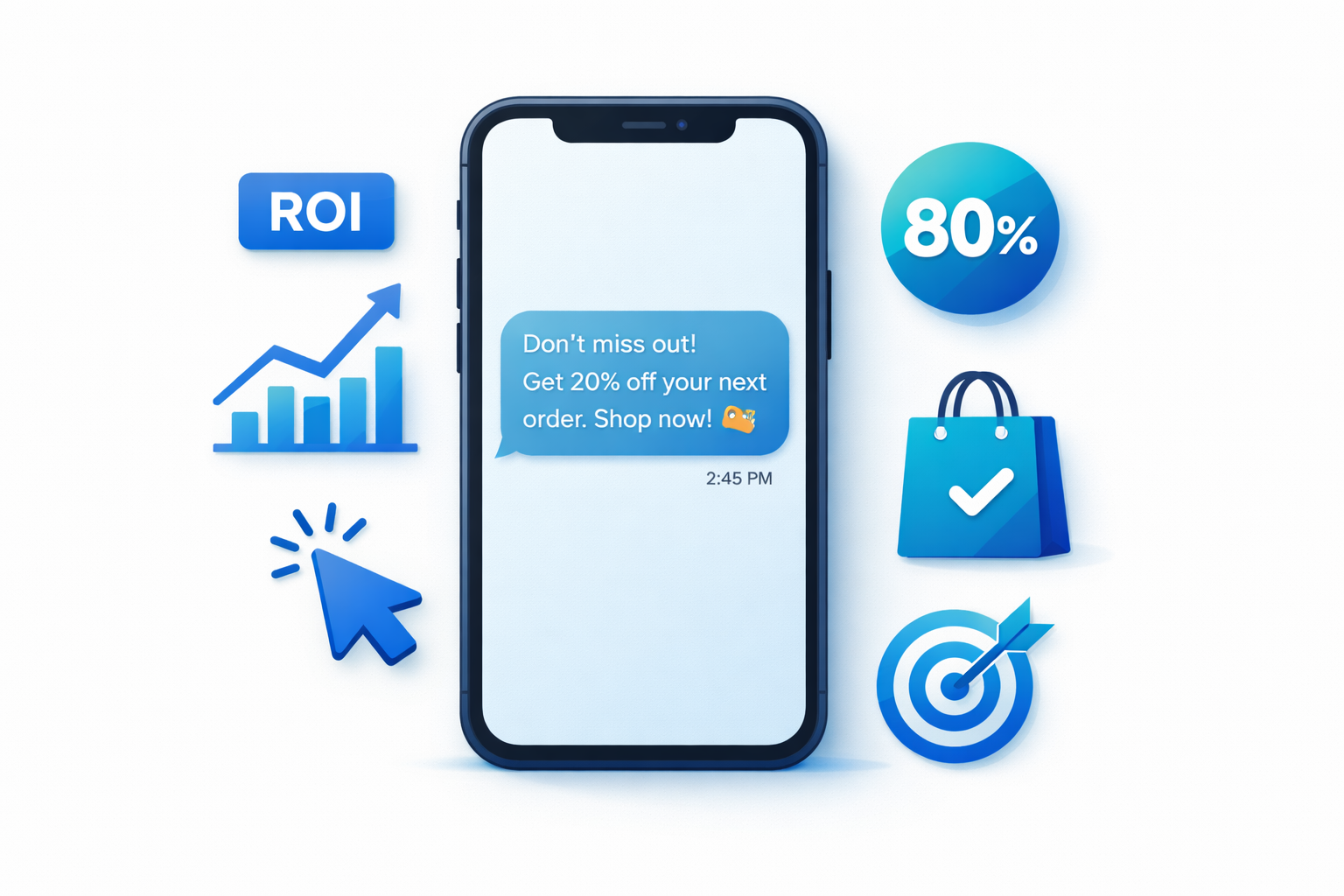
Promotional SMS is the most established use case and the one most ecommerce teams start with. The logic is straightforward: if you have a limited-time discount, a flash sale, or a seasonal promotion, SMS offers the fastest path from message to purchase. With 90% of messages read within three minutes, the window between send and conversion can be measured in minutes, not days [1].
The most effective promotional SMS campaigns share three characteristics. First, they are genuinely time-sensitive — a 24-hour sale, a limited inventory alert, or a holiday-specific offer. Second, they are segmented. Sending the same promotional message to your entire subscriber list ignores the fact that different customer segments respond to different offers. Third, they include a clear, single-step call to action. A link to the product page. A code to apply at checkout. One thing to do, not several.
Segmenting by Behavior — Personalized Promotions That Work
Segmentation is what separates effective promotional SMS from spam. Common segmentation approaches for ecommerce include:
- Purchase history: Send replenishment reminders for consumable products or complementary items for past purchases.
- Browse behavior: If a customer viewed a product category but did not purchase, a targeted offer for that category can tip the scale.
- Engagement level: Highly engaged subscribers may respond to early-access offers, while lapsed subscribers may need a stronger incentive to return.
- Location: For brands shipping to multiple regions, location-based offers can account for local holidays, seasons, or shipping conditions.
The data supports this approach. Research shows that 72% of consumers are willing to receive weekly texts from brands they trust — but only when the messages are relevant [2]. Relevance comes from segmentation, not volume.
Real-World ROI Benchmarks
Industry data points to automated SMS flows delivering 8-12x ROI on average [2]. These numbers come from brands that combine segmentation with automation — setting up trigger-based flows that send promotional messages at the right moment rather than broadcasting to everyone at once.
But a benchmark is not a guarantee. The actual ROI of promotional SMS depends on list quality, offer relevance, timing, and the specific product category. A high-margin fashion brand running a seasonal clearance sale will see different results than a low-margin consumables brand running a weekly promotion. The more useful way to read these numbers is as a directional signal: promotional SMS tends to outperform other channels on a per-send basis, but the exact multiplier depends on execution.
Order Updates and Shipping Notifications — Building Trust Through Real-Time Information
Why Order Confirmation SMS Reduces Customer Anxiety and Support Tickets
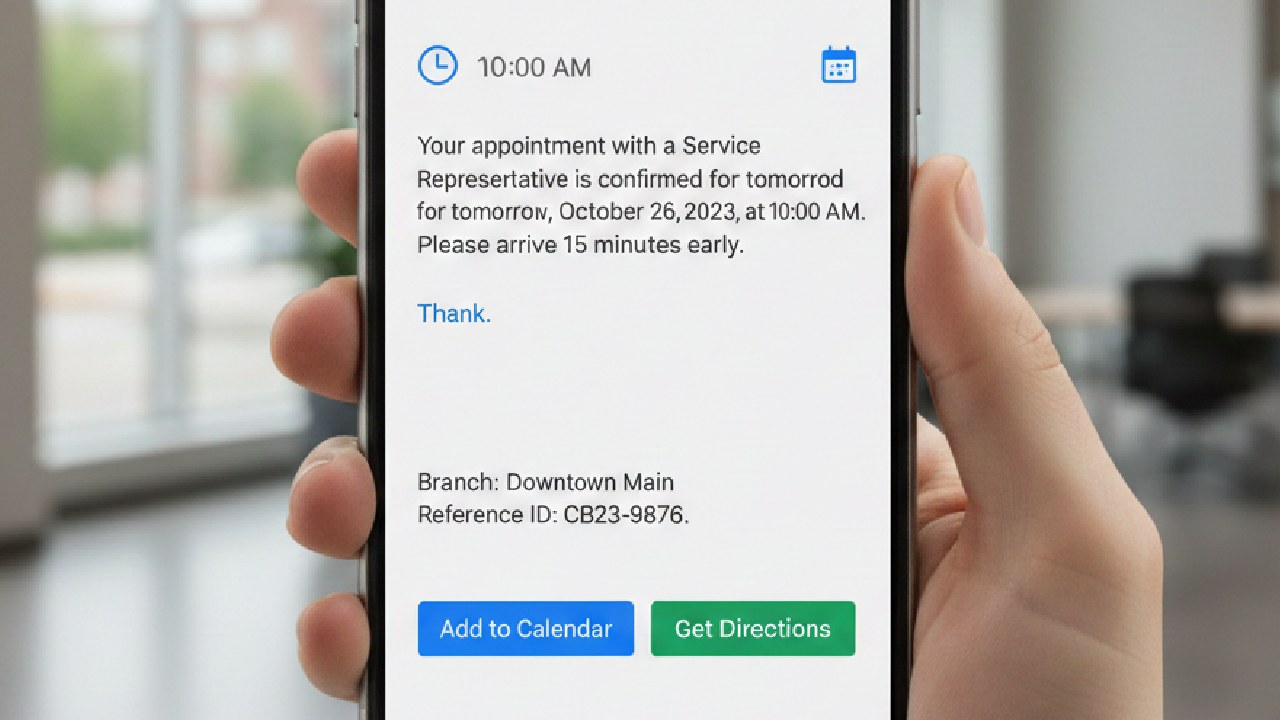
After a customer completes a purchase, the most important question they have is: "Did my order go through?" An order confirmation SMS answers that question instantly. It also preempts a wave of support inquiries — customers who receive a confirmation message are significantly less likely to contact support asking whether their payment was processed.
Order confirmation SMS serves a trust function that goes beyond convenience. For cross-border ecommerce, where delivery times are longer and tracking complexity is higher, the confirmation message is the first signal that the brand is reliable. It sets the tone for the entire post-purchase experience.
Delivery Tracking Alerts — Turning Wait Time Into Brand Trust
The period between order confirmation and delivery is where customer anxiety peaks. Delivery tracking alerts — sent when the package is shipped, when it reaches a distribution center, when it is out for delivery, and when it is delivered — transform that waiting period into a series of reassuring touchpoints.
Each alert answers a specific question: "Has my order shipped?" "Where is it now?" "When will it arrive?" Without these updates, customers fill the information gap with support inquiries, negative reviews, or refund requests. With them, the shipping experience becomes part of the brand experience rather than a source of friction.
For ecommerce brands shipping to multiple countries, delivery notification SMS needs to account for different carrier ecosystems, tracking formats, and time zones. This is where having a delivery partner with global routing capability becomes important — not just for sending the message, but for ensuring it reaches the right carrier network in the destination country.
Cross-Border Considerations
Global ecommerce adds complexity to order update SMS. Different markets have different carrier requirements for transactional SMS. Delivery windows vary by region. Tracking URL formats differ between carriers. And the cost of sending SMS varies significantly by destination country.
A practical approach is to work with an SMS provider that offers market-level visibility into sending conditions and cost ranges. SMSBoosting's work with a cross-border ecommerce brand illustrates this: by moving from campaign-level to market-level planning, the brand reduced post-campaign review time from 6-8 hours to 3-4 hours and cut cost forecast variance by more than half. The operational insight is that order update SMS is not just about message content — it is about having visibility into how each market handles message delivery.
Customer Follow-Ups — Turning One-Time Buyers Into Repeat Customers
Post-Purchase Follow-Ups That Build Relationships
The moment after delivery is one of the most underused opportunities in ecommerce. A post-purchase follow-up SMS can serve multiple purposes: confirming delivery satisfaction, asking for a review, offering product care tips, or suggesting complementary items.
The key distinction from promotional SMS is intent. A follow-up message is not trying to close a sale — it is trying to close the loop on the current purchase and open a relationship. That shift in intent changes the tone, the timing, and the metrics. Success is measured not by click-through rate but by repeat purchase rate and customer satisfaction scores.
Research indicates that 63% of consumers have made a purchase directly from an SMS message [2]. That number reflects the channel's ability to drive action across the full customer lifecycle, not just at the point of initial conversion.
Loyalty Rewards and Replenishment Reminders
For subscription-based or consumable product ecommerce brands, SMS is a natural channel for loyalty and replenishment messaging. A loyalty point balance update, a reward expiration reminder, or a "time to reorder" message for a consumable product — these are high-relevance, low-friction messages that customers appreciate receiving.
The difference between a replenishment reminder and a promotional offer is subtle but important. A replenishment reminder is triggered by the customer's own usage pattern. It is a service, not a sales pitch. That framing makes it more likely to be welcomed and acted upon.
Integration with Customer Data
Follow-up SMS works best when it is connected to your customer database. Without CRM integration, follow-ups become generic blasts — "Thanks for your purchase" sent to everyone, regardless of what they bought or when. With CRM integration, follow-ups can be personalized: a skincare brand sends usage tips for the specific product purchased; a furniture brand sends assembly instructions and care guides.
The level of personalization depends on the data available, but even basic segmentation — by product category, purchase date, or order value — produces noticeably better results than broadcast messaging.
Cart Abandonment Recovery — Winning Back the 70%
The Abandoned Cart Problem
No Purchase"] --> Wait1h["Wait 1-4 Hours"] Wait1h --> S1["Send SMS 1
Gentle Reminder"] S1 --> R1{"Returned?"} R1 -->|"Yes ✓"| Done["Order Completed"] R1 -->|"No"| Wait24h["Wait 24 Hours"] Wait24h --> S2["Send SMS 2
Urgency + Social Proof"] S2 --> R2{"Returned?"} R2 -->|"Yes ✓"| Done R2 -->|"No"| S3["Send SMS 3
Discount Offer"] S3 --> R3{"Returned?"} R3 -->|"Yes ✓"| Done R3 -->|"No ✗"| Lost["Loss Tracked"]
Average cart abandonment rates across ecommerce hover around 70%. That means for every ten customers who add items to their cart, seven leave without completing the purchase. A portion of those customers will come back on their own, but most will not — unless they receive a timely reminder.
SMS is particularly effective for cart recovery because it reaches customers on the same device where they abandoned the cart. Research shows that 18% of shoppers prefer SMS over email for abandoned cart reminders [2]. For a channel that converts at significantly higher rates than email, that preference translates directly into recovered revenue.
Industry data points to abandoned cart SMS recovering approximately 23% of otherwise lost sales on average [2]. This number varies by industry, average order value, and the specific recovery strategy used, but it provides a reasonable baseline for estimating the impact of a well-executed SMS recovery flow.
Timing Matters — When to Send Recovery Messages
The optimal timing for cart recovery SMS follows a general pattern, though specific results depend on your customer base:
- First message (1-4 hours after abandonment): A gentle reminder that items are still in the cart. No urgency, no discount. This message alone recovers a meaningful portion of abandonments.
- Second message (24 hours later): If the first message did not convert, a follow-up with slightly more urgency — limited stock, a customer review quote for the product, or a time-limited free shipping offer.
- Third message (48-72 hours): A final attempt, often including a small discount or free shipping code. This message targets price-sensitive abandoners who need an extra incentive.
The exact timing and number of messages should be tested against your own data. Some stores see better results with a single well-timed message. Others benefit from a two or three-message sequence. The common mistake is sending too many messages too quickly, which can trigger opt-outs.
Combining Personalization With Incentives
A cart recovery SMS that simply says "You left items in your cart" is better than nothing, but not by much. The most effective recovery messages include:
- The specific product name and image (if MMS is supported)
- A direct link back to the cart with items preserved
- A reason to act now: low stock, a limited-time offer, or social proof
For stores using CRM-connected SMS platforms, adding the abandoned item details can double or triple recovery rates compared to generic reminder messages.
SMS Use Cases Across the Ecommerce Customer Journey
How the Five Use Cases Fit Together
The five use cases described above are not isolated tactics. They form a connected customer journey when orchestrated together:
- A shopper browses your store and receives a targeted promotional offer via SMS. (Marketing Campaign)
- The shopper adds items to their cart but leaves. An automated SMS arrives within hours. (Cart Recovery)
- The shopper completes the purchase. An order confirmation SMS arrives instantly. (Order Update)
- Over the following days, shipping updates keep the shopper informed. (Delivery Notification)
- After delivery, a follow-up SMS checks in and offers a loyalty reward. (Customer Follow-Up)
Each touchpoint serves a different purpose, but together they create a continuous brand experience that covers the full journey from discovery to retention.
Cross-Border Challenges in SMS for Ecommerce
Shopify / WooCommerce"] --> API["SMS API"] API --> Routing["Smart Routing
Engine"] Routing --> Monitoring["Real-Time
Monitoring"] Routing --> Cost["Cost
Optimization"] Routing --> SEA["Southeast
Asia"] Routing --> EU["Europe"] Routing --> ME["Middle East"] SEA --> C1["Customer SMS"] EU --> C2["Customer SMS"] ME --> C3["Customer SMS"]
For ecommerce brands operating across multiple countries, SMS strategy becomes more complex. Each market has different carrier networks, regulatory requirements, and customer expectations. Cost structures vary. Delivery reliability differs by region. And campaign-level visibility — knowing what happened across all markets — requires tools that most basic SMS platforms do not provide.
This is where the operational layer of SMS matters most. A brand sending 1.8 million SMS per month across Southeast Asia, Europe, and the Middle East needs more than a messaging API. It needs market-level visibility into sending conditions, route options, and cost ranges before each campaign, plus post-campaign review tools that show not just volume but delivery behavior — failed messages, delayed sends, and destination-specific issues.
From One-Off Messages to Orchestrated Journeys
The most mature ecommerce SMS strategies move beyond individual campaign types and toward orchestrated customer journeys. A single customer might receive:
- A welcome SMS after subscribing
- A promotional offer during their first month
- An abandoned cart reminder when they browse but do not buy
- A shipping update when they order
- A follow-up after delivery
- A replenishment reminder three months later
Each message is triggered by the customer's behavior, not by a campaign calendar. The result is a communication flow that feels responsive rather than intrusive. Building this level of orchestration requires a CRM-connected SMS platform, clearly defined trigger rules, and ongoing monitoring of message frequency to prevent overload.
Choosing the Right SMS Approach for Your Ecommerce Store
SMS Scenario Selection Decision Checklist
Before launching any SMS use case, work through these questions:
- Do we have explicit opt-in consent from our subscribers?
- Which customer journey stage does this message serve? (Awareness / Consideration / Purchase / Post-Purchase / Retention)
- What is the primary metric for this use case? (Click-through rate / Delivery rate / Conversion rate / Customer satisfaction)
- Do we need real-time delivery or scheduled sending?
- Are we sending to a single country or multiple regions?
- Does our SMS platform support automation triggers for this use case?
- Can we segment our audience based on behavior or purchase history?
- Does the scheduled send time comply with local regulations for the target market?
- Does every message include a clear opt-out instruction?
- Do we have a process for tracking ROI and iterating on performance?
Use Case Comparison Table
| Use Case | Trigger | Primary Metric | Best For | Automation Required |
|---|---|---|---|---|
| Promotional Campaigns | Manual schedule or event | Click-through rate, ROI | Flash sales, seasonal offers, new product launches | Optional, but recommended |
| Order Confirmation | Purchase completed | Message delivery rate | All ecommerce stores | Yes |
| Shipping Updates | Status change in logistics system | Delivery rate, support ticket reduction | Physical goods, cross-border shipping | Yes |
| Customer Follow-Ups | Delivery confirmed or time elapsed | Repeat purchase rate, NPS | DTC brands, subscription models | Yes |
| Cart Recovery | Cart abandoned (no purchase in X hours) | Recovery rate, attributed revenue | All ecommerce with tracked carts | Yes |
Key Metrics to Track
Different SMS use cases require different success metrics. Here is a practical breakdown:
- Promotional SMS: Click-through rate, conversion rate, revenue per send, ROI, opt-out rate
- Transactional SMS (orders/shipping): Delivery rate, customer satisfaction score, support ticket volume
- Follow-up SMS: Repeat purchase rate, review submission rate, response rate
- Cart recovery SMS: Recovery rate, time-to-purchase, average order value of recovered carts, incremental revenue
Tracking these metrics separately per use case — rather than rolling all SMS activity into a single dashboard — reveals which parts of your SMS strategy are working and which need adjustment.
Frequently Asked Questions
What is SMS for ecommerce, and how is it different from general SMS marketing?
SMS for ecommerce refers specifically to the use of text messaging in online retail operations. It includes promotional campaigns (flash sales, discounts), transactional messages (order confirmations, shipping updates), customer follow-ups (satisfaction surveys, replenishment reminders), and cart abandonment recovery. General SMS marketing can apply to any industry. SMS for ecommerce is tied directly to the online shopping journey — pre-purchase, purchase, post-purchase, and retention.
Do I need a separate SMS platform for ecommerce, or can I use a general SMS API?
You can use a general SMS API, but most ecommerce teams benefit from a platform that supports automation triggers, CRM integration, and campaign analytics. The key requirement is the ability to trigger messages based on customer behavior — purchase events, cart abandonment, delivery status changes — rather than sending manually.
How many SMS messages should an ecommerce store send per customer per month?
There is no universal number, but a reasonable starting point is 4-8 messages per month for engaged subscribers. This typically includes 2-3 promotional messages, 1-2 transactional messages (order/shipping), 1 follow-up message, and 1-2 cart recovery messages (if applicable). Monitor opt-out rates closely. If opt-outs exceed 0.5% per campaign, reduce frequency.
What is the average ROI of SMS for ecommerce?
Industry reports indicate that automated SMS flows deliver 8-12x ROI on average [2]. However, ROI varies significantly based on list quality, offer relevance, product category, and execution. A more useful approach is to track ROI per use case rather than relying on a single benchmark number.
How do I handle SMS compliance for ecommerce in different countries?
Compliance requirements vary by country. The baseline rules include: obtain explicit opt-in consent, include opt-out instructions in every message, respect quiet hours, and maintain records of consent. For cross-border ecommerce, verify the regulations for each destination country, as carrier requirements for transactional SMS also differ by market.
Can SMS replace email marketing for ecommerce?
Not entirely. SMS and email serve different roles. Email is better suited for long-form content, detailed product information, and automated nurture sequences. SMS excels at time-sensitive, action-oriented messages that require immediate attention. Most successful ecommerce brands use both channels in a coordinated strategy.
What types of ecommerce stores benefit most from SMS?
All ecommerce stores can benefit from SMS, but the impact is highest for stores with: time-sensitive offers (flash sales, limited inventory), cross-border shipping (where tracking updates reduce anxiety), subscription or consumable products (where replenishment reminders drive repeat purchases), and high average order values (where cart recovery recovers significant revenue per saved sale).
How does cart abandonment SMS recovery work in practice?
When a customer adds items to their cart but leaves without purchasing, an automated SMS is triggered. The message typically includes the product name, a direct link back to the cart, and a reason to complete the purchase. The first message is sent within 1-4 hours. If the customer does not return, a follow-up may include a small incentive. Industry data suggests this approach recovers approximately 23% of otherwise lost sales on average [2].
Core Takeaways and Next Steps
Summary of the Five Use Cases
SMS for ecommerce is not a single-use channel. It is a set of use cases that serve different purposes across the customer journey:
- Promotional campaigns drive immediate sales through targeted, time-sensitive offers.
- Order updates and shipping notifications build trust by keeping customers informed in real time.
- Customer follow-ups turn one-time buyers into repeat purchasers through post-purchase engagement.
- Cart abandonment recovery recovers revenue that would otherwise be lost by reaching customers at the right moment.
- Cross-journey orchestration ties all of the above into a connected customer experience.
Getting Started
If you are evaluating SMS for your ecommerce store, start with one use case — the one that addresses your most immediate need. For most stores, that is either cart abandonment recovery (if cart abandonment is a significant source of lost revenue) or promotional campaigns (if driving incremental sales is the priority). Build a basic flow, track the results, and add use cases one at a time as you gain confidence.
Explore Related Resources
For a deeper look at how SMS supports specific ecommerce scenarios, check out our guide on SMS Marketing for Ecommerce and the case study on cross-border promotional SMS optimization. If you are evaluating SMS providers, understanding delivery reliability and cross-border routing is a good place to start — these operational factors determine whether your SMS investment delivers the results your team expects.
References
- [1] Omnisend — SMS Marketing: How It Works, Examples & Best Practices. https://www.omnisend.com/blog/sms-marketing/ — Provides industry benchmark data on SMS open rates (98%), read times (90% within 3 minutes), and click-through rates (10-15%).
- [2] Ringly — Ecommerce SMS Marketing: A Complete Guide for Online Stores. https://www.ringly.io/blog/ecommerce-sms-marketing — Provides data on SMS vs email engagement metrics, 8-12x ROI for automated flows, 23% cart recovery rate, 72% consumer willingness to receive SMS, and 63% purchase-from-SMS rate.