An SMS gateway in Brazil connects your application, CRM, or campaign system to Brazilian mobile numbers through local and international A2P routes. Businesses use Brazil SMS for Pix-related alerts, ecommerce delivery updates, OTP codes, banking notices, marketplace reminders, support messages, and promotional campaigns in cities such as Sao Paulo, Rio de Janeiro, Brasilia, Belo Horizonte, Curitiba, and Recife.
This guide explains how Brazil SMS delivery works, how to evaluate routes across Vivo, Claro, and TIM, how to compare pricing, and how to set up an SMS API for +55 mobile numbers.
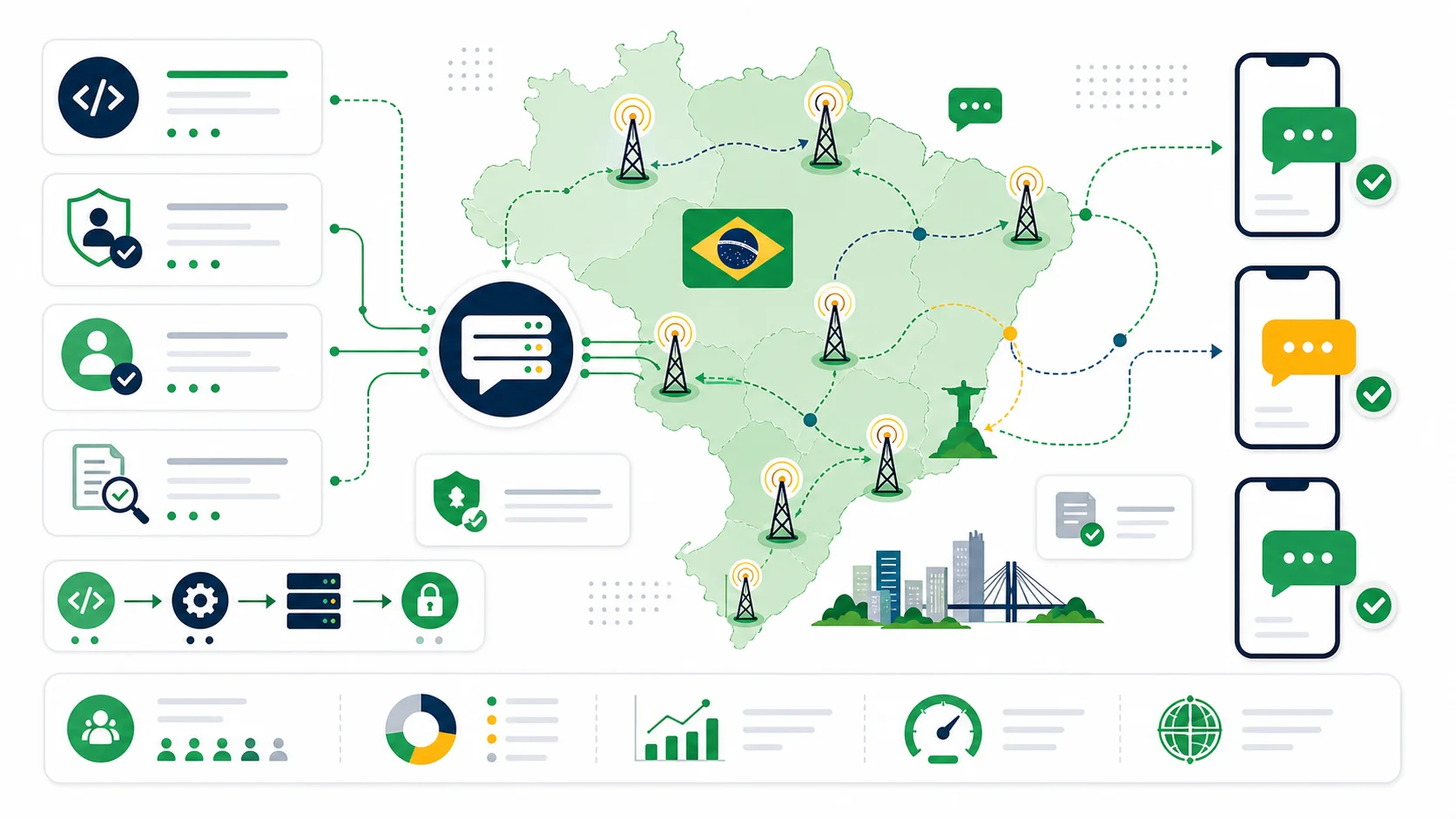
Quick answer: A reliable Brazil SMS gateway needs tested routing across Vivo, Claro, and TIM, clean +55 number formatting, Portuguese template review, consent controls for marketing, useful delivery reports, and API support for OTP and bulk messaging. Pricing should be compared by route quality, operator reach, sender identity options, message length, support response, and monthly volume. If you are evaluating SMSBoosting, Brazil reference pricing starts from approximately EUR 0.01 per SMS. Treat this as SMSBoosting-specific reference pricing, not a Brazil market average.
Brazil Mobile Market and Regulatory Context
Brazil is one of Latin America’s largest SMS markets by population and ecommerce activity. The main mobile operators for SMS route testing are Vivo, Claro, and TIM. Oi’s former mobile base has been absorbed into the larger operators, so Brazil SMS testing should focus on how messages terminate across Vivo, Claro, and TIM coverage.
The telecom regulator is Anatel (Agencia Nacional de Telecomunicacoes). Anatel maintains telecom rules, consumer-facing information, sector data, numbering resources, and regulated-service oversight. For SMS buyers, Anatel context matters because Brazil delivery depends on approved telecom routes, consumer complaint control, and reliable operator reporting.
Brazil also has data protection expectations under LGPD (Lei Geral de Proteção de Dados). Marketing SMS should use opt-in lists, clear brand identification, and an opt-out process. This is especially important for fintech, lending, health, insurance, education, and e-commerce campaigns.
| Brazil Route Area | Why It Matters for SMS |
|---|---|
| Vivo | Major national operator and an essential route test group |
| Claro | Major national operator with broad consumer and enterprise reach |
| TIM | Major national operator and required for balanced delivery testing |
| São Paulo / Rio / Brasília | Dense audiences for e-commerce, fintech, logistics, and marketplace SMS |
| Portuguese templates | Local wording, accents, and links affect trust and filtering risk |
What SMS Is Used For in Brazil
Brazil SMS use cases are practical and transaction-heavy. A good provider should support OTP, notifications, and marketing as separate traffic streams.
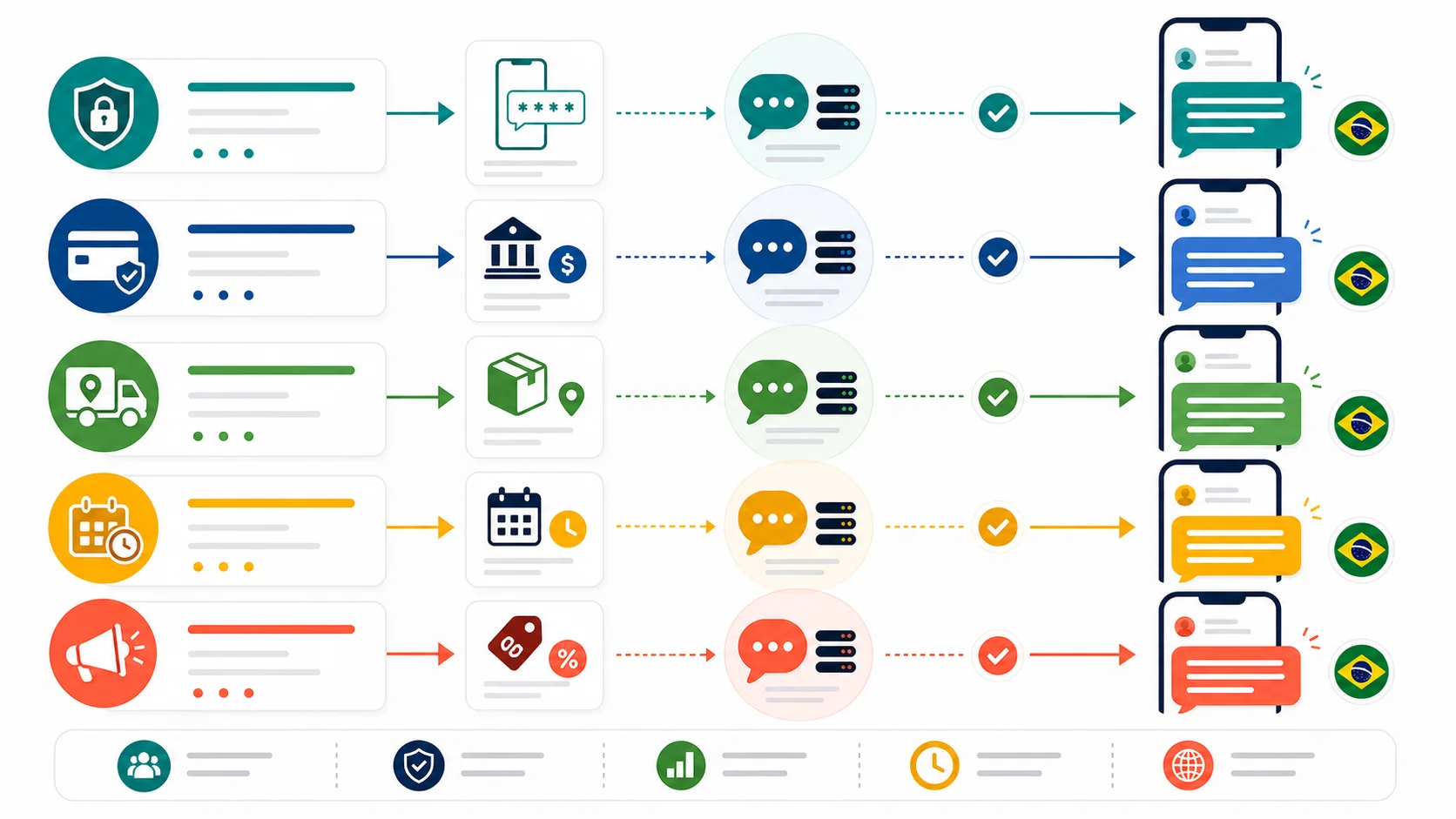
Pix and Fintech Alerts: Digital banks, wallets, lenders, crypto products, and payment platforms use OTP SMS for login, payment confirmation, account changes, and fraud checks. Brazil fintech flows need fast delivery because a delayed verification code can interrupt a Pix transfer or onboarding step.
Ecommerce and Marketplace Updates: Stores, marketplaces, courier networks, and local delivery services use SMS notification messages for order confirmation, shipping status, pickup codes, failed-delivery notices, and customer support.
Marketing SMS: Retailers, pharmacies, fashion brands, electronics stores, gyms, and local services use marketing SMS for coupons, back-in-stock alerts, event reminders, and loyalty offers. Brazil promotional SMS should be permission-based and written in natural Portuguese.
SaaS and Platform Messaging: Apps serving Brazilian customers use SMS for account recovery, security alerts, billing reminders, appointment flows, and product notifications.
Do not reuse a translated English template without local review. Brazilian Portuguese copy that sounds too literal can lower trust, especially in banking, delivery, and consumer-credit flows.
Sender Identity, Consent, and Template Checks
Brazil sender identity can vary by provider and route. Some international routes use numeric sender formats, while branded sender options may depend on provider capability, route type, and operator rules. The important question is not only what sender appears, but whether Brazilian recipients can recognize the message as legitimate.
Brand Clarity: The first line of a Brazil SMS should identify the brand or service if the sender field is not enough. This matters for Pix, banking, lending, and delivery messages.
Consent Records: Marketing campaigns should keep proof that Brazilian recipients opted in through checkout, account registration, a lead form, loyalty enrollment, or another clear channel.
Opt-Out Process: Brazil promotional SMS should include a practical opt-out process and a suppression list that is checked every send.
Portuguese Review: Review accent marks, shortened links, currency notation, and local wording. A message that says “pedido,” “entrega,” “boleto,” or “Pix” should use the phrase the customer expects.
Template Separation: Keep OTP, notification, and promotional templates separate. A Brazil OTP code with a discount offer or shortened link can look suspicious to customers and route filters.
This guide is not legal advice. For Brazil finance, health, education, lending, insurance, and regulated ecommerce programs, confirm current LGPD and telecom requirements with counsel and your messaging provider.
Brazil SMS Pricing Factors
Brazil SMS pricing depends on route quality, operator coverage, message type, number validation, sender identity, encoding, and monthly volume. The cheapest quote is not always the best fit for OTP or transactional traffic.
If you are evaluating SMSBoosting, Brazil reference pricing starts from approximately EUR 0.01 per SMS. This is a brand-specific starting point from SMSBoosting, not a Brazil market average, and not a claim about all providers. Final pricing depends on volume, route type, sender identity requirements, destination/operator split, content type, and support needs.
Route Quality: Premium A2P routes generally cost more than low-grade routes, but they reduce OTP delay and improve reporting. Brazil fintech and marketplace messages usually need stronger routing than low-risk promotional reminders.
Operator Split: Ask whether Vivo, Claro, and TIM are priced the same and whether delivery reports can separate operator performance. This helps diagnose failures in a large Brazilian contact list.
Number Validation: Brazilian mobile numbers should be cleaned before sending. Old, mistyped, landline, or inactive numbers can waste spend and distort campaign reports.
Message Length: Portuguese templates may include accents and longer phrases. Check whether the content stays in GSM-7 or uses Unicode, because encoding affects billable message parts.
Volume Commitments: Higher Brazil volumes may lower unit price, but only compare quotes after confirming route quality, API limits, reporting depth, and support response time.
If Brazil is one market in a global messaging plan, our global SMS gateway coverage guide can help compare routing, sender requirements, and delivery expectations across countries.
SMS API Setup for Brazil Numbers
A Brazil SMS API should support single-message sending, batch sending, delivery reports, webhook callbacks, and error codes that help engineers fix issues quickly. For OTP workflows, the API should also support retry logic and route fallback.
Use an SMS API for login codes, Pix alerts, order updates, payment reminders, password resets, and automated CRM messages. Use a campaign dashboard for Brazilian marketing teams that need to upload lists, segmentation, scheduling, and campaign reports.
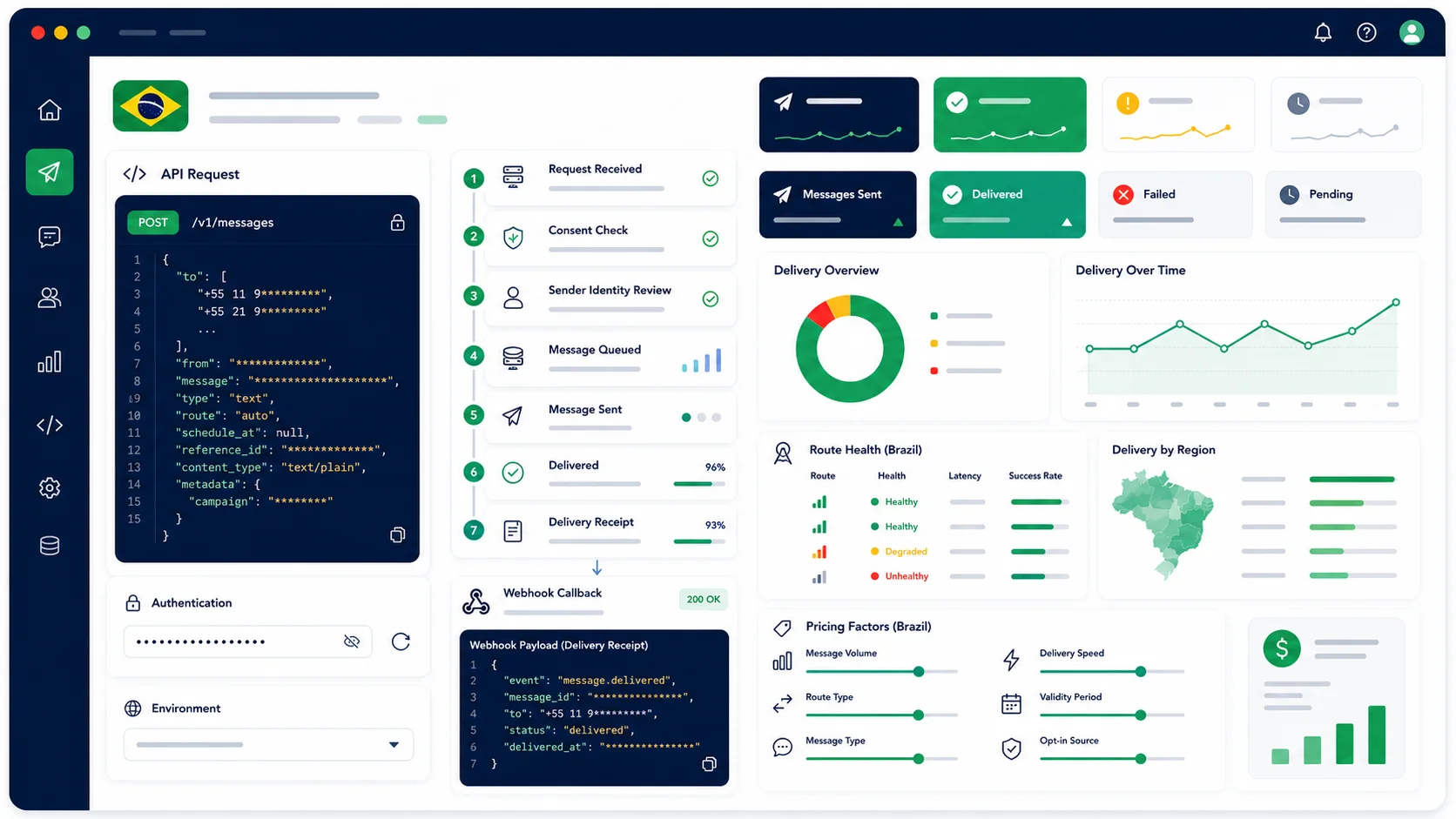
Here is a basic cURL example for a Brazil destination number. Replace the endpoint, credentials, sender ID, and content with your provider’s values.
curl -X POST “https://api.smsprovider.com/send” \
-H “Content-Type: application/json” \
-d ‘{
“account”: “your_account”,
“password”: “your_password_or_md5_hash”,
“numbers”: “5511999999999”,
“content”: “Seu código de verificação é 123456.
“sender”: “YOURBRAND”,
“smstype”: 0
}’
Use country code 55, the Brazilian area code, and the mobile number in the format your provider requires. For Sao Paulo, a test number may look like 5511999999999. Test numbers from more than one area code if your Brazil audience is national.
Delivery Reports and Common Failures
Brazil delivery quality depends on route class, operator coverage, template quality, number hygiene, sender display, and language. A campaign that works in Sao Paulo may still behave differently for customers in the Northeast, South, or interior cities if the list and routing are uneven.
Watch for these Brazil-specific issues:
- Wrong +55 Formatting: Brazil numbers need country code, area code, and mobile-number normalization before API submission.
- Inactive or Recycled Numbers: Large Brazil lists often contain old ecommerce, prepaid, or inactive contacts that should be cleaned before sending.
- Portuguese Template Risk: Literal translations, suspicious links, and vague sender identity can reduce trust in Pix, banking, and delivery messages.
- Operator Route Imbalance: Vivo, Claro, and TIM may show different delivery patterns if route coverage is uneven.
- Marketing Consent Gaps: Brazil promotional SMS without clear opt-in and opt-out handling can create complaint and compliance risk.
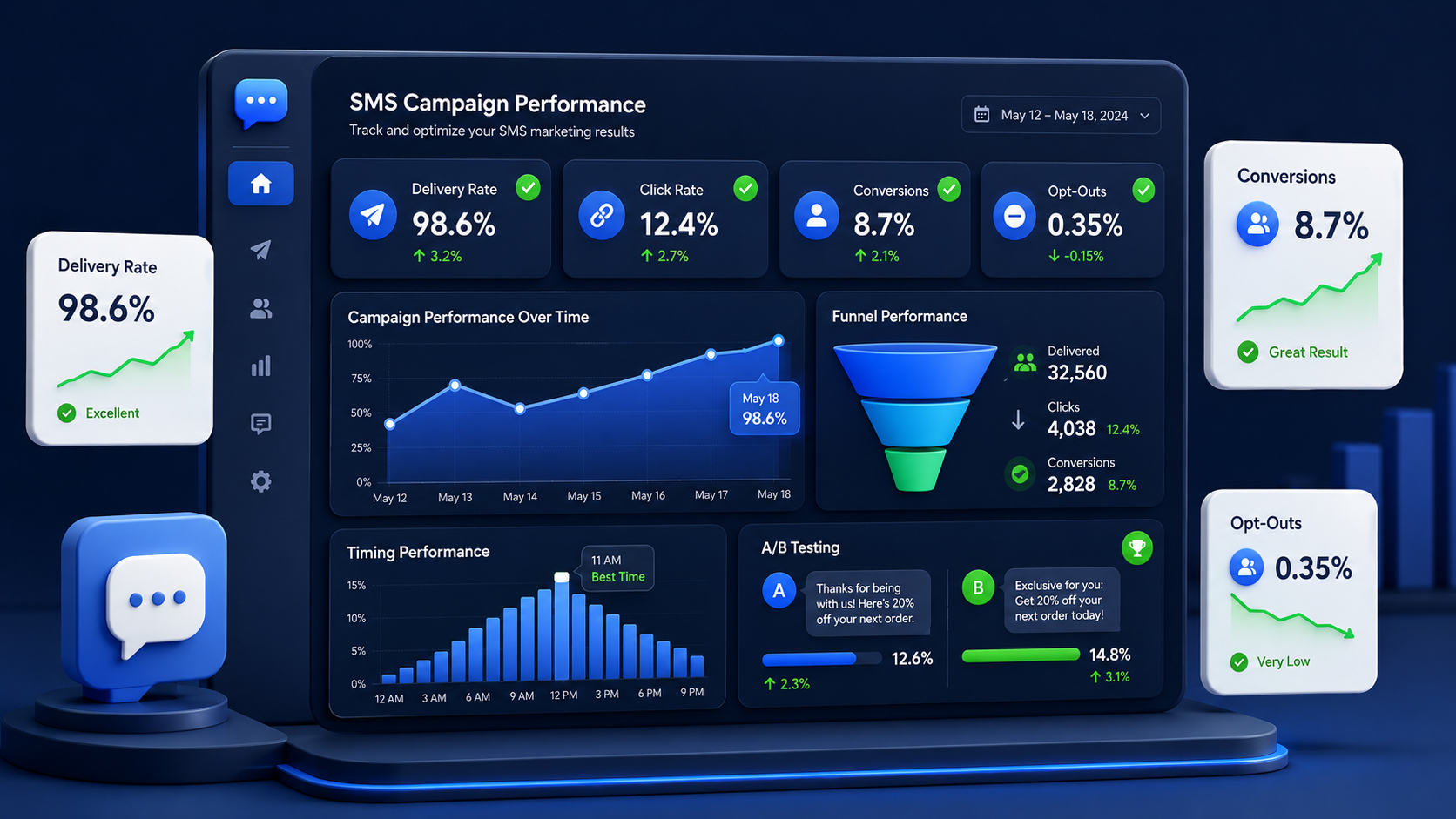
When Brazil delivery drops, review SMS deliverability data by operator, area code, template, sender display, encoding, and route. If reports only show “submitted,” ask for deeper status codes before scaling Brazil traffic.

Conclusion
A Brazil SMS gateway should be judged by route quality, +55 formatting support, Portuguese message handling, delivery reporting, and operator coverage across Vivo, Claro, and TIM. Price matters, but it should not be separated from delivery speed, reporting depth, and support.
Before sending Brazil SMS at scale, test multiple operators and area codes, clean the number list, review Portuguese templates, and compare quotes by route type. If you are evaluating Brazil delivery through SMSBoosting, start with a free trial or request a tailored quote based on volume, message type, and route needs.
FAQ
What is the best SMS gateway setup for Brazil?
The best setup tests Vivo, Claro, and TIM, uses clean +55 formatting, separates OTP from marketing, reviews Portuguese templates, and provides delivery reports by route and operator.
Can I send OTP SMS to Brazil?
Yes. Brazil OTP SMS is common for fintech, ecommerce, SaaS, marketplace, and account-security flows. Use priority routes and short Portuguese templates for a better user experience.
What is SMSBoosting’s Brazil reference price?
SMSBoosting’s Brazil reference pricing starts from approximately EUR 0.01 per SMS. Treat this as SMSBoosting-specific reference pricing, not a Brazil market average.
What number format should I use for Brazil SMS?
Use country code 55, then the area code and mobile number, such as 5511999999999. Confirm exact formatting with your API provider.
Do Brazilian marketing SMS campaigns need consent?
Yes. Brazilian marketing SMS should use opt-in lists, clear brand identification, and opt-out handling. Regulated sectors should confirm LGPD and telecom requirements before sending.