
Many teams assume an SMS platform controls whether messages are delivered. It doesn’t.
An SMS platform helps businesses send and manage text messaging programs—but mobile carriers, local regulations, and user behavior still determine what ultimately happens to a message.
That misunderstanding is common because SMS looks simple: one API call, one message, one phone. But at scale, business SMS operates inside a complex telecom ecosystem worth tens of billions of dollars globally.
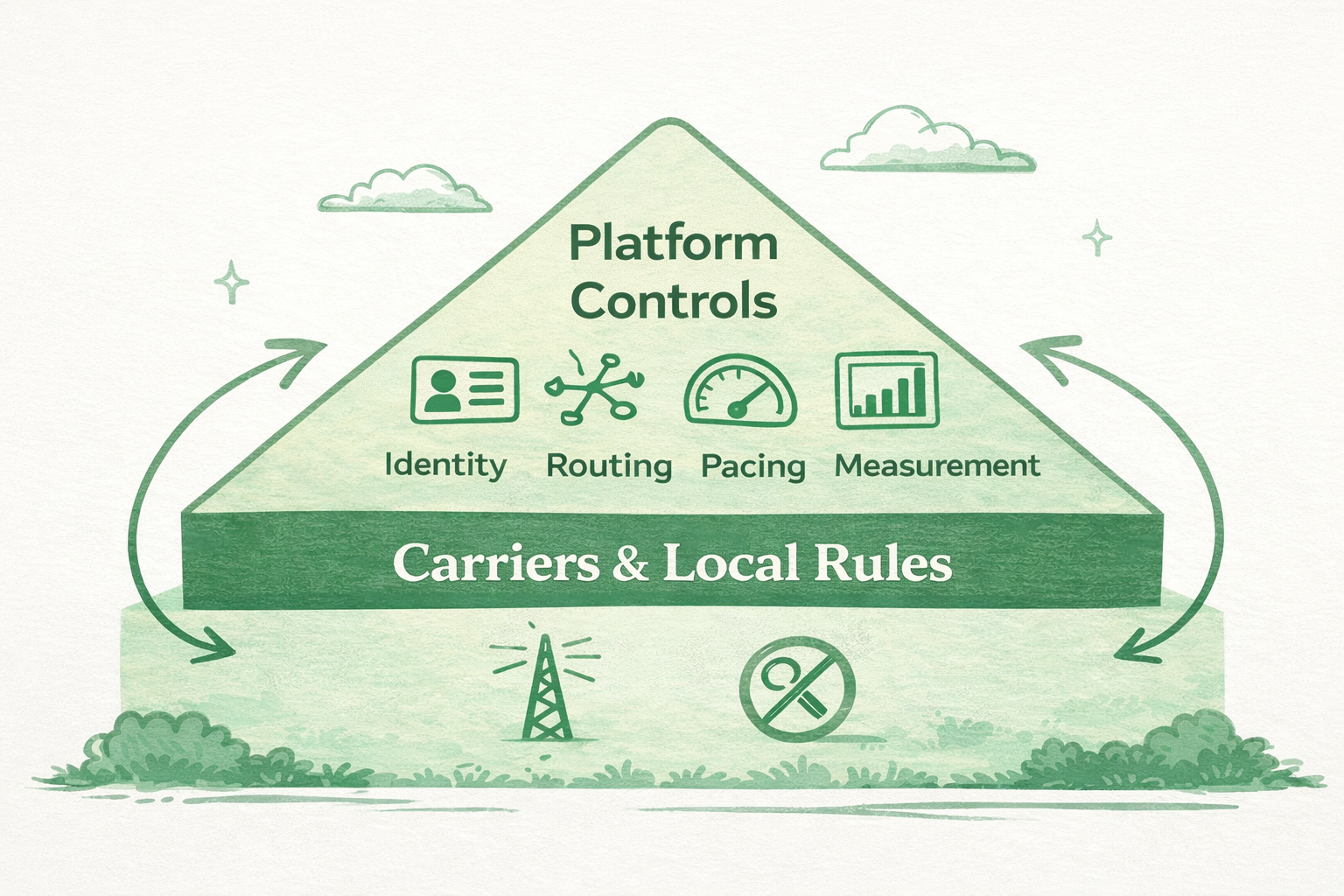
In simple terms: an SMS platform cannot control carriers—but it can control your sending. That includes identity setup, routing choices, pacing rules, and the reporting you need to understand what changed.
What an SMS Platform Actually Does?
An SMS platform is the system you use to send business texts through carrier routes, while managing the operational rules around that sending.
In practice, a platform typically gives you:
- An API (how your app requests a message to be sent)
- Sender identity support (short code / long code / alphanumeric sender ID, plus any required registration)
- Routing decisions (which network path your message takes, and when to fall back)
- Send controls (rate limits, scheduling, segmentation, templates, opt-out handling)
- Delivery reporting (status updates like “delivered/failed,” often via DLRs—delivery receipts)
- Monitoring & troubleshooting (what changed, where failures cluster, what’s predictable)
If you’re brand new, the mental model is simple:
A gateway is “handoff.” A platform is “handoff + control + visibility.”
The Biggest Misconception: Businesses Do Not Control SMS Delivery
You don’t. And that’s okay.
Mobile carriers, regulators, and local messaging ecosystems ultimately decide what traffic is acceptable. A platform helps you work with those realities. It gives you levers. It doesn’t give you a remote control for the mobile network.
So when you hear “we guarantee delivery,” treat it like you would treat “we guarantee email inbox placement.”
It’s not how the world works.
Misconception 1: “If my SMSAPI Returns 200 OK, the Message Was Delivered”
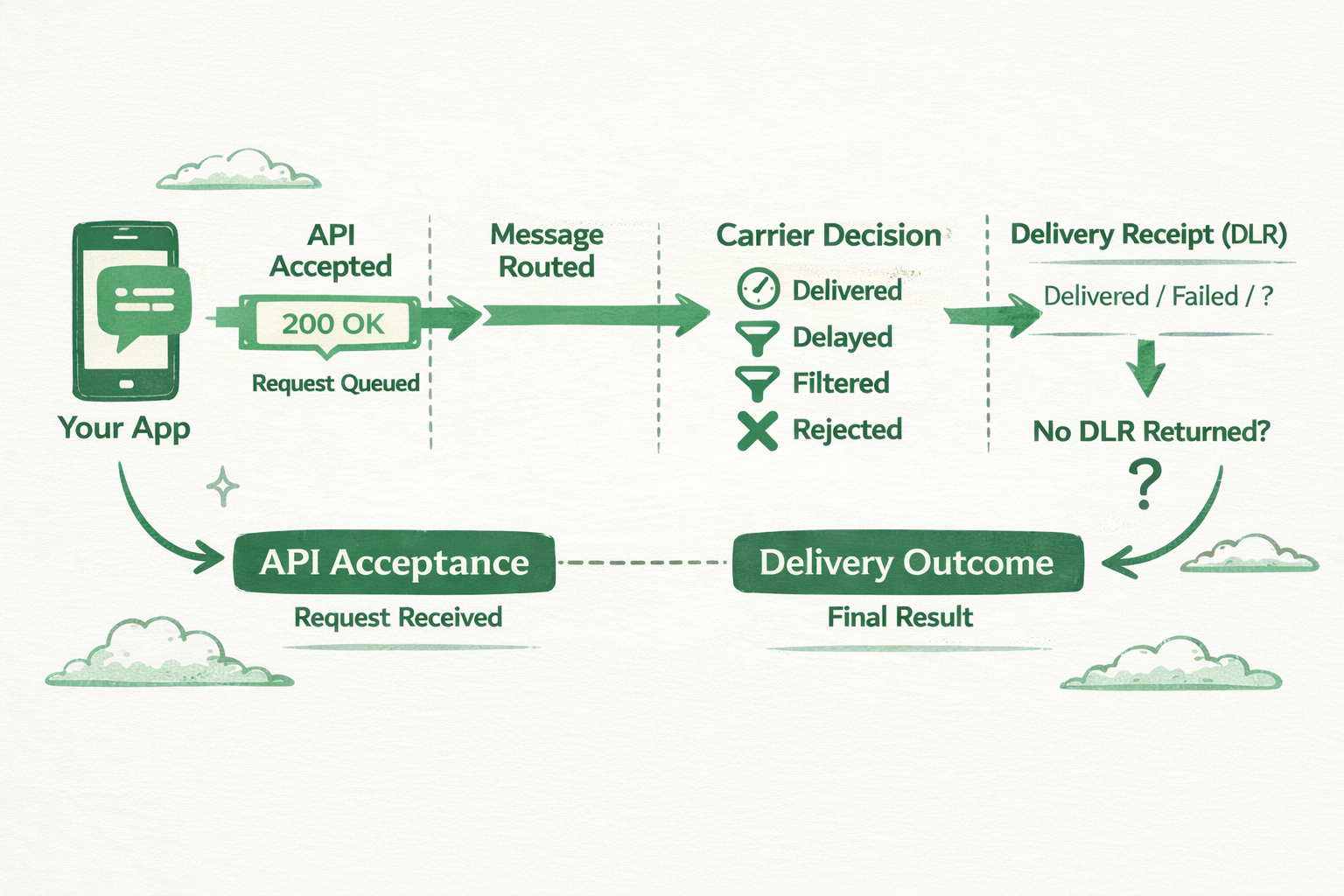
Reality: 200 OK usually means your request was accepted by the platform—not that a phone received the text.
Here’s the common timeline:
- Your system calls the API
- The platform accepts the request and queues it
- The message is routed toward the destination country/carrier
- The carrier decides to deliver, delay, filter, or reject
- A delivery receipt (DLR) may come back later—or never
What to do instead:
Track two states separately:
- API acceptance (your request is valid and queued)
- delivery outcome (carrier-level result, if available)
Mini example:
You launch a campaign and see 99% “sent” inside your app. The next day support tickets spike. Nothing is broken in your code—your reporting model is just missing the second half of the story.
Misconception 2: “SMSDelivery Rate Tells the Whole Story”
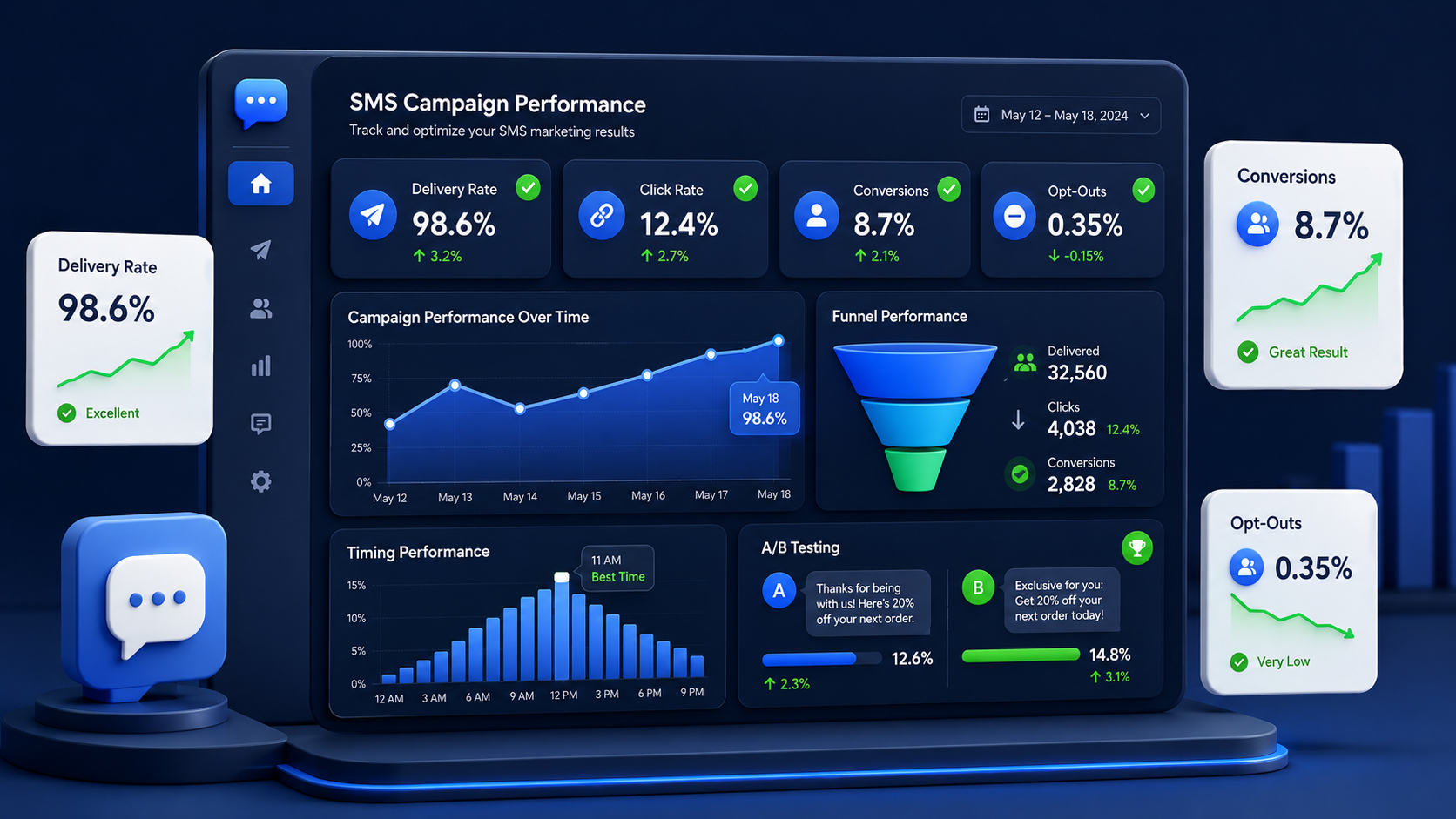
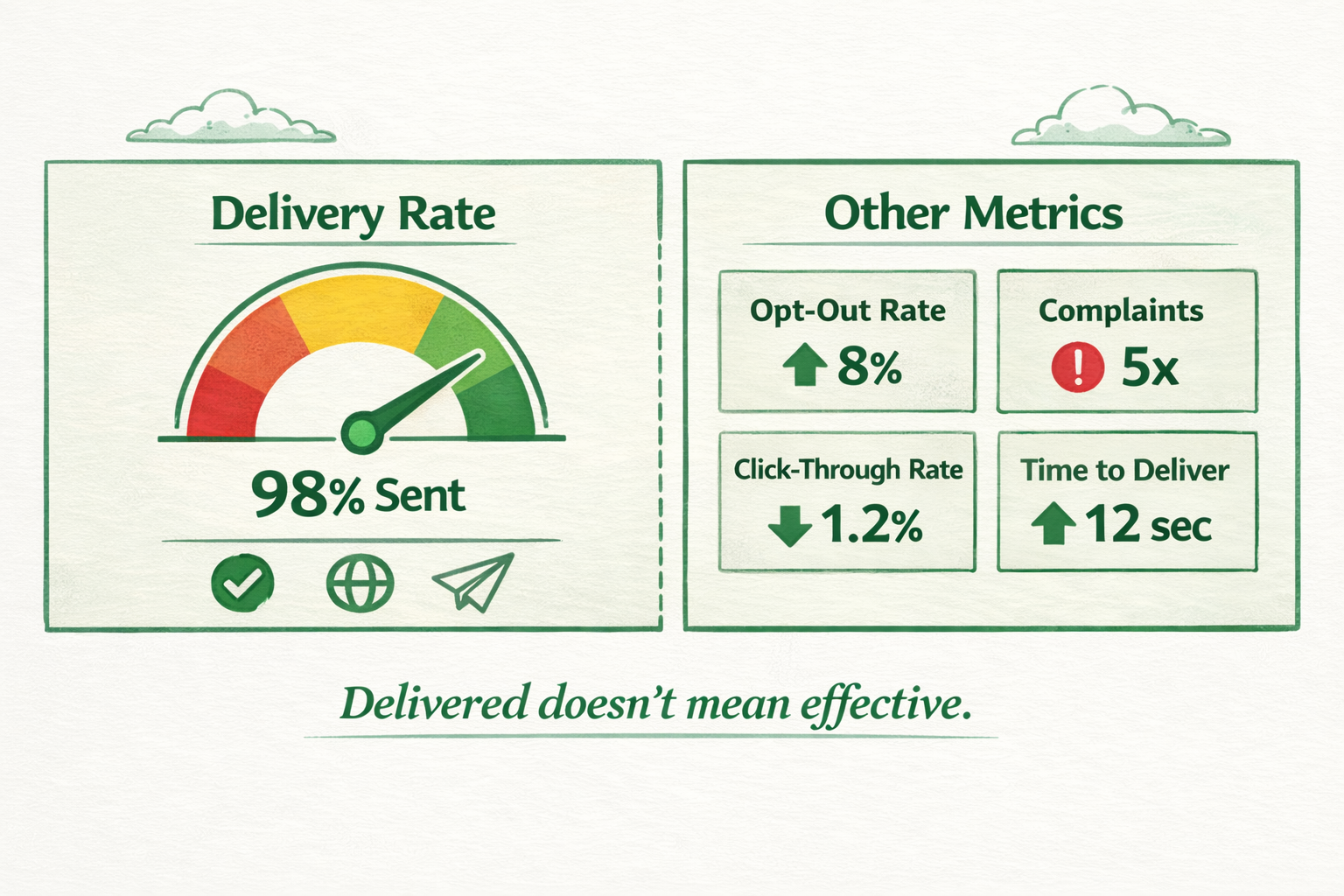
Reality: SMS delivery rate is only one part of performance. A message can be marked as delivered and still fail to achieve business results.
A campaign can look healthy by delivery rate while:
- opt-outs are climbing
- complaints are creeping up
- engagement is dropping
- filtering gets stricter over time
What to do instead:
Measure delivery together with customer signals, especially when running campaigns such as SMS marketing:
- opt-out rate (by campaign + by country)
- complaint signals (if available)
- click rate/conversion rate
- time-to-deliver (latency) and delays
Mini example:
Two routes both show 98% delivery. Route A drives conversions. Route B drives opt-outs. Delivery rate didn’t warn you. Customer behavior did.
Misconception 3: “An SMSPlatform Can Force Carriers to Accept Messages”
Reality: Mobile carriers can still throttle, filter, or block traffic—even when you are using a legitimate platform.
An SMS platform can help you reduce risk, but they can’t override carrier enforcement.
What to do instead:
Ask your provider about:
- how they handle country-specific restrictions
- what registration they support
- how they detect and respond to filtering shifts
- what route options exist when a path degrades
Mini example:
A message category that worked last month starts getting delayed in one carrier. Nothing changed on your side. The carrier’s filtering did.
Misconception 4: “One Sender ID Works Everywhere”
Reality: Sender identity is local.
A sender name that’s allowed in one country may be blocked, replaced, or rejected in another. Some destinations require pre-registration. Others require specific types of numbers. Some don’t support alphanumeric IDs at all.
What to do instead:
Treat sender identity like a country-level requirement, not a branding preference.
- decide what sender type you need per region
- confirm registration timelines
- plan fallbacks (especially for multi-country traffic)
Mini example:
Your brand sender name performs well in Country A. In Country B, it silently changes into a random shortcode-like string. Customers think it’s phishing. Trust drops fast.
Misconception 5: “Marketing SMS and OTP are basically the same thing”
Reality: They behave differently, and they’re often governed differently.
Authentication messages such as OTP SMS are usually held to stricter delivery expectations than promotional traffic.
- speed matters more
- content patterns are heavily filtered
- sender requirements may be different
- throughput rules can be different
What to do instead:
Separate your traffic:
- separate senders when possible
- separate routing logic when needed
- separate monitoring dashboards (don’t mix alerts with promos)
Mini example:
A promotional campaign triggers filtering. Your OTP messages share the same sender/route and start arriving late. Users blame your login system, not your marketing team.
Misconception 6: “Sender Registration Is Optional”
Reality: In many countries, registration is the price of admission.
Waiting until after you build your flows can cause:
- launch delays
- unexpected sender changes
- blocked traffic right when you scale
What to do instead:
Build your launch plan like this:
- target countries
- sender type per country
- registration needs + lead time
- content rules (what’s restricted)
- fallback path if a destination is delayed
Mini example:
You schedule a product launch for next week. Then you learn one of your top markets needs brand registration and the review window is longer than your deadline.
Misconception 7: “Direct SMS Routes Are Always Better Than Aggregators”
Reality: “Direct vs aggregator” is a trade-off, not a moral ranking.
Direct connectivity can improve control and sometimes performance in specific places. Aggregator routes can improve coverage and speed-to-launch. Both can be good or bad depending on the destination and the provider’s operations.
What to do instead:
Ask for specifics:
- which countries are truly “direct”
- what visibility you get (route-level logs? carrier IDs?)
- how fallback works
- what changes trigger route swaps
Mini example:
A provider markets “direct routes” globally. But only a subset is truly direct; the rest behave like standard aggregator paths. The label misled you, not the network.
Misconception 8: “All SMS Routes Deliver the Same Quality”
Reality: Route quality directly affects user experience, especially when messages are time-sensitive.
Bad routes can cause:
- delayed delivery (especially for time-sensitive traffic such as an SMS notification service)
- higher filtering risk
- inconsistent sender behavior
- confusing reporting
What to do instead:
If you’re cost-sensitive (most teams are), set a floor:
- acceptable latency window
- acceptable failure rate by destination
- acceptable opt-out/complaint thresholds
- a process for switching when a route degrades
Mini example:
Your finance team celebrates a lower cost-per-message. Your retention team quietly absorbs churn from “late codes” and “spammy sender” experiences.
Misconception 9: “One SMS Routing Strategy Works for Every Country”
Reality: SMS delivery performance varies significantly by country because telecom networks, regulations, and carrier policies differ.
Different countries have different:
- mobile network topologies
- compliance rules
- sender constraints
- filtering patterns
- peak-hour behaviors
What to do instead:
Start simple, then add structure:
- Tier 1: your top 3–5 countries get the most attention
- Tier 2: the next set gets baseline monitoring
- Tier 3: long-tail countries get defaults + alerts for anomalies
Mini example:
You copy your US sender + timing strategy into a market with strict local requirements. Delivery collapses. The platform didn’t “fail”—the plan didn’t match the destination.
Misconception 10: “SMS Messaging Is a Set-and-Forget Channel”
Reality: SMS messaging is an operational channel that requires ongoing monitoring.
Filters evolve. Country policies change. Carrier behavior shifts. A platform can give you monitoring and controls, but someone still has to watch the dashboard.
What to do instead:
Make SMS ownership explicit:
- who monitors deliverability weekly
- who reviews opt-outs monthly
- who owns country expansion
- who updates sender/registration status
Mini example:
Everything is stable for months. Then one carrier tightens filtering and your conversion rate drops. Nobody notices for two weeks because “SMS is supposed to just work.”
Misconception 11: “Sending More SMS Always Means More Revenue”
Reality: Message frequency directly affects customer trust and opt-out behavior.
Over-messaging can train customers to ignore you—or opt out. Some consumer research has found large shares of people dislike repeated or overly frequent brand messaging, even when they previously opted in.
What to do instead:
Use pacing rules:
- cap frequency per user (by week, not by day)
- prioritize high-intent triggers (abandoned cart, delivery updates)
- make opt-out easy and immediate
- treat “silence” as feedback
Mini example:
You send daily promos for a week. CTR drops each day. Opt-outs rise each day. By the end, your list is smaller and your sender reputation is weaker.
Misconception 12: “An SMS Platform Can Fix Poor Audience Quality”
Reality: SMS Platforms can enforce rules, but they can’t repair a list that never should have been messaged.
If your audience is stale, scraped, or poorly consented, you’ll see:
- higher blocks and filtering
- lower engagement
- higher opt-out
What to do instead:
Get the basics right:
- confirm consent for each region
- clean inactive segments
- personalize by context, not just by name
- don’t send the same message across every channel
Mini example:
Your email list has become “everyone who ever bought.” You reuse it for SMS. People who don’t remember you opt out immediately. Some complain. You’re now paying to damage trust.
A 10-Minute Checklist Before Choosing an SMS Platform
Use this quick checklist to evaluate an SMS platform or diagnose delivery problems before scaling your messaging program.
And yes—this is the same one-liner again, on purpose: **An SMS platform can’t control carriers—but it can control your sending: identity, routing, pacing, and measurement.**
1) Define success beyond “sent”
- What’s your required delivery window? (seconds vs minutes)
- What’s your acceptable opt-out rate?
- What’s your failure threshold per country?
2) Map sender identity per country
- Which sender types do you need?
- Which destinations require registration?
- What’s your fallback plan?
3) Ask routing questions that matter
- What route options exist in your top markets?
- How does failover work?
- What visibility do you get when something changes?
4) Validate reporting depth
- Do you get message-level status events?
- Can you group by country, carrier, sender, and route?
- Can you export raw logs for debugging?
5) Put pacing rules in writing
- frequency caps
- quiet hours
- how you handle repeated failures
- opt-out behavior and confirmation messages
A quick field note: We’ve seen teams hit 95% delivery one week and 60% the next—without changing copy or code—because routing changed underneath them. That’s why “operational visibility” is not a nice-to-have.

Final thought
The goal of an SMS platform isn’t to make mobile networks behave. The goal is to help your business send responsibly and debug reality.
Keep your expectations realistic, and you’ll pick better vendors, launch faster, and waste less time arguing with dashboards.
One last time: An SMS platform can’t control carriers—but it can control your sending: identity, routing, pacing, and measurement.
If you’re evaluating SMS providers and want a practical checklist for your countries (sender requirements, routing questions, reporting needs), the SMS Boosting team can help review your setup and highlight potential risks before you scale.
FAQs
1. What is an SMS platform?
An SMS platform is the system that lets businesses send texts through carrier routes while managing sender identity, routing, pacing, and reporting.
2. What Is the Difference Between an SMS Platform and an SMS Gateway?
Not always. A gateway is often just the connectivity layer; a platform usually includes controls, routing strategy, and reporting around that connectivity.
3. Why Does “200 OK” Not Mean an SMS Was Delivered?
Because it usually confirms your API request was accepted. Delivery depends on carrier acceptance and may be reported later via delivery receipts (DLRs).
4. What Is an SMS Delivery Receipt (DLR)?
A DLR is a status update that indicates whether a carrier reports the message as delivered, failed, expired, etc. Not all destinations provide reliable DLRs.
5. Do SMS Messages Require Sender ID Registration?
In many countries, yes—especially for branded or high-volume traffic. Requirements depend on destination, sender type, and message category.
6. Can an SMS Platform Improve SMS Deliverability?
It can help by giving you better sender options, routing choices, pacing controls, and visibility—but content, consent, and country rules still matter.